This article provides insight into the best Margin Trade Funding (MTF) brokers with the lowest interest rates for investors and traders who want to take advantage of margin calls to increase exposure to the markets while reducing the costs of funding.
We will analyze the major MTF service providers and their interest rates, the leverage they offer, which stocks are available to margin, and other trading features and the overall value. This information will help you identify the most economical broker for your trading and investing requirements.
Key Points & Best Margin Trade Funding (MTF) Brokers With the Lowest Interest Rates
| Broker | Explanation |
|---|---|
| Pocketful | Lowest MTF rates, high leverage, suitable for active investors. |
| m.Stock | Very low interest slabs, ideal for large funded positions. |
| ICICI Direct | Competitive rates, strong research tools, trusted full-service broker. |
| Kotak Neo | Affordable MTF rates, easy platform, broad stock coverage. |
| Paytm Money | Reduced MTF interest, suitable for cost-conscious traders today. |
| Rupeezy | Low-interest plans, flexible brokerage options for different traders. |
| Dhan | Competitive rates, advanced trading features, excellent MTF experience. |
| Zerodha | Higher interest but capped brokerage lowers overall trading costs. |
| Groww | Beginner-friendly platform with simple MTF and stock investing. |
| Angel One | Research-backed platform offering MTF across numerous eligible stocks. |
10 Best Margin Trade Funding (MTF) Brokers With the Lowest Interest Rates
1. Pocketful
Among traders looking for affordable Margin Trade Funding, Pocketful is certainly one of the most popular options. The broker provides low-interest rates which helps both the costs of borrowing and the costs of trading.
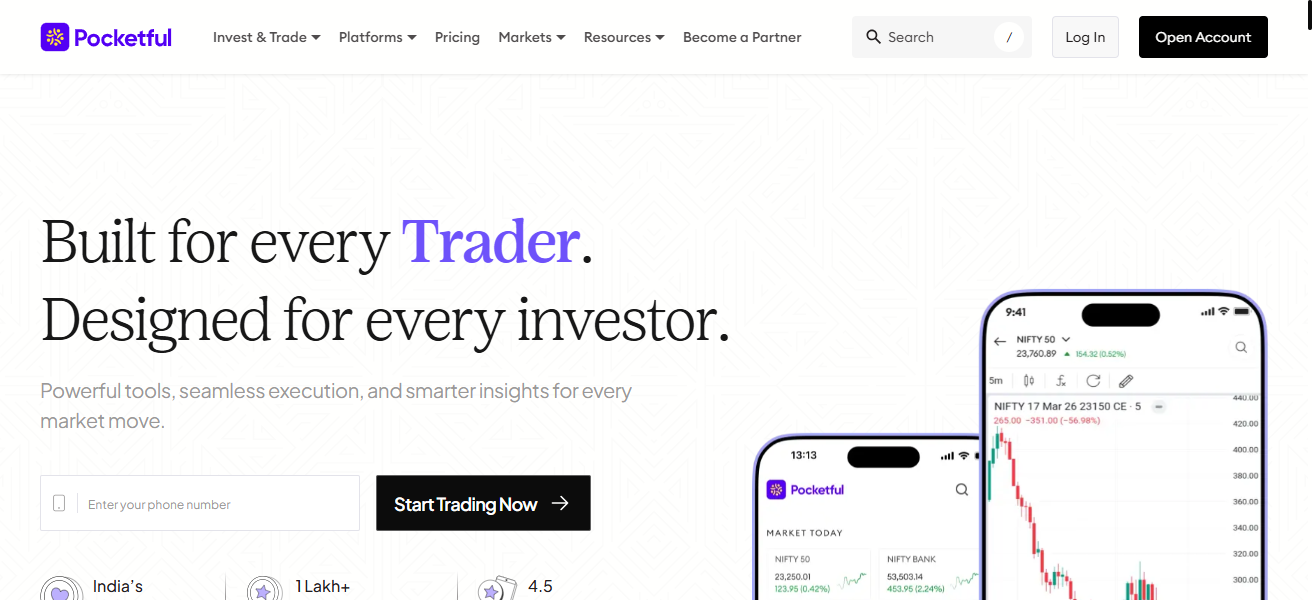
They also have a user-friendly platform, quick approval times, and a variety of eligible stocks. Pocketful also has a pricing model that maximizes capital usage and reduces risk of missing out on market opportunities due to cost, especially with fast market conditions.
Pocketful Pros & Cons
| Pros | Cons |
|---|---|
| Among the lowest MTF interest rates available | Limited brand recognition compared to larger brokers |
| Transparent pricing structure | Smaller research ecosystem |
| Fast account opening and approvals | Fewer advanced trading tools |
| High leverage opportunities | Limited offline support presence |
| User-friendly platform for beginners | MTF stock list may vary periodically |
2. m.Stock
m.Stock has one of the most favorable MTF interest slabs for retail investors among all the online trading platforms. The trading platform has a flat-fee brokerage model and advanced trading tools, which reduce the cost of trading and favor investors with large funded positions for a long duration.
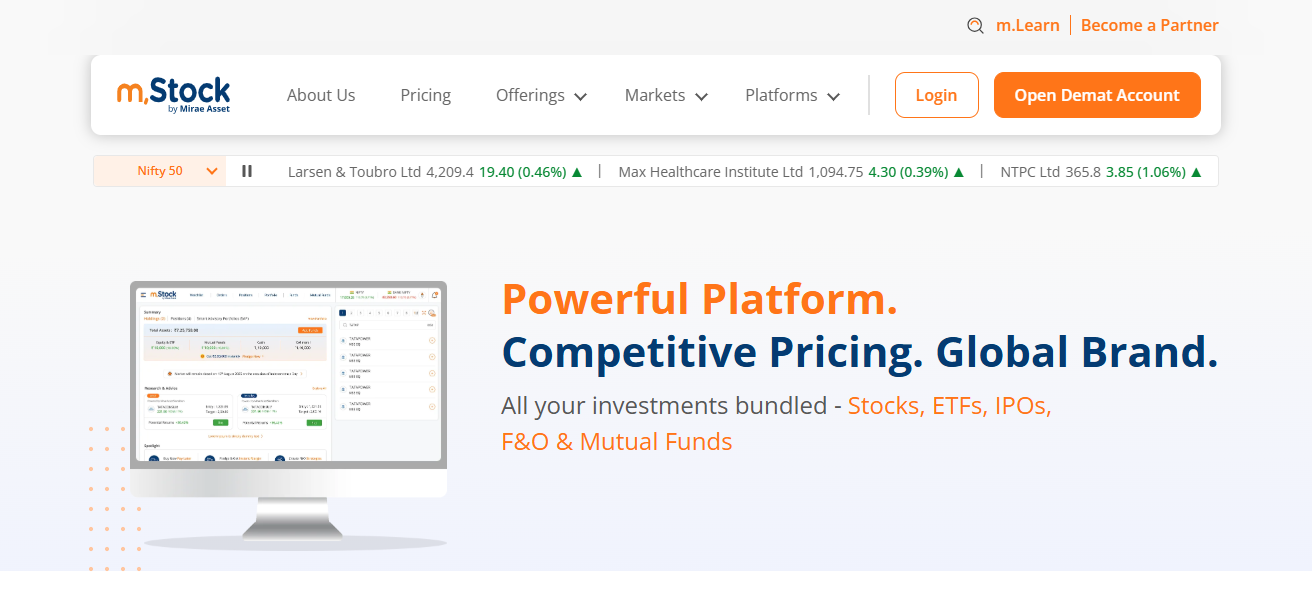
The broker also has a growing list of MTF-eligible securities, limiting funded costs and providing investors with higher market opportunities. This makes for an ideal platform for investors actively trading.
m.Stock Pros & Cons
| Pros | Cons |
| Very competitive MTF interest rates | Customer support response may vary during peak hours |
| Flat-fee brokerage model | Research offerings are relatively basic |
| Suitable for large funded positions | Fewer premium advisory services |
| Modern trading interface | Limited branch network |
| Expanding MTF-eligible stock universe | Less suitable for investors seeking full-service support |
3. ICICI Direct
ICICI Direct has MTF rates that are very favorable along with being one of the most reliable financial institutions in India. The broker has researched trading and investment options along with good customer service and seamless banking.
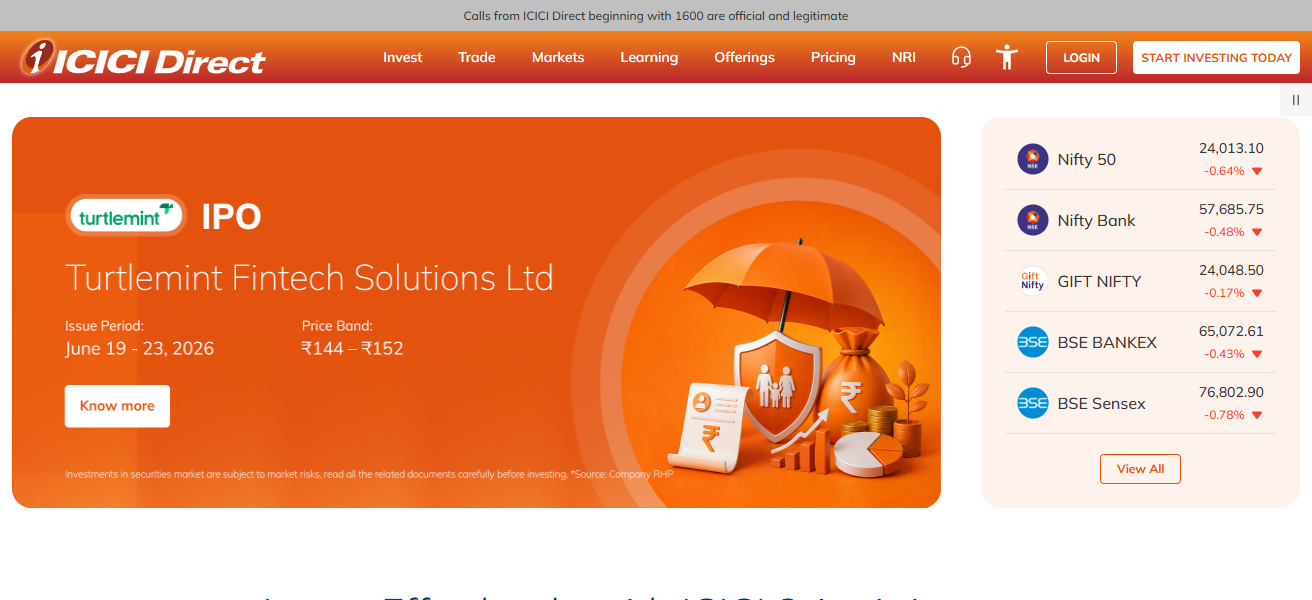
The Margin Trading Facility of ICICI Direct enables investors to have higher market exposure and the capital control to do so. The combination of these offerings makes ICICI Direct a favorable brokerage for traders.
ICICI Direct Pros & Cons
| Pros | Cons |
| Trusted brand backed by ICICI Group | MTF rates may be higher than those of discount brokers |
| Comprehensive research reports | Higher overall service charges in some cases |
| Seamless banking integration | Platform can feel complex for beginners |
| Strong customer support | Account maintenance costs may apply |
| Wide investment product ecosystem | Not the cheapest option for active traders |
4. Kotak Neo
Kotak Neo combines competitively low MTF rates with a digitized trading system. Supported by the Kotak Group, the platform covers a wide range of stocks eligible for margin trading. Investors are provided a fast system of modern order entry with low financing costs.
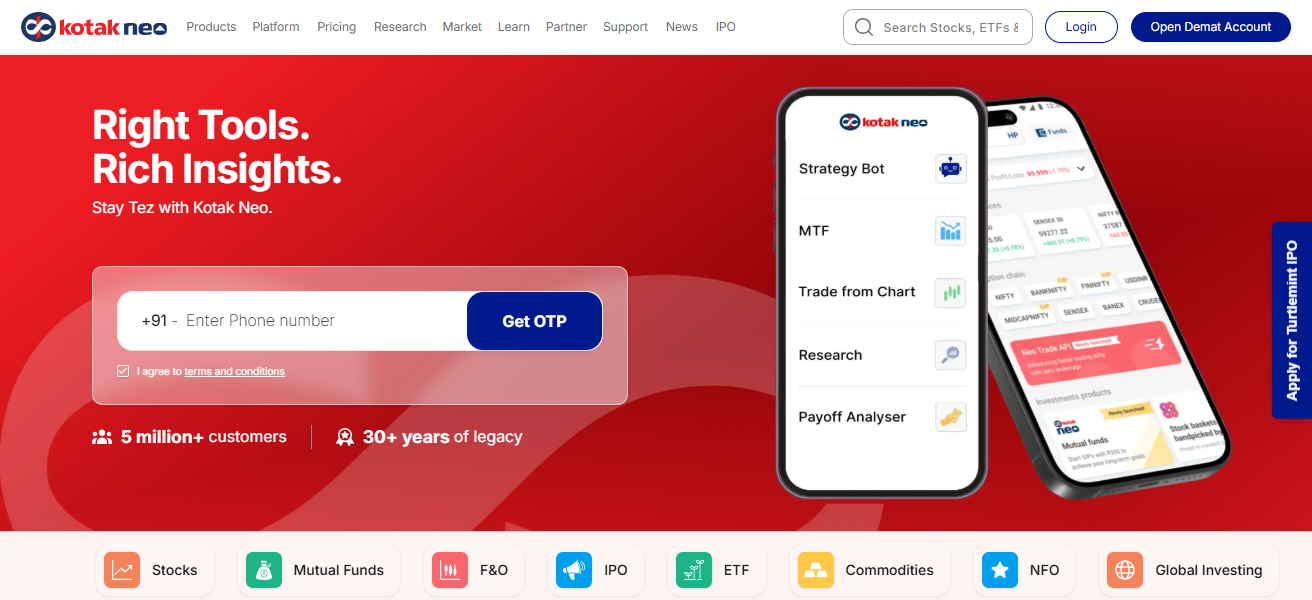
Kotak Neo has also improved both its mobile and web trading systems, enabling users to manage leveraged trading and be able to access significant market data as well as trading and analysis services.
Kotak Neo Pros & Cons
| Pros | Cons |
| Competitive MTF funding rates | Research tools are less extensive than full-service brokers |
| Backed by the Kotak Group’s credibility | Premium features may be limited |
| Fast and smooth digital experience | Smaller educational content library |
| Broad stock eligibility for MTF | Advanced traders may need additional analytics tools |
| Efficient order execution | Customer service quality can vary |
5. Paytm Money
Paytm Money is an affordable trading platform that has recently provided more affordable access to leveraged trading via Margin Trade Funding. The platform has a low cost to fund and very low trading costs, particularly for retail investors.
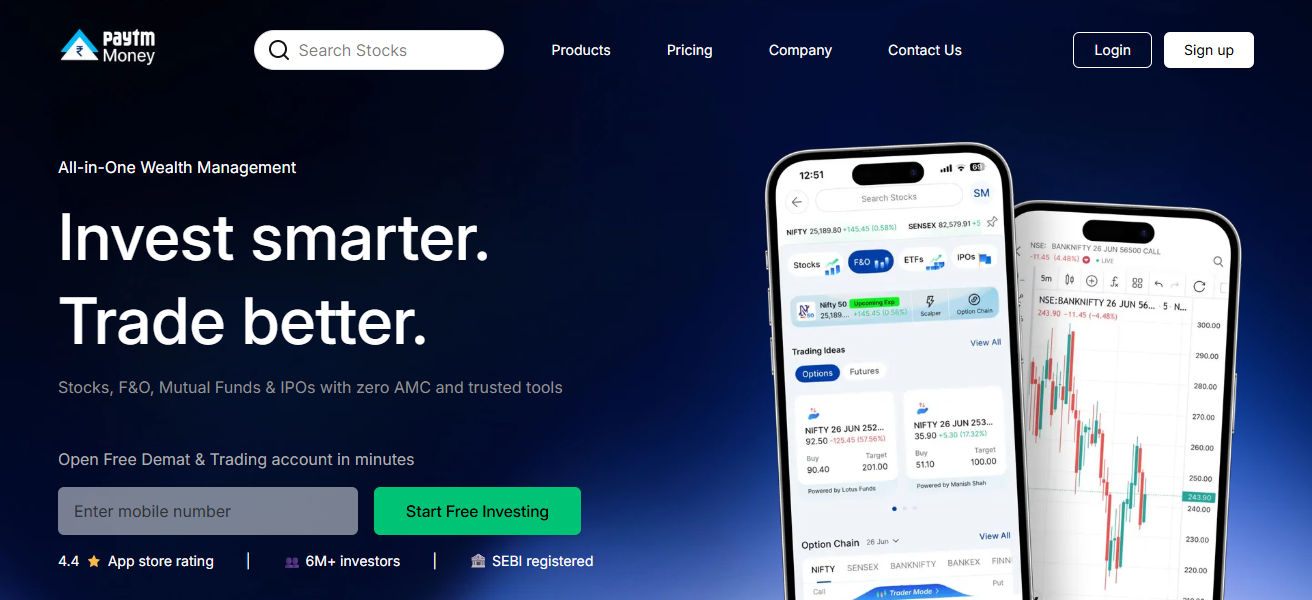
Paytm Money has a mobile and web system that manages trades, and due to its mobile and web-first system, it is a very modern and attractive trading platform.
Paytm Money also has a growing collection of other financial and trade services that are affordably priced and integrated with digital financial services.
Paytm Money Pros & Cons
| Pros | Cons |
| Affordable funding costs | Limited advanced trading functionality |
| Easy-to-use mobile platform | Smaller research ecosystem |
| Simple onboarding process | Less suitable for professional traders |
| Transparent pricing structure | Fewer customization options |
| Strong digital payments integration | Advanced charting features are limited |
6. Rupeezy
Rupeezy provides flexible Margin Trade Funding with plans tailored to specific trading styles and risk appetites. The broker offers lower interest costs along with greater coverage of eligible stocks, to help traders enhance purchasing power without excessive financing costs.
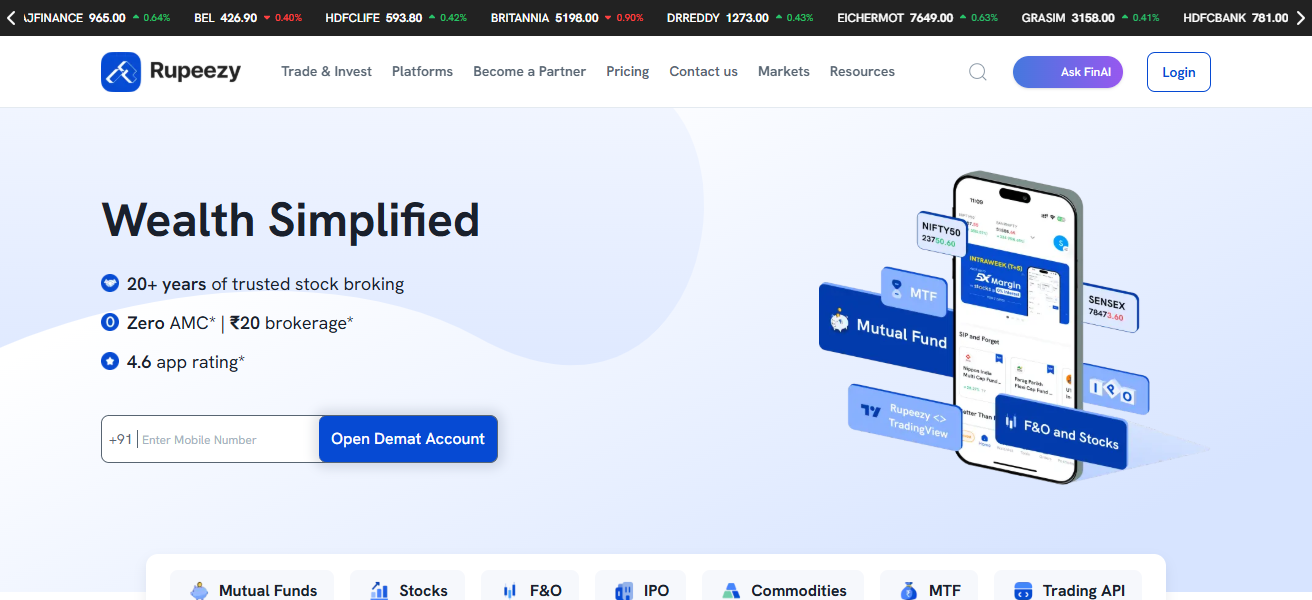
Rupeezy’s technology-centered system supports trading and active portfolio management. The broker also provides flexible and less costly solutions through customizable brokerage plans, making Rupeezy an attractive trading platform for both new and experienced investors.
Rupeezy Pros & Cons
| Pros | Cons |
| Flexible MTF plans for different traders | Lower market visibility than major brokers |
| Competitive interest rates | Research coverage may be limited |
| Affordable brokerage options | Smaller customer support network |
| Good portfolio tracking tools | Limited educational resources |
| Suitable for beginners and active traders | Brand awareness still growing |
7. Dhan
Advanced technology and competitive MTF make Dhan popular with active traders. Dhan offers efficient leverage, advanced charting, and easy order management. Their Margin Trade Funding lets traders take advantage of opportunities without impacting cash flow.
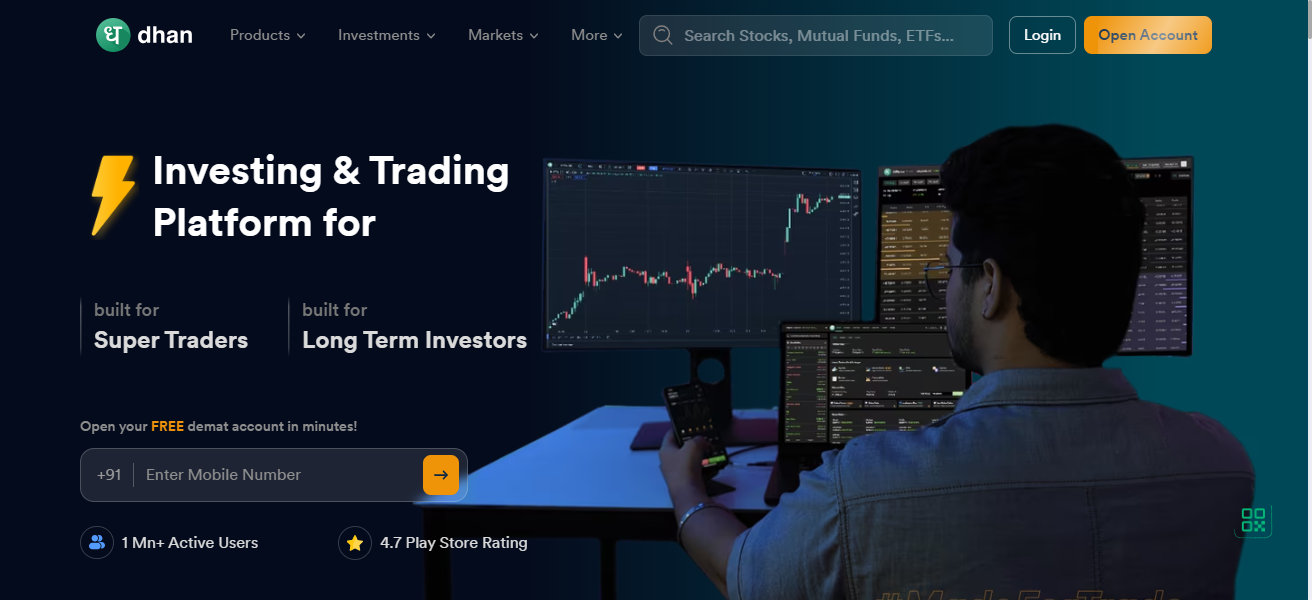
Frequent updates, API support for advanced traders, and an increasing number of trading resources make Dhan an appealing choice for traders who value analytics and optimization.
Dhan Pros & Cons
| Pros | Cons |
| Advanced trading technology | Learning curve for new investors |
| Competitive MTF offerings | No extensive offline branch presence |
| Excellent charting and analytics | Research reports are less comprehensive |
| API support for advanced traders | Premium tools may require experience |
| Regular platform enhancements | Not ideal for traditional investors |
8. Zerodha
Zerodha is one of India’s most esteemed discount brokers. Margin funding is available through approved and partner funding methods. While funding costs may not be the cheapest, Zerodha more than compensates with superior transparency and low-cost trading.
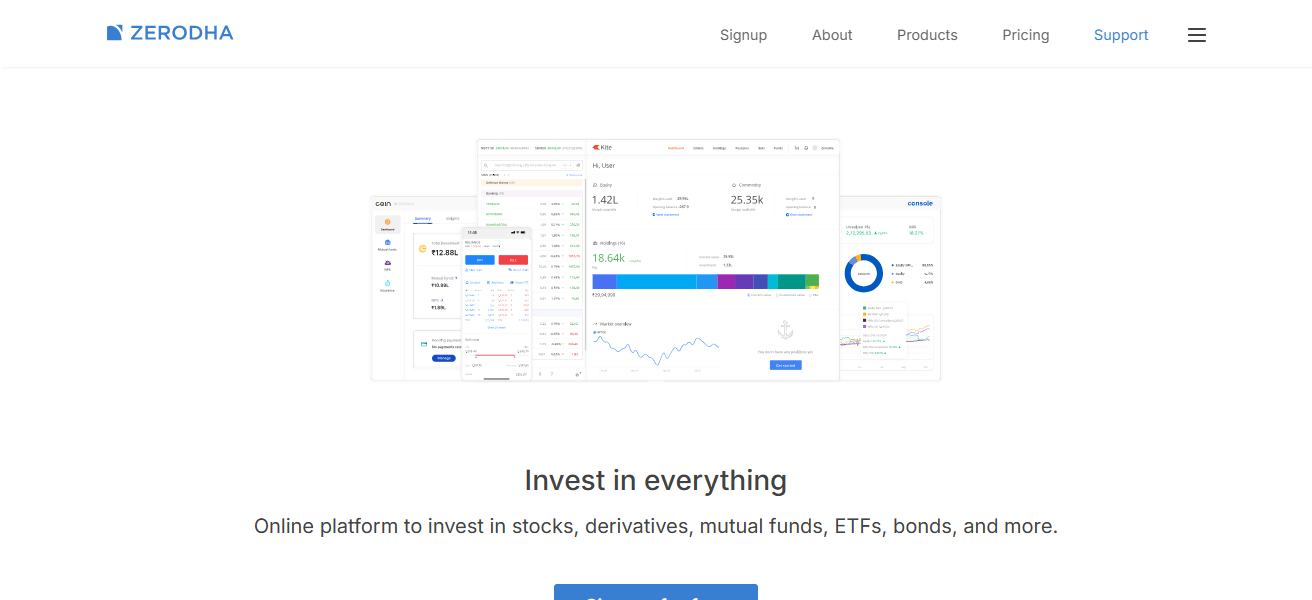
The Kite application is powerful, and trading is simplified with the aid of Zerodha’s education and advanced market tools.
While traders using margin funding appreciate the low cost of trading, the reliability of order execution, and the strong risk management features, Zerodha’s margin funding model and costs are of concern to many.
Zerodha Pros & Cons
| Pros | Cons |
| Industry-leading trading platform | MTF costs may not be the lowest |
| Transparent fee structure | No dedicated relationship managers |
| Strong educational resources | Limited direct advisory services |
| Reliable execution quality | Margin funding options are more structured |
| Large and active user community | Customer support can be slower during peak periods |
9. Groww
Groww has added many active trading features after evolving from a simplified investing app. Groww’s Margin Trade Funding is easy to use and understand, making trading with leverage simple.
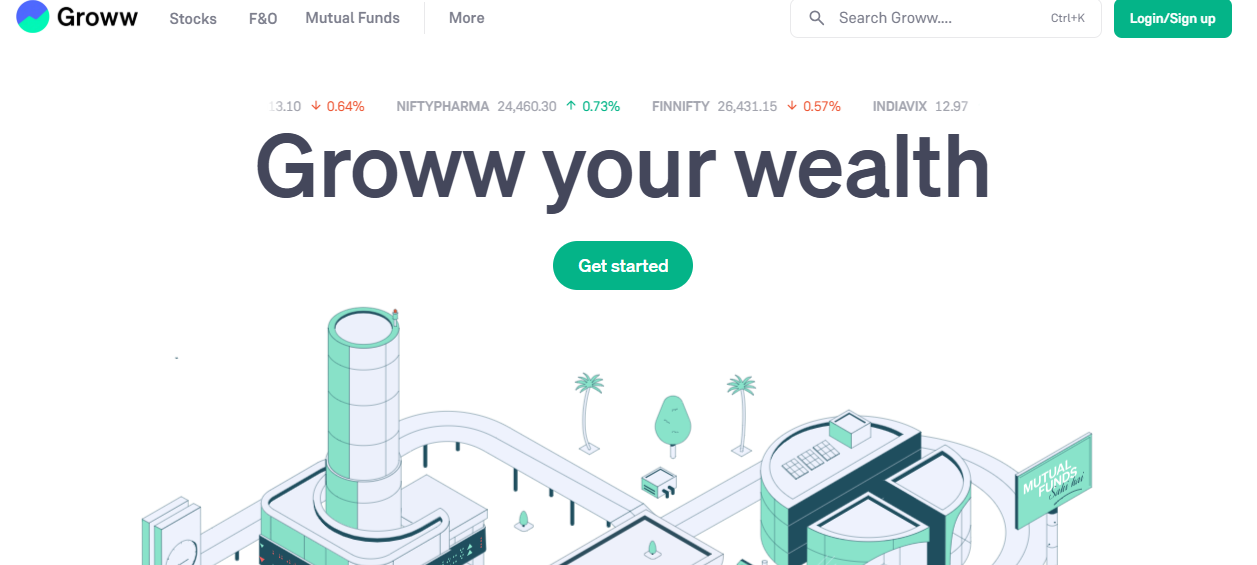
The emphasis on transparency, along with easy interface design, simplifies the onboarding process. Groww is an appealing choice for investors wanting to take on margin trading.
Groww Pros & Cons
| Pros | Cons |
| Beginner-friendly interface | Limited advanced trading features |
| Easy MTF access for new investors | Smaller professional research offering |
| Quick account opening process | Fewer customization options |
| Transparent pricing model | Advanced traders may outgrow the platform |
| Strong focus on user education | Limited institutional-grade tools |
10. Angel One
Backed by extensive market knowledge and a broad investor base, Angel One provides a research-oriented Margin Trade Funding solution. The broker provides advanced trading technology and a wide selection of eligible stocks as well as competitive funding rates.
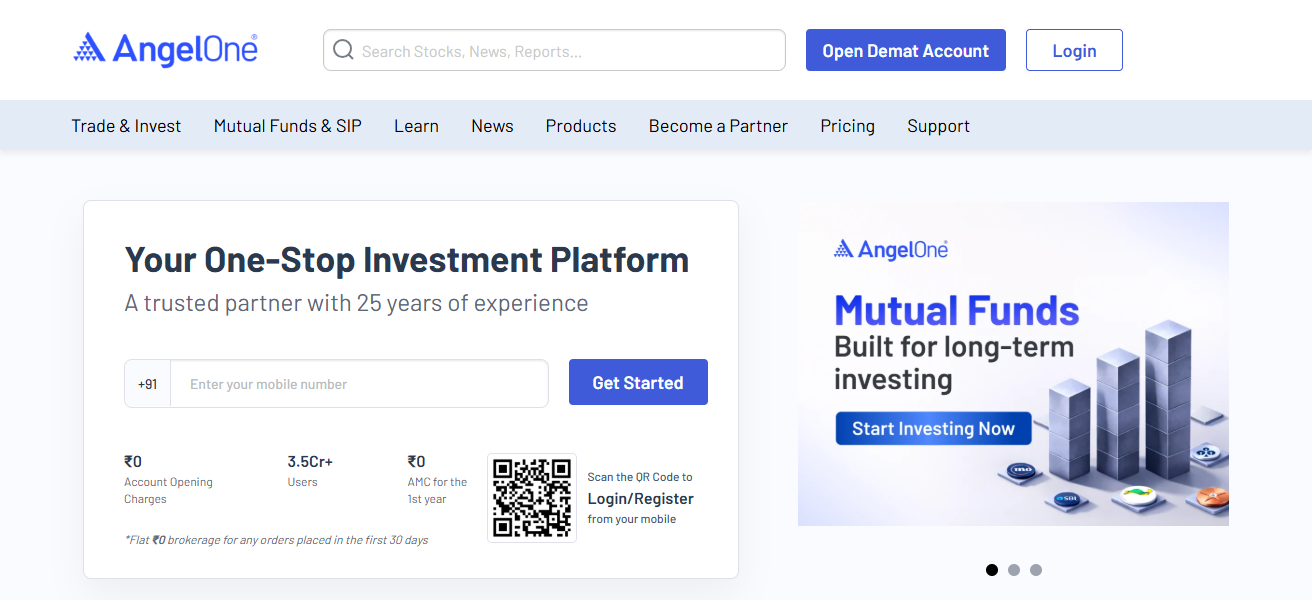
With its AI-powered suggestions, thorough market analysis and embedded investment tools, traders can recognize opportunities. The balance of research assistance and innovative, affordable solutions helps Angel One stand out for investors who desire leveraged market exposure.
Angel One Pros & Cons
| Pros | Cons |
| Strong research and market insights | The platform can appear feature-heavy for beginners |
| AI-powered investment recommendations | MTF rates may not always be the lowest |
| Large selection of MTF-eligible stocks | Some advanced features require experience |
| Competitive overall trading costs | Occasional platform congestion during volatile markets |
| Robust trading and investment ecosystem | The interface may feel complex initially |
Conclsuion
In conclsuion the Choosing the appropriate Margin Trade Funding (MTF) broker will help you become more profitable by decreasing your costs of borrowing and improving the efficiency of your capital.
Competitors like Pocketful, m.Stock, Dhan, Angel One, and ICICI Direct have different advantages for MTF. Before you choose a broker, compare the interest rates, the eligible stocks, the leverage limits, platform features and customer support.
Choosing the right MTF broker will help you take advantage of opportunities while managing the trade costs and risks.
FAQ
Which broker offers the lowest MTF interest rates?
Brokers like Pocketful.Stock and Dhan are often recognized for offering highly competitive MTF interest rates.
Is MTF suitable for beginners?
Yes, but beginners should understand leverage risks before using MTF since losses can be amplified alongside profits.
How is MTF interest calculated?
MTF interest is generally charged daily on the funded amount until the position is squared off or fully paid.
Which stocks are eligible for MTF?
Only SEBI-approved stocks and securities listed by individual brokers are eligible for Margin Trade Funding.