This article will speak about the Privacy & Data Protection Tools for Modern Businesses that help companies protect sensitive information, manage compliance, and build customer trust effectively.
All of these sophisticated platforms enable AI governance, consent management, cybersecurity monitoring, and automated privacy operations across contemporary digital ecosystems.
More businesses are using such tools to mitigate regulatory risk while establishing secure, transparent, and scalable data management systems globally.
Key Poinst & Privacy & Data Protection Tools for Modern Businesses
- Collibra simplifies enterprise data governance, compliance management, cataloging, and privacy risk monitoring globally.
- OneTrust automates privacy compliance workflows, consent management, vendor assessments, and regulatory reporting efficiently.
- BigID discovers sensitive enterprise data, improving privacy, classification, security, and governance operations effectively.
- DataGrail streamlines consumer privacy requests, compliance automation, and risk reduction across organizations seamlessly.
- Securiti.ai enables automated data privacy controls, governance, security, and compliance management using artificial intelligence.
- TrustArc provides privacy assessments, compliance automation, consent solutions, and enterprise risk management capabilities worldwide.
- Transcend automates data privacy requests, consent management, and governance processes for enterprises efficiently.
- Osano helps businesses manage cookie consent, privacy compliance, and third-party vendor monitoring effectively.
- Varonis protects sensitive business information through data monitoring, analytics, and threat detection solutions.
- MineOS simplifies privacy operations, data mapping, compliance workflows, and customer data transparency management.
10 Privacy & Data Protection Tools for Modern Businesses
1. Collibra
Collibra has emerged as an industry leader in the combined management of AI governance, privacy protections, predictive analytics, and enterprise data intelligence.
From 2026, it will also add AI-powered semantic modeling, automated governance workflows, and a centralized registry management layer for more transparency.
Collibra is used by many Fortune 500 companies to track data lineage, mitigate compliance risks, and provide easy access to trusted data across cloud environments.
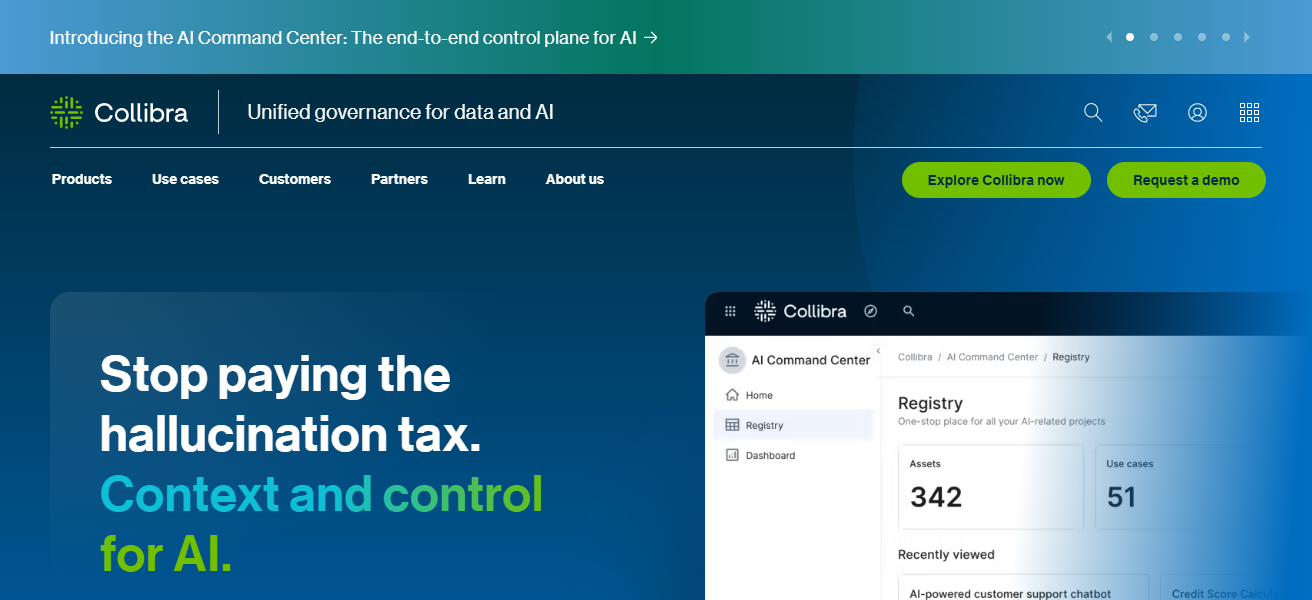
The attractiveness of the platform is due to its integration with AI governance frameworks that helps organizations scale artificial intelligence securely.
| Pros | Cons |
|---|---|
| Strong AI governance and enterprise data lineage management capabilities | Expensive for small and medium-sized businesses |
| Excellent cloud integration across large enterprise ecosystems | Requires technical expertise during deployment |
| Automated governance workflows improve compliance efficiency | Initial implementation can consume significant organizational resources |
| Trusted by Fortune 500 companies for scalable data governance | Advanced customization may increase operational complexity |
2. OneTrust
OneTrust retains top position in privacy automation with in-flight AI governance and consent-aware data management solutions.
The company launched intelligent automation, real-time AI monitoring, and automated assessment workflows in its Winter 2026 release to enable enterprises to address rising regulatory pressure more effectively.

Due to their incredible integrations with Snowflake and enterprise cloud ecosystems, OneTrust tools are quickly becoming the go-to platform that businesses leverage for GDPR, CCPA, and AI compliance operations.
The latest of these tools is its intelligent AI governance platform, which ensures organisations’ privacy transparency as they confidently scale data-driven innovation across global markets.
| Pros | Cons |
|---|---|
| Advanced privacy automation for GDPR, CCPA, and AI regulations | Platform pricing may challenge smaller organizations |
| Real-time AI monitoring strengthens compliance visibility | User interface can feel overwhelming initially |
| Strong integrations with enterprise cloud infrastructure providers | Some advanced modules require separate licensing |
| Centralized consent management improves operational transparency | The user interface can feel overwhelming initially |
3. BigID
BigID differentiates itself by enabling organizations to find, discover, and secure sensitive enterprise data across hybrid environments.
For a better understanding of how BigID works, businesses choose this tool because, via its AI-driven discovery engine, search across all cloud systems, SaaS applications, and databases to find hidden regulated information immediately.
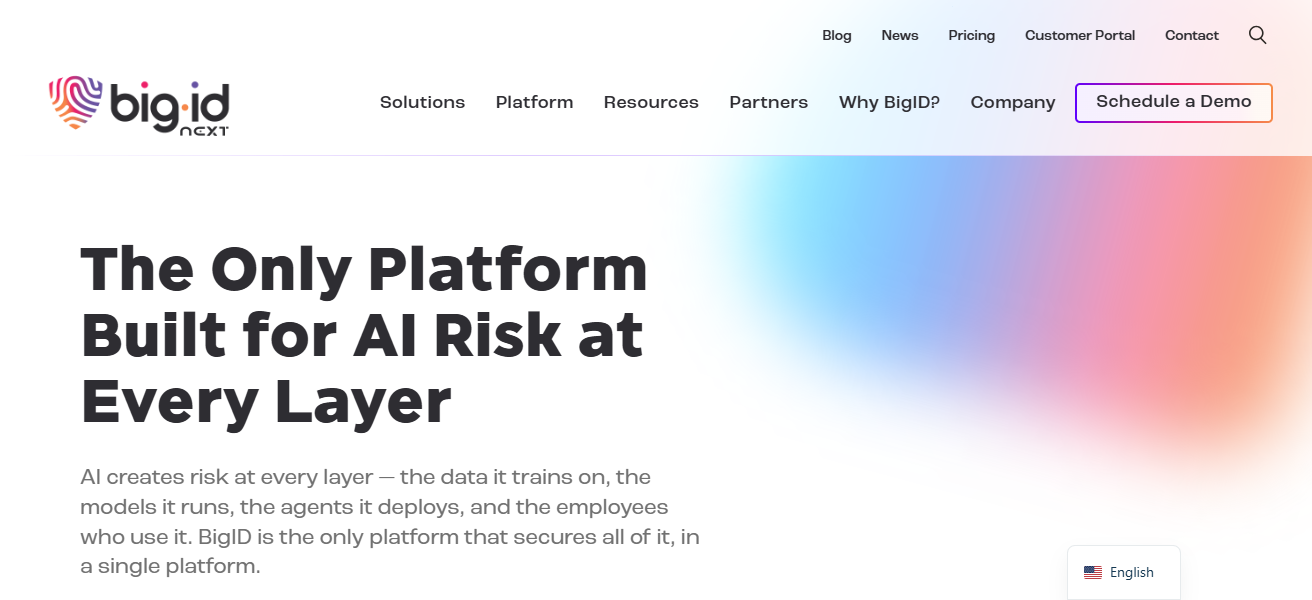
More and more modern enterprises are using BigID to automate data mapping, reduce risk, and manage privacy operations.
Its advanced machine-learning capabilities enable organizations to manage escalating cyber threats while continuing to meet global privacy laws and enterprise governance challenges over time.
| Pros | Cons |
|---|---|
| Powerful AI-driven sensitive data discovery across hybrid environments | Complex enterprise deployment for inexperienced teams |
| Excellent automated data classification and risk management features | Premium pricing structure for advanced enterprise capabilities |
| Supports multicloud, SaaS, and structured database environments efficiently | Reporting customization may require additional configuration |
| Strong cybersecurity and privacy governance integration tools | Smaller businesses may not utilize full platform capabilities |
4. DataGrail
Fast-growing companies looking for light-weight, yet powerful tools to aid their privacy compliance efforts are attracted to DataGrail.
It provides natural integrations with business applications that simplify data subject request processing, vendor risk monitoring, and privacy workflow orchestration.
For companies, DataGrail is a good choice and becomes preferable as it can get up and running faster than larger, more enterprise-focused tools.
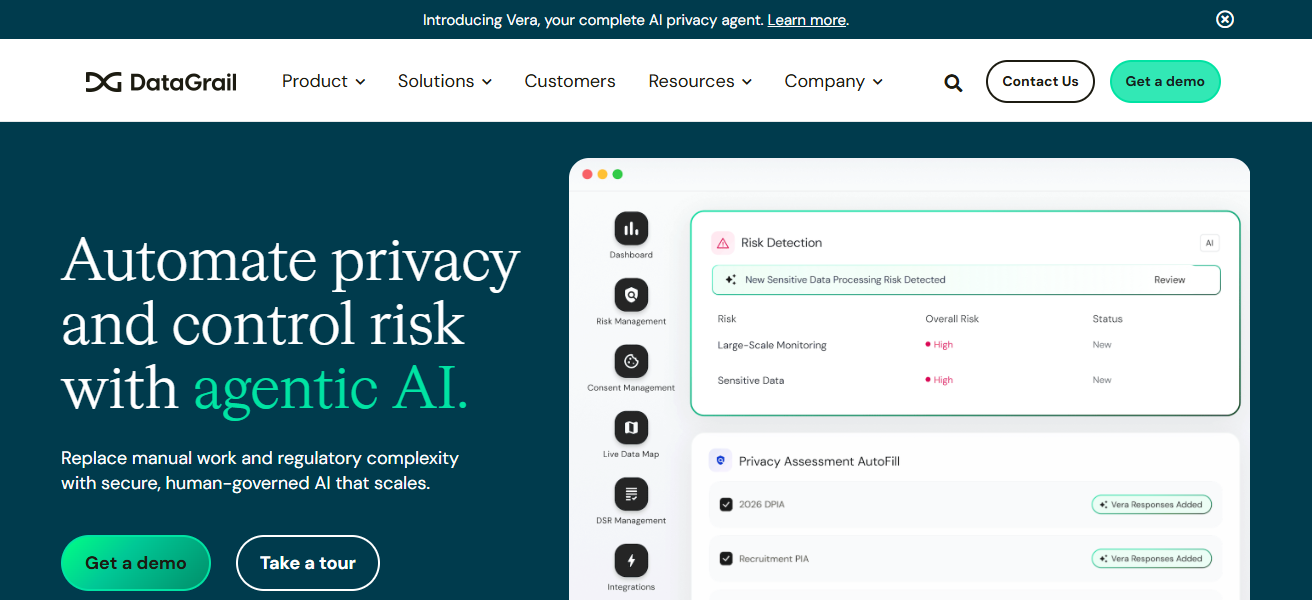
Its automation-focused strategy enables privacy teams to minimize manual workloads, all while increasing customer confidence.
DataGrail addresses the sweet spot for startups and mid-sized businesses with a solution that balances compliance efficiency, scalable processes, and operational simplicity in one of the hardest problems facing today’s digital infrastructure.
| Pros | Cons |
|---|---|
| Fast implementation with lightweight privacy compliance automation tools | Limited enterprise-scale governance customization options |
| Simplifies data subject request handling and vendor monitoring | Fewer advanced analytics compared with larger competitors |
| Ideal for startups and growing digital businesses | Enterprise integrations may require additional development support |
| Reduces manual privacy workflows through strong automation features | Advanced governance features remain less comprehensive overall |
5. Securiti.ai
Securiti. AI is gaining traction quickly as a single platform for privacy, security, governance, and AI risk management. Modern businesses use Securiti.
It enables AI to provide automation for consent management, data intelligence, and compliance workflows across multicloud environments.
With its AI-based privacy controls, the company helps enterprises balance increasing regulatory needs and safe AI adoption.
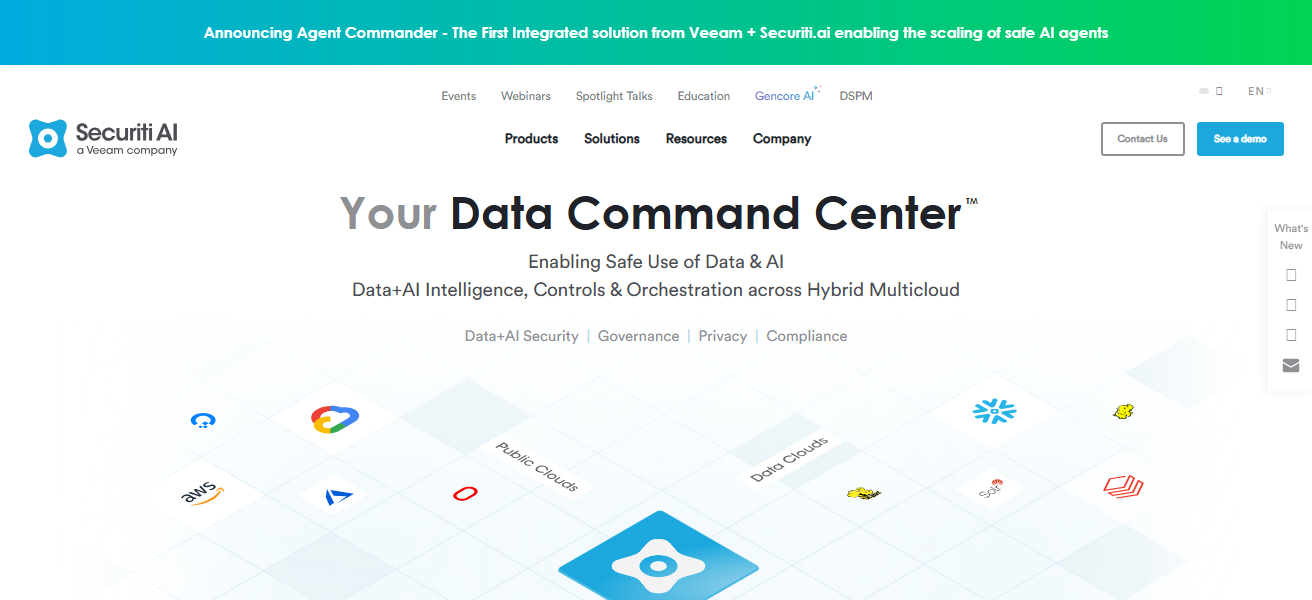
With organizations assessing modern DPDPA and GDPR automation tools, Securiti is finding itself increasingly on the short list.
There’s also a deep learning guide that provides details on the types of problems it excels at solving. AI, which offers enterprise-scale data intelligence architecture, centralized governance capabilities, and excellent automation capabilities.
| Pros | Cons |
|---|---|
| Combines privacy, security, governance, and AI risk management together | Enterprise onboarding process may require experienced compliance teams |
| Strong automation for multicloud compliance operations | Higher pricing for advanced AI governance features |
| Excellent support for modern DPDPA and GDPR requirements | Platform learning curve may challenge smaller organizations |
| Centralized governance improves enterprise-wide visibility and control | The enterprise onboarding process may require experienced compliance teams |
6. TrustArc
TrustArc continues to be highly regarded by large enterprises tasked with managing complex global privacy regulations and cross-border data governance needs.
TrustArc is used widely by businesses for privacy assessments, automated compliance reporting, consent management, and risk mitigation of operational risk.
Being a fast-paced regulatory expert, it enables multinational organizations to navigate today`s rapidly changing compliance frameworks.

TrustArc is gaining traction among the enterprises that not only appreciate our mature governance ecosystem and traditional privacy solutions, such as compliance, but also look for scalable privacy management tools that can be tuned to changing global laws.
World-class privacy software: The platform is still being supported and expanded for organizations that need detailed visibility into their compliance posture, audit readiness, and enterprise-grade privacy management infrastructure globally.
| Pros | Cons |
|---|---|
| Strong regulatory expertise supporting global compliance operations | Interface modernization could improve user experience significantly |
| Comprehensive privacy assessments and audit readiness capabilities | Smaller businesses may find pricing expensive |
| Scalable governance tools for multinational enterprises | Advanced customization may increase implementation timelines |
| Excellent consent management and compliance reporting features | Learning advanced workflows can require additional training |
7. Transcend
Transcend is gaining popularity for a privacy infrastructure that caters to developer preferences and fully automated data rights management, and low-code solutions.
Transcend helps businesses to simplify directly with consent operations, automating deletion requests and bringing them closer to the transparency expected by their customers across their systems of data.
Its architecture, focused on APIs allowing easy integration into new digital ecosystems, is also particularly appreciated by growth-stage technology companies.
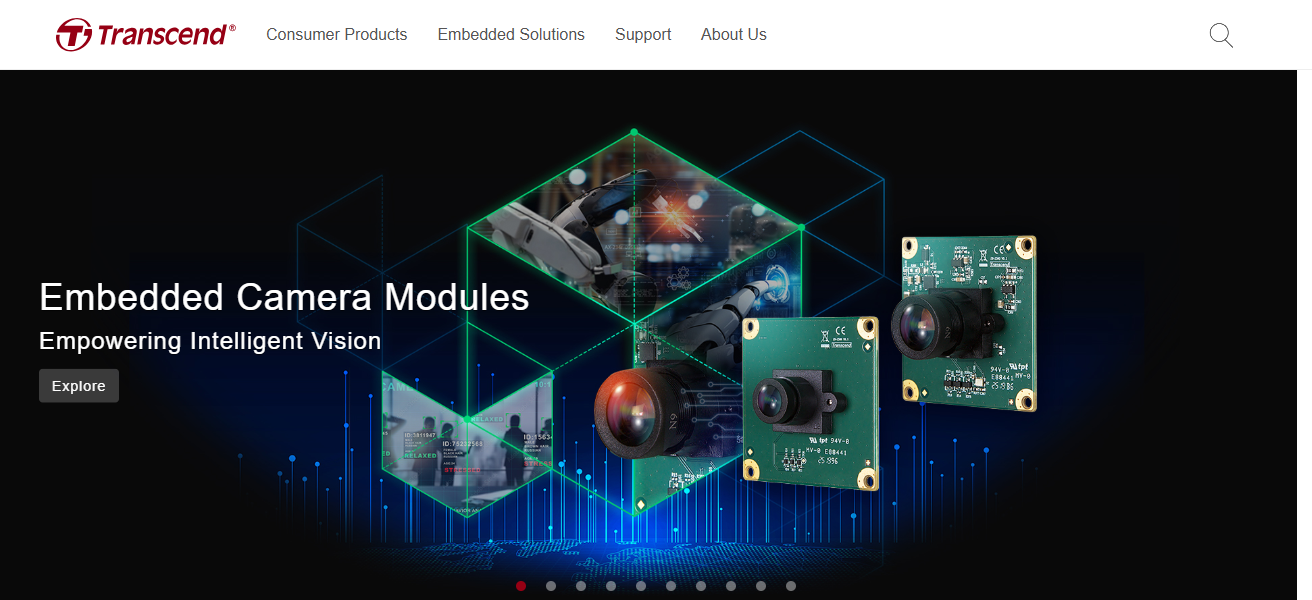
With less operational overhead and compliance efficiency gained, an increasing number of organizations are turning
To Transcend as their scalable and flexible privacy automation solution. Its efficient workflows enable businesses to respond more quickly to global customer privacy requests.
| Pros | Cons |
|---|---|
| Developer-friendly APIs simplify privacy infrastructure integration | Less suitable for non-technical business teams |
| Automates deletion requests and consent operations efficiently | Advanced enterprise governance features remain limited |
| Flexible architecture supports modern digital ecosystems seamlessly | Smaller support ecosystem compared with larger competitors |
| Reduces operational overhead through streamlined automation workflows | Requires technical expertise for deeper integrations |
8. Osano
Osano is best known for its easy-to-use consent management solution and efficient privacy compliance framework.
Osano is built for businesses — incredibly easy to implement with little technical complexity required compared to enterprise privacy platforms.
The suite’s cookie consent tools, vendor monitoring systems, and compliance automation functions enable organizations to boost regulatory compliance quickly.

Osano is becoming the tool of first choice for smaller businesses and emerging digital brands, either due to its pricing, short time to value, and operational simplicity.
The platform helps organizations govern customer trust in a sustainable manner while ensuring transparency across websites, applications, and third-party data ecosystems.
| Pros | Cons |
|---|---|
| User-friendly platform with minimal technical deployment complexity | Limited enterprise-level customization capabilities |
| Affordable privacy compliance solution for growing businesses | Advanced analytics features remain comparatively basic |
| Strong cookie consent and vendor monitoring tools | Large enterprises may require more robust governance controls |
| Faster implementation compared with larger compliance platforms | Fewer advanced AI governance capabilities available |
9. Varonis
Intelligent data monitoring, threat detection, and behavioral analytics are highly focused on protecting sensitive enterprise information.
Varonis today helps modern organizations with insider threat detection, cloud collaboration platform protection, and automated recognition of anomalous data access behaviors.
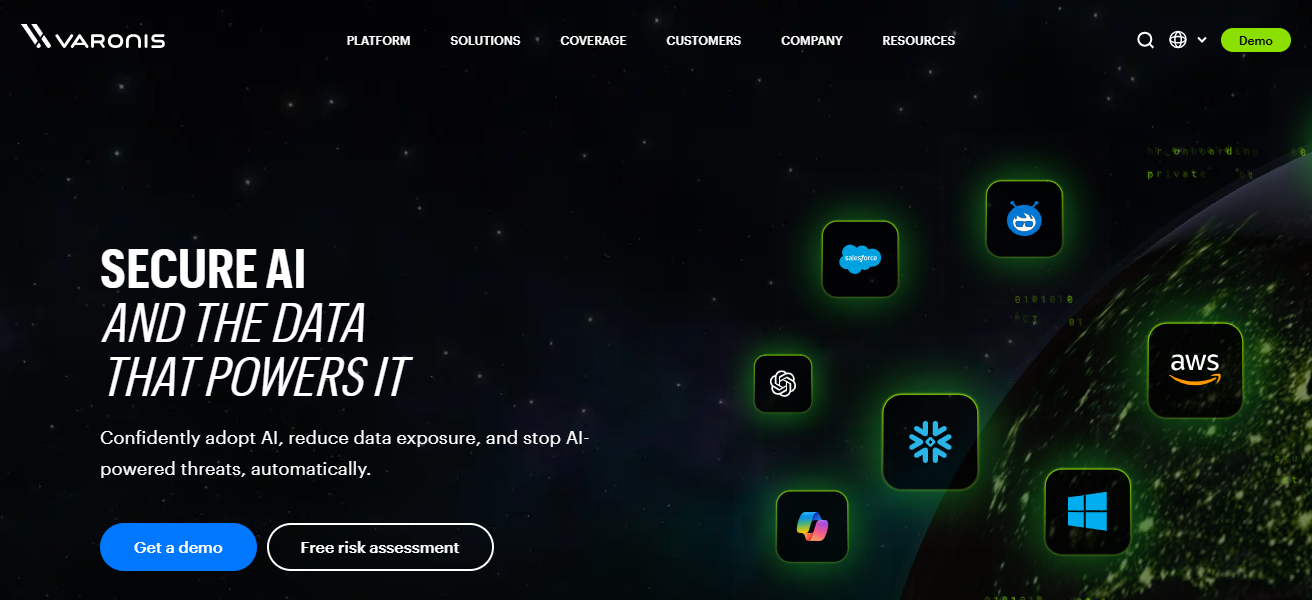
It’s then that the company’s AI-driven analytics engine enhances transparency around enterprise data utilization while aiding compliance efforts.
Varonis Enterprise features have also become more favorable with several key business benefits boosting its adoption — stronger cybersecurity posture, threat exposure reduction, and a better ability to monitor enterprise data use in real-time within complex infrastructures.
| Pros | Cons |
|---|---|
| Excellent threat detection and behavioral analytics capabilities | Deployment may require dedicated cybersecurity expertise |
| Strong protection for sensitive enterprise information systems | Higher costs for enterprise-scale monitoring operations |
| AI-powered monitoring improves real-time visibility significantly | Complex configuration for advanced security policies |
| Effective insider threat detection across cloud collaboration platforms | Smaller organizations may find features excessive |
10. MineOS
MineOS is modernizing privacy operations with Data mapping, Consent management, and Customer transparency solutions.
MineOS is only going to be adopted more broadly by businesses because it streamlines the handling of such requests and allows for greater visibility into customer data processing activities.
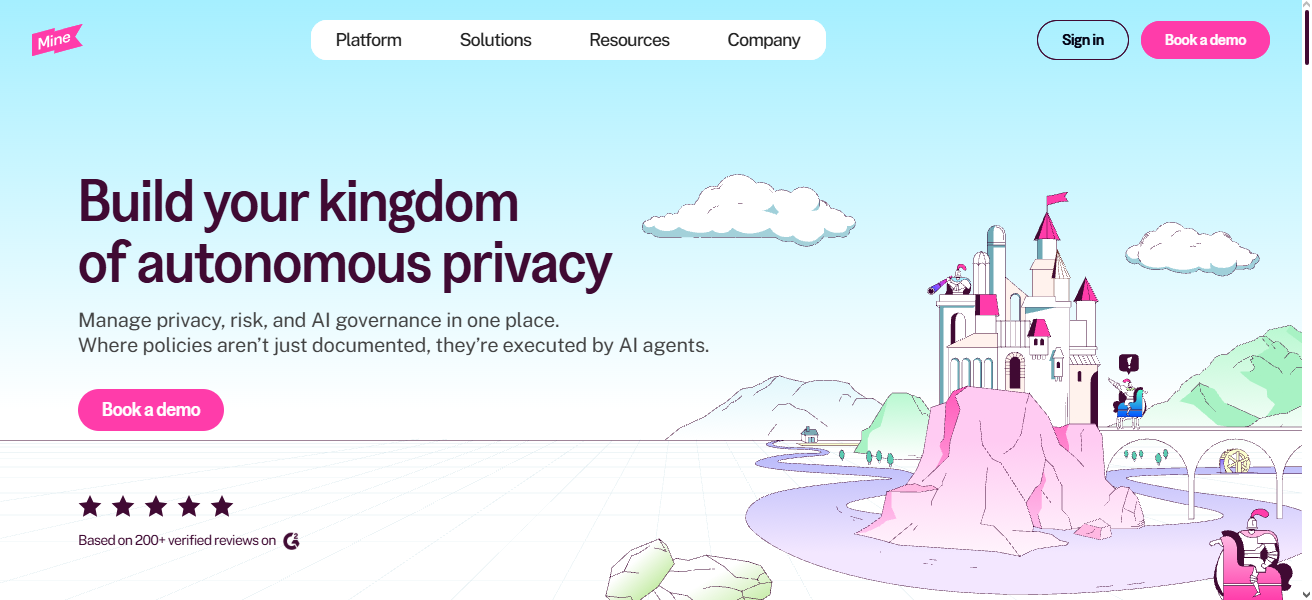
Its platform both enables organizations to comply with new regulations, as they arise, and helps them enhance consumer trust.
MineOS is loved by all companies that are currently looking for scalable privacy operations tools, as it brings automation, intuitive workflows, and the ability to centralize privacy management processes across all business systems and digital environments of the organization quickly.
| Pros | Cons |
|---|---|
| Simplifies privacy operations with automated data mapping tools | Limited advanced enterprise governance customization |
| Strong transparency features improve consumer trust management | Smaller ecosystem compared with established competitors |
| Centralized privacy workflows enhance operational efficiency | Advanced analytics features continue evolving gradually |
| Easy-to-use interface supports scalable compliance operations | Large enterprises may require broader compliance integrations |
Conclusion
In conclusion, Privacy & Data Protection Tools for Modern Businesses are an indispensable tool in successful security, compliance, and customer trust management.
Collibra, OneTrust, BigID and Varonis provide body of suites that can be used to automate governance control and monitoring while understanding sensitive information and reducing regulatory exposure in an efficient manner.
Businesses that are investing in leading-edge privacy management solutions will gain enduring advantages across operational transparency, cybersecurity protection, and long-term digital growth pathways as global privacy regulations proliferate alongside the ongoing adoption of AI.
FAQ
What are privacy and data protection tools?
These tools help businesses secure sensitive data and maintain regulatory compliance efficiently.
Why do businesses need privacy compliance platforms?
They reduce legal risks, automate workflows, and improve customer data transparency significantly.
Which industries use privacy management tools most?
Healthcare, finance, ecommerce, SaaS, and enterprise technology industries commonly use these platforms.
What makes Collibra popular among enterprises?
Collibra offers advanced AI governance, data lineage tracking, and enterprise compliance management solutions.
Why is OneTrust widely adopted globally?
OneTrust provides strong consent management, privacy automation, and global regulatory compliance support.