This article analyzes Enterprise hiring bias and how certain AI recruitment platforms are changing that paradigm. We explore how AI is revolutionizing talent acquisition. Employing cutting edge algorithms, skills assessments, and data all play a part in addressing bias and inequity at every phase of the hiring process.
We explore the various components and advantages of AI recruitment platforms as well as their limitations. Finally we examine how various enterprises use these AI tools to create a diverse and comprehensive workforce.
Key Points & AI Recruitment Platforms Eliminating Bias In Enterprise Hiring
| AI Recruitment Platform | Explanation |
|---|---|
| HireVue | Uses AI assessments to evaluate candidates objectively and reduce hiring bias. |
| Eightfold AI | Matches talent using skills intelligence while minimizing unconscious recruitment bias. |
| Paradox | Automates candidate screening with conversational AI for fair hiring decisions. |
| Pymetrics | Uses neuroscience-based games to identify unbiased candidate potential effectively. |
| Beamery | Provides talent management AI supporting inclusive workforce hiring strategies. |
| SeekOut | Uses AI sourcing tools to improve diverse candidate discovery processes. |
| LinkedIn Talent Solutions | Applies AI recommendations to expand fair and diverse hiring opportunities. |
| Workable | Offers AI-powered recruiting features that streamline unbiased candidate selection. |
| Greenhouse | Supports structured hiring workflows reducing bias through consistent evaluations. |
| SmartRecruiters | Uses automation and analytics to create transparent enterprise recruitment processes. |
10 AI Recruitment Platforms Eliminating Bias in Enterprise Hiring
1. HireVue
HireVue makes enterprise hiring more consistent and data-driven with the use of AI to incorporate structured video interviews, skill assessments, and predictive analytics. Traditional resume-centric evaluations can be greatly supplemented with these tools.
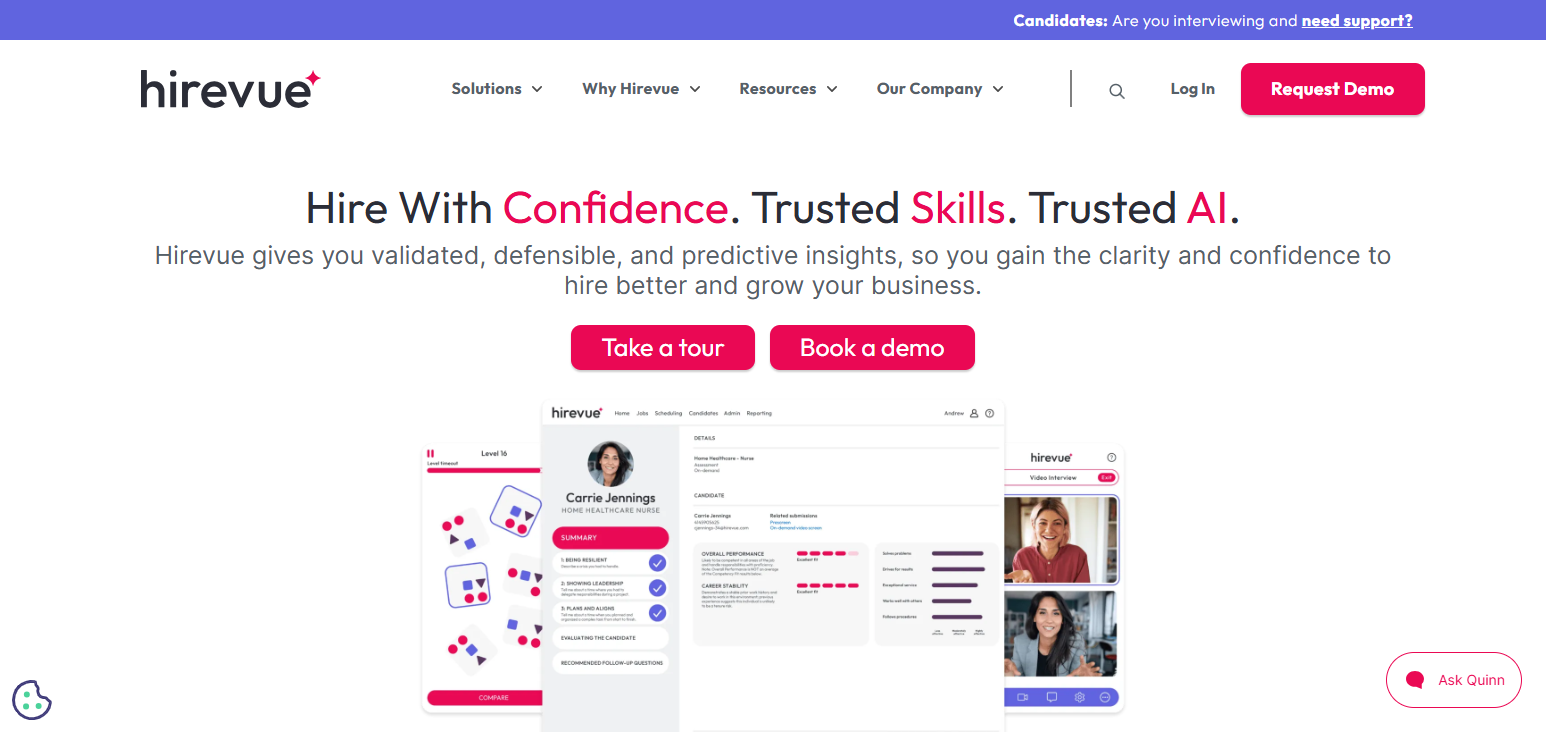
HireVue’s newer updates center on the fairness of the product and decreasing bias during the screening stages.
With HireVue, organizations can standardize candidate evaluations and hiring processes, analyze job-related skills, and create more compliant and inclusive hiring processes with regard to workplace diversity.
HireVue Features
- AI Video Interview Evaluation: Analyzes video interviews by scoring candidate answers with a structured assessment framework aligned to job-related criteria.
- Pre-Employment Skill Assessments: Evaluates candidate skills by administering standardized assessments, which go beyond resume screenings.
- Predictive Hiring Analytics: Analyzes historical data to make judgment calls about candidate job fit.
- Structured Interview Design: Standardizes interview design to help reduce subjective assessments.
- Compliance-Centered Assessments: Provides fair hiring practices by offering a clear pathway to assessments.
| Pros | Cons |
|---|---|
| Provides structured AI interviews for consistent candidate evaluation. | AI assessments may require continuous monitoring for algorithm fairness. |
| Reduces manual screening time for enterprise recruiters. | Video-based assessments may create accessibility concerns for some candidates. |
| Uses analytics to improve hiring accuracy and efficiency. | Implementation costs can be high for smaller organizations. |
| Helps standardize recruitment decisions across teams. | Candidates may feel uncomfortable with AI-based evaluations. |
| Supports compliance with fair hiring practices. | Requires proper training for recruiters to use effectively. |
2. Eightfold AI
Eightfold AI provides enterprises with a way to use bias-reducing advanced talent intelligence and skill-oriented candidate matching. Eightfold AI considers countless career data points to provide skilled candidates free of bias.
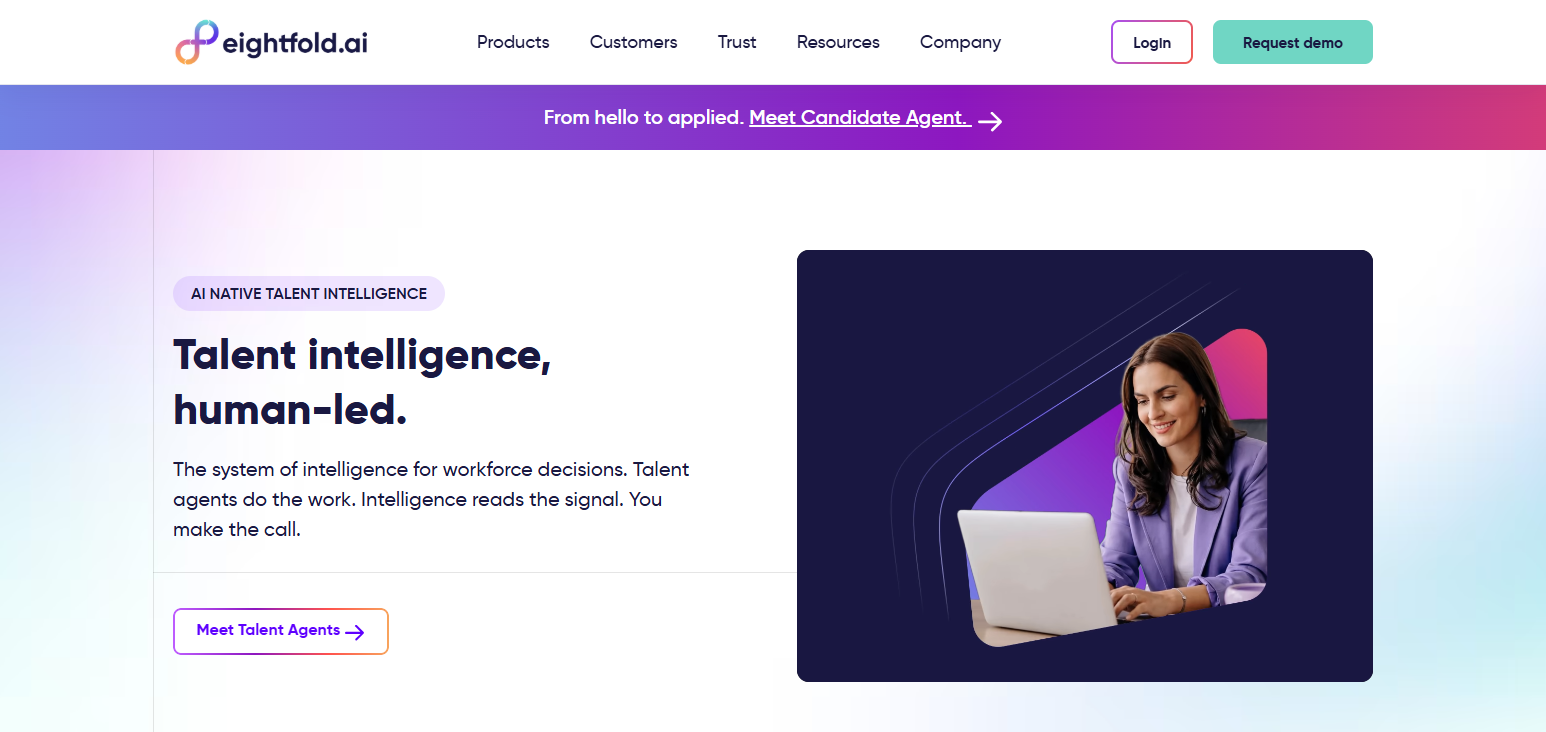
The platform’s latest AI models emphasize the internal mobility of employees, the assistance of diverse talent, and the planning of a workforce. Eightfold AI provides enterprises with the means to construct advanced, skill-oriented equity in recruitment.
Eightfold AI Features
- Talent Intelligence Framework: Analyzes talent using AI to assess skills, competencies, and career trajectories.
- Skills-Based Role Placement: Offers roles to candidates based on their established skills, rather than their past experiences.
- Diversity Talent Explorer: Aids companies in spotting candidates who have previously been ignored in wider talent pools.
- AI Workforce Mobility: Offers employees different career opportunities based on AI insights.
- Workforce Analytics: Offers insight and analytics to aid companies in their hiring in the future.
| Pros | Cons |
|---|---|
| Uses skills intelligence to improve unbiased talent matching. | Requires large datasets for accurate AI recommendations. |
| Helps discover diverse candidates from wider talent pools. | Advanced features may increase platform complexity. |
| Supports internal employee mobility and career growth. | Enterprise pricing can be expensive for small businesses. |
| Provides powerful workforce planning insights. | AI decisions still require human validation. |
| Reduces dependency on traditional resume-based hiring. | Integration with existing HR systems may take time. |
3. Paradox
Paradox’s use of conversational AI assistants simplifies the recruitment process while ensuring fairness. Paradox employs an AI Assistant, an automated, objective, conversational, and interactive tool, to streamline screening and facilitate candidate engagement.
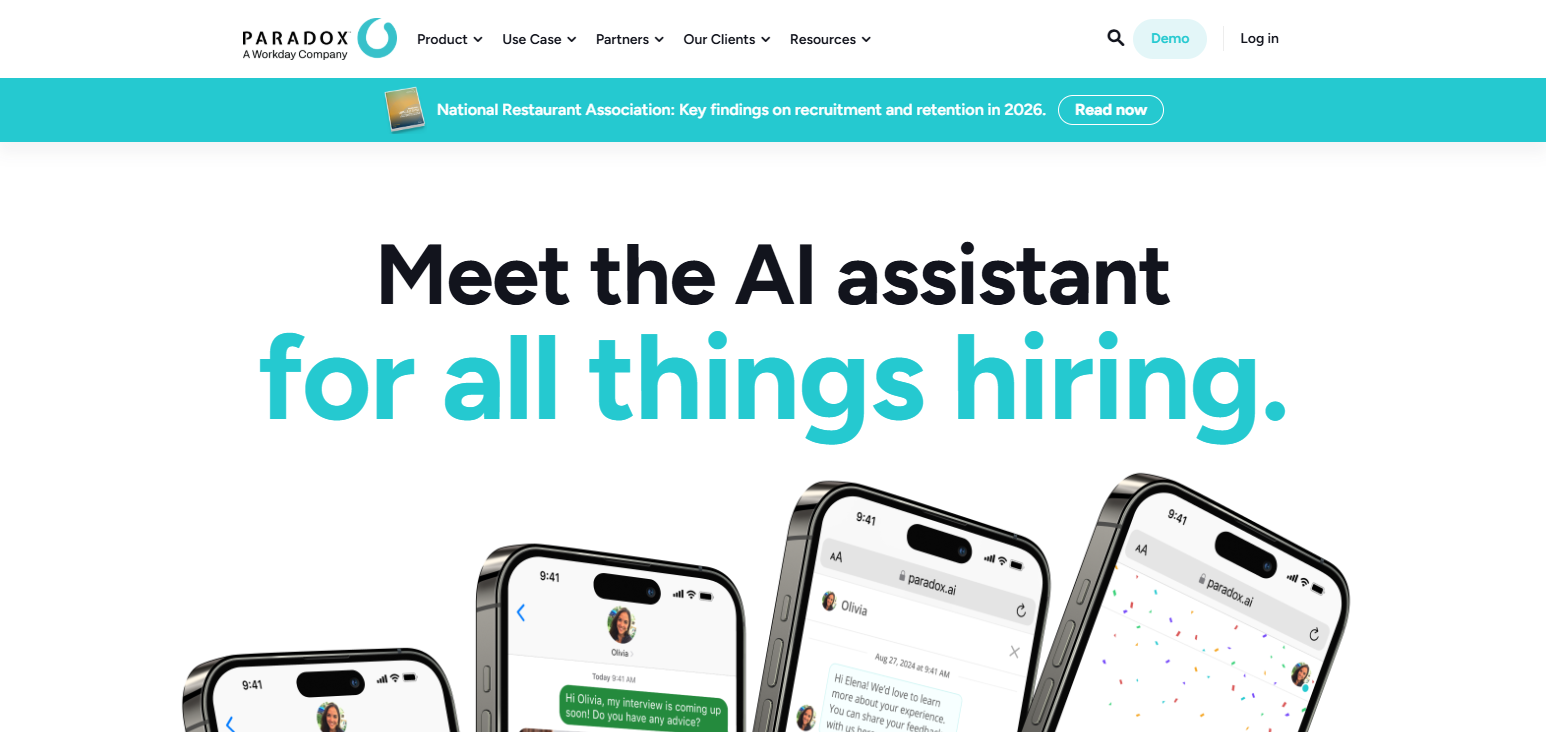
Paradox enables enterprises to create a consistent experience for all applicants and minimizes early-stage recruitment barriers. Newer updates to Paradox have included a ‘smart’ automation feature, multilingual support, and adaptive AI, all of which assist talent acquisition and engagement.
Paradox Features
- AI Recruiter: Automates candidate engagement and recruitment support through conversational AI.
- Efficient Interview Automation: Minimizes time inefficiencies through interview automation.
- Equitable Candidate Engagement: Guarantees that all applicants receive the same level of engagement.
- Diverse Language Recruiter: Able to recruit talent in multiple languages.
- Standardized Screening Automation: Enhances candidate screening consistency.
| Pros | Cons |
|---|---|
| Automates candidate communication using conversational AI. | Limited human interaction may affect candidate relationships. |
| Speeds up scheduling and early screening processes. | Complex recruitment needs may require customization. |
| Provides consistent experiences for all applicants. | AI chatbot responses may not handle every situation. |
| Supports multilingual hiring across global markets. | Setup and configuration can require technical support. |
| Reduces recruiter workload through automation. | Some candidates may prefer traditional communication methods. |
4. Pymetrics
Pymetrics usage of neuroscience and AI to better understand behaviors and traits of candidates and their fit with jobs. Unlike the traditional approaches of only utilizing resumes or conducting interviews, Pymetrics incorporates a series of cognitive and emotional games.
This results in a more selective and analytical identification of candidate talent. Pymetrics is most effective for organizations that are interested in more objective hiring initiatives.
Pymetrics Features
- Cognitive and Emotional Skill Assessment: This feature employs the science of emotional and cognitive skills and assessments to determine fit.
- AI-Driven Talent Role Fit: Uses assessments of behavior to ensure the best fit for talent and roles.
- Bias-Free Candidate Evaluation: Abandons demographic determinants in favor of evaluating capability.
- Data-Driven Hiring Decisions: Supplies recruitment teams with objective data.
- Workplace Compatibility Analysis: Evaluates workplace candidate success.
| Pros | Cons |
|---|---|
| Evaluates candidates using neuroscience-based assessments. | Assessment accuracy depends on quality research models. |
| Focuses on skills rather than personal background details. | Some candidates may question AI evaluation methods. |
| Helps reduce unconscious bias in hiring decisions. | Game-based assessments may not suit every job role. |
| Provides data-driven candidate insights. | Requires explanation to build candidate trust. |
| Improves matching between employees and job roles. | May need additional interviews for final decisions. |
5. Beamery
Beamery uses AI-based talent management to help organizations design more inclusive hiring practices. With their Candidate Relationship Management and Workforce Analytics features, Beamery uses AI to help organizations make better recruitment decisions.
With Beamery, organizations can easily identify and reach more varied talent pools, create unique experiences for candidates, and better handle their hiring pipeline.
The newest capabilities of Beamery help organizations develop a more skills-focused and less biased framework for workforce planning. This helps organizations make better decisions throughout the employee lifecycle.
Beamery Features
- AI Talent Insights: Offers intelligence on the workforce and recruitment options.
- Candidate Relationship Management: Establishes connections with prospective employees.
- Skills-Based Hiring Approach: Carries out candidate assessments based on skills and prospects.
- Diversity Recruitment Support: Shapes inclusive recruitment pipelines.
- Workforce Planning Tools: Strategic recruitment planning resources.
| Pros | Cons |
|---|---|
| Provides AI-powered talent management insights. | Advanced features may require HR expertise. |
| Helps companies build diverse recruitment pipelines. | Pricing may be high for smaller organizations. |
| Supports long-term workforce planning strategies. | Data management requires regular maintenance. |
| Improves candidate relationship management processes. | Initial implementation can be time-consuming. |
| Enables skills-based recruitment approaches. | AI recommendations should be reviewed manually. |
6. SeekOut
SeekOut aids recruiters in discovering qualified candidates from a variety of professional backgrounds through its AI features. Using skills and other career related information, SeekOut helps identify candidates that are typically overlooked.
SeekOut features a wide array of AI functions such as advanced market intelligence and talent search capabilities and improvements targeted towards diversity hiring and reducing reliance on biased referrals.
SeekOut Features
- AI-Powered Talent Search: Optimizes candidate searches.
- Diversity Candidate Discovery: Expands and diversifies candidate searches.
- Market Intelligence Analytics: Provides insight into current skills and analyzing the workforce.
- Personalized Sourcing Recommendations: Suggests candidates for searches and candidates based on job description.
- Advanced Candidate Filtering: Improves likelihood of searches yielding candidates.
| Pros | Cons |
|---|---|
| Finds candidates using powerful AI talent search. | Large candidate databases require careful filtering. |
| Improves diversity hiring through broader sourcing. | Premium features may increase recruitment costs. |
| Provides valuable market intelligence insights. | AI search results may need recruiter verification. |
| Helps identify hidden talent opportunities. | Learning advanced search features takes time. |
| Supports personalized candidate discovery. | Limited value without proper recruitment strategy. |
7. LinkedIn Talent Solutions
LinkedIn Talent Solutions promotes enterprise recruitment that is more equitable using AI recommendations and data analytics. Its suite of AI tools assists recruiters in finding candidates based on skills, experience, and qualifications instead of limited hiring signals.
Features such as search filters and recommendations for diverse talent help employers broaden their recruitment searches. LinkedIn’s tools for AI-enhanced recruitment are advancing to help organizations construct hiring strategies that are more transparent, effective, and equitable.
LinkedIn Talent Solutions Features
- AI Candidate Recommendations: Candidate suggestions based on skills/experience.
- Smart Recruitment Search: AI-enhanced search for expanded talent discovery.
- Diversity Hiring Insights: Provides analytics for companies seeking to diversify talent.
- Automated Talent Matching: Facilitates connections between companies and candidates.
- Recruitment Analytics Dashboard: Provides insights for improved recruitment.
| Pros | Cons |
|---|---|
| Provides access to a massive professional talent network. | High competition exists among recruiters using the platform. |
| AI recommendations improve candidate discovery. | Premium hiring tools can be expensive. |
| Supports diversity-focused recruitment strategies. | Profiles may not represent complete candidate abilities. |
| Offers strong recruitment analytics and insights. | Requires effective filtering to avoid irrelevant matches. |
| Integrates easily with modern hiring workflows. | Heavy dependence on online professional profiles. |
8. Workable
Workable’s suite of AI recruitment features allow companies to build more equitable processes by reducing the need for candidates to be evaluated through highly manual and subjective judgments.
The platform supports the creation of job postings, as well as the sourcing and screening of candidates, in addition to the automation of recruitment process tasks.
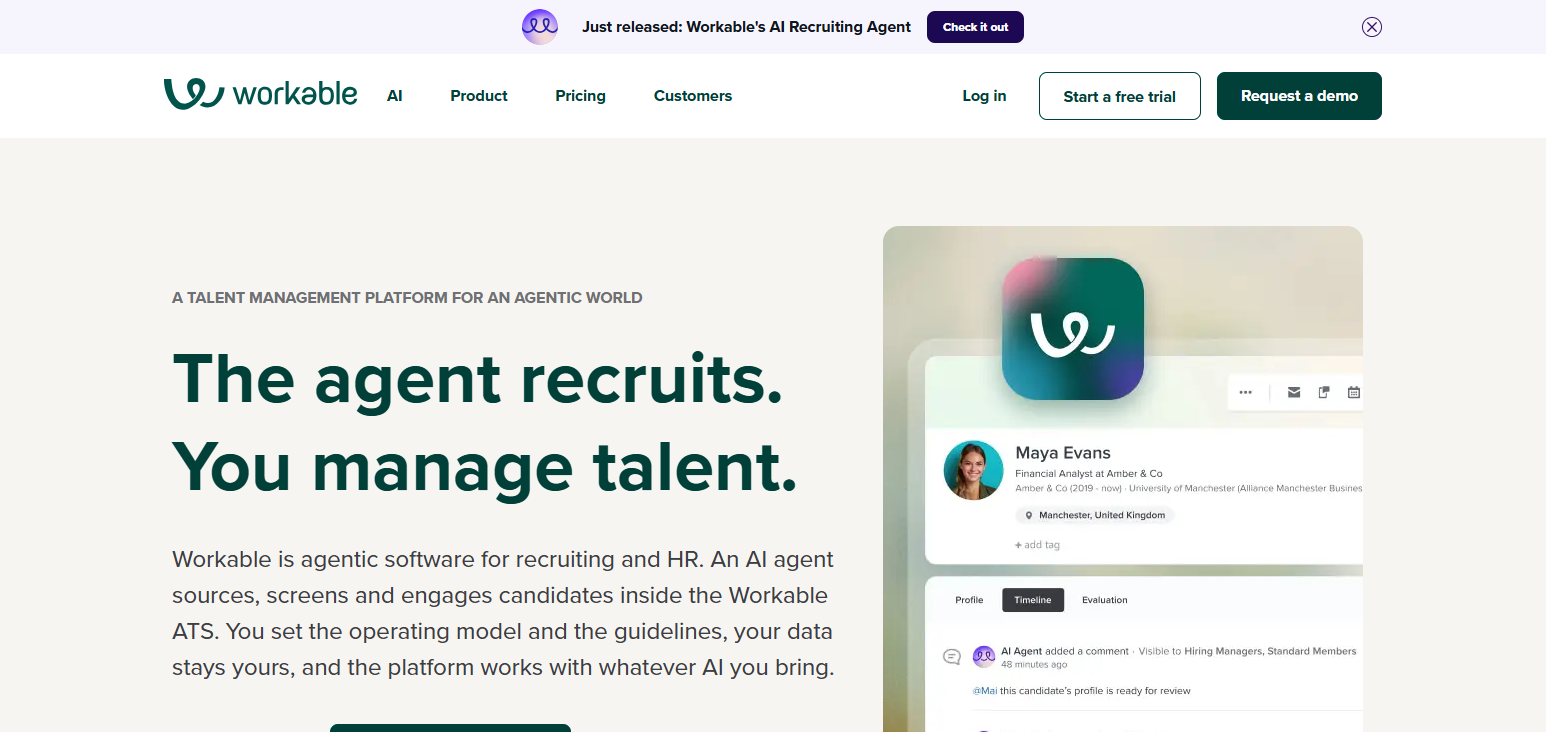
Workable strengthens the recruitment processes of scaling companies through the creation of equitable and collaborative processes, as well as the removal of subjective recruiting tasks and poor process constructs.
Workable Features
- AI for Candidate Screening: Recruitment intelligence automates candidate screening.
- Resume Parsing: Efficiently captures information from resumes.
- Automated Hiring Workflows: Automation of manual recruitment tasks.
- Structured Candidate Evaluation: Standardizes evaluation criteria for all recruitment teams.
- Collaboration Tools: Tools that facilitate joint decision-making for hiring managers and recruiters.
| Pros | Cons |
|---|---|
| Simplifies recruitment through AI automation tools. | Advanced AI features may require additional learning. |
| Reduces manual resume screening efforts. | Smaller companies may find some features unnecessary. |
| Provides organized hiring workflows. | AI suggestions may require recruiter review. |
| Improves collaboration between hiring teams. | Customization options can be limited in some plans. |
| Supports structured candidate evaluation processes. | Integration setup may require technical assistance. |
9. Greenhouse
Greenhouse Software’s recruitment tools minimize the negative impact of bias by providing structured frameworks for recruitment tasks.
The platform provides interview and candidate feedback frameworks in addition to recruitment analytics, and thus facilitates the consistent application of candidate evaluation criteria.
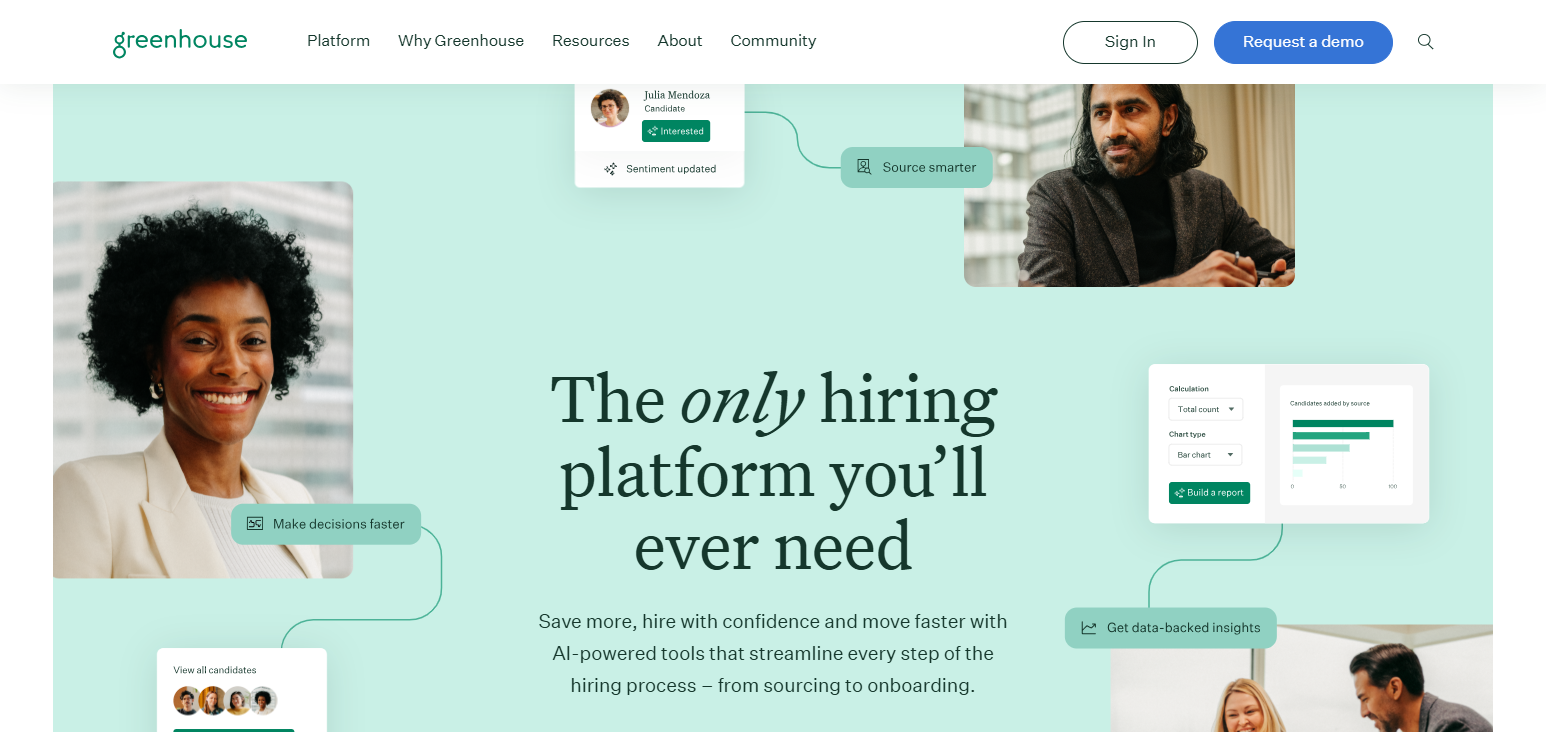
Greenhouse’s recruitment offering increasingly promotes transparency in recruitment, as well as accountability and equitable hiring. Companies use Greenhouse to build structured recruitment processes that improve the quality of hiring decisions and the diversity of candidate hiring.
Greenhouse Features
- Structured Interview Frameworks: Standardizes evaluation process for all candidates.
- Hiring Scorecards: Allows for evaluation of candidates against criterion.
- Bias Reduction Tools: Discover and reduce negative patterns within hiring processes.
- Recruitment Analytics: Evaluation of recruitment and diversity hiring metrics.
- Collaborative Hiring Platform: Hiring decisions made transparent and collaborative.
| Pros | Cons |
|---|---|
| Creates structured hiring processes to reduce bias. | Requires consistent usage by all hiring teams. |
| Provides detailed recruitment analytics and reporting. | Setup can be complex for new users. |
| Improves transparency through interview scorecards. | Pricing may be higher for smaller companies. |
| Supports collaborative decision-making among recruiters. | Some automation features need configuration. |
| Helps build repeatable hiring workflows. | Requires training for maximum effectiveness. |
10. SmartRecruiters
SmartRecruiters blends AI and recruitment analytics to provide transparent enterprise hiring. This platform assists businesses with candidate sourcing, screening, interviews, and hiring through intelligent workflows.
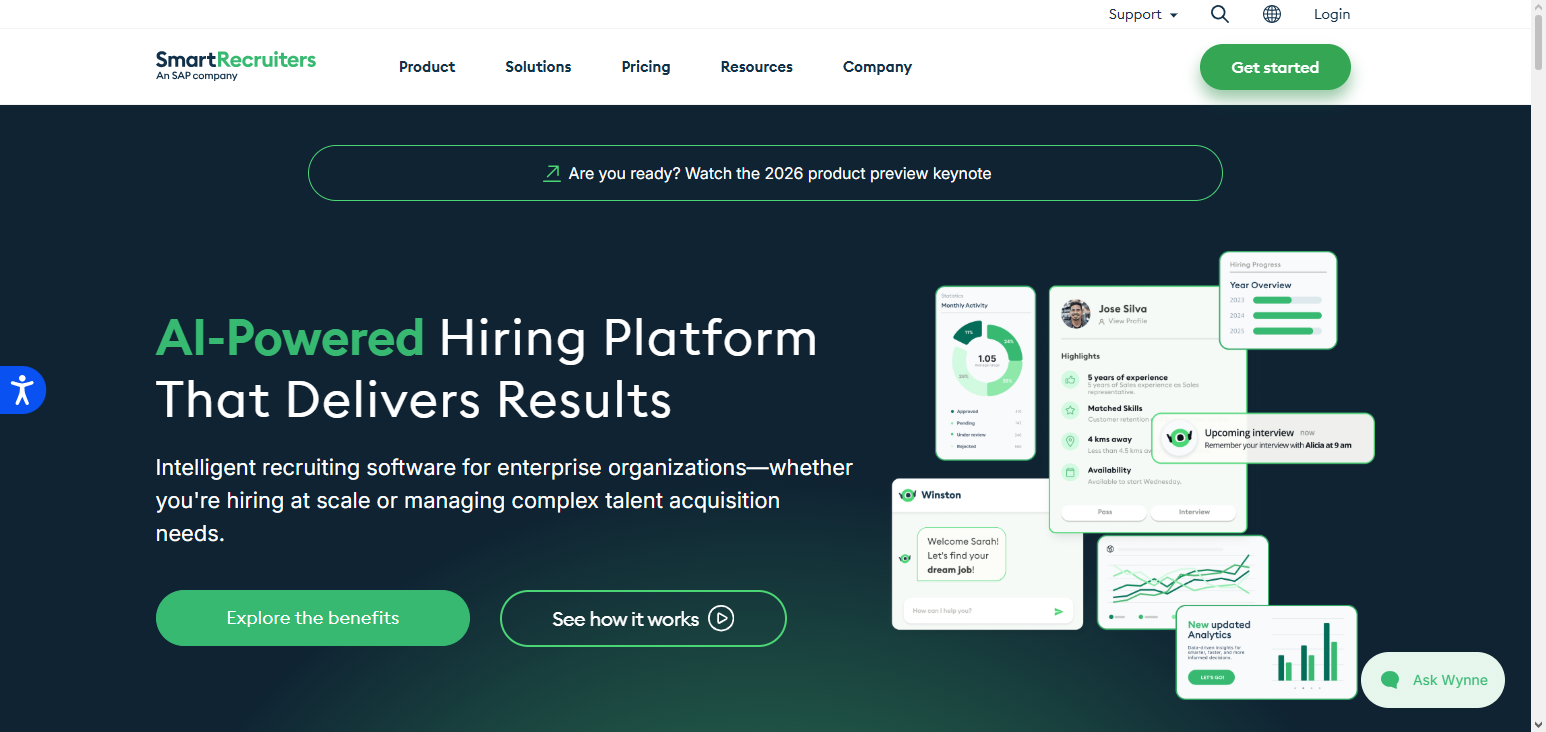
SmartRecruiter’s AI capabilities streamline the hiring process and assist recruiters in identifying relevant candidate qualifications. This platform also helps businesses curb recruitment bias by standardizing evaluation processes, enhancing candidate experiences, and creating inclusive workforce-development strategies.
SmartRecruiters Features
- AI Recruitment Automation: Candidate recruitment, screening, and hiring process automation.
- Intelligent Candidate Matching: Job opportunity alignment for candidates.
- Recruitment Analytics Tools: Assessment of recruitment process effectiveness.
- Standardized Evaluation Processes: Minimization of evaluation process irregularities.
- Inclusive Hiring Management: A diverse and transparent recruitment strategy for large organizations.
| Pros | Cons |
|---|---|
| Automates recruitment processes with AI technology. | Advanced features may increase platform costs. |
| Improves candidate matching and hiring efficiency. | Requires proper setup for enterprise workflows. |
| Supports transparent and inclusive hiring practices. | AI recommendations need human oversight. |
| Provides useful recruitment analytics and insights. | Smaller companies may not use all features. |
| Helps manage large-scale enterprise recruitment operations. | Learning curve may exist for new recruiters. |
Cocnlsuion
In cocnlsuion AI Recruitment Platforms Eliminating Bias in Enterprise Hiring are redefining talent acquisition and evaluation in enterprises. Automated skill assessments, AI-based skill matching, and structured hiring roadmaps empower enterprises to design equitable recruitment systems.
These systems reduce unconscious biases, offer diversity and inclusion, and optimize recruitment throughput. Given the trajectory of AI, enterprises will leverage more advanced, transparent, and inclusive recruitment systems to build resilient and adaptable teams.
FAQ
How do AI recruitment platforms reduce hiring bias?
They analyze candidates using skills, experience, and data instead of personal background factors.
Why do enterprises use AI recruitment platforms?
Enterprises use them to improve hiring speed, accuracy, diversity, and decision-making quality.
Can AI completely eliminate recruitment bias?
AI reduces bias but still requires human monitoring and regular algorithm evaluation.
What features do AI recruitment platforms offer?
They provide candidate screening, skill matching, analytics, automation, and structured interviews.