
This article will focus on AI-Powered SOC Automation tools and how they are alleviating Cyber Alert Fatigue. I will be discussing artificial intelligence and its impact on contemporary security operations. These modern tools assist SOC teams when dealing with excessive security alerts.
They offer quicker threat detection, investigation automation, and the prioritization of significant incidents. AI-driven automation influences the optimization of cybersecurity by mitigating the occurrence of false positives and redundant functions.
This allows SOC teams to dedicate their efforts toward identifying and managing potential high-risk security threats.
What Are AI-Powered SOC Automation Tools?
AI-Powered SOC Automation Tools optimize the level of efficiency for SOCs through the implementation of AI technologies, ML, and automation. An example of the application of such tools can be seen with the analysis of multiple large volumes of threat data to identify, assess, and address threatening data.
By minimizing the overly positive results and redundant work, AI SOC Automation Tools allow the SOC staff to eliminate low-priority tasks, quickly adapt and address the level of threats, and focus their attention on threats that are of greater concern.
Why SOC Teams Need AI Automation to Reduce Alert Fatigue
- Cybersecurity Threats: SOC teams face labor challenges because rising threats and the resultant thousands of daily alerts overwhelm them with the impossibility of keeping surveillance.
- Speed of Threat Response: AI Automation progresses demand for speed with the benefit of quicker analysis of alerts with reduced investigation times and greater responsiveness to threats.
- Skill Shortages: Workers feel less stressed with the aid of AI tools automating security task sub-segments and alert analysis.
- Critical Threats: Employees feel less safe with peace of mind. Automation helps them focus their attention on dangerous security incidents.
Key Points & AI-Powered SOC Automation Tools Reducing Cyber Alert Fatigue
| AI-Powered SOC Automation Tool | Explanation |
|---|---|
| Darktrace | Uses AI threat detection to reduce alerts and automate security responses efficiently. |
| CrowdStrike Falcon | Applies machine learning to prioritize threats and streamline SOC investigation workflows. |
| Microsoft Sentinel | Combines AI analytics with automation to minimize false security alerts. |
| Splunk Enterprise Security | Uses AI insights to correlate events and improve analyst productivity. |
| Palo Alto Networks Cortex XSIAM | Automates threat detection, investigation, and response using advanced artificial intelligence. |
| IBM Security QRadar | Leverages AI analytics for faster threat prioritization and reduced alert overload. |
| SentinelOne Singularity | Uses autonomous AI to detect threats and automate incident responses. |
| Google Chronicle | Provides AI-driven security analytics for faster detection and investigation processes. |
| Rapid7 InsightIDR | Applies behavioral analytics to reduce noise and improve SOC efficiency. |
| Tines | Automates security workflows using AI-powered playbooks and response actions. |
10 AI-Powered SOC Automation Tools Reducing Cyber Alert Fatigue
1. Darktrace
Darktrace automates network monitoring to alleviate security alert overwhelm. By employing AI and self-learning algorithms, it analyzes user activity, devices, and applications to find concealed threats.

With Darktrace as part of their SOC, security analysts can devote their time to the remaining high-risk uncovered threats instead of making sense of the thousands of alerts that do not require action. Darktrace’s self-learning algorithms also help to optimize SOC and contain risks faster.
Key Features Darktrace
- Automatically identifies new types of cyber threats.
- Monitors networks in real-time.
- Uses machine learning to find abnormal behavior.
- Investigates threats and automates response actions.
- Reduces SOC demands by filtering out low priority threats.
| Pros | Cons |
|---|---|
| Uses self-learning AI to detect unknown threats and abnormal behavior. | Can require significant tuning to reduce unnecessary alerts initially. |
| Provides autonomous response capabilities for faster threat containment. | Pricing may be expensive for small organizations. |
| Reduces SOC workload through automated threat investigation. | AI decisions may require analyst verification. |
| Offers real-time monitoring across networks and devices. | Complex deployment needs skilled cybersecurity teams. |
2. CrowdStrike Falcon
CrowdStrike Falcon is an amalgamation of several SOC tools and technologies that help combat the modern problem of alert domination.
CrowdStrike Falcon evaluates the risk and the attack pattern among the threats to determine the warning that has the greatest effect. As a SOC tool, it helps analysts respond to the threat faster because the AI layer behind the system illuminates a threat’s context.
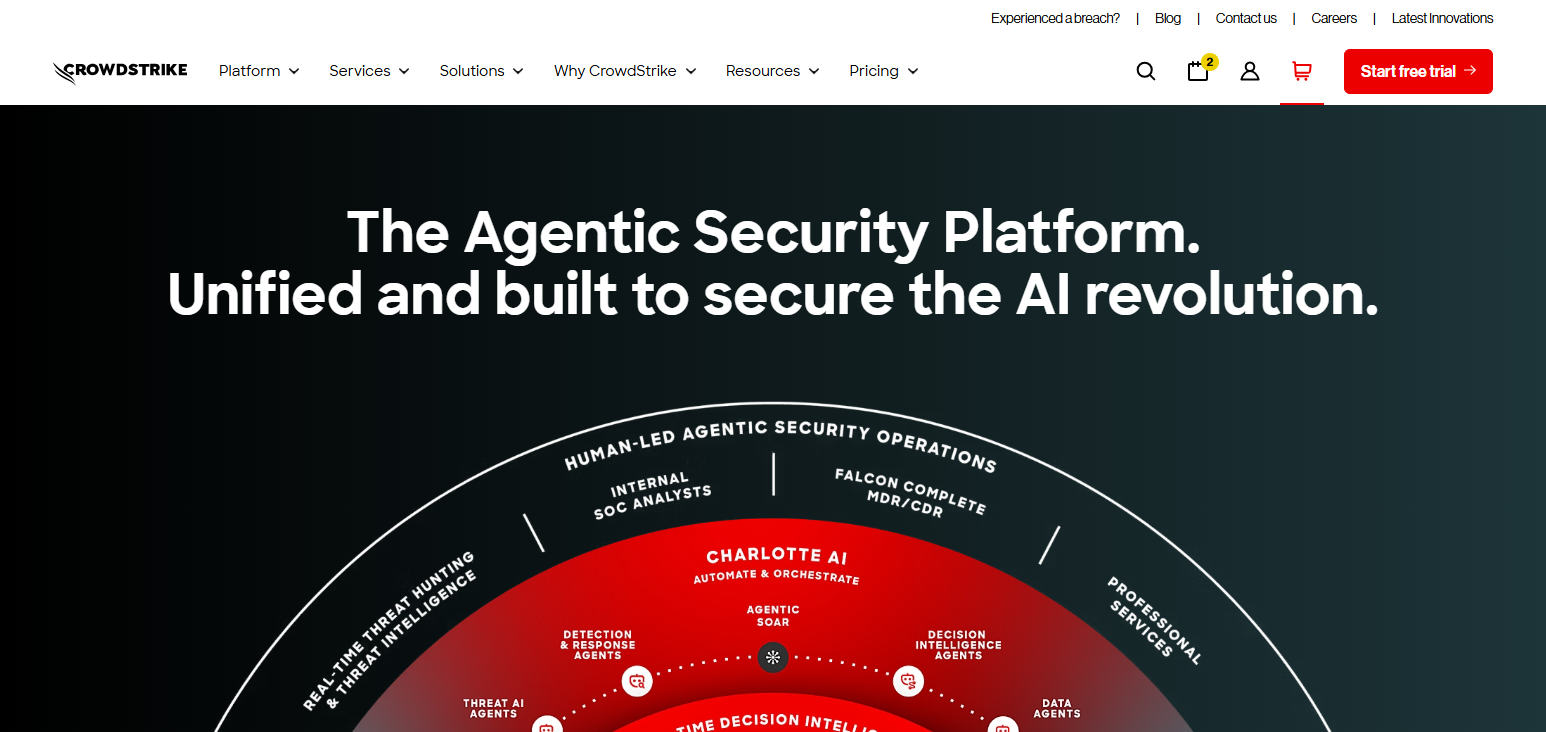
The endless monitoring and self-initiated response operations of Falcon help SOC teams work on large technological challenges without being overwhelmed by the perpetual flood of security threats.
Key Features CrowdStrike Falcon
- Uses AI for endpoint security and threat detection.
- Assess threat levels and prioritize alerts.
- Automates response to threats and protects systems.
- Uses advanced security intelligence for real-time monitoring.
- Enhances SOC operations with behavior analysis.
| Pros | Cons |
|---|---|
| Advanced machine learning improves threat detection accuracy. | Premium pricing can be challenging for smaller businesses. |
| Automatically prioritizes high-risk security incidents. | Requires internet connectivity for cloud-based operations. |
| Provides strong endpoint visibility and automated responses. | Extensive features may need training for new users. |
| Reduces false positives through behavioral analysis. | Some advanced capabilities require additional licenses. |
3. Microsoft Sentinel
Security Operations Centers(Microsoft Sentinel) combines the self-learning algorithms of modern threat detection with the automation of SOC operations. It collects logs from the applications, cloud, and network to provide contextual threat detection services.

By recognizing automated security patterns, it reduces the guesswork involved in the detection of threat alerts. It also helps analysts clear incidents and build automated workflows in response to the high-demand of the threat without increasing the complexity of operations.
Key Features Microsoft Sentinel
- Merges AI analytics and automated security actions.
- Gathers data across clouds, networks, and apps.
- Analyzes data with machine learning to detect threats.
- Lowers false positives with smart prioritization of alerts.
- Supports automation of investigations and response to incidents.
| Pros | Cons |
|---|---|
| Integrates easily with Microsoft security and cloud services. | Costs can increase with high data ingestion volumes. |
| Uses AI analytics to reduce false security alerts. | Requires expertise in Microsoft security ecosystem. |
| Provides automated investigation and response workflows. | Initial configuration can be complex. |
| Scales effectively for enterprise security operations. | Less effective without proper data customization. |
4. Splunk Enterprise Security
Artificial intelligence, machine learning models, and advanced analytics combined in Splunk Enterprise Security offer an advanced system for threat detection and management of alert oversaturation.
SOC analysts are able to see attack signals and alerts more rapidly, thanks to the consolidating abilities of Splunk that collect security events from multiple sources.

The system also features a risk-based alerting model to minimize the amount of alerts, and focus on threats that are more substantial.
Further automation in the investigation process and continuous system monitoring enhances the capabilities of security operations for effective decisions and advanced response to cyber threats.
Key Features Splunk Enterprise Security
- Threat detection using AI and machine learning.
- Risk based alerts to minimize notification fatigue.
- Security investigations are automated through advanced analytics.
- Security operations is made visible in real-time.
- Correlates security events across data sources.
| Pros | Cons |
|---|---|
| Powerful AI analytics for security event correlation. | Licensing costs can be high for enterprises. |
| Risk-based alerting reduces unnecessary notifications. | Requires skilled professionals for advanced management. |
| Supports large-scale data monitoring and investigation. | Implementation may take significant time. |
| Provides detailed security visibility across environments. | Complex dashboards may overwhelm beginners. |
5. Palo Alto Networks Cortex XSIAM
Cortex XSIAM by Palo Alto Networks adopts a unique approach to the application of artificial intelligence within enterprise systems. The integration of endpoint, network, cloud, and identity data provides a consolidated view of security systems within the enterprise.
For SOC teams, shifting from the investigation of threats to the prevention of threats is the primary goal of XSIAM. Eliminating the need for routine investigation through the advanced automation of security operations and significantly increasing the speed of response is a key feature of the system.
Key Features Palo Alto Networks Cortex XSIAM
- Incorporates security data across endpoint, cloud, network, and identity.
- Threat detection and prevention uses AI and automation.
- Centralized management of security operations is offered.
| Pros | Cons |
|---|---|
| Automates detection, investigation, and response processes. | Higher investment compared with traditional SOC tools. |
| Combines endpoint, cloud, and network security intelligence. | Migration from existing tools can be challenging. |
| Reduces analyst workload using AI-driven automation. | Requires security expertise for optimization. |
| Provides advanced threat prevention capabilities. | Best suited for medium and large enterprises. |
6. IBM Security QRadar
AI-powered analytics and automation are a central focus of IBM Security QRadar and the management of security alerts in cyber environments. Analyzing security data streams and identifying suspicious activities and threat prioritization are key features of QRadar.
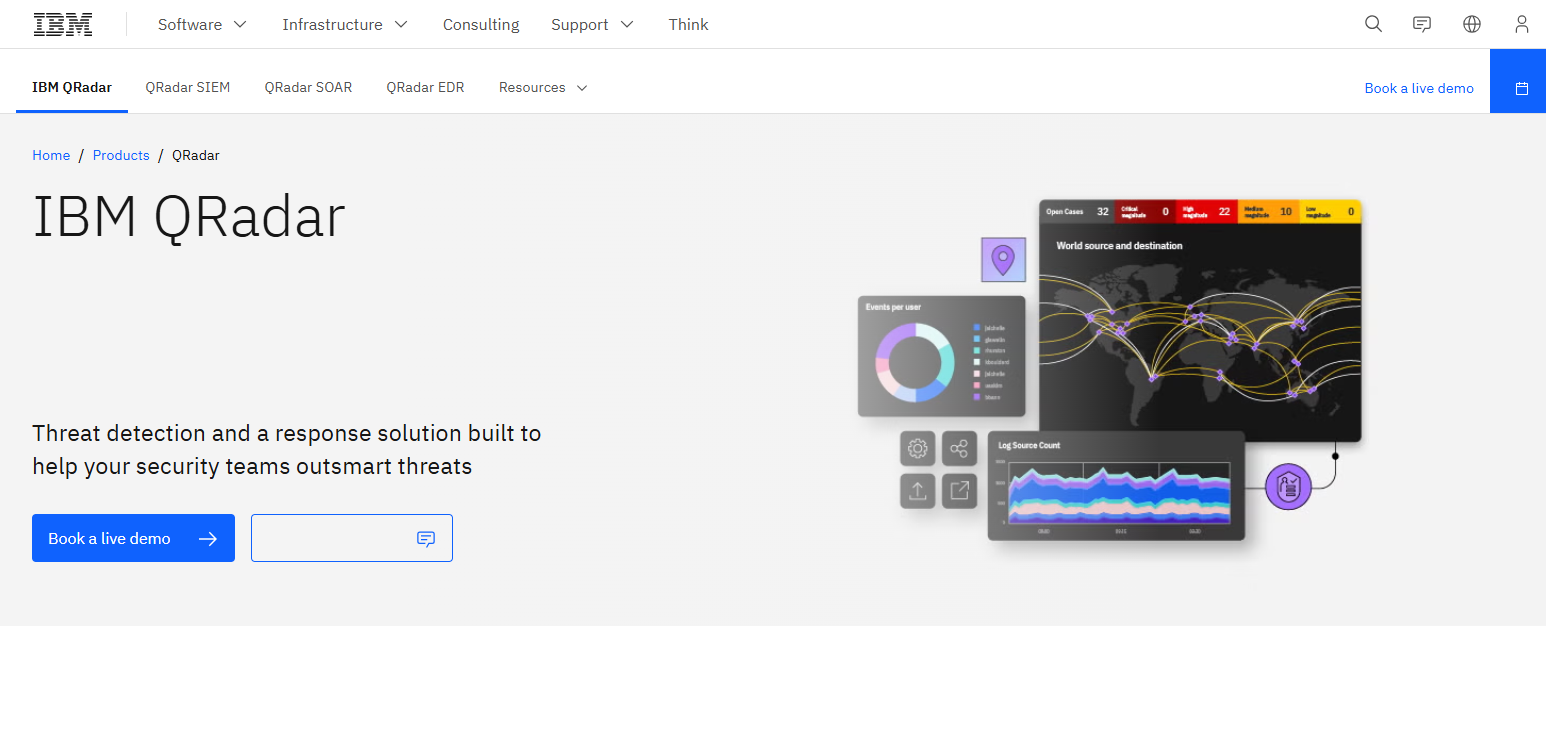
Advanced correlation assists in the identification of attacks and the minimization of false positives. SOC teams are able to advance the security operations of the enterprise with less need for intervention through the automation of investigations and responsive features of QRadar.
Key Features IBM Security QRadar
- Monitors security operations to pinpoint problematic activities.
- Uses intelligent event correlation to increase threat detection.
- Alerts and ranks risks pertinent to security.
- Automates investigation and response workflows.
- Assists in minimizing the occurrence of false positive alerts.
| Pros | Cons |
|---|---|
| Strong event correlation improves threat identification. | Setup and maintenance can be complex. |
| AI analytics help prioritize critical incidents. | Licensing expenses may be high. |
| Supports hybrid environments with broad integrations. | Requires experienced security administrators. |
| Helps reduce alert overload through intelligent filtering. | User interface can feel complex for beginners. |
7. SentinelOne Singularity
SentinelOne Singularity uses artificial intelligence to autonomously defend against threats. It monitors endpoints, cloud workloads, and identities, detecting and analyzing cyber threats.
The AI engine detects suspicious behavior by learning patterns of system activity and behavior. Traditional methods of signature matching are not required.
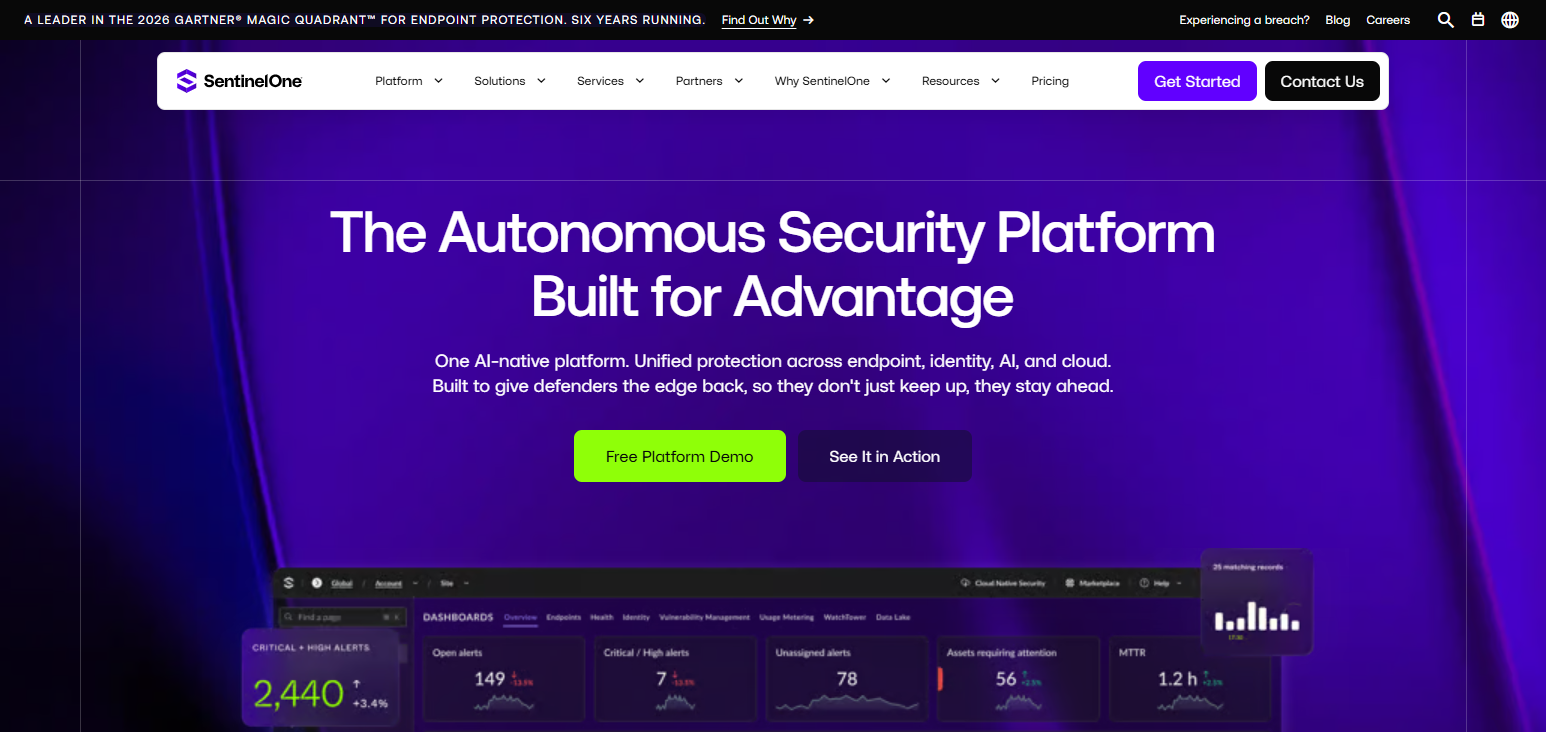
The platform combats alert fatigue by filtering threats and performing response actions without the oversight of the security team.
Singularity improves investigation and response time, while providing greater visibility of complex threats and reducing the burden of repetitive tasks for the security operations team.
Key Features SentinelOne Singularity
- Threats to endpoints are managed using autonomous AI.
- Detects behavioral threats without the use of signatures.
- Threat response and remediation are automated.
- Continuous monitoring of endpoints, cloud workloads, and identities.
- Analyzes threats to improve SOC visibility.
| Pros | Cons |
|---|---|
| Autonomous AI provides rapid threat detection and response. | Advanced features may require premium subscriptions. |
| Reduces manual SOC investigation activities. | Some integrations may need additional configuration. |
| Provides strong endpoint and cloud workload protection. | Limited customization compared with some competitors. |
| Detects sophisticated attacks using behavioral intelligence. | Requires proper policy tuning for accuracy. |
8. Google Chronicle
Google Chronicle incorporates powerful AI analytic capabilities to bring cybersecurity analytics to a new level. Chronicle helps organizations analyze and filter the copious amounts of data that populate an organization’s cybersecurity infrastructure.
The platform uses analytics, machine learning, and threat intelligence to construct and identify patterns of malicious behavior and significantly reduce noise.
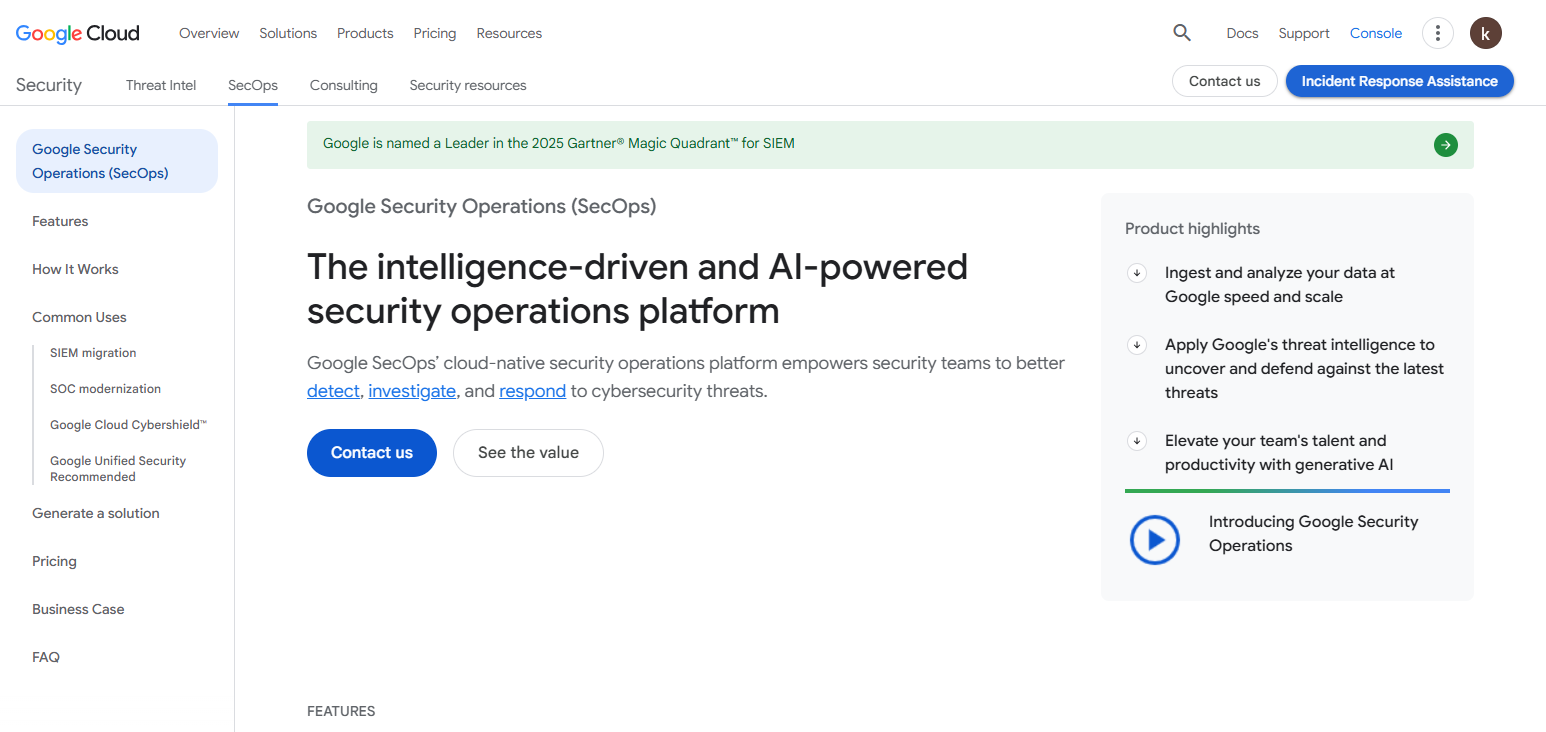
Chronicle provides faster, cloud-based searches across the entirety of an organization’s stored security data, even that which is many years old. SOC teams are given substantial aid in threat detection, and incident analysis and response is greatly improved.
Key Features Google Chronicle
- Cybersecurity monitoring using cloud-scale AI analytics.
- Acceleration of threat detection by processing large sets of security data.
- Identification of malicious patterns through the machine learning.
- Threat hunting is made rapid by analysis of security data.
- Decreased alerts through threat noise and intelligent analysis.
| Pros | Cons |
|---|---|
| Handles massive security data volumes using cloud AI. | Best suited for organizations using cloud environments. |
| Provides fast threat hunting and investigation capabilities. | Requires Google Cloud knowledge for optimization. |
| Uses machine learning to identify attack patterns. | Migration of existing security data can be complex. |
| Offers long-term security data storage and analysis. | Pricing depends heavily on data usage. |
9. Rapid7 InsightIDR
Rapid7 InsightIDR, uses a combination of machine learning and behavioral analytics to create an automated, low-signaling security monitoring environment. InsightIDR is capable of detecting threats using a variety of security patterns, such as identifying suspicious user activity or compromised accounts.

The platform aids security analysts by providing context to events of low signaling behavior, thus greatly decreasing the time necessary to carry out the investigations.
Alert fatigue is decreased and the system is better able to detect threats in a timely manner, thereby allowing the security operations center to devote its resources to threats of higher importance.
Key Features Rapid7 InsightIDR
- Behavioral analytics are paired with machine learning for detection.
- Compromised accounts and suspicious activities are identified.
- Contextual security insights are provided for automated investigations.
- Intelligent filtering techniques are used to eliminate redundant alerts.
- Monitoring is provided for endpoints, identities, and cloud security.
| Pros | Cons |
|---|---|
| Behavioral analytics identify suspicious user activities quickly. | Advanced automation features require configuration. |
| Reduces alert fatigue with automated investigations. | Smaller teams may find some features complex. |
| Provides useful security insights for SOC analysts. | Limited customization compared with larger SIEM platforms. |
| Supports cloud, endpoint, and identity monitoring. | May require additional tools for complete coverage. |
10. Tines
Tines is a security automation platform powered by AI, which focuses on easing the tasks of SOC teams by designing automated workflows. Tines integrates all your security applications, threat intelligence, and your preferred response to incidents.
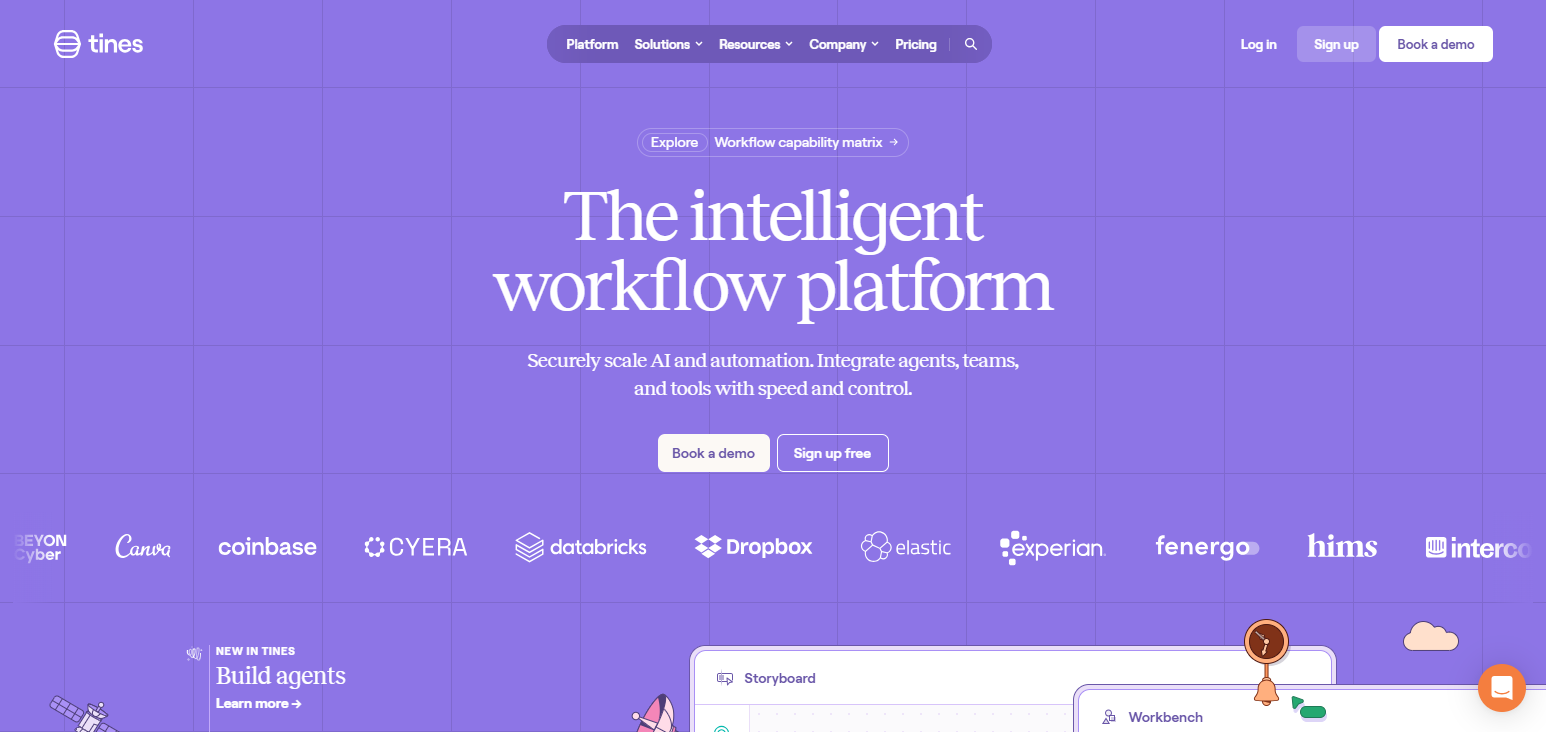
SOC teams face the challenge of many incoming alerts. Tines aims to reduce the number of alerts and balances the workload of security analysts by automating the enrichment of alerts, the time-consuming tasks of the investigation, and the final task of mitigating the threat.
Tines’s advanced automation functions have the capability to manage the rising threat of cyber incidents while improving the speed and reliability of your threat response.
Key Features Tines
- AI workflows are used for task automation within a SOC.
- Security and threat intelligence tools are integrated.
- Alert automation for investigation is improved.
- Operational consistency is improved and response automation decreases operational tasks.
- Remediation automation decreases the workload of analysts.
| Pros | Cons |
|---|---|
| Automates repetitive SOC workflows efficiently. | Requires workflow design knowledge for best results. |
| Reduces manual alert enrichment and response tasks. | Not a complete SIEM replacement solution. |
| Provides flexible integrations with security tools. | Advanced automation may require technical expertise. |
| Improves incident response speed and consistency. | Initial setup can take time for complex workflows. |
How To Choose the Right AI-Powered SOC Automation Tool
- Assess Security Needs: Understand your organization’s threat landscape, compliance, and SOC challenges to find a matching AI automation tool.
- Analyze AI Skill: Examine sophistication of threat detection, machine learning, automation, and intelligent alert prioritization.
- Look at Integration: Assess whether the tool fits your current SIEM and endpoint, cloud, and threat intelligence ecosystems.
- Think about Growth: Select a tool that will not necessitate a purchase in the next few years for growth in data, users, or threats.
- Check Cost and Setup: Look at license, cloud versus on-prem, and maintenance costs against the value expected.
Future Trends of AI-Powered SOC Automation
- Rise of Automated SOC Operations: AI will create automated SOC environments that will identify, analyze, and address cyber challenges without the need for human operators.
- Generative AI Security Tools: Companies will look to implement AI tools to assist analysts in evaluating a security concern, summarizing security incidents, aiding in the investigation, and providing automated security advice.
- AI-Enhanced Threat Hunting: Automation of threat hunting through advanced machine learning will be utilized to identify attack patterns, and anomalous behavior in a proactive stance to advanced cyber threats.
- New Predictive Cybersecurity Models: AI systems will be developed that will be able to simulate and predict security incidents based on previous incidents, intelligence on security threats, and emerging exploitation of vulnerabilities.
- Enhanced SOC Operations through AI Automation: SOC operations will implement a combination of human and automated AI to streamline the decision-making process, reduce notification fatigue, and maximize the effectiveness of the operations.
Conclusion
AI-Powered SOC Automation Tools help preventative mechanisms become more efficient with the passing of time.
With these tools, SOC staff can work more efficiently and improve response times. As cyber threats evolve, these tools surely will, as they cope with speed and demand, and add more protective measures to an already existing system.
FAQ
Why are SOC teams adopting AI automation solutions?
SOC teams use AI automation to manage increasing cyber threats, reduce manual workloads, improve response speed, and handle large volumes of security alerts.
Can AI SOC automation tools replace human security analysts?
No, AI tools support analysts by automating repetitive tasks and providing insights, while human experts handle complex decision-making and strategic security actions.
Which AI-powered SOC automation tools help reduce alert overload?
Popular solutions include Darktrace, CrowdStrike Falcon, Microsoft Sentinel, Splunk Enterprise Security, Cortex XSIAM, IBM QRadar, SentinelOne, Google Chronicle, Rapid7 InsightIDR, and Tines.
How does machine learning improve SOC operations?
Machine learning identifies unusual patterns, predicts potential threats, improves detection accuracy, and helps security teams respond faster to cyber incidents.