
In this article, I will cover the Most Efficient AI Blockchain Infrastructure Platforms. These platforms are revolutionary in decentralized artificial intelligence.
Incorporating secure blockchain technology with advanced artificial intelligence, they provide a means to share data, computing power, task automation and intelligent applications.
I will discuss the characteristics, advantages, and applications of these platforms and how they assist organizations in the implementation of scalable AI solutions in the year 2026.
What Are AI Blockchain Infrastructure Platforms?
Decentralized systems merge artificial intelligence with blockchain technology which builds secure and scalable AI blockchain infrastructure. Platforms offering an AI infrastructure solution aim to assist the AI community with model training and data dissemination. They provide computational resources and support autonomous agents.
Platforms offer these resources without dependence on third party services. AI infrastructure blockchain solutions establish data ownership and privacy using the blockchain coupled with smart contracts and token systems. The solutions engage and motivate the AI community to provide advanced AI services.
Why AI Blockchain Infrastructure Platforms Matter in 2026
- Higher Demand for Decentralized AI: Fosters the community development of AI.
- Less Reliance on Centralization: Provides alternatives to common AI and cloud services.
- Greater Data Privacy: Better ownership of secure data with AI operations that are data secure and private.
- Enhanced AI Computing Scalability: Provides distributed computing to run more advanced AI.
- AI Agents and Web3 Support: Provides support for autonomous AI agents and intelligent applications.
Key Points & Best AI Blockchain Infrastructure Platforms
| AI Blockchain Infrastructure Platform | Explanation |
|---|---|
| Bittensor | Decentralized AI network enabling machine learning models through blockchain-based incentive systems globally. |
| Fetch.ai | Autonomous AI agents use blockchain infrastructure for decentralized digital economies and automation. |
| Ocean Protocol | Blockchain data marketplace enabling secure AI data sharing and monetization worldwide. |
| SingularityNET | Decentralized AI marketplace connecting developers, services, and intelligent algorithms efficiently. |
| Akash Network | Decentralized cloud computing platform supporting scalable AI workloads using blockchain technology. |
| Render Network | Distributed GPU network providing blockchain-powered computing resources for AI applications. |
| Cortex | Blockchain platform enabling AI models integration into smart contracts and applications. |
| Autonolas | Decentralized protocol building autonomous AI agents with blockchain-based coordination mechanisms. |
| iExec | Blockchain computing marketplace providing secure decentralized resources for AI processing. |
| Numerai | AI-powered hedge fund platform using blockchain incentives for data scientists globally. |
10 Best AI Blockchain Infrastructure Platforms
1. Bittensor
Combining machine learning with de-centralized finance, Bittensor is a decentralized ML network built around peer-to-peer collaborations of AI developers and models. Contributors of AI models gain incentive-based rewards for their contributions.
With Bittensor’s TAO token economy, and unlike established AI providers, Bittensor works to create an innovative and open market for machine intelligence. With a focus on autonomy, Bittensor supports the creation of decentral AI networks through its subnet architecture.
Bittensor Features
- Pioneers the first decentralized AI network for the global interconnection of ML models.
- Subnet architecture allows for the creation of specialized development ecosystems for AI.
- TAO tokens reward contributors of machine intelligence.
- Users can collaborate on models in a decentralized manner.
- Provides an open marketplace for AI models and services.
| Pros | Cons |
|---|---|
| Decentralized AI marketplace encourages innovation | Token economy volatility may affect rewards |
| Subnet architecture supports specialized AI networks | Complex setup for new developers |
| Open collaboration without centralized providers | Scalability challenges with large models |
2. Fetch.ai
Fetch.ai is an autonomous digital economy AI blockchain network that integrates intelligent agents and AI. In Fetch.ai’s network, intelligent agents can automate tasks, such as data exchanges, trading, and business operations, independent of human intervention.
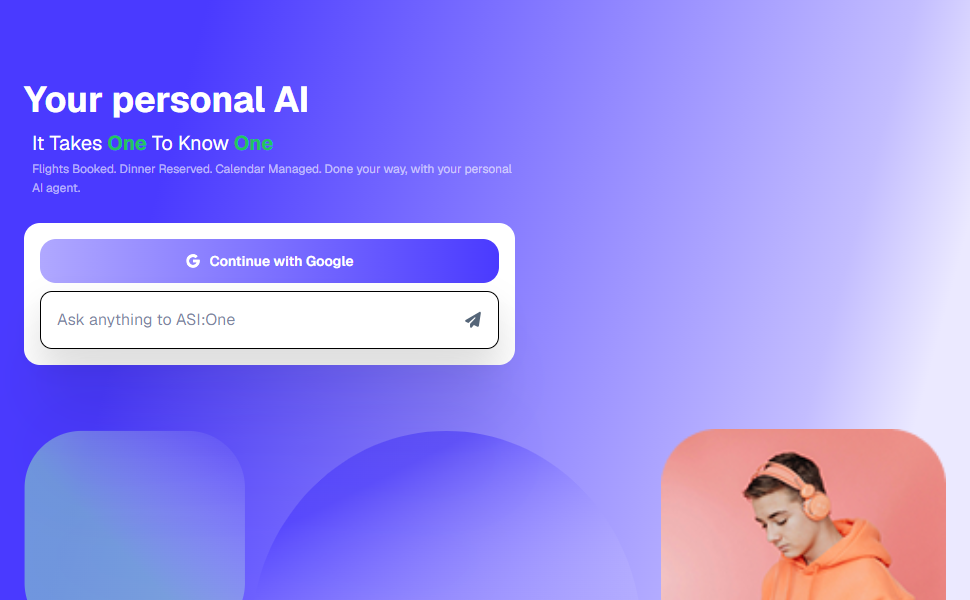
Fetch.ai’s blockchain infrastructure enables secure communications and decentralized agents coordination. Fetch.ai’s infrastructure supports the development of future autonomous AI and decentralized service applications across multiple sectors, including finance, supply chain, mobility, and smart cities.
Fetch.ai Features
- Deploys autonomous AI agents to perform tasks in a digital environment.
- Intelligent agents can communicate securely over blockchain.
- Supports Decentralized Finance, mobility, and supply chains.
- Enables economic transfers between machines.
- Provides a framework for building autonomous applications.
| Pros | Cons |
|---|---|
| Autonomous agents enable automation | Adoption still limited outside pilot projects |
| Supports industries like finance, mobility, supply chains | Requires strong developer expertise |
| Secure agent communication via blockchain | Network congestion possible with high agent activity |
3. Ocean Protocol
Ocean Protocol facilitates the discovery, sharing, and monetization of AI data on the blockchain. With the utilization of the decentralized data marketplace, Ocean Protocol allows secure data sharing while maintaining control and ownership of the data.
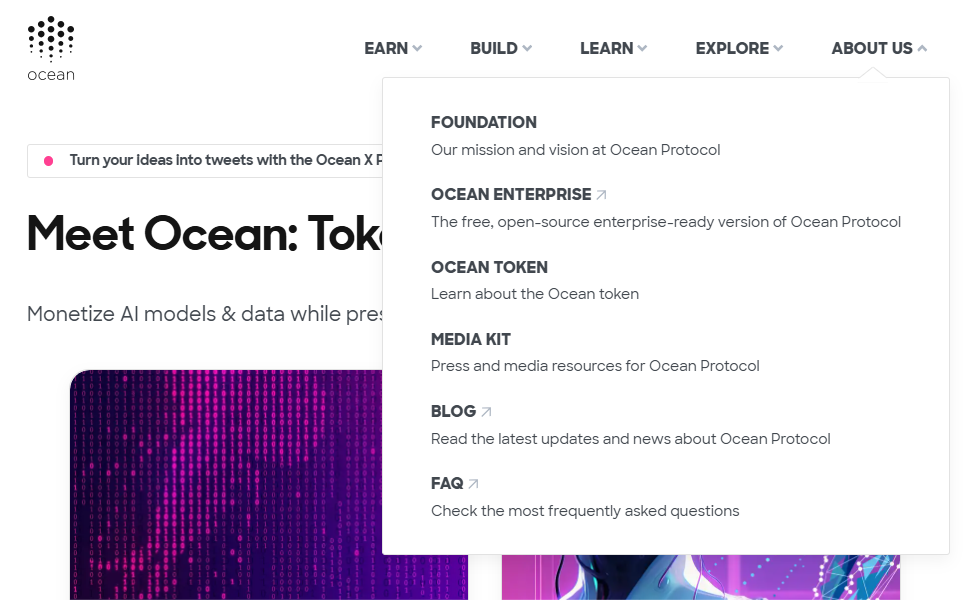
With their data marketplace and AI-centered skills, Ocean Protocol allows researchers to obtain the data they need for machine learning.
Ocean Protocol employs privacy-preserving AI and combines its Compute-to-Data services with its privacy-centric focus to allow AI to analyze data without the need to expose the data, thus fostering AI development.
Ocean Protocol Features
- Provides a marketplace for the exchange of AI and data in a secure manner.
- Enables the sharing and commercialization of data while preserving privacy.
- Sensitive data remains secure with Compute-to-Data.
- Provides the necessary infrastructure for AI model training.
- Users retain ownership and control of their data.
| Pros | Cons |
|---|---|
| Compute-to-Data ensures privacy | Complexity in integrating legacy datasets |
| Decentralized data marketplaces | Token liquidity varies across exchanges |
| Strong focus on ownership rights | Regulatory uncertainty around data monetization |
4. SingularityNET
As a decentralized AI marketplace, SingularityNET enables blockchain-based AI services to connect developers, businesses, and users. Developers can make, publish, and sell their AI algorithms, and businesses can obtain custom AI services.
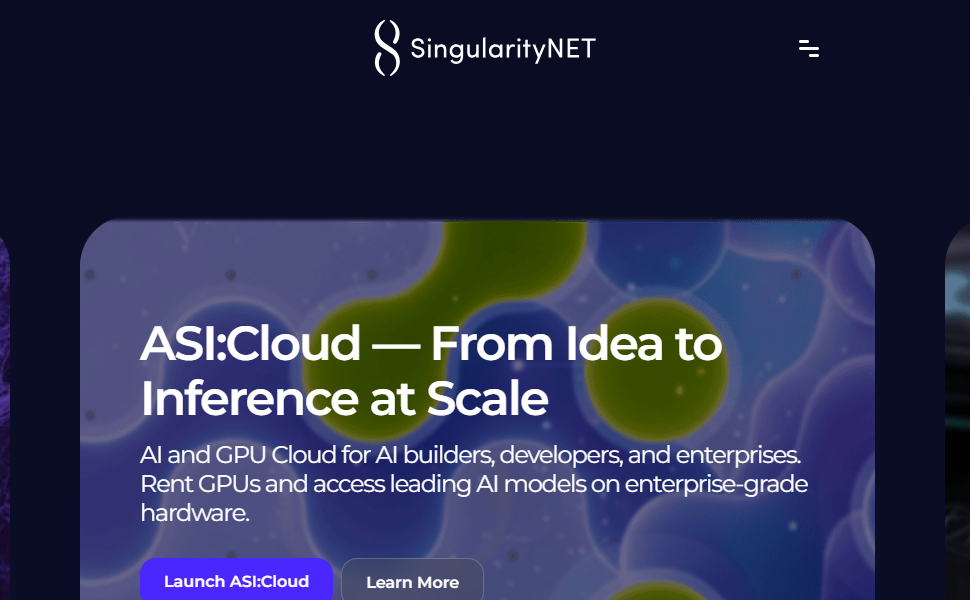
The many AI tools in their framework offer NLP, robotics, and machine learning services. SingularityNET’s decentralized approach to an open AI economy stretches the bounds of services beyond the reach of traditional, centralized structures.
SingularityNET Features
- A marketplace for decentralized AI algorithms and services.
- Developers can sell their AI solutions to any user.
- Supports a variety of AI solutions such as ML, Robotics, and NLP.
- AI services can interoperate and collaborate.
- Supports the AI services economy.
| Pros | Cons |
|---|---|
| Open AI economy fosters collaboration | Competition among services may dilute quality |
| Supports NLP, robotics, ML services | Token dependency for transactions |
| Easy monetization for developers | Adoption slower compared to centralized AI APIs |
5. Akash Network
Making AI development easier and cheaper, Akash Network is a distributed marketplace for decentralized, cloud-based computing and GPU services. Training AI models usually requires cloud-based computing services, and centralized services can be expensive.
Akash Network is a lower-cost, flexible option to use in cloud-based GPU services, especially for machine learning and generative AI. With the rise in large-scale AI computing, Akash Network makes a decentralized, cloud computing infrastructure available for businesses and researchers.
Akash Network Features
- A decentralized cloud solution for hosting AI tasks.
- Provides markets for GPU resources and lowers the costs for users.
- Clouds can be used to deploy machine learning tasks.
- Reduces reliance on centralized clouds.
| Pros | Cons |
|---|---|
| Affordable GPU access for AI workloads | Reliability depends on distributed providers |
| Flexible alternative to centralized clouds | Limited enterprise adoption so far |
| Scalable infrastructure for ML & generative AI | Pricing fluctuations in marketplace |
6. Render Network
A decentralized GPU computing network, Render Network helps users and providers of blockchain-based computing resources connect. GPU computing is in high demand for AI, graphics, and HPC.
Training AI models, and especially rendering, can be expensive and out of reach for many. Render Network gives a GPU computing solution, and with the demand for AI rendering especially, offers services for 3D and visual computing as well as AI-based Generative services and experiences.
Render Network Features
- A decentralized GPU network to fulfill AI computing needs.
- Provides distributed rendering and processing.
- Networks users who require computation with those who provide GPUs.
- Supports generative AI and visual applications.
- Makes access to high-performance computing resources more widespread.
| Pros | Cons |
|---|---|
| Decentralized GPU marketplace reduces costs | Heavy reliance on GPU supply availability |
| Supports generative AI, 3D, visual computing | Network demand spikes can raise costs |
| Blockchain coordination ensures transparency | Limited enterprise‑grade compliance features |
7. Cortex
Cortex is a blockchain platform for the embedding of AI models within smart contracts and DApps. It allows developers the ability to upload and execute AI models to the blockchain.
Through the combination of machine learning and smart contracts, Cortex brings forth the potential of decentralized intelligent applications.
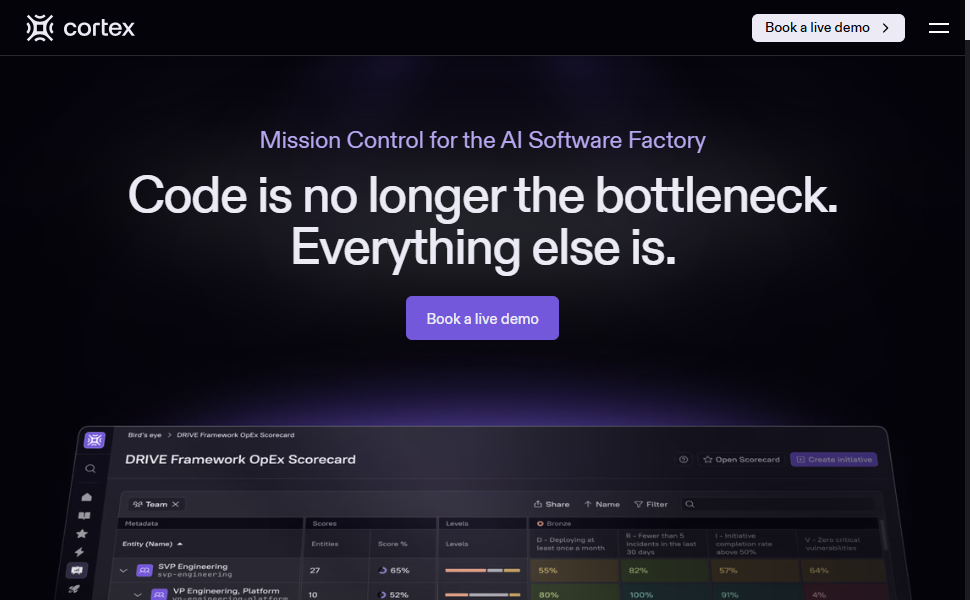
The platform provides automation, prediction, and tailored blockchain services, while attempting to solve the challenge of incorporating high-level AI within the decentralized ecosystem in a safe and efficient manner.
Cortex Features
- Connects AI models with blockchain smart contracts.
- Supports the development of AI-driven dApps.
- Supports the on-chain execution of ML models.
- Offers tailored AI solutions to developers.
- Merges the security of blockchain with AI.
| Pros | Cons |
|---|---|
| AI-powered smart contracts enable automation | Execution costs higher than standard contracts |
| Supports prediction systems & automation | Limited developer adoption compared to Ethereum |
| Expands decentralized app capabilities | Complexity in deploying ML models on-chain |
8. Autonolas
Autonolas is a decentralized platform for the design of autonomous AI agents, as well as the deployment and orchestration of these agents. It gives users the means to develop intelligent agents that can operate on their own across various digital and blockchain environments.
The platform is highly oriented toward agent-based automation, which provides a great deal of flexibility in the design of collaborative AI systems, as well as the ability to carry out complex and advanced tasks. Due to its focus on the automation of decentralized AI, Autonolas is highly applicable to the Web3, as well as the evolution of advanced blockchain systems.
Autonolas Features
- Constructs autonomous AI Agents for decentralized networks.
- Allows the collaboration of many intelligent agents.
- Facilitates the automation of Web3 along with AI.
- Supplies developer resources for the construction of agents.
- Boosts productivity by utilizing independent AI.
| Pros | Cons |
|---|---|
| Agent-based automation for Web3 | Still early-stage ecosystem |
| Enables decentralized coordination | Requires advanced AI expertise |
| Supports next-gen blockchain automation | Limited enterprise case studies |
9. iExec
iExec is a marketplace for decentralized computation that offers secure, blockchain-based access to the computing resources needed by AI and data intensive applications. It allows the rental of distributed computing resources, all the while maintaining data privacy and security.

As an alternative to cloud computing, iExec’s framework enables the execution of AI models and the processing of sensitive information.
Through the merge of blockchain and decentralized computation, iExec empowers organizations to develop policies and scalable AI integrated solutions without reliance on traditional centralized infrastructures.
iExec Features
- Decentralized marketplace for computing resources.
- Offers safe environments for the execution of AI workloads.
- Enables the processing of sensitive data.
- Provides developers with scalable alternatives to cloud computing.
- Facilitates the connection of businesses to distributed computing.
| Pros | Cons |
|---|---|
| Confidential computing protects sensitive data | Smaller ecosystem compared to AWS/Azure |
| Scalable decentralized infrastructure | Token volatility affects pricing |
| Secure access to distributed resources | Integration complexity with enterprise IT |
10. Numerai
Numerai is a hedge fund that aims to take advantage of the latest trends in AI and blockchain. Numerai is a closed system that allows data scientists to create possible financial predictions while ensuring that Numerai’s private financial data remains secure.
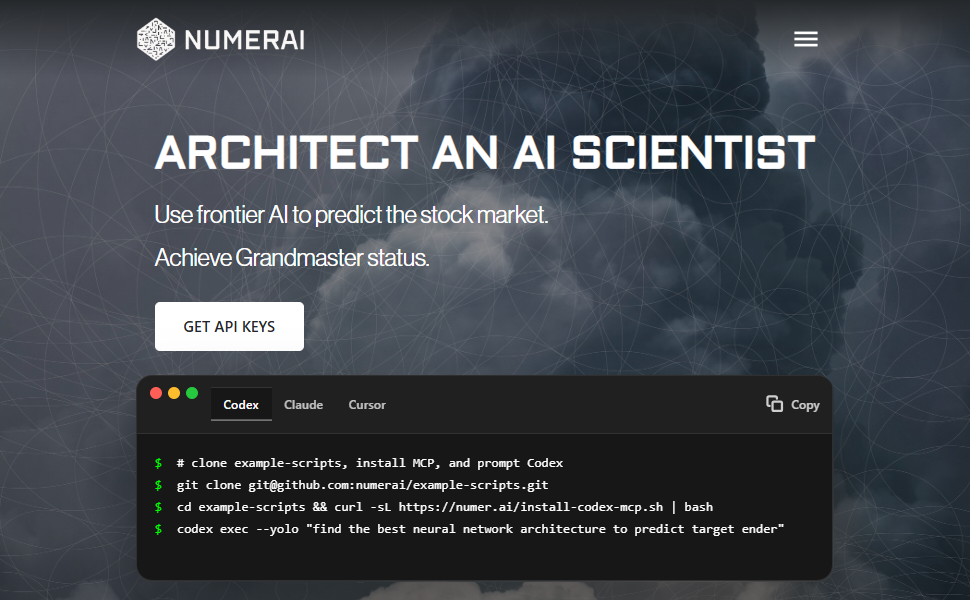
Data scientists create models to predict financial trends and are rewarded in NMR tokens based on the performance of their models.
By utilizing a proprietary model with AI, blockchain technology, and crowd-sourced funding, Numerai has created a system that is fully decentralized for the purpose of predictive analytics in the financial sector.
Numerai Features
- Blockchain based, AI fueled, financial forecasting.
- Encapsulates data scientists and machine learning on the same platform.
- Offers NMR token rewards to participants.
- Safely stores private financial data.
- Merges AI and analytics with a decentralized approach.
| Pros | Cons |
|---|---|
| Crowdsourced predictive models improve accuracy | Focused mainly on financial markets |
| Rewards via NMR token system | Token dependency may limit adoption |
| Protects proprietary financial data | Limited applicability outside hedge funds |
How To Choose the Best AI Blockchain Infrastructure Platform?
- Assess AI Project Needs: Pick platforms that suit your AI objectives and workload.
- Check Scalability and Performance: Look at the speed of the network and required computational power to assess future needs.
- Look at Data Privacy Policies: Know how your data will be managed, who will own it, and if you will have control over it.
- Look for a Robust Developer Ecosystem: Look for platforms that have a rich set of tools, documentation, and active development communities.
- Study Cost and Token Models: Evaluate the costs, fees to transact, and the models of token based incentives.
- Check for Relevant Industry Use Cases: Choose platforms with tested use cases across a good number of industries and verticals.
Conclusion
To conclude, the leading AI Blockchain Infrastructure Platforms foster innovation through the unification of decentralization and AI. Bittensor, Fetch.ai, Ocean Protocol, and other platforms facilitate AI computing, data privacy, and automation and intelligent applications.
Evolving needs for data transparency and sophisticated, scalable AI instantiation will support the focus of these platforms in 2026, integrating decentralized AI systems.
Frequently Asked Questions (FAQ)
Why are AI Blockchain Infrastructure Platforms important in 2026?
They improve AI accessibility, data privacy, computing scalability, and reduce dependency on centralized technology providers.
Which is the best AI Blockchain Infrastructure Platform?
Bittensor, Fetch.ai, Ocean Protocol, SingularityNET, and Akash Network are among the leading platforms.
How does Bittensor support AI development?
Bittensor enables decentralized AI model collaboration through blockchain incentives and its subnet-based ecosystem.
What are the benefits of AI blockchain platforms?
They provide secure data ownership, decentralized computing, transparent operations, and AI automation capabilities.
Are AI Blockchain Infrastructure Platforms secure?
Yes, they use blockchain technology to improve transparency, privacy, and secure data management.