The following review analyzes the Best Fraud Intelligence Platforms suitable for managing fraud detection and prevention for any company. These levels platform offer AI fraud analytics, risk scoring, and real-time monitoring.
Know the best platforms that employ AI security measures and reduce money loss, safeguard customers, and heighten compliance to enhance account security for financial technology companies, e-commerce, banking solutions, and online marketplaces for the year 2026.
What Is a Fraud Intelligence Platform?
A Fraud Intelligence Platform is a tool deploying AI, ML, behavioral analytics, and real-time data to spot fraudulent activity, with the intent of prevention and investigation. It is capable of monitoring transactions, behaviors, devices, and digital identities and can spot potentially damaging trends and patterns.
It is imperative to identify these trends and patterns to avoid financial losses. Banks, fintech, e-commerce, insurance, and payment service firms leverage these platforms to minimize fraud, counter account takeovers, satisfy compliance, and enhance customer confidence with rapid frameworks and enhanced risk assessments and automated decision support systems.
Why Businesses Need Fraud Intelligence Platforms in 2026
- Adapting to Changing Fraud Techniques – Advanced AI and other upcoming fraudulent tactics will be detected and prevented.
- Safeguarding Revenue – Revenue won’t be impacted by fraudulent transactions.
- Instant Analytics – Behaviors and transactions are continuously monitored and analyzed in the moment.
- Minimized Chargebacks – Payment disputes and chargeback occurrences are greatly reduced.
- Enhanced Identity Verification – Synthetic and other identity fraud are prevented.
- Account Security – Account takeovers are blocked in the moment.
- KYC and AML Compliance – Fraud protection and prevention of data breaches are achieved.
- Customer Satisfaction – Payment approvals are granted, eliminating negative experiences.
- Fraud Detection Systems – Less investigation and effort are required to monitor fraud.
- Built To Last – The system continues to work with the business.
Key Points & Best Fraud Intelligence Platforms
| Platform | Description |
|---|---|
| Sift | Detects payment fraud using trillion yearly data events for trusted online commerce protection. |
| LexisNexis ThreatMetrix | Analyzes global identity intelligence, detecting high-risk behavior within milliseconds using AI technology effectively. |
| Kount (by Equifax) | Combines machine learning to prevent chargebacks across omnichannel retail payment platforms efficiently worldwide. |
| DataVisor | Uses unsupervised machine learning detecting coordinated fraud attacks across high-volume financial environments accurately. |
| Feedzai | Provides real-time AI risk scoring for banks and fintech transaction monitoring across channels. |
| SEON | API-driven platform analyzes emails, phones, and digital footprints preventing fraud efficiently for startups. |
| Sardine | Combines KYC, biometrics, and fraud screening for crypto and BNPL businesses securely everywhere. |
| Signifyd | Protects e-commerce merchants with guaranteed chargeback coverage and AI fraud detection solutions effectively. |
| Resistant AI | Detects document fraud through forensic analysis preventing synthetic identity manipulation across financial systems. |
| Socure | Predictive identity platform auto-approves legitimate users while blocking sophisticated synthetic identity fraud attempts. |
10 Best Fraud Intelligence Platforms
1. Sift
Sift is an advanced AI-based fraud detection service for the e-commerce and fintech spaces. Sift utilizes machine learning on data from over a trillion annual events to analyze real-time payment fraud, account takeovers, the creation of false accounts, and the abuse of policies.
This is done through the evaluation of user behavior, device intelligence, transaction history, and account activity. Using this evaluation helps protect right customers and reduces false declines.
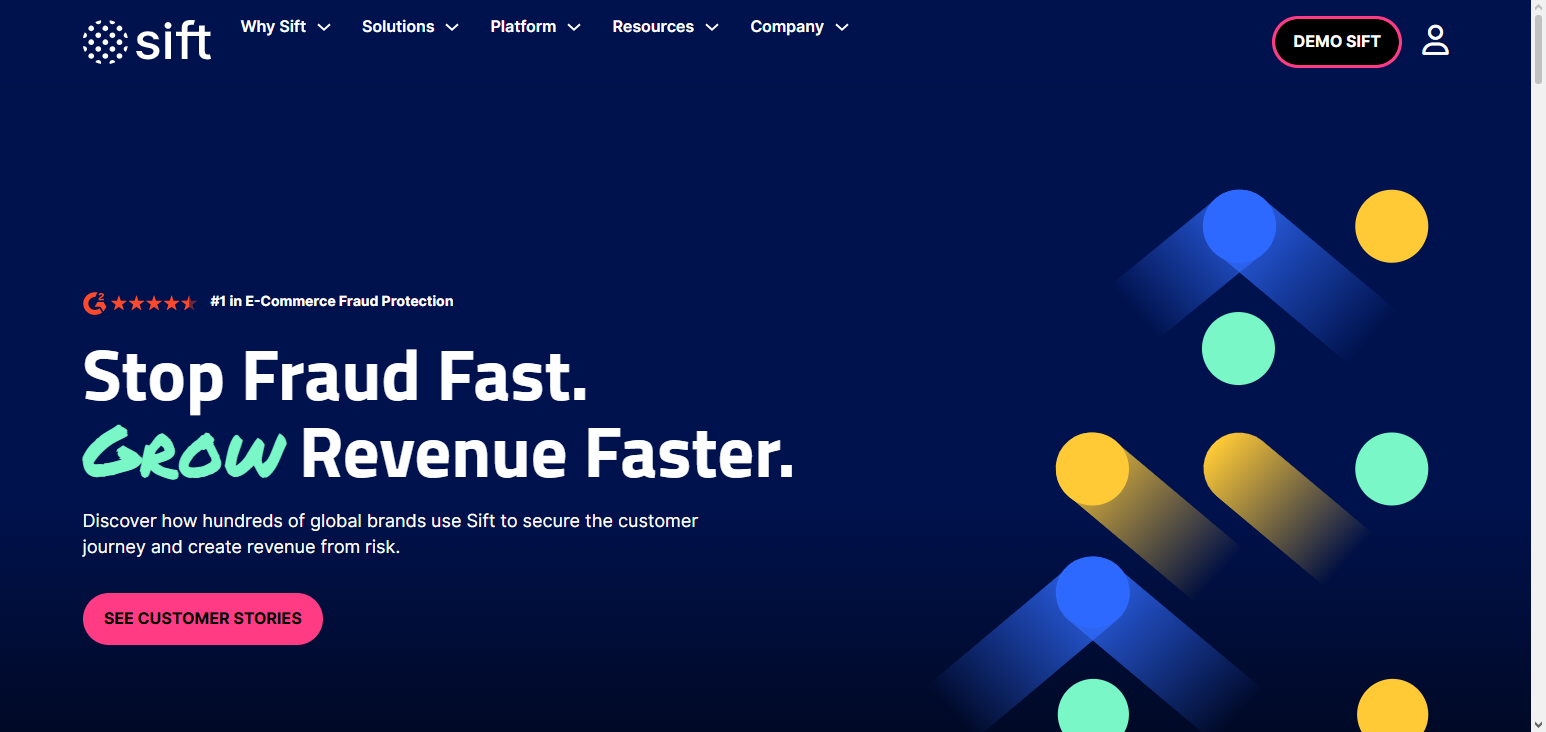
The platform uses adaptive AI technology to increase detection accuracy and is compatible with extensive payment integrations. This makes Sift an ideal candidate for businesses that need fraud protection that scales, and that increases trust in digital transactions.
Sift – Key Features
- Uses AI to analyze over one trillion events each year to identify fraud.
- Instant detection of payment fraud, account takeovers, and the creation of fraudulent accounts.
- Behavioral analytics aid in decreasing false declines and improving the customer experience.
- Seamless integration with predominant payment gateways and e-commerce platforms.
- Fraud detection accuracy increases with the passage of time and maturation of adaptive machine learning.
| Pros | Cons |
|---|---|
| AI analyzes massive datasets with excellent fraud detection accuracy. | Premium pricing may challenge smaller businesses. |
| Reduces payment fraud and account takeover incidents effectively. | Initial configuration requires technical implementation expertise. |
| Continuously improves through adaptive machine learning models. | Advanced customization may require enterprise support. |
| Integrates with major e-commerce and payment platforms. | Best features available in higher-tier plans. |
| Lowers false declines while improving customer experience. | Smaller merchants may not need enterprise-level capabilities. |
2. LexisNexis ThreatMetrix
LexisNexis ThreatMetrix utilizes one of the largest networks of global identities to give customers digital intelligence on enterprise-grade identities.
This platform gives businesses the ability to protect themselves from payment fraud, account takeover, synthetic identity fraud, and other identity-related fraud, all while reducing the friction of customers.

ThreatMetrix combines an AI-based analytic approach with rapid risk scoring and generative compliance in order to enhance the protection of digital channels for consumer verification and regulatory compliance as well as fulfill requests for stronger verification.
LexisNexis ThreatMetrix – Key Features
- Instant analysis of digital identities and billions of signals by a global identity network.
- Real-time device intelligence determines suspicious users in milliseconds.
- Effectively stops account takeovers, credential stuffing, and identity fraud.
- AI-based risk scoring allows customers to be authenticated and protected.
- Supports organizations with fraud prevention and regulatory compliance.
| Pros | Cons |
|---|---|
| Extensive global identity intelligence network improves accuracy. | Enterprise implementation can be complex. |
| Detects fraud within milliseconds using real-time analysis. | Pricing is generally higher for small businesses. |
| Excellent for financial institutions and regulated industries. | Requires proper integration for maximum effectiveness. |
| Strong protection against account takeovers and identity fraud. | Advanced analytics may require staff training. |
| Supports compliance with industry regulations globally. | Better suited for medium and large organizations. |
3. Kount (by Equifax)
Kount, a division of Equifax, has developed a highly sophisticated AI-driven fraud prevention solution with a focus on the needs of retailers, payment processors, travel, and fintech sectors.
Kount employs advanced supervised and unsupervised machine learning in combination with identity intelligence to assess and score every transaction in real-time.
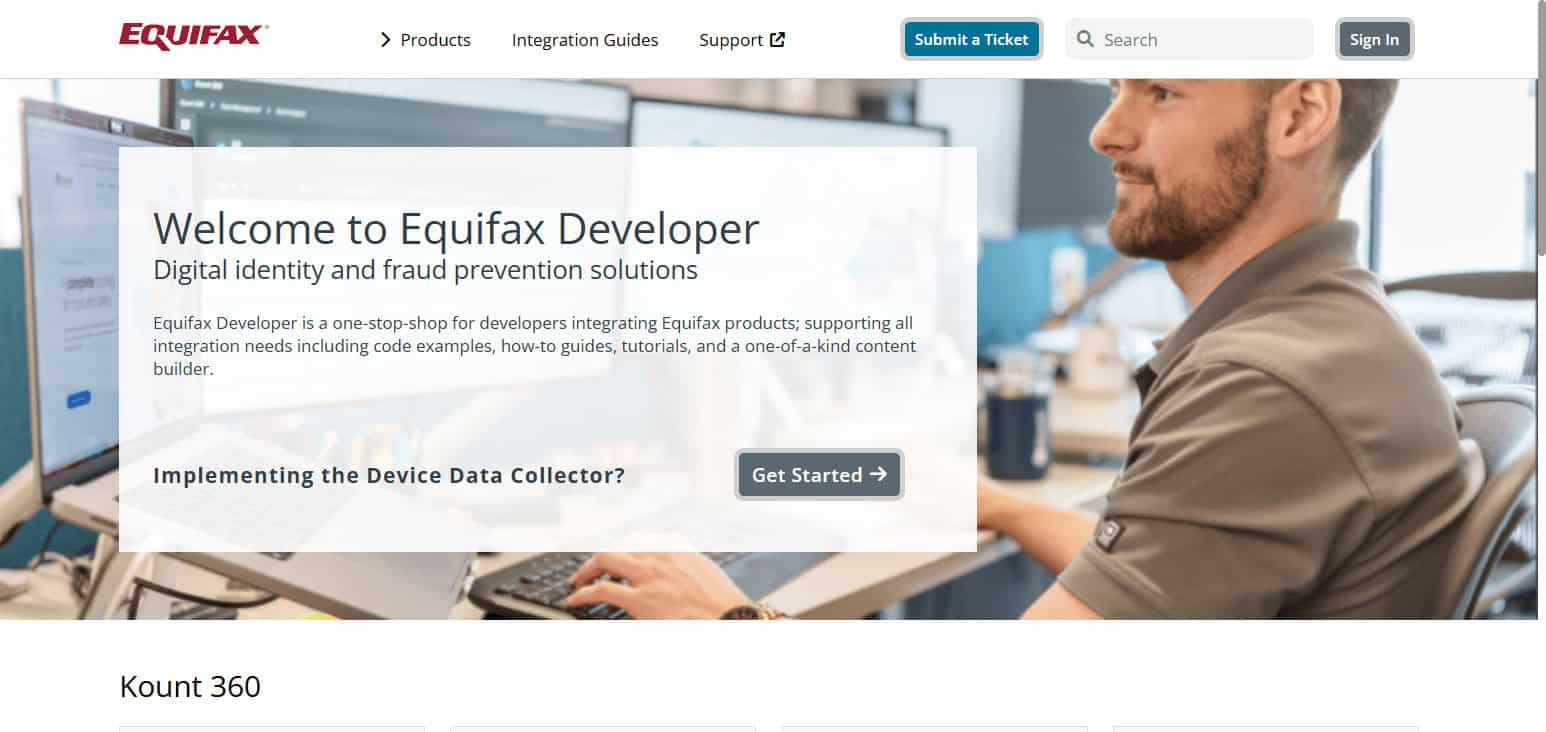
Kount’s platform increases transactional approval rates and lessens most common payment processing threats and frauds. Kount’s flexible risk engine results in less fraudulent decisions and adapts in real-time with the everchanging landscape of payment fraud.
Kount also offers countless integrations, advanced reporting capabilities, and tailored fraud protection solutions for both online and offline payment solutions.
Kount (by Equifax) – Key Features
- Uses both supervised and unsupervised machine learning to prevent fraud.
- Accurate detection of payment fraud, refund abuse, and chargeback fraud.
- Identity Trust Platform significantly increases the approval rate of legitimate transactions.
- Flexible and automated risk-based decision making is achieved via configurable fraud rules.
- Covers multiple channels for retail and travel as well as payment processing.
| Pros | Cons |
|---|---|
| Strong machine learning reduces chargebacks effectively. | Setup may require integration resources. |
| Excellent omnichannel fraud protection capabilities. | Premium features increase overall costs. |
| Flexible risk rules support business customization. | Small businesses may find pricing expensive. |
| Improves approval rates for genuine customers. | Some advanced reports require additional configuration. |
| Trusted Equifax identity intelligence enhances security. | Learning curve for first-time administrators. |
4. DataVisor
DataVisor is most known for their exclusive opt-out model of machine learning. The model allows fraud prediction without solely depending on the historical labels of fraud.
The model built for banks, payment processors, digital wallet systems, and other large financial services, identifies fraud as a ring of equal collaborative effort, otherwise known as organized fraud.
The DataVisor model offers graph-based intelligence with the combination of behavioral analytics and real-time risk scoring in order to connect the often obscured link between accounts.
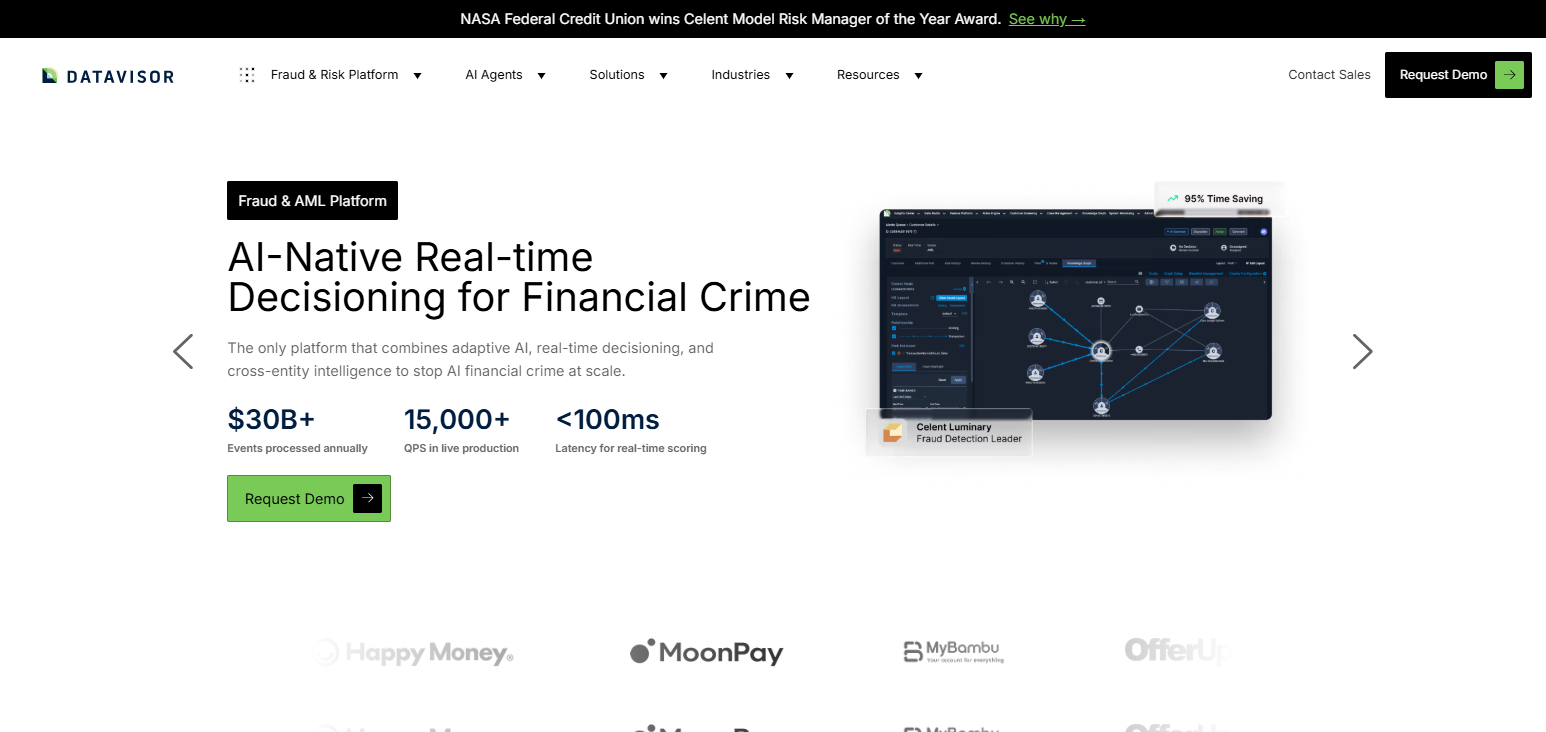
The cognitive load of fraud detection, a model that adapts to the attacks of the fraudsters, is placed on the DataVisor model and not the clients.
The continuous adaptation of the model results in less false detection of fraud and a seamless transaction experience for the clients of the large financial institutions reliant on the services.
DataVisor – Key Features
- Patented unsupervised AI identifies novel fraud without the use of historical labeling.
- Using graph intelligence, coordinated fraud rings can be identified.
- Behavioral analytics assist the rapid detection of fraud and abuse of a financial nature.
- Adapts to emerging fraud techniques through machine learning.
| Pros | Cons |
|---|---|
| Patented unsupervised AI detects unknown fraud patterns. | Primarily designed for enterprise organizations. |
| Excellent graph analytics uncover coordinated fraud rings. | Initial deployment can be technically demanding. |
| Reduces false positives significantly. | Premium enterprise pricing limits smaller businesses. |
| Processes high-volume transactions efficiently. | Advanced analytics require experienced fraud teams. |
| Continuously adapts to evolving fraud techniques. | May exceed needs of smaller companies. |
5. Feedzai
Feedzai is an artificial intelligence platform for financial crime prevention. Many banks and global financial technology companies use Feedzai. It assesses risk in regards to transactions, customer and payment behavior, as well as device and channel information and analytics.

It does this in real time. Feedzai helps in the identification of card fraud and account takeover as well as the detection of money laundering and the impediment of suspicious financial actions.
This platform helps prevent unnecessary transaction decline while having machine learning technology that is always improving and scaling. Feedzai helps banks improve security and prevent fraud without harming the customer experience.
Feedzai – Key Features
- Oversees fraud with real time AI scoring across all transactional channels.
- Account takeovers, card fraud and AML compliance issues are easily identified.
- Explainable AI brings transparency to compliance and audit professionals.
- Useful to banks, fintechs and international payment service providers.
- A Cloud-native platform that scales with your transaction volume.
| Pros | Cons |
|---|---|
| Real-time AI risk scoring improves fraud detection. | Best suited for large financial institutions. |
| Strong AML and fraud monitoring capabilities. | Implementation requires technical expertise. |
| Explainable AI supports regulatory compliance. | Enterprise pricing may be expensive. |
| Scales efficiently across multiple payment channels. | Smaller fintechs may not utilize every feature. |
| Trusted by leading global banks. | Custom integrations may require professional services. |
6. SEON
SEON is a fraud prevention API designed with a lot of flexibility in mind. Start-ups, SaaS companies, fintech, online merchants, as well as gaming companies can all benefit from the technology. SEON helps companies avoid the financial disadvantages of account takeovers, payment fraud, and even bonus abuse.
This is all done before the financial disadvantages occur. The technology helps companies determine risk by scoring customer data, as well as desktop and mobile device data. It helps a lot with social accounts and even customer emails.
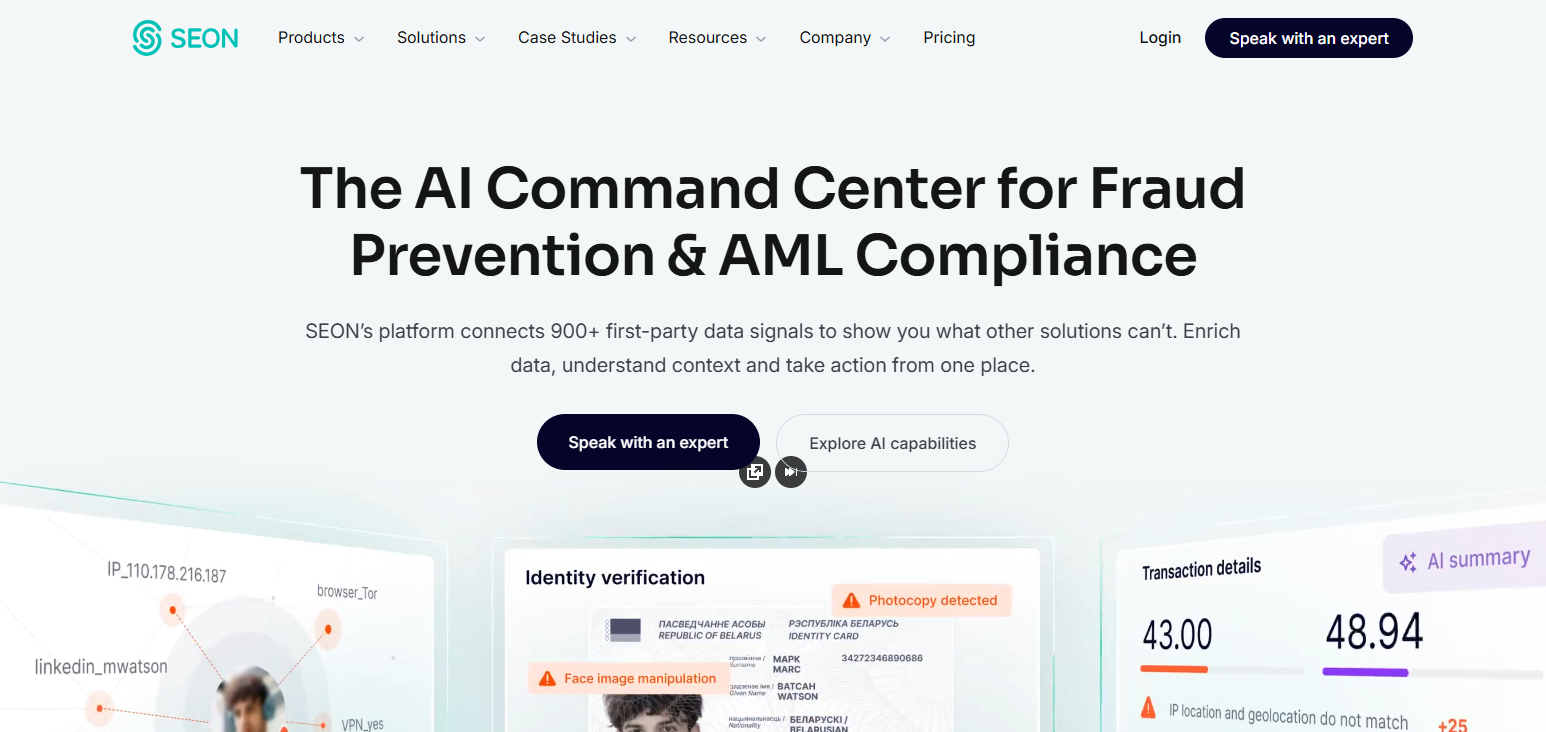
The modular design of this technology allows companies to easily implement their own fraud deciding and scoring mechanisms. This flexibility is a key reason why a lot of modern, fraud prevention technology companies choose SEON.
Seon – Key Features
- Rapid and flexible integration through API-first design.
- Automatically analyzes emails, phone numbers, and online behavior.
- Identifies fraudulent accounts and payment issues before losing money.
- Highly configurable custom fraud rules.
- Scalability for rapidly growing Fintech customers.
| Pros | Cons |
|---|---|
| API-first platform integrates quickly with applications. | Limited enterprise-focused compliance features. |
| Flexible fraud rules simplify customization. | Some advanced capabilities require premium plans. |
| Affordable option for startups and fintechs. | Global identity coverage varies by region. |
| Detects fake accounts before onboarding. | Requires optimization for best detection accuracy. |
| Excellent digital footprint analysis capabilities. | Large enterprises may need additional integrations. |
7. Sardine
Sardine integrates a number of fraud prevention services to cover every aspect of risk when it comes to customer accounts. Monitoring device and user behavior allows for fraud detection and identification of criminal conduct such as identity theft.
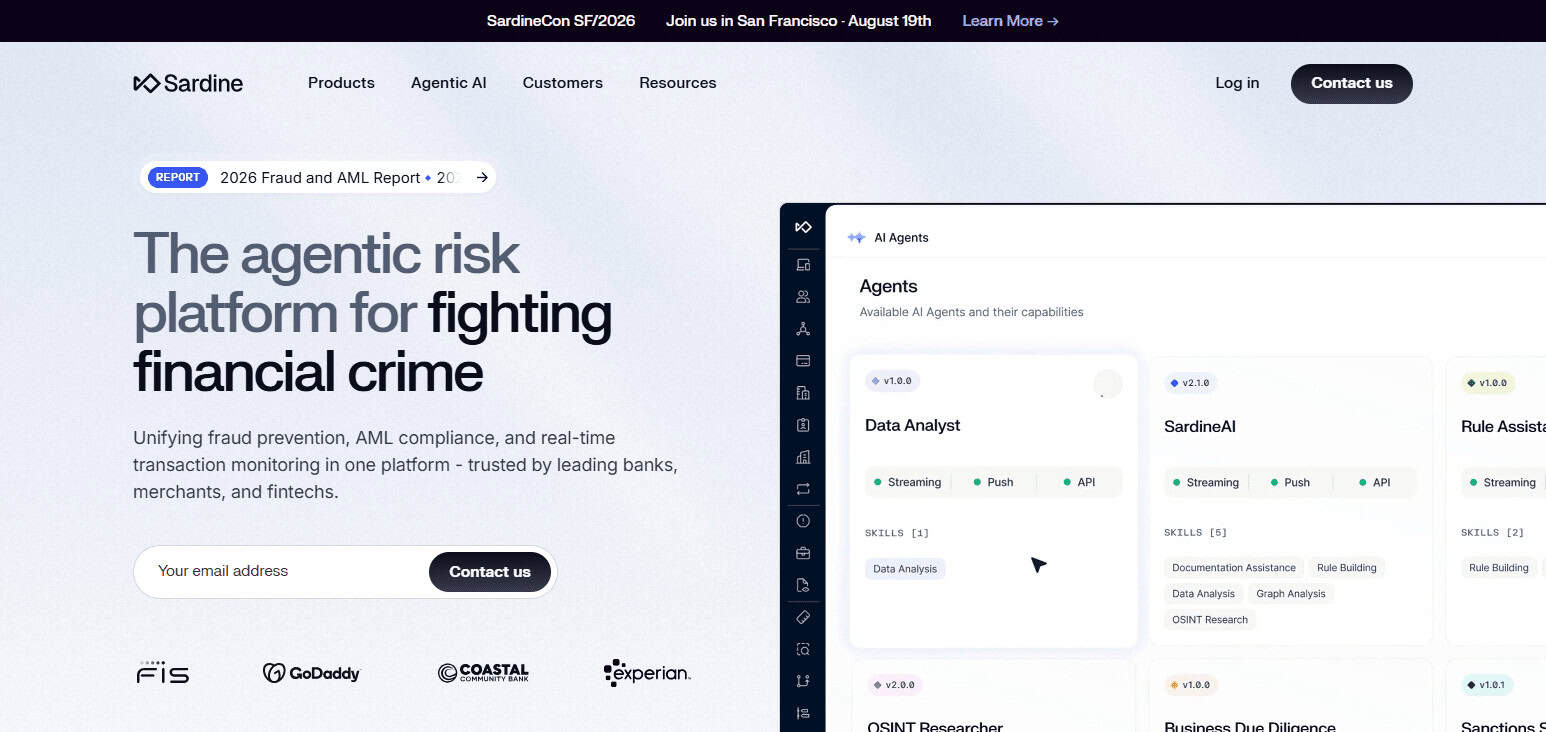
Sardine then uses this information to adjust customer onboarding and compliance procedures while providing instant documentation approval. This leads to a more positive user experience during the account registration process and allows your business to become a part of digital financial ecosystems with confidence.
Sardine – Key Features
- Comprehensive fraud detection and KYC, AML, and assessment of behavioral biometrics.
- Targeting crypto, BNPL and embedded finance.
- Customer identity assurance strengthened through real-time device intel.
- Automated fraud detection for synthetic identities and payments.
- Simplified compliance through integrated fraud and risk management.
| Pros | Cons |
|---|---|
| Unified fraud, KYC, and AML platform. | Primarily optimized for fintech and crypto sectors. |
| Strong behavioral biometrics improve fraud prevention. | Limited relevance for traditional retail businesses. |
| Fast onboarding with automated verification. | Enterprise features may increase subscription costs. |
| Excellent for BNPL and embedded finance. | Newer platform than some established competitors. |
| Real-time fraud detection reduces financial losses. | Custom integrations may require developer resources. |
8. Signifyd
Signifyd is a fraud detection and prevention service that primarily focuses on online shopping. It utilizes a variety of data and Artificial Intelligence to assess the legitimacy of a transaction before the order is fulfilled.
What is even better is that this service then guarantees the transaction. This protection allows online retailers to approve more customer transactions without the concern of being defrauded. This service focuses on transactional protection but also account protection and policy abuse as well. This allows retailers to focus on growth and sales.
Signifyd – Key Features
- Fraud detection through AI post-order and pre-fulfillment.
- Guaranteed 100% Chargeback for approved order.
- Protection from return fraud and account takeover.
- Highly automated adaptive solution reducing manual reviews.
- Plug and Play with top eCommerce and payment.
| Pros | Cons |
|---|---|
| Offers financial guarantee against approved chargebacks. | Mainly focused on e-commerce businesses. |
| AI reduces manual fraud reviews significantly. | Less suitable for banking fraud detection. |
| Improves legitimate order approval rates. | Pricing depends on transaction volume. |
| Easy integration with popular commerce platforms. | Advanced customization options are limited. |
| Protects against return fraud and abuse. | Smaller merchants may find costs higher. |
9. Resistant
Resistant AI’s technology specializes in document fraud detection using AI and digital forensics. Rather than replacing legacy fraud systems, it augments those systems and analyzes invoices, bank statements, ID documents, tax documents, and financial records for concealed forensics manipulation and AI alteration.
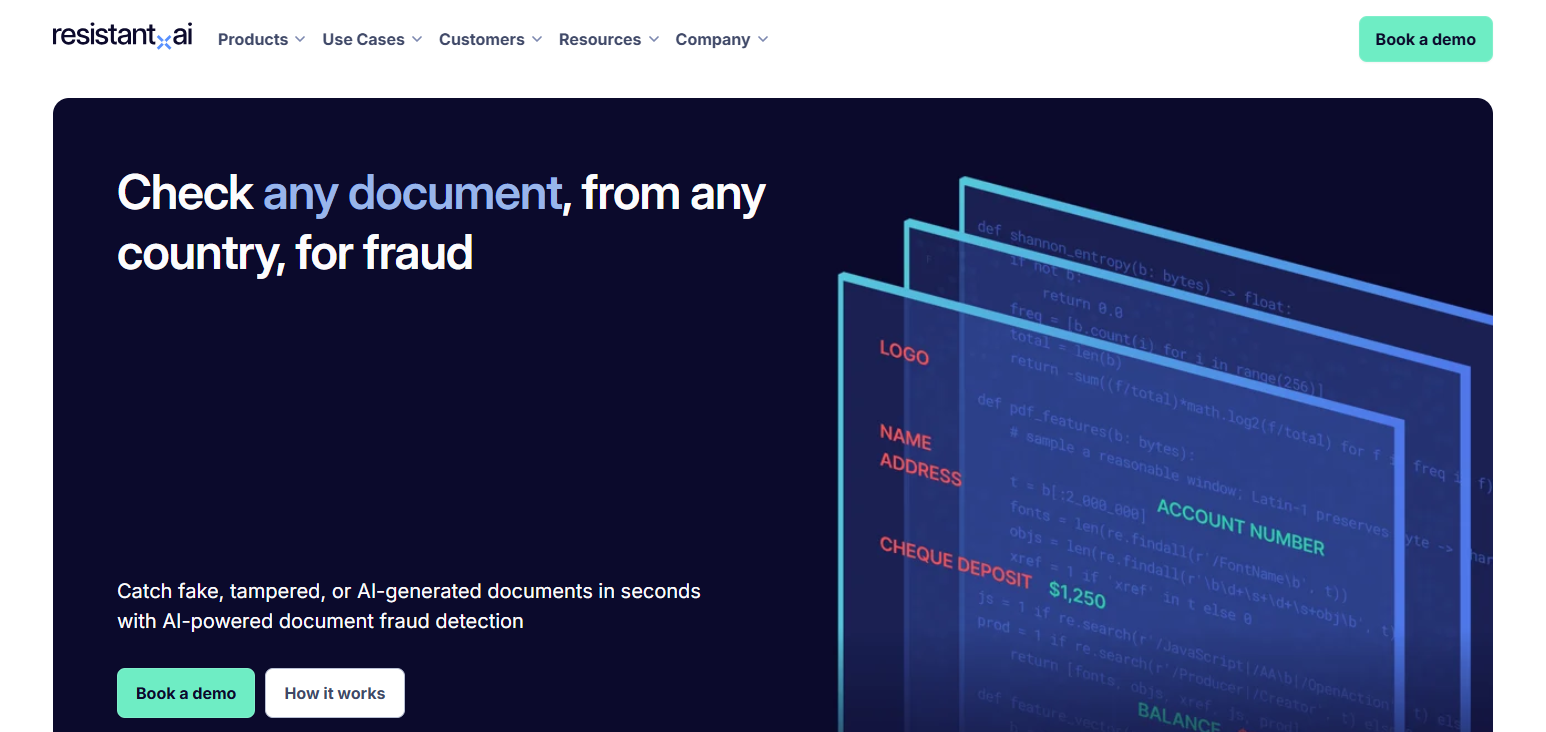
The product uses synthetic identity detection to assist banks, lenders, insurers, and fintech during document verification and loan processes.
Resistant AI automates advanced digital forensics, decreasing manual forensics reviews, and increasing verification and fraud risks for financial workflows and document processes.
Resistant AI – Key Features
- Utilization of Forensic AI for fraudulent financial document detection.
- Detection of synthetic identity in onboarding and verification fraud.
- Seamless collaboration with existing fraud prevention tools.
- Automation of document verification leading to less manual reviews.
- Enhanced compliance for Banking, Lending and Insurance.
| Pros | Cons |
|---|---|
| Excellent document forensic fraud detection. | Focuses mainly on document verification. |
| Detects AI-generated document manipulation effectively. | Not a complete fraud management platform. |
| Integrates with existing fraud systems easily. | Enterprise deployment may require technical support. |
| Reduces manual document review workload. | Limited use outside document-intensive industries. |
| Improves onboarding accuracy and compliance. | Premium pricing for advanced capabilities. |
10. Socure
Socure is a predictive identity verification and fraud technology solution for financial services, fintech, and government products. Its predictive AI technology assesses ID documents, behavior, device data, and multiple fraud vectors to identify real users and detect synthetic fraud.

Predictive analytics within the technology automate the onboarding process, decrease manual verification, and improve acceptance of low-risk customers.
It further enables KYC, AML, and regulatory compliance. Socure is an identity intelligence technology solution for organizations requiring fast and secure identity verification.
Socure – Key Features
- Authenticates identities by employing AI with numerous data sources.
- Uses advanced analytics technology to identify artificial identities.
- Enables the secure automation of customer onboarding to accelerate approvals.
- Complies with KYC and AML laws and mandates internationally.
- Increases approvals of legitimate customers and reduces fraud.
| Pros | Cons |
|---|---|
| Highly accurate AI-powered identity verification. | Strongest coverage in the United States market. |
| Excellent synthetic identity fraud detection. | International coverage may vary by region. |
| Automates customer onboarding efficiently. | Enterprise pricing may not suit startups. |
| Supports KYC, AML, and compliance requirements. | Integration requires technical implementation. |
| Reduces manual verification and fraud losses. | Advanced analytics may require user training. |
How to Choose the Right Fraud Intelligence Platform
- List your fraud prevention needs – Think about the types of fraud you might face, the industry you are in, security goals, and more.
- Look at how the platform fits with your systems – Make sure the software you pick will integrate with your payment systems, CRMs, APIs, and all other systems your business operates.
- Look at the security and compliance measures – Make sure the platform supports KYC and AML and complies with PCI DSS and GDPR.
- Think about how the platform can scale and how much it costs – Pick a tool that can grow as your business does and aligns to your budget.
- Look at the tool’s analytics and reporting – Pick systems that have dashboards and reports that can be customized and that give your business actionable insights on fraud.
- Look at the fraud prevention platform’s implementation and customer support – Pick a tool that has good support and onboarding and that is easy to use.
Conclusion
In cocnlsuion Choosing the Best Fraud Intelligence Platforms depends on your size and industry, your compliance and fraud risk needs.
Top solutions like Sift, Feedzai, DataVisor, Socure, and SEON have AI-lead fraud protection, real-time monitoring, and advanced transactional ID verification.
Choosing the right solution means your business will avoid fraud losses and increase your security and trust from your customer base against fraud threats in 2026.
FAQ
Which industries use fraud intelligence platforms?
Banks, fintechs, e-commerce, insurance, healthcare, gaming, and payment companies use them extensively.
How does AI improve fraud detection?
AI analyzes transactions and user behavior in real time to identify suspicious patterns accurately.
Can fraud intelligence platforms prevent account takeovers?
Yes, they monitor login behavior, devices, and identities to stop unauthorized account access.
Do these platforms support KYC and AML compliance?
Most leading platforms include KYC, AML, identity verification, and regulatory compliance features.