In this article, we are going to look at the Best Financial Planning & Analysis (FP&A) Software that helps organizations create better budgets, forecasts, and reports, and helps with financial decision software.
These top FP&A tools empower finance teams to analyze the data and optimize processes to build better financial models and plans and gain the insights needed for strategic thinking to drive performance management.
Criteria for Selecting Best Financial Planning & Analysis Software for 2026
- FP&A Features: We assessed applications based on their budgeting, forecasting, reporting, and financial modeling features.
- Business Insights: We included applications with business analytics, dashboards, and instant insights.
- Integration: We included applications that integrate with ERP, CRM, and accounting applications.
- Usability: We included applications that have easy to use interfaces, navigation, and features.
- Process Automation: We included applications that automate financial processes and decrease manual work.
- Flexibility/Scalability: We included FP&A software that meets the changing needs of the business and financially flexible/scalable.
- Security: FP&A Platforms that meet regulatory financial compliance, have data security, and access controls were included.
- Customizability: We included applications that provide flexible reporting, modeling, and plans.
- Cost-Benefit: We included applications that provide the best cost to benefit ratio for the variety of the business.
- Support: We included applications that provide good support and training and service assistance.
Key Points & Best Financial Planning & Analysis (FP&A) Software
| Financial Planning & Analysis (FP&A) Software | Explanation |
|---|---|
| Oracle Fusion Cloud EPM | Provides enterprise budgeting, forecasting, reporting, and financial performance management capabilities. |
| SAP Analytics Cloud | Enables planning, analytics, collaboration, and real-time financial decision-making processes. |
| Anaplan | Offers connected planning, forecasting, modeling, and business performance optimization solutions. |
| Workday Adaptive Planning | Simplifies budgeting, forecasting, workforce planning, and financial analysis activities. |
| IBM Planning Analytics | Delivers advanced analytics, predictive planning, and financial modeling features. |
| Prophix | Automates budgeting, reporting, consolidation, and financial planning workflows efficiently. |
| Jedox | Provides flexible planning, forecasting, analytics, and performance management tools. |
| Vena Solutions | Combines Excel flexibility with powerful budgeting and reporting automation. |
| Board International | Integrates planning, analytics, simulation, and strategic decision-making capabilities. |
| Pigment | Supports collaborative planning, forecasting, and real-time business performance insights. |
10 Best Financial Planning & Analysis (FP&A) Software
1. Oracle Fusion Cloud EPM
Oracle Fusion Cloud EPM is a fully integrated, modern enterprise cloud application for budgeting, forecasting, financial reporting, and performance management. It empowers enterprises to develop more precise financial plans and analyze business results.
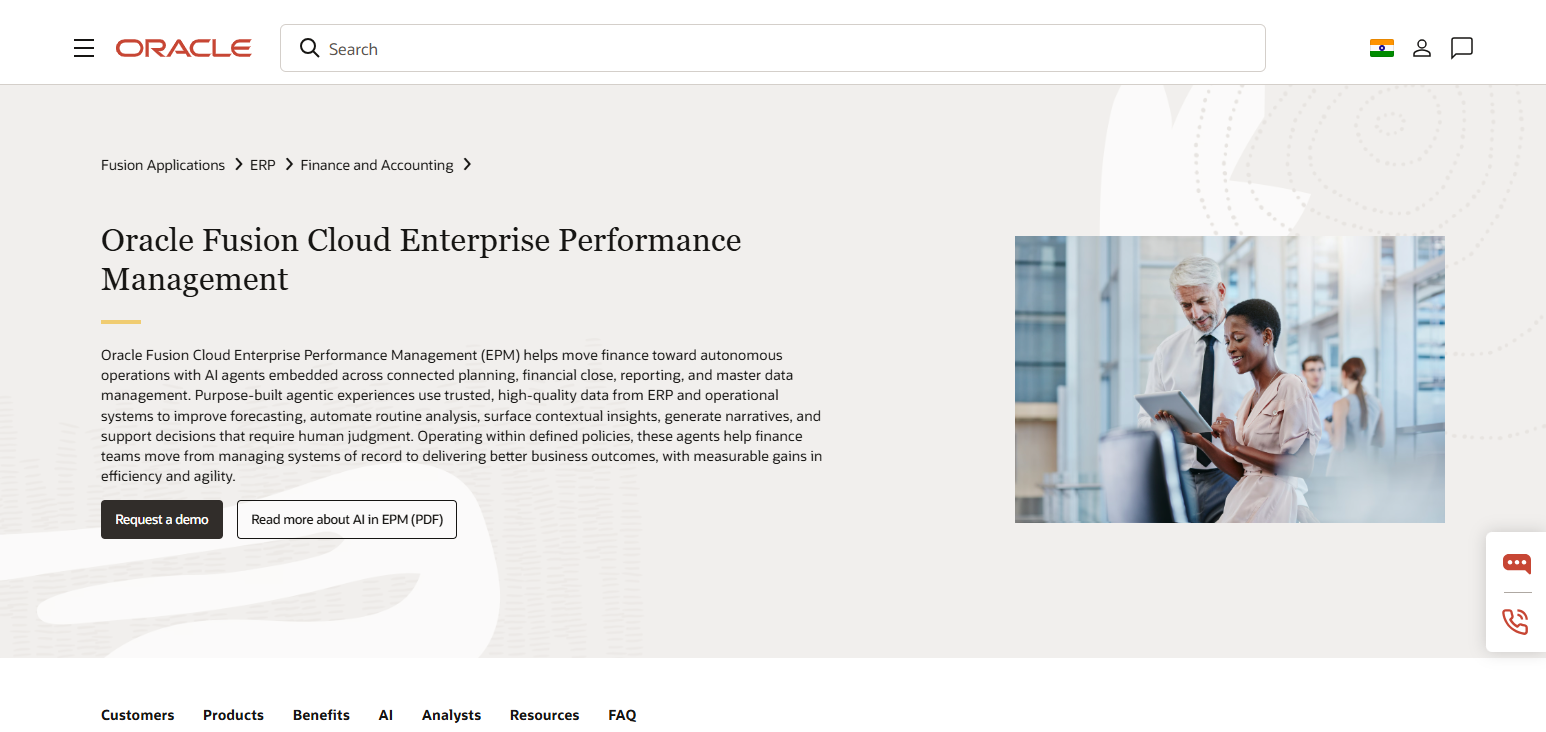
By using automation and the availability of real-time data, organizations can make better business decisions. As the Best Financial Planning & Analysis (FP&A) Software, Oracle Fusion Cloud EPM facilitates the finance teams in managing multiple elaborate planning processes, simplifying reporting processes, and aligning financial plans with corporate strategies.
Features of Oracle Fusion Cloud EPM
- Enterprise Budgeting: Develops precise budgets using the automation of financial planning and advanced forecasting.
- Financial Forecasting: Analyzes financial data to model and predict future financial performance.
- Performance Reporting: Provides detailed reporting of the financial results and the progress of the strategies.
- Scenario Planning: Teams can evaluate multiple financial scenarios to aid the decision-making process.
- Data Integration: Unifies the management of financial information by integrating the various business systems.
- Automation Tools: Improvements and reporting automation diminish the need for manual input.
| Pros | Cons |
|---|---|
| Advanced budgeting and forecasting improves financial planning accuracy. | Implementation process can be complex for smaller organizations. |
| Provides powerful reporting and performance management features. | Requires skilled users for advanced functionalities. |
| Integrates easily with Oracle enterprise applications. | Higher pricing compared to basic FP&A solutions. |
| Automates financial workflows and reduces manual efforts. | Customization may require additional technical resources. |
| Supports large-scale enterprise planning requirements. | Learning curve can be challenging for beginners. |
2. SAP Analytics Cloud
SAP Analytics Cloud is a fully integrated, cloud-based solution that encompasses financial planning, business analytics, and collaborative capabilities. It enables organizations to formulate forecasts, evaluate financial data, and develop various analytical dashboards and displays.
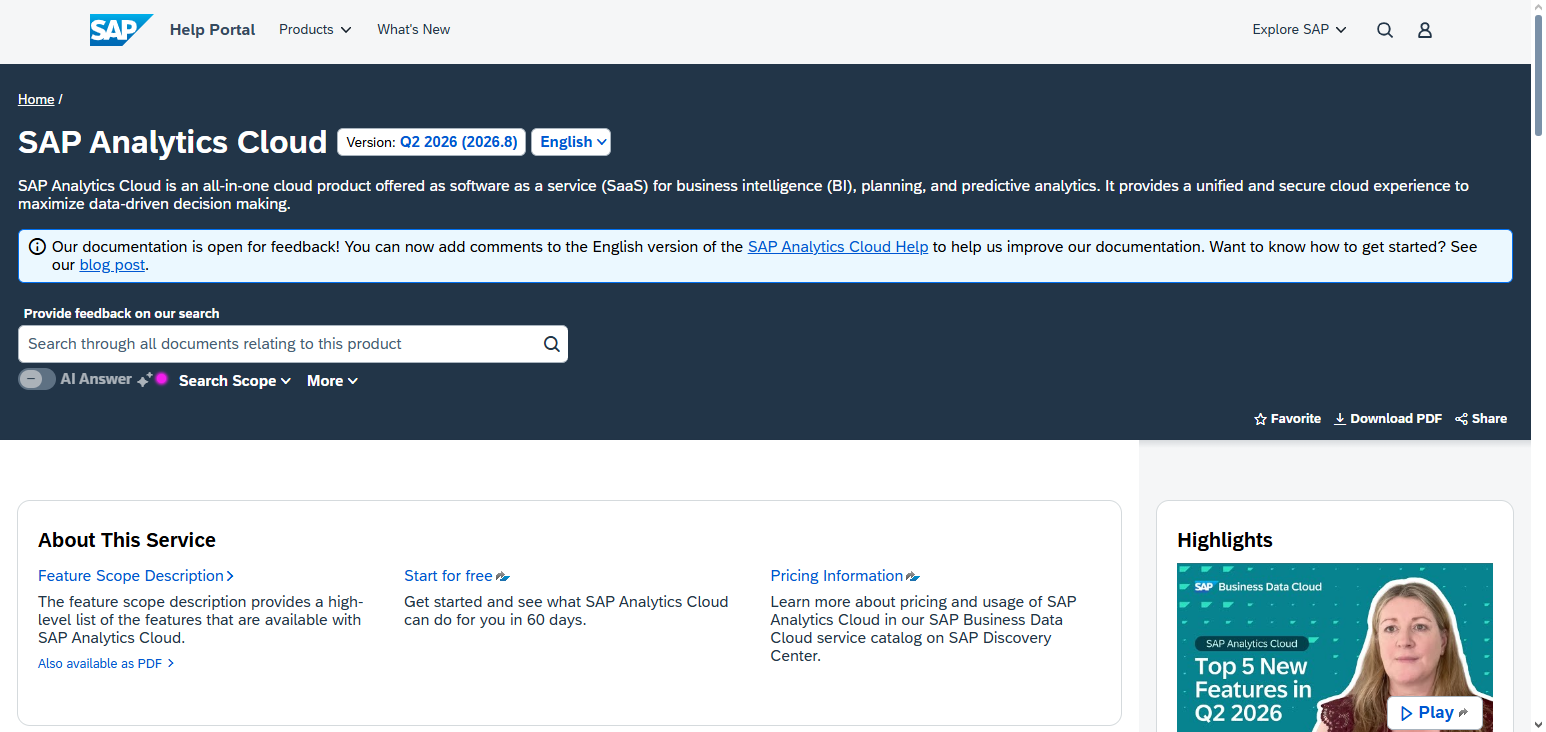
As the Best Financial Planning & Analysis (FP&A) Software, SAP Analytics Cloud promotes the execution of real-time financial assessments by integrating operational data with tactical planning.
Features of SAP Analytics Cloud
- Cloud-Based Planning: Provides financial planning tools within a secure, adaptable cloud environment.
- Interactive Dashboards: Visual dashboards of key metrics of financial and operational performance are displayed.
- Real-Time Analytics: Instantaneous insights of business data are provided.
- Collaborative Planning: Collaboration in the creation of budgets and financial plans is facilitated.
- Predictive Analytics: Intelligent forecasting models reveal potential opportunities for the business.
- Data Visualization: Complex financial data are represented in graphical reports.
| Pros | Cons |
|---|---|
| Offers real-time analytics with powerful cloud-based planning tools. | Can be expensive for small businesses. |
| Provides interactive dashboards and data visualization features. | Requires SAP knowledge for advanced configuration. |
| Supports collaboration between finance and business teams. | Initial setup may take significant time. |
| Integrates well with SAP ecosystem applications. | Limited flexibility outside SAP environments. |
| Uses predictive analytics for better financial decisions. | Training is required for new users. |
3. Anaplan
Anaplan is the Best Financial Planning & Analysis (FP&A) Software that offers a unique planning infrastructure to enterprises for better management of planning, forecasting, budgeting, and performance evaluation. Anaplan provides financial teams with a collaborative, centralized workspace to improve the accuracy of plans by modeling a variety of scenarios.
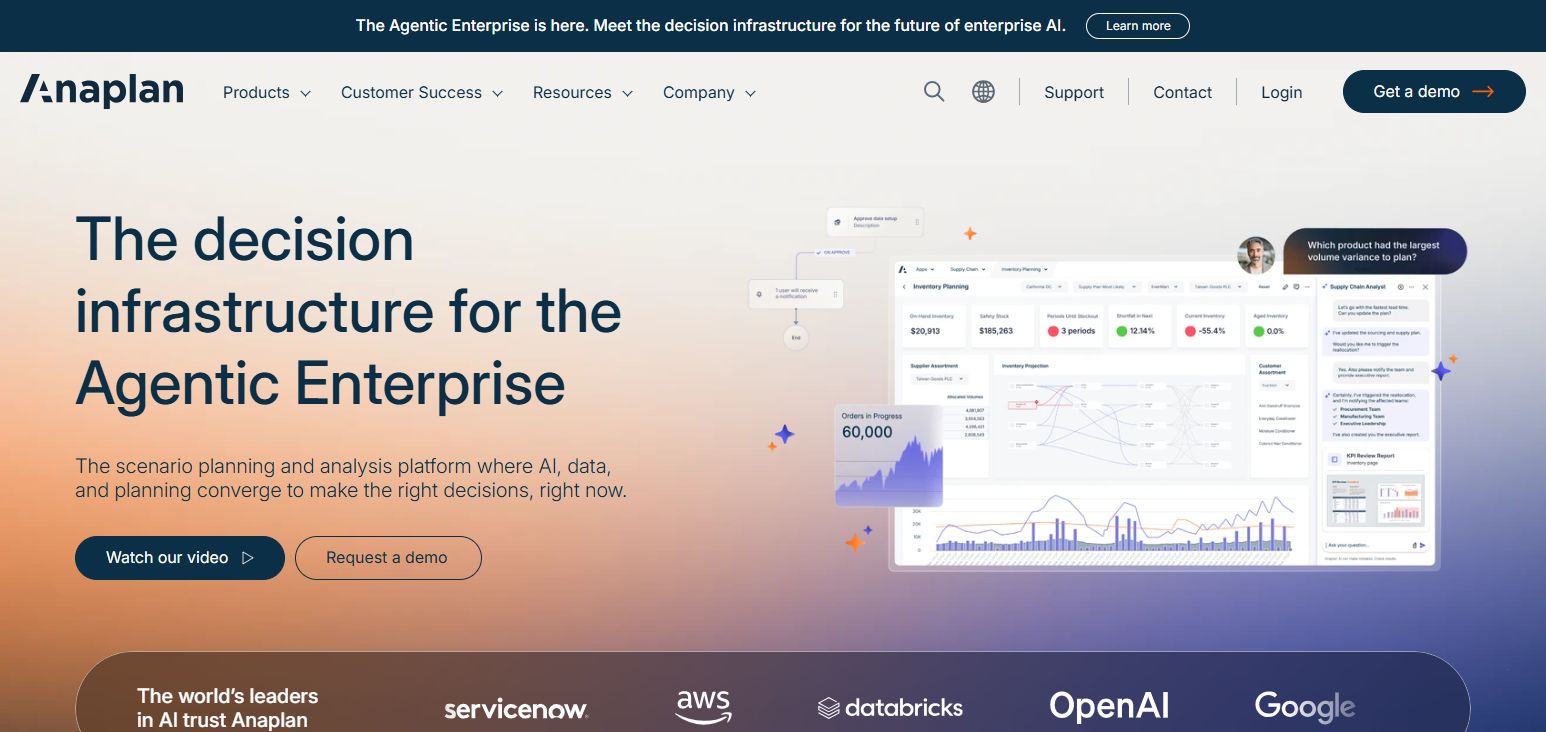
As the Best Financial Planning & Analysis (FP&A) Software, Anaplan enables organizations to build dynamic financial models and provides the ability to rapidly respond to the market environment.
Features of Anaplan
- Connected Planning: Integrates all financial, operational, and strategic planning across the organization.
- Financial Modeling: Flexible forecasting, budgeting, and performance models build up.
- Scenario Simulation: Business scenarios may be simulated to aid in the decisions of the strategy.
- Real-Time Collaboration: Collaboration in planning is enabled across multiple teams.
- Forecast Management: Data-driven planning enhances the quality of financial forecasts.
- Performance Tracking: Financial goals are monitored against business performance.
| Pros | Cons |
|---|---|
| Enables connected planning across multiple business departments. | Pricing can be high for smaller companies. |
| Provides flexible financial modeling capabilities. | Complex models require experienced administrators. |
| Supports real-time collaboration and scenario analysis. | Implementation may require professional assistance. |
| Improves forecasting accuracy through dynamic planning. | User interface may seem complex initially. |
| Scales effectively for growing enterprises. | Advanced features need additional learning. |
4. Workday Adaptive Planning
Workday Adaptive Planning provides tools for budgeting, forecasting, and reporting, with features to streamline workforce planning. Workday Adaptive Planning gives control of financial operations to companies through the ability to eliminate the manual spreadsheet processes from financial planning.
Workday Adaptive Planning has been rated and recognized as one of the best financial planning & analysis (FP&A) software as it enhances the ability of companies to forecast their data, and ultimately increases the speed and quality of decisions made based on data.
Features of Workday Adaptive Planning
- Budget Automation: Reduces reliance on spreadsheet-based financial management by streamlining budget automation.
- Workforce Planning: Assists in understanding the costs of employees and the financial planning of the workforce.
- Financial Forecasting: Leverages sophisticated analytics to create more accurate forecasts.
- Reporting Tools: Designs reports that provide greater insight and analysis of finances.
- Cloud Accessibility: Provides secure access to planning data in the cloud.
- Collaboration Features: Enables collaboration between the finance and business teams.
| Pros | Cons |
|---|---|
| Simplifies budgeting and forecasting processes efficiently. | Limited customization compared with enterprise platforms. |
| Provides user-friendly interface for finance teams. | Costs can increase with additional features. |
| Automates spreadsheet-based financial operations. | Requires training for complete functionality usage. |
| Offers strong workforce planning capabilities. | Less suitable for highly complex organizations. |
| Provides secure cloud-based accessibility. | Integration options may require technical support. |
5. IBM Planning Analytics
One of the many strong features of IBM Planning Analytics is the predictive capabilities it has on financial modeling and planning for enterprises.
Organizations are able to create financial planning strategies and assess their effectiveness through the analysis of the future performance and past data facilitated by IBM Planning Analytics.
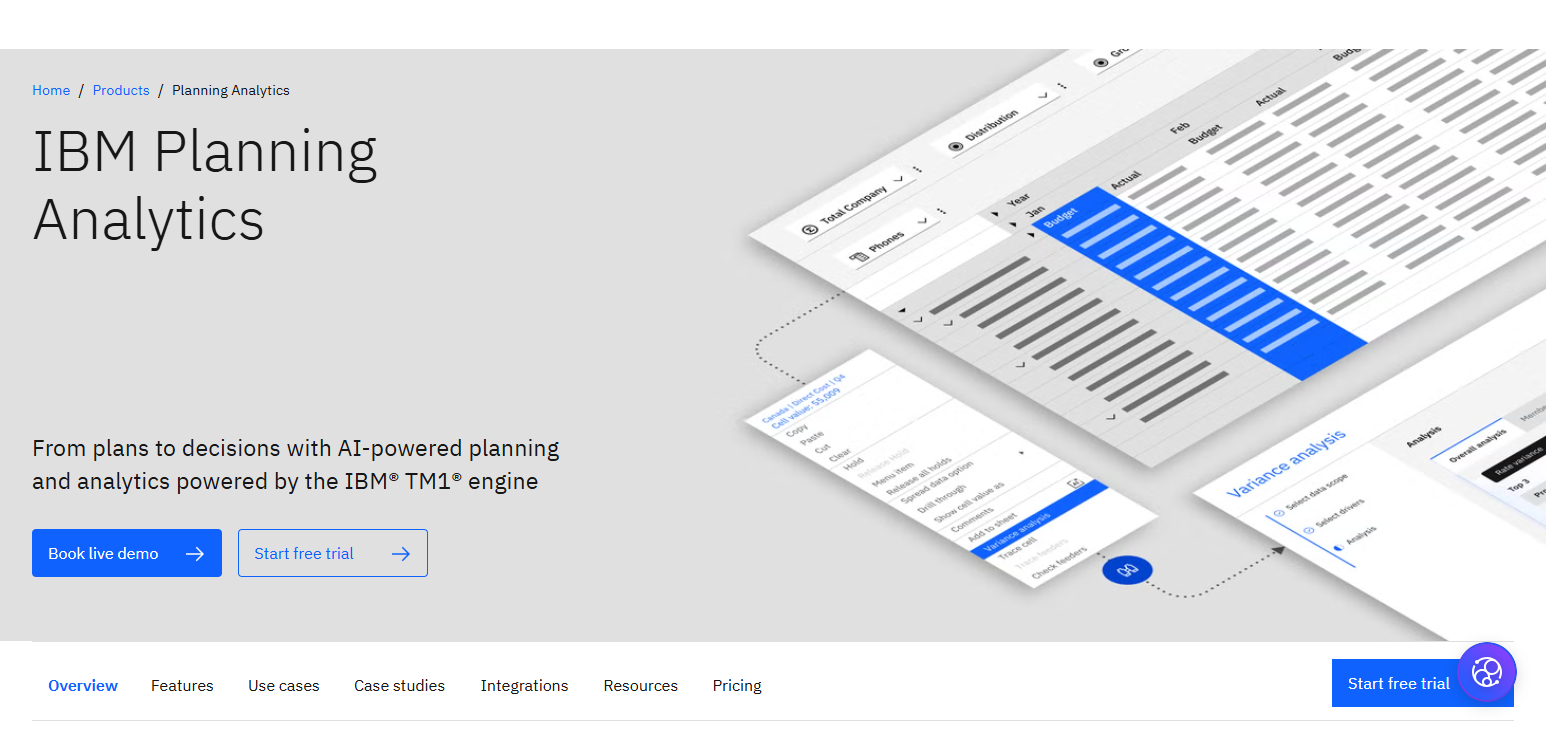
IBM Planning Analytics has been rated and recognized as one of the best financial planning & analysis (FP&A) software as it enables the finance team to make informed decisions when improving budgeting and planning for the enterprise for the long term.
Features of IBM Planning Analytics
- Predictive Analytics: Provides financial outcomes and trends through sophisticated analytics.
- Financial Modeling: Develops more sophisticated models for complex business planning.
- AI-Powered Insights: Offers smart suggestions on financial choices.
- Budget Management: Assists organizations in developing, reviewing, and controlling budgets.
- Data Analysis: Reviews past data to predict future trends.
- Enterprise Planning: Enables financial planning throughout the entire organization.
| Pros | Cons |
|---|---|
| Provides powerful predictive analytics and financial modeling. | Requires technical expertise for implementation. |
| Handles complex enterprise planning requirements effectively. | Interface may feel difficult for beginners. |
| Uses AI-powered insights for better decisions. | Higher maintenance requirements compared with simpler tools. |
| Supports large-scale financial data analysis. | Licensing costs can be expensive. |
| Offers strong reporting and budgeting capabilities. | Setup process can be time-consuming. |
6. Prophix
Prophix is an FP&A software that aims to promote efficiency by automating budgeting, financial consolidation, and planning processes.
Prophix is one of the best financial planning & analysis software because of its ability to promote the effective management of financial performance through seamless planning, as well its ability to increase the visibility of financial operations through reporting.
Features of Prophix
- Automated Budgeting: Reduces the effort to create a budget by automating the planning process.
- Financial Consolidation: Unifies multiple financial datasets in a single report.
- Reporting Automation: Less manual work is required to produce accurate financial reports.
- Workflow Management: Adds structured approval workflows to enhance planning processes.
- Performance Analysis: Aids organizations in the evaluation of financial performance.
- Data Accuracy: Automates financial calculations and processes to decrease errors.
| Pros | Cons |
|---|---|
| Automates budgeting and reporting workflows efficiently. | Limited advanced analytics compared with competitors. |
| Reduces manual financial reporting errors. | May require customization for specific needs. |
| Provides effective financial consolidation features. | Smaller user community compared to major platforms. |
| Improves workflow approval management. | Integration setup may require technical assistance. |
| Easy-to-use interface for finance teams. | Advanced features require additional learning. |
7. Jedox
Jedox is excellent financial planning & analysis (FP&A) software that offers end to end solutions for planning, forecasting, and performance management.
Its ability to harmonize financial data and allow the modeling of plans gives users the flexibility and control desired. Furthermore, its collaborative budgeting feature enables the progressive improvement of strategic financial planning.
Features of Jedox
- Flexible Planning: Delivers diverse custom planning solutions.
- Forecasting Tools: Builds precise forecasts with integrated financial data.
- Performance Management: Monitors achievement of financial metrics and business objectives.
- Data Consolidation: Empowers centralized financial analysis by unifying multiple data sources.
- Collaborative Budgeting: Assists teams in the budget creation process.
- Excel Integration: Merges the use of spreadsheets with optimal advanced planning.
| Pros | Cons |
|---|---|
| Offers flexible planning and forecasting capabilities. | Advanced customization requires technical knowledge. |
| Integrates well with Excel environments. | User interface may need improvement. |
| Supports collaborative financial planning processes. | Limited features compared with enterprise solutions. |
| Provides customizable reporting options. | Setup process can be complex. |
| Suitable for medium-sized businesses. | Requires training for advanced usage. |
8. Vena Solutions
Vena Solutions merges the ease of Microsoft Excel with sophisticated financial automation and reporting services and budgeting. This software helps finance teams manage the planning process while still using the flexibility of spreadsheets.
Best Financial Planning & Analytics (FP&A) Software like Vena Solutions, help businesses make the most of their forecasts, report with automation, and improve the caliber of financial collaboration.
Features of Vena Solutions
- Excel-Based Planning: Merges the familiarity of spreadsheets with the functionality of advanced FP&A.
- Budgeting: Simplifies the construction and administration of business budgets.
- Automation of Reports: Streamlines the reporting process and enhances the accuracy of finance reporting.
- Financial Consolidation: Integrates and structures all financial data.
- Workflow Control: Enhances financial governance by managing the approval processes.
- Data Structuring: Makes financial data easier to access and analyze.
| Pros | Cons |
|---|---|
| Provides familiar Excel-based financial planning experience. | Depends heavily on Microsoft Excel environment. |
| Simplifies budgeting and reporting automation. | Limited flexibility for highly complex models. |
| Improves collaboration between finance teams. | Advanced features may require additional setup. |
| Reduces manual spreadsheet management efforts. | Can become costly as users increase. |
| Offers strong workflow control features. | Less suitable for large enterprises. |
9. Board International
Board International is a one-stop shop for financial planning, analytics, and simulations, as well as advanced tools for strategic decision-making. This software helps companies assess the performance of their business, draw up forecasts, and analyze various financial scenarios.
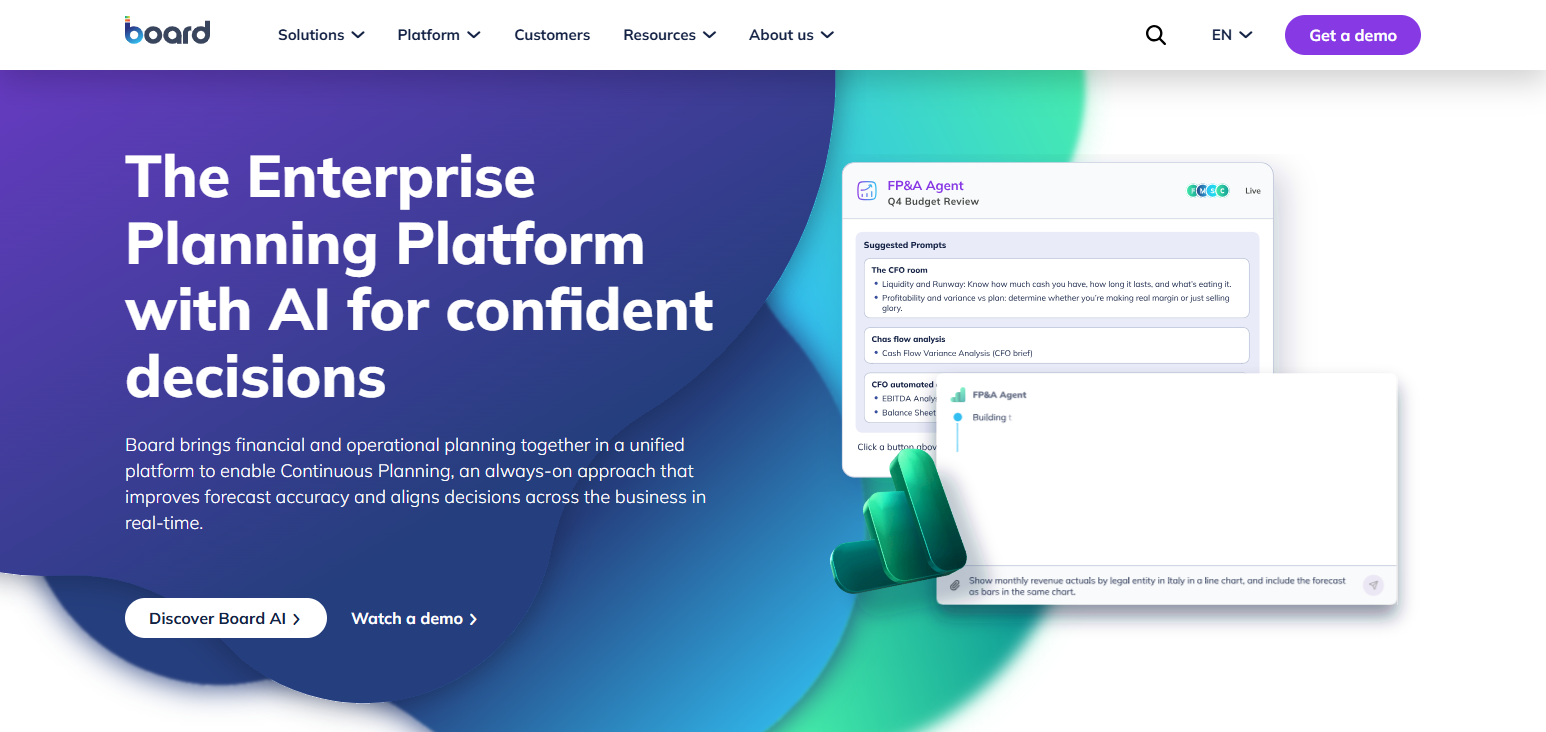
Best Financial Planning & Analytics (FP&A) Software like Board International promotes centralized data with planning and leads companies to make well-informed decisions.
Features of Board International
- Integrated Planning: Financial planning and analytics are seamlessly combined with business intelligence.
- Simulation and Scenario Analysis: Elaborates potential scenarios through sophisticated simulations.
- Financial Reporting: Develops comprehensive reports to aid in critical business decisions.
- Business Intelligence: Analytics and data processing are robust and advanced.
- Monitoring: Evaluates performance indicators and financial targets.
- Planning: Formulates business strategies that are effective and actionable for the long-term.
| Pros | Cons |
|---|---|
| Combines planning, analytics, and business intelligence tools. | Requires training for advanced functionality. |
| Provides powerful scenario analysis capabilities. | Implementation can be lengthy. |
| Supports strategic decision-making with real-time insights. | Pricing may not suit small companies. |
| Offers flexible financial reporting features. | Complex configurations need expert support. |
| Helps organizations monitor business performance effectively. | User adoption may require change management. |
10. Pigment
Pigment is a contemporary planning solution that simplifies collaborative budgeting, forecasting, and real-time analysis of company performance.
This software makes it easy for teams to develop sophisticated financial models and track performance of critical business metrics and provides comprehensive tools for financial planning and analysis.
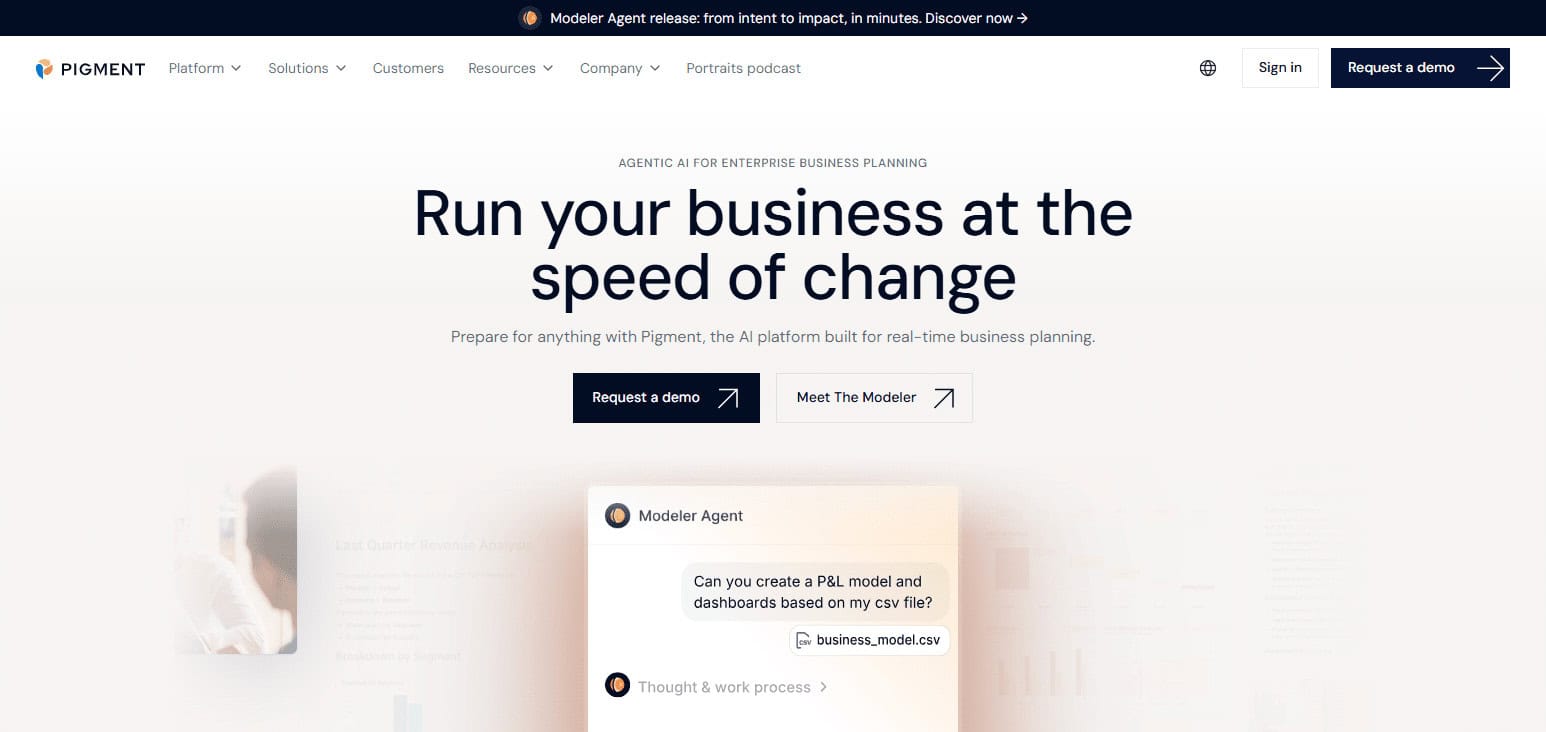
Best Financial Planning & Analytics (FP&A) Software like Pigment promotes collaboration and planning agility, as well as improved financial decision-making in enterprises.
Features of Pigment
- Collaborative Planning: Streamlines the construction of financial plans for teams.
- Modeling: Makes the construction of financial models flexible and responsive to alterations in the business.
- Insights: Performance data is and facilitates the improvement of and the speed of data-based decisions.
- Forecasting: Refines the accuracy of forecasts through sophisticated planning.
- Data Representation: Simplifies financial reporting through structured dashboards.
- Business Performance: Evaluates the metrics that matter and drives the performance of the business.
| Pros | Cons |
|---|---|
| Provides modern collaborative planning capabilities. | Newer platform with smaller market presence. |
| Offers flexible financial modeling features. | Advanced features may require learning time. |
| Enables real-time business performance monitoring. | Pricing details may vary by requirements. |
| Improves teamwork across departments. | Limited integrations compared with older platforms. |
| Provides intuitive and user-friendly interface. | May not fit highly complex enterprise needs. |
Cocnlsuion
In conclusion, the Best Financial Planning & Analysis (FP&A) Software has its strengths in the areas of business budgeting, forecasting, reporting, and financial strategizing. Oracle Fusion Cloud EPM and SAP Analytics Cloud, Anaplan,
Workday Adaptive Planning, et al. are some of the FP&A Tools with advanced analytics and automation. The right FP&A Software offers the opportunity to strategic business advances based on the analytics and automation offered by the software.
FAQ
Why should businesses use FP&A Software?
FP&A Software improves financial accuracy, automates manual processes, provides real-time insights, and helps companies make better financial decisions.
What are the key features of the Best Financial Planning & Analysis (FP&A) Software?
The best FP&A Software includes budgeting, forecasting, reporting, scenario planning, data integration, analytics, and performance management features.
Which companies can use FP&A Software?
Businesses of all sizes, including startups, mid-sized companies, and large enterprises, can use FP&A Software for financial planning.
How does FP&A Software improve forecasting accuracy?
FP&A Software uses historical data, predictive analytics, and automated models to create more accurate financial forecasts.