Today, I will talk about the Best Crypto Indexer Infrastructure Providers that help developers to access, structure and analyze blockchain data efficiently.
These platforms provide robust indexing tools, APIs, and real-time data solutions for Web3 applications, DeFi projects, and blockchain analytics. We will examine their main features, advantages and functions to assist you in selecting the appropriate provider for your requirements.
Key Points & Best Crypto Indexer Infrastructure Providers
| Provider | Explanation |
|---|---|
| The Graph | Decentralized protocol for indexing blockchain data and querying it efficiently. |
| Goldsky | Provides reliable blockchain indexing and real-time data pipelines for developers. |
| Envio | Offers high-performance blockchain indexing with flexible, developer-friendly data access. |
| Subsquid (SQD) | Delivers scalable blockchain data indexing for analytics and decentralized applications. |
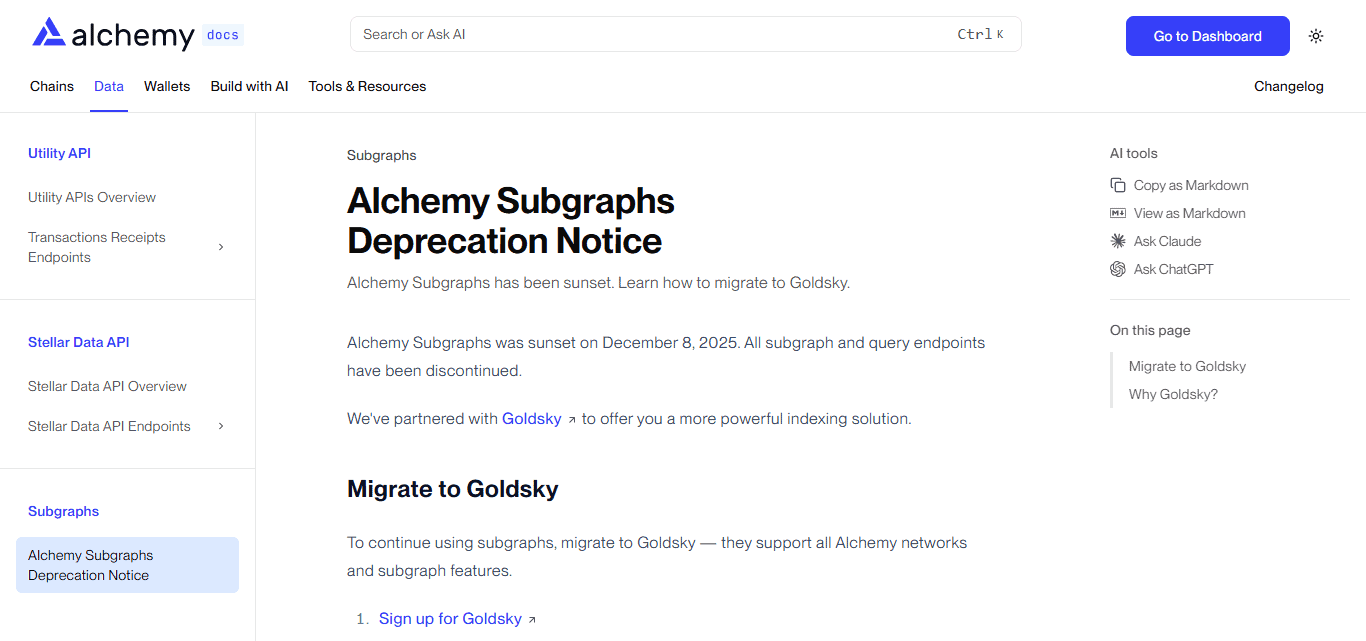
| Alchemy Subgraphs | Simplifies blockchain data querying through managed subgraph indexing infrastructure. |
| SubQuery | Provides decentralized blockchain data indexing for Web3 applications and analytics. |
| Covalent | Offers unified blockchain data APIs for analytics, research, and development. |
| Ponder | Enables developers to build custom blockchain indexers using TypeScript. |
| Bitquery | Delivers blockchain data APIs for transaction tracking and on-chain analytics. |
| Ormi | Supports blockchain data infrastructure for efficient indexing and application development. |
10 Best Crypto Indexer Infrastructure Providers In 2026
1. The Graph
The Graph is a top decentralized blockchain indexing protocol that makes it easier to access and query on-chain data. It uses subgraphs to organize smart contract events, transactions, and blockchain entities into structured datasets that applications can query with GraphQL APIs.
The Graph can be used by developers to build DeFi dashboards, NFT marketplaces, portfolio trackers, governance platforms and other Web3 applications. Its Substreams technology provides also high-throughput blockchain data processing and streaming.

The Graph is particularly helpful for teams looking for reusable blockchain data APIs and decentralized indexing infrastructure. The supported networks, the query costs and the available datasets differ per service.
The Graph Feature
| Feature | Explanation |
|---|---|
| Subgraph Indexing | Organizes blockchain data into structured, queryable datasets. |
| GraphQL APIs | Enables applications to retrieve indexed data through flexible queries. |
| Decentralized Infrastructure | Supports decentralized data indexing and querying through its network. |
| Multichain Support | Provides indexing solutions for supported blockchain networks and ecosystems |
2. Goldsky
Goldsky is a blockchain data infrastructure provider that offers managed indexing and real-time data pipelines for Web3 applications. Its subgraph services enable developers to convert smart contract events into structured, queryable data without having to manage the entire indexing infrastructure themselves.
Goldsky Mirror enables streaming of blockchain data into external databases and data systems, and is useful for analytics, monitoring and application backends. Goldsky allows developers to create DeFi interfaces, trading apps, dashboards and data-driven services that need timely blockchain updates.

The managed approach can reduce the need to maintain the infrastructure, but the supported networks, throughput, pricing and retention options should be checked against the requirements of the individual project.
Goldsky Feature
| Feature | Explanation |
|---|---|
| Managed Subgraphs | Simplifies deploying and maintaining blockchain indexing projects. |
| Real-Time Pipelines | Streams blockchain events into external databases and applications. |
| Historical Data | Helps developers process and access blockchain history efficiently. |
| Scalable Infrastructure | Supports growing data workloads for production Web3 applications. |
3. Envio
Envio is a performance-oriented blockchain indexing platform for developer flexibility and efficient access to historical and real-time on-chain data. With HyperIndex, developers are able to build custom indexers using familiar programming languages like TypeScript and JavaScript, and HyperSync speeds up the process of retrieving historical blockchain data.

Developers are able to define intelligent contracts and event handlers, process blockchain activity and expose indexed information via query interfaces such as GraphQL. If you need transaction histories, token activity, protocol analytics or frequently changing application data in your app
Then Envio is a good fit. Depending on operational requirements, deployment preferences, and available resources, teams can opt for managed hosting or self-host their infrastructure.
Envio Feature
| Feature | Explanation |
|---|---|
| HyperIndex | Enables developers to build custom blockchain indexers. |
| HyperSync | Accelerates historical blockchain data retrieval and processing. |
| TypeScript Support | Provides familiar development workflows for JavaScript and TypeScript developers. |
| Real-Time Indexing | Processes blockchain events for applications requiring timely data updates. |
4. Subsquid (SQD)
Subsquid (SQD) is a blockchain data infrastructure platform for scalable indexing, historical data extraction, and custom processing of on-chain data. Its tools allow developers to retrieve blockchain events, transaction receipts, traces and other relevant information without having to build each data pipeline from scratch.

Developers are able to create custom indexers to transform raw blockchain data into structured datasets for applications and analytics. Subsquid is especially useful for multichain projects, DeFi analytics, transaction monitoring and for apps that need large historical datasets.
It offers a modular architecture for flexible data extraction and processing workflows. Developers should evaluate network coverage, data availability, query requirements and costs of their intended workloads before choosing Subsquid.
Subsquid (SQD) Feature
| Feature | Explanation |
|---|---|
| Historical Data Extraction | Retrieves blockchain data for analytics and custom applications. |
| Custom Indexers | Enables developers to define and process application-specific blockchain data. |
| Scalable Processing | Supports large-scale blockchain data extraction and transformation workflows. |
| Multichain Capabilities | Provides tools for indexing data across supported blockchain networks. |
5. Alchemy Subgraphs
SubQuery is a blockchain indexing platform that allows developers to turn raw blockchain data into structured APIs for decentralized applications. It provides indexing tools that allow projects to define the data they need, process blockchain events, and query particular information without having to re-query full blockchain histories.
SubQuery supports a variety of blockchain ecosystems, both EVM compatible and non-EVM. The exact coverage depends on the service. Developers are able to use its infrastructure to build wallet apps, blockchain explorers, DeFi dashboards, NFT platforms, and analytical tools.
It also has a wider ecosystem of decentralized data services and other developer infrastructure. If you want customizable indexing workflows, multichain support and flexible access to blockchain data, then SubQuery is the way to go.
Alchemy Subgraphs Feature
| Feature | Explanation |
|---|---|
| Subgraph Indexing | Organized smart contract events into structured blockchain datasets. |
| GraphQL Queries | Allowed applications to retrieve indexed blockchain information. |
| Managed Hosting | Simplified subgraph deployment and infrastructure maintenance. |
| Developer Integration | Supported blockchain applications requiring customized data access. |
6. SubQuery
Covalent’s GoldRush developer platform offers unified blockchain data APIs that simplify access to on-chain data across multiple networks. Developers do not need to collect and decode the blockchain data themselves. They can use its APIs to fetch wallet balances, token transfers, transaction histories, token prices, NFT information, and other structured data sets.

This makes Covalent useful for portfolio trackers, crypto wallets, DeFi dashboards, accounting tools, trading applications and blockchain analytics platforms. The unified approach can reduce the complexity of integrating multiple blockchain networks into a single product.
Before deciding on any of the services for production applications, developers should check the available API endpoints, the supported chains, how fresh the data is, the rate limits, and pricing.
SubQuery Feature
| Feature | Explanation |
|---|---|
| Custom Indexing | Transforms blockchain data into application-specific datasets. |
| Multichain Support | Provides indexing tools for multiple supported blockchain ecosystems. |
| API Access | Makes indexed blockchain information available through query interfaces. |
| Flexible Infrastructure | Supports different deployment and data indexing requirements. |
7. Covalent
Covalent’s GoldRush developer platform provides unified blockchain data APIs that simplify access to on-chain data across multiple chains. Developers do not need to collect and decode the blockchain data themselves.
They can use its APIs to fetch wallet balances, token transfers, transaction histories, token prices, NFT information, and other structured data sets. This makes Covalent useful for portfolio trackers, crypto wallets, DeFi dashboards, accounting tools, trading applications and blockchain analytics platforms.

The unified approach can facilitate the integration of multiple blockchain networks into a single product. Before choosing the service for production applications, it is important to review individual API endpoints, supported chains, data freshness, rate limits, and pricing.
Covalent Feature
| Feature | Explanation |
|---|---|
| Unified APIs | Provides standardized access to data across supported blockchains. |
| Wallet Data | Retrieves balances, token holdings, and transaction histories. |
| NFT Information | Supports applications accessing NFT and digital asset data. |
| Blockchain Analytics | Helps developers build portfolio trackers and analytics dashboards. |
8. Ponder
Ponder is an open source framework built in TypeScript for building custom blockchain indexers, mostly for Ethereum and other EVM-compatible networks. It allows developers to track smart contract events, process transactions on the blockchain and store application-specific data in a database that can be efficiently queried.

Ponder highlights a familiar development experience for JavaScript and TypeScript teams, with type safety, local development tools and flexible deployment options. It can be used to build DeFi backends, token tracking systems, NFT apps, and real-time blockchain dashboards.
Ponder may require developers to set up and manage supporting infrastructure, unlike a fully managed indexing service. It’s a great option for teams who want more control over indexing logic and application architecture.
Ponder Feature
| Feature | Explanation |
|---|---|
| TypeScript Framework | Enables developers to build indexers using familiar TypeScript tools. |
| Smart Contract Events | Processes contract events to generate structured application data. |
| Database Integration | Stores indexed information for efficient application queries. |
| Custom Indexing Logic | Offers control over data processing and application requirements. |
9. Bitquery
Bitquery is a blockchain data infrastructure company that provides APIs to access historical and real time information from multiple blockchain networks. It provides structured data on transactions, token transfers, decentralized exchange trades, liquidity pools, NFTs, wallet activity and market movements on its platform.
GraphQL APIs allow developers to tailor queries and pull the information needed to build trading platforms, blockchain explorers, analytics dashboards, and research applications. Bitquery also provides streaming interfaces like WebSocket subscriptions and Kafka for applications that need continuous data updates.

Its analytics-driven datasets can reduce the work needed to decipher raw blockchain data. Before building, developers should verify the datasets, network-specific features, API limits and pricing supported for their use case.
Bitquery Feature
| Feature | Explanation |
|---|---|
| GraphQL APIs | Enables flexible querying of structured blockchain datasets. |
| Real-Time Streaming | Delivers blockchain updates for monitoring and analytics applications. |
| DEX Analytics | Provides data about trades, liquidity pools, and token activity. |
| Multichain Data | Supports blockchain analytics across numerous supported networks. |
10. Ormi
ORMI is a blockchain indexing infrastructure provider targeting Web3 developers, providing managed indexing and subgraph hosting services. Managed infrastructure allows developer teams to query indexed smart contract data instead of running every indexing component themselves.
These services are useful to provide apps with structured blockchain data for dashboards, transaction histories, DeFi interfaces and other data-heavy features.

Ormi is a great choice for developers looking for the best crypto indexer infrastructure providers, and it’s worth considering its supported networks, indexing performance, Graph-compatible workflows, query reliability, and integration options.
They should also look at the current documentation, service availability, pricing, and migration support before they commit to production use. These checks help ensure Ormi fits the technical requirements and long-term infrastructure needs of a project.
Ormi Feature
| Feature | Explanation |
|---|---|
| Managed Indexing | Aims to simplify blockchain data indexing for development teams. |
| Subgraph Hosting | Intended to support structured data access for Web3 applications. |
| Developer Integration | Can be evaluated for compatibility with existing blockchain workflows. |
| Infrastructure Evaluation | Check current network support, reliability, pricing, and documentation before adoption. |
Conclusion
To summarize, The Best Crypto Indexer Infrastructure Providers help developers to simplify blockchain data indexing, improve application performance, and access real-time on-chain information. Web3 projects may take advantage of different features offered by platforms like The Graph, Goldsky, Envio, Subsquid and Bitquery.
Evaluate supported networks, pricing, scalability, API capabilities, and ease of integration when choosing a provider to determine the best fit for your blockchain development needs.
FAQ
What are crypto indexer infrastructure providers?
They organize blockchain data for efficient querying.
Which provider is popular?
The Graph is widely used for decentralized indexing.
Is Goldsky suitable for real-time data?
Yes, it supports real-time data pipelines.
What does Envio offer?
It provides customizable, performance-focused indexing tools.