In this article, I am going to discuss Best Blockchain RPC Failover Services that helps developers to maintain reliable blockchain connectivity, reduce downtime, and improve application performance.
We will analyze their key features, supported blockchains, multi-provider support, pricing, and use cases to help you compare leading providers and choose the right RPC failover solution for your Web3 infrastructure needs.
How We Choose Best Blockchain RPC Failover Services
- Supported Blockchains: We evaluate the compatibility of blockchain networks and the coverage of supported ecosystem.
- Multiple Providers: We study the composition of multiple independent RPC infrastructure providers.
- Automatic Failover: We measure automatic endpoint switching during outage and performance degradation.
- Reliability and Uptime: We look at the uptime history, availability of infrastructure, and reliability of services.
- Performance and Latency: We analyze RPC response time, request processing and latency .
- Load Balancing: We efficiently evaluate the traffic distribution over available RPC endpoints.
- Monitoring and Analytics. We examine endpoint health checks, monitoring tools and performance analytics.
- Scalability: We assess the infrastructure capability in terms of handling increasing traffic of blockchain applications.
- Developer Support: Includes documentation, integration resources, technical assistance, and troubleshooting support.
Key Points & Best Blockchain RPC Failover Services
| Provider | Description |
|---|---|
| Chainstack | Managed blockchain nodes provide RPC access, monitoring, and resilient infrastructure across networks. |
| QuickNode | Developer-focused RPC endpoints combine broad chain support, scaling options, and dedicated clusters. |
| RouteMesh | Routes requests across multiple RPC providers, automatically failing over when endpoints degrade. |
| Uniblock | Unifies RPC access across providers, with automated routing, fallback, and data APIs. |
| NOWNodes | Provides multi-chain RPC endpoints, WebSockets, archive access, and indexed blockchain data APIs. |
| Alchemy | Combines multi-chain RPC with automatic node routing, failover, enhanced APIs, developer tools. |
| Infura | Offers reliable Ethereum-focused RPC infrastructure, with Consensys integration and selected network failover. |
| OnFinality | Delivers managed multi-chain RPC endpoints, usage analytics, monitoring, and dedicated node options. |
| GetBlock | Supplies shared and dedicated blockchain nodes, supporting scalable RPC access across networks. |
| dRPC | Decentralized RPC routing balances requests across providers, offering retries and geographic failover. |
10 Best Blockchain RPC Failover Services In 2026
1. Chainstack
Chainstack is a blockchain infrastructure provider that provides reliable RPC endpoints, managed nodes, and scalable infrastructure for Web3 applications. Its services help developers keep their blockchain connectivity consistent with global node infrastructure, monitoring and geographically distributed request routing.

Supported Blockchains Chainstack supports 70+ blockchain networks including Ethereum, Solana, Polygon, BNB Smart Chain, Arbitrum, Base and other Layer-2 ecosystems. Multi-Provider Support: Its Global Nodes offer geographically distributed routing on Chainstack infrastructure, and developers are able to configure external backup providers separately. Pricing: Chainstack provides a free Developer plan with 3 million monthly request units, and the paid Growth plans begin at around $49 per month.
Chainstack Key Features
- RPC Nodes Management: Reliable blockchain connectivity and app development with dedicated & shared nodes.
- Global Node Infrastructure Supports geographically distributed infrastructure to improve network access and performance.
Monitoring and Scalability: Offers infrastructure monitoring, usage analytics and scalable resources for scaling Web3 applications.
Chainstack – Use Cases
| Use Case | Explanation |
|---|---|
| DeFi Applications | Maintains blockchain connectivity for decentralized exchanges, lending platforms, and liquidity protocols. |
| Enterprise Blockchain | Supports businesses building blockchain-based applications with managed node infrastructure. |
| Web3 Gaming | Provides RPC connectivity for blockchain games requiring consistent transaction and data access. |
| Multi-Chain dApps | Helps developers connect applications to multiple blockchain networks through managed RPC endpoints. |
2. QuickNode
QuickNode offers managed blockchain RPC infrastructure for developers building decentralized applications, wallets, DeFi platforms, and Web3 services. Its platform offers scalable endpoints, dedicated clusters, WebSockets, Streams and Webhooks to meet demanding blockchain workloads.
Supported Blockchains: QuickNode supports 75+ blockchain networks including Ethereum, Solana, Polygon, Arbitrum, Base, and BNB Chain. Multi-Provider Support QuickNode provides dedicated infrastructure and distributed endpoint capabilities
But external multi-provider failover typically needs to be configured separately or handled by routing tools. Pricing: It employs credit-based billing for its plans, and the paid Build plans begin at around $49 a month. The availability of trials is subject to the current terms.
QuickNode Key Features
- High-Performance Endpoints: Provides scalable RPC infrastructure to deal with high request volumes and application traffic.
- Dedicated Node Infrastructure: Offers dedicated clusters and custom infrastructure for heavy blockchain workloads.
- Developer Tools: Tools for Web3 development like WebSockets, Streams, Webhooks and monitoring.
- QuickNode– Multi-Chain RPC Support: Blockchain connectivity with Ethereum, Solana, Polygon, Arbitrum, Base and more.
QuickNode – Use Cases
| Use Case | Explanation |
|---|---|
| NFT Marketplaces | Supports NFT minting, marketplace transactions, and blockchain asset data retrieval. |
| Cryptocurrency Wallets | Provides RPC connectivity for wallet balances, transaction submissions, and blockchain interactions. |
| DeFi Protocols | Supports decentralized exchanges, staking platforms, and smart contract interactions. |
| Real-Time Applications | Uses WebSockets, Streams, and Webhooks for applications requiring continuous blockchain updates. |
3. RouteMesh
RouteMesh could be looked at in a blockchain RPC failover comparison because of its planned function in handling RPC endpoint routing and connection reliability. When considering key functionalities, it’s important to think about traffic distribution, monitoring of endpoint health, backup routing, and automatic switching when primary connections are lost.

Supported Blockchains: Look at its current network directory for Ethereum, Polygon, Solana, Arbitrum, Base and other supported networks before picking it. Multi-Provider Support: The key metrics for evaluation are whether it connects to independent RPC providers, checks their status and redirects requests automatically.
RouteMesh Key Features
- Provider Redundancy: Connecting multiple RPC providers can be useful to avoid dependence on a single provider.
- Automatic Failover: Check if it offers automatic failover if the primary RPC endpoints are unreachable.- Endpoint Monitoring: Get familiar with its health-check, performance-monitoring, and routing-management capabilities.
- RouteMesh- RPC Request Routing: Handles the routing of blockchain requests through available RPC endpoints.
RouteMesh – Use Cases
| Use Case | Explanation |
|---|---|
| RPC Redundancy | Helps applications reduce dependency on a single RPC endpoint through multi-provider routing. |
| High-Traffic dApps | Routes blockchain requests across available endpoints to manage application traffic. |
| Endpoint Failover | Provides a potential solution for maintaining connectivity when primary RPC endpoints become unavailable. |
| Multi-Provider Infrastructure | Supports use cases requiring centralized management of connections to different RPC providers. |
4. Uniblock
Uniblock is a Web3 infrastructure platform that aims to simplify the connection to blockchain through unified API access and RPC infrastructure. It enables developers to connect applications with blockchain networks without managing each connection to nodes themselves.
Supported Blockchains: Check its current coverage across Ethereum, Polygon, Arbitrum, Optimism, Base, BNB Chain, and other EVM-compatible networks. Multi-Provider Support: The multi-provider approach is particularly good for teams that want to aggregate RPC connections, distribute requests, and have alternative endpoints.
Developers should verify provider selection, automatic failover and health-check capabilities before deployment. Pricing: Check out the API usage allowances, subscription packages, request limits and custom enterprise pricing to consider before you choose a plan.
Uniblock Key Features
- Multi-Chain Connectivity: Allows developers to access multiple blockchain networks through a single platform.
- RPC Provider Integration: Aimed at making blockchain infrastructure and other sources of data easier to access.
- Flexible Infrastructure: Enables Web3 developers to manage blockchain connectivity without integrating each network provider individually.
- Uniblock- Unified API Access: Provides a unified API infrastructure to simplify the blockchain connectivity experience.
Uniblock – Use Cases
| Use Case | Explanation |
|---|---|
| Multi-Chain Applications | Helps developers connect applications with multiple blockchain networks through unified API access. |
| Web3 Data Platforms | Supports applications that require blockchain information from different networks and infrastructure sources. |
| DeFi Development | Simplifies blockchain API integration for decentralized finance applications and protocols. |
| Blockchain Analytics | Helps applications access blockchain data for monitoring, reporting, and analytical purposes. |
5. NOWNodes
NOWNodes is a blockchain node infrastructure and API service that helps developers access blockchain data via managed RPC endpoints. Its platform enables applications that require blockchain transactions, historical information and continuous network connectivity.
Supported Blockchains NOWNodes supports 120+ blockchain networks including Bitcoin, Ethereum, Litecoin, BNB Chain, Polygon and other popular ecosystems. Multi-Provider Support: It offers access to multiple blockchain networks through a single service, but this is not the same as independently verified external-provider automatic failover.
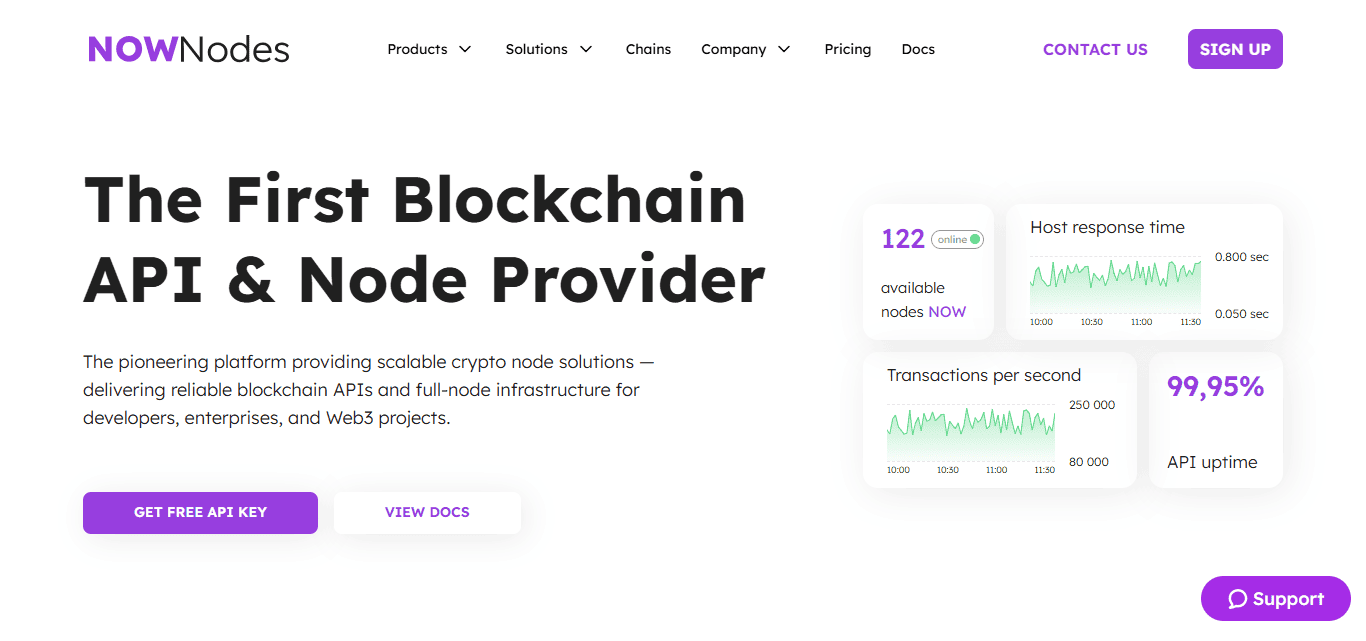
Pricing NOWNodes has subscriptions based on the number of requests, and also has a free plan to try it out (limited requests). The paid plans start from around €20/month. Sales may be required for dedicated infrastructure pricing.
NOWNodes Key Features
- Extensive Blockchain Coverage: Supports numerous networks, including Bitcoin, Ethereum, Litecoin, Polygon, and BNB Chain.
- Shared and Dedicated Nodes: Offers different node infrastructure options based on application requirements.
- Blockchain Data Access: Provides RPC endpoints, WebSockets, and access to blockchain information.
- Scalable API Infrastructure: Supports applications requiring blockchain connectivity, transaction processing, and historical data access.
NOWNodes – Use Cases
| Use Case | Explanation |
|---|---|
| Blockchain Explorers | Provides blockchain data access for tracking transactions, addresses, and network activity. |
| Cryptocurrency Exchanges | Supports blockchain connectivity for deposits, withdrawals, and transaction verification. |
| Payment Applications | Helps cryptocurrency payment platforms communicate with supported blockchain networks. |
| Historical Data Platforms | Provides access to historical blockchain information through supported node infrastructure. |
6. Alchemy
Alchemy is a Web3 development platform that offers blockchain RPC infrastructure, enhanced APIs, developer tools, and application monitoring. It helps developers build decentralized applications and manage blockchain requests with scalable infrastructure.
Supported Blockchains: Alchemy supports a wide range of networks including Ethereum, Solana, Polygon, Arbitrum, Optimism, Base and other blockchain ecosystems. Multi-Provider Support: The infrastructure provides managed RPC connectivity and routing capabilities.

Applications requiring independent external-provider failover will require additional configuration. Pricing: Alchemy provides a free monthly allowance of around 30 million compute units, with pay-as-you-go pricing starting at about $0.525 per million compute units. Enterprise packages offer tailored capacity and service configurations.
Alchemy Key Features
- Enhanced RPC APIs: Provides advanced blockchain APIs for accessing network data and executing blockchain requests.
- Multi-Chain Support: Supports Ethereum, Solana, Polygon, Arbitrum, Base, and additional blockchain networks.
- Developer-Friendly Tools: Offers debugging, monitoring, WebSockets, and application development resources.
- Reliable Infrastructure: Provides managed RPC infrastructure designed for scalable Web3 applications and blockchain services.
Alchemy – Use Cases
| Use Case | Explanation |
|---|---|
| NFT Applications | Supports NFT marketplaces, minting platforms, and digital asset management applications. |
| DeFi Platforms | Provides blockchain APIs for smart contracts, token balances, and decentralized financial services. |
| Web3 Gaming | Supports blockchain game development through scalable RPC access and developer tools. |
| Wallet Development | Helps developers build wallets with transaction monitoring and blockchain data access. |
7. Infura
Infura is a blockchain infrastructure platform offering RPC endpoints, APIs and developer tools to access decentralized networks. Web3 developers are able to connect wallets, decentralized applications and blockchain services without needing to run their own full node infrastructure.
Supported Blockchains Infura supports Ethereum, Polygon, Arbitrum, Optimism, Base, and other supported blockchain networks, with varying coverage based on the product. Multi-Provider Support Limited failover capabilities through partner infrastructure with its decentralized infrastructure initiatives, though this varies by network and configuration.

Pricing: Infura offers around three million daily credits for free and its paid Developer plan has been quoted at around $50 per month. Custom plans may be needed for higher volume needs.
Infura Key Features
- Reliable RPC Endpoints: Provides managed blockchain endpoints for connecting decentralized applications to blockchain networks.
- Multi-Chain Connectivity: Supports Ethereum, Polygon, Arbitrum, Optimism, Base, and other supported networks.
- Developer Integration: Offers APIs and tools for building wallets, dApps, and Web3 applications.
- Infrastructure Redundancy: Provides managed infrastructure and selected decentralized routing capabilities, depending on network availability.
Infura – Use Cases
| Use Case | Explanation |
|---|---|
| Ethereum dApps | Provides RPC connectivity for decentralized applications interacting with Ethereum smart contracts. |
| Cryptocurrency Wallets | Enables wallets to retrieve balances, submit transactions, and access blockchain information. |
| DeFi Infrastructure | Supports decentralized finance applications requiring reliable blockchain API connectivity. |
| Web3 Development | Helps developers integrate blockchain networks into applications without operating their own nodes. |
8.OnFinality
OnFinality is a blockchain infrastructure provider, offering managed RPC endpoints, dedicated nodes and blockchain indexing solutions. Its services enable developers to deploy, monitor and scale Web3 applications, while providing reliable access to blockchain data.
Supported Blockchains OnFinality supports Ethereum, Polkadot, Substrate-based chains and other mainstream blockchain ecosystems. Multi-Provider Support – Managed infrastructure can provide scalable endpoint access, dedicated nodes and monitoring.

Failover to external providers may require additional configuration. Pricing: OnFinality has usage based plans with a free allowance of about 400k response units per day. Its Growth plan is around $49 a month, with enterprise options for larger capacities.
OnFinality Key Features
- Managed Blockchain Nodes: Provides hosted blockchain nodes and RPC endpoints for Web3 developers.
- Multi-Chain Infrastructure: Supports Ethereum, Polkadot, Substrate-based networks, and other blockchain ecosystems.
- Performance Monitoring: Offers usage analytics and infrastructure monitoring to help track node performance.
- Dedicated Node Options: Provides dedicated infrastructure for applications requiring greater control and resources.
OnFinality – Use Cases
| Use Case | Explanation |
|---|---|
| Polkadot Ecosystem | Supports applications interacting with Polkadot and Substrate-based blockchain networks. |
| Enterprise Applications | Provides managed node infrastructure for businesses developing blockchain-based solutions. |
| Blockchain Indexing | Supports blockchain data indexing and querying for applications requiring organized network information. |
| Custom Blockchain Networks | Helps developers access and manage infrastructure for supported blockchain ecosystems. |
9. GetBlock
GetBlock provides developers creating Web3 apps, cryptocurrency platforms, and decentralized services with blockchain node infrastructure and RPC API services. It has a platform that provides shared nodes, dedicated nodes, archive access and scalable blockchain connectivity. Supported Blockchains GetBlock supports over 130 blockchain networks including Ethereum, Bitcoin, Polygon, Solana, BNB Chain and other popular networks.

Multi-Provider Support: It offers multiple node access options like shared and dedicated infrastructure but automatic failover for external providers should be separately configured and verified. Pricing: GetBlock offers shared subscriptions starting at $49/month, as well as dedicated infrastructure and custom enterprise plans. Pricing is based on compute units, request volume and infrastructure needs.
GetBlock Key Features
- Extensive Network Support: Provides RPC access to numerous blockchain networks, including Bitcoin, Ethereum, Solana, and Polygon.
- Shared and Dedicated Nodes: Offers flexible node infrastructure for different application workloads.
- Archive Node Access: Supports access to historical blockchain data through available archive infrastructure.
- Scalable RPC Infrastructure: Helps developers manage blockchain requests through configurable node access and API services.
GetBlock – Use Cases
| Use Case | Explanation |
|---|---|
| Cryptocurrency Exchanges | Provides node connectivity for transaction processing and blockchain deposit verification. |
| Blockchain Explorers | Supports transaction tracking, address monitoring, and blockchain information retrieval. |
| DeFi Applications | Enables decentralized finance platforms to interact with smart contracts and blockchain networks. |
| Payment Gateways | Helps payment services process cryptocurrency transactions through blockchain RPC endpoints. |
10. dRPC
dRPC is a Decentralized RPC Infrastructure Platform that improves blockchain connectivity through distributed node providers, smart routing, and automatic fallback mechanisms. Its routing infrastructure allows developers to keep accessing their blockchain data even when individual RPC endpoints are down or suffering performance issues.
Supported Blockchains dRPC supports more than 130 blockchain networks including Ethereum, Polygon, Arbitrum, Base, Optimism, and other major ecosystems. Multi-Provider Support: Its Nodehaus routing infrastructure balances requests across independent

RPC providers with load balancing and fallback mechanisms for better availability. Pricing: dRPC offers free usage allowances, pay-as-you-go and subscription pricing. The published pricing is in the ballpark of $6 per million requests, depending on the plan you select.
dRPC Key Features
- Decentralized RPC Routing: Distributes blockchain requests across independent RPC infrastructure providers.
- Multi-Provider Support: Connects multiple node providers to reduce reliance on a single RPC endpoint.
- Automatic Failover: Supports fallback routing when individual RPC providers experience downtime or performance problems.
- Load Balancing: Distributes incoming requests across available infrastructure to improve connectivity and resource utilization.
dRPC – Use Cases
| Use Case | Explanation |
|---|---|
| RPC Failover Infrastructure | Routes requests across independent providers to help maintain blockchain connectivity during outages. |
| High-Availability dApps | Helps decentralized applications reduce single-provider dependency through distributed RPC infrastructure. |
| Multi-Provider Routing | Connects applications with different RPC providers for improved endpoint availability and redundancy. |
| Global Web3 Applications | Distributes blockchain requests across available infrastructure to support geographically distributed users. |
Conclusion
To summarize, choosing the best blockchain RPC failover service comes down to network compatibility, reliability, performance, multi-provider support, and pricing. Web3 apps can tap into different infrastructure capabilities like Chainstack, QuickNode, Alchemy, Infura, and dRPC.
Assess the automatic failover, uptime, scalability, and monitoring capabilities of the provider before selecting one to ensure continuous blockchain connectivity and sustained application performance over time.
FAQ
What are blockchain RPC failover services?
Blockchain RPC failover services automatically redirect requests to backup endpoints when primary connections experience downtime, errors, or performance issues, maintaining application connectivity.
Why are RPC failover services important?
They reduce downtime, improve availability, prevent connection failures, and maintain reliable blockchain communication for Web3 applications.
Which are the best blockchain RPC failover services?
Popular options include Chainstack, QuickNode, RouteMesh, Uniblock, NOWNodes, Alchemy, and Infura, depending on infrastructure requirements.
What is multi-provider RPC support?
Multi-provider RPC support connects applications with multiple independent providers, reducing dependency on a single endpoint.