In this article, I will cover the Best Crypto Prime Brokerage Providers for 2026, looking at their key features, institutional services, supported cryptocurrencies, security, custody solutions, and trading capabilities.
You will also learn their main pros and cons, helping institutional investors, hedge funds, and professional traders compare top providers and choose the right crypto prime brokerage platform for their investment needs.
How we select the best Crypto Prime Brokerage providers
- Regulatory Compliance: Review licensing, regulatory approvals, and compliance in supported jurisdictions.
- Security & Custody: Review cold storage, insurance coverage, asset segregation, and security infrastructure.
- Supported Cryptocurrencies: Compare crypto selection, supported coins, and blockchain networks.
- Trading & Liquidity: Look at trading options, liquidity depth, execution speed, and market access.
- Institutional Services: Assess custody, lending, financing, staking, settlement, and portfolio management.
- Pricing & Fees: Look at trading fees, custody fees, financing costs and withdrawal fees.
- Institutional Support: Evaluate dedicated account management, customer service and technical support.
- Platform Technology: Consider API integration, reporting tools, trading infrastructure and reliability of the platform.
- Reputation & Experience: Look at the experience in the industry, institutional partnerships, client feedback, and market presence.
- Global Reach: Assess country support, regional availability, and international coverage of services for institutions.
Key Points & Best Crypto Prime Brokerage Providers
| Provider | Explanation |
|---|---|
| FalconX | Provides institutional crypto trading, liquidity, financing, and execution services through one platform. |
| Coinbase Prime | Offers institutional trading, custody, financing, and advanced portfolio management for digital assets. |
| BitGo | Delivers secure crypto custody, trading, lending, and settlement solutions for institutions. |
| Anchorage Digital Bank | Provides regulated digital asset custody, trading, staking, and institutional financial services. |
| Gemini Custody & Prime | Combines institutional crypto custody, trading, financing, and secure digital asset management solutions. |
| Komainu | Specializes in institutional digital asset custody, collateral management, and regulated trading services. |
| Zodia Custody | Offers institutional-grade crypto custody, settlement, and connectivity for financial institutions globally. |
| Sygnum Bank | Provides regulated digital asset banking, custody, trading, and wealth management services. |
| Hex Trust | Delivers institutional crypto custody, staking, tokenization, and financial infrastructure solutions globally. |
| Nexo Institutional | Offers institutional crypto lending, trading, liquidity, and structured digital asset solutions. |
10 Best Crypto Prime Brokerage Providers In 2026
1. FalconX
FalconX is an institutional crypto prime brokerage platform providing digital asset trading, liquidity, financing, derivatives and custody solutions. It has more than 400 tokens, opening up a wide range of crypto markets for institutions, with regional limitations.
The security and custody services include integrated custody and access to qualified custody via Fireblocks Trust Company for eligible U.S. clients. Most of FalconX’s clients are hedge funds, asset managers, family offices, venture funds, miners, banks and other financial institutions.
Our institutional support includes specialized trading expertise, 24/7 global market coverage, financing assistance and bespoke execution solutions to help clients navigate complex digital asset portfolios.
FalconX Features
- Liquidity Access: Provides institutions with access to deep liquidity across a range of digital asset markets.
- Financing Solutions: Provides borrowing, lending and capital efficient trading facilities.
- Portfolio Management: provides institutional clients with execution, risk management and portfolio services
FalconX Pros & Cons
| Pros | Cons |
|---|---|
| Deep liquidity: aggregates many venues and market makers for tight pricing on large orders. | Institutions only: retail and small funds are generally not served. |
| Full-stack services: covers spot, derivatives, lending and clearing in one relationship. | Not a bank: it lacks the regulatory protections of a chartered bank or trust. |
| Strong credit and financing: offers margin and credit lines to trading firms. | Third-party custody: it often relies on partners for storage, which adds counterparty layers. |
| Fast execution and API: its APIs suit algorithmic and high-volume desks. | Pricing opacity: spreads and fees are negotiated, so costs are harder to compare. |
2. Coinbase Prime
Coinbase Prime is an institutional crypto prime brokerage that combines trading, financing, custody, staking, and portfolio management. It supports more than 275 digital objects that can be traded and custody for more than 470 assets across 52 blockchain networks, subject to jurisdiction and custodian availability.
The security framework includes qualified custody through Coinbase Custody Trust Company, offline asset storage, institutional controls and independent SOC 1 and SOC 2 audits. Coinbase Prime is built for hedge funds, asset managers, investment advisors, corporates, family offices and financial institutions.
Institutional support includes dedicated account management, trading support, API connectivity, reporting tools and integrated operational services to manage institutional digital asset portfolios.
Coinbase Prime Features
- Advanced Trading: Tools for institutional spot trading, execution and portfolio management.
- Secure Custody: Institutional-grade custody and protection of crypto assets.
Staking Services: Offers eligible institutions the ability to earn rewards on supported electronic assets. - Integrated Platform: Trading, financing, custody and reporting within a single ecosystem.
Coinbase Prime Pros & Cons
| Pros | Cons |
|---|---|
| Large, public company: its scale and disclosure give counterparties more transparency. | Higher fees: costs can be higher than some competitors unless you negotiate on volume. |
| Integrated custody and trading: assets can be traded while staying in custody. | Concentration risk: many funds and ETFs use Coinbase, so a single failure would have wide impact. |
| Staking and financing: it offers yield products and lending for institutions. | US-centric: some products and features are limited outside the US. |
| Insurance and compliance: it holds crime insurance and strong regulatory standing. | Regulatory exposure: as a high-profile US firm, it faces frequent regulatory scrutiny. |
3. BitGo
BitGo offers institutional crypto prime brokerage services including digital asset trading, financing, collateral management, custody and settlement. Its platform supports multiple cryptocurrencies from different blockchain networks and the eligibility of assets is subject to custody and trading agreements.
Security and custody are underpinned by regulated custody infrastructure, multi-signature technology, multi-party computation, offline cold storage, segregated wallets and insurance coverage. BitGo serves hedge funds, asset managers, financial institutions, exchanges, corporations and high net-worth individuals.
It’s institutional support features dedicated OTC trading coverage, API integrations, electronic execution, personalized account assistance and 24/7 settlement infrastructure to help organizations manage electronic assets and institutional trading operations.
BitGo Features
- Multi Asset Custody: Provides secure custody for multiple cryptocurrencies and digital assets in general.
- Multi-Signature Security: Incorporates advanced wallet security and transaction authorization protocols.
- Trading Infrastructure: Institutional trading, settlement and liquidity solutions.
- Insurance Protection: Provides insurance coverage for qualifying custodial digital property.
BitGo Pros & Cons
| Pros | Cons |
|---|---|
| Qualified custodian: it is a regulated trust company that institutions can use for compliance. | Smaller prime offering: its trading and lending are less extensive than the largest prime brokers. |
| Multi-signature security: funds are protected by multiple keys with strong operational controls. | Fee structure: custody and transaction fees can add up for smaller clients. |
| Wide asset support: it supports a large number of tokens, including newer assets. | US focus: regulatory coverage is strongest in the US, which may limit some global clients. |
| Strong integrations: it works with exchanges, wallets and trading platforms. | Custody-first model: execution depth depends on its partners and connected venues. |
4. Anchorage Digital Bank
Anchorage Digital Bank offers institutional digital asset services including qualified custody, trading, staking, settlement and financial infrastructure. Its supported cryptocurrency selection includes Bitcoin, Ethereum and many other digital currencies, with new assets being added based on institutional demand and internal due diligence.
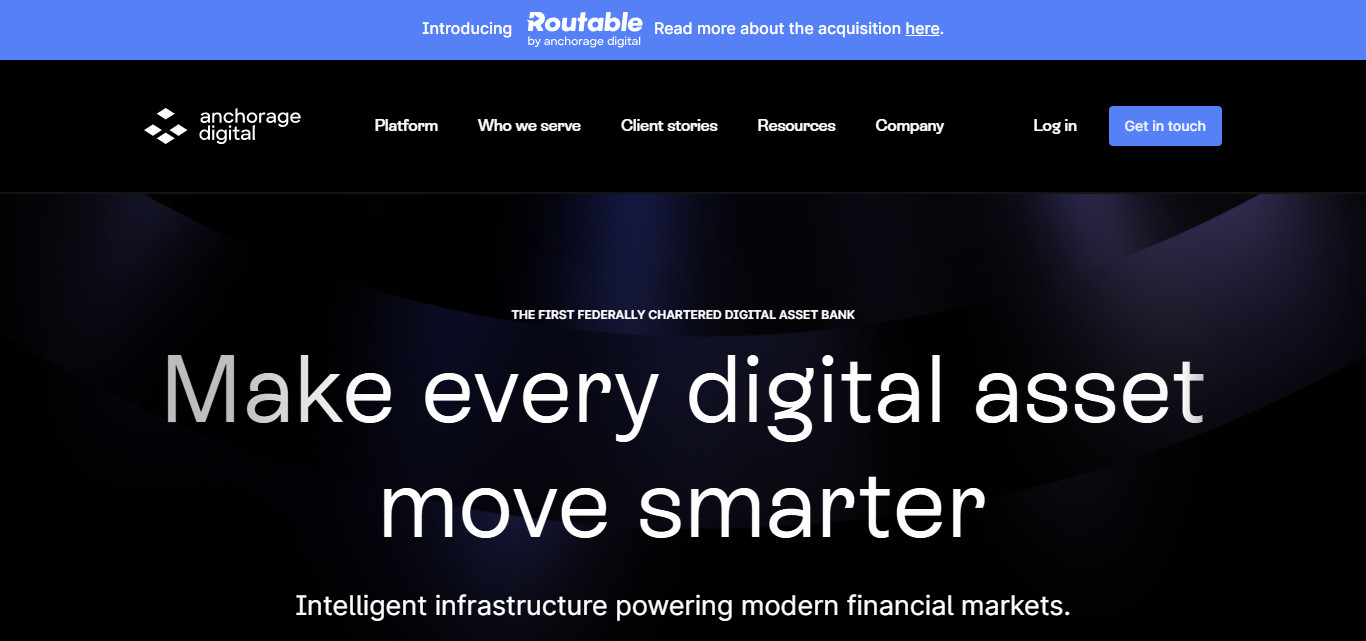
Security and custody depend on federally regulated banking infrastructure, bankruptcy-remote segregated custody, biometric transaction approvals and institutional control frameworks. Hedge funds, venture capital firms, asset managers, corporate treasuries, banks, financial institutions, family offices and token issuers use Anchorage.
Institutional support includes dedicated specialists, 24/7 transaction authorization, customized custody, operational support and integrated financial services to manage digital asset portfolios.
Anchorage Digital Bank Features
- Regulated Custody: Offers digital asset custody by leveraging a federally regulated banking infrastructure.
Institutional Security: Employs sophisticated security controls and protective custody arrangements. - Staking Solutions: Supports staking services for eligible cryptocurrencies and institutional customers.
- Banking Infrastructure: Custody, trading, governance and financial services for institutions.
Anchorage Digital Bank Pros & Cons
| Pros | Cons |
|---|---|
| Federally chartered bank: it is regulated as a national trust bank, which is rare in crypto. | US-focused: international clients may find fewer services and jurisdictions covered. |
| Secure custody: its custody technology uses hardware security modules. | Narrower asset list: it supports fewer tokens than some competitors. |
| Integrated trading and staking: it covers custody, settlement and staking in one place. | Past regulatory history: it has had regulatory actions (an OCC consent order), so check their current status. |
| Institution-grade controls: it has strong governance, policy and compliance tooling. | Onboarding: due diligence can be slow and demanding. |
5. Gemini Custody & Prime
Gemini Custody and Gemini Prime is an institutional crypto custody, trading and OTC execution provider. Its custody platform supports 100+ cryptocurrencies including Bitcoin, Ethereum, Solana, XRP, Litecoin and various stablecoins subject to jurisdiction.
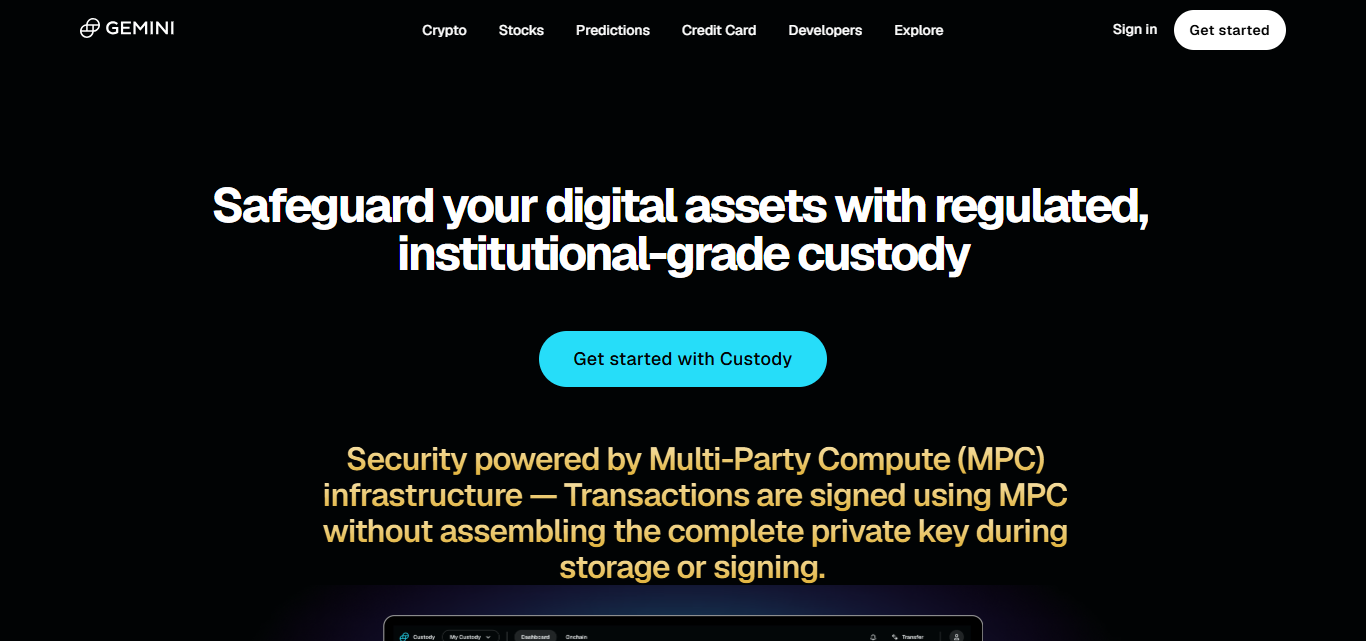
Security and custody includes offline cold storage, multi-party technology, role-based permissions, biometric control of access and segregated customer assets. Gemini serves institutional investors, hedge funds, asset managers, corporates, family offices and professional trading firms.
Institutional support includes electronic OTC trading, API connectivity, dedicated account services, reporting capabilities and trading directly with eligible assets held in custody, allowing institutions to manage digital asset operations securely.
Gemini Custody & Prime Features
- Institutional Custody: Provides secure custody infrastructure for institutional-grade cryptocurrency storage.
- OTC Trading: Offers over-the-counter trading to qualified institutional customers.
- Security Controls: Utilizes cold storage, access permissions and advanced security processes.
- Portfolio Services: supports institutional asset management, trading operations and reporting.
Gemini Custody & Prime Pros & Cons
| Pros | Cons |
|---|---|
| Regulated in New York: it is a trust company under NYDFS oversight. | Smaller liquidity pool: execution depth is lower than at the largest prime brokers. |
| Security track record: it has SOC certifications and cold storage practices. | Reputation issues: the Gemini Earn / Genesis dispute still affects some institutions’ views. |
| Clean, usable platform: the interface and reporting are straightforward. | Business pressures: the company has been reporting losses, so check its financial health. |
| Custody and trading together: institutions get both from one provider. | Fewer advanced products: it offers limited derivatives and credit compared with larger rivals. |
6. Komainu
Komainu is an institutional digital asset custody service provider that offers secure storage, collateral management, staking and settlement capabilities. Its supported cryptocurrencies include Bitcoin, Ethereum, Solana, XRP, Litecoin, Cardano, Avalanche, Polkadot and many more tokens.

Security and custody arrangements include segregated on-chain wallets, off-balance sheet asset structures, bankruptcy-remote protection, and institutional governance controls. Komainu primarily serves hedge funds, asset managers, financial institutions, investment firms and digital asset businesses.
Institutional support includes personalized client support, operational guidance, custody management and regulatory-focused services that help organizations safeguard electronic assets while maintaining efficient institutional investment and trading operations.
Komainu Features
- Digital Asset Custody: Offers institutional custody services for cryptocurrencies and digital assets of any kind.
- Collateral Management: Allows collateralized transactions and digital asset management.
- Settlement Services: Provides secure settlement for institutional trading activities.
- Regulatory Focus: We have compliance driven custody infrastructure and governance procedures.
Komainu Pros & Cons
| Pros | Cons |
|---|---|
| Strong institutional backing: it is a joint venture of Nomura, Ledger and CoinShares. | Custody-centric: trading and prime services are less developed. |
| Cold-storage security: it uses offline storage with bank-style controls. | Smaller scale: its client base and asset support are limited compared with larger players. |
| Regulated across jurisdictions: it is licensed in places such as Jersey and the UAE. | Regional footprint: its presence in the US and some other markets is limited. |
| Collateral management: its tri-party solutions let clients use assets as collateral without moving them. | Pricing and minimums: it targets large institutions, which can exclude smaller clients. |
7. Zodia Custody
Zodia Custody is a cryptocurrency custody and settlement solution for professional investors, as well as a digital asset infrastructure. Its supported digital investments include access to major cryptocurrencies and selected institutional-grade tokens (subject to eligibility requirements) and
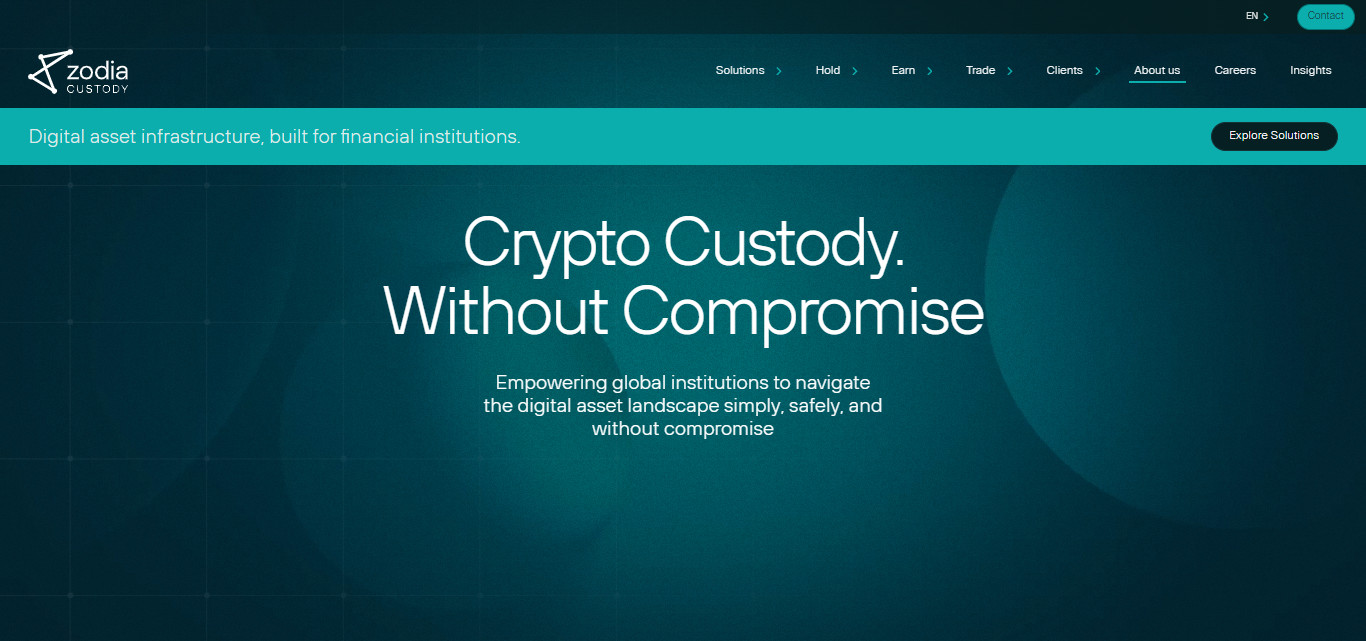
80%+ of the cryptocurrency market cap. Cold storage offline custody, separate client wallets, hardware security modules and institutional governance procedures are all covered in security. The platform also holds SOC 1 and ISO 27001 certifications. Zodia’s primary customers are banks, asset managers, hedge funds, financial institutions and crypto businesses.
Institutional support provides 24/7 operational availability, instant settlement capabilities, connectivity solutions and dedicated support to manage institutional digital asset custody requirements.
Zodia Custody Features
- Cold Storage: Uses offline storage techniques to protect supported digital files.
- Settlement Infrastructure: Facilitates digital asset transfers and institutional settlement processes.
- Banking Connectivity: Links financial institutions to cryptocurrency custody and infrastructure services.
- Institutional Security: Offers secure storage of digital files using institutional custody infrastructure.
Zodia Custody Pros & Cons
| Pros | Cons |
|---|---|
| Bank-backed: it is supported by Standard Chartered, Northern Trust and SBI. | Limited trading services: it is focused on custody, not full prime brokerage. |
| Regulated: it holds licences, including FCA registration in the UK. | Narrower asset coverage: it supports fewer tokens than some competitors. |
| Institutional-grade security: it has strong governance and segregated custody. | Smaller market presence: it has less visibility and fewer integrations than top-tier providers. |
| Global reach: it operates in multiple regions through its partners. | Onboarding complexity: compliance processes can be slow. |
8. Sygnum Bank
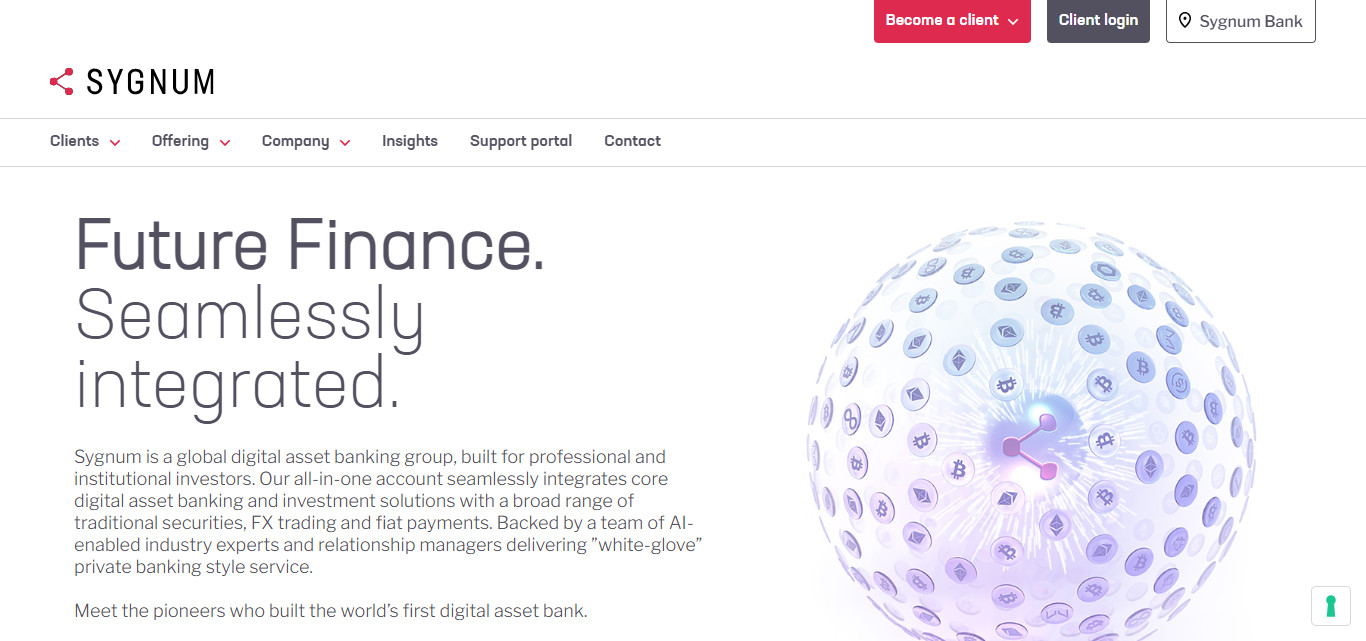
Sygnum Bank is a regulated digital asset bank providing custody, trading, staking, lending and investment services for cryptocurrencies. Its custody platform supports over 70 digital currencies, including major cryptocurrencies and select blockchain-based tokens.
Security and custody arrangements include off-balance sheet asset segregation, multi-party computation technology, FIPS 140-2 Level 3 hardware, cold storage and Swiss regulatory oversight. Sygnum serves financial institutions, professional investors, family offices, asset managers, hedge funds and banks.
Institutional support encompasses dedicated banking services, customized digital asset solutions, API connectivity, integrated onboarding, compliance assistance, and expert guidance for organizations managing institutional portfolios and cryptocurrency investments.
Sygnum Bank Features
- Digital Asset Banking: Regulated banking services with cryptocurrency investment products.
- Secure Custody: Institutional custody with state-of-the-art security technologies.
- Crypto Trading: Facilitates crypto trading and digital asset investment activities.
- Staking Services: Provides access to staking services on supported blockchains for eligible clients.
Sygnum Bank Pros & Cons
| Pros | Cons |
|---|---|
| Licensed bank: it is regulated in Switzerland and Singapore, which gives strong protection and trust. | High entry barriers: it serves mainly institutional and high-net-worth clients. |
| Full banking and crypto services: it combines custody, trading, lending and tokenization. | Limited US presence: American institutions may find fewer options. |
| Strong compliance reputation: it holds Swiss banking-level standards. | Smaller liquidity than global leaders: execution on very large orders may be less deep. |
| Tokenization and digital asset innovation: it offers tokenized products alongside standard prime services. | Higher cost structure: bank-level compliance can mean higher fees. |
9. Hex Trust
Hex Trust offers institutional digital asset custody with services such as staking, wallet infrastructure, tokenization and settlement. Its platform offers a broad array of cryptocurrencies and digital currencies on supported blockchain networks, based on custody arrangements and regulatory requirements.

Security and custody includes segregated cold storage, transaction approval controls, insurance protection, licensed custody infrastructure, and institutional compliance monitoring. Hex Trust’s clients include financial institutions, asset managers, hedge funds, token issuers, blockchain companies and professional investors.
Institutional support includes dedicated account assistance, API connectivity, customized custody arrangements, transaction reporting and specialized transition services to help organizations manage digital asset operations in global markets.
Hex Trust Features
- Institutional Custody: Custody and wallet infrastructure solutions for cryptocurrencies.
- Staking Infrastructure: Provides staking services on select blockchain networks.
- Tokenization Services: Infrastructure for blockchain-based financial products and tokenized assets.
- Compliance Framework: Committed to regulatory compliance and institutional security standards.
Hex Trust Pros & Cons
| Pros | Cons |
|---|---|
| Strong Asia presence: it is a good fit for institutions in Hong Kong, Singapore and the wider region. | Smaller scale: its assets under custody and client base are modest next to global leaders. |
| Licensed custodian: it operates under trust and regulatory frameworks in several jurisdictions. | Limited prime depth: lending and trading are less developed than at larger firms. |
| Flexible custody options: it offers hot, warm and cold storage for different needs. | Regional focus: coverage in the US and Europe is weaker. |
| DeFi and staking access: it provides institutional routes into yield and on-chain activity. | Brand recognition: it is less known among large traditional institutions. |
10. Nexo Institutional
Nexo Prime is the crypto prime brokerage division of Nexo Institutional, offering spot, futures, lending, borrowing, liquidity provisioning and OTC execution services. Clients can access major electronic assets and more than 1,500 aggregated trading pairs, subject to jurisdiction and service.
Security and custody are enhanced by institutional-grade custody arrangements, third-party providers such as Bakkt and Fireblocks, multi-signature control of access, encryption and SOC 2 Type 2 certification.
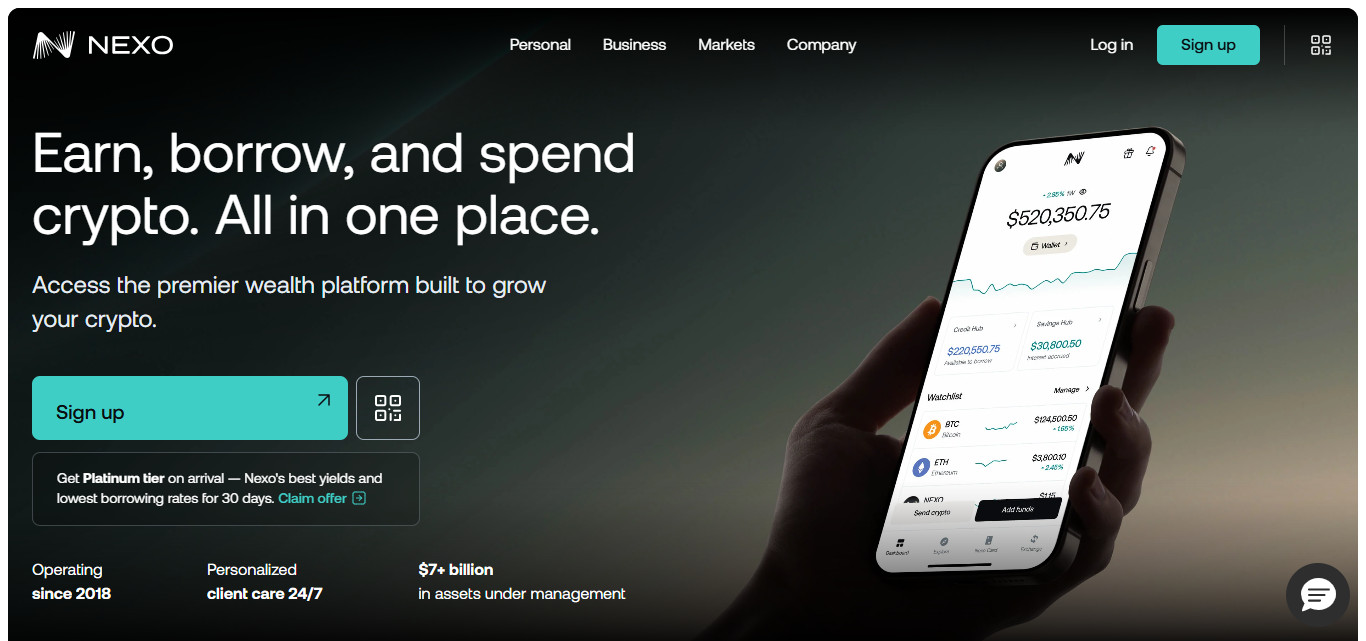
Nexo serves crypto exchanges, broker-dealers, payment providers, institutional trading desks and professional investors. Institutional support includes 24/7 client care, account permissions, sub-accounts, OTC support and liquidity solutions customized to your needs.
Institutional Nexo Features
- Prime Brokerage: Offers institutional access to crypto trading and execution services.
- Liquidity Solutions: Aggregated liquidity across supported digital asset trading markets.
- Lending Facilities: Provides borrowing and financing solutions secured with crypto.
- OTC Trading: Provides bespoke execution over the counter to eligible institutional clients.
Nexo Institutional Pros & Cons
| Pros | Cons |
|---|---|
| Crypto lending and credit: it provides loans and credit lines against crypto collateral. | Not a bank: it lacks the regulatory protections of chartered institutions. |
| OTC and liquidity services: it offers large-order execution for institutions. | Regulatory history: it settled with US regulators in 2023, which may concern risk-averse clients. |
| Custody via third parties: it has used external custody partners for added security. | Retail-lender image: it is better known for retail lending than as an institutional prime broker. |
| Yield options: it offers interest-bearing products on holdings. | Counterparty risk: lending and yield products carry credit and rehypothecation risks. |
Conclusion
Conclusion The determination of the Best Crypto Prime Brokerage Provider depends on institutional needs, trading goals, security requirements, and available liquidity. Institutional solutions vary with providers such as FalconX, Coinbase Prime, BitGo and Anchorage Digital Bank.
Make sure that the platform you choose supports the cryptocurrencies you want to invest in, has custody protection, is compliant with regulations and provides financing services. Compare the prices and choose a reputable platform that fits your long-term digital asset investment strategy.
FAQ
Which are the best crypto prime brokerage providers in 2026?
Leading providers include FalconX, Coinbase Prime, BitGo, Anchorage Digital Bank, and Gemini Custody.
What services do crypto prime brokerage providers offer?
They offer trading, custody, lending, borrowing, liquidity, staking, collateral management, and settlement solutions.
Who uses crypto prime brokerage services?
Hedge funds, asset managers, banks, family offices, investment firms, and professional cryptocurrency traders.
How do crypto prime brokerage providers secure digital assets?
They use cold storage, multi-signature wallets, asset segregation, encryption, and institutional security controls.