In this article we will go over the Best Crypto Liquidity Aggregation APIs that help developers, traders and businesses access liquidity from multiple cryptocurrency exchanges.
We will review their core features, supported blockchains, token coverage, pricing, slippage, trading fees and transaction speed.
This comparison will help you understand what each API can do and choose the right solution for your crypto trading platform or DeFi app.
Key Points & Best Crypto Liquidity Aggregation APIs
| API Name | Explanation |
|---|---|
| 0x Swap API | Aggregates decentralized exchange liquidity to deliver competitive token swap prices efficiently. |
| 1inch Swap API | Sources liquidity across decentralized exchanges to optimize swap rates and execution. |
| Velora (formerly ParaSwap) API | Aggregates decentralized liquidity sources to find efficient routes for token swaps. |
| Jupiter API | Aggregates Solana exchange liquidity to provide optimized token swaps and routing. |
| ChangeNOW Liquidity API | Enables crypto exchanges through liquidity access, supporting seamless asset conversions globally. |
| CoW Swap (CoW Protocol) API | Uses batch auctions and solvers to optimize trades and reduce slippage. |
| Odos API | Combines liquidity sources and smart routing to improve swap execution efficiency. |
| LlamaSwap API | Compares decentralized exchange routes to identify competitive token swap prices. |
| OpenOcean API | Aggregates centralized and decentralized exchange liquidity for optimized crypto trading execution. |
| Rubic API | Connects cross-chain liquidity providers to simplify swaps between different blockchain networks. |
10 Best Crypto Liquidity Aggregation APIs
1. 0x Swap API
0x Swap API combines liquidity from decentralized exchanges and professional market makers into one API endpoint. Supported blockchains Ethereum, Base, Arbitrum, Optimism, Polygon, BNB Chain, Avalanche and more EVM networks. It supports thousands of ERC-20 assets and covers long-tail tokens as long as there are pools.
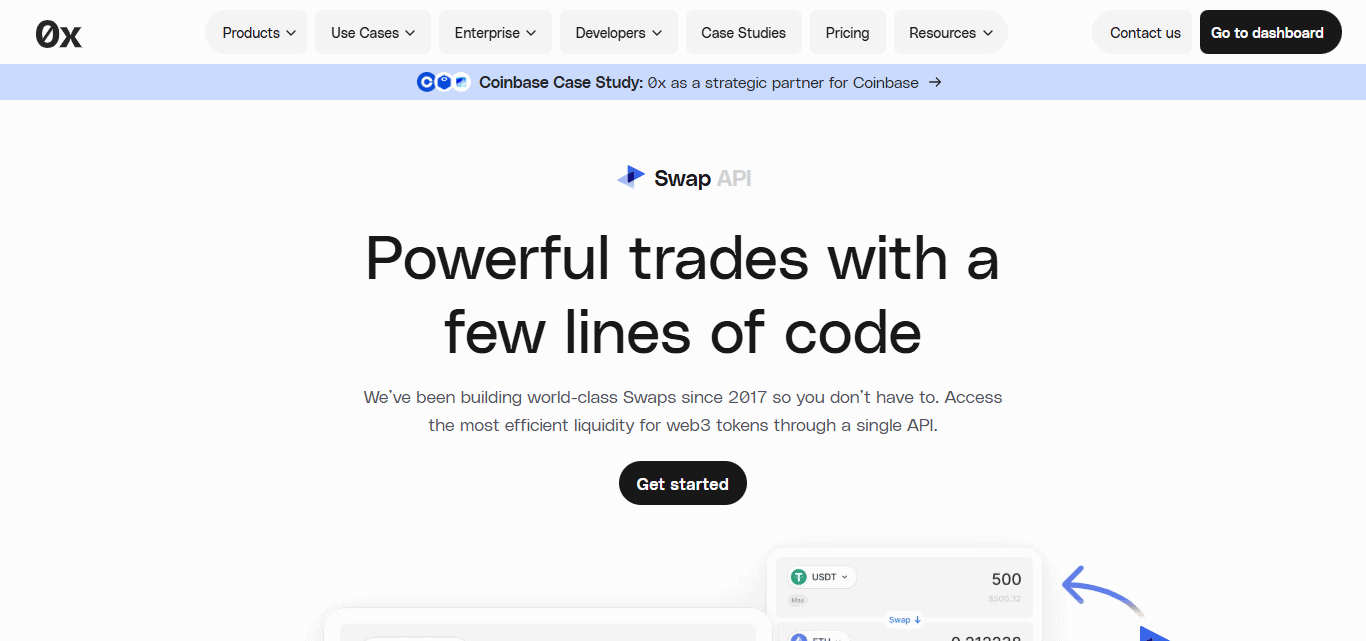
Pricing and slippage it pulls prices from multiple venues, has configurable slippage, and its RFQ market makers often give tighter quotes on large trades. Trading fees: 0x doesn’t charge a protocol fee itself but integrators can charge an affiliate fee and standard gas applies.
Transaction speed: quotes are returned in milliseconds, settlement is per chain block time. Network coverage: EVM only but broad on major chains.
0x Swap API Feature
| Feature | Explanation |
|---|---|
| Smart Order Routing | Combines liquidity sources and selects efficient trade routes for competitive execution. |
| Multi-Source Liquidity | Aggregates liquidity from decentralized exchanges and professional market makers. |
| Gasless Trading | Supports gasless transactions through its separate Gasless API for eligible trades. |
| Cross-Chain Swaps | Provides a separate API for cross-chain swaps, routing, bridging, and transaction tracking. |
2. 1inch Swap API
One of the most widely used aggregators, 1inch Swap API, uses its Pathfinder algorithm to split orders among many liquidity sources. Supported Blockchains Ethereum, BNB Chain, Polygon, Arbitrum, Optimism, Avalanche, Gnosis, Base, zkSync Era and others. Supported tokens: almost all liquid ERC-20 tokens on supported chains. — Pricing and slippage: order splitting, multi-hop routing to reduce price impact, slippage adjustable.
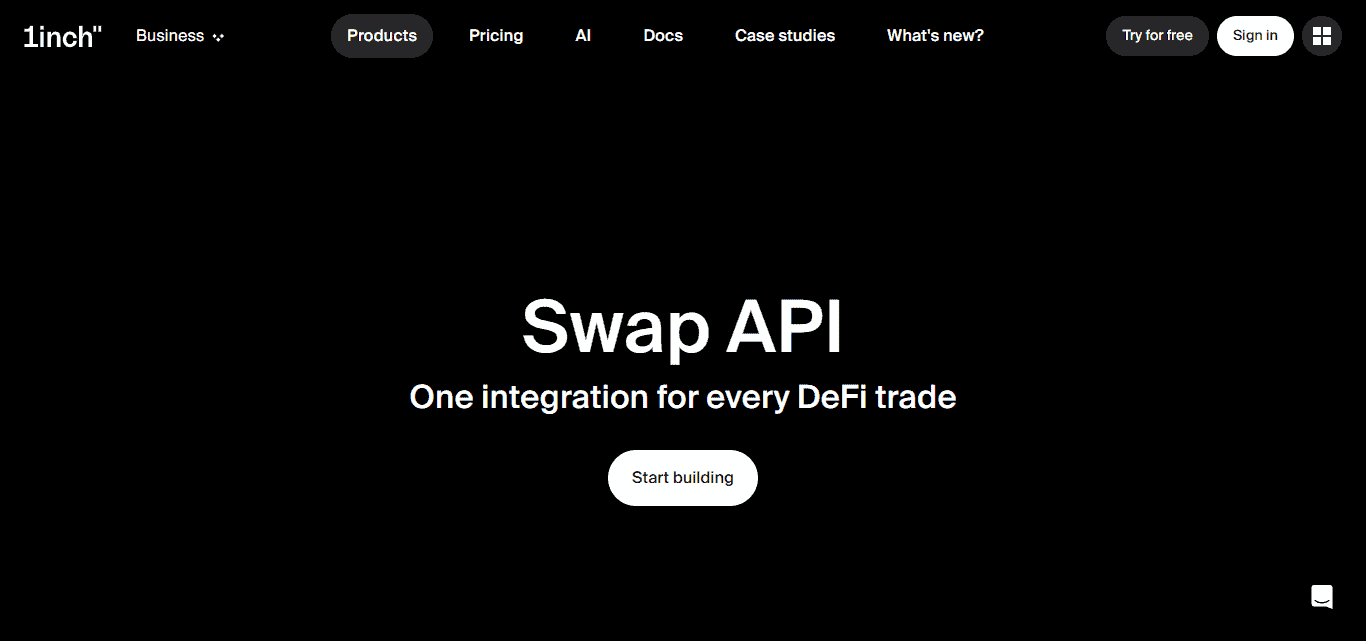
1inch does not charge a swap fee for its API, however integrators can set referral fees and gas is paid by the user. Speed of transactions: quotes are almost instantly provided and gas-optimized routes reduce costs. Network coverage: Strong multi-chain EVM coverage + gasless swap support in Fusion mode.
1inch Swap API
| Feature | Explanation |
|---|---|
| Pathfinder Algorithm | Evaluates trading routes to optimize token swap output and execution efficiency. |
| Multi-Chain Support | Supports multiple networks through classic, intent-based, and cross-chain swap modes. |
| MEV Protection | Intent-based swaps provide protection against certain MEV-related trading risks. |
| Gasless Swaps | Intent-based and cross-chain modes support gasless trading experiences where available. |
3. Velora (formerly ParaSwap) API
Velora (formerly ParaSwap) pools DEX liquidity and employs its Augustus routing contract to find efficient swap paths. Supported blockchains: Ethereum, Polygon, BNB Chain, Avalanche, Arbitrum, Optimism, Base and Gnosis.
It supports a wide range of ERC-20 tokens on these networks. Pricing and slippage: it compares routes and uses multi-path splitting to provide competitive prices with user-defined slippage tolerance.

Trading fees no base fee protocol but partners can add fees and Velora may share positive slippage with integrators. Transaction speed: fast API quotes, execution subject to congestion on the chain. Network coverage: mainly EVM-chains, increasing support for intent-based Delta orders.
Velora (formerly ParaSwap) API
| Feature | Explanation |
|---|---|
| Liquidity Aggregation | Combines available decentralized exchange liquidity to discover competitive swap opportunities. |
| Smart Routing | Evaluates different trade paths to improve expected token output. |
| Price Optimization | Compares available execution routes to help reduce unnecessary price impact. |
| Developer Integration | Provides API-based swap functionality for wallets and decentralized finance applications. |
4. Jupiter API
Jupiter is the leading aggregator on Solana, routing swaps through nearly all of the Solana DEX’s and AMM’s. Blockchains supported : Solana only. Supported tokens: all SPL tokens with liquidity available including a large long tail universe.
Pricing and slippage Smart routing and order splitting provide strong execution with dynamic slippage options to protect against volatility. Trading fees Jupiter does not charge any platform fee on standard swaps, only network fees and underlying pool fees.

However, integrators can add a platform fee. Transaction speed: Solana’s ~400ms blocks support near instant settlement. Network Coverage: Solana focused, but incredibly deep with limit orders, DCA and perpetuals to go along with swaps.
Jupiter API
| Feature | Explanation |
|---|---|
| Solana Liquidity Aggregation | Connects supported Solana liquidity sources for efficient token swaps. |
| Route Optimization | Compares trading paths to find competitive execution prices. |
| Slippage Controls | Supports swap parameters that help users manage acceptable price changes. |
| Developer Tools | Provides swap APIs and transaction-building functionality for Solana applications. |
5. ChangeNOW Liquidity API
ChangeNOW Liquidity API provides non-custodial, cross-chain exchange access without user accounts required. Supported blockchains: 100+ networks including Bitcoin, Ethereum, Solana, Tron & more. Supported Tokens: 1,200+ Cryptocurrencies.
Pricing and slippage it provides floating and fixed-rate options and fixed-rate swaps avoid slippage by locking the quote. Fees Built-in spread of about 0.4% to 0.5%. Revenue sharing with partners available.

Transaction speed Swaps are usually completed in a couple of minutes, depending on confirmations. Network coverage very broad, includes non-EVM chains, making it a good fit for exchange and wallet integrations.
ChangeNOW Liquidity API
| Feature | Explanation |
|---|---|
| Crypto Exchange Integration | Enables applications to integrate cryptocurrency exchange and conversion services. |
| Multi-Asset Conversions | Supports conversions between available cryptocurrencies and compatible network assets. |
| Exchange Rate Quotes | Provides exchange quotes according to the selected rate mode and availability. |
| Simplified Integration | Helps businesses add crypto conversion functionality without building exchange infrastructure independently. |
6. CowSwap (CoW Protocol) API
CoW Protocol uses batch auctions where solvers compete to offer the best price to users. Blockchains supported Ethereum, Gnosis Chain, Arbitrum, Base and a few others. Supported tokens: most of the ERC-20 tokens with on-chain liquidity.
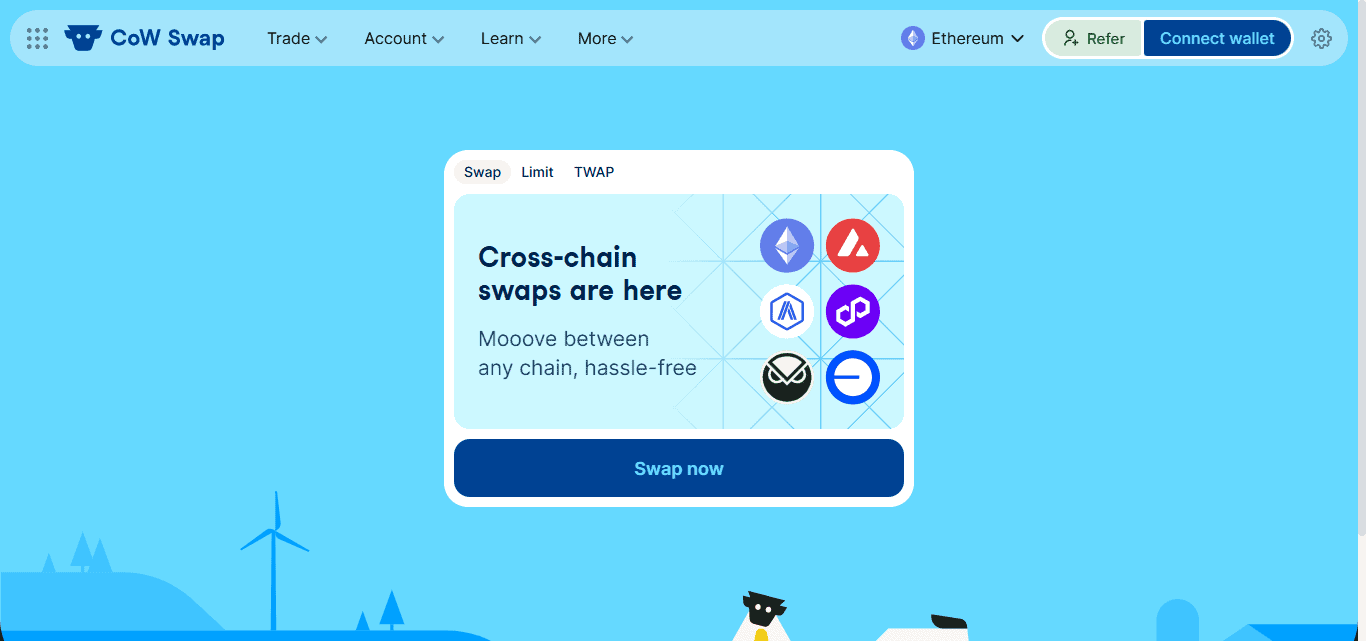
Pricing and slippage Coincidence of Wants matches trades directly and competition between solvers minimizes slippage and protects users from MEV. Transaction fees small protocol fee on some orders, no fee on failed transactions (as users don’t pay gas on unfilled trades).
Transaction speed batches settle every block or few blocks, so limit orders may fill later. Network coverage: fewer chains, but strong protection against MEV.
CoW Swap (CoW Protocol) API
| Feature | Explanation |
|---|---|
| Batch Auctions | Groups orders into auctions to discover competitive clearing prices. |
| Solver Competition | Allows competing solvers to find efficient execution opportunities for user orders. |
| MEV Protection | Uses batch-auction mechanisms to help reduce exposure to certain MEV attacks. |
| Coincidence of Wants | Matches compatible trading intentions to reduce reliance on external liquidity for some trades. |
7. Odos API
Odos’s proprietary algorithm can route one trade across multiple tokens and pools simultaneously. Supported blockchains: Ethereum, Arbitrum, Optimism, Base, Polygon, Avalanche, BNB Chain, zkSync, Scroll, Linea, Sonic and more.
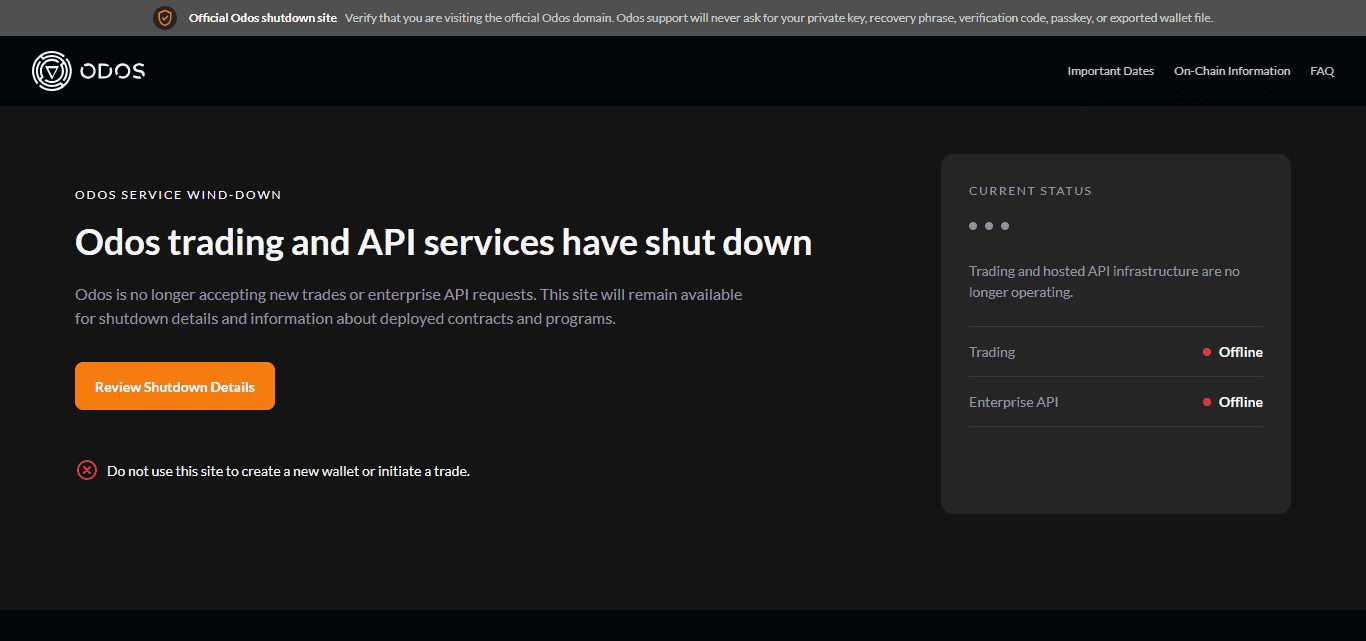
Supports thousands of ERC-20 tokens with multi-input and multi-output swaps. Pricing and Slippage Usually beats other aggregators on complex trades with less price impact. Trading fees: no additional protocol fee, only gas, referral options for integrators.
Transaction speed quick quote generation, confirmation on every chain. Network Coverage: Broad EVM Coverage, with particular strength on L2 networks.
Odos API
| Feature | Explanation |
|---|---|
| Smart Order Routing | Searches supported liquidity routes to improve expected swap execution. |
| Split Routing | Can distribute trades across multiple liquidity sources when advantageous. |
| Multi-Token Swaps | Supports supported swap operations involving multiple assets in a single transaction. |
| Developer Integration | Offers API-based swap routing for wallets and DeFi applications. |
8. LlamaSwap API
DefiLlama’s LlamaSwap is a meta aggregator that compares quotes from multiple other aggregators. Supported blockchains: dozens of EVM chains including Ethereum, Arbitrum, Optimism, Polygon, BNB Chain and Base.
Supported tokens are tokens supported by underlying aggregators. Pricing & Slippage Displays the best rate available from providers, with adjustable slippage. Trading fees LlamaSwap charges zero fees, only gas and any underlying aggregator costs are paid by the user.
Transaction speed quotes load quickly, execution depends on selected route and chain. Network coverage: Very broad EVM coverage. Transparency and no fees also make it popular with power users.
LlamaSwap API Feature
| Feature | Explanation |
|---|---|
| Exchange Comparison | Compares available decentralized exchange routes for competitive token swap quotes. |
| Price Discovery | Helps identify attractive quoted prices across supported liquidity sources. |
| Route Selection | Directs users toward compatible routes based on available trading opportunities. |
| Integration Potential | Can support liquidity discovery workflows where a maintained integration is available. |
9. OpenOcean API
OpenOcean is a full aggregator with DEX and CEX liquidity across many chains. Supported blockchains 30+ including Ethereum, BNB Chain, Solana, Polygon, Avalanche, Arbitrum, and Optimism. Supported tokens: thousands of tokens across EVM and non-EVM networks.
Pricing and slippage: its routing algorithm splits orders across venues for competitive pricing, with configurable slippage. Trading fees: it does not charge a base swap fee, but integrators can add commissions.

Transaction speed: quick quotes and settlement based on network speed. Network coverage: among the broadest, including Solana and other non-EVM chains, plus limit orders and DCA features.
OpenOcean API
| Feature | Explanation |
|---|---|
| Multi-Chain Aggregation | Connects supported blockchain networks to access decentralized exchange liquidity. |
| Smart Routing | Evaluates alternative trade routes to improve expected swap output. |
| Gas-Aware Optimization | Considers estimated transaction costs when evaluating supported swap routes. |
| Developer Integration | Provides APIs that help wallets and trading platforms integrate token swaps. |
10. Rubic API
Rubic is a cross-chain swap that aggregates bridges and DEXs into one interface. Supported blockchains: 70+ networks including Ethereum, Bitcoin, Solana, Tron, TON and multiple EVM chains. supports thousands of tokens and allows swaps between different ecosystems.
Pricing & Slippage – Compare multiple bridge and DEX routes to get the best rate, with adjustable slippage settings for each leg. Trading fees: small platform fee, usually between 0.2% and 2% depending on the route, plus bridge and gas costs.

Time to complete transaction: seconds to minutes, depending on chain and bridge. Network coverage: strong cross-chain coverage, ideal for multi-chain wallets and dApps.
Rubic API Feature
| Feature | Explanation |
|---|---|
| Cross-Chain Swaps | Enables supported token exchanges between different blockchain networks. |
| Bridge Aggregation | Compares supported bridging routes for cross-chain asset transfers. |
| Best-Route Discovery | Evaluates available swap and bridge options for competitive execution. |
| Developer Integration | Provides API and SDK options for integrating cross-chain swaps into applications. |
Conclusion
To summarize, the top crypto liquidity aggregation APIs enable companies to optimize token swaps, access multiple liquidity sources and enhance trading efficiency. There are different platforms, such as 0x
1inch, Jupiter, Odos and Rubic that offer different features, blockchain coverage and integration. Before picking an API, compare supported networks, token availability, pricing, slippage, trading fees and transaction speed to find the right fit for your needs.
FAQ
What are crypto liquidity aggregation APIs?
They combine liquidity sources to find competitive prices and optimize cryptocurrency trades.
Which are the best crypto liquidity aggregation APIs?
Popular options include 0x, 1inch, Jupiter, Velora, Odos, and OpenOcean.
How do liquidity aggregation APIs work?
They compare available trading routes and select suitable options for token swaps.
Which blockchains do liquidity aggregation APIs support?
Supported networks vary, including Ethereum, Solana, Polygon, Arbitrum, Base, and others.