I will discuss the Best Intent-Based Trading Protocols that are revolutionizing decentralized trading with smarter execution, cross-chain swaps, and efficient liquidity management in this article. We will review the leading platforms
like Across Protocol, NEAR Intents, UniswapX, deBridge DLN, CoW Swap, and others, detailing their core features, supported blockchains, execution mechanisms, and benefits, so readers can grasp their significance in the growing DeFi landscape.
Key Points & Best Intent-Based Trading Protocols
| Protocol | Explanation |
|---|---|
| Across Protocol | Enables cross-chain transfers and swaps through intents, simplifying asset movement across blockchain networks. |
| NEAR Intents | Lets users express desired outcomes while solvers compete to execute transactions efficiently across chains. |
| UniswapX | Uses competing fillers to source liquidity and execute token swaps with potential gasless transactions. |
| deBridge DLN | Enables direct cross-chain asset transfers using intent-based execution without traditional liquidity pools. |
| CoW Swap | Batches orders and uses solver competition to find efficient trades and minimize transaction costs. |
| 1inch Fusion+ | Facilitates cross-chain swaps through resolvers, using atomic swap mechanisms designed to reduce counterparty risk. |
| Chainflip | Enables native cross-chain swaps between major blockchains without requiring wrapped tokens or external bridges. |
| Squid Router / Axelar | Simplifies cross-chain swaps and application interactions through Axelar-powered messaging and liquidity routing infrastructure. |
| Everclear | Coordinates cross-chain settlement and netting to reduce liquidity requirements for intent-based bridging protocols. |
| Velora | Provides intent-based trading through solver competition, helping users access efficient execution across decentralized liquidity sources. |
10 Best Intent-Based Trading Protocols In 2026
1. Across Protocol
Across Protocol Across Protocol is an intent-based cross-chain bridge for fast and capital-efficient transfers and swaps. Supported Blockchains: It supports networks like Ethereum, Arbitrum, Optimism, Base, Polygon, Solana, BNB Chain, and other listed networks, with availability being dependent on the route and token.

Users state which destination asset and how much they want, and competing relayers use their own capital to deliver funds on the destination chain. Then the protocol checks fills and settles relayer repayments. Execution and Charges. Costs Relayer and liquidity provider fees, plus any applicable gas costs. Most transfers complete in about two seconds, but execution times and fees vary by route
Across Protocol Feature
| Feature | Explanation |
|---|---|
| Fast Cross-Chain Transfers | Enables rapid asset transfers between supported blockchains using competitive relayers. |
| Relayer Competition | Relayers compete to fulfil transfer requests efficiently. |
| Flexible Integration | Offers APIs, gasless transactions, and deposit-address integrations for different applications. |
| Cross-Chain Actions | Supports combining bridging with destination-chain swaps and other DeFi operations. |
2. NEAR Intents
NEAR Intents is a cross-chain transaction protocol that makes swapping and asset transfers easier via outcome-based instructions. Blockchains supported: Includes NEAR, Ethereum, Bitcoin, Solana, Arbitrum, Base, Polygon, BNB Chain and other supported networks.
Assets and routes subject to change. Intent Mechanism: Users specify what they want to receive, instead of having to manually select each execution step. Competing solvers try to satisfy these demands, abstracting away much of the complexity of bridging and routing.

Fees and Execution: Users should review the quote for any fees related to network costs, solver pricing and fees specific to the interface. The execution speed and the final output depend on the selected assets, the liquidity and the destination network
NEAR Intents
| Feature | Explanation |
|---|---|
| Intent-Based Execution | Users specify desired outcomes while solvers handle transaction execution. |
| Unified Liquidity | Connects assets and liquidity across multiple supported blockchain ecosystems. |
| Chain Abstraction | Simplifies cross-chain swaps without requiring users to manage every bridging step. |
| Confidential Transactions | Offers privacy-focused execution options through its Confidential Intents initiative. |
3. UniswapX
UniswapX is an auction-based trading protocol that sources liquidity from automated market makers and other trading venues. Supported blockchains: UniswapX versions work with Ethereum, Arbitrum, Base, Avalanche, BNB Smart Chain, Unichain, and other networks depending on the version.
Intent Mechanism Traders sign orders describing the desired outcome of the swap, and the conditions under which they are willing to do it. Competing fillers will attempt to complete these orders using available liquidity, and auction mechanisms will assist in identifying competitive execution prices.

Fees And Execution Users can swap without paying network gas fees for the swap itself, and failed transactions do not incur any network cost under the documented model. Price variations, trading fees, and token fees might still be relevant.
UniswapX
| Feature | Explanation |
|---|---|
| Competitive Auctions | Fillers compete to execute signed swap orders at attractive prices. |
| Gasless Swaps | Eligible trades can execute without users directly paying swap transaction gas. |
| MEV Protection | Auction-based execution helps reduce harmful front-running and sandwiching. |
| Flexible Liquidity Access | Sources liquidity from automated market makers and other trading providers. |
4. deBridge DLN
DeBridge’s Decentralized Liquidity Network (DLN) enables cross-chain asset transfer and swap without the need for traditional destination-side liquidity pools. Supported Blockchains: DLN supports multiple blockchain ecosystems, however, the exact networks and tokens available should be verified via its current supported-chain documentation or transaction quote.

Intent Mechanism: Users input the source asset, the destination asset, the amount, and the recipient. A self-standing solver fulfills the order on the destination chain and protocol settlement mechanisms synchronize the transaction over the networks.
Fees & Execution: Fees are dependent on the route, network gas and applicable protocol/solver fees. Do not assume a fixed fee or time to completion, instead, check the quoted output, execution conditions and transaction status before confirming a trade.
deBridge DLN
| Feature | Explanation |
|---|---|
| Direct Cross-Chain Transfers | Enables asset transfers between supported networks without conventional destination liquidity pools. |
| Solver-Based Execution | Solvers fulfil user orders across blockchain networks. |
| Non-Custodial Design | Uses protocol mechanisms to coordinate transfers without requiring a central custodian. |
| Cross-Chain Trading | Supports transferring value and exchanging assets across compatible networks. |
5. CoW Swap
CoW Swap is a decentralized trading protocol that uses signed trade intents and solver competition to optimize the execution of swaps. Supported Blockchains: The core trading engine runs on Ethereum and supports other EVM-compatible chains where deployments exist. Please check the current interface support status for the chain you plan to use.
Intent Mechanism: Users place orders with trading conditions, without having to specify each step of a transaction themselves. Finding efficient settlement routes is the main competition among solvers, including matching compatible user orders (Coincidence of Wants) and accessing decentralized exchanges or private liquidity.
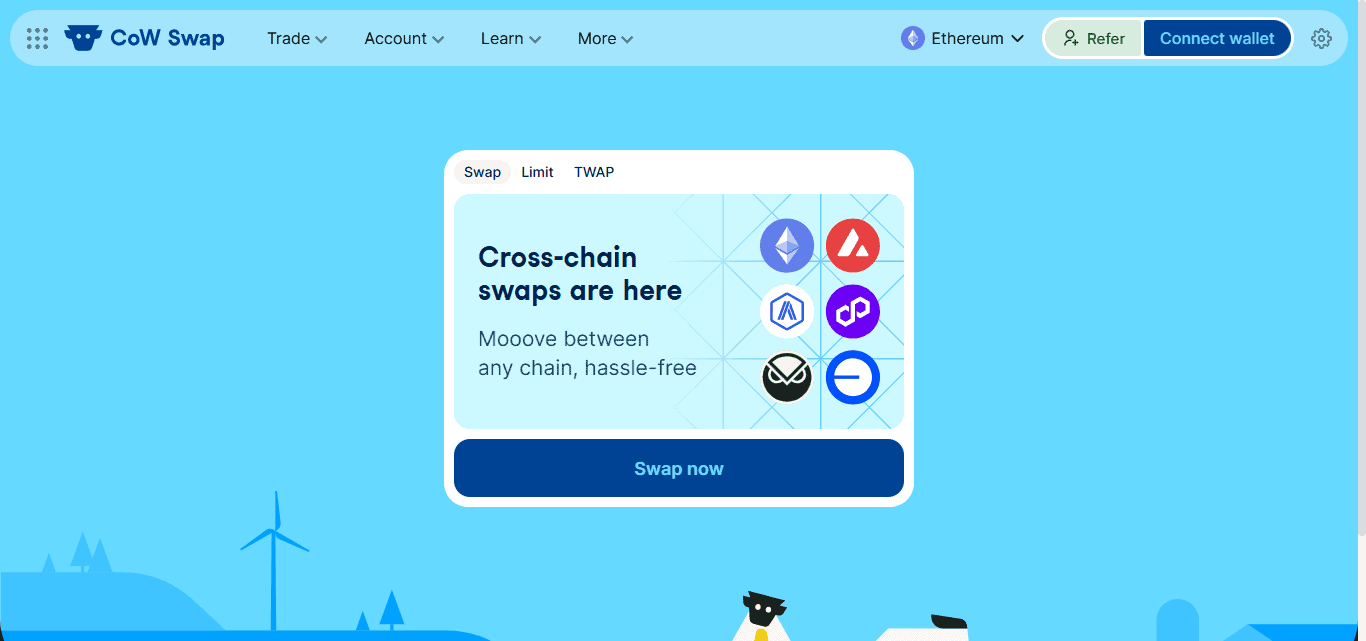
Fees and Execution: Batch settlement and direct order matching can enable users to enjoy lower gas costs. According to its documented model, failed transactions do not incur the normal failed-trade network cost, but applicable trading and network charges should be checked.
CoW Swap
| Feature | Explanation |
|---|---|
| Batch Auctions | Groups orders into batches to discover efficient settlement opportunities. |
| Coincidence of Wants | Matches compatible buy and sell orders directly when possible. |
| Solver Competition | Solvers compete to find favourable execution routes and prices. |
| MEV Protection | Batch settlement helps protect traders from certain forms of MEV exploitation. |
6. 1inch Fusion+
1inch Fusion+ works on a resolver-based execution system for cross-chain token swaps. Supported Blockchains: Cross-chain availability is subject to the current Fusion+ integrations, participating networks and supported token pairs. Please check the exact route before trading. Intent Mechanism: Users submit an order for the swap they want, and resolvers compete to fill the order.
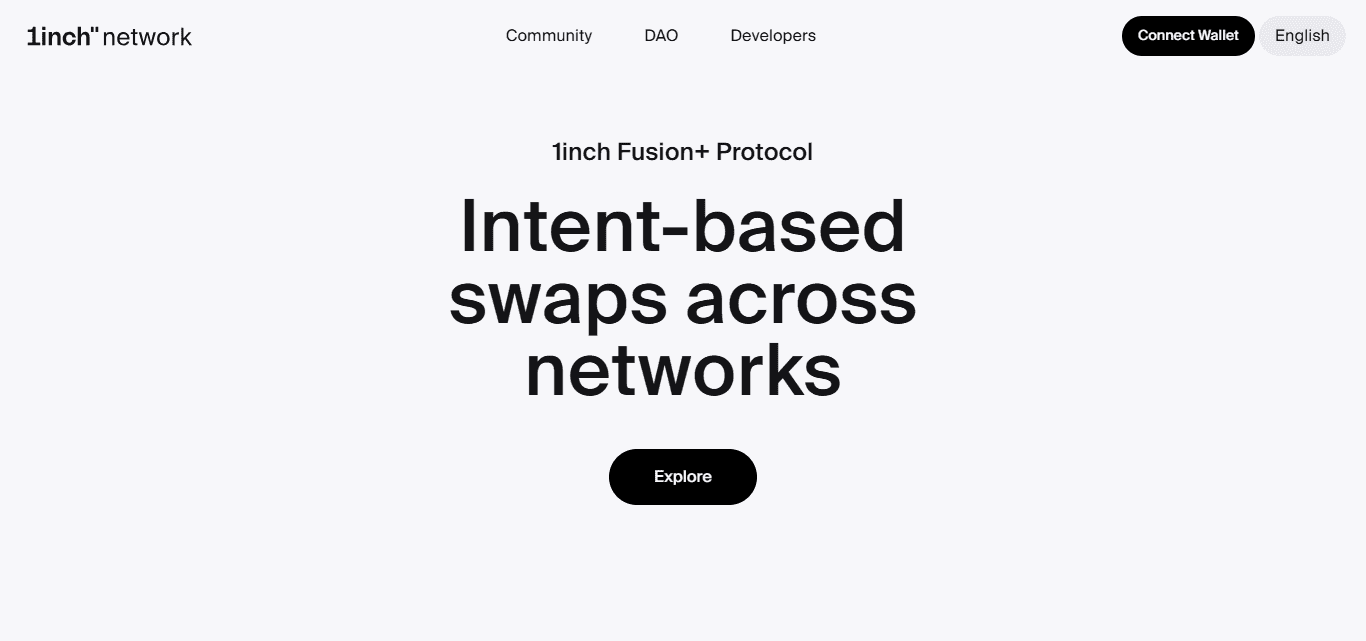
Cross-chain execution uses coordinated settlement mechanisms that are designed to help secure both sides of the swap. The broader 1inch Fusion ecosystem supports gasless swaps executed by resolvers on supported networks.
Execution and Fees: Fusion orders typically do not require users to pay source-chain transaction gas directly, but resolver pricing, token approvals, network conditions, and route-specific costs can affect the final outcome. See quote for actual terms of execution.
1inch Fusion+
| Feature | Explanation |
|---|---|
| Cross-Chain Swaps | Enables token exchanges between supported blockchain networks. |
| Resolver Competition | Resolvers compete to fulfil user swap orders. |
| Atomic Swap Security | Hashlock and timelock mechanisms help coordinate completion or refunds. |
| Gasless Execution | Eligible orders include execution costs in pricing, reducing direct gas-management requirements. |
7. Chainflip
1inch Fusion+ is designed for cross-chain token swaps and uses a resolver-based execution system. Supported Blockchains: Cross-chain availability is dictated by Fusion+ integrations, participating networks and supported token pairs; please verify the exact route before trading.
Intent Mechanism: Users submit an order for the swap they want, and resolvers compete to fill the order. Cross-chain execution uses coordinated settlement mechanisms that are designed to help secure both sides of the swap.

The broader 1inch Fusion ecosystem supports gasless swaps executed by resolvers on supported networks. Execution and Fees: Fusion orders typically do not require users to pay source-chain transaction gas directly, but resolver pricing, token approvals, network conditions, and route-specific costs can affect the final outcome. See quote for actual terms of execution.
Chainflip
| Feature | Explanation |
|---|---|
| Native Asset Swaps | Enables swaps involving native assets such as Bitcoin and Ether. |
| Cross-Chain Trading | Connects supported blockchain ecosystems through its decentralised swapping infrastructure. |
| Just-in-Time AMM | Uses a liquidity model designed to price swaps efficiently around execution. |
| Decentralised Validators | Validator infrastructure coordinates protocol operations and transaction processing. |
8. Squid Router / Axelar
Chainflip is a decentralized cross-chain swapping protocol that enables users to swap native assets between supported blockchains. Supported Blockchains
Documented networks are Bitcoin, Ethereum, Arbitrum, Solana, Polkadot, Asset Hub, Tron, and BNB Smart Chain. Assets are not available on all networks. Intent Mechanism: A user registers a swap through a broker or supported interface, specifying the asset, chain and address to which it will be swapped.

These swaps are executed via the protocol’s Just-in-Time automated market maker, in which liquidity providers compete to price the transactions. Fees and Execution . Fees may include source-chain deposit and liquidity fees, network fees for the transfer into the destination chain, and optional boost fees. Slippage protection and refund conditions mitigate execution risk, while exact fees depend on the route.
Squid Router / Axelar
| Feature | Explanation |
|---|---|
| Cross-Chain Routing | Routes swaps and transfers across supported blockchain networks. |
| Axelar Interoperability | Uses Axelar infrastructure for cross-chain messaging on applicable routes. |
| Multi-Chain Swaps | Simplifies exchanges between assets residing on different networks. |
| Contract-Call Routing | Supports cross-chain application interactions beyond basic token transfers. |
9. Everclear
Everclear is a cross-chain settlement protocol that enables applications and solvers operating across multiple blockchain networks to use capital more efficiently. Supported Blockchains: Its architecture is designed to support multiple chains and rollups, but actual support depends on the current network integrations and settlement infrastructure.
Intent Mechanism: Everclear handles cross-chain settlements and offsets conflicting transfers against one another. This helps fillers and liquidity providers avoid having to shift funds between chains for each and every transaction. It is not mainly a retail swap interface but rather provides settlement infrastructure for cross-chain applications.
Fees and Execution Costs will be dependent on the chosen settlement mechanism, messaging infrastructure and liquidity-rebalancing arrangements. Its primary benefit is to reduce aggregate settlement and rebalancing requirements, not to ensure zero fees or instant execution.
Everclear
| Feature | Explanation |
|---|---|
| Cross-Chain Clearing | Coordinates settlement between applications and liquidity providers across networks. |
| Transaction Netting | Offsets opposing transfers to reduce unnecessary asset movement. |
| Capital Efficiency | Helps solvers and liquidity providers reduce cross-chain rebalancing requirements. |
| Settlement Infrastructure | Provides a clearing layer for cross-chain intent systems and applications. |
10. Velora
Velora is a decentralized trading and liquidity aggregation protocol that provides intent-based execution through its Delta trading infrastructure. Supported Blockchains: The networks supported are subject to the current Velora interface, API and Delta deployment, so please check chain and token availability before placing an order.
Intent Mechanism: Users express the trade they wish to make and competing execution agents seek to find suitable routes amongst available liquidity sources. This separates the user’s trading goal from the underlying execution process, which can improve price discovery and reduce the need for manual routing.

Execution & Fees: The actual costs will depend on the route chosen, liquidity, network gas and any interface or protocol fees. Don’t assume every trade is gasless or has a fixed fee, check the quoted output amount, execution conditions and transaction status instead.
Velora Feature
| Feature | Explanation |
|---|---|
| Intent-Based Trading | Lets users specify trade requirements while execution agents handle routing. |
| Liquidity Aggregation | Searches available liquidity sources to identify suitable swap routes. |
| Competitive Execution | Uses execution-agent competition to seek favourable trade outcomes. |
| Simplified Trading | Abstracts complex routing steps behind a streamlined trading experience. |
Conclusion
To summarize, the Best Intent-Based Trading Protocols are improving decentralized trading with efficient execution, cross-chain swaps, solver competition, and better access to liquidity. DeFi users can benefit from platforms
like the Across Protocol, NEAR Intents, UniswapX, deBridge DLN, and CoW Swap. Before selecting a protocol, assess the supported blockchains, fees, execution speed and security features to identify the best solution for your trading needs.
FAQ
Which are the best intent-based trading protocols?
Leading options include Across Protocol, NEAR Intents, UniswapX, deBridge DLN, CoW Swap, and Velora.
How do intent-based protocols work?
Users specify desired outcomes, while solvers find routes and execute transactions under predefined conditions.
What is the main benefit of intent-based trading?
It simplifies trading, improves execution opportunities, and reduces manual cross-chain transaction management.
Do intent-based protocols support multiple blockchains?
Many support multiple networks, but available chains and tokens vary across protocols and integrations.