
The right hosting provider can make or break your SaaS startup’s journey, whether it will scale seamlessly or face downtime and sluggish performance.
As your user base grows speed uptime security and flexible pricing all matter In this article, I am going to talk about Best Web Hosting Services for SaaS Startups and compare the best options to help you find the right one.
Our Criteria for Choosing the Best Web Hosting Services for SaaS Startups
- Performance and Speed: We check the response time of the server, its storage speed and processing power to make sure that the application runs smoothly.
- Uptime and Reliability: Providers offering good uptime guaranties and stable infrastructure ensure that customers can always access your SaaS product.
- Scalability: Your hosting needs to be able to grow easily as your user base grows, with easy upgrades, auto scaling and flexible resources.
- Security and Compliance: We look for firewalls, encryption, backups, DDoS protection and certifications that keep customer data safe.
- Cost and Value: Transparent, flexible pricing with pay-as-you-go options help startups manage costs without sacrificing quality.
- Customer Support: Fast, knowledgeable and 24/7 support to help teams solve technical problems quickly.
- Developer Tools: APIs, Kubernetes, staging environments, and managed databases speed up development and deployment.
- Global Data Centers: Multiple locations provide lower latency and serve customers globally.
Key Points & Best Web Hosting Services for SaaS Startups
| Hosting Service | Explanation (12 Words) | Best For |
|---|---|---|
| Cloudways | Managed cloud hosting on top providers, simple setup without server administration headaches. | Non-technical founders |
| DigitalOcean | Developer-friendly cloud servers with predictable pricing, clean interface, and strong community documentation. | Small dev teams |
| Amazon Web Services (AWS) | Largest cloud platform offering unmatched services, global reach, and massive enterprise-grade scalability. | Fast-scaling startups |
| Google Cloud Platform (GCP) | Strong Kubernetes, data analytics, and AI tools backed by Google’s global infrastructure. | AI/data-driven SaaS |
| Microsoft Azure | Seamless Microsoft ecosystem integration, hybrid cloud support, and strong enterprise compliance features. | Enterprise-focused SaaS |
| Vultr | Affordable high-performance cloud compute and bare metal across numerous worldwide data centers. | Global low-latency apps |
| Linode | Simple, reliable Linux cloud servers with transparent pricing and excellent customer support. | Cost-conscious developers |
| UpCloud | Fast MaxIOPS storage and strong 100% uptime SLA for performance-sensitive SaaS applications. | High-performance workloads |
| SiteGround | Beginner-friendly managed hosting with good speed, reliable support, and Google Cloud infrastructure. | Early-stage SaaS websites |
| Hostinger | Budget-friendly hosting with easy management, suitable for small early-stage MVPs and prototypes. | MVP testing on a budget |
10 Best Web Hosting Services for SaaS Startups
1. Cloudways
Cloudways is a managed cloud hosting platform for SaaS startups to run applications on top of infrastructure providers like DigitalOcean, Vultr, Linode, AWS and Google Cloud without the hassle of server administration. Cloudways takes care of security patches, firewalls, backups, and performance tuning behind the scenes so founders can get servers up and running in minutes.
With built-in tools like staging environments, one-click cloning, team access management and integrated caching, development teams can ship updates faster and more safely. Scaling is easy. As your user base grows, you can upgrade server size with a few clicks.
It’s pay as you go pricing with no long term contracts, which is great for early stage budgets. Best for non-technical founders and small teams wanting dependable cloud performance and responsive 24/7 expert support without hiring a dedicated DevOps engineer.
Cloudways Key Features
- Multi-Cloud Selection: Deploy on DigitalOcean, Vultr, Linode, AWS or Google Cloud from one dashboard.
- Fully Managed Servers: We take care of the security patches, firewalls, backups and server monitoring for you.
- Developer Tools: Staging environments, one-click cloning, Git integration, and access to team collaboration.
- Easy Scaling: Add server resources with a few clicks and pay only for what you use.
2. DigitalOcean
DigitalOcean is a developer-centric cloud platform with simple Droplets, managed databases, Kubernetes and App Platform that meet most of the SaaS infrastructure needs. Clean dashboard, easy API, and predictable monthly pricing will make it easier for startups on tight budgets to plan their costs.
Managed PostgreSQL, MySQL and Redis reduces the operational effort, and load balancers, firewalls and block storage provide reliable production deployments. The company also provides comprehensive tutorials and an active community, which can help small teams to solve problems quickly.
And the data centers are in multiple regions so you can place the servers near the customers. And startups can get started small with a Droplet and grow from there. If you’re a small development team looking for flexibility, clear billing, and scalability, DigitalOcean is a good pick, without the complexity of the larger hyperscale cloud providers.
Digital Ocean Key Features
- Droplets & App Platform: Scalable virtual servers and a managed platform for rapid app deployment.
- Managed Databases: PostgreSQL, MySQL and Redis with automatic backups and updates.
- Kubernetes Support: Managed Kubernetes to run containerized SaaS applications at scale.
- Transparent Pricing: No hidden fees, with an understandable monthly invoice and generous data transfer limits.
3. Amazon Web Services (AWS)
Amazon Web Services is the world’s most comprehensive and broadly adopted cloud, offering over 200 fully featured services from data centers globally. SaaS startups can use EC2 for servers, Lambda for serverless functions, RDS and DynamoDB for databases and S3 for storage.
Almost any architecture can be built. It has a global network of regions and availability zones to deliver high availability and low latency to global customers. AWS also has strong compliance certifications, fine-grained identity controls, and programs like AWS Activate that extend credits and technical support to qualifying startups.
The biggest downside is complexity and potentially confusing pricing, so teams often need cloud expertise. AWS is best for fast-scaling startups that expect rapid growth and need enterprise-grade reliability, security and long-term flexibility as they grow globally.
Amazon Web Services (AWS) Key Features
- Huge Service Catalog: More than 200 services covering compute, storage, databases, analytics, and AI.
- Global Infrastructure: High availability and low latency with many regions and availability zones.
- Serverless Options: Lambda and related services take the server management out of your hands and scale automatically.
- Startup Programs: AWS Activate provides credits, training, and technical support for qualifying startups
4. Google Cloud Platform (GCP)
Google Cloud Platform uses the same global infrastructure as Google Search and YouTube, so SaaS startups enjoy reliable performance and fast networking. It has a particular strength in Kubernetes, where Google Kubernetes Engine is one of the most mature managed container services available.
Tools like BigQuery, Vertex AI and Cloud Run make it attractive for products built on analytics, machine learning or serverless architectures. Cloud SQL and Firestore offer flexible database options, and customer data is protected by built-in security and encryption. Google gives startups cloud credits to help early-stage teams lower their initial costs.
Its service catalog is smaller than AWS, but the platform is cleaner and easier for many developers to use. If you’re building an AI-driven, data-heavy SaaS product, GCP is the best fit especially if you need powerful analytics and container-based scalability.
Google Cloud Platform (GCP) Key Features
- Google Kubernetes Engine: Probably one of the most mature managed container platforms on the market.
- Data & Analytics: BigQuery lets you analyze big data fast to build data-driven products.
- AI & Machine Learning: With Vertex AI you can build and deploy intelligent SaaS features.
- Global Network: Runs on Google’s private high-speed fiber network for reliable performance
5. Microsoft Azure
Microsoft Azure is an all-encompassing cloud platform that works particularly well for SaaS startups looking to target business and enterprise customers. It also works seamlessly with Microsoft products like Active Directory (Entra ID), .NET, Visual Studio, GitHub and Microsoft 365, making authentication and development easier.
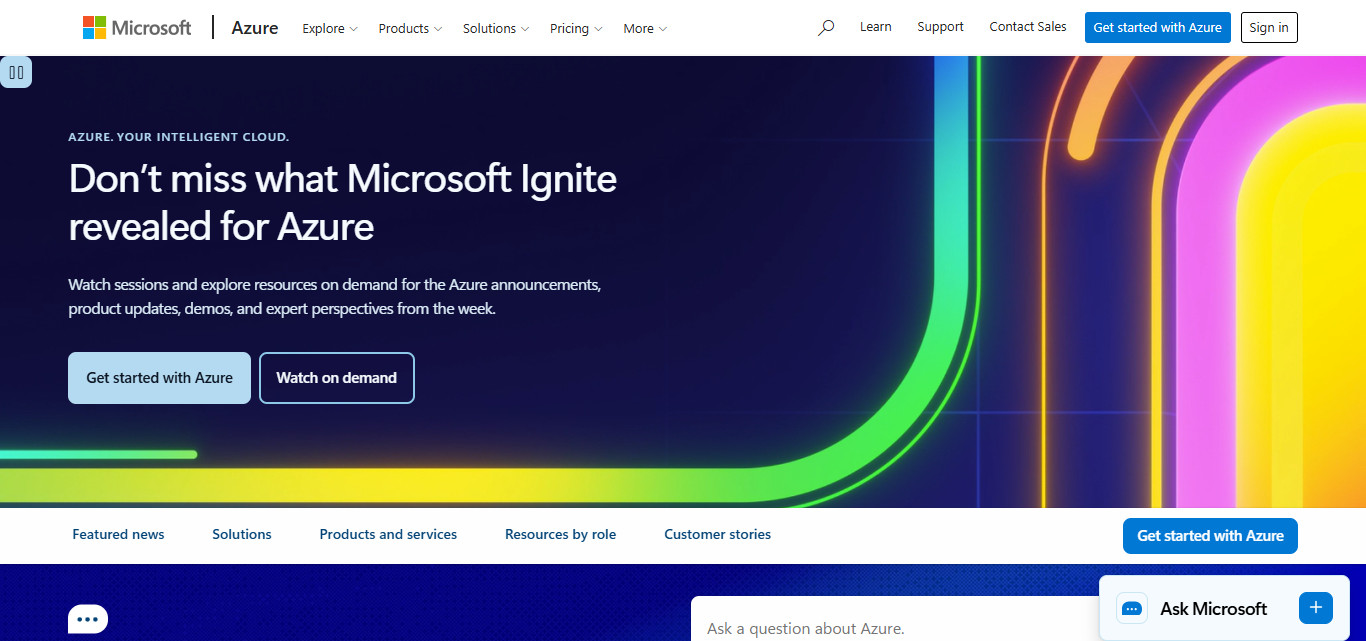
You have flexible options for hosting apps of any size with Azure App Service, Azure SQL Database, Kubernetes Service, and Azure Functions. For customers that do keep some data on-premises, the platform has one of the broadest arrays of compliance certifications and solid hybrid cloud capabilities.
Microsoft for Startups programs offer credits and mentoring to eligible companies. The interface and pricing of Azure are confusing at first, but the ecosystem is powerful. It is ideal for enterprise-oriented SaaS products with need of security, compliance and identity management.
Microsoft Azure Key Features
- Microsoft Integration: Works natively with Entra ID,.NET, GitHub, Visual Studio and Microsoft 365.
- Certifications: One of the broadest sets of security and regulatory certifications.
- Hybrid Cloud: Link on-premises systems to cloud resources for enterprise customers.
- App Hosting Services: App Service, Azure SQL, Functions, Kubernetes support a broad set of architectures.
6. Vultr
Vultr is an independent cloud provider offering high performance virtual machines, bare metal servers, managed Kubernetes and managed databases in more than 30 data center locations worldwide. This wide geographic footprint enables
SaaS startups to deploy applications closer to the user, reducing latency and improving the experience for global customers. Pricing is affordable and hourly, so teams pay only for the resources they use.
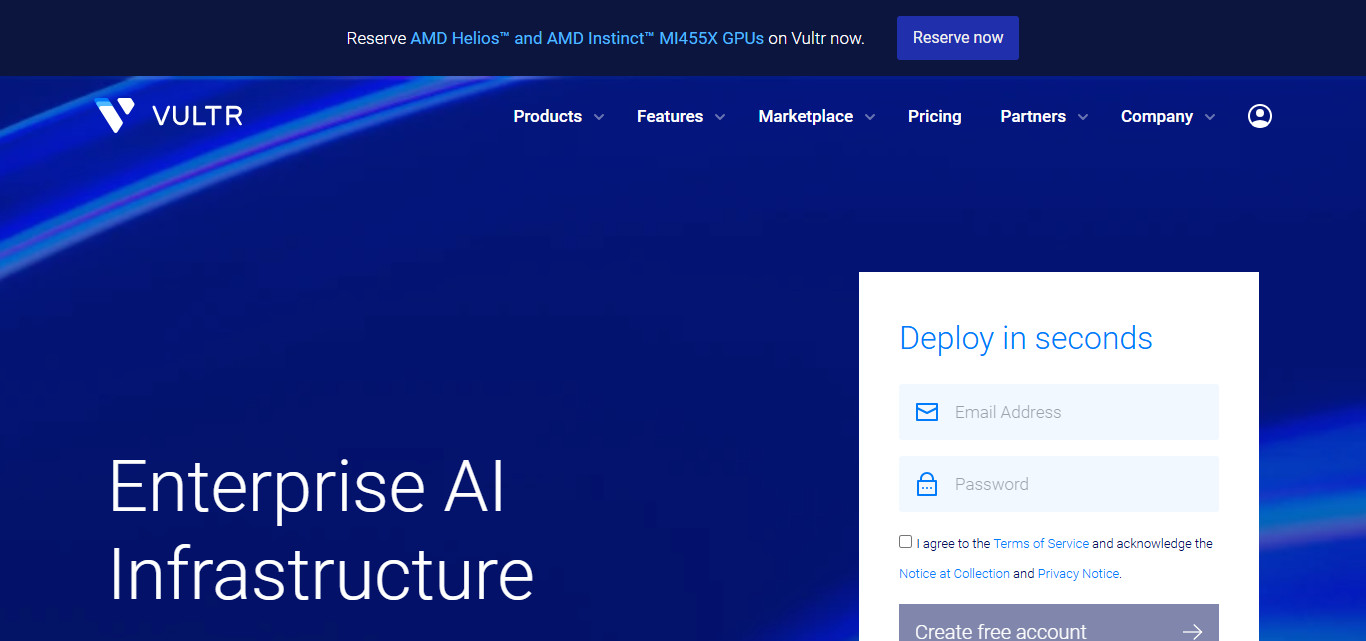
Vultr supports a lot of operating systems, custom ISO uploads, block storage, load balancers and a clear API for automations. Its high-frequency compute plans feature fast processors and NVMe storage, which are suitable for demanding workloads.
The control panel is easy to use but the ecosystem is smaller than the large hyperscalers. Vultr is perfect for startups needing global reach, high performance and cost efficiency.
Vultr Key Features
- Global Data Centers: 30+ locations worldwide to host your applications near to your users.
- Flexible Compute: Cloud VMs, high frequency instances and bare metal servers for demanding workloads.
- Pay by the Hour: Only pay for what you use, keeping your early stage costs down.
- Managed Services: Managed databases and kubernetes, and a clear API for automation
7. Linode
Linode is now part of Akamai and is known as Akamai Cloud. It has been around for a long time and offers straightforward Linux virtual servers, transparent pricing, and reliable customer support. SaaS startups can provision compute instances, managed databases, Kubernetes clusters, object storage and load balancers via a clean dashboard or API.
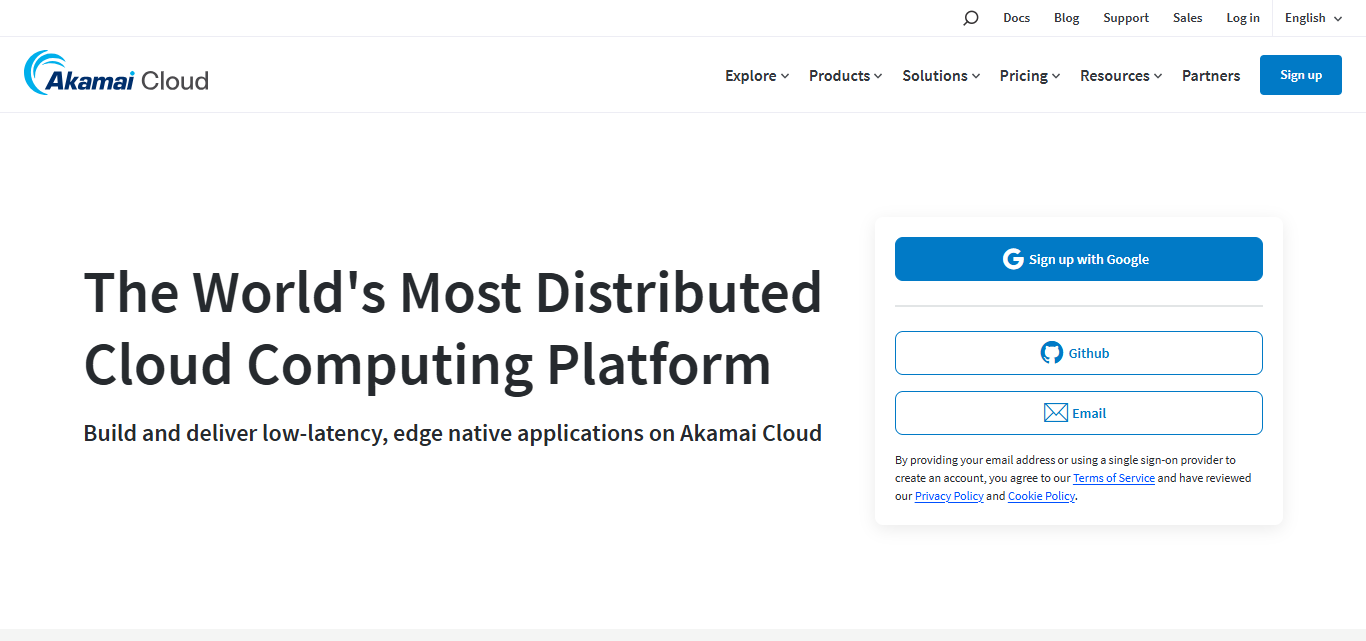
Flat, predictable monthly rates make budgeting easy and generous bandwidth allowances help keep costs in check as traffic grows. Integration with Akamai’s global network offers robust content delivery and security options. Developers also get complete guides, one-click marketplace apps, and responsive human support.
The platform doesn’t provide as many advanced services as AWS or Azure but does a very good job of covering the basics. Linode plans are designed for budget-minded developers, startups and small teams who want solid infrastructure without the bloat.
Linode Key Features
- Simple Linux Servers: Fast deploy of stable compute instances with a clean dashboard.
- Transparent pricing. Flat monthly rates with generous bandwidth allowance.
- Akamai Edge: Powered by Akamai’s world-class network for improved delivery and security.
- Responsive Support: Human support and developer guides.
8. UpCloud
UpCloud is a European cloud provider, founded in Finland, with a focus on speed, reliability and simplicity for performance-sensitive applications. Its MaxIOPS storage technology provides very fast disk performance, which is good for database-heavy SaaS platforms.
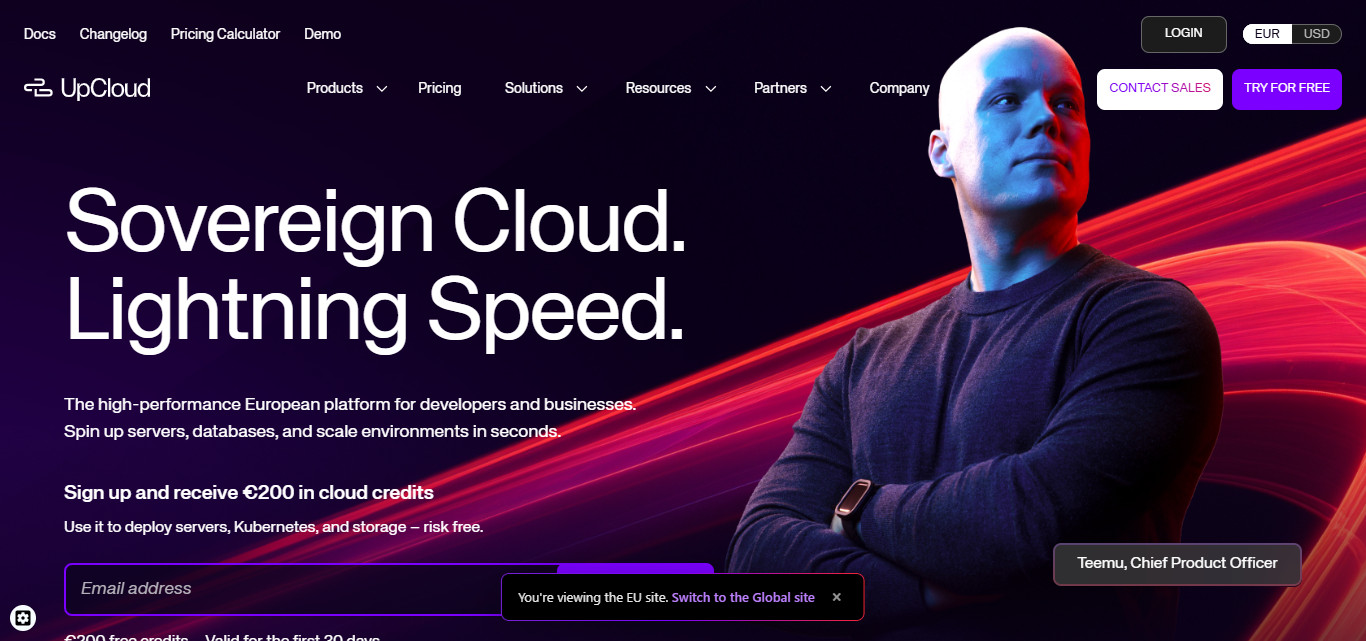
UpCloud advertizes a 100% uptime SLA so startups can rest assured that customer-facing services will remain up. Deploying servers takes about a minute, and you get managed databases and managed Kubernetes, as well as load balancers, object storage, private networking, and an API for automation.
Transparent pricing, hourly billing, capped monthly price. Data centers in Europe, North America, Asia and Australia. Its steady performance is key for teams and its strong benchmark results make it a favorite. UpCloud is best suited for high performance workloads, European data residency needs and startups that value uptime and speed.
UpCloud Key Features
- MaxIOPS Storage: Very high disk performance, ideal for database-heavy SaaS platforms.
- 100% Uptime SLA: Robust availability guaranty for customer-facing applications.
- One-Click Deploy: Spin up servers in ~1 minute. Managed databases and Kubernetes available.
- Global Locations: Data centers in Europe, North America, Asia & Australia
9. SiteGround
Popular managed hosting company SiteGround is famous for fast websites, reliable uptime and top customer support. It runs on Google Cloud infrastructure and offers free SSL, daily backups, built-in caching, staging tools and a custom control panel called Site Tools.
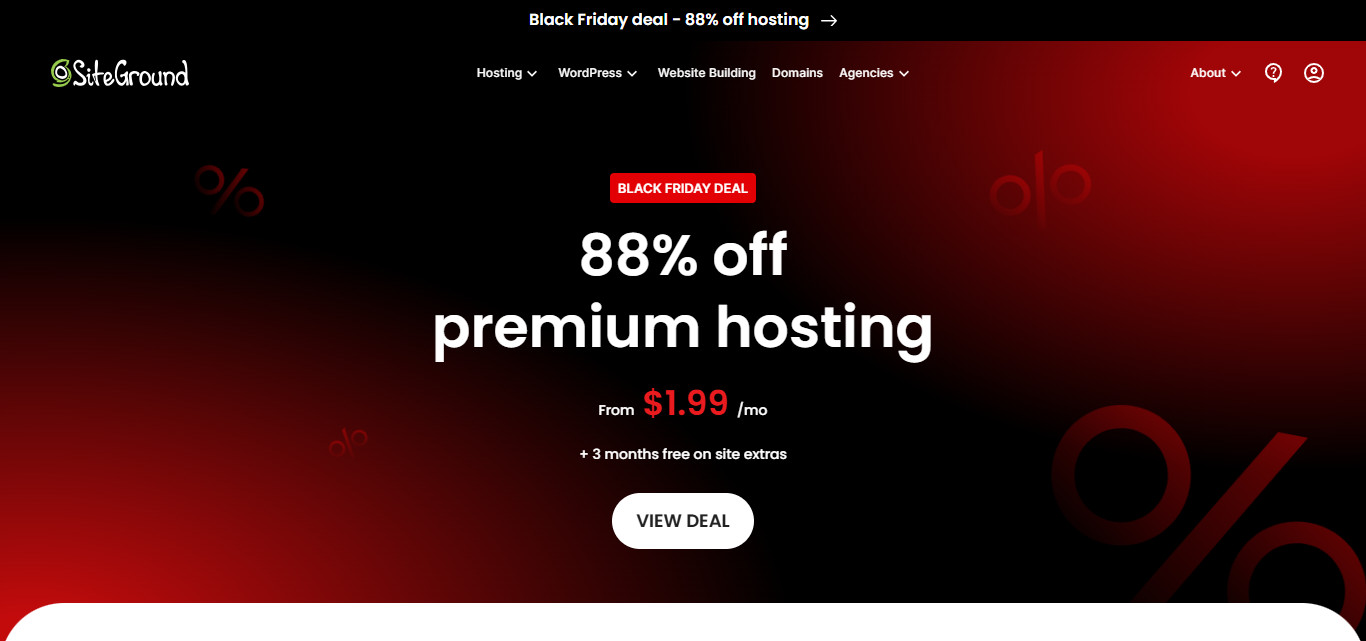
It is best suited for SaaS startups, marketing websites, landing pages, documentation portals, blogs and early-stage web apps – not for heavy and large-scale application infrastructure. The cloud hosting plans have dedicated resources and are easy to scale, and the support team is fast and knowledgeable in their responses.
Renewal prices are higher than introductory rates so start ups need to consider long term costs. SiteGround doesn’t offer the advanced services or deep customization of AWS or DigitalOcean. If you run an early-stage SaaS company and you want reliable, no-fuss hosting for your public web presence, this is a good option.
SiteGround Key Features
- Google Cloud Infrastructure: Quick, dependable hosting on Google’s global network.
- Included Essentials: Free SSL, daily backups, caching and staging tools are included.
- Site Tools Panel: A custom control panel that makes site and server management a breeze.
- Quality Support: Fast and knowledgeable support. Great for marketing sites and documentation portals
10. Hostinger
Hostinger is a cheap hosting provider that has grown rapidly because of its low prices, a beginner-friendly control panel known as hPanel, and good performance for the price. Its VPS and cloud hosting plans provide SaaS startups with full root access so teams can install custom stacks, run Docker containers and host APIs or web apps.
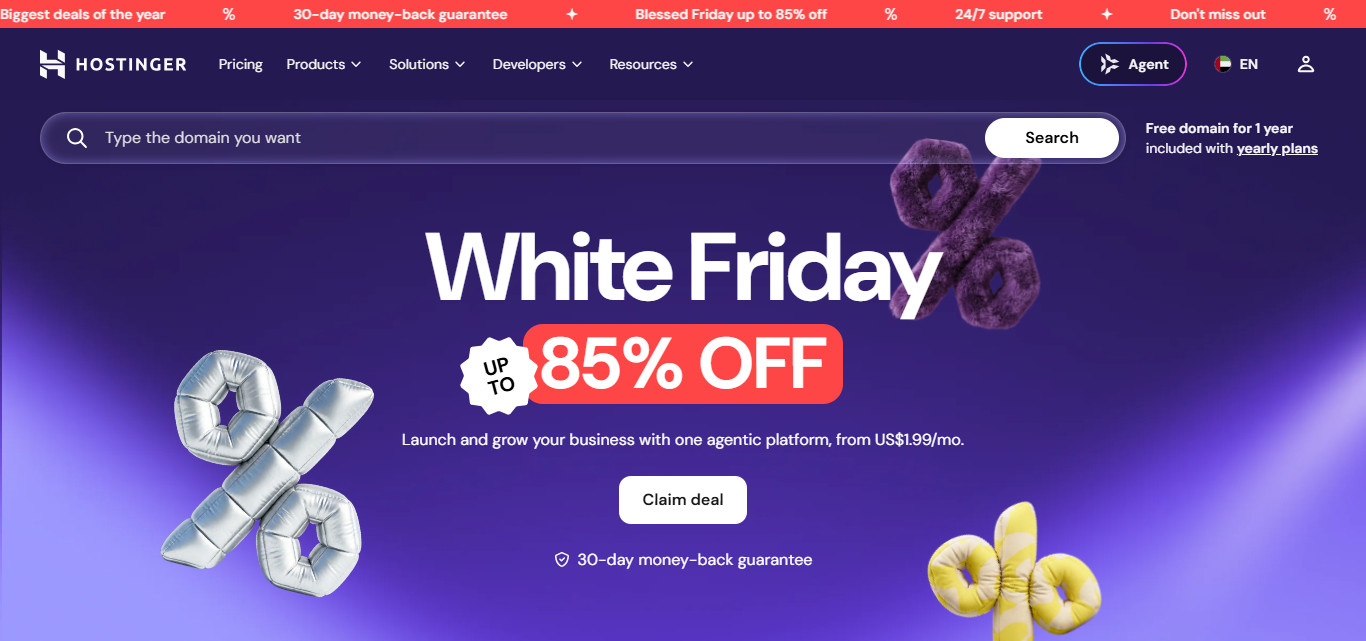
Multiple region data centers reduce latency while automated backups, a free domain on select plans and 24/7 support make management a breeze. Hostinger also comes with an AI-assisted website builder, which can come in handy for building quick landing pages.
It doesn’t have the advanced managed services of AWS or Google Cloud, so growing products may eventually move on. Hostinger is the best option for bootstrapped founders, MVP testing and prototyping who need affordable hosting.
Hostinger Key Features
- Cheap VPS & Cloud Hosting: For bootstrapped founders, cheap VPS and cloud hosting.
- Full root access: Install custom stacks, run Docker containers, host APIs or web applications
- hPanel for newbies: Easy-to-use control panel with automated backups and easy management.
- 24/7 Support: 24/7 assistance, several data center regions to minimize latency.
Conclusion
Conclusion The right hosting for your SaaS startup will depend on your budget, technical skills and growth plans. Cloudways and DigitalOcean are great for small teams, while AWS, Google Cloud and Azure offer powerful scalability for bigger ambitions.
Vultr, Linode, and UpCloud all perform well, and SiteGround and Hostinger are great for early projects. Compare features Test options Select a provider that grows with you.
FAQ
What is the best web hosting for SaaS startups?
AWS fits fast growth; Cloudways and DigitalOcean suit small teams.
Which hosting is best for non-technical founders?
Cloudways manages servers, security, and backups, so founders avoid technical work.
Which hosting is cheapest for early-stage SaaS startups?
Hostinger and Vultr offer affordable plans, ideal for MVPs and budgets.
Which platform is best for AI and data-driven SaaS?
Google Cloud offers BigQuery and Vertex AI for analytics and ML.