
In this article I will talk about the Best Hosting Platforms for Decentralized Applications, looking at the best solutions for Web3 development and deployment.
You’ll learn about their key features, performance, pricing, supported technologies, and best use cases. This guide aims to help developers choose the right hosting platforms to efficiently build, deploy, and manage decentralized applications.
Our Methodology for Selecting the Best Decentralized App Hosting Platforms
- Decentralization: Evaluate the independence of the infrastructure and capabilities of distributed networks.
- Performance: Check speed, uptime, reliability and network efficiency.
- Security: Examine data protection, encryption and infrastructure security.
- Scalability: Assess how well it can scale to meet increasing application demands.
- Key Features: Look at the comparison of hosting tools, storage, APIs and computing resources.
- Supported Technologies: Make sure you check that it supports blockchain networks and Web3 tools.
- Pricing: Subscription plans, storage prices, usage-based pricing.
- Developer Experience: Assess documentation, APIs, SDKs and support.
- Deployment Options: Evaluate the flexibility of application deployment, integration & management.- Use Cases: Evaluate its applicability for DeFi, NFTs, gaming, and Web3 applications.
Key Points & Best Hosting Platforms for Decentralized Applications
| Platform | Category | Explanation |
|---|---|---|
| Akash Network | Decentralized Compute | Decentralized cloud marketplace offering affordable, permissionless compute by renting unused server capacity. |
| Flux | Decentralized Cloud | Decentralized cloud running Docker apps across distributed, community-operated nodes with automatic redundancy. |
| Arweave | Permanent Storage | Permanent data storage network; pay once, your files stay stored online forever. |
| IPFS | Storage Protocol | Peer-to-peer protocol storing content by hash, enabling fast, distributed, tamper-resistant file sharing. |
| Filecoin | Storage Marketplace | Incentivized storage marketplace where miners earn tokens for reliably storing your data. |
| Pinata | IPFS Pinning | Easy IPFS pinning service providing fast uploads, gateways, and reliable file management. |
| Fleek | Web3 Hosting | Web3 hosting platform deploying websites and apps on IPFS with simple workflows. |
| Chainstack | Node Infrastructure | Managed blockchain node infrastructure offering reliable RPC endpoints across many popular networks. |
| QuickNode | Blockchain API | High-speed blockchain API provider delivering low-latency node access for scalable, production-ready dApps. |
| OVHcloud Web3 | Traditional Cloud | Traditional cloud provider offering secure, compliant servers and nodes for blockchain projects. |
10 Best Hosting Platforms for Decentralized Applications
1. Akash Network
Akash Network is a decentralized cloud computing platform that offers flexible infrastructure to host decentralized applications. Platform Type: It is an open blockchain-based cloud computing marketplace, where independent providers rent out computing resources. Core Services Developers are able to get virtual servers, CPU, RAM, storage and GPU resources for application deployment.
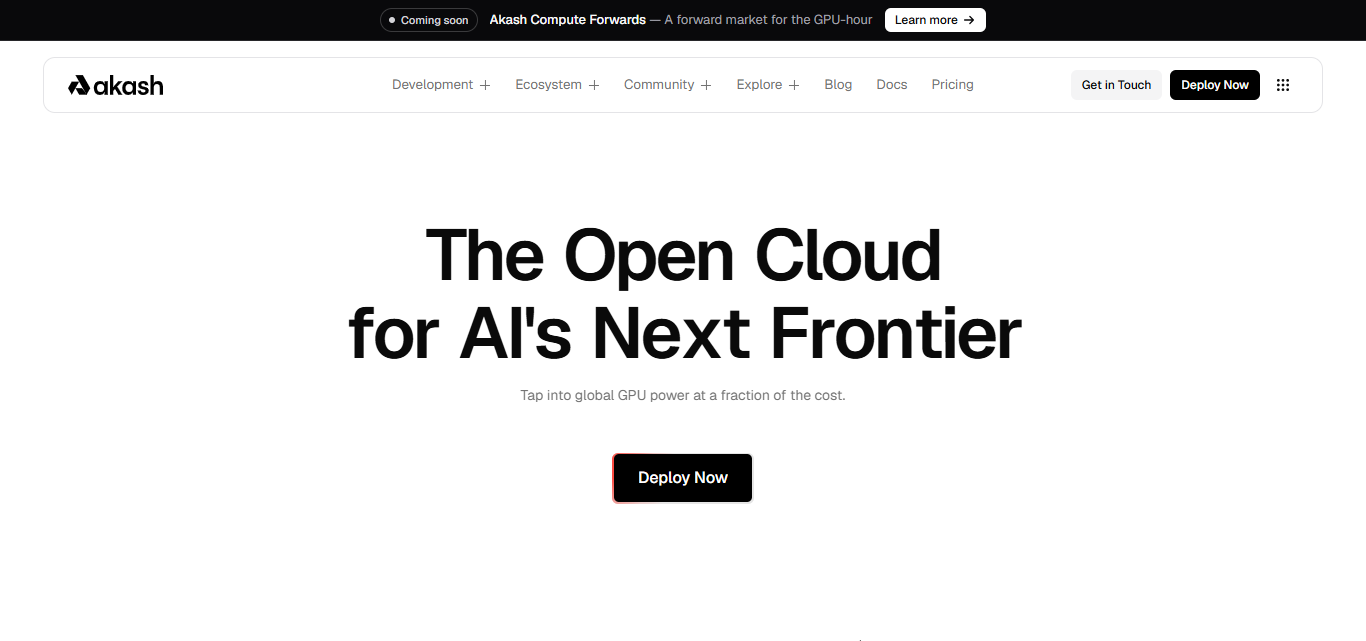
Main Features Permissionless hosting, flexible resource allocation, competitive bidding by providers, and censorship resistance. Performance Applications may utilize globally distributed providers and configurable compute resources.
Supported Technologies Akash supports Docker containers, APIs, databases and many development frameworks. Pricing: Marketplace pricing that is competitive and usage-based. Where it really shines: Web3 apps, AI workloads, APIs and blockchain infrastructure.
Akash Network Best Use Cases
- Web3 Application Hosting: Deploy decentralized applications with cheap cloud computing resources.
- Machine learning & AI: Deploy compute-intensive AI workloads with distributed GPU computing.
- Blockchain Infrastructure: Operate blockchain nodes, APIs, and backend services.
- Development and Testing: Build, test and deploy applications using flexible compute resources.
| Key Feature | Explanation |
|---|---|
| Decentralized Cloud Marketplace | Connects developers with independent computing providers through an open marketplace. |
| Cost-Effective Computing | Offers competitive pricing through provider bidding and resource availability. |
| Container-Based Deployment | Supports Docker containers for flexible application deployment and management. |
| GPU Computing Support | Provides access to GPU resources for demanding computing workloads. |
| Permissionless Infrastructure | Allows developers to access computing resources without traditional centralized cloud restrictions. |
2. Flux
Flux is a decentralized cloud infrastructure platform that helps developers deploy applications on globally distributed computing nodes. Platform Type It is a decentralized cloud hosting and computing network that is built on top of independent FluxNodes. Core Services Application hosting, container deployment, computing resources, and blockchain infrastructure.
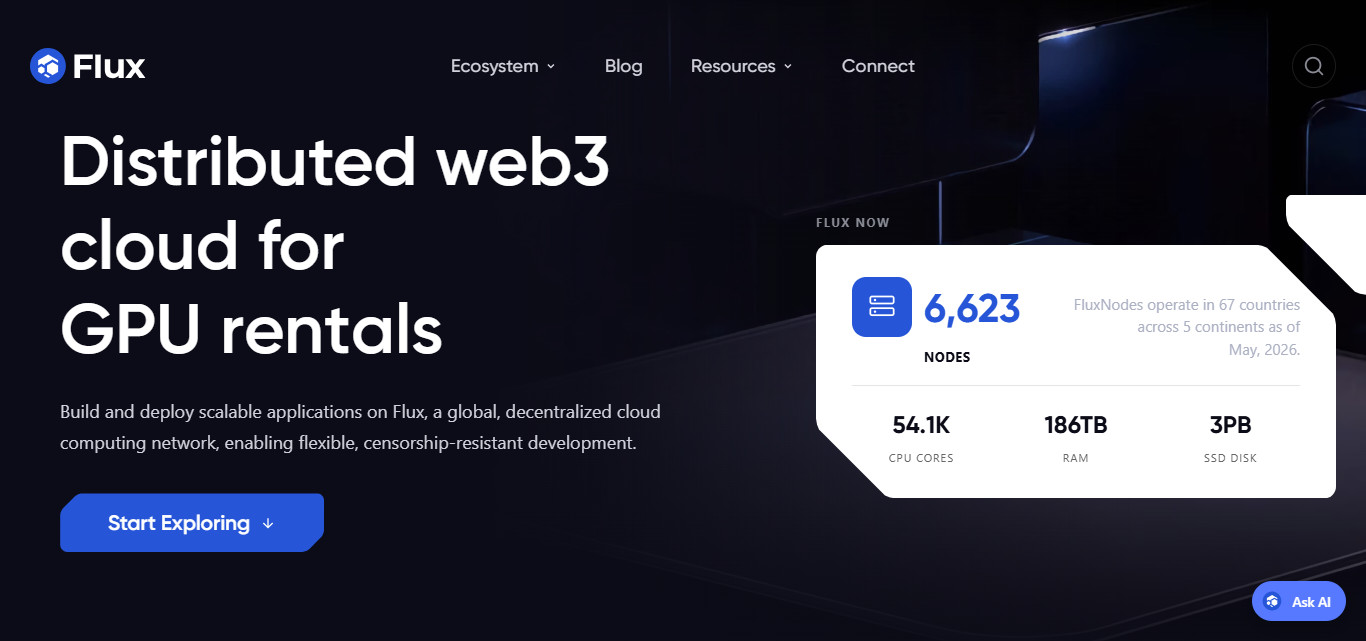
Key Features Flux offers distribution hosting, automatic fail-over, redundancy and censorship resistant infrastructure. Performance: Its geographically dispersed nodes help to improve the availability and reliability of the application.
Supported Technologies The platform supports Docker applications, APIs, blockchain nodes and cloud native workloads. Pricing The cost of hosting depends on the resources and deployment options you choose. Best use cases include Web3 apps, DeFi platforms, blockchain nodes, gaming servers, and decentralized websites.
Flux Best Use Cases
- Decentralized Web Hosting: Host websites on a distributed infrastructure, eliminating reliance on centralized servers.
- Web3 Application Deployment: deploy blockchain applications with decentralized compute nodes
- Blockchain Node Hosting: Host your blockchain nodes and supporting infrastructure on distributed networks.
- Gaming Applications: Host decentralized gaming servers and multiplayer application infrastructure.
| Key Feature | Explanation |
|---|---|
| Distributed Node Network | Uses globally distributed FluxNodes to provide decentralized computing infrastructure. |
| Decentralized Application Hosting | Enables developers to deploy applications across independent network nodes. |
| Automatic Failover | Supports application redundancy to improve availability during node failures. |
| Docker Integration | Uses container technology to simplify application deployment and management. |
| FluxOS Infrastructure | Provides an operating environment for deploying and managing decentralized applications. |
3. Arweave
Arweave is a decentralized storage network that attempts to use its blockchain-based infrastructure to preserve digital information forever. Platform Type It offers decentralized permanent storage of data as opposed to traditional application hosting on servers.
Core Services Developers are able to upload website files, app data, documents, images, and NFT metadata. Key Features The architecture is built using a blockweave structure, cryptographic verification and an economic model that rewards long-term data storage.

Performance Gateways and indexing services can be used to access stored content. Speed of access is dependent on retrieval infrastructure. Supported Technologies Arweave Permaweb, data transactions, SmartWeave-based applications.
Pricing Usually users pay upload fees, depending on the size of the data and the network condition. Best Uses: Permanent websites, digital archives, NFT assets, immutable application records.
Arweave Best Use Cases
- Permanent Website Hosting: Permanently host website content on decentralized storage infrastructure.
- NFT Metadata Storage: Store NFT images, metadata and data related to digital ownership.
- Digital Preservation: Store historical records, research data and important digital materials.
- Decentralized Applications: Storage of application data and frontend assets for long time access.
| Key Feature | Explanation |
|---|---|
| Permanent Data Storage | Preserves digital information through its long-term decentralized storage model. |
| Blockweave Architecture | Uses a specialized blockchain-like structure designed for permanent data preservation. |
| Pay-Once Storage Model | Provides an upfront payment model intended to fund long-term data storage. |
| Censorship Resistance | Distributes stored information across a decentralized network of participants. |
| Permaweb Support | Enables permanent websites, applications, and publicly accessible digital content. |
4. IPFS
IPFS ( InterPlanetary File System ): a peer-to-peer protocol for decentralized content storage, addressing and distribution. Platform Type It is a distributed file-sharing and content-addressing protocol, not a traditional hosting provider. Core Services Developers distribute website files, application assets, documents, images and NFT metadata using IPFS.
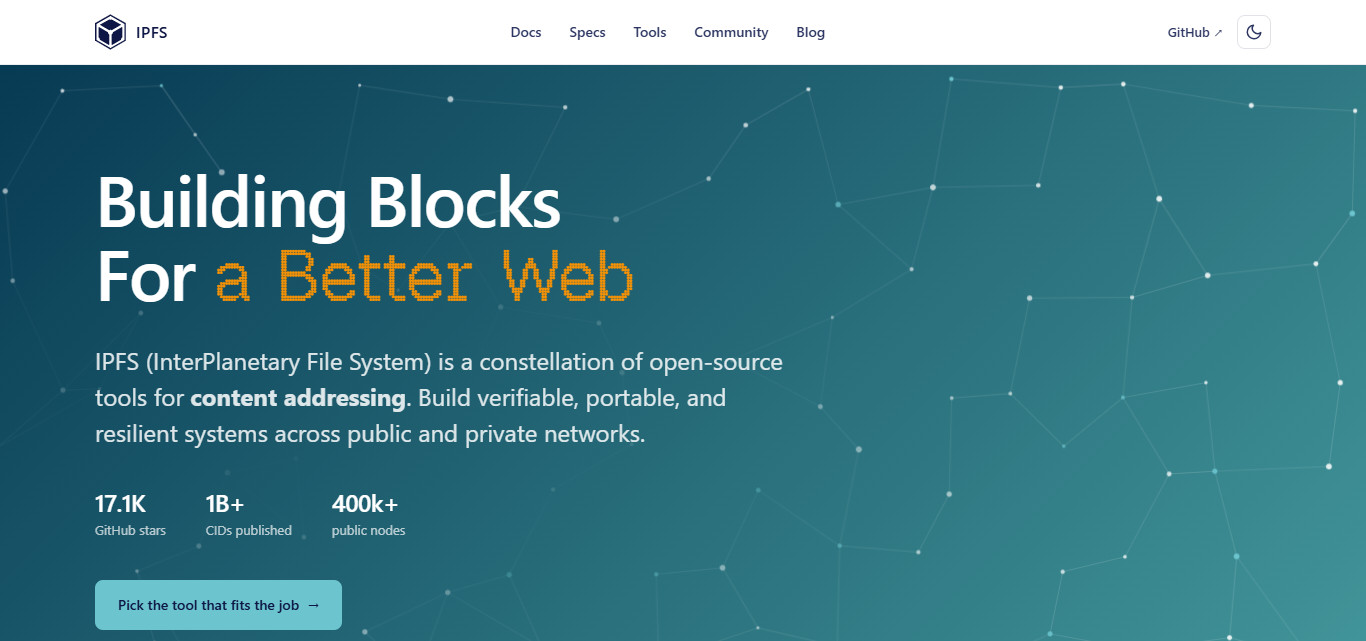
Key Features It uses content identifiers (CIDs), peer-to-peer networking and cryptographic verification to ensure the integrity of content. Performance: Content retrieval depends on network peers, geographic distribution, gateways and available bandwidth.
Compatible Technologies IPFS works with JavaScript, HTTP gateways, IPNS, and other Web3 development technologies. Pricing The protocol is open source but third party pinning and gateway services may charge fees. Best Use Cases Decentralized websites, NFT marketplaces and distributed application storage.
IPFS Best Use Cases
- Decentralized Web Hosting: Distribute web pages over a peer-to-peer content-addressed network.
- NFT Marketplace Storage: Store NFT images, metadata, and digital collectibles.
- Application File Distribution: Distribute application files without the need for centralized storage servers.
- Distributed Content Sharing: Share documents, videos, images and other digital files with the world.
| Key Feature | Explanation |
|---|---|
| Content Addressing | Identifies files through unique content identifiers rather than traditional server locations. |
| Peer-to-Peer Networking | Allows network participants to exchange content directly with one another. |
| Distributed File Storage | Stores and retrieves content across multiple participating network nodes. |
| Data Integrity Verification | Uses cryptographic content addressing to identify changes to stored files. |
| Gateway Integration | Provides HTTP gateways for accessing IPFS content through standard browsers. |
5. Filecoin
Filecoin is a decentralized storage network that connects users to independent storage providers via a blockchain-based marketplace. Platform Type It is a peer-to-peer decentralized cloud storage infrastructure. Core Services: Developers are able to store large data sets, application files, backups, website assets, and digital media.
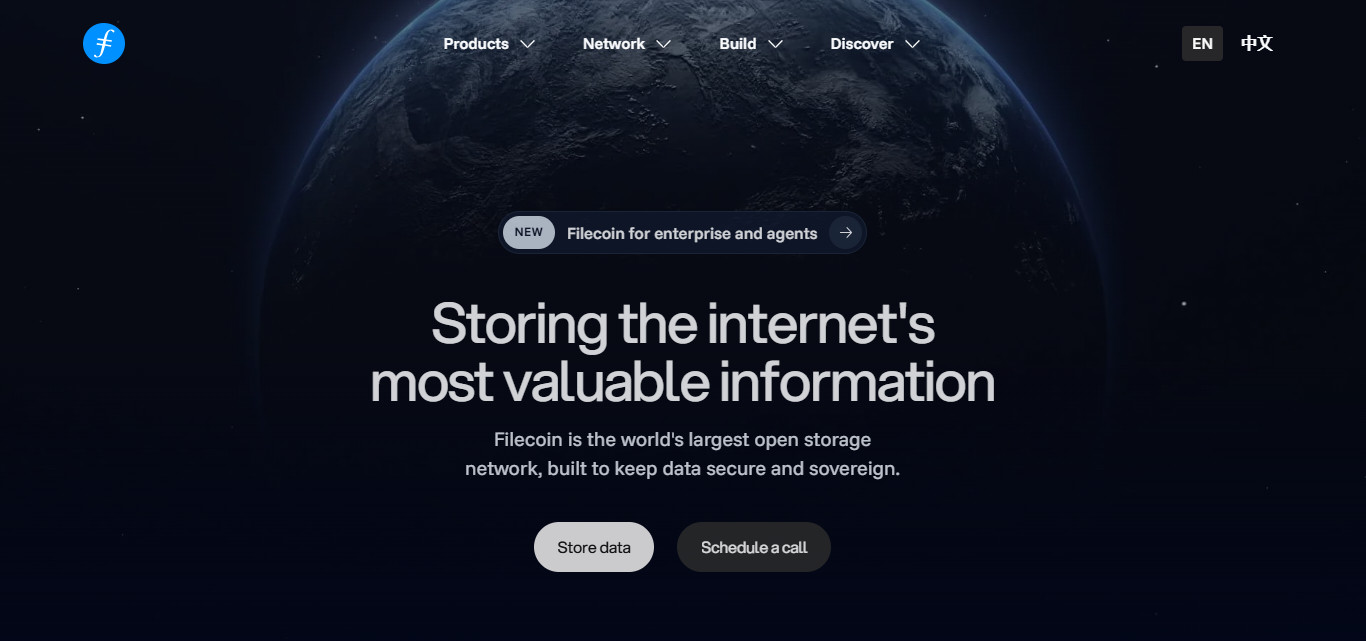
Main Features: Filecoin uses cryptographically secure storage proofs, economic incentives, and storage agreements to incentivize providers to keep customer data. Performance: Storage and retrieval speeds depend on provider infrastructure, network conditions and retrieval arrangements.
Technologies Supported: Supports IPFS integration, content identifiers, Filecoin Virtual Machine (FVM), and decentralized storage apps. Pricing: Cost of storage is determined by providers and is dependent on the length of time data is stored, the need for replication and the retrieval services. Best suited for: Web3 apps, NFT storage, backups and large-scale decentralized data management.
Filecoin (FIL) Best Use Cases
- Big Data Storage: Store large data sets from decentralized storage providers.
- NFT Asset Preservation: Safeguard digital artwork, metadata, and collectible files.
- Enterprise Data Backup: Distributed backups for critical business data and files.
- Web3 App Storage: Store app files and datasets with verifiable storage contracts.
| Key Feature | Explanation |
|---|---|
| Decentralized Storage Marketplace | Connects customers with independent providers offering storage capacity. |
| Cryptographic Storage Proofs | Uses Proof-of-Replication and Proof-of-Spacetime to verify storage commitments. |
| Economic Incentives | Rewards storage providers for fulfilling network storage agreements. |
| IPFS Compatibility | Works alongside IPFS for decentralized content addressing and retrieval workflows. |
| Filecoin Virtual Machine | Supports programmable smart contracts and decentralized storage-related applications. |
6. Pinata
Pinata is a developer-focused Web3 infrastructure platform that makes it easy to upload, manage, and deliver content over IPFS. Platform Type: managed IPFS pinning, storage management and content delivery platform.
Core Services Services like file uploads, IPFS pinning, APIs, SDKs and dedicated gateways. Key Features Pinata provides content management tools, gateway customization, developer integrations, and reliable access to stored files.
Performance – Dedicated gateways improve content delivery and controlled access to application assets. Supported Technologies: Supports IPFS, HTTP APIs, JavaScript SDKs and NFT-related workflows. Pricing: It has different plans of service based on your needs of storage, bandwidth, and usage. Best Use Cases NFT marketplaces, decentralized websites, digital collectibles, Web3 application storage.
Pinata Best Use Cases
- NFT Marketplace Development Upload and manage NFT images, metadata, and digital resources.
- Decentralized Web Hosting: Pin website content to IPFS with dedicated gateways.
- Web3 Application Development: Add decentralized file storage to your application with developer-friendly APIs and SDKs.
- Digital Content Management: Media files that are uploaded and distributed onto decentralized networks
| Key Feature | Explanation |
|---|---|
| IPFS Pinning Services | Helps keep uploaded content available through managed IPFS pinning infrastructure. |
| Dedicated Gateways | Provides customized gateways for accessing and delivering decentralized content. |
| Developer-Friendly APIs | Offers APIs and SDKs for integrating file management into applications. |
| Media Management | Supports uploading, organizing, and managing digital content and assets. |
| NFT Infrastructure | Simplifies storage and delivery of NFT images and metadata. |
7. Fleek
Fleek is a Web3 infrastructure brand that has a history of making decentralized website hosting and content delivery simple. Platform Type: It used to offer managed decentralized website deployment and IPFS-based storage. Core Services: Previously, developers could deploy websites, manage files and integrate decentralized storage technologies.

Key Features: It’s previous offering focused on developer friendly deployment, automated workflows and distributed content delivery. Performance: Its legacy edge infrastructure was built to minimize latency based on geographically distributed delivery locations.
Supported Technologies: Its previous storage integrations were IPFS, Filecoin, and Arweave. Pricing: N/A for the discontinued hosting service. Best Use Cases Fleek’s former hosting product supported Web3 websites and decentralized applications. Note: Fleek’s IPFS hosting service was discontinued on January 31, 2026, so check the product’s current availability before choosing it.
Fleek Best Use Cases
- Web3 Website Development: It used to support decentralized websites with IPFS based hosting.
- Static website deployment: previously, it allowed developers to deploy static websites using automated workflows
- Decentralized Content Delivery: Its old infrastructure supported distributed content delivery of websites.
- Web3 Frontend Hosting: Traditionally helped developers deploy the frontend interfaces of decentralized applications.
| Key Feature | Explanation |
|---|---|
| Web3 Infrastructure | Historically provided tools for deploying decentralized websites and applications. |
| IPFS Integration | Supported decentralized content storage and distribution through IPFS. |
| Automated Deployment | Previously simplified website publishing through developer deployment workflows. |
| Content Delivery | Its former hosting infrastructure supported distributed delivery of website content. |
| Developer Tools | Offered tools and integrations for managing Web3 website deployments. |
8. Chainstack
Chainstack is a managed blockchain infrastructure platform which enables developers to build and run decentralized applications without the hassle of running their own blockchain nodes. Platform Type: Offers managed blockchain nodes, RPC endpoints, and Web3 infrastructure services. Main Services: Services are node hosting, blockchain APIs, archive nodes and network access.
Key Features Chainstack provides managed infrastructure, developer tools, monitoring and scalable blockchain connectivity. Performance. Designed to provide reliable network access and handle application traffic as projects grow.
Supported Technologies It supports multiple blockchain ecosystems including Ethereum compatible networks and other major blockchain platforms. Pricing: There are free and paid plans, with pricing based on the number of requests, nodes and other features. Best Use Cases: DeFi apps, NFT trading platforms, blockchain analytics, and Web3 back-end development.
Chainstack Best Use Cases
- DeFi Application Development: Build decentralized finance applications on blockchain networks.
- Blockchain Node Management: Deploy and manage blockchain nodes without the need for physical infrastructure.
- NFT Marketplace Development: Get access to blockchain data for NFT transactions and marketplace apps.
- Blockchain Analytics: Access network information to track transactions and applications.
| Key Feature | Explanation |
|---|---|
| Managed Blockchain Nodes | Provides managed node infrastructure across supported blockchain networks. |
| Multi-Chain Support | Enables developers to connect with multiple blockchain ecosystems. |
| RPC Endpoints | Provides blockchain connectivity through reliable Remote Procedure Call endpoints. |
| Developer-Friendly APIs | Simplifies blockchain application development through accessible APIs and tools. |
| Infrastructure Monitoring | Offers monitoring and management capabilities for blockchain infrastructure deployments. |
9. QuickNode
QuickNode is a blockchain infrastructure platform that provides developers with managed node access and APIs to build decentralized applications. Platform Type: Managed blockchain node hosting and RPC infrastructure provider. Core Services: It provides services such as RPC endpoints, blockchain APIs, websockets, real-time data streams, and webhooks.
Key Features: QuickNode provides managed nodes, developer integrations, scalable endpoints, and access to multiple blockchain networks. Performance: Global infrastructure for dependable blockchain connectivity, automatic regional failover and scalable endpoints.
Supported Technologies: It supports networks including Ethereum, Solana, Polygon, Arbitrum, and Base, as well as other blockchain ecosystems. Pricing: It has free trials and paid plans depending on the API usage and resource requirements. Best Use Cases: DeFi platforms, NFT apps, wallets, blockchain analytics and Web3 gaming
QuickNode Best Use Cases
- DeFi Platform Development: Develop decentralized financial applications with trusted blockchain connectivity.
- NFT Marketplace Infrastructure: Get NFT ownership, transaction, and blockchain information.
- Web3 Wallet Development: Connect crypto wallets to the blockchain networks it supports.
- Blockchain Gaming: Incorporate blockchain transactions and real-time network connectivity into gaming apps.
| Key Feature | Explanation |
|---|---|
| Global Blockchain Infrastructure | Provides distributed infrastructure for accessing supported blockchain networks. |
| Multi-Chain Connectivity | Supports numerous blockchain ecosystems through managed node services. |
| High-Performance RPC APIs | Enables applications to communicate with blockchains through optimized RPC endpoints. |
| WebSocket Support | Provides real-time blockchain communication through WebSocket connections. |
| Developer Tools | Offers APIs, SDKs, webhooks, and data tools for Web3 development. |
10. OVHcloud Web3
OVHcloud Web3 is a cloud and dedicated server infrastructure for blockchain networks and decentralized applications. Platform Type: Centralized cloud infrastructure provider with Web3-specific hosting solutions.
Core Services Services include dedicated servers, public cloud instances, managed Kubernetes, and blockchain node infrastructure. Key features include DDoS protection, global infrastructure, flexible deployment and predictable infrastructure costs.
Performance : High-bandwidth connectivity, dedicated computing resources and geographically-distributed data centers support demanding blockchain workloads. Supported Techs: Developers are able to deploy Ethereum nodes, validators, Layer 2 infrastructure, and DeFi applications.
Pricing: Pricing depends on the server configurations, cloud resources and infrastructure services selected. Best Use Cases: Blockchain nodes, validator operations, Web3 backends, enterprise decentralized applications.
OVHcloud Web3 Best Use Cases
- Blockchain Node Hosting Deploy blockchain nodes on dedicated servers and cloud infrastructure.
- Enterprise Web3 Apps: Provide scalable backend infrastructure for enterprise blockchain projects.
- Validator Infrastructure: Run blockchain validators on purpose built compute.
- DeFi backend hosting: Use trusted cloud computing infrastructure to power decentralized finance apps.
| Key Feature | Explanation |
|---|---|
| Dedicated Server Hosting | Provides dedicated computing resources for blockchain infrastructure deployments. |
| Public Cloud Infrastructure | Offers flexible cloud resources for decentralized application backends. |
| DDoS Protection | Provides network protection services against distributed denial-of-service attacks. |
| Kubernetes Support | Enables container orchestration for scalable application infrastructure management. |
| Global Data Centers | Provides geographically distributed infrastructure for hosting demanding workloads. |
Conclusion
Conclusion Selecting the right hosting platforms for decentralized applications depends on the infrastructure, performance, security, scalability, and budget requirements of your project. Platforms like Akash Network, Flux, Arweave, IPFS, and Filecoin offer decentralized hosting and storage solutions.
Meanwhile, Chainstack and QuickNode are making it easier to connect to the blockchain. Evaluate their features, pricing, and supported technologies closely to determine the best platform for your Web3 project.
FAQ
What are decentralized application hosting platforms?
They provide infrastructure for deploying and managing blockchain-based decentralized applications.
Which hosting platform is best for decentralized applications?
Akash Network, Flux, and other platforms offer different Web3 infrastructure solutions.
Are decentralized hosting platforms more secure than traditional hosting?
They reduce centralized dependencies but still require proper security and configuration.
Can I host Web3 websites using IPFS?
Yes, IPFS distributes website files through decentralized peer-to-peer content-addressed networking.