
In this article, I will be discussing AI Financial Reconciliation Tools Automating Enterprise Bookkeeping. I will be explaining how AI is changing the way accounting is done today.
AI solutions allow enterprises a new level of automation when it comes to matching transactions, spotting financial discrepancies, ensuring greater compliance, and faster reconciliation.
From AI agents to automated ledger management, finance teams can now look to faster, more accurate, efficient bookkeeping.
What Are AI Financial Reconciliation Tools?
AI Financial Reconciliation Tools are smart technologies powered by AI, ML, and automation to make the processes of financial matching and bookkeeping easier.
These tools handle the tedious work of transaction comparisons, balance checks, error and anomaly detection, and report generation for reconciliation.
Organizations that implement these tools can achieve a significant reduction in manual bookkeeping, an increase in precision, a faster monthly closing of books, and improved compliance.
AI Reconciliation solutions integrate with the enterprise’s ERP and accounting systems for financial management that is faster, more reliable, and smarter.
Key Points & AI Financial Reconciliation Tools Automating Enterprise Bookkeeping
| Platform | Explanation |
|---|---|
| HighRadius Agentic AI | Uses AI agents for automated reconciliation, matching, compliance, and faster financial close processes. |
| BlackLine | Centralizes enterprise reconciliation, controls, and transaction matching across global financial systems. |
| Trintech (Cadency & Adra) | Automates reconciliations, compliance workflows, journal entries, and financial risk management. |
| FloQast | Simplifies accounting collaboration with ERP integration and spreadsheet-based reconciliation automation. |
| Sage Intacct | Provides AI-powered reconciliation, anomaly detection, and multi-entity financial management capabilities. |
| Vic.ai | Automates invoice matching, accounts payable workflows, and intelligent approval processes. |
| AutoRek | Offers scalable reconciliation automation with customizable matching rules for complex datasets. |
| Numeric | Delivers real-time GL reconciliation, reporting, and automated transaction matching workflows. |
| OneStream | Combines consolidation, reporting, reconciliation, and workflow management in one platform. |
| DualEntry | Uses AI accounting automation for journals, matching, and ledger management. |
10 AI Financial Reconciliation Tools Automating Enterprise Bookkeeping
1. HighRadius Agentic AI
HighRadius Agentic AI redefines enterprise bookkeeping by designating autonomous AI agents to perform sophisticated reconciliation at scale.
This solution is built to operate at the level of firms with millions of financial transactions. HighRadius uses dedicated AI agents to certify GL accounts, match bank statements, find exceptions, and create journal entries.

This sophisticated automation significantly decreases the need for manual spreadsheet audits and streamlines the financial closing cycle.
Using intelligent workflows, organizations accomplish reconciliation with greater accuracy and flexibility to balance sheet verification with the assurance that records are retention-ready.
HighRadius offers the integration of AI and decision-making with ERP integration, targeting large enterprises with SAP, Oracle, or NetSuite implementations.
HighRadius Agentic AI – Key Features
- Autonomous AI Agents – Automated reconciliation and financial closing tasks using Agentic AI.
- Automated GL Certification – Certifies general ledger accounts with little to no manual effort.
- Smart Transaction Matching – Transaction and financial statement matching with precision.
- ERP Integration Support – Offers integration with SAP, Oracle, and NetSuite accounting systems.
- AI Exception Detection – Recognizes discrepancies in reconciliation and detected abnormal financial activity.
- Audit-Ready Documentation – Creates and keeps records needed for compliance and reporting oversight.
- Faster Financial Closing – Month-end closes are faster with Agentic AI.
| Pros | Cons |
|---|---|
| Uses autonomous AI agents to automate complex reconciliation processes. | May require significant implementation time for large enterprises. |
| Supports ERP integrations with SAP, Oracle, and NetSuite. | Higher pricing compared to basic reconciliation solutions. |
| Provides faster financial closes with improved accuracy. | Requires employee training for effective AI workflow management. |
| Creates audit-ready trails for compliance requirements. | Best suited for large organizations, not small businesses. |
| Handles millions of transactions efficiently. | Customization can increase deployment complexity. |
2. BlackLine
BlackLine is an advanced AI financial reconciliation solution for global enterprises with complex accounting systems. BlackLine connects general ledgers, subledgers, and bank data across various ERP systems to automate account substantiation, transaction matching, and variance analysis.

This significantly enhances financial controls by enabling visibility to progress in accounting reconciliation prior to the reporting deadline and identifying errors in advance. BlackLine’s intelligent automation further reduces the repetitive task burden in accounting
While enhancing compliance and preparation for audits. BlackLine’s flexible framework and design provide standardized reconciliation in the diverse bookkeeping units spanning multiple regions and currencies.
BlackLine – Key Features
- Automated Account Reconciliation – Makes enterprise wide balance sheet reconciliation effortless.
- Multi-ERP Connectivity – Consolidates financial data from various accounting systems.
- Transaction Matching Engine – Validates mass volumes of transactions via automated matching.
- Variance Analysis Tools – Discovers and alerts on financial and transactional discrepancies.
- Centralized Financial Controls – Empowers visibility throughout all accounting processes.
- Compliance Management – Readies for audits and meets internal control needs.
- Real-Time Reporting – Shows up-to-the-minute reconciliation coverage and financial position.
| Pros | Cons |
|---|---|
| Excellent for global enterprise reconciliation management. | Can be expensive for smaller organizations. |
| Improves financial controls and audit readiness. | Implementation requires proper planning and technical support. |
| Automates transaction matching and variance analysis. | May feel complex for first-time users. |
| Supports multiple ERP environments and subsidiaries. | Advanced features require additional configuration. |
| Provides real-time reconciliation visibility. | Needs integration expertise for complex systems. |
3. Trintech (Cadency & Adra)
For companies in highly regulated sectors, Trintech’s Cadency and Adra solutions offer AI-powered reconciliation automation. Their products assist financial teams with the automation of account reconciliation, journal entries, and the certification and timeliness of the financial close in multiple ERP systems.
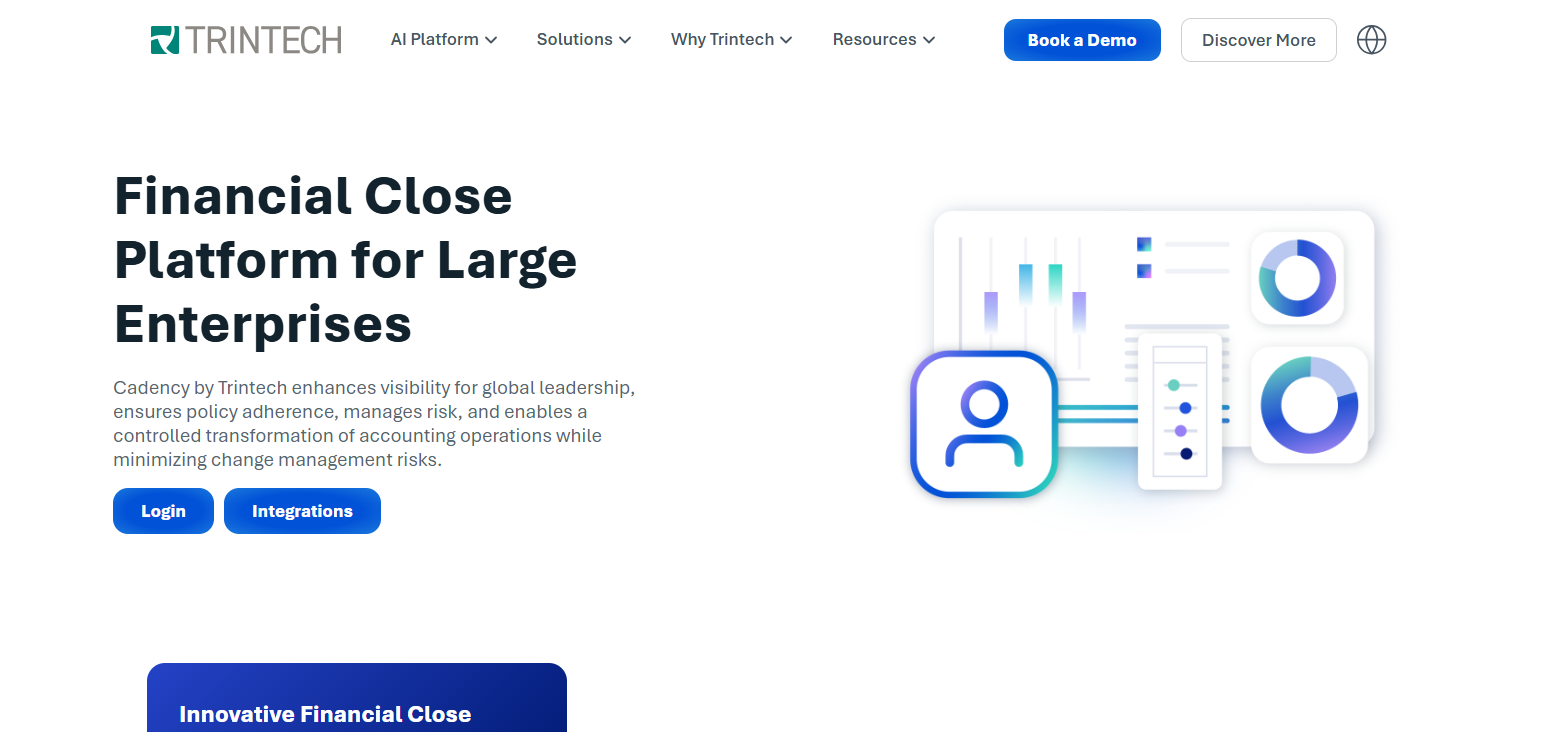
Trintech’s tools are centered on compliance and include risk-based workflows, enhanced audit trails, and sophisticated variance analysis. Trintech’s system aids in the identification of unusual financial transactions and the enforcement of internal accounting controls.
Their products are frequently employed by firms in the banking, insurance, and healthcare sectors, where rigorous regulatory compliance is required. Trintech allows financial teams to enhance accuracy, lower reconciliation risk, and shorten the duration of the month-end close.
Trintech (Cadency & Adra) – Key Features
- AI-Powered Reconciliation – Reconciliation of financial accounts and transactions is automated from simple to complex.
- Journal Entry Automation – Streamlines the creation and control of journal entries.
- Risk-Based Workflows – Reviews high-risk transactions, while low-risk transactions are let through.
- Advanced Variance Analysis – Analyzes and detects large and abnormal financial transactions and variances.
- SOX Compliance Support – Allows companies to meet regulatory accounting standards.
- Multi-System Integration – Integrates with multiple ERP and financial systems.
- Audit Trail Management – Manages control and visibility of reconciliation.
| Pros | Cons |
|---|---|
| Strong compliance features for regulated industries. | Setup process can be lengthy for enterprises. |
| Provides detailed audit trails and financial controls. | Pricing may not fit smaller accounting teams. |
| Automates reconciliation and journal management. | Requires training to use advanced features effectively. |
| Supports risk-based workflows and variance analysis. | Interface may require customization for specific workflows. |
| Handles complex enterprise accounting structures. | Less suitable for simple reconciliation needs. |
4. FloQast
FloQast is an AI-based reconciliation and financial close automation tool with an emphasis on collaboration and increased automation within accounting teams. The tool features a direct integration with ERP systems for instant access to real-time General Ledger balances, making account reconciliation easier.
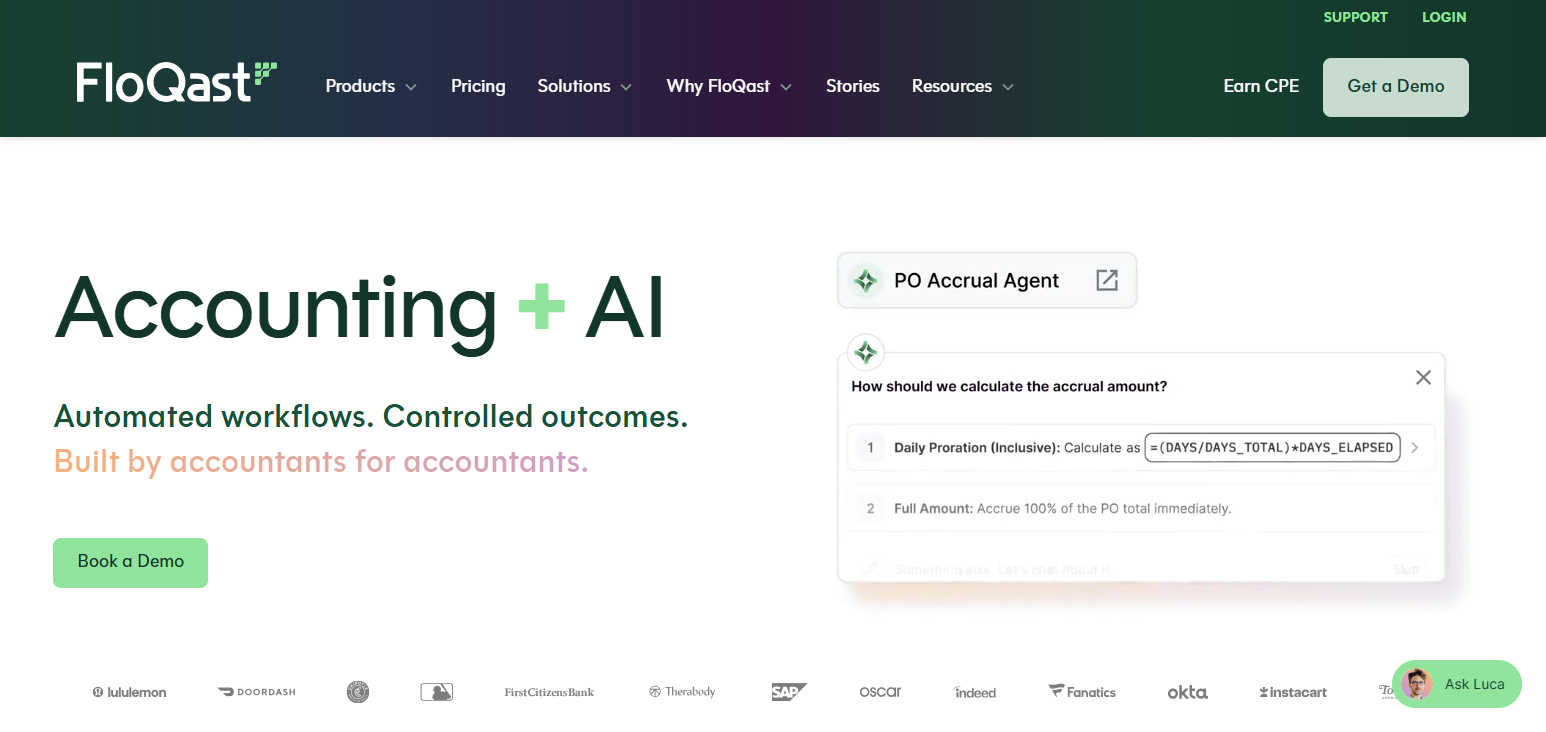
Rather than a complete overhaul, FloQast offers embedded automation within a familiar spreadsheet-style accounting workflow. Integrated tools connected within Microsoft Excel and Google Sheets promote collaboration and minimize the learning curve for firm employees.
Once incorporated, FloQast enhances accounting workflows by collecting necessary backup documentation and showing the status of reconciliations while also listing tasks to complete. It is especially beneficial for mid- to large-sized enterprises.
FloQast – Key Features
- ERP Synchronization – Retrieves real-time GL balances.
- Collaborative Close Management – Helps teams complete reconciliation together.
- Spreadsheet-Based Workflow – Offers an easy Excel-like solution for accountants.
- Automated Account Reviews – Streamlines the verification and approval process for accounts.
- Document Management – Safeguards financial documents.
- Task Tracking System – Keeps watch of reconciliation tasks and deadlines.
- Real-Time Collaboration Tools – Facilitates seamless interaction for finance teams.
| Pros | Cons |
|---|---|
| Easy adoption due to spreadsheet-style workflows. | Limited advanced AI capabilities compared with competitors. |
| Improves collaboration among accounting teams. | Best suited for organizations using structured accounting processes. |
| Integrates with ERP systems and productivity tools. | May require additional tools for broader automation. |
| Reduces manual reconciliation tracking efforts. | Scaling complex global operations may require extra configuration. |
| Provides strong financial close management features. | Some advanced reporting features may need upgrades. |
5. Sage Intacct
Sage Intacct automates bookkeeping and facilitates bank reconciliation for growing enterprises using intelligent automation. Its multi-entity accounting capability automates bank reconciliations and journal entry and transaction match analyses.
For growing enterprises using Sage Intacct, AI-powered financial assurance capability jumps ahead of potential accounting dilemmas and reporting inaccuracies by detecting duplicated records and atypical transactions before they become an issue.
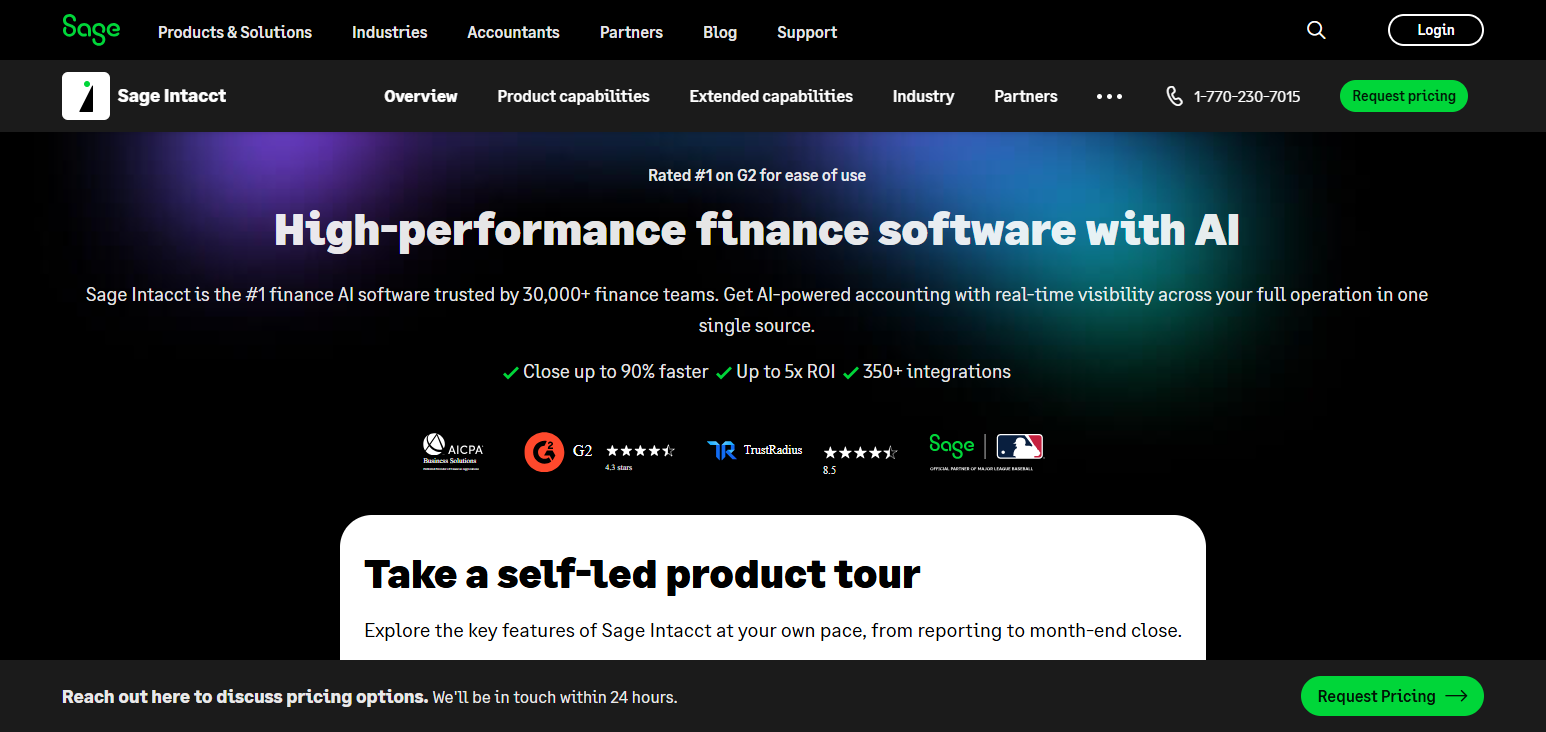
Sage Intacct helps finance teams achieve better accuracy and a higher degree of control by minimizing manual review of bank transactions and accounting routines. For growing enterprises with multiple subsidiaries and/or locations
Sage Intacct helps achieve financial visibility across the organization. Flexible accounting controls and AI monitoring embedded in Sage Intacct facilitate improved financial governance and reduced closing times.
Sage Intacct – Key Features
- AI Financial Assurance – Identifies anomalies and atypical transactions.
- Multi-Entity Accounting – Addresses needs of complex business structures.
- Automated Bank Reconciliation – Reconciles bank records with financial statements.
- Journal Entry Analysis – Evaluates compliance and accuracy of journal entries.
- Duplicate Detection Technology – Spots erroneous and duplicate transactions.
- Cloud Financial Management – Delivers scalable solutions for accounting.
- Advanced Reporting Tools – Provides comprehensive reports for deeper financial analysis.
| Pros | Cons |
|---|---|
| Strong multi-entity accounting capabilities. | Advanced AI features may require higher subscription plans. |
| Automates reconciliation and financial assurance tasks. | Initial setup can be complex for growing businesses. |
| Detects unusual transactions and accounting errors. | Custom workflows may need technical assistance. |
| Provides centralized financial visibility. | Not designed mainly for large multinational enterprises. |
| Supports scalable cloud-based financial management. | Users may need training for advanced modules. |
6. Vic.ai
Vic.ai is an AI accounting platform that is fully autonomous and focused on the automation of accounting routines surrounding the processing of accounts payable and the reconciliation of invoices. This platform automates invoice matching to purchase orders, exception identification, and manual approval.
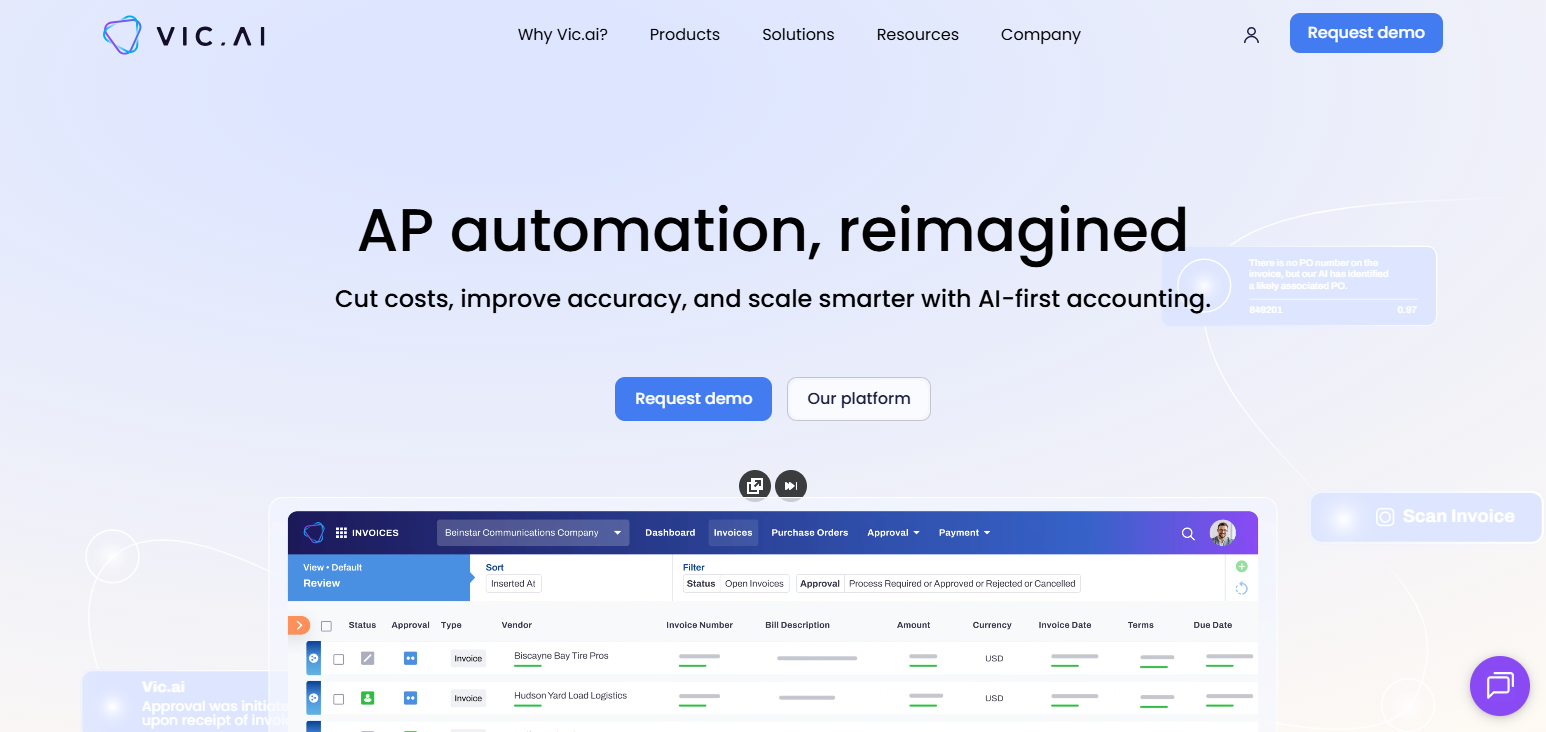
Traditional automation tools and Vic.ai differ in that Vic.ai uses machine learning to refine the accuracy of its processing based on business approval patterns and unique accounting behaviors. Vic.ai helps eliminate the time and effort devoted to manual processing of invoices, supports timely payments, and facilitates faster vendor management.
Vic.ai is suited best for organizations with a high volume of invoices and a complex accounts payable process. The integration of self-autonomy and artificial intelligence present in Vic.ai provides finance teams the flexibility needed to engage in higher level and strategic activities.
Vic.ai – Key Features
- Autonomous Invoice Processing – Fully automates invoice processing with AI.
- Smart Invoice Matching – Automates the matching of invoices with POs.
- Machine Learning Adaptation – Adapts to a company’s invoice approval workflow.
- Automated Exception Handling – Assigns exceptions to manual review.
- Accounts Payable Automation – Helps mitigate the burden of manual invoice processing.
- Data Extraction Technology – Automatically captures financial data from invoices.
- Workflow Optimization – Reduces the time it takes to approve and pay vendors.
| Pros | Cons |
|---|---|
| Provides autonomous invoice processing and reconciliation. | Primarily focused on accounts payable workflows. |
| Learns company-specific approval patterns over time. | Requires quality invoice data for best results. |
| Reduces manual invoice processing workload. | Limited broader financial close capabilities. |
| Improves payment accuracy and efficiency. | AI decisions may require human verification initially. |
| Handles large invoice volumes effectively. | Integration setup can require technical resources. |
7. AutoRek
AutoRek has developed an adaptable AI-powered reconciliation platform designed for large enterprises with big, intricate financial data. Uniquely, AutoRek can process both unstructured and structured data from all data sources for automated transaction matching.
AutoRek can be adapted per industry, as the finance team can leverage the structural flexibility of the platform to create customized reconciliation rules.
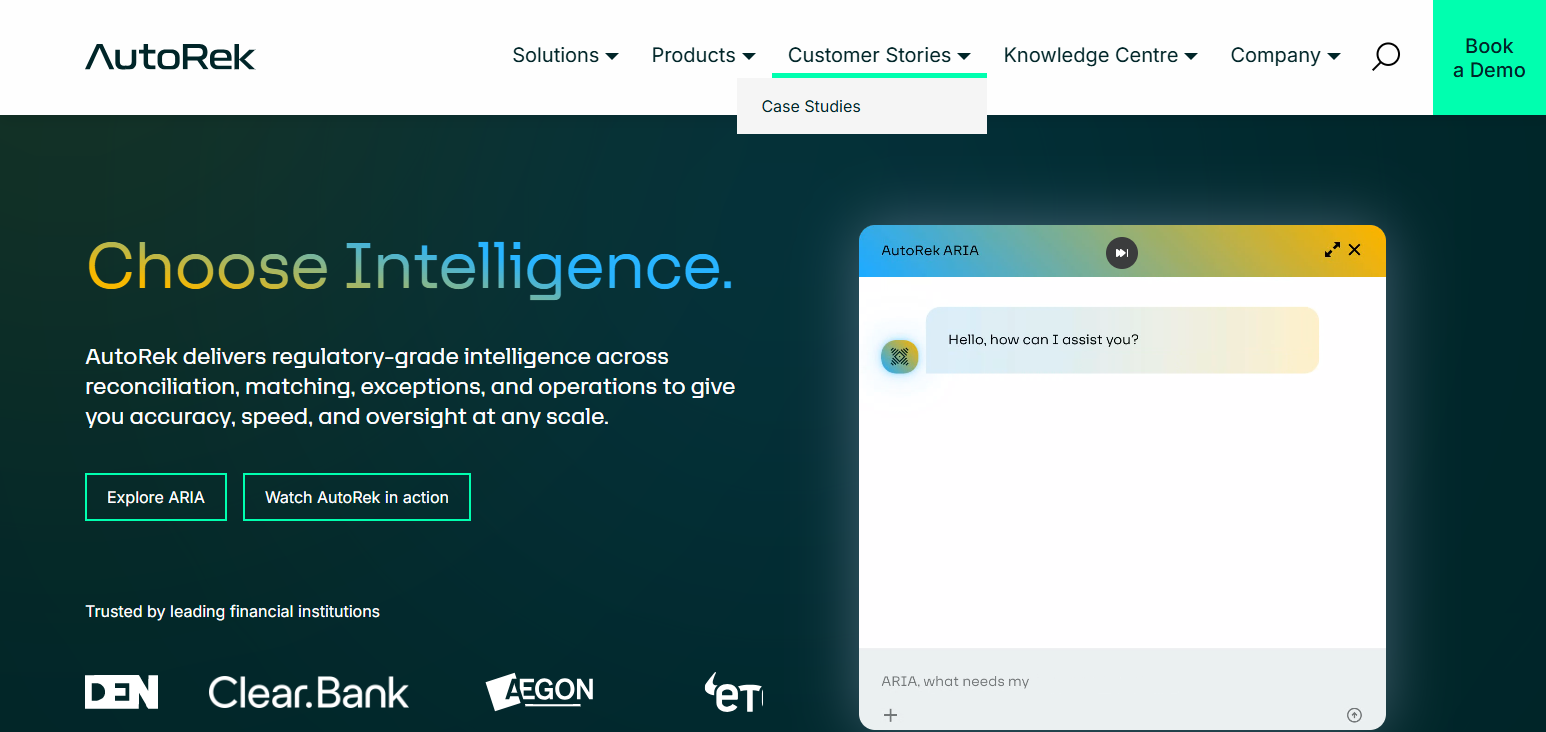
Convolution to accounting workflows is reduced, as AutoRek eliminates manual comparisons, improves the efficiency of exception resolutions, and ensures the accuracy of financial data.
The platform is built using a cloud-native design which aids flexibility and scalability to support increasing transactional data. For these reasons, AutoRek is best suited for financial services and enterprises requiring sophisticated customization, high levels of automation, and guaranteed reconciliation.
AutoRek – Key Features
- Custom Matching Rules – Offers flexibility in defining reconciliation logic.
- Large Data Processing – Efficiently processes millions of financial records.
- Structured Data Management – Automatically handles organized financial data.
- Unstructured Data Processing – Understands complicated financial documents and provides insights.
- Cloud-Based Architecture – Offers reconciliation infrastructure that scales in the cloud.
- Exception Management – Supports teams in investigating and clearing unmatched transactions.
- Industry Flexibility – Adapts to the needs of specific businesses and financial services.
| Pros | Cons |
|---|---|
| Highly customizable reconciliation workflows. | Configuration may require specialist knowledge. |
| Handles structured and unstructured financial data. | Not ideal for small accounting teams. |
| Scales effectively for high transaction volumes. | Implementation can take longer for complex environments. |
| Supports industry-specific reconciliation requirements. | User interface may require additional learning. |
| Improves accuracy through automated matching rules. | Higher costs for customized deployments. |
8. Numeric
Numeric is an AI-based reconciliation platform designed to enhance the accuracy of financial ledgers and the real-time management of balance sheets. The platform provides financial clarity and automation of reconciliation by matching credit and debit transactions and insight automation.

Numeric is an atypical tool, as other reconciliation tools provide transactional scrutiny for a specified time period. Numeric allows constant monitoring of account activities during the entire reporting period.
The tool streamlines reporting and improves the latency of reconciliation by minimizing the reliance on spreadsheets and identifying discrepancies. The automation of reconciliation provides ease of bookkeeping, and supports finance teams with faster financial closures.
Numeric – Key Features
- Real-Time GL Reconciliation – Constantly assesses the status of financial accounts.
- Automated Debit Credit Matching – Matches transactions that offset one another.
- Balance Sheet Monitoring – Ensures accounts are accurate throughout each reporting cycle.
- Dimensional Reporting – Views financial data by various business functions and units.
- Spreadsheet Reduction – Diminishes manual accounting tasks.
- Financial Workflow Automation – Enhances the reconciliation process.
- Instant Error Identification – Finds discrepancies prior to the financial close.
| Pros | Cons |
|---|---|
| Provides real-time GL reconciliation insights. | Newer platform with fewer enterprise integrations. |
| Reduces dependency on spreadsheets. | May lack some advanced enterprise features. |
| Automates debit and credit matching workflows. | Best suited for modern accounting teams. |
| Improves continuous balance sheet monitoring. | Limited functionality outside reconciliation workflows. |
| Offers easier adoption for finance teams. | May require integrations for complex ERP environments. |
9. OneStream
OneStream provides an integrated system for reconciliation, consolidation, reporting, and the automation of workflows; a single system for enterprise grade financial management. For large corporations
OneStream automates the matching of financial transactions, allows the organization of financial data in a central location, and enhances the precision of reporting for all the business units. Many large enterprises implement complex enterprise accounting; by eradicating multiple systems, OneStream provides a single system for a single, financial truth.
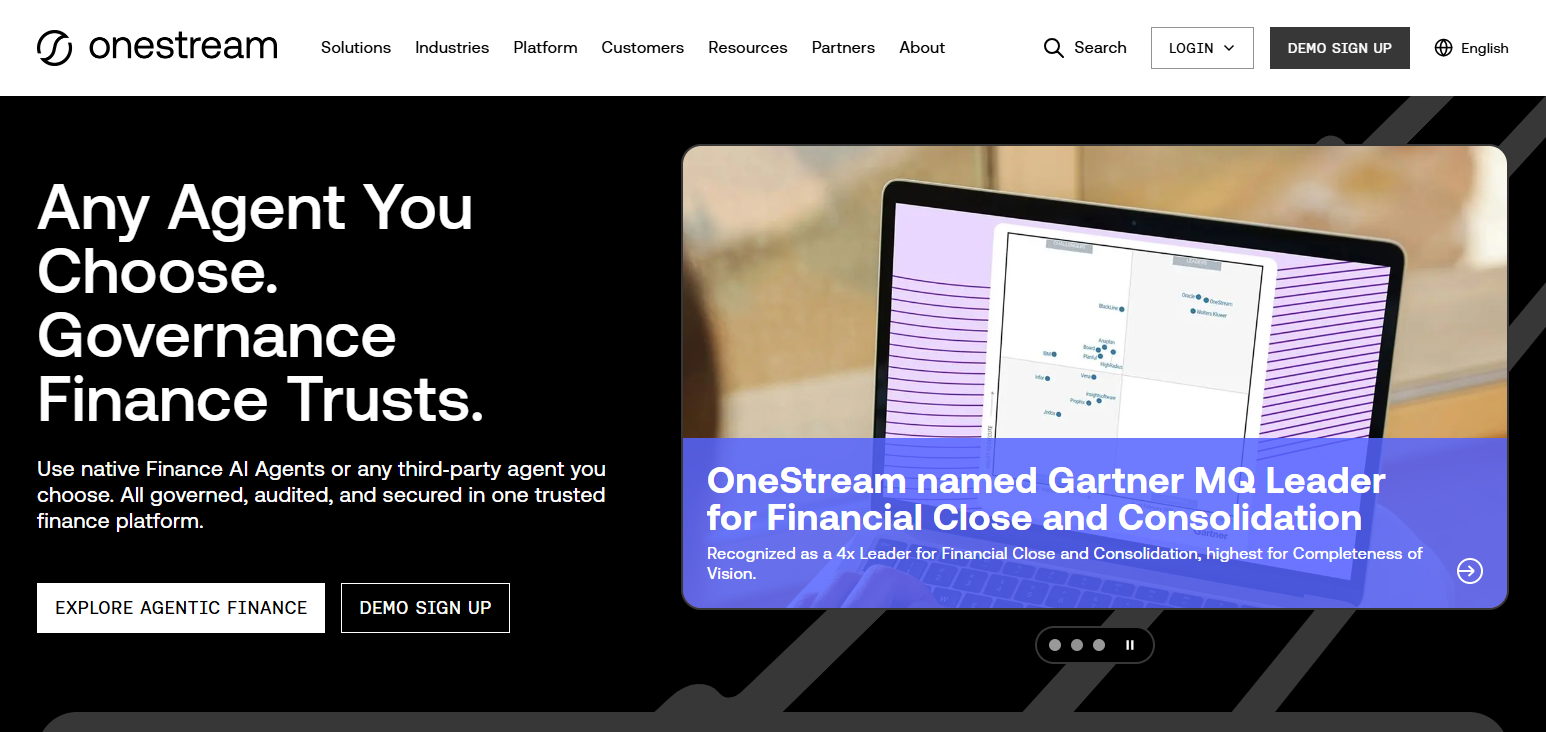
OneStream enhances the workflow of accounting teams by fostering better collaboration and compliance with the internal control system. Its global reach and elastic scalability also make OneStream appropriate for large multi-national corporations with extensive financial operations.
By unifying reconciliation with corporate performance management, OneStream enables corporations to enhance both the speed and quality of financial reporting and the effectiveness of financial corporate decisions.
OneStream – Key Features
- Unified Financial Platform – Merges reconciliation, reporting, and consolidation in one place.
- Automated Transaction Matching – Matches disparate financial records across platforms.
- Enterprise Data Management – Consolidates financial data from various systems.
- Workflow Automation – Enhances management and cooperation in accounting.
- Financial Consolidation Support – Eases the complexities involved in multinational reporting.
- Compliance Tracking – Creates robust internal financial controls.
- Scalable Enterprise Architecture – Accommodates expansive global companies.
| Pros | Cons |
|---|---|
| Combines reconciliation, consolidation, and reporting. | Expensive compared with standalone reconciliation tools. |
| Designed for large enterprise financial operations. | Implementation requires specialized expertise. |
| Provides centralized financial data management. | Can be complex for smaller organizations. |
| Supports global reporting and compliance needs. | Longer deployment timelines for large enterprises. |
| Improves financial planning and decision-making. | Requires ongoing system administration. |
10. DualEntry
DualEntry is an AI-based accounting platform for the 21st century. Automation of journal entries, reconciliation and ledger management is the key selling point. The platform uses a form of AI-based Optical Character Recognition to glean the pertinent transactional data from paperwork to suggest matching heuristics and to analyze financial data in a less fragmented manner.
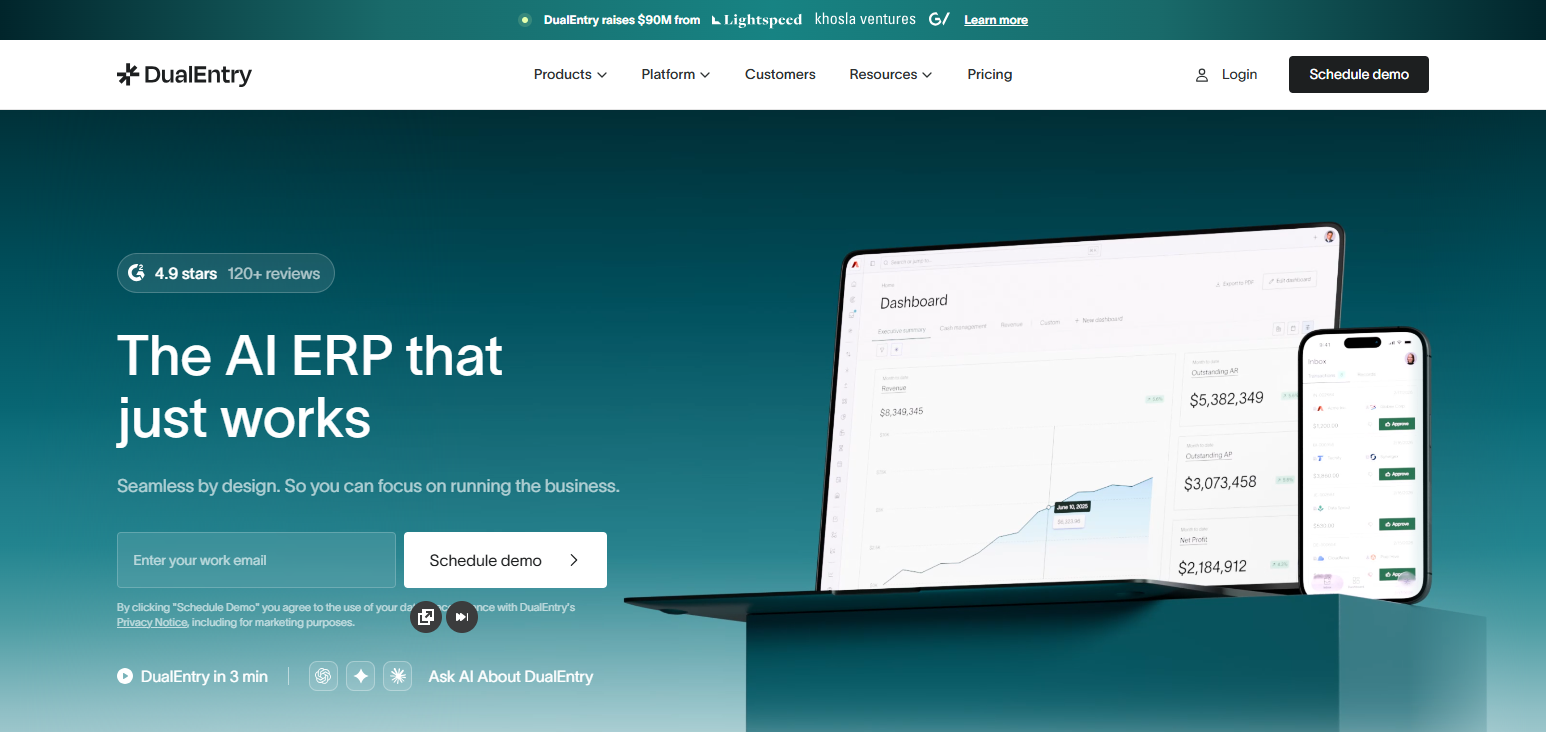
It aids in the automation of the preparation of depreciation, amortization and a multitude of other transaction schedules and even transactional categorization all in situ with its embedded general ledger.
DualEntry is a flexible financial infrastructure with a cutting edge implementation of AI technology. Coupling adequate financial infrastructure with machine learning, automated workflow management, and an ingenious ledger system, DualEntry makes accounting operations a breeze for finance teams.
DualEntry – Key Features
- AI-Powered OCR Technology – Captures financial document transaction data.
- Automated Journal Creation – Constructs accounting entries through smart automation.
- Smart Matching Suggestions – Provides reconciliation rule suggestions via AI reasoning.
- Ledger Automation – Eases management of general ledger tasks.
- Amortization Scheduling – Facilitates the calculation of depreciation and expenses automatically.
- Transaction Categorization – Classifies financial data.
- AI Accounting Workflows – Advances speed, precision, and integration of accounting tasks.
| Pros | Cons |
|---|---|
| Uses AI OCR for automated transaction processing. | Newer solution with developing market adoption. |
| Automates journal creation and ledger management. | May have fewer enterprise-level integrations. |
| Reduces manual bookkeeping activities. | Requires accurate source documents for automation. |
| Provides intelligent matching rule suggestions. | Advanced features may require user learning. |
| Supports modern AI-driven accounting workflows. | Not suitable for highly complex global accounting structures. |
Why Enterprises Need AI-Based Financial Reconciliation Solutions
- Manages Advanced Worldwide Transactions – AI handles big amounts of multi-currency and worldwide financial transactions with total accuracy.
- Lowers Manual Ledger Errors – Automation means less spreadsheets, less repetitive tasks, and reduces human errors in the reconciliation process.
- Improves Reconciliation Speed – AI reconciliation helps companies complete month-end and year-end closings quicker with automation of match and report.
- Boosts Compliance & Audit Processes – Records detailed audit trails and improves control and meets request for regulatory compliance.
- Gains Better Financial Clarity – AI tools allow for better financial clarity by easily showing account balance discrepancies and financial performance.
- Increases Finance Team Output – Accounting staff have more time for financial analysis and less time for repetitive reconciliation tasks.
Challenges of AI Financial Reconciliation Tools
- High Initial Set Up Costs – Setting up an AI reconciliation tool may cause disruption in the business and require a large financial outlay.
- Difficulty Integrating Existing Systems – Specialized skills and effort will be required to make the AI reconciliation integrate with existing ERP, accounting and banking systems.
- Quality of Data – Financial data must be accurate and complete in order for the AI tools to conduct reconciliation properly.
- Need for Additional Training – The finance team will have to be trained to understand the AI and be able to monitor automated decisions.
- Managing AI Decision Transparency – Companies have to ensure that the AI will create matches and recommendations that are explainable and flexible and will comply with the financial policies of the company.
- Data Privacy – Using AI reconciliation tools will require the company to relinquish control of data.
Future Trends of AI Financial Reconciliation In 2026
- Increase in Autonomous Finance Agents – AI agents will manage reconciliation, discrepancy identification, and journal entry automation while enhancing the financial process with little human presence.
- Predictive Reconciliation with Machine Learning – ML models will forecast reconciliation discrepancies and upcoming accounting challenges with error avoidance recommendations.
- AI-Enabled Continuous Accounting – Companies will implement the continuous monitoring of accounting transactions and reporting with the reconciliation of accounting done in real time.
- Continuous Accounting Real-Time Financial Compliance – AI agents will assist in monitoring legislative changes and accounting transactions while identifying compliance challenges.
- More Integrations of Cloud ERP Systems – Reconciliation tools will have more integrations with automated financial Cloud ERP systems like SAP, Oracle, and NetSuite.
- Generative AI Assistants for Finance Teams – AI copilots will aid interpretation of reports by accountants and the generation of recommendations for the support of strategy and optimization decisions.
- Better Fraud Detection – AI will analyze behavior and identify financial fraud.
- Hyper Automated Financial Closing – Companies will implement fully automated closing workflows with minimal manual procedures and faster reporting.
- Increased AI Explainability – Reconciliation tools of the future will have transparent AI decisions for finance teams to comprehend and substantiate automated recommendations.
Conclusion
In Conclusion AI Financial Reconciliation Tools Automating Enterprise Bookkeeping will continue to develop sophisticated solutions to reconcile accounts quickly and accurately. The tools will consume less of your time in manual data entry, reconcile accounts automatically, and quickly provide accurate account status.
Businesses will be able to make sound business decisions based on up-to-date financial data, close their books and comply with regulatory requirements faster AI will improve autonomous reconciliation, making accounting smarter, faster and more flexible.
FAQ
How do AI reconciliation tools automate bookkeeping?
They automatically analyze financial data, match transactions, identify discrepancies, generate reports, and reduce manual accounting tasks.
What are the benefits of AI Financial Reconciliation Tools?
They improve accuracy, reduce processing time, enhance compliance, minimize errors, and help businesses complete financial closes faster.
Can AI reconciliation tools integrate with ERP systems?
Yes, most platforms integrate with ERP systems like SAP, Oracle, NetSuite, and other accounting software for seamless data management.
Are AI Financial Reconciliation Tools suitable for large enterprises?
Yes, they are designed to handle high transaction volumes, multi-entity accounting, global operations, and complex financial workflows.