

This article will cover some of the AI tools that describe reasons for your losses in crypto. These tools use your trading patterns, the performance of your portfolio, market behaviors, and on-chain analytics to explain trading errors.
- Key Points & AI Tools That Explain Why You Lost Money in Crypto
- 10 AI Tools That Explain Why You Lost Money in Crypto
- 1. Token Metrics
- 2. CryptoHopper
- 3. Santiment
- 4. CoinStats
- 5. Glassnode
- 6. Nansen
- 7. Shrimpy
- 8. Messari
- 9. CryptoQuant
- 10. TradeSanta
- How To Choose AI Tools That Explain Why You Lost Money in Crypto
- Conclusion
- FAQ
Understanding the reason and the location of the losses, these tools aid an investor in making data-optimized decisions to improve strategies in the fast-changing crypto market.
Key Points & AI Tools That Explain Why You Lost Money in Crypto
Token Metrics – Uses AI to analyze market trends, highlighting why certain trades performed poorly recently.
CryptoHopper – AI-driven trading bot evaluates historical trades, identifying patterns causing losses in automated strategies.
Santiment – Monitors social sentiment, market behavior, and on-chain activity to explain investment mistakes and losses.
CoinStats – Tracks portfolio performance and uses AI insights to show reasons for underperforming assets.
Glassnode – On-chain analytics platform revealing market signals and trends that contributed to portfolio losses.
Nansen – AI examines blockchain wallets and smart money activity to highlight poor trading decisions.
Shrimpy – Portfolio management tool using AI to explain losses through diversification and rebalancing missteps.
Messari – Combines data analytics and AI to uncover hidden factors behind failed crypto investments.
CryptoQuant – Provides AI-driven alerts on market liquidity and exchange flows causing unexpected losses.
TradeSanta – AI trading assistant analyzing past trades to show miscalculations leading to financial loss.
10 AI Tools That Explain Why You Lost Money in Crypto
1. Token Metrics
Token Metrics is an AI-focused crypto research tool that studies coins based on unique algorithms, historical data, and predictive analysis of the coin.
It seeks to assist your understanding of the broader market including pricing/risk analysis, market behaviors, technical analysis, and price patterns.

Token Metrics AI will also assist you in understanding why specific trading decisions caused you a loss based on the analysis of market cycles and the timing of your trades.
Its AI rating capabilities help investors identify areas where they may have over-invested as well as features that help analyze losing trading strategies.
Token Metrics Features
- Running AI analysis for coin evaluation based on a coin’s past history, predictions, and analytics based on coin signals.
- Overexposed coins and repeated trading errors are demonstrated with the help of a portfolio evaluation.
- Risk analysis and evaluation will help determine high risk coins and coins that are performing lower than others.
- Insights are given for the best time and strategy for trading on the coin market.
| Pros | Cons |
|---|---|
| AI analyzes market trends and technical signals to explain losses. | Premium subscription required for full features. |
| Provides risk scores and predictive analytics for better decision-making. | Learning curve for beginners can be steep. |
| Portfolio analysis identifies repeated mistakes and overexposure. | AI predictions are probabilistic, not guaranteed. |
| Highlights low-potential projects to avoid future losses. | Focused mainly on coin analysis, less on macro factors. |
| Helps optimize trade timing and strategy refinement. | Limited real-time trade execution support. |
2. CryptoHopper
CryptoHopper is an example of an AI trading bot. The bot trades on its own and analyzes past trading performances. CryptoHopper is able to detect mistakes, and bad trades.
They determine if the reason for the trading loss is due to; bad timing, trading too much of an asset, taking profits too soon, etc.

CryptoHopper provides analytics and backtesting to its users so they can see the reason why they lost money in the trade. The bot is able to identify and explain trading mistakes.
The AI in these bots is supposed to learn and optimize the trading behavior, and then explain why the trade lost money.
CryptoHopper Features
- Bot trading automation and AI strategies for optimal trading.
- Historical trades are evaluated to improve strategies that have been proven to be unsuccessful.
- Market analytics, and trigger execution of trades and stop-loss.
- Trade automation and portfolio analysis across multiple exchanges.
| Pros | Cons |
|---|---|
| Automates trades and identifies patterns causing losses. | Bots require careful configuration to avoid mistakes. |
| Backtesting against historical data reveals underperforming strategies. | Can lead to over-reliance on automation. |
| Monitors stop-loss triggers and execution errors. | Subscription costs increase with advanced features. |
| AI optimizes bot performance for improved outcomes. | Not ideal for manual traders who want full control. |
| Supports multiple exchanges for portfolio diversification. | Historical data may not perfectly predict future markets. |
3. Santiment
Santiment is able to explain why the user has lost money through an analysis of the social sentiment, the on-chain activities, and the market behavior versus the user’s financial loss.
The AI cover dashboards allow the user to see the trading behavior of those who lost money. Value-sensitive trading behavior caused the portfolios to lose value.
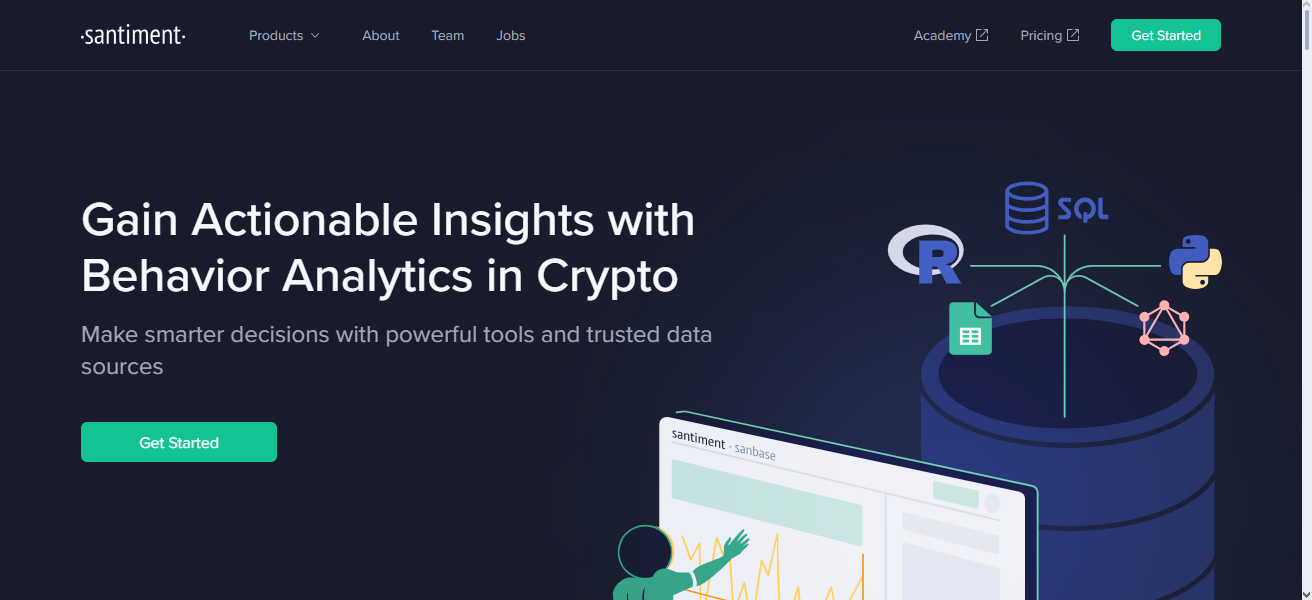
These portfolios lost value because sentimental trading caused an emotional response to the market.
Santiment has the ability to identify overbought and oversold sentiment, and liquidity outflows. These unhealthy trading practices describe a pattern that must be avoided in future trades.
Santiment Features
- AI and social analysis for market movement, on-chain analysis, and social movement analysis.
- Trades that are driven by social movement and emotion are evaluated and analyzed.
- Analysis of large transactions and events of large liquidations.
- Market analysis for oversold and overbought situations.
| Pros | Cons |
|---|---|
| Tracks social sentiment and market behavior to explain losses. | Complex dashboards may overwhelm new users. |
| Highlights periods of overbought/oversold assets. | Requires familiarity with on-chain metrics for full benefit. |
| Detects unusual whale transactions affecting portfolio value. | Subscription needed for advanced analytics. |
| AI-driven insights help identify emotional or hype-driven mistakes. | Not a trading execution platform. |
| Combines on-chain and social signals for comprehensive analysis. | Real-time alerts can sometimes lag volatile markets. |
4. CoinStats
CoinStats uses AI portfolio analytics and market data to assess how investors track and understand losses.
It assesses prior trades and asset performance and analyzes how each portfolio allocation impacts diminishing returns.
The AI features obstructions like overexposure to risky coins, missed opportunities, or poor entry timing.
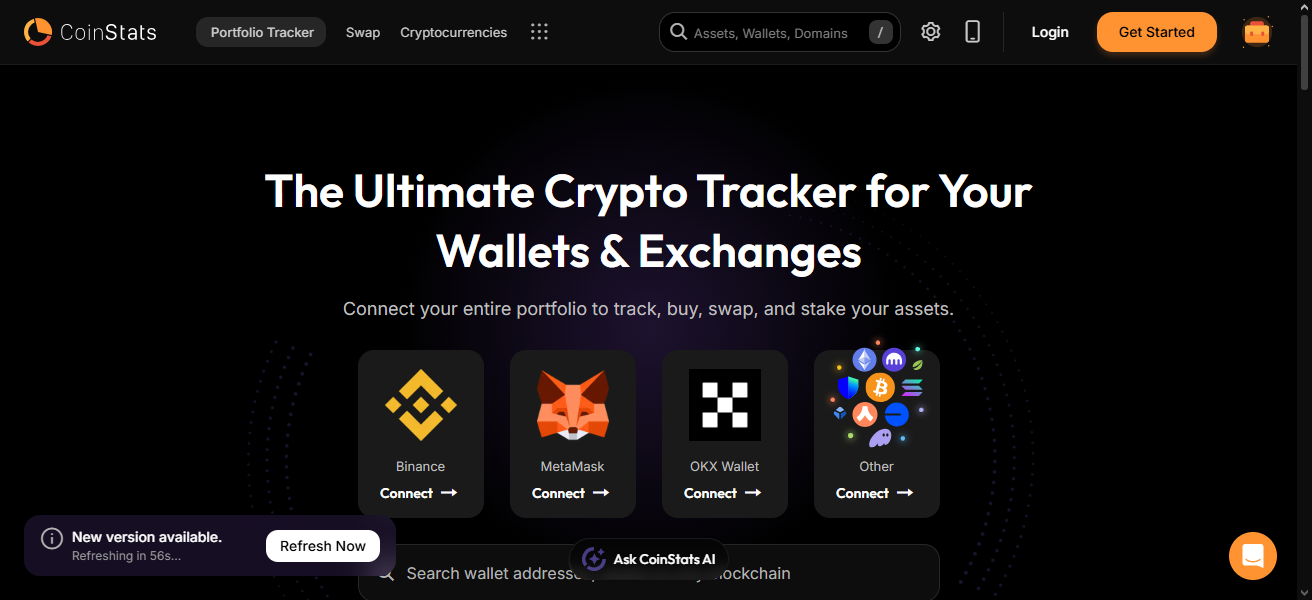
On top of everything, CoinStats assesses market sentiment as a whole and focuses correlations and risky patterns in relation to investments.
The tool aids traders to understand external factors to offset strategies and to clarify the reasons for the segmentation of losses and gains within their respective crypto portfolios.
CoinStats Features
- Movement of portfolios across multiple exchanges and wallets for real-time updates.
- Market analysis for optimal performance, entry/exit, and time analysis for asset management.
- Market analysis and sentient movement updates.
- Risk analysis based on trade movement to determine losses and profits.
| Pros | Cons |
|---|---|
| Tracks portfolio performance and identifies poor allocation. | Free version has limited tracking capabilities. |
| Provides insights into missed exit opportunities and overexposure. | Less focused on deep technical analysis. |
| Alerts users to risky correlations in investments. | AI insights may oversimplify complex market trends. |
| Supports multiple exchanges and wallets for full overview. | Not optimized for high-frequency trading. |
| Helps visualize profit and loss per asset. | Some advanced features require premium subscription. |
5. Glassnode
Glassnode is based in blockchain analytics and uses AI to assess the activity performed on blockchains and the impacts of such activities on the market.
The AI assesses the volume transacted through wallets, the market liquidity, and the wallets in various exchanges to understand the causes of losses.
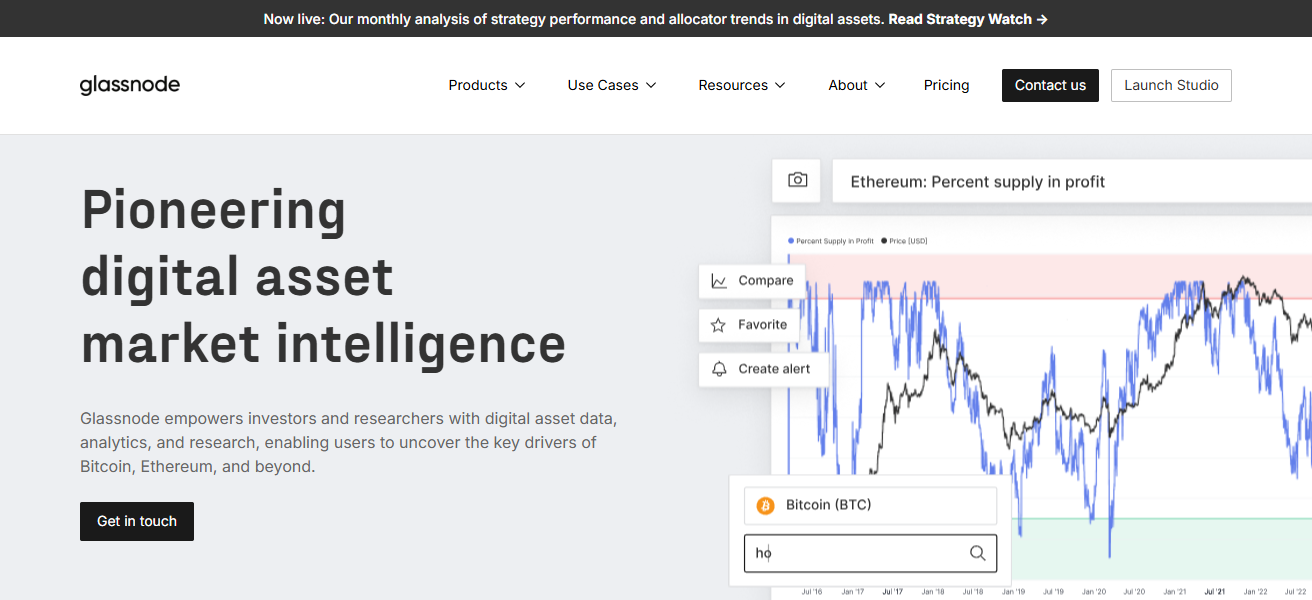
In this regard, Glassnode analyzes movements of holders and other groups. In this regard, the AI examines volatile positions, overleverage, and risks.
Glassnode assesses on-chain signals to provide clarity on where portfolio strategies failed. The AI aims to minimize losses in volatile cryptocurrencies.
Glassnode Features
- Market analytics for on-chain analysis, wallet transactions, and behavior, as well as market liquidity.
- Evaluation of longs vs short holders for loss movement.
- Market cycles, over leveraged positions, and risk variables are shown through AI dashboards.
- Portfolio strategies can be refined through insights from past data.
| Pros | Cons |
|---|---|
| On-chain analytics reveal why trades failed or underperformed. | Advanced on-chain metrics can be difficult to interpret. |
| Tracks wallet behaviors, liquidity, and market cycles. | Mainly analytical, lacks direct trade automation. |
| Shows long-term vs. short-term holder behavior to pinpoint losses. | Subscription needed for premium metrics. |
| Identifies risk factors like overleveraged positions. | AI insights rely on historical data patterns. |
| Clear visual dashboards for market trend interpretation. | Best for serious investors, not casual users. |
6. Nansen
Nansen provides clients with AI features to monitor movements in blockchain wallets to discern smart money alterations in order to determine losses and the trades that caused said losses.
These clients are shown successful investor behavior and shown how investor behavior aligns with the clients’ investor activity (from the client’s portfolio) in order to determine any behavioral misalignment, lack of behavioral flexibility, or lack of strategic behavioral activity.

Nansen provides clients with data that may explain an investor’s persistent inactivity and reluctance to respond to activity in the market, investor behavior, and holds data on value (may) have affected the client’s trade.
Nansen identifies areas of opportunities and provides actionable insights to its clients so the clients can grow, dispose of habits, and, with purpose, change their behaviors to improve their investor activity.
Nansen Features
- Whales and smart money wallet movement are tracked by AI.
- Successful portfolio strategies are compared to users.
- Hype chasing and holding poor performing assets are pointed out.
- Illiquidity and market manipulation risk exposure are actionable and a reduction strategies are proposed
| Pros | Cons |
|---|---|
| Tracks smart money and whale wallet movements. | Complex interface may confuse beginners. |
| Highlights misaligned strategies and missed opportunities. | High subscription costs for full access. |
| Identifies risky behavior like chasing hype tokens. | Primarily focuses on Ethereum and EVM chains. |
| Provides actionable insights to refine investment strategies. | AI insights cannot guarantee profit recovery. |
| Alerts users to liquidity risks and market manipulation. | Not a trading execution platform. |
7. Shrimpy
Shrimpy is a portfolio management platform that uses artificial intelligence to offer services like management diversification and to focus on a user’s long term strategy.
Shrimpy uses analytics to show users the reasons for their losses due to poor allocation of the user’s assets or inability to rebalance their allocation at different points in time.
AI technology is able to locate patterns concerning the concentration on coins that are highly volatile, overall neglecting market cycles, and the missing of high market upside exit points.
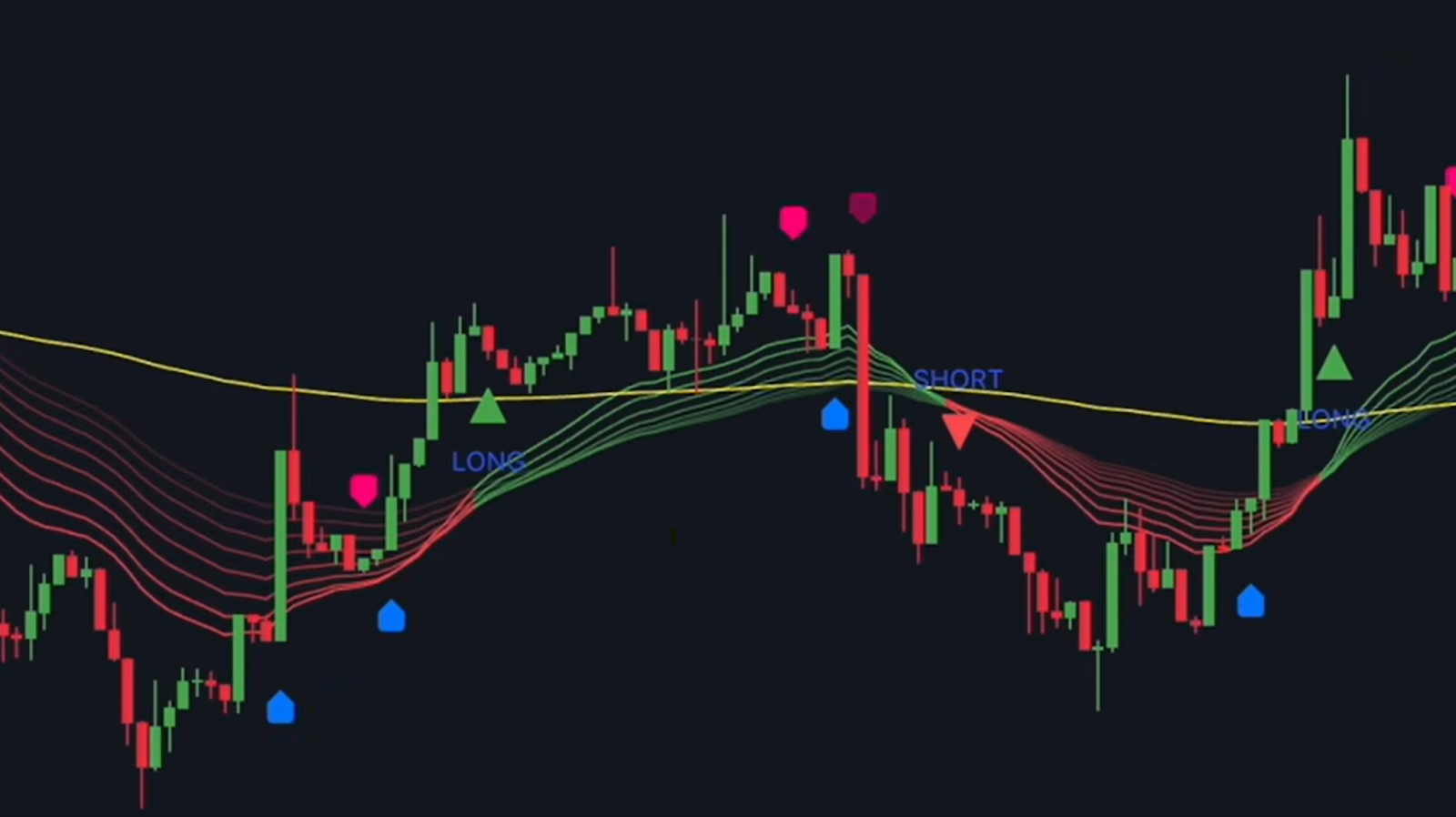
Shrimpy also educates the user on the average hyped market profit loss and the individual user loss due to an emotionally driven trade.
These tools teach users and investors the time and reasons for poor portfolio performance. The intelligence guides the investors to the reasons behind the poor performance, enhancing their future investment discipline
Shrimpy Features
- Diversification and rebalancing through AI for portfolio management.
- Potential strategies are simulated, and losses are minimized, expectationally.
- Emotional trading, overconcentration, and a lack of trading cycles are identified.
- Disciplined management of investments is required to optimize strategies in the future.
| Pros | Cons |
|---|---|
| Portfolio rebalancing and diversification reduces potential losses. | Limited advanced trading analytics compared to other platforms. |
| AI simulates alternative strategies for risk reduction. | Less suited for high-frequency traders. |
| Identifies overconcentration and emotional trading patterns. | Requires linked exchange accounts for full functionality. |
| Long-term strategy optimization improves portfolio discipline. | Some features are behind a paywall. |
| Provides historical trade analysis for better learning. | Focused on portfolio management, not market prediction. |
8. Messari
Messari harnesses AI technologies to analyze crypto markets, providing investors information as to why investments failed.
Measuring losses, while assessing fundamentals, market structure, tokenomics, and investor sentiment, Messari identifies losses due to stagnant market adoption, illiquid markets, and actionable drops in investment.

Messari’s AI provides investors all necessary criteria to formulate and execute trading plans, including: evaluation of trading plans, identification of market behavior or anomalies that may resulted in detrimental trading performance.
Messari accompanies investors in evaluating and dissecting poor investment and trading decisions. Messari is able to isolate and answer detailed critiques regarding trading losses and why they were realized.
Messari Features
- Fundamental and technical data are aligned and analyzed by AI.
- Weak project adoption, risk tokens, and coins that are overvalued are pointed out.
- Portfolio performance is affected be market anomalies that are tracked.
- Trading is better informed by risk assessments and strategies by trading anomalies.
| Pros | Cons |
|---|---|
| Combines fundamental and technical analytics for loss analysis. | Complex data may overwhelm beginners. |
| Highlights overvalued coins and weak adoption projects. | Requires premium subscription for advanced features. |
| Tracks market anomalies affecting performance. | Not an automated trading tool. |
| AI-driven insights improve future investment decisions. | Analysis is more explanatory than predictive. |
| Allows strategy comparison and risk evaluation. | Focuses on long-term trends rather than short-term trades. |
9. CryptoQuant
Utilizing artificial intelligence (AI), CryptoQuant analyzes market liquidity, exchange flow and on-chain data analytics that influence asset pricing.
CryptoQuant is able to detect loss potential through on-chain data analytics that show selling pressure, exchange inflows, and/or increased leverage in the derivatives market.

CryptoQuant’s AI powered tools are able to show analytics that contribute to the loss of value in portfolios. External market conditions without trader intervention can lead to portfolio losses.
CryptoQuant provides aids, alerts, and conclusive reasoning that facilitate the reconciliation of trading activities and market conditions, as well as determining the cause of losses so that similar losses are avoided in the future.
CryptoQuant Features
- AI is used to assess on-chain actions and liquidity, and exchange flow.
- Market risk, leveraged increases, and sell off events are alerts.
- Causation of market movement by trade actions is shown through visualizations.
- Portfolio valued are affected by miner and whale movements.
| Pros | Cons |
|---|---|
| Tracks market liquidity and exchange flows to explain losses. | Data-heavy interface may be complex for beginners. |
| AI identifies sudden sell-offs and leverage spikes. | Subscription needed for premium insights. |
| Provides visualizations linking trades to market dynamics. | Not a portfolio automation tool. |
| Alerts users to miner activity and whale movements. | Requires understanding of derivatives markets for full benefit. |
| Helps prevent repeated mistakes with actionable insights. | Best suited for experienced traders analyzing risk. |
10. TradeSanta
TradeSanta is an AI crypto trading assistant that executes trades on behalf of users while analyzing the historical performance to explain losses.
Its AI evaluates prior trades (including entry and exit points) along with the surrounding market conditions to identify errors in execution, wrong trading signals, or suboptimal strategies.
TradeSanta monitors the execution of trades, stop-loss events, and the surrounding market conditions to explain the outcome of trades.

TradeSanta also offers simulations and strategies to improve performance and reduce risk. By identifying errors committed by both the TradeSanta bot and the trader
TradeSanta provides an opportunity to improve the underlying strategies for automated trading and to provide the trader opportunities to make more data-driven decisions in the trading process.
TradeSanta Features
- AI trading performance is analyzed for automated crypto trading.
- Trade past mistakes, stop loss, and volatility are tracked.
- Demonstrates and suggests strategic changes to mitigate risks.
- Provides feedback on errors made by both humans and bots for educational purposes.
| Pros | Cons |
|---|---|
| Automates trades while analyzing historical performance. | Overreliance on automation can lead to errors. |
| AI identifies poor timing and wrong signals. | Requires careful bot configuration to prevent losses. |
| Simulates strategies for improved performance. | Limited in advanced market analytics. |
| Tracks stop-loss and volatility to explain failures. | Free plan has restricted features. |
| Highlights human and bot-driven mistakes for learning. | AI recommendations are probabilistic, not guaranteed. |
How To Choose AI Tools That Explain Why You Lost Money in Crypto
- Define the objective – Do you need to analyze the portfolio, automate trading, or analyze the sentiment, for example?
- Analyze the information coverage – Make sure the tool analyzes the coins, wallets, and exchanges you need.
- Analyze the dimensionality of the information – Prefer tools that analyze the historical performance, on-chain performance, risks, and other metrics.
- User-Friendly – Choose an easier tool if you lack experience.
- A clear explanation of the AI insights – Explain to the users the criteria and logic of the prediction instead of simply stating the prediction..
- Subscription and Tools Balance – Compare tools against the cost of the subscription, and choose the most balanced option.
- Tools reliability – tools that are updated frequently and the support is responsive are a good option.
Conclusion
To conclude, AI tools provide understanding for past trading errors by identifying the reasons behind the loss of funds in cryptocurrency trading.
The analysis of portfolios, market trends, trading sentiment, and on-chain data is coupled with the identification of gaps in trading strategies to give the investor information so that future, rational, data-backed trading decisions are made.
AI tools provide the reasoning behind the loss of funds in order to provide the investor with the information that past errors in trading can be mitigated.
FAQ
They are platforms using AI to track trades, portfolio performance, and market trends to explain losses.
By analyzing trade timing, risk exposure, market sentiment, and on-chain activity.
No, they explain past mistakes but provide insights to improve future decisions.
Some are beginner-friendly, but advanced analytics may require crypto knowledge.