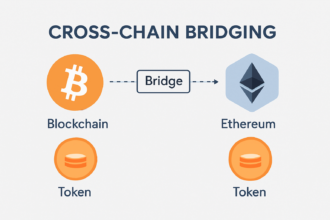
In this post , I will analyze the issue Are Stablecoins Backed by Real Money. While stablecoins offer the promise to bring some measure of stability to the crypto markets
The methods used in backing stablecoins (fiat reserves, commodities, or engineered algorithms) bring the fundamental issues of trust, transparency and financial security into critical focus.
Overview
The name stablecoin implies reliability, but cryptos are well-known for their volatility. The main issue with stablecoins is whether or not these digital tokens are backed by “real money.
To answer this, it’s necessary to break down what stablecoins are, how they work, and what is really behind their promise of stability.
What Are Stablecoins?
Stablecoins are a type of cryptocurrency that is designed to have a stable price and are typically pegged to a fiat currency like the US dollar or Euro, or even to a commodity like gold.
For example, stablecoins are designed to have a stable price which is the exact opposite of what Bitcoin or Ethereum.

Stablecoins are used in payments, remittances, trading, and decentralized finance (DeFi) applications. They are used as a bridge between traditional finance and blockchain technology.
Types of Stablecoins and Their Backing
| Type of Stablecoin | Backing Mechanism | Example | Reliability Concerns |
|---|---|---|---|
| Fiat-backed | Reserves of fiat currency held in banks or custodians | Tether (USDT), USD Coin (USDC) | Transparency of reserves, audit frequency |
| Commodity-backed | Pegged to assets like gold or oil | Digix Gold (DGX) | Asset storage and verification |
| Crypto-backed | Collateralized by other cryptocurrencies | DAI | Over-collateralization required due to volatility |
| Algorithmic | No reserves; stability maintained by supply-demand algorithms | TerraUSD (UST, collapsed) | Vulnerable to market shocks and confidence loss |
The closest stablecoins come to being “backed by real money” is through fiat-backed stablecoins, as issuers say they have bank reserves that are equivalent to the stablecoins issued. Yet, without greater transparency and regulation, this claim does not carry much credibility.
The Transparency Problem
The controversy that envelops stablecoins is whether their issuers have enough reserves to back every single token that is in circulation.
The largest stablecoin, Tether (USDT), has been in the news multiple times because its reserves have been questioned in the context of whether they are fully backed by US dollars.
Some investigations have shown that not all of their reserves are cash-based. Some of them are instead commercial papers and other forms of assets which are not as liquid in times of crisis.

To try to set itself apart from its competitors, USD Coin (USDC), which is issued by Circle, has been publishing attestations from auditors that show its reserves are in cash and in US Treasuries, but are for the most part, short-term.
The absence of regulations that are standardized means that as a stablecoin investor, you are gambling on the reputation of the issuer because there are no regulations that can be enforced.
Why “Real Money” Matters
Stablecoins can be redeemed for the same value as their fiat counterparts as long as they are backed by real money.
For example, if you own 100 USDC, you are supposed to be able to get 100 USD in fiat currency. Without this guarantee, stablecoins become unstable and are not serving their purpose.
The 2022 collapse of the algorithmic stablecoins like TerraUSD demonstrated the risks associated with uncollateralized systems.
When faith in the system disappeared, billions of dollars were lost, and the case was proven for the long-term stability of assets or ”real money.”
Benefits of Stablecoins

Decreased volatility Users of stablecoins can avoid the price volatility of traditional cryptocurrencies because stablecoins have their value pegged to fiats.
Cross-border transfer of funds Users can transfer funds internationally without the traditional banking system delays because stablecoins eliminate the need for an intermediary and the payment system’s use of fiat currencies to settle beween countries.
Unstable currency regions Use of stablecoins means people in economically challenged countries and regions can safely store funds and transact in any economically stable country without loss of value.
Integration with DeFi Stablecoins allow users to lend, borrow, and engage in yield farming within decentralized finance using the financial services provided by smart contracts and liquidity pools.
Risks and Challenges
The disadvantages of stablecoins are numerous. Some of them are as follows:
Run risk: If users distrust the reserves, they can redeem their stablecoins en masse which could cause the system to collapse.
Regulatory risk: Governments have yet to determine how stablecoins will be categorized and regulated.
Systemic collapse: If a major stablecoin fails, it could impact the entire crypto market and traditional finance.
Centralization: Most stablecoins are issued by a single central entity, which is contrary to decentralized finance.
The Regulatory Perspective

Global regulators are watching them closely. The U.S. is developing regulations that would require stablecoin issuers to keep reserves in federally insured bank accounts and undergo constant auditing.
Additionally, the MiCA regulation of the European Union mandates the implementation of bank-style reserve management.
These regulations are an effort to prove that stablecoins are fully reserve backed in order to reduce the potential of fraudulent activity and system collapses.
Pros and Cons of Stablecoins
| Pros | Cons |
|---|---|
| Price Stability – Pegged to fiat currencies, reducing volatility compared to Bitcoin or Ethereum. | Backing Transparency Issues – Not all issuers provide clear audits of reserves, raising doubts about whether coins are fully backed. |
| Efficient Transactions – Faster and cheaper cross-border payments compared to traditional banking. | Risk of De-pegging – If reserves are insufficient or mismanaged, stablecoins can lose their peg to fiat. |
| Integration with DeFi – Widely used in decentralized finance for lending, borrowing, and trading. | Regulatory Uncertainty – Governments are scrutinizing stablecoins, which could lead to restrictions or stricter compliance requirements. |
| Accessibility – Easier entry point for crypto newcomers who want stability without volatility. | Run Risks – In times of crisis, mass redemptions could destabilize the system, similar to a bank run. |
| Bridge Between Fiat and Crypto – Acts as a gateway for businesses and institutions to adopt blockchain. | Not Always “Real Money” – Some stablecoins are backed by commercial paper or other assets rather than cash, making them less secure. |
Conclusion
Stablecoins are unique because they have qualities of traditional finance and crypto innovations. They hold value in real money or real assets, but the backing of stablecoins can be unreliable.
How stable a stablecoin is, is a reflection of how honest the issuer is and how much regulatory oversight there is.
Stablecoins are not a uniform product, and some stablecoins have real money backing and some have questionable principles.
For users and investors of stable coins they may be wondering not only whether stablecoins have real value, but which stablecoins are backed, and whether they can trust the issuer.
FAQ
Not all. Fiat-backed stablecoins hold reserves in banks, while algorithmic ones rely on supply-demand mechanisms without tangible assets.
Popular examples include Tether (USDT) and USD Coin (USDC), both claiming to hold equivalent reserves in cash or short-term government securities.
They are pegged to assets like gold or oil, with issuers storing these commodities to guarantee redemption at equal value.
No, they are backed by other cryptocurrencies, requiring over-collateralization to offset volatility, making them less stable than fiat-backed options.