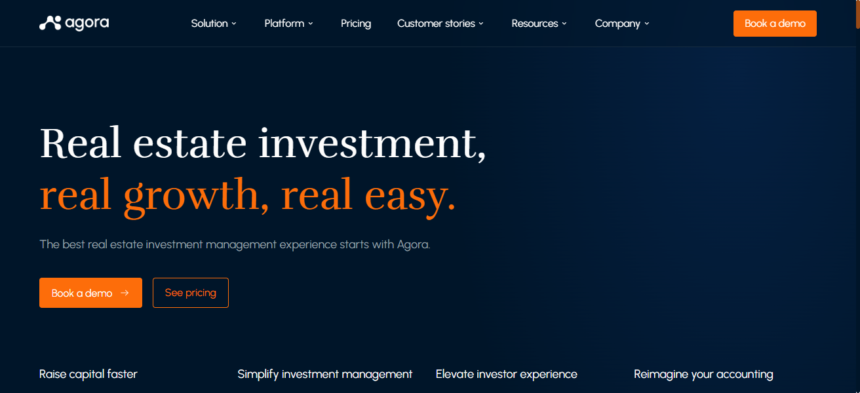
In this article, I will talk about the Best Agora Alternatives for businesses and developers looking for reliable real-time communication services.
While Agora is very popular, there are several other platforms with their own unique offerings such as low latency, scalable infrastructures, and customizable SDKs.
From Dyte to 100ms, these alternatives are flexible, secure, and developer-oriented, to help you build top tier video, voice, and messaging solutions.
Key Poinst & Best Agora Alternatives
| Platform | Key Point |
|---|---|
| Dyte | Customizable SDKs with modern UI components |
| Twilio | Robust global infrastructure for voice and video |
| Vonage | Strong APIs for video, voice, and messaging |
| ZEGOCLOUD | Low-latency streaming optimized for gaming and social apps |
| Daily.co | Easy integration with WebRTC and flexible pricing |
| Jitsi | Open-source platform with strong privacy focus |
| Zoom SDK | Enterprise-grade video conferencing features |
| EnableX | AI-powered analytics and real-time engagement tools |
| Mux | Powerful video streaming and analytics APIs |
| 100ms | Developer-friendly APIs with quick setup |
10 Best Agora Alternatives
1. Dyte
One of the best alternatives to Dyte is Agora. Dyte is also highly customizable, specially built for developers, and highly customizable.
Unlike other platforms, Dyte gives developers additional control around the UI, real-time features, and backend systems, enabling businesses to provide highly customized real-time audio and video experiences.
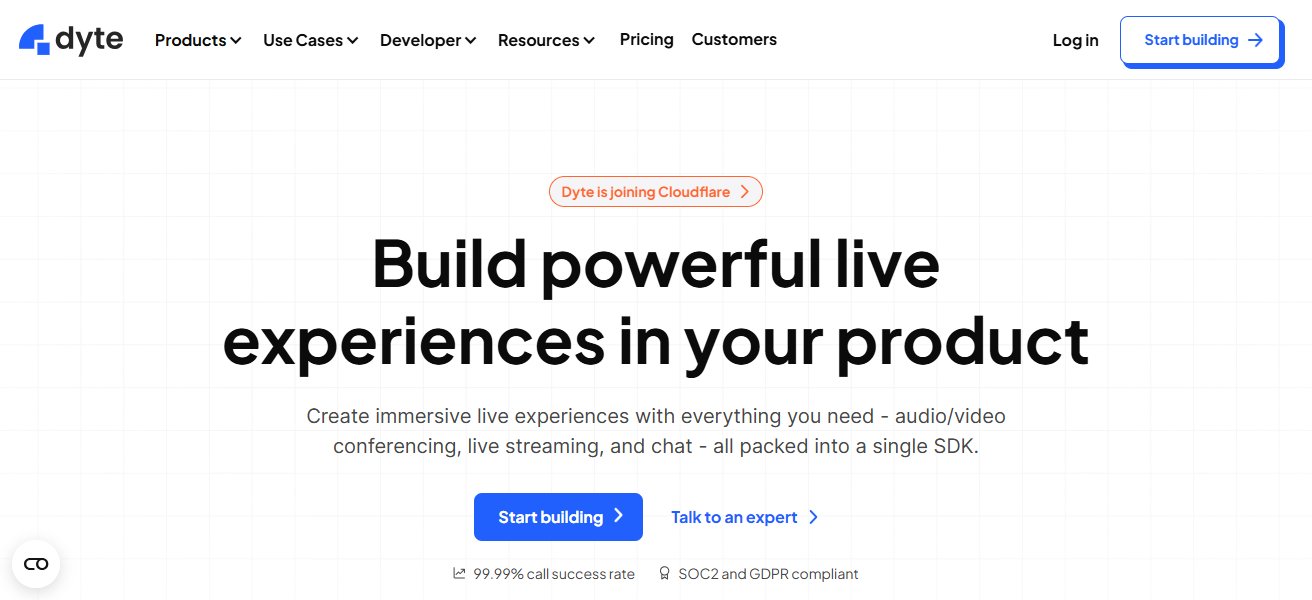
The platform has lightweight architecture. This leads to low and smooth latency, even on low-bandwidth networks.
Furthermore, Dyte supports scalable, real-time communication, making it a great option for enterprises and startups needing flexible, reliable, and completely customizable alternatives to Agora.
Dyte Features
- Customizable SDKs & UI: Developers have the freedom to personalize the UI and customize the integration of various features.
- Low-latency communication: The platform is optimized to provide uninterrupted audio/video communication even when the network is restricted.
- Scalable infrastructure: The solution is reliable for small as well as large scale applications.
- Developer-friendly tools: The platform is equipped with comprehensive documentation to facilitate API integration and the development of real-time applications.
| Pros | Cons |
|---|---|
| Highly customizable UI and SDK | Smaller community compared to Agora |
| Low-latency and smooth performance | Less documentation than larger platforms |
| Scalable for enterprise apps | Limited global reach in some regions |
| Developer-friendly APIs | May require developer expertise for full customization |
2. Twilio
As an Agora alternative, Twilio is a top choice because of its unparalleled global reliability and strong communication API’s.
What sets Twilio apart is that voice, video, messaging, and authentication are all consolidated into one product.

This allows developers to craft custom solutions. Twilio provides a powerful solution for businesses of all sizes, thanks to its extensive documentation, strong security, and scalable architecture.
This makes Twilio ideal for creating seamless, secure, and adaptable real-time communication. This positions Twilio as a superior alternative to Agora.
Twilio Features
- All-in-one communication platform: The platform unifies services for voice, video, and message plus authentication.
- Global infrastructure: The solution guarantees real-time moments of connection for users, regardless of their location.
- Strong security & compliance: The platform offers a robust security system, including end-to-end encryption, authentication, and compliance with industry and regional standards.
- Extensive APIs & documentation: The integration and customization of the platform for any developer is simplified, regardless of their expertise.
| Pros | Cons |
|---|---|
| Combines voice, video, messaging, and authentication in one platform | Can be expensive for large-scale usage |
| Globally reliable infrastructure | Requires developer knowledge for integration |
| Strong security and compliance | Advanced features may need multiple APIs |
| Extensive documentation and support | Pricing can be complex |
3. Vonage
Vonage is an excellent alternative for Agora because of its powerful and flexible all-in-one communication platform.
Its main feature is the ability to effortlessly integrate voice, video, and text into consumer applications, all powered by a global and resilient network.
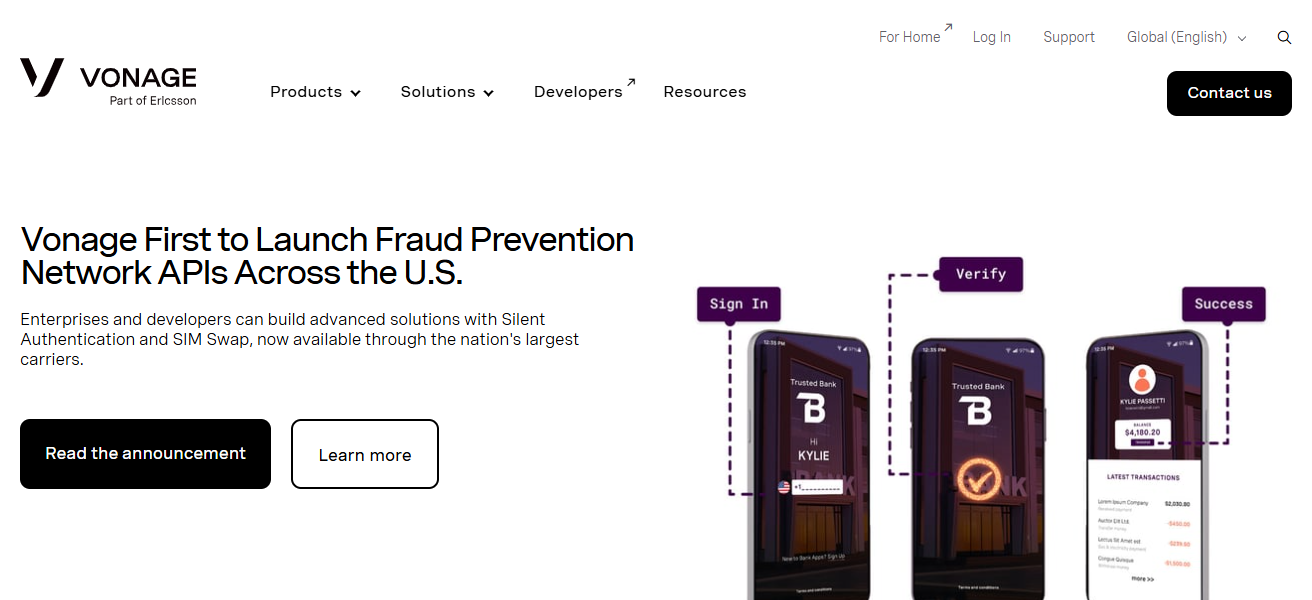
Easy to use APIs, low latency, and solid developer support help vonage allow businesses to provide real-time communication.
For businesses looking for a scalable, adaptable, and secure solution, Vonage helps businesses stand apart from the traditional video SDKs, like Agora.
Vonage Features
- Flexible APIs: The platform offers APIs for voice, video, and message services with numerous integration capabilities.
- Global network reliability: The platform offers low-latency connections owing to its distributed infrastructure.
- Real-time performance: Highly responsive environment for interactive applications and voice calls.
- Developer support: The platform offers numerous SDKs, documentation, and a wide array of tools to facilitate development.
| Pros | Cons |
|---|---|
| Flexible APIs for voice, video, and messaging | Pricing can be higher for frequent calls |
| Globally resilient network | UI customization may require extra effort |
| Low-latency performance | Some advanced features require additional setup |
| Strong developer support | Limited pre-built UI components |
4. ZEGOCLOUD
ZEGOCLOUD’s ultra-low latency and the highly scalable real-time communication platform makes it a top Agora alternative.
What differentiates ZEGOCLOUD is the interactive and immersive focus that goes hand in hand with their real-time co-creation, live streaming, and spatial audio features.
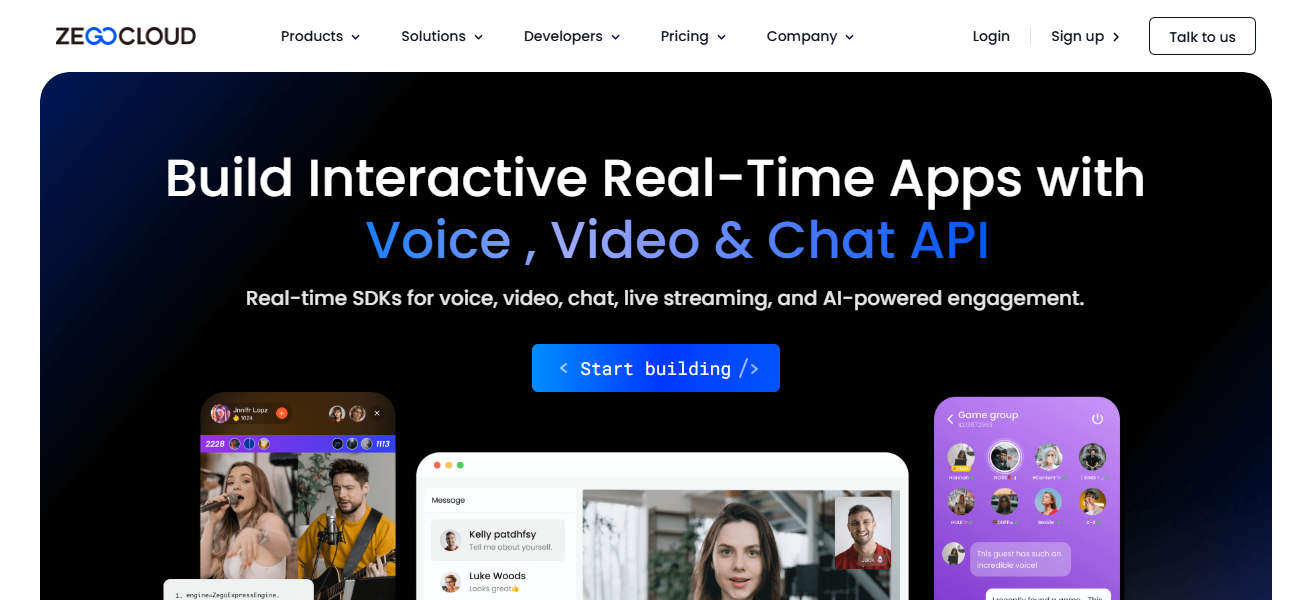
With their flexible, globally distributed SDKs, software developers can build bespoke solutions that include video, voice, and live streaming capabilities.
For businesses that demand pioneering performance in real-time communication, ZEGOCLOUD is the developer-first alternative to Agora that is most focused on addressing the needs of its customers.
ZEGOCLOUD Features
- Ultra-low latency: The platform offers optimized services for real-time audio and video communications.
- Improved interactive capabilities: Supports live cooperation, spatial audio, and several participants.
- Large scale adaptable design: Efficiently manages large events and broadcasts.
- Developer friendly flexible SDKs: Provides the necessary components for developers to create customized applications.
| Pros | Cons |
|---|---|
| Ultra-low latency and high scalability | Smaller global footprint than Twilio |
| Advanced features like spatial audio and live co-creation | Learning curve for advanced SDK features |
| Flexible SDKs for custom apps | Limited third-party integrations |
| Global infrastructure | May require technical expertise for complex use cases |
5. Daily.co
Daily.co stands out as an Agora alternative because it provides seamless, browser based, real-time audio and video integration with minimal hassle.
Embedding high quality video calls is also one of their unique offerings. Easily embedded video calls can be added to websites or apps with little backend coding.
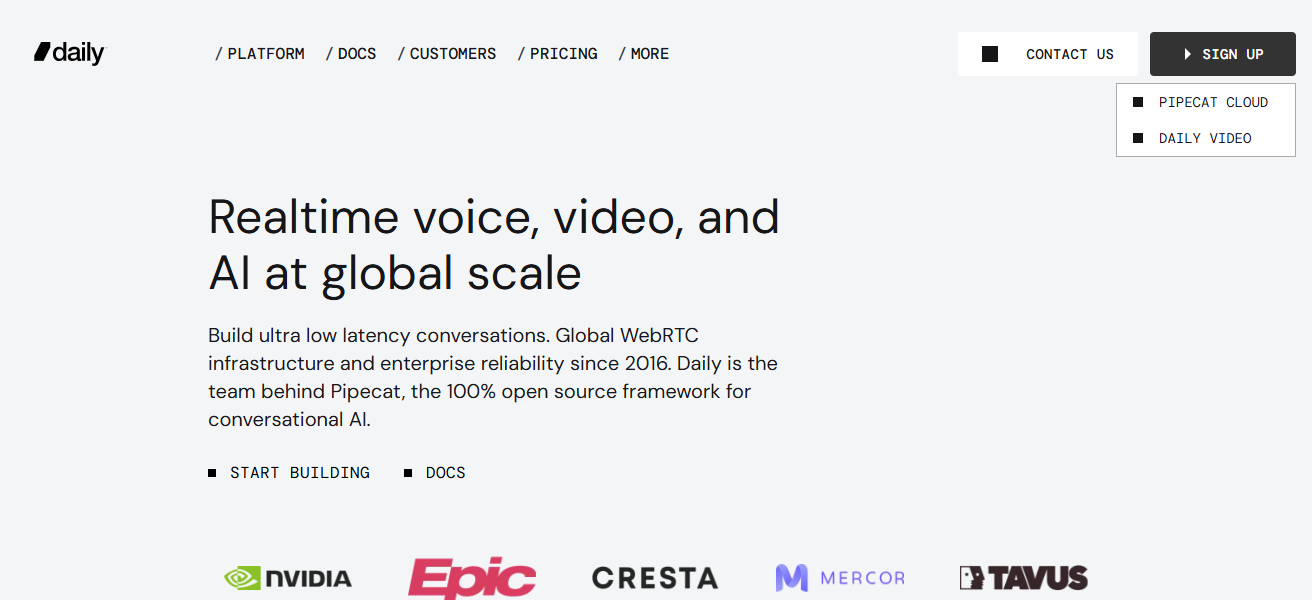
Daily.co offers cross device, low latency interactions with smooth UI customization, screen sharing, and video call recording features.
Daily.co is an efficient alternative to Agora for businesses and developers that need flexibility, quick deployment, and a lightweight video call solution.
Daily.co Features
- Integration via browsers: Simplifies embedding video calls in websites and applications with no complex backend configurations.
- Fast and lightweight: The minimal amount of resources used provides smooth functionality across all devices.
- Record and share screens: Built-in support for the necessary collaboration features.
- Adjustable UI: Developers can customize the user interface to fit the design of their application.
| Pros | Cons |
|---|---|
| Simple, browser-based integration | Limited advanced features compared to enterprise platforms |
| Lightweight and fast deployment | Performance can vary on low-end devices |
| Supports screen sharing, recording, and custom UI | Less control over server-side customization |
| Minimal backend setup | Limited global server coverage |
6. Jitsi
Jitsi is one of the best alternatives to Agora because it’s completely open-source, meaning developers have full freedom to build any kind of solution for audio and video communication.
The biggest advantages of the platform are privacy and customization due to the possibility of self-hosting, modifying, and customizing it with extra functionalities and advanced integrations, all without third party servers.
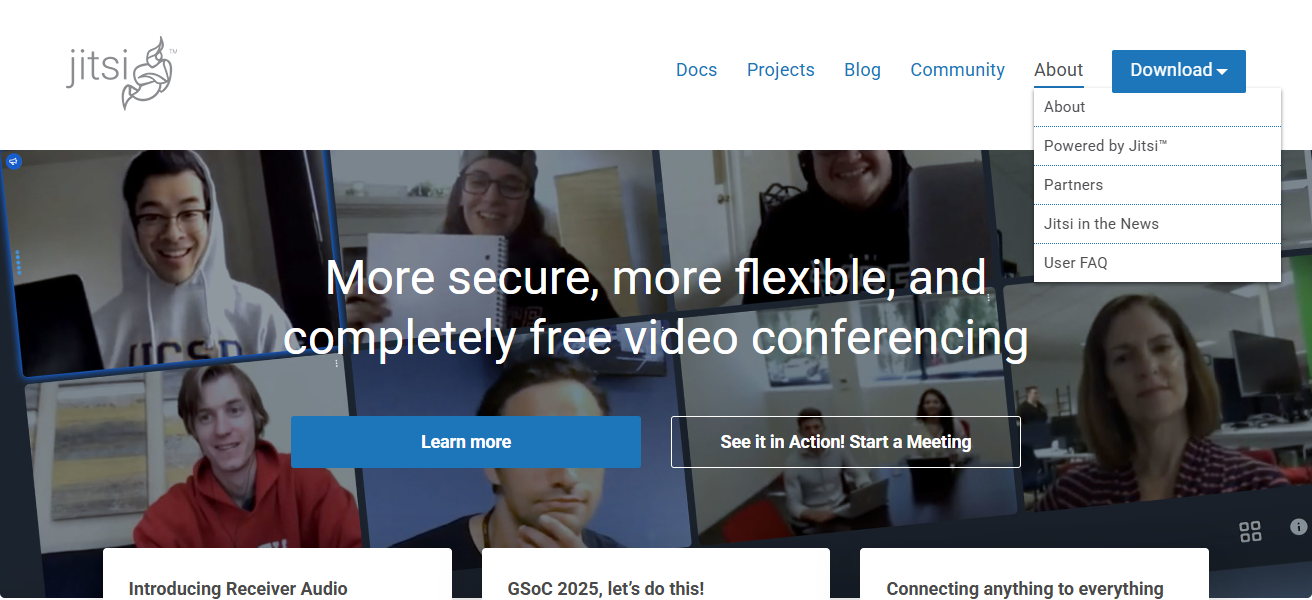
Jitsi has quality video calling with low latency, screen sharing, recording, and end-to-end encryption.
Because Jitsi is developer friendly, and provides secure and flexible real-time communication at an affordable price, it’s a strong alternative to Agora for organizations.
Jitsi Features
- No cost, open source: Fully open for customization and with no licensing fees.
- Self-hosting: Full autonomy over server control, data, and privacy.
- End-to-end encryption: Enhanced privacy features for secure communications.
- Extensible & flexible: Developers can customize plugins, integrations, and features.
| Pros | Cons |
|---|---|
| Fully open-source and free | Requires technical knowledge to self-host |
| Self-hosting gives complete control | Performance depends on server infrastructure |
| Supports encryption and privacy | Smaller official support community |
| Highly customizable | Advanced integrations may require expertise |
7. Zoom SDK
Zoom SDK stands out as an alternative to Agora because it offers the high-quality video and audio capabilities that customers trust Zoom to provide straight into their customized applications.
Unlike other competitors, Zoom SDK has the added benefits of complete embed-ability and long-standing industry reliability.
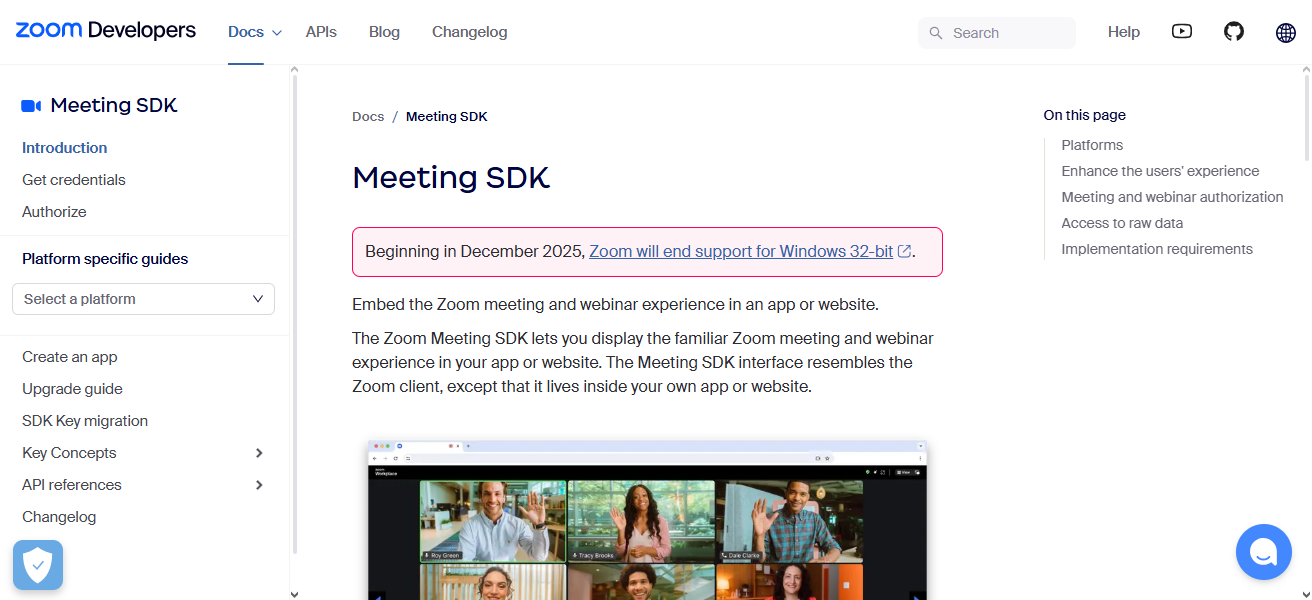
Meeting controls, chat, and screen-sharing features allow developers the capability to provide seamless, professional-grade communication without incurring the costs of building the features themselves.
With industry low latency, scalable performance, and a solution that’s globally available, Zoom SDK offers businesses the ability to provide exceptional seamless and secure interactive experiences, making it a strong alternative to Agora.
Zoom SDK Features
- Dependable Zoom trust: Built on Zoom’s worldwide infrastructure for dependable performance.
- Completely embeddable: Merges Zoom meetings, chats, and screen sharing into bespoke applications.
- Adapts in scale: Effortlessly manages large webinars as well as small group meetings.
- Secure & compliant: Provides secure meeting options and encryption for enterprise level security.
| Pros | Cons |
|---|---|
| Trusted Zoom reliability | Licensing costs can be high |
| Fully embeddable into apps | Limited customization compared to open-source platforms |
| Supports chat, screen sharing, and meeting controls | Some features require Zoom account integration |
| Scalable and secure | Can be heavy for lightweight apps |
8. EnableX
EnableX is an effective alternative to Agora because of its versatile, developer-friendly real-time communication platform.
Embedding unique, customizable APIs and SDKs for video, voice, and messaging, EnableX offers businesses the opportunity to build tailored communication solutions.
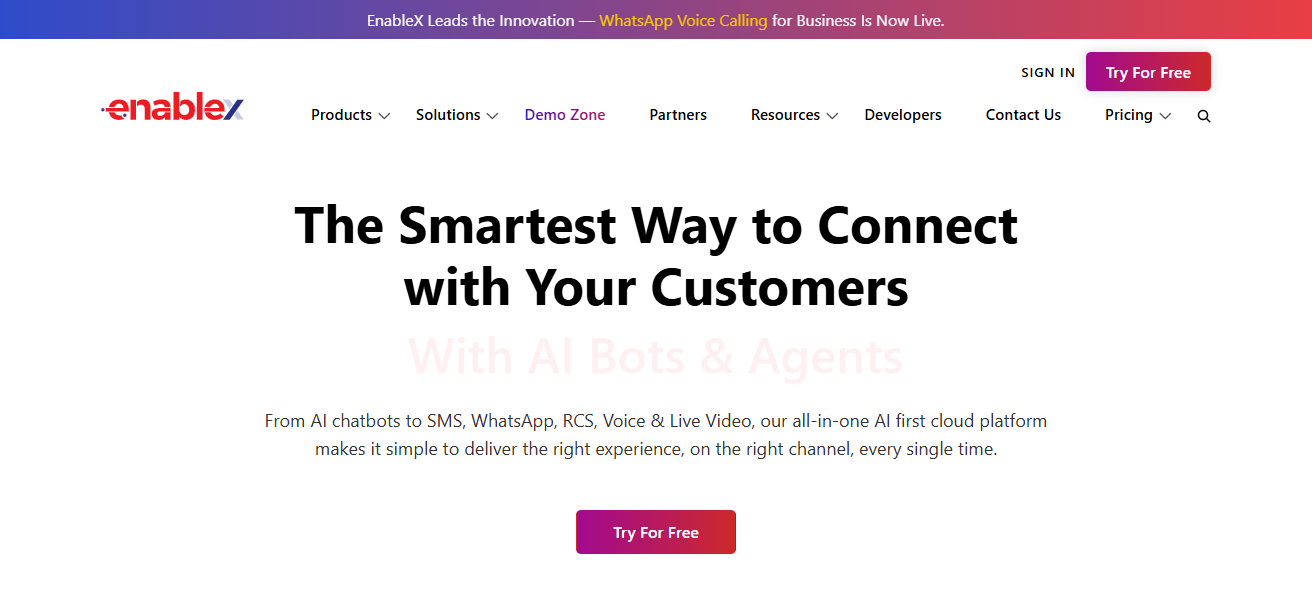
Furthermore, EnableX guarantees low latency, global scalability, and robust security, making it ideal for enterprises and startups. Overall, EnableX is a powerful alternative to Agora.
EnableX Features
- Developer-friendly APIs: Voice, video, and messaging interfaces that can be adapted to your preferences.
- Customizable real-time solutions: Create your own applications to address specific business challenges.
- Low-latency & reliable: Optimized for seamless communication under all network conditions.
- Scalable & secure infrastructure: Growing applications are supported, and security standards are maintained.
| Pros | Cons |
|---|---|
| Developer-friendly APIs for voice, video, messaging | Less global presence than Twilio or Zoom |
| Highly customizable | Smaller community support |
| Scalable and secure | Advanced customization may require technical expertise |
| Low-latency and reliable | Pricing information may be less transparent |
9. Mux
Mux stands out as one of the best alternatives to Agora because it prides itself in offering high quality, developer focused, video streaming and real-time communication services.
What differentiates Mux in the market is the ability to offer a holistic business solution through the combination of live streaming, on-demand video, and real-time APIs, and analytics, providing businesses with comprehensive insights and engagement metrics.
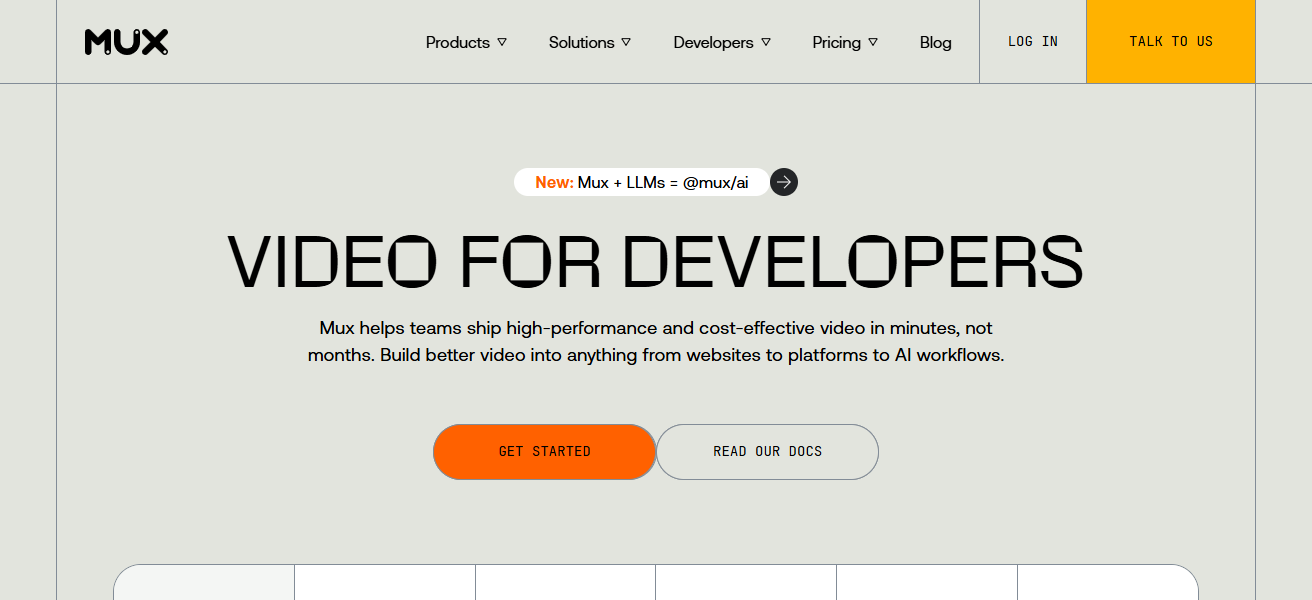
Mux’s light weight SDKs, coupled with scalable, low latency delivery, provide seamless integration for real-time video streaming services into apps and websites.
Mux is one of the best alternatives to Agora as it offers control, performance and a business driven video streaming solution.
Mux Features
- Live & on-demand video: Efficiently processes both real-time video and recorded streams.
- Analytics & insights: Offers performance tracking and user engagement analytics.
- Lightweight SDKs: Integrates easily into mobile applications and websites.
- Scalable infrastructure: Reliable for enterprise and large audience use.
| Pros | Cons |
|---|---|
| Combines live streaming, on-demand, and real-time APIs | Focused more on streaming than real-time chat |
| Strong analytics for performance and engagement | Advanced features may require multiple integrations |
| Lightweight SDKs | Limited pre-built UI components |
| Scalable infrastructure | Requires developer knowledge for full customization |
10. 100ms
100ms is among the best alternatives to Agora since it provides a flexible and low-latency real-time audio and video experiences.
Its differentiating factor is offering fully customizable SDKs and pre-built UI components that help developers build interactive live events, webinars, and video chats.
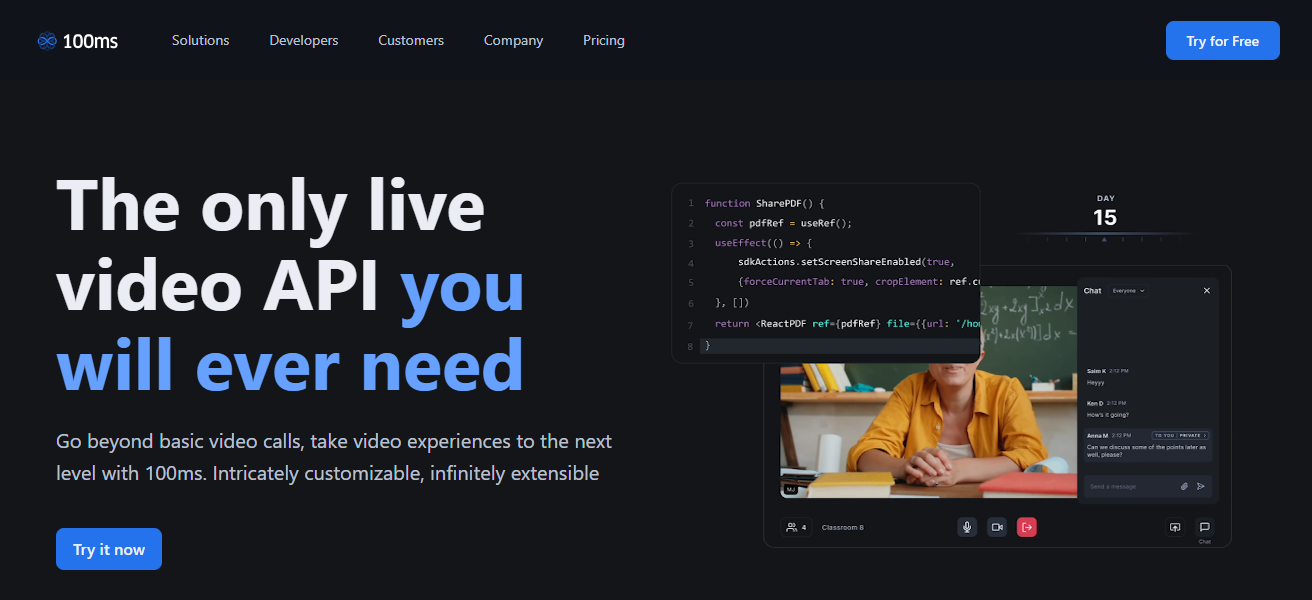
With global reach, adaptive streaming, and developer-friendly features, 100ms provides uninterrupted experience across devices and networks.
For companies looking for a dependable, feature-rich, and seamlessly integrable option, 100ms is the best alternative to Agora.
100ms Features
- Optimized interactive audio and video experiences: Low-latency real-time communications.
- Customizable SDKs & UI components: Pre-made assets that help streamline the development of your applications.
- Live events & webinars: Perfect for large crowds and multi-user communications.
- Global scalability: Ensures consistent performance across all devices and locations.
| Pros | Cons |
|---|---|
| Low-latency real-time video/audio | Relatively newer platform with smaller community |
| Customizable SDKs and pre-built UI | Advanced integrations may require developer expertise |
| Supports live events and webinars | Some features may require paid plans |
| Global scalability | May lack some enterprise-level features |
How To Choose Best Agora Alternatives
- Latency & Performance: Choose platforms where real-time communication is smooth and has the least amount of latency.
- Customization & Flexibility: Look for SDKs & APIs that grant control over the UI and feature set of the app.
- Scalability: Choose alternative solutions that have the ability to adjust to small scale and large scale applications without compromising performance.
- Security & Privacy: Look for end to end encryption and compliance and other protective features.
- Ease of Integration: Look for friendly tools, straightforward documentation, and UI components that have been built in advance.
- Global Reach: Check if the servers and other tools that support the infrastructure of the intended regions are available.
- Pricing: Check if the cost of the alternative isingignificant when it comes to scaling and long term use.
- Support & Community: Strong community along with good support helps in solving the issues more quickly.
Conclusion
To sum up, Agora is one of the top platforms for real-time communication but Dyte, Twilio, Vonage and 100ms have their own benefits.
These platforms have custom SDKs, low latency, better scalability, and strong security. Selecting the best alternative is based on your app’s requirements and will help in providing smooth, dependable and high quality experiences in video, voice and messaging.
FAQ
Platforms that provide real-time video, voice, and messaging services like Agora.
To get better customization, pricing, features, or global coverage.
Dyte, Twilio, Vonage, ZEGOCLOUD, Daily.co, Jitsi, Zoom SDK, EnableX, Mux, 100ms.
Yes, most offer developer-friendly SDKs and APIs.
Yes, many are scalable for enterprise and multi-user applications.