
The aim of this paper is to explain the Best AI-Powered Investment Tools in Europe and how sophisticated AI is changing the way investors perform market research, portfolio management, and other activities that involve the analysis of complex data.
These tools, from automated robo-advisors to AI-powered analytic tools, allow European investors to better manage risk and more efficiently operate in today’s rapidly changing financial markets.
Key Points & Best AI-Powered Investment Tools In Europe
| Tool | Key Point |
|---|---|
| Magnifi | Beginner-friendly account analysis, integrates with brokers |
| Tickeron | Quant-heavy AI signals and pattern recognition |
| Q.ai | AI-driven portfolios with thematic investing |
| Incite AI | Q&A style financial insights for investors |
| RockFlow | Smart portfolio management with real-time AI trading |
| Ellevest AI | Goal-based investing tailored to user profiles |
| Betterment AI | Automated portfolio optimization and tax-loss harvesting |
| Wealthfront AI | Hands-off robo-advisor with AI-driven rebalancing |
| Nutmeg AI (UK) | Popular European robo-advisor with AI portfolio insights |
9 Best AI-Powered Investment Tools In Europe
1. Magnifi
Magnifi operates as an artificial-intelligence powered investment idea discovery and research platform that acts like a “Google for investing,” allowing users to search for stocks, ETFs, and funds using natural language querying.
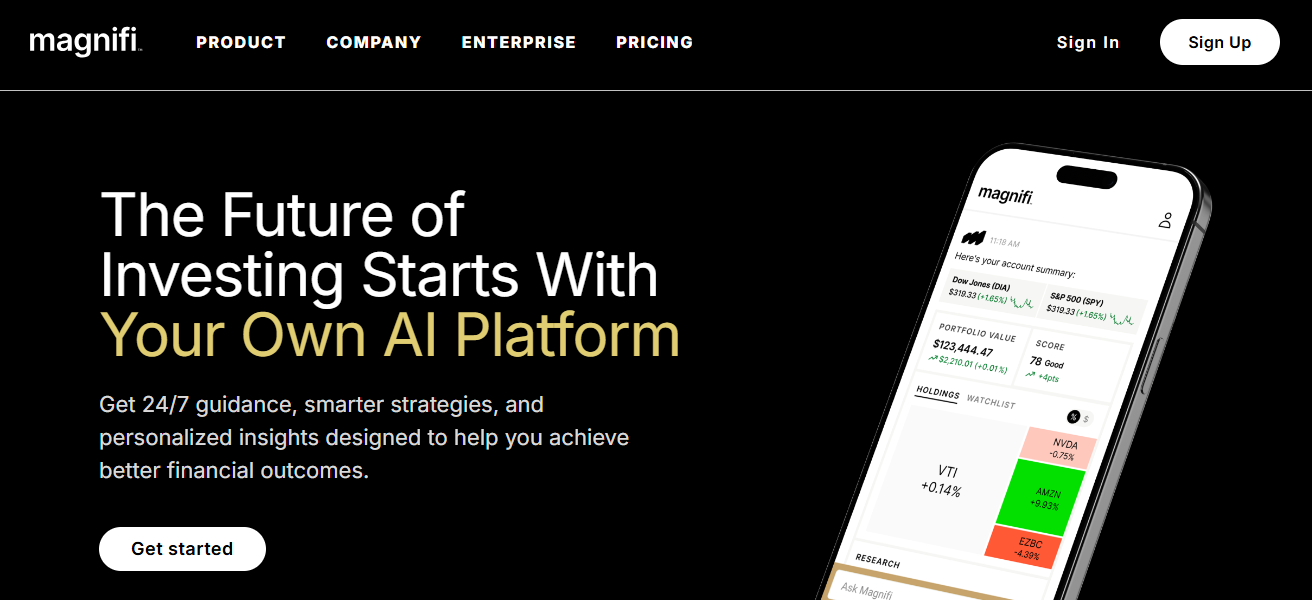
Magnifi’s AI-powered systems answer questions like “What are low-risk tech ETFs?” and provide data-backed investment recommendations, comparative analyses, and insights on portfolios.
The platform also scores portfolios for health and offers visual sliders on risk, sectors, and ESG, making it useful for novice and seasoned investors alike seeking research support without having to construct an entire strategy.
| Pros | Cons |
|---|---|
| Natural-language search makes investment research intuitive and fast. | Not a full investment manager — no automated trading or portfolio execution. |
| Helps discover stocks, ETFs and themes without technical analysis skills. | Lacks real-time trade signals and execution tools. |
| Good for building watchlists and comparing assets side-by-side. | Less useful for passive investors wanting done-for-you portfolios. |
| Works globally as a research tool. | Subscription cost may not justify value for casual investors. |
2. Tickeron
Tickeron is an Ai-enhanced analytics platform designed for quantitative investors and traders who need real-time trading signals and trade pattern analytics.
The platform has prebuilt Ai models which scan the market for technical patterns and provide trade signals and other Ai signals for swing trades.
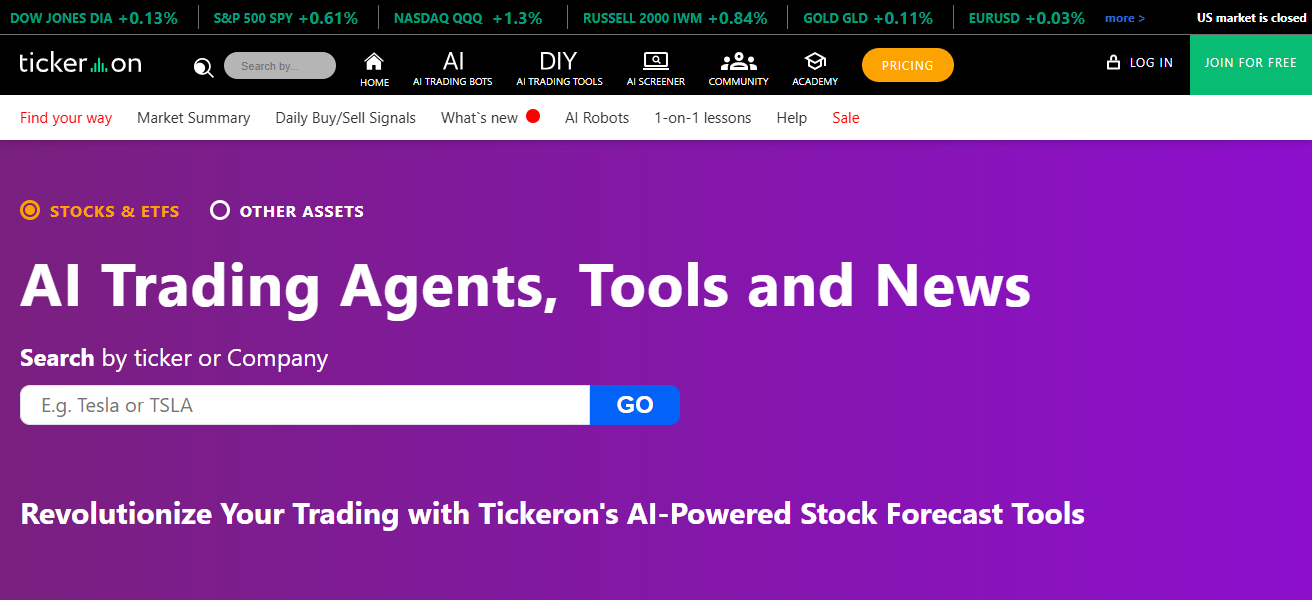
Users can backtest trading strategies and automate parts of the trading process. The platform is especially valuable for those who want algorithmic trading insights and do not want the effort or time to build their own quant trading models.
The platform is not an entirely automated robo-advisor but is an excellent analytical tool for long-term investors and active traders in need of algorithmic analytical support.
| Pros | Cons |
|---|---|
| AI detects trading patterns, signals, and technical setups. | Not a full wealth-management platform. |
| Backtesting helps evaluate strategies historically. | Requires interpretation — not fully automated trading. |
| Useful for active traders and swing traders. | Less suited for long-term, buy-and-hold investors. |
| Works worldwide with many asset types. | Interface can feel complex for beginners. |
3. Q.ai
Q.ai provides automated, machine-learning investment kits in 10 different thematic applications like technology, climate innovation, and crypto, and adjusts to market conditions.
The platform’s AI assesses market conditions and investment performance, and adjusts kits to optimize holdings every week.
The platform is an excellent AI-assisted investment option for beginners and investors with theme-focused strategies who want to diversify without stock-picking.
Trend and investement risk are balanced and the platform provides educational material to users detailing the automated decision-making process, which makes the platform an acessable option to AI-assisted investment.
| Pros | Cons |
|---|---|
| AI-created “investment kits” catered to trends and themes. | Availability in Europe can be limited depending on regulation. |
| Auto-rebalanced weekly for optimal alignment. | Lower customization of underlying holdings. |
| Good for hands-off, thematic investing. | Some kits include higher fees than passive ETFs. |
| Easy for beginners to start without deep market knowledge. | Not a full broker — needs external execution path. |
4. Incite AI
Incite AI leverages billions of data points to generate predictive models built for institutional quality investment forecasting.
Using technical indicators and fundamental analysis, includes new patterns and trends emerging in the market in real time. Its users market inefficiencies and risk adjusted optiomal strategies.

These predictive models and forecasts enable users to make better short and long term investment decisions.
Users can ask their predictive conversational AI questions about the strategy and provide guidance to inprove users investment delcision autonomous.
| Pros | Cons |
|---|---|
| Combines fundamentals, technicals and trends in analysis. | Does not build or manage full portfolios automatically. |
| Conversational AI answers investment questions directly. | Best paired with an external broker. |
| Enhances decision-making for both trading and investing. | Still maturing in advanced forecasting features. |
| Useful for both beginners and experienced users. | Learning curve for interpreting AI insights effectively. |
5. RockFlow
RockFlow is an investment and trading platform within an AI Assistant investment platform named “Bobby” which converses, builds portfolio strategies, screens investments, and provides personalized recommendations.
Unlike most research and analysis only tools, RockFlow integrates real-time data from multiple financial markets to provide actionable ideas and allows users to execute trades within the app.
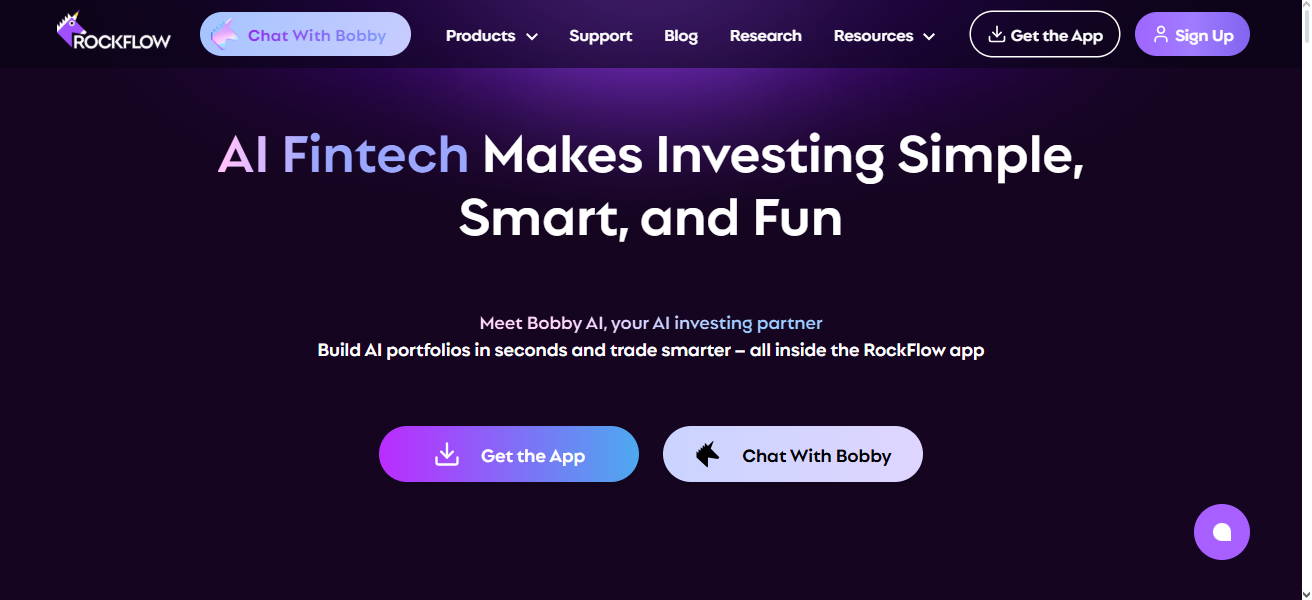
The platform’s AI evaluates the user’s investment style and risk profile and builds an optimized portfolio and recommends tactical changes based on real-time market adjustments.
With features like global market access, backtesting, and community strategy sharing, RockFlow is a perfect platform for beginner and expert investors looking to improve their investing with the help of a unified AI assistant.
| Pros | Cons |
|---|---|
| AI assistant (“Bobby”) builds strategies and screens assets. | Some features may be limited outside major markets. |
| Integrates trade execution in supported regions. | Not yet a complete wealth manager for all investors. |
| Personalized recommendations based on risk profile. | Newer platform — ecosystem still growing. |
| Combines real-time data with strategy suggestions. | Can feel complex for complete beginners. |
6. Ellevest AI
Ellevest started as a robo-advisor dedicated to automated investing with a focus on women and offering customized, goal-based diversified portfolios.
Betterment acquired your automated investing business, Ellevest, in 2025, along with the accounts and strategies that were integrated into Betterment’s AI-infused investing platform.
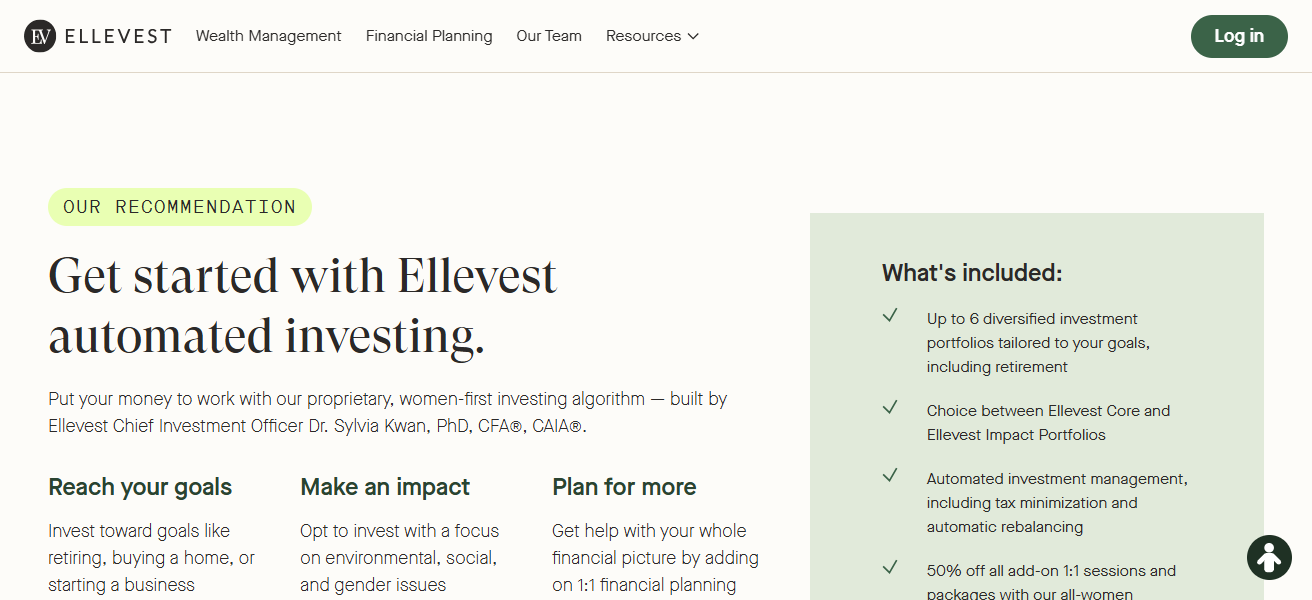
Although Ellevest no longer provides automated investing on its own, its original investing tools are now part of Betterment’s system.
Former Ellevest clients are now using Betterment’s AI tools to manage portfolios, automated rebalancing, and tax-loss harvesting according to a client’s investment objectives and risk tolerance.
| Pros | Cons |
|---|---|
| AI-powered automated investing focused on goals. | Core Ellevest product has been absorbed into Betterment. |
| Personalized portfolios based on risk and goals. | Not directly available for European investors yet. |
| Strong diversification and planning features. | Limited visibility into newer AI features post-acquisition. |
| Focused on long-term financial wellness. | No standalone “Ellevest AI” product any more. |
7. Betterment AI
Betterment is one of the top AI-powered robo-advisors that, based on goals and risk tolerances, automates the construction, rebalancing, and tax optimizing of diversified portfolios.
Its algorithms tax loss harvest and rebalance daily to optimize portfolios, then adjust based on goals for minimal tax drag.
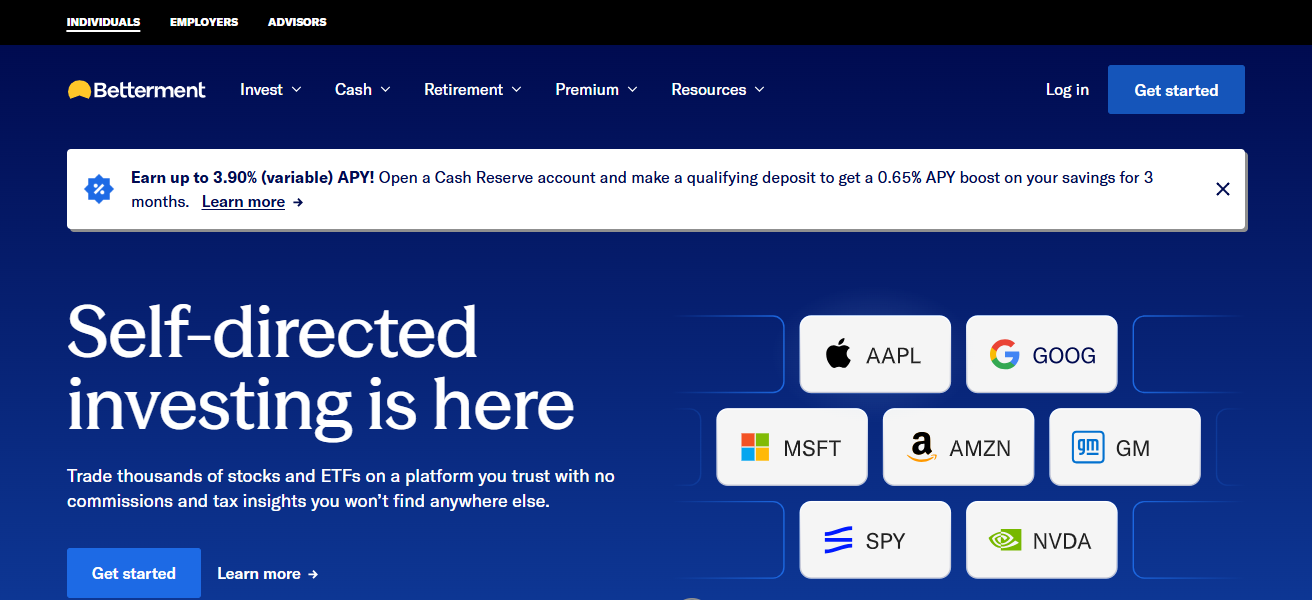
Betterment’s AI is also able to assist in goal-based investing, like retirement planning or education savings, and helps clients stay on track for the long-term goals.
Betterment is fully automated with fiduciary oversight, making it a great option for passive investors who want to get smart, real-time portfolio adjustments without the hassle of market timing or manual adjustments.
| Pros | Cons |
|---|---|
| Automated portfolio management with tax-loss harvesting (US). | Service is primarily for US investors — limited EU access. |
| AI keeps portfolios aligned with goals and risk. | Not designed for active trading or short-term signals. |
| Clear goal-based investment planning tools. | Lacks real-time trading signal capabilities. |
| Easy for passive investors to set and forget. | European tax/regulatory differences not covered. |
8. Wealthfront AI
Wealthfront employs automation and artificial intelligence to understand wealth management and plan for the future. Then, suppose automated wealth managers construct and maintain well-distributed investments.
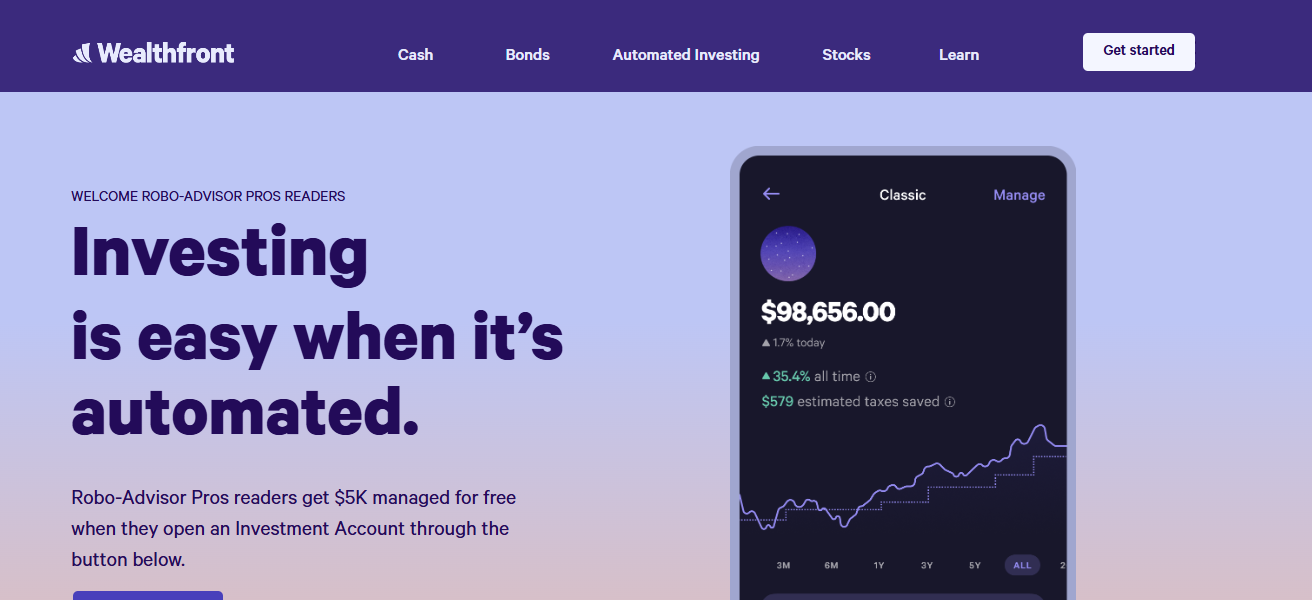
In that case, they balance them, employ efficient tax avoidance techniques such as direct tax-loss harvesting, and apply modern theories and automated specialization to portfolio management.
In that case, they become digitally accessible and lower in cost than traditional consultancy–automated investment management. Wealthfront also forecasts future cash surpluses to streamline retirement capitalism.
| Pros | Cons |
|---|---|
| Automated investing with diversified portfolios. | Like Betterment, mainly US-oriented today. |
| AI tax optimization and forecasting features. | Doesn’t provide short-term trade signals. |
| Simple onboarding and planning tools. | Not ideal for active or tactical traders. |
| Adaptive adjustments based on changing financial goals. | European market access limited without third-party brokers. |
9. Nutmeg AI (UK)
Nutmeg was one of the first UK digital wealth mangers to use the algorithms to build diversified portfolios based on client risk tolerances and investment goals to determine which ETFs to include in portfolios.
Not advertised as an ‘AI tool,’ technology automates processes to make investing easier for UK retail clients.

Approximately in late 2025, Nutmeg’s branding transitioned to JP Morgan Personal Investing, integrating it into JP Morgan’s digital investment and expanding the offering within a retail framework.
| Pros | Cons |
|---|---|
| Automated portfolio allocation based on risk tolerance. | Not fully generative AI — mostly rule/algorithm-based. |
| Simple, diversified investment options (ETFs). | Transition to JPM may change features and fees. |
| UK-focused — compliant with local tax/taxonomy rules. | Limited advanced AI trade signals. |
| Ideal for passive UK investors wanting low-maintenance portfolios. | Not available outside UK without residency. |
How To Choose Best AI-Powered Investment Tools in Europe
Regulation and Safety: Make sure that the system is fully compliant with EU regulations and holds the relevant licensing.
Customization: Target AI that is able to adapt to your goals and risk tolerance, and reallocate resources based on time horizon.
Clarity: Investment tools that have AI should be able to provide an explanation of how the AI system works, and not just provide outputs of a black box.
Costs and Fees: Assess the potential management fees and subscription costs, along with any additional costs that may erode the returns.
User Experience: An intuitive and easy-to-understand interface is even more important for those who have not used the product before.
Integration: Determine whether the tool can communicate with the broker or bank account for smooth order execution.
Track Record: AI can make predictions based on past data, but there should be a record of previous results and ratings that have not been obtained by the AI.
Assistance and Learning Support: Platforms that provide learning assistance such as tutorials, Q&A box, or human agents alongside the teaching materials make learning easier.
Conclusion
As a final thought, the most AI-powered investment tools in Europe provide the best assistance, allowing investors to make better, automate, and make better data-based decisions.
Whether you’re interested in passive portfolio management or market analysis using AI, these tools mitigate risk, save time, and streamline investing.
If you want to increase the efficacy of your investing, pick the right investment tool to meet your goals, risk tolerance, and accessibility of tools in your region.
FAQ
AI-powered investment tools use artificial intelligence to analyze market data, manage portfolios, and provide smarter investment insights automatically.
Yes, most AI investment tools are legal in Europe if they comply with EU regulations such as MiFID II and GDPR.
Popular options include Magnifi, Tickeron, Incite AI, RockFlow, and Nutmeg AI (UK), depending on your investing style.
Yes, many AI tools are beginner-friendly and offer automated investing, risk profiling, and easy-to-use dashboards.
No, AI tools help improve decision-making but cannot guarantee profits due to market risks and volatility.