
In the following article, I am going to talk about the Best AI Systems For Operational Risk Prediction.
By utilizing cutting-edge machine learning and AI technologies, these platforms scrutinize intricate data, predict probable threats, and optimize risk management procedures.
Whether it be predictive analytics or real-time monitoring, these systems are revolutionizing the way that businesses uphold operational resilience and achieve compliance.
Key Points & Best AI Systems for Operational Risk Prediction
IBM OpenPages with Watson — AI‑powered GRC platform that predicts risks, automates controls, and unifies operational risk workflows enterprise‑wide.
MetricStream Enterprise Risk Management — AI‑first risk platform delivering predictive analytics, real‑time insights, and unified operational risk intelligence across large organizations.
LogicGate Risk Cloud — No‑code risk management suite that streamlines operational risk workflows with customizable automation and real‑time analytics.
SAS Risk Management — Advanced analytics and scenario simulation solution used by financial institutions for predictive operational risk quantification.
ServiceNow Risk Management — Integrated AI risk system that continuously monitors and predicts operational exposures across enterprise workflows.
Resolver AI Risk Intelligence — Risk intelligence suite enhancing operational risk visibility, automated compliance tracking, and real‑time risk dashboards.
Riskonnect AI Suite — Unified risk intelligence platform embedding machine intelligence to predict, analyze, and visualize enterprise operational risks.
LogicManager AI Risk Platform — Intuitive risk platform linking operational risk taxonomies and dashboards to uncover and prioritize emerging threats.
AccuKnox AI‑SPM — AI Security Posture Management that enforces real‑time risk controls for cloud‑native and AI workload operations.
ComplyAdvantage — AI‑native compliance and risk intelligence engine that predicts financial‑crime risk through real‑time screening and adverse media.
10 Best AI Systems for Operational Risk Prediction
1. IBM OpenPages with Watson
IBM OpenPages with Watson is an enterprise risk management platform that uses Artificial Intelligence (AI) to aggregate risks data organization-wide.
It applies natural language processing and machine learning to identify patterns, anomalies and emerging risks from both structured and unstructured data.

By analyzing past incidents and trends, the system automates control assessments, highlighting operational risk events and predicting potential failure points. Its link with IBM’s cognitive powers adds to this, by improving decision and prioritization processes.
By offering customizable dashboards, users can gain real-time insights into key risk indicators (KRIs) and compliance gaps, enabling proactive mitigation of risks across business units and regulatory landscapes.
| Feature | Description |
|---|---|
| AI‑Driven Risk Insights | Uses Watson AI to detect patterns and predict operational risks. |
| Unified Risk Management | Combines GRC, compliance, and control data in one platform. |
| Automated Control Testing | Schedules and runs control assessments automatically. |
| Real‑Time Dashboards | Visualizes risk scores and trends live for stakeholder awareness. |
2. MetricStream Enterprise Risk Management
MetricStream ERM integrates advanced analytics with AI-driven intelligence to help organizations forecast and drive operational risks.
The platform ingests a massive amount of data, pulling from multiple sources and utilizing machine learning models to predict the odds and severity of a risk materializing.
Users are able to set up dynamic risk dashboards, alerts and predictive models that can be customized according to unique industry-specific risk profiles.
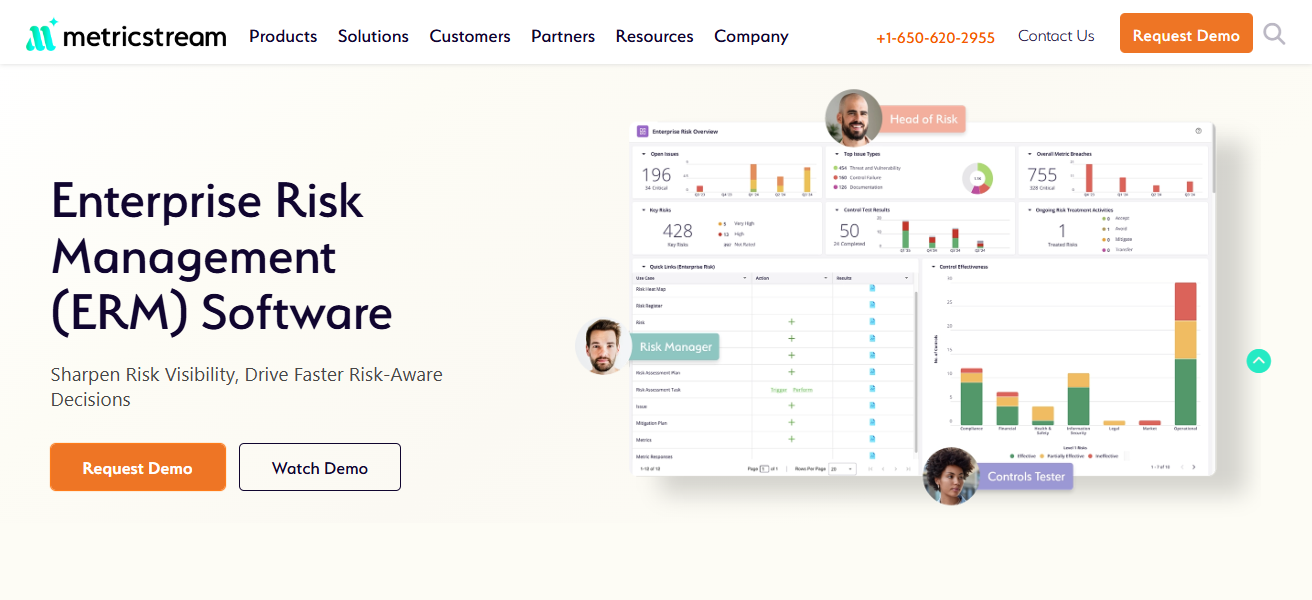
AI functionalities facilitate root-cause analysis and scenario planning, allowing risk professionals to run outcomes to foresee different risks and help make data-backed choices.
This helps with not just risk visibility but also cross-functional collaboration and strategic resilience planning by centralizing risk taxonomy and correlating risk events.
| Feature | Description |
|---|---|
| Predictive Analytics | Forecasts risk events using ML models and historical data. |
| Centralized Risk Framework | Standardizes risk definitions across the organization. |
| Dynamic Risk Dashboards | Real‑time visualization of risk indicators and heatmaps. |
| Scenario Planning | Simulates operational risk outcomes for proactive planning. |
3. LogicGate Risk Cloud
LogicGate Risk Cloud is a contemporary and scalable risk management solution that embeds automation and Ai to optimize the prediction of operational risks.
Risk teams can be, and need to be, free of heavy IT support and IT coding dependencies thanks to its intuitive interface with which they can design workflows, rule-based logic and dynamic assessments.
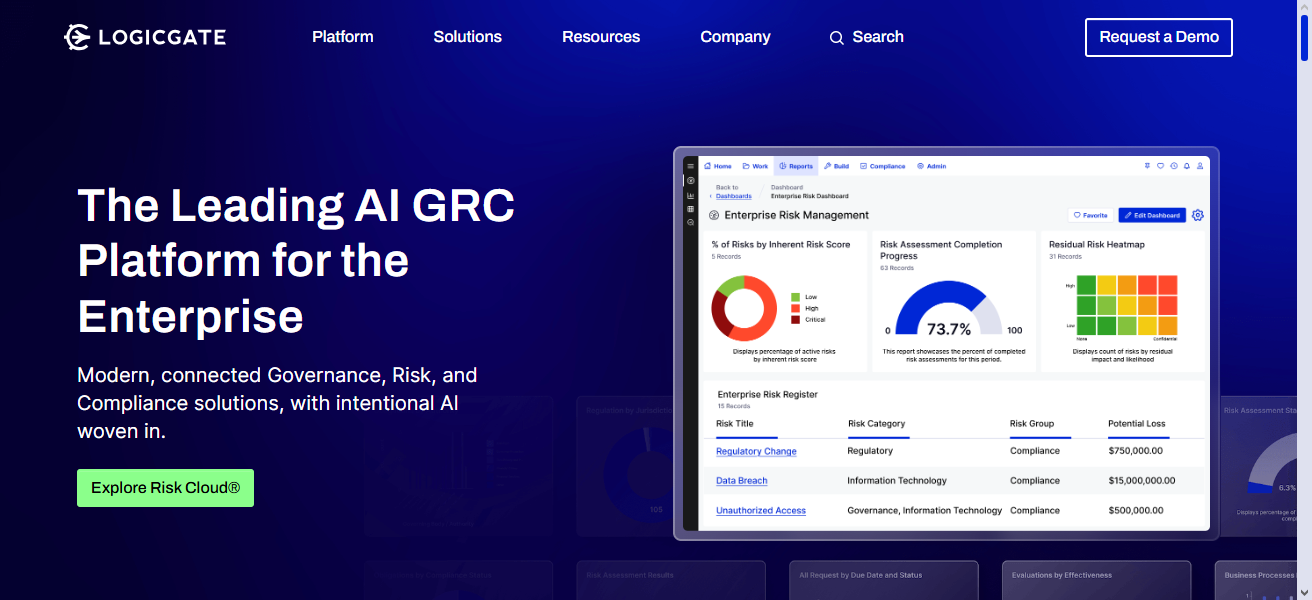
AI-driven analytics for trends, correlations and high-risk areas based on incident reports, controls, audits and process data. It facilitates predictive modeling and risk scoring, enabling firms to head off problems before they occur.
LogicGate integrates with other enterprise systems to improve data accuracy and minimize manual risk reporting work. It also allows for personalized dashboards and real-time monitoring for quick decision-making and action.
| Feature | Description |
|---|---|
| No‑Code Workflow Builder | Customize risk processes without IT support. |
| Rule‑Based Automation | Automates tasks like alerts and risk scoring. |
| Integrated Risk Repository | Stores all operational risk data in one place. |
| Real‑Time Reporting | Provides live updates on risk status and trends. |
4. SAS Risk Management
SAS Risk Management uses advanced analytics and machine learning technology to accurately predict operational risks.
It ingests and correlates data from financial operations, transactions, customer behavior and outside risk vectors to develop predictive models.
The machine components learn from fresh data at all times to enhance risk ratings and abnormality identification.
It provides scenario analysis, stress testing, and simulation tools to support organizations in gaining insight into the impact of potential risks across different conditions.
It enables risk professionals to articulate insights effectively through powerful visualization tools and integration capabilities.
SAS’s deep statistical foundation makes it particularly well-suited for complex operational environments that require robust quantitative risk prediction.
| Feature | Description |
|---|---|
| Advanced Analytics Engine | Uses statistical models for deep risk prediction. |
| Scenario Simulation | Creates stress tests and “what‑if” scenarios. |
| Enterprise Data Integration | Ingests data from multiple systems for accuracy. |
| Regulatory Compliance Support | Ensures reporting aligns with global standards. |
5. ServiceNow Risk Management
ServiceNow Risk Management is utilized by enterprises to manage operational risk through AI technology and workflow automation.
It empowers teams to measure cyber defense effectiveness, engage the entire organization in security efforts and integrate with traditional business operations.
Built on the Now Platform, it aggregates risk data spanning IT, security, and business operations into a comprehensive risk profile.
Predictive analytics using AI to discover patterns, outliers or signs of warning in risk metrics allows for proactive mitigation.
It performs risk assessments, control testing and compliance tasks using automation, thereby cutting down on manual overhead and improving accuracy.
Dashboards and alerts can be integrated to allow stakeholders to monitor live key risk indicators. ServiceNow embeds risk management within our everyday workflows to help ensure operational resilience and further align risk with organizational strategic objectives.
| Feature | Description |
|---|---|
| Automated Risk Assessments | Schedules and runs risk reviews automatically. |
| AI‑Enhanced Insights | Predicts areas of operational vulnerability. |
| Workflow Integration | Connects risk tasks with IT and business workflows. |
| KPI Monitoring | Tracks key risk indicators with alerts. |
6. Resolver AI Risk Intelligence
Resolver AI Risk Intelligence (RAT, for short) is machine learning combined with risk data aggregation to predict operational threats and vulnerabilities.
Using its AI models, it analyzes historical incidents and control failures, environmental factors and external threat feeds to produce risk forecasts and actionable insights.
Resolver’s platform enables incident tracking, root cause analysis and scenario planning to better understand current and forward-looking risk landscapes.
Automated risk scoring, trend visualization, and what-if simulations help users decide where to focus mitigation efforts.
It also melds with ticketing and security and business systems to enhance datasets, improve accuracy, and respond quickly to emerging risks.
| Feature | Description |
|---|---|
| Real‑Time Risk Scoring | Continuously updates risk scores using AI. |
| Incident & Issue Tracking | Captures and analyzes operational events. |
| Automated Alerts | Notifies teams of high‑risk trends. |
| Root Cause Analysis | AI helps identify underlying risk drivers. |
7. Riskonnect AI Suite
Riskonnect AI Suite is a full risk management platform that utilizes artificial intelligence to identify, anticipate and mitigate operational risk exposures.
The suite brings together data from all enterprise risk, incident management, health and safety and compliance functions, feeding this into AI algorithms that help identify hidden signals of emerging risks.
Predictive analytics can be used to identify risk trends and potential disruption, while machine learning helps improve models through time.
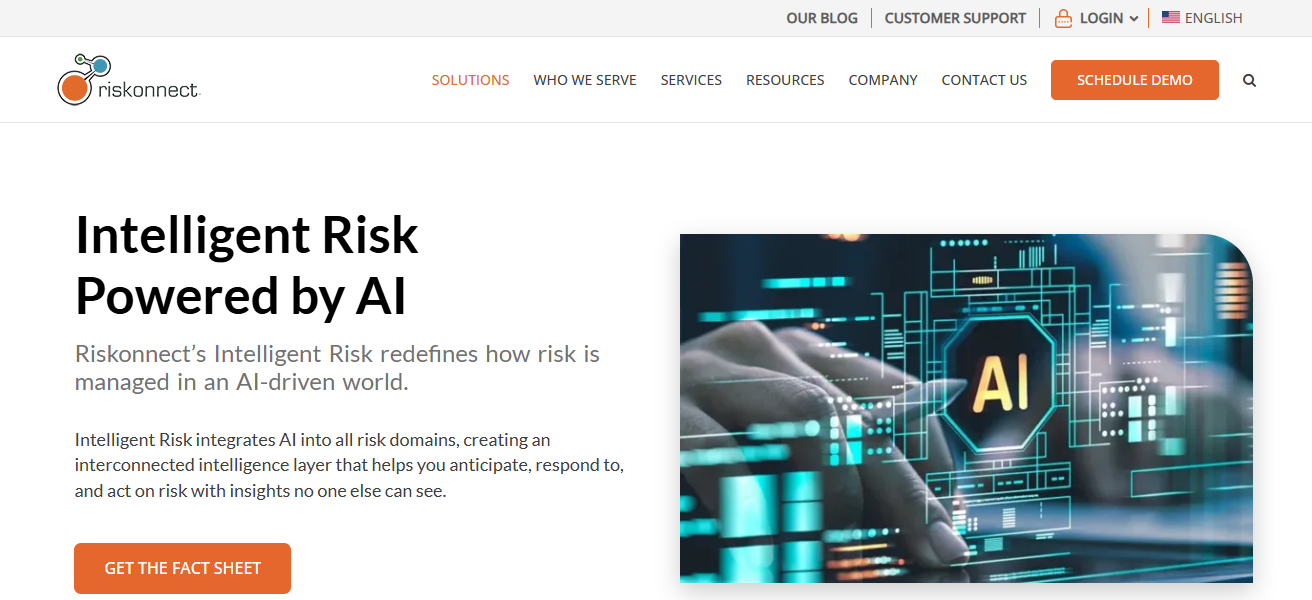
Riskonnect provides interactive dashboards, alerts and data visualization tools keep risk professionals focused on what factors require their attention.
The platform comes with integrated audit trails and compliance tracking, promoting transparency within the organization while supporting proactive risk governance across multidimensional organizational structures.
| Feature | Description |
|---|---|
| Unified Risk Data | Centralizes risk info from multiple business functions. |
| Predictive Risk Modeling | AI forecasts upcoming operational risks. |
| Visualization Tools | Intuitive charts and dashboards for insights. |
| Compliance & Audit Integration | Ties risk tracking to compliance requirements. |
8. LogicManager AI Risk Platform
MyLogicManager, an artificial intelligence risk platform by LogicManager responsible for predicting operational risks and assisting in decision-making.
Our platform is fed data regarding risk, and pulls in from internal systems, surveys, audits, control frameworks (check out our S360 digital map of controls
Which ensures you have all the necessary controls available) to apply AI mechanisms with laundering emerging risks and changing patterns.
It offers predictive risk scores and risk likelihood to get ahead of potential disruptions within organizations.
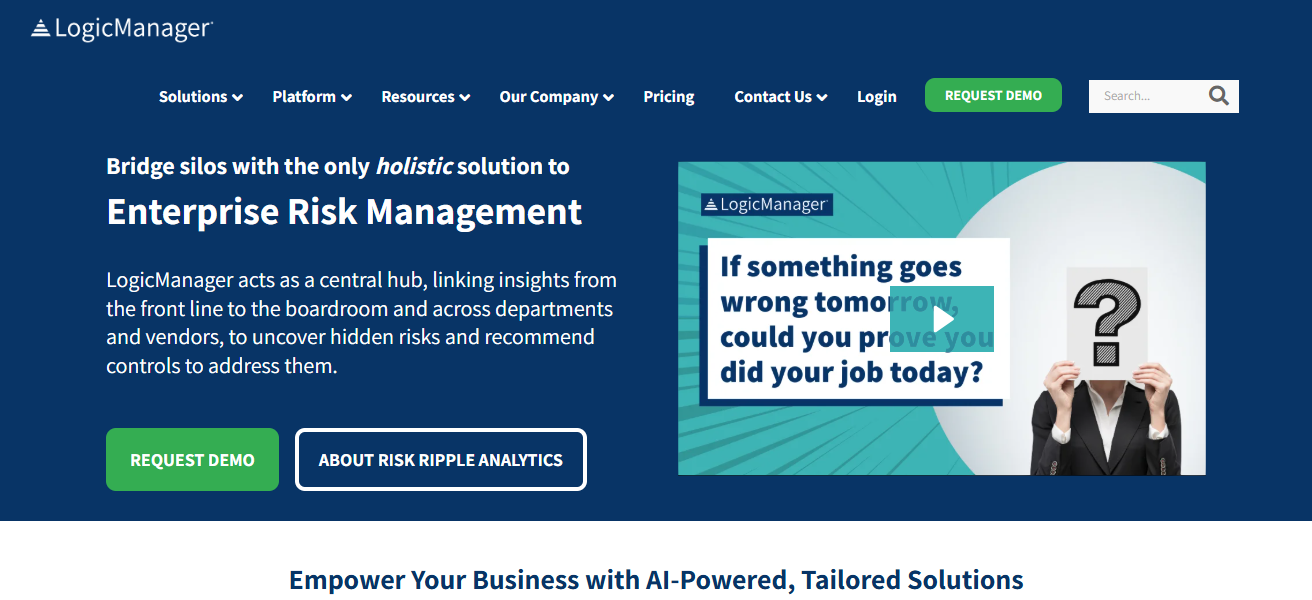
Workflow automation powered by AI streamlines risk assessments, control monitoring and remediation tracking.
With powerful reporting and dashboards, LogicManager empowers stakeholders to visually intuit risk heat maps and trends.
Whether regulatory compliance initiatives or strengthened organizational resilience — by embedding risk intelligence into daily operations, the platform conveys dangerous content that drives action.
| Feature | Description |
|---|---|
| Risk Taxonomy Builder | Defines and standardizes risk categories. |
| AI‑Based Prioritization | Highlights highest‑impact risk areas. |
| Automated Workflows | Streamlines assessment and mitigation tasks. |
| Collaborative Risk Dashboards | Shareable insights across teams. |
9. AccuKnox AI-SPM
AccuKnox AI‑SPM (Security Posture Management) uses the combination of AI and observability to predict both operational risks as well as security risks in cloud-native environments.
It analyzes workloads, APIs and service interactions in real time, employing machine learning to identify anomalies, policy violations and misconfigurations that could cause operational breaks.
AccuKnox’s AI models map telemetry data to find latent risk exposures, and predict possible incidents ahead of impact.
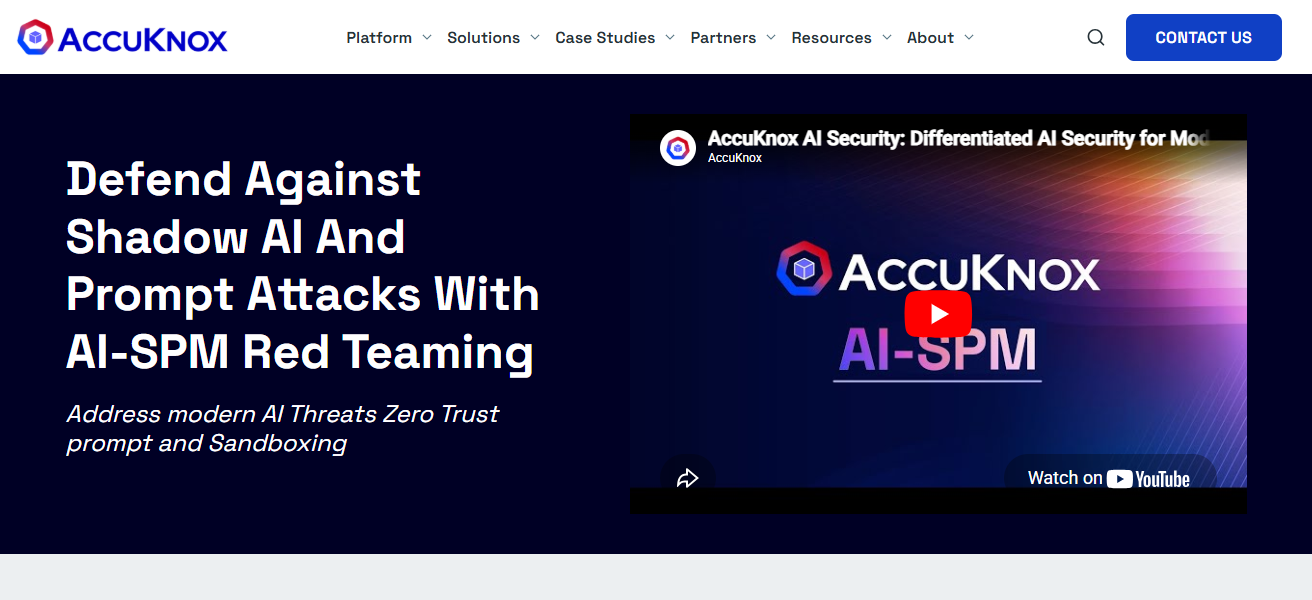
It also automates remediation recommendations and risk scoring, making the cloud more resilient, improving security posture.
Specifically useful for organizations with dynamic, distributed infrastructures looking for predictive operational risk insights, AccuKnox offers full support of Kubernetes and container ecosystems.
| Feature | Description |
|---|---|
| Cloud‑Native Security | Designed for Kubernetes and microservices. |
| Real‑Time Policy Enforcement | Blocks risky configurations instantly. |
| Machine Learning Alerts | Detects anomalous behavior using AI. |
| Risk Visualization | Shows attack paths and risk hotspots. |
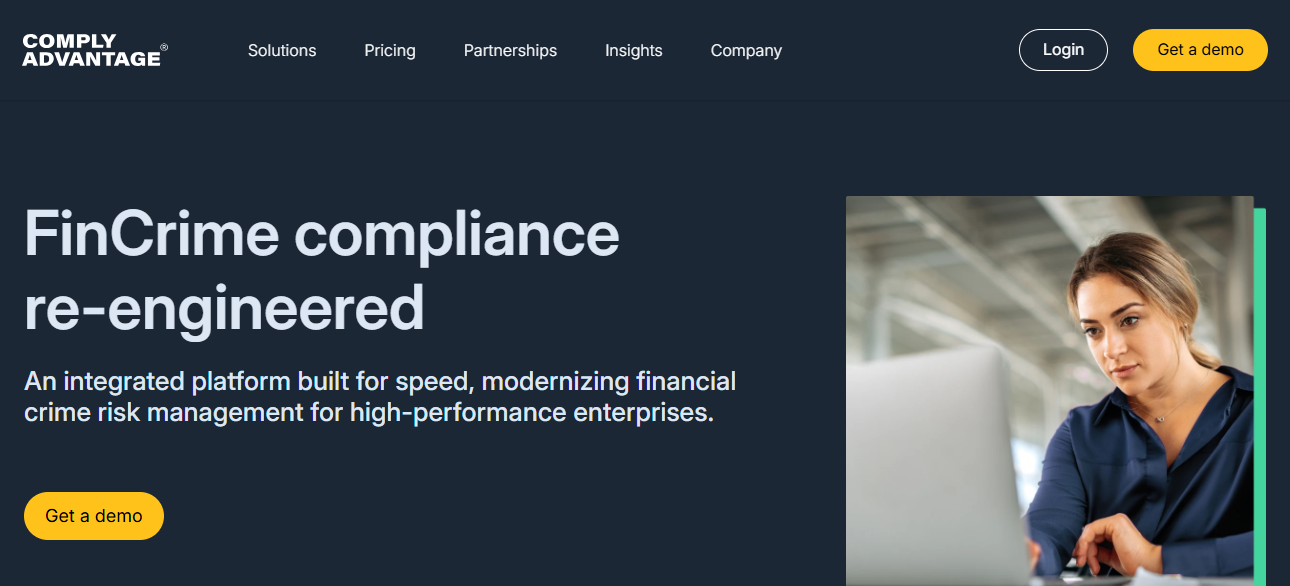
10. ComplyAdvantage
ComplyAdvantage utilizes AI and natural language programming to predict regulatory and financial crime risks.
Their strengths are in the detection of anti‑money laundering and sanctions risk, however its AI models can also highlight operational risk by identifying unusual trends in transactions, customer behaviour and external risk feeds.
Real‑time screening and alert generation by the platform enable organizations to anticipate compliance breaches and operational vulnerabilities.
With machine learning, it is constantly updated to accommodate a growing list of threats and changing regulations, resulting in very high accuracy.
The first enhances predictions with external intelligence from ComplyAdvantage’s global risk database, enabling businesses to reduce false positives and make smart operational and compliance risk decisions.
| Feature | Description |
|---|---|
| AI‑Driven Monitoring | Scans data for suspicious patterns and anomalies. |
| Real‑Time Screening | Checks entities against global risk databases. |
| Adverse Media Detection | Finds negative media related to risks. |
| AML & Compliance Tools | Predicts financial crime risk exposure. |
How To Choose Best AI Systems for Operational Risk Prediction
Set Your Risk Scope –Determining Which Operational Risks (Financial, IT, Compliance & Supply Chain) Are Most Important.
Assess AI Functionality – Seek functionality such as predictive analytics, anomaly detection, and machine learning models.
Data Integration & Quality – You’ll need the system to connect with wherever you have existing data and to handle unstructured fields.
Compliance & Reporting — Check if you comply with regulations and have audit-ready reporting capabilities.
Scalability & Support – Confirm vendor support, scalability and flexibility for future risk requirements.
Concsluion
In conclusion, the Best AI Systems for Operational Risk Prediction empower organizations to anticipate, analyze, and mitigate operational risks effectively.
By leveraging AI, machine learning, and predictive analytics, these platforms enhance decision-making, automate workflows, and ensure regulatory compliance.
Adopting the right system strengthens operational resilience, reduces potential losses, and provides real-time insights for smarter, proactive risk management.
Faq
Who should use them?
Enterprises, financial institutions, and organizations with complex operational processes.
Key features to look for?
Predictive analytics, real-time dashboards, automation, and compliance reporting.
Top systems available?
IBM OpenPages, MetricStream, LogicGate, SAS, ServiceNow, Resolver, Riskonnect, LogicManager, AccuKnox, ComplyAdvantage.
What are AI systems for operational risk prediction?
They use AI and machine learning to identify, forecast, and mitigate business risks.