
This article discusses the Best Asia Focused Fixed Income Investments that provide stable income, diversification, as well as exposure to Asia’s growing economies.
- Key Points & Best Asia-Focused Fixed-Income Investment Ideas
- 10 Best Asia-Focused Fixed-Income Investment Ideas
- 1. Asian Investment Grade Bonds
- 2. Asian High Yield Bonds
- 3. China Onshore Bonds
- 4. Indian Sovereign Bonds
- 5. Green Bonds in Asia
- 6. Asian Local Currency Bonds
- 7. Southeast Asia Corporate Bonds
- 8. Korean Corporate Debt
- 9. Singapore Government Bonds
- 10. Asian Frontier Market Debt
- How To Choose Best Asia-Focused Fixed-Income Investment Ideas
- Conclsuion
- FAQ
The potential investments include government bonds, as well as various corporate and green bonds
Which will allow an investor the ability to manage their risk and return rudiment in conjunction with the economic growth potential that Asia has to offer.
Key Points & Best Asia-Focused Fixed-Income Investment Ideas
| Investment Idea | Key Point |
|---|---|
| Asian Investment Grade Bonds | Resilient performance supported by strong macro fundamentals and tightening credit spreads. |
| Asian High Yield Bonds | Attractive return potential due to higher yields and improving corporate balance sheets. |
| China Onshore Bonds | Diversification benefits with relatively low correlation to global markets. |
| Indian Sovereign Bonds | Strong growth outlook and favorable demographics underpin long-term stability. |
| Green Bonds in Asia | Sustainability-driven demand with governments pushing ESG initiatives. |
| Asian Local Currency Bonds | Lower FX volatility expected as regional currencies stabilize. |
| Southeast Asia Corporate Bonds | High carry opportunities in Indonesia, Thailand, and Malaysia. |
| Korean Corporate Debt | Strong credit quality backed by global tech and manufacturing leaders. |
| Singapore Government Bonds | Safe-haven appeal with AAA rating and robust fiscal discipline. |
| Asian Frontier Market Debt | Higher risk-adjusted returns in Vietnam, Philippines, and other emerging economies. |
10 Best Asia-Focused Fixed-Income Investment Ideas
1. Asian Investment Grade Bonds
Investment-grade bonds from Asia present a unique blend of stability, consistency, and diversification options, catering to conservative and moderate investors alike.
Coming from relatively strong states, financial institutions, and companies in regions such as Japan, South Korea, Singapore, and Hong Kong, such bonds are likely to be highly-rated.
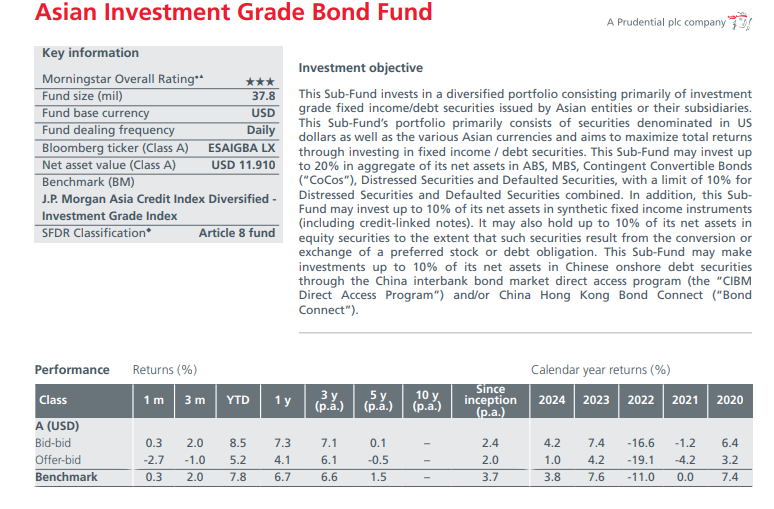
Compared to high-yield bonds, these have a far lower chance of default and are likely to pay a premium as opposed to bonds from Western developed economies.
In terms of unsystematic risk, these bonds in a diverse portfolio moderate overall risk, defend against capital losses from other instruments, and inject a high turnover rate of cash at a time of elevated market risk.
Features Asian Investment Grade Bonds
- Superior Credit Quality: These bonds are issued by the most creditworthy countries and companies.
- Predictable Returns: Conservative investors can take comfort in the guaranteed interest payments.
- Low Default Risk: Compared to high-yield bonds, these bonds have very low chances of default.
- Balanced Risk Profile: When combined with stocks and other high-risk investments, these bonds can reduce overall risk.
| Pros | Cons |
|---|---|
| High credit quality with low default risk | Lower yields compared to high-yield bonds |
| Stable and predictable income | Sensitive to global interest rate changes |
| Strong diversification benefits | Limited upside returns |
| Issued by reputable governments and corporates | Currency risk for foreign investors |
| Suitable for conservative investors | Less attractive in high-inflation periods |
2. Asian High Yield Bonds
The appeal of Asian high yield bonds is that they offer higher coupon payments that result in greater income. These bonds are issued by companies in risky areas of are real estate, infrastructure and, energy, and with lower credit ratings.
This market has a large presence in China, India, and Indonesia. These bonds come with a high credit risk and are sensitive to economic change, but with focused issuer selection and diversification, the downsides can be greatly reduced.
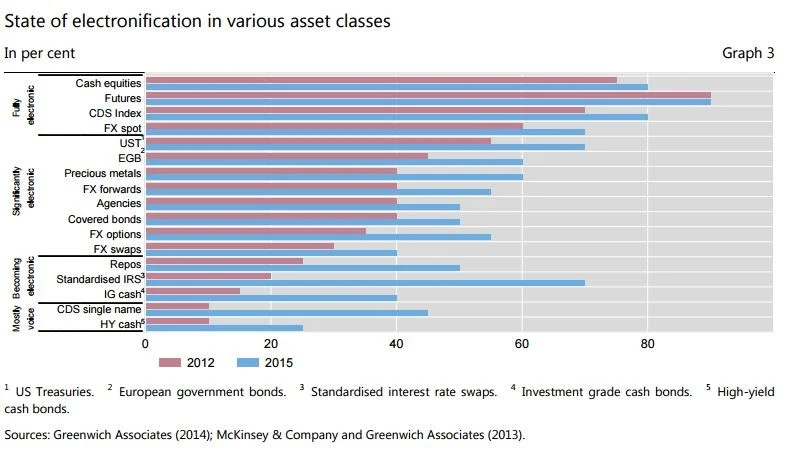
They are high yield but also risky, and good for portfolio diversification, especially in times of economic recovery. This makes them best for an experienced investor.
Features Asian High Yield Bonds
- Enhanced Yield: These bonds have lower credit ratings, which is compensated for with higher interest.
- Growing Economies: These bonds provide exposure to fast-growing sectors like real estate and infrastructure.
- Higher Reactive: More reactionary to trends in the market.
- Requires Attention: Needs good diversification and selection of bond issuers.
| Pros | Cons |
|---|---|
| Higher coupon income | Higher default and credit risk |
| Attractive yields compared to developed markets | Sensitive to economic slowdowns |
| Potential for capital appreciation | Sector concentration risk (e.g., real estate) |
| Improves portfolio income | Greater price volatility |
| Benefits during economic recovery cycles | Requires active risk management |
3. China Onshore Bonds
China’s onshore bonds traded in the domestic markets, give investors access to the most liquid and largest fixed income markets in the world.
The onshore bonds include government bonds, policy bank bonds, and investment grade corporate bonds.
The bonds offered in the Chinese market have historically had a very low correlation with the rest of the world, offering good diversification.
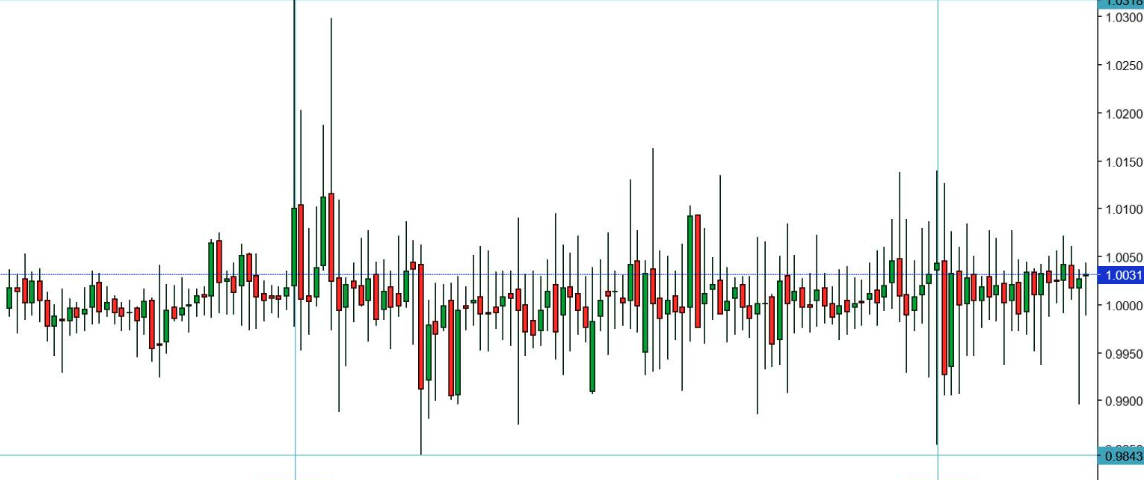
Low and stable inflation, the control over the monetary policy, and the changes to the market make the investment more attractive.
For investors in other countries, Chinese onshore bonds give a better yield, when compared to other developed market bonds, and make the portfolio more stable.
Features China Onshore Bonds
- Significantly Large Market: China has one of the largest and most liquid bond markets in the world.
- Independently Driven: The bond market is not influenced by the U.S. and European markets.
- Favorable Support: China has most of the control over the area’s monetary and fiscal policies.
- Strategic: It can help to mitigate potential losses and risk of other markets in times of economic downturn.
| Pros | Cons |
|---|---|
| Large and liquid domestic bond market | Regulatory and policy transparency issues |
| Low correlation with global markets | Limited accessibility for some investors |
| Competitive yields | Capital controls and repatriation risks |
| Strong government support | Credit risk in lower-quality corporates |
| Portfolio diversification benefits | Geopolitical uncertainty |
4. Indian Sovereign Bonds
Government-issued Indian sovereign bonds are among the safest investments in the region. India’s economic growth and fiscal discipline help provide the strong domestic demand that feeds the real yields.
India is now included in global bonds indices which is bringing in foreign funding and further enhancing liquidity and transparency.

These bonds also protect from VNAV and offer some currency diversification. For long-term investors that are looking for economic growth in India while also needing a stable income and inflation protection, Indian government securities are ideal.
Features Indian Sovereign Bonds
- Government Guaranteed: Bonds sustained by Government’s guarantee.
- Real Yields: Yield higher than many developed countries markets.
- Inclusion in Index: Increased foreign participation through global bond indices.
- Stability Over Time: Ideal for income seekers and risk averse individual investors.
| Pros | Cons |
|---|---|
| Government-backed with low default risk | Exposure to interest rate fluctuations |
| Attractive real yields | Currency depreciation risk |
| Increasing foreign investor access | Inflation sensitivity |
| Supported by strong economic growth | Long duration risk |
| Inclusion in global bond indices | Lower returns than equities |
5. Green Bonds in Asia
Asian green bonds support projects in renewable energy, clean transport, and climate-resilient infrastructure.
These are the most eco-sustainable initiatives. The primary bond issuers are China, South Korea, and India, thanks to solid governing policies and ESG frameworks.
Such green bonds give eco-conscious investors stable, fixed returns. There is significant demand for such bonds, which give the issuers better support in liquidity and pricing.

Predictable returns, reduced risks associated with the climate, and the chance to take part in the transition toward a low-carbon economy have made them a favourite for long-term investors. These are the Asian green bonds.
Features Green Bonds in Asia
- Focus on Sustainability: Finances renewable energy and eco-friendly initiatives.
- Supportive Policies: ESG government initiatives.
- Demand from Investors: Increased liquidity and depth in the markets.
- Responsible Investing: Fixed income with sustainable investment.
| Pros | Cons |
|---|---|
| Supports environmentally sustainable projects | Yields may be slightly lower |
| Growing investor demand | Limited issuer diversity |
| Strong policy and regulatory backing | Greenwashing concerns |
| Stable long-term returns | Project-specific risks |
| Enhances ESG portfolio alignment | Market still developing in some regions |
6. Asian Local Currency Bonds
Bonds in the local currencies of Asia enable investors to take part in the local bond market and reap the rewards of possible currency appreciation.
With the ability to issue bonds through the governments and corporations in India, Indonesia, Thailand, and Malaysia, the bonds lessen dependence on the US dollar and provide diversification of currency risk.

Many currencies in Asia have positive mid to long term outlooks backed by solid economic fundamentals and foreign exchange reserves.
There are local currency bond amplifying regional growth and inflation waning that will positive short term volatility in the asset that will broaden the global diversification of the fixed income portfolio.
Features Asian Local Currency Bonds
- Diversified Currency: Less reliant on US dollar-denominated assets.
- Possible Gains from FX: Total return can be enhanced from currency appreciation.
- Growth in Domestic Market: Gains from expansion of the economy.
- Inflation Sensitivity: Local inflation and rates influence returns.
| Pros | Cons |
|---|---|
| Reduced reliance on US dollar | Currency volatility |
| Potential currency appreciation gains | Higher short-term fluctuations |
| Diversification across Asian economies | Political and policy risks |
| Attractive domestic yields | Hedging costs can reduce returns |
| Long-term growth exposure | Inflation risk |
7. Southeast Asia Corporate Bonds
Southeast Asia corporate bonds are great investments given their rapid urbanization, economy growth, and infra development, and in light of that, the emerging market offers great yields.
Bonds from the banking, utilities, telecom, and consumer goods sectors from issuers in Indonesia, Vietnam, the Philippines, and Thailand usually have higher returns than developed markets and have an improving credit quality.

The political climate of the country and currency fluctuations are risks that are involved, but the volatility can be helped by diversifying across the countries.
For investors in emerging markets, the Southeast Asia corporate bonds are great for those wanting financing growth and looking for that economic momentum in the region.
Features Southeast Asia Corporate Bonds
- Linked to Growth Issuers: Bonds of the rapidly growing ASEAN economies.
- Yield Premiums: Bonds yield higher than developed markets.
- Diversity in Sector: Banking, telecom, utilities, and infrastructure.
- Market Structure: Increased regulations and liquidity.
| Pros | Cons |
|---|---|
| Higher yields than developed markets | Currency and liquidity risks |
| Exposure to fast-growing economies | Political instability in some countries |
| Expanding corporate bond markets | Credit quality varies widely |
| Sector diversification opportunities | Lower transparency in smaller issuers |
| Strong infrastructure growth support | Market depth limitations |
8. Korean Corporate Debt
Korean corporate debt was underpinned by strong credit, good corporate governance, and export-oriented business models.
These bonds, issued by multinational companies with strong global competitiveness in the tech, auto, and manufacturing sectors, are often rated investment grade.
The steady state of South Korea’s regulatory framework and the South Korea’s large foreign exchange reserves are also factors that enhance its credit quality.

Compared to other emerging markets, Korean corporate bonds offer low risk of default and thus offer stable income.
For investors seeking to add quality corporate debt within the Asian region to their holdings but seeking to maintain strong portfolio stability and moderate improvement in yield, these bonds are appropriate.
Features Korean Corporate Debt
- Corporate Investment Grade: Issued by dominant, strong, and export-oriented firms.
- Transparent Governance: Regulated and welcoming for investors.
- Stable Cash Flows: Driven by the demand for technology and manufacturing.
- Moderate Risk Profile: Considering other emerging markets, this one is a lot less volatile.
| Pros | Cons |
|---|---|
| Strong credit fundamentals | Moderate yield levels |
| Transparent governance standards | Export dependency risk |
| Investment-grade corporate issuers | Sensitive to global trade cycles |
| Stable regulatory environment | Limited high-yield opportunities |
| Reliable income stream | Interest rate sensitivity |
9. Singapore Government Bonds
Singapore government bonds are very secure fixed-income investments with one of the top rated government credit standings in Singapore.
With essentially no chances of losing money, predictable cost of inflation, and firm management with no frivolous spending, these bonds save money while allowing you to make money.

Even though the interest in these bonds will be low, they are very stable investments and are easy to liquidate, which will be very beneficial in the long run.
Singapore government bonds are also unique in the way that they are good to hold on to when the world’s economy is failing
Which allows you to offset some of the risk in other investments that are not as stable. Because of this, having Singapore government bonds in your portfolio can help balance your risk level.
Features Singapore Government Bonds
- Top-Tier Credit Rating: Has one of the strongest and most secure sovereign balance sheets.
- Capital Preservation: Good option for investors who prefer to take less risk.
- High Liquidity: Investors can enter and exit easily.
- Low Volatility: Has good performance when global markets are uncertain.
| Pros | Cons |
|---|---|
| Extremely low default risk | Relatively low yields |
| Strong sovereign balance sheet | Limited capital appreciation |
| High liquidity and stability | Inflation may reduce real returns |
| Safe-haven asset | Less suitable for aggressive investors |
| Ideal for capital preservation | Opportunity cost during bull markets |
10. Asian Frontier Market Debt
Asian frontier market debt appreciates high yield by investing in the incipient bonds markets like Bangladesh, Sri Lanka, Mongolia, and Cambodia.
These bonds compensate investors with higher interest rates because of high political, economic, and liquidity risks. Although there is higher volatility, selective exposure can lead to strong income and diversification.

Besides that, frontier markets have strong demographics and growing infrastructure. An investment in this asset class suits well those with high tolerance for risk, with a long term, diversified investment attitude.
Features Asian Frontier Market Debt
- High Yield Potential: Justifies the strong economic and political risk posed.
- Early-Stage Markets: Get to invest in developing bond markets.
- Demographic Growth: Gains from the young population and the increasing demand for infrastructure.
- Higher Risk-Return Profile: Best for experienced investors.
| Pros | Cons |
|---|---|
| Very high yield potential | High political and economic risk |
| Early-stage market growth opportunities | Low liquidity |
| Portfolio diversification | Currency instability |
| Benefits from demographic expansion | Weak regulatory frameworks |
| Suitable for risk-tolerant investors | Higher default probability |
How To Choose Best Asia-Focused Fixed-Income Investment Ideas
Determine credit quality: Look into nearly all issued credit (position) ratings, governmental backing, and defaults to assess credit risk.
Stability and yield: Make sure that any yield gets you an attractive figure and does not compromise (or, more likely, is not compromised by) the inflation and price volatility risk.
ICurrency risk: Opting between bonds with the USD as its denomination and bonds issued in the locality’s currency bonds is a matter of choosing a risk profile with more or less currency flexibility.
Strength of the economy: Give preference to the those which undergo stable growth, have low inflation, and execute sound fiscal policy.
Geographically diversified: Opting more flexibility is less concentration risk.
Assess some active trading liquidity: Opt both markets and bonds with more volume.
Investment objectives: This should give preference to the needs, time, and any ESG outcomes required (green bonds).
Conclsuion
In summary elastic Asia-centered Fixed-Income Investing concepts driven by Asia Focused Fixed-Income Investing concepts grow income stability, diversification, and growth potential.
Sovereign and investments are high quality and tier Asia, including offers green and frontier market debt which allow for variety in random risk DNA.
Correct yield, and broad credit quality, and liquid currency combinations, in Asia and with it countries and Asia investors, can create deep, debt portfolios.
FAQ
They are bonds and debt instruments issued by Asian governments, corporations, or institutions that provide regular interest income.
Safety depends on the type—government and investment-grade bonds are relatively safer, while high-yield and frontier bonds carry higher risk.
Singapore government bonds, Indian sovereign bonds, and Asian investment-grade corporate bonds are known for stability.
Many Asian bonds offer higher yields due to faster economic growth and emerging market risk premiums
Local currency bonds are affected by exchange rate movements, which can increase gains or losses for foreign investors.