
This article covers the Best Blockchain Identity Solutions For Secure Payments, examining providers who offer safe, confidential, and seamless transactional services.
These providers utilize decentralized identifiers, fraud-attenuating mechanisms, streamlined KYC/AML compliance, and credential blockchain
Technology accompanied by self-sovereignty with identity mechanisms. Such solutions are vital in the contemporary systems of efficient, trusted payments.
Key Points & Best Blockchain Identity Solutions for Secure Payments
| Identity Solution | Key Points / Strengths (for Secure Payments & Identity) |
|---|---|
| Civic | – Uses a Secure Identity App; PII (personally identifiable information) is stored locally on user’s device, not on blockchain. |
| uPort | – Based on Ethereum; supports self-sovereign identities for people, devices, institutions. |
| Sovrin | – Designed as a self-sovereign identity (SSI) public-permissioned blockchain. |
| ShoCard | – Uses blockchain to anchor identity hashes: user data is hashed and recorded on chain, data stored on user’s phone. |
| Bloom | – (Less detailed technical public data) Bloom is designed for credit & identity scoring |
| SelfKey | – Self-sovereign identity wallet: users fully own their identity, credentials are portable. |
| Ontology (ONT ID) | – ONT ID is Ontology’s decentralized identity solution; supports W3C DIDs. |
| KILT Protocol | – Built for verifiable credentials and claims; identity holder gets attestations on-chain. |
| Dock | – Provides decentralized identity infrastructure: focuses on issuing verifiable credentials. |
| Blockpass | – Identity verification platform (KYC / AML) using blockchain; issues verifiable credentials. |
10 Best Blockchain Identity Solutions For Secure Payments
1. Civic
Civic intends to strengthen its position in decentralized identity with the integration of Civic Auth with Python support in Q2 2025
So that developers can easily automate their identity verification. Its enhancement of OAuth integration puts Civic at the forefront of Web3 identity solutions.
With the high demand for secure, AI-enabled verifications, analysts expect long-term growth of the native digital token, CVC, as Civic keeps its focus on Web3 identity markets.
Hackathons, developer focus, and identity integration are all part Civic’s effort to dominate the trilogy of blockchain, AI and identity management.
| Feature | Description |
|---|---|
| Decentralized Identity | Provides secure, private verification for payments and other transactions. |
| Local Data Storage | Personal data stored on the user’s device, reducing hacker exposure. |
| Blockchain-based Attestations | Validators verify identity without accessing raw data. |
| CVC Token | Facilitates identity verification payments. |
| Biometric Authentication | Ensures secure transaction approvals. |
| Tokenized Identity Passes | Can be issued, revoked, or frozen for KYC/AML compliance. |
| Self-Sovereign Identity | Users control multiple keys and can recover their identities. |
2. uPort
Founded by Joseph Lubin, uPort has expanded as a self-sovereign ethos identity system on Ethereum.
Persona management using identity trees permits the creation of complex identity trees from one seed phrase is a 2025 focus.
This innovation allows for the user-control sandboxing of the private keys to improve protection from malicious apps. Hence, uPort is positioned as a Remote Web3 self-management portal.
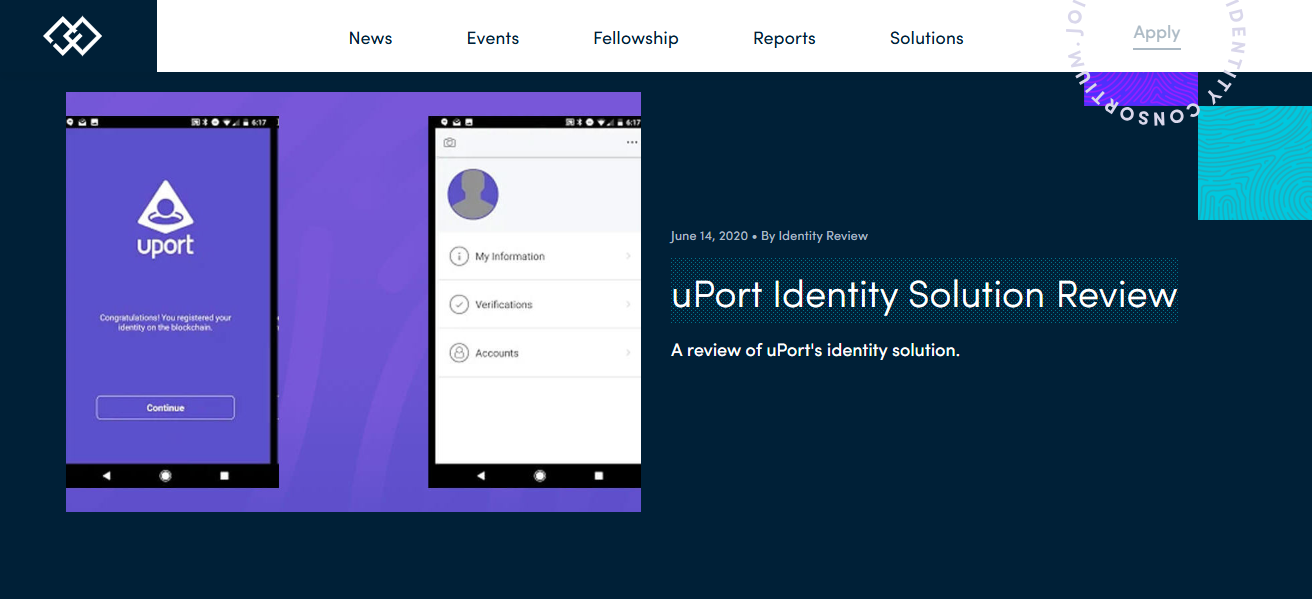
This segment highlights the strong competition such as Civic and SelfKey. However, uPort’s seamless integration and developer tools for Ethereum smart contracts make it the easiest to onboard customers with decentralized identity solutions.
| Feature | Description |
|---|---|
| Ethereum-based SSI | Supports self-sovereign identities for individuals, devices, and organizations. |
| Verifiable Credentials | Enables secure sharing for payments and access control. |
| Social Recovery | Identity recovery through trusted delegates. |
| Privacy-Preserving Design | Limits correlation of user activity across applications. |
| Interoperability | Uses DIDs and verifiable credentials across blockchains. |
| Secure Key Management | Reduces fraud risk via on-chain verification. |
3. Sovrin
In 2025, Sovrin will face a crucial moment as the Sovrin Foundation’s MainNet ledger will likely suspend operations on March 31, 2025.
Although Sovrin was a frontrunner in offering decentralized identity solutions as early as 2017, constant shortcomings in usage, regulations, and technology have made it financially unviable.
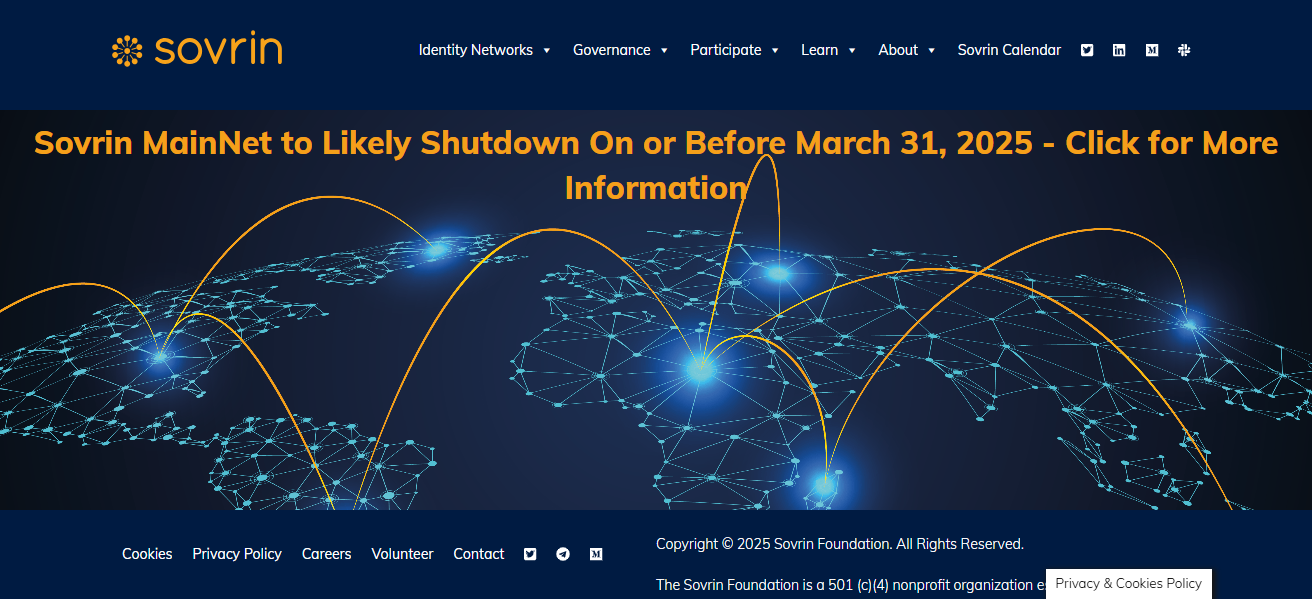
Sovrin’s model was meant to enable people to hold and manage veriable credentials without a central authority, thus eliminating the possibility of fraud.
The absence of community self-organization and new endosers (around 2024) weakened the model.
While Sovrin was also an important player in the identity space (estimated to reach USD 49.2 B by 2026), its shut down was an important lesson on the challenges surrounding governance and adoption of identity on the blockchain.
| Feature | Description |
|---|---|
| Public-Permissioned Blockchain | Designed for self-sovereign identities with high trust. |
| Decentralized Identifiers (DIDs) | Stored on ledger with selective disclosure via zero-knowledge proofs. |
| Off-Chain Credential Management | Minimizes exposure of sensitive data. |
| Governance by Stewards | Ensures ledger integrity and trust. |
| Reusable Verifiable Credentials | Ideal for banking and fintech compliance. |
| Secure Payment Enhancement | Reliable identity verification without centralized data storage. |
4. ShoCard
ShoCard stands out for its cryptographic hash-based identity verification system especially now that it has been acquired in 2025.
Since its founding in 2015, it has been raising investment rounds and most recently $5.75M from AME Cloud Ventures.
Its system allows the creation of digital identity cards done exclusively from a mobile app. ID documents are stored on a public blockchain system by owning a cryptographic hash.

Fraud is prevented through a combination of multi-key encryption, two-factor authentication, and out-of-band communications.
Despite its acquisition, ShoCard will always be remembered for the legacy it built in identity loss protection for blockchain-based systems.
As of 2025, ShoCard has more than 1,200 competitors. Given the degree of consolidation currently taking place, the identity verification market seems to have a singular focus driving its consolidation: the ability to scale and remain compliant.
| Feature | Description |
|---|---|
| Blockchain Hashing | Anchors identity proofs without storing full data. |
| Mobile Storage | Users retain control over personal information. |
| KYC Verification | Supports financial institutions for secure authentication. |
| Lightweight Integration | Easily integrates with multiple platforms and apps. |
| Privacy-Focused | Controlled sharing reduces fraud and ensures compliance. |
5. Bloom
In 2025, Bloom continues to be the only market player promoting the privacy-preserving digital identity.
Through BloomID, users are able to hold digital credentials that are secure, reusable, and can be verified once for data that can be used repeatedly across different applications and countries, which streamlines KYC and fraud prevention processes.
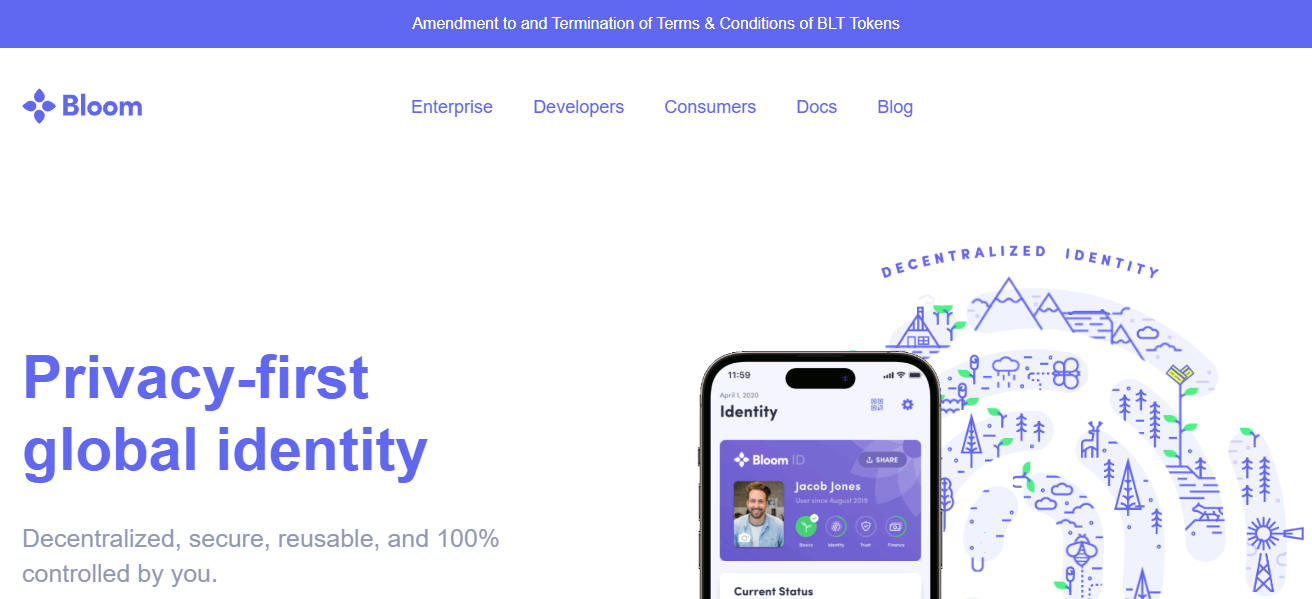
Bloom also offers breach monitoring and free credit score monitoring, indicating that it tries to serve these Kollien clients as well.
The market for blockchain identity management was worth $5.88 billion in 2025 and is expected to expand to $331.03 billion by 2033 at a CAGR of 65.53%. With growing interest in user-controlled identity, Bloom is poised to lead the market.
| Feature | Description |
|---|---|
| Decentralized Credit Scoring | Securely shares personal data with lenders and financial services. |
| Tamper-Proof Blockchain | Ensures data integrity and privacy. |
| User Ownership of Identity | Permissions granted selectively to service providers. |
| Verifiable Credentials | Reduce repeated KYC and prevent fraud. |
| Reputation & Credit Data | Enables privacy-preserving risk assessment. |
| Efficient Payments | Supports secure, compliant financial transactions. |
6. SelfKey
SelfKey (KEY) is an identity blockchain platform that provides KYC processes. Still, as of 2025, analysts Note its challenges in gaining adoption and visibility in an increasingly competitive market in the likes of Civic and Sovrin.
After once bearing the expectations of a market leader in self-sovereign identity, SelfKey is currently losing that market position.
Nevertheless, it maintains an active blockchain presence, and there are market forecasts indicating that it will experience a rebound in the range of 2025 to 2030 within the next 5 years.
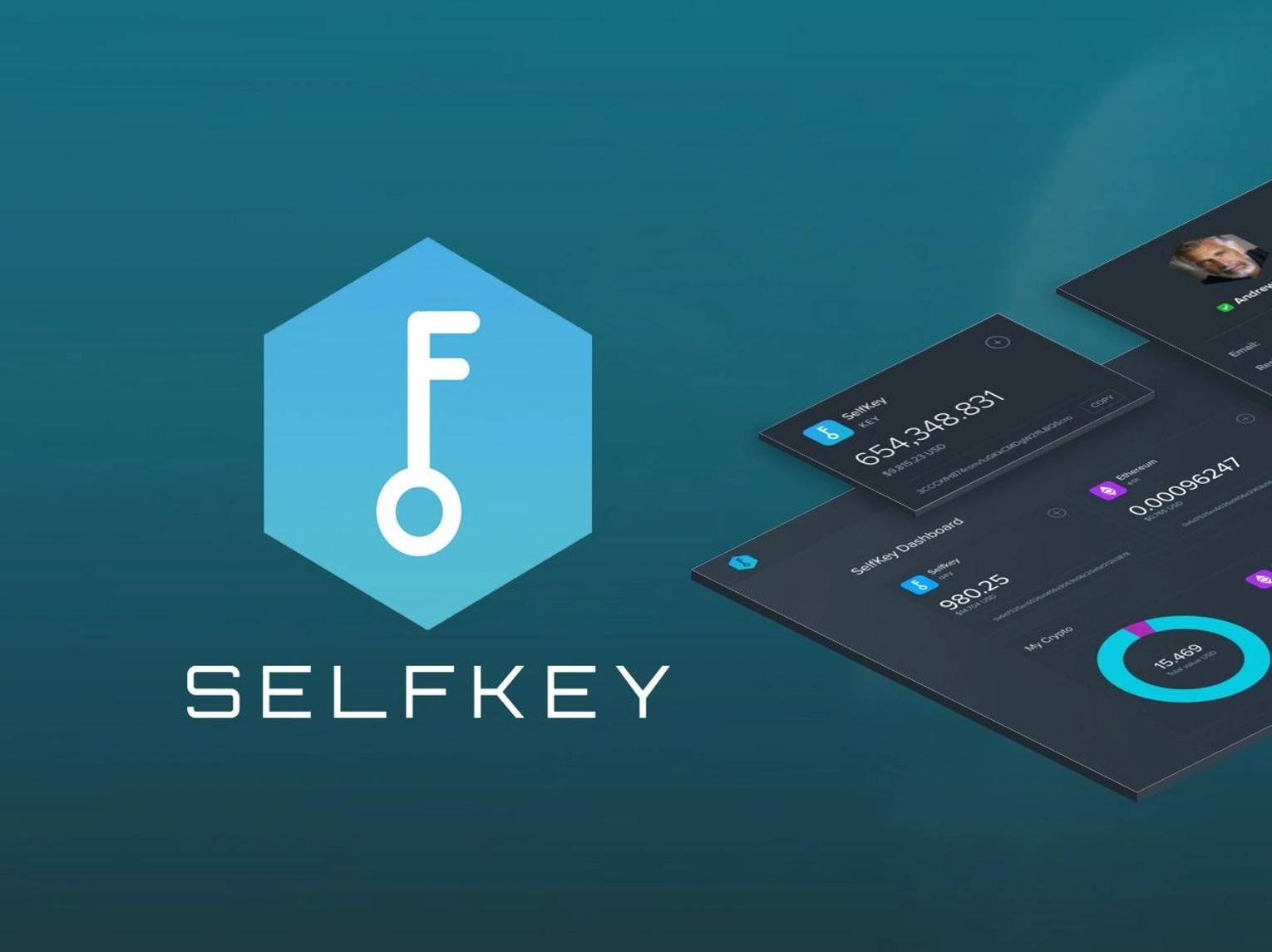
Being able to provide secure management of self-sovereign and organizational identity data is a key strength of SelfKey
However, SelfKey’s indistinctness in a saturated market is a worrying indicator of SelfKey’s ability to survive in the long term.
Having said that, SelfKey’s is still active participant in the decentralized self-sovereign identity ecosystem.
| Feature | Description |
|---|---|
| Self-Sovereign Identity | Full user control over digital identities. |
| Portable Identity Wallet | Stores verifiable credentials for secure sharing. |
| KYC Marketplace | One-time verification for multiple services. |
| Privacy & Consent | Sensitive data is never exposed without authorization. |
| Reusable Identity Proofs | Improves efficiency and trust in payments. |
| Crypto & Traditional Finance | Supports secure transactions across both sectors. |
7. Ontology (ONT ID)
Ontology added more detail to its 2025 vision, and central to that is ONT ID, the key building block of Web3.
The vision focuses on privacy, decentralization, and interoperability. The utilization of ONT ID provides secure communication, health care, gaming, and AI marketplaces.
In the vision, Ontology consolidates ONTO Wallet and Orange Protocol to optimize cross-chain liquidity and staking.
The decentralized ID solutions Ontology provides are in demand and ONT crypto is a key asset in Web3.
Ontology is a frontrunner in data ownership and reputation management by marrying identity to use cases and allowing people and organizations to be in charge of their identity in a more digital world.
| Feature | Description |
|---|---|
| W3C-Compliant DIDs | Decentralized identifiers for identity verification. |
| Selective Disclosure | Zero-knowledge proofs for privacy-preserving sharing. |
| Cross-Blockchain Interoperability | Can operate across multiple financial applications. |
| Scalable Design | Supports large user bases and enterprise use. |
| Verifiable Credentials | Reduce fraud and simplify onboarding. |
| Secure Payments | Enables reusable identity proofs for crypto and traditional services. |
8. KILT Protocol
KILT Protocol’s vision in 2025 is to provide new Web 3 tool set like Sporran 2.0, Clans, and KILT Pay to redefine the decentralized identity paradigm.
It enables the issuance of decentralized identifiers (DIDs) and self-sovereign verifiable credentials to enterprises, governments and citizens.
KILT’s compatibility with Ethereum and EVM-based chains like Base, Arbitrum, Optimism, and Polygon makes its reach even wider, and KILT’s SDK solutions and libraries for Solidity enable ease of adoption by developers.
Special features include Proof of Personhood and media verification, tackling the challenges of misinformation and unethical AI use.
In 2025 KILT expects to integrate decentralized identity with compliance and AI, so KILT can serve as a scalable identity layer for the decentralized web.
| Feature | Description |
|---|---|
| Verifiable Credentials | Identity attestations presented without exposing additional info. |
| Revocable Credentials | Privacy-preserving and compliant with regulations. |
| Polkadot/Substrate Based | Scalable and interoperable across networks. |
| Secure Payments & Transactions | Reduces fraud risk and supports fintech applications. |
| Reusable Decentralized Proofs | Streamlines onboarding and identity verification. |
9. Dock
Dock has been a frontrunner in decentralized identity with verifiable credential solutions since 2017. In 2025, Dock hopes to improve client onboarding, data security, and interoperability.
A significant achievement was the token merger with cheqd in 2024, linking Dock’s credential issuance to cheqd’s payment systems.
This partnership enhances Dock’s Certs platform, allowing identity solution providers to profit from the verifiable credentials.
Dock’s in decentralized identity helps and connects them with enterprises as a compliant and privacy-respecting collaborator.
Dock keeps advancing to respond to the rising demand for digital identity and to help users securely control their digital identity and engage from one place in a highly fragmented digital world.
| Feature | Description |
|---|---|
| Decentralized Identity Infrastructure | Issue and verify verifiable credentials securely. |
| User-Controlled Credentials | Share data without exposing sensitive information. |
| Credential Revocation | Supports compliance workflows. |
| Enterprise Integration | Suitable for payment processors and financial institutions. |
| Blockchain Verification | Ensures trust, privacy, and efficiency. |
| Fraud Prevention | Simplifies regulatory compliance and secure transactions. |
10. Blockpass
Blockpass released On-Chain KYC® 2.0 in October 2025, a first in the blockchain world for blockchain identity and for privacy- preserving attestations.
Blockpass has created a reusable and crypto-native KYC/AML solution that significantly lowers the cost of onboarding and streamlines compliance while offering bot and fraud protection.
Blockpass has also integrated with Binance’s BNB Chain via the BNB Attestation Service (BAS), allowing for digital and verifiable credentials in various decentralized applications.
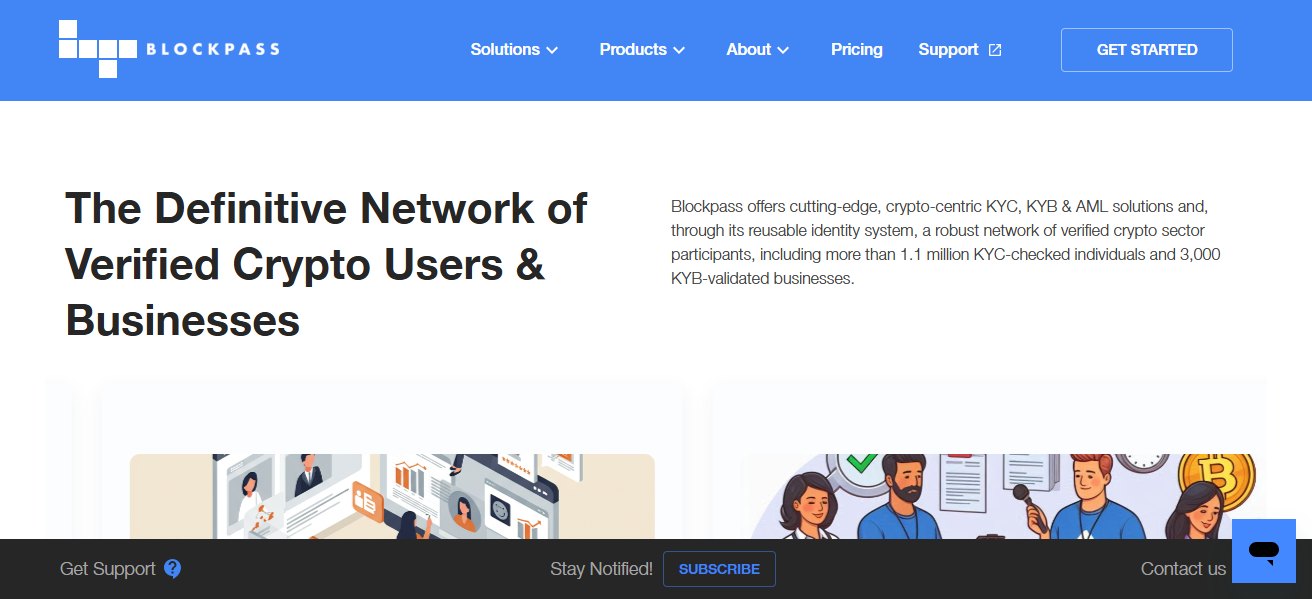
As crypto becomes more widely accepted, Blockpass is making himself a customizable compliance entity and is even offering companies quick-launch free samples.
Blockpass had started focusing on reusable identities and attestations and is already offering critical foundational infrastructure for Web3.
Available attributes and attestations are and will remain core for the increasing privacy, scaling, and regulatory flexibility required in 2025.
| Feature | Description |
|---|---|
| Reusable KYC/AML Credentials | Verified once, reused across multiple services. |
| Regulatory Compliance | Supports exchanges, fintech, and payment providers. |
| Tamper-Proof Storage | Ensures secure and reliable identity verification. |
| Reduced Onboarding Friction | Minimizes repetitive KYC checks. |
| Controlled Data Sharing | Streamlines secure payment processes. |
| Blockchain-Based | Enhances security, prevents fraud, and builds trust. |
Conclusion
To sum up, Civic, uPort, Sovrin, and other blockchain identity solutions facilitate secure, privacy-protecting, and customer-controlled verification for payments
These systems mitigate fraud, facilitate KYC/AML compliance, and support easy online transactions through the use of decentralised identifiers
Verifiable credentials, and zero-knowledge proofs. They supply individuals and entities with trust, efficiency, and interoperability in their financial systems.
FAQ
It is a decentralized system allowing users to manage and verify digital identities securely using blockchain technology.
They enhance security, prevent fraud, and ensure compliance with KYC/AML regulations.
SSI lets users fully control their personal data without relying on central authorities.
Civic uses local data storage, blockchain attestations, and biometric verification for trusted transactions.
Cryptographically secured proofs of identity that can be shared selectively without exposing full personal data.