In this article, I will talk about the Best ChainSafe Alternatives for Web3 Gaming. I will compare platforms that offer powerful blockchain infrastructure, gaming tools, developer resources, and scalable Web3 solutions.
We will examine their key features, benefits, development capabilities, and gaming-specific technologies to help developers and gaming projects find the right alternatives for building secure, scalable, and engaging blockchain-powered gaming experiences.
How We Selected the Best ChainSafe Alternatives for Web3 Gaming
Blockchain Performance – We evaluate transaction speed, scalability, reliability, and network performance for gaming applications.
Gaming Infrastructure — We evaluate tools for game development, backend systems, wallets, NFTs and integrations.
Developer Experience — We examine SDK quality, documentation, APIs, integrations, and overall dev simplicity.
Player Experience — We value platforms with simple onboarding, smooth gameplay, wallets, and accessible Web3 experiences.
Security and Reliability — We look at infrastructure security, network stability, smart contract support, and operational reliability.
Ecosystem and Growth — We look at developer adoption, gaming partnerships, community strength, ecosystem activity and scalability.
Key Points & Best ChainSafe Alternatives for Web3 Gaming
| Platform | Web3 Gaming Infrastructure | Key Strength | Best For |
|---|---|---|---|
| Immutable (IMX) | Gaming blockchain offering scalable infrastructure, NFTs, marketplaces, and developer-focused Web3 gaming tools. | Scalable gaming ecosystem | Studios needing blockchain infrastructure, NFTs, and player-friendly gaming experiences. |
| Beamable Network | Decentralized backend infrastructure helping developers build, operate, and scale multiplayer blockchain games. | Multiplayer backend | Developers requiring scalable backend systems and decentralized multiplayer game infrastructure. |
| Ankr SDK | Blockchain development toolkit providing RPC access, APIs, wallets, and essential Web3 connectivity services. | Blockchain connectivity | Game developers integrating blockchain functionality without building infrastructure from scratch themselves. |
| MUD | Ethereum framework enabling developers to build customizable fully onchain games and applications. | Fully onchain development | Developers creating persistent, composable, blockchain-native gaming worlds and experiences. |
| Paima Engine | Framework for creating Web3 games using blockchain data, state machines, and traditional engines. | Blockchain game logic | Studios combining conventional game engines with blockchain-based mechanics and progression. |
| Cartridge | Gaming infrastructure providing wallets, identity, accounts, and seamless blockchain experiences for players. | Player experience | Developers prioritizing easy onboarding, wallets, accounts, and seamless Web3 gameplay experiences. |
| Redbrick | Web3 gaming ecosystem combining game development, digital assets, communities, and blockchain-powered experiences. | Gaming ecosystem | Developers seeking integrated Web3 gaming, digital ownership, and community-building capabilities. |
| Yooldo | Web3 gaming platform supporting blockchain games, digital ownership, player communities, and sustainable economies. | Game publishing | Projects seeking Web3 game distribution, communities, digital assets, and ecosystem support. |
| Elixir Games | Web3 gaming distribution platform connecting players with blockchain games, rewards, NFTs, and communities. | Game distribution | Studios wanting distribution, discovery, player acquisition, and Web3 gaming ecosystem exposure. |
| X World Games | Blockchain gaming ecosystem offering multiplayer experiences, NFTs, digital assets, and decentralized gaming economies. | Multiplayer ecosystem | Players and developers interested in blockchain-based multiplayer games and digital economies. |
10 Best ChainSafe Alternatives for Web3 Gaming
1. Immutable (IMX)
Immutable (IMX) is one of the strongest ChainSafe alternatives for Web3 gaming studios looking to focus on scalable blockchain integration. What makes the On-Chain Support Comparison unique is its gaming-oriented Layer-2 infrastructure that enables NFT ownership, marketplace capabilities, and asset trading—all without players needing to master the intricacies of blockchain operations.

Support for game engines: Immutable has native SDKs for Unity and Unreal, which makes it easier for traditional game developers to plug in. In the eyes of Individual Review, it is perfect for AAA and NFT-driven games that require scalability and user onboarding tools.
Best for Big Studios Looking for Production-Ready Infrastructure. Future Readiness Score: 9.5/10 Strong pace of ecosystem growth and gaming-focused blockchain technology.
Features of Immutable (IMX)
| Feature | Explanation |
|---|---|
| Gaming-Focused Blockchain | Built specifically to support scalable blockchain gaming and digital ownership. |
| NFT Infrastructure | Provides tools for creating, minting, trading, and managing gaming NFTs. |
| Developer Tools | Offers APIs, SDKs, and infrastructure for integrating Web3 gaming functionality. |
| Scalability | Designed to support high-volume gaming transactions with lower blockchain costs. |
2. Beamable Network
Beamable Network is a combination of traditional game backend services and Web3 functionality, and is a real-world alternative to ChainSafe. Beamable supports Wallet Authentication, NFT Integration, Intelligent Contracts, and Onchain/Offchain Asset Interoperability in terms of Onchain Support Comparison.

Game Engine Support . SDKs for Unity and Unreal allow developers to launch multiplayer games without the need to build backend infrastructure from the ground up. Beamable is particularly valuable in an Individual Review for studios that need LiveOps, leaderboards, commerce and blockchain connectivity all in one place.
Beamable is well suited for multiplayer and live-service games. Future Readiness Score: 8.8/10 for its growing Web3 ecosystem and scalable decentralized infrastructure.
Features of Beamable Network
| Feature | Explanation |
|---|---|
| Game Backend | Provides backend infrastructure for building and managing online multiplayer games. |
| Multiplayer Support | Helps developers create connected multiplayer experiences with scalable backend services. |
| Web3 Integration | Enables blockchain functionality to be incorporated into traditional gaming environments. |
| Live Operations | Supports ongoing game management, player services, and evolving gaming experiences. |
3. Ankr SDK
Ankr SDK is a Web3 gaming developer kit that makes it easy to integrate with a range of blockchains. On-Chain Support Comparison Wallet connectivity Token support NFT functionality Staking interactions Access to decentralized infrastructure Game Engine Support Ankr supports Unity and Unreal Engine, which allows developers to add blockchain capabilities to existing games.
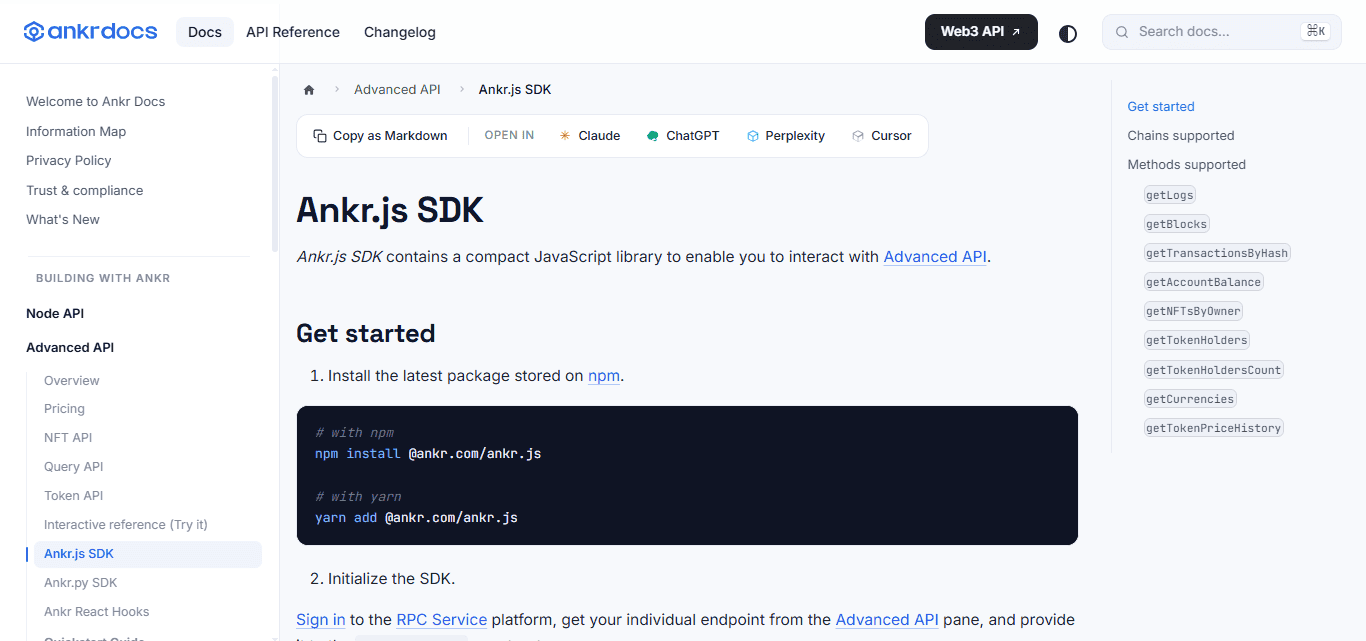
From an Individual Review perspective, Ankr is the infrastructure layer of game connectivity, not the full gaming ecosystems. Ankr is the one to go with if your priority is multi-chain access and blockchain infrastructure. Future Readiness Score: 8.7/10 – thanks to wide chain support, RPC capabilities & developer-centric architecture.
Features of Ankr SDK
| Feature | Explanation |
|---|---|
| Blockchain Connectivity | Provides reliable RPC infrastructure for connecting games with supported blockchains. |
| Developer APIs | Offers APIs that simplify access to blockchain data and functionality. |
| Multi-Chain Support | Helps developers connect applications across multiple blockchain networks and ecosystems. |
| Web3 Integration | Simplifies implementation of blockchain features without building infrastructure independently. |
4. MUD
MUD is a leading framework for fully on-chain apps and autonomous worlds, which is a big differentiator from traditional Web3 gaming SDKs. On the On-Chain Support Comparison, MUD brings all the game logic and state directly on the blockchain networks, not just assets on-chain.
Game Engine Support: It works primarily with web-based and custom interfaces through its development stack rather than mainstream game engines. Individual Review MUD works well for autonomous worlds, strategy games and experimental blockchain-native experiences.
Which alternative do you opt for? If you are a developer building a fully decentralized game, MUD should be your first choice. Future Readiness Score: 9.2 / 10 because autonomous worlds are a big future trend in Web3 gaming infrastructure.
Features of MUD
| Feature | Explanation |
|---|---|
| Onchain Development | Enables developers to create game logic and state directly on blockchain networks. |
| Ethereum Framework | Provides development infrastructure for building customizable Ethereum-based onchain applications. |
| Composable Worlds | Supports interconnected game systems where different applications can interact with shared states. |
| Game Logic | Helps developers create programmable mechanics, rules, assets, and persistent gaming environments. |
5. Paima Engine
Paima Engine allows traditional game developers to build blockchain games using familiar Web2 development skills. On-Chain Support Comparison: Trustless game logic, sovereign layer-2 architectures, Stateful NFTs, and cross-chain experiences. Regarding Game Engine Support, Paima is compatible with well-known development environments such as TypeScript-based stacks and supports Unity-style workflows.
The Individual Review highlights that it can be deployed once and target multiple blockchain ecosystems, which significantly reduces development complexity.
Which Option Should You Choose? Paima is best suited for developers moving from Web2 to Web3 gaming. Future Readiness Score: 8.9/10 for its cross-chain architecture and scalable application-specific focus on gaming environments.
Features of Paima Engine
| Feature | Explanation |
|---|---|
| Blockchain Data | Allows games to use blockchain activity as inputs for application logic. |
| State Machines | Provides programmable state-machine architecture for developing blockchain-powered gaming mechanics. |
| Game Engine Integration | Connects Web3 functionality with conventional game engines and development workflows. |
| Web3 Game Development | Simplifies building decentralized games without requiring every component to run fully onchain. |
6. Cartridge
Cartridge is a dedicated infrastructure stack for fully on-chain gaming ecosystems. The On-Chain Support Comparison : Blockchain-native game development requires the Dojo engine, embedded wallets, execution layers, and verifiable randomness services that Cartridge provides.
Game Engine Support is mostly focused on Starknet-based gaming environments, not typical Unity or Unreal development. In an Individual Review, Cartridge is a standout for letting developers build autonomous worlds with game logic running transparently on-chain.

Which one to choose? Cartridge is the best choice for teams building fully on-chain games powered by Starknet. Future Readiness Score: 9.0/10 with a strong emphasis on provable gameplay, account abstraction and scalable on-chain ecosystems.
Features of Cartridge
| Feature | Explanation |
|---|---|
| Gaming Wallets | Provides wallet infrastructure designed to make blockchain gaming more accessible. |
| Player Identity | Supports player identity and account systems for connected gaming experiences. |
| Account Infrastructure | Helps developers manage blockchain accounts and interactions within gaming applications. |
| Player Experience | Focuses on reducing friction between players and blockchain-powered game features. |
7. Redbrick
Instead of focusing on pure blockchain infrastructure, Redbrick takes a creator-economy approach to Web3 gaming. On-Chain Support Comparison: It combines blockchain rewards, token economies, NFTs and creator monetization systems into a cloud-native metaverse platform.
Redbrick provides visual development tools, AI-driven creation systems and drag-and-drop functionality for creators with little programming knowledge in Game Engine Support. Individual Review is very interested in user generated material and metaverse experiences.

Which option should you choose? Redbrick is the perfect platform for creators building community-powered gaming experiences. Future Readiness Score: 8.5/10 as AI-assisted content creation and creator economies are key trends in Web3 gaming.
Features of Redbrick
| Feature | Explanation |
|---|---|
| Web3 Gaming | Provides an ecosystem focused on blockchain-powered gaming experiences and digital ownership. |
| Digital Assets | Supports blockchain-based ownership of gaming assets and virtual items. |
| Gaming Communities | Connects gaming experiences with communities and social participation around Web3 projects. |
| Developer Ecosystem | Supports projects developing and expanding blockchain-based gaming experiences. |
8. Yooldo
Yooldo is a Web3 gaming platform that aims to onboard traditional gamers into blockchain ecosystems. On-Chain Support Comparison provides NFT ownership, multi-chain support, digital asset management, and token-based rewards along with a user-friendly experience.
Yooldo focuses on platform access and integration rather than building dedicated development engines for game engine support. The platform is unique in its Individual Review by combining Web2 and Web3 gaming with easy onboarding and competitive gaming features.

Which Alternative Should You Take? Yooldo works best for projects that want to get the average player involved. Future Readiness Score: 8.4/10 on its multi-chain support, esports focus and accessibility-first philosophy.
Features of Yooldo
| Feature | Explanation |
|---|---|
| Web3 Games | Provides an ecosystem for discovering and participating in blockchain-powered gaming experiences. |
| Digital Ownership | Enables gaming ecosystems to incorporate blockchain-based ownership and digital assets. |
| Player Communities | Supports communities surrounding Web3 games, players, and gaming ecosystems. |
| Game Economies | Enables blockchain gaming projects to develop digital economies around their experiences. |
9. Elixir Games
Elixir Games is not a classic SDK provider, but a Web3 gaming distribution and discovery platform. In the On-Chain Support Comparison, it supports NFT ownership, wallet integration, token launches, gaming marketplaces and Web3 monetization tools.
For Game Engine Support While Elixir does not enable developers to build games, it does enable them to distribute them. It offers developer dashboards and launcher integration. Great platform to help game studios get users and manage blockchain gaming ecosystems – Individual Review.

Which Alternative Is Right For Me? Elixir is the best option for distribution, publishing and acquiring players. Future Readiness Score: 8.8/10 The industry still faces major challenges with Web3 game discovery and distribution.
Features of Elixir Games
| Feature | Explanation |
|---|---|
| Game Distribution | Helps developers distribute and promote blockchain games to broader gaming audiences. |
| Game Discovery | Provides players with access to discover different Web3 gaming experiences. |
| Digital Rewards | Supports blockchain-based rewards, assets, and incentives within gaming ecosystems. |
| Gaming Community | Connects players, developers, and Web3 gaming projects through an integrated ecosystem. |
10. X World Games
X World Games is a complete Web3 gaming ecosystem that includes NFTs, GameFi, marketplaces and gaming communities. On-Chain Support Comparison: Cross-game assets, NFT ownership, token economy, DAO governance, multi-chain integration supported. Game Engine Support is not about giving out development specific engines but rather about ecosystem participation.

An Individual Review calls out its expanding network of games, NFT infrastructure, and blockchain-enabled community engagement tools. What Alternative Should You Select? Projects that want ecosystem exposure and GameFi functionality are a good fit for X World Games. Future Readiness Score: 8.7/10 as interoperability, AI-assisted services, and cross-game assets become increasingly important in Web3 gaming.
Features of X World Games
| Feature | Explanation |
|---|---|
| Multiplayer Gaming | Provides blockchain-based multiplayer experiences involving players across connected gaming environments. |
| NFT Assets | Incorporates NFTs and blockchain-based digital assets into gaming experiences. |
| Digital Economy | Supports decentralized economic systems involving digital assets and player participation. |
| Gaming Ecosystem | Combines blockchain technology, gaming experiences, digital assets, and community participation. |
Conclusion
Conclusion The selection of the best ChainSafe alternatives for Web3 gaming depends on your project’s infrastructure, scalability, development needs, and player experience. Other platforms that take a different approach to blockchain gaming include Immutable, Beamable, Ankr SDK, MUD,
Paima Engine and Cartridge. Meanwhile, Redbrick, Yooldo, Elixir Games and X World Games are offering wider gaming ecosystems to assist developers in selecting solutions that align with their Web3 gaming ambitions.
FAQ
What are the best ChainSafe alternatives for Web3 gaming?
Immutable, Beamable, Ankr SDK, MUD, Paima Engine, Cartridge, and Elixir Games.
Which ChainSafe alternative is best for scalable Web3 gaming?
Immutable provides scalable blockchain infrastructure designed specifically for developers building Web3 gaming experiences.
Which alternative is best for fully onchain games?
MUD is well-suited for developers creating customizable, fully onchain Ethereum-based gaming experiences.
Which platform offers strong blockchain development infrastructure?
Ankr SDK provides blockchain connectivity, APIs, RPC services, and developer-focused Web3 infrastructure.