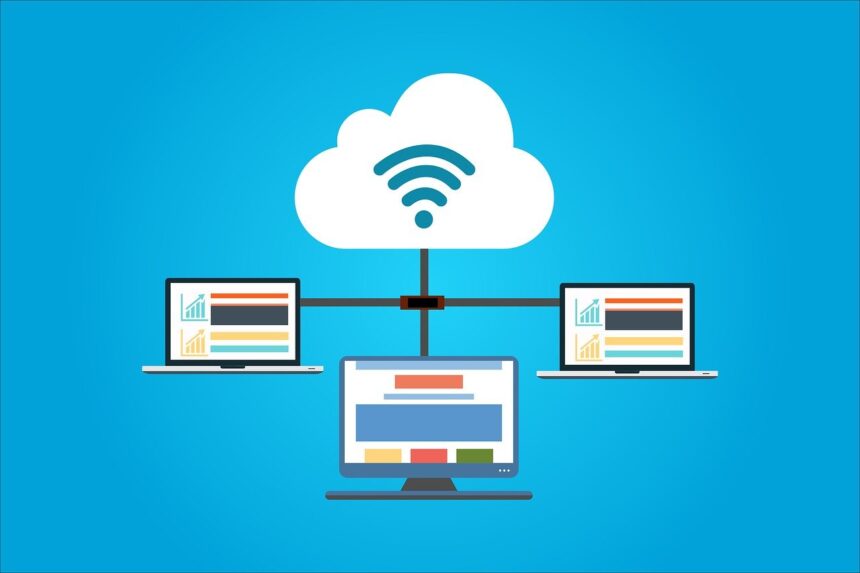
The purpose of this article is to talk about the finest Cloud Security Solutions that assist companies in safeguarding their cloud-based data, applications, and infrastructures from evolving cyber threats.
- Key Points & Best Cloud Security Solutions
- 10 Best Cloud Security Solutions
- 1. Palo Alto Networks Prisma Cloud
- 2. Check Point CloudGuard
- 3. Fortinet FortiCWP
- 4. Trend Micro Cloud One
- 5. SentinelOne Singularity Cloud
- 6. McAfee MVISION Cloud
- 7. Cisco Cloudlock
- 8. Sophos Cloud Optix
- 9. IBM Security Cloud Pak
- 10. Zscaler Cloud Security
- How To Choose Best Cloud Security Solutions
- Conclsuion
- FAQ
With the increasing use of the cloud, the right tools to ensure compliance, avoid breaches, and ensure visibility in multi-cloud and hybrid environments is a necessity.
Key Points & Best Cloud Security Solutions
| Cloud Security Solution | Key Point |
|---|---|
| Palo Alto Networks Prisma Cloud | Comprehensive workload protection across multi-cloud environments |
| Check Point CloudGuard | Advanced threat prevention with unified security management |
| Fortinet FortiCWP | Integrated compliance monitoring for regulatory frameworks |
| Trend Micro Cloud One | Automated vulnerability scanning for containers and serverless apps |
| SentinelOne Singularity Cloud | AI-driven detection against evolving cloud-native attacks |
| McAfee MVISION Cloud | Data loss prevention with strong encryption and access controls |
| Cisco Cloudlock | Identity and access governance for SaaS and cloud platforms |
| Sophos Cloud Optix | Continuous posture management with automated remediation |
| IBM Security Cloud Pak | Hybrid cloud integration with centralized visibility |
| Zscaler Cloud Security | Zero-trust architecture enabling secure remote access |
10 Best Cloud Security Solutions
1. Palo Alto Networks Prisma Cloud
Prisma Cloud is a full-lifecycle protection cloud native security platform (CNSP) offered by Palo Alto Networks that offers a full spectrum of protection across cloud environments. It unifies ntegration of vulnerabilities, compliance, defense, and micro-segmentation.
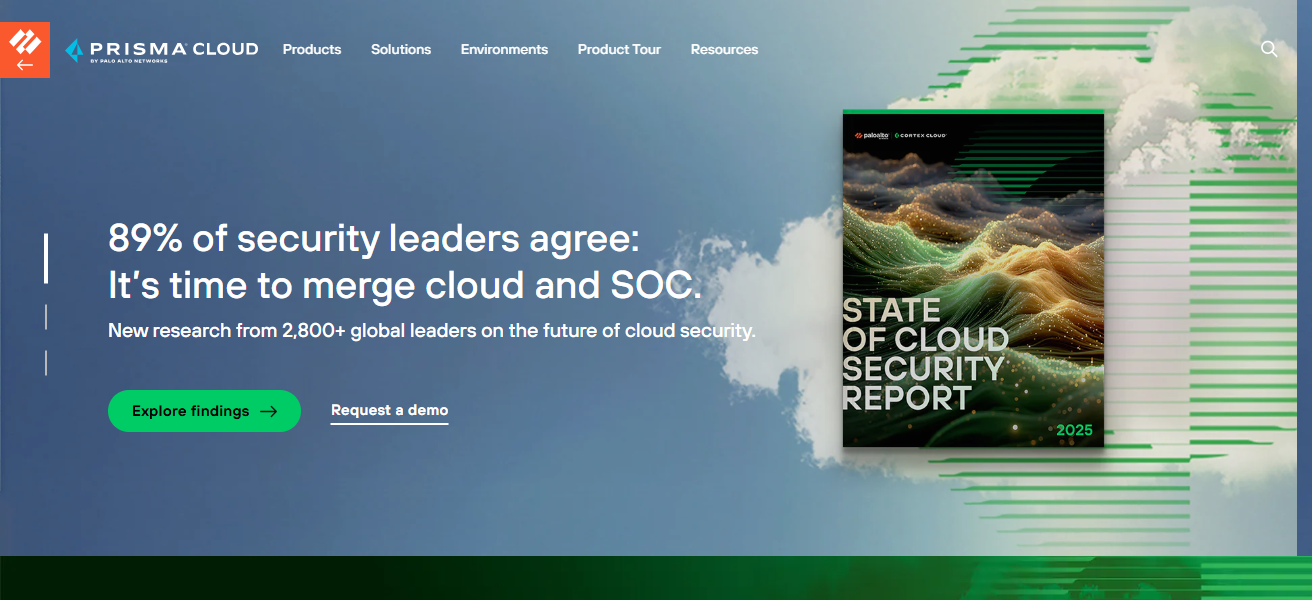
Prisma Cloud supports AWS, Azure, and Google Cloud, giving security teams visibility into their workloads, containers, and serverless functions.
It uses automation and machine learning to identify risky behavior and drift. It enjoys a wealth of policy Prisma Cloud to maintain compliance and is able to protect development velocity gaps.
Features:
Completely cloud native security platform (CNSP): Safeguards cloud workloads, containers, serverless functions, and APIs across AWS, Azure, and Google Cloud.
Cloud Security Posture Management (CSPM): Persistent compliance observation and automated remediation for security misconfigurations.
Vulnerability & risk scanning: Assesses for shortcomings in images, hosts, and IaC templates during development and at runtime.
Identity-aware microsegmentation: Access is controlled, per user identity, and limits lateral movement within cloud networks.
| Pros | Cons |
|---|---|
| Comprehensive cloud-native security (CNSP) covering posture, workload, containers, and serverless. | Can be expensive for smaller teams due to breadth of features. |
| Strong compliance and governance capabilities across multi-cloud environments. | Steeper learning curve for beginners. |
| Deep visibility and automated threat detection. | Some advanced features require additional licensing. |
| Integrates well with DevOps and CI/CD workflows. | UI complexity can overwhelm new users. |
2. Check Point CloudGuard
Check Point CloudGuard is a Cloud computing platform focused on internet security which assists in protecting all cloud computing assets within an organization. Cloud Guard delivers automated posture management, threat intelligence, and runtime defense.
Provides deep situational awareness on the customers data i.e. misconfigurations, compliance violations, attack vectors, and assists in organizations to secure their cloud environments.
CloudGuard assists organizations to protect their environments and maintain the compliance needed. Cloud Guard has advanced features on integrated firewalls, micro segmentation and threat detection.
Their compliance certifications helps organizations to adopt hybrid and multi cloud. Their design helps organizations implement consistent compliance and breach protections at all points before damage to production workloads is incurred.
Features:
Automated posture management: Continuously reviews cloud environments to keep recommended configurations in place.
Threat prevention engines: Real-time attack prevention includes firewall, IPS, and anti-malware.
Multi-cloud visibility: Consolidated UI for AWS, Azure, Google Cloud, and hybrid.
Compliance automated reporting: Automatically generates audits and compliance frameworks such as PCI, HIPAA, and GDPR.
| Pros | Cons |
|---|---|
| Excellent threat prevention and firewalling across cloud services. | Costly for enterprise scale usage. |
| Automated cloud posture and compliance management. | Configuration and tuning can be complex. |
| Real-time visibility into attack paths and misconfigurations. | May require additional management tools for full coverage. |
| Scales well for hybrid and distributed clouds. | Reporting can be less intuitive. |
3. Fortinet FortiCWP
The Fortinet FortiCWP (Cloud Workload Protection) service provides a seamless defense for cloud workloads and infrastructure by merging threat visibility, compliance monitoring, threat response automation, and overall threat protection.
FortiCWP provides a greater level of integration than most of its competitors into public cloud services (AWS, Azure, Google Cloud) enabling security teams to identify and monitor misconfigurations, and threat changes in their cloud security posture in real-time.
FortiCWP’s analytic capabilities use machine-learning to detect and respond to cloud service anomalies and suspicious activities.
FortiCWP is also driven by automated response and orchestration, allowing greater security to cloud environments and enabling DevSecOps teams to carry out their functions without unnecessary barriers.
Features:
Cloud workload protection: Anomalies and threats are observed across hosts, apps, and workloads.
Real-time misconfiguration detection: Risky configurations are found and automated policy compliance is enforced.
Threat intelligence integration: Detection quality is enhanced by Fortinet’s threat feeds.
Automated fixing: Coordinates activities to resolve problems identified across multi-cloud settings.
| Pros | Cons |
|---|---|
| Strong workload protection with real-time detection. | Some features limited outside AWS/Azure/Google. |
| Automated response and compliance automation. | May require deep Fortinet ecosystem knowledge. |
| Good anomaly detection with machine learning. | Documentation sometimes lacking updates. |
| Integrates with broad Fortinet product suite. | UI can feel outdated compared to newer competitors. |
4. Trend Micro Cloud One
Trend Micro Cloud One (CM1) provides modular services covering workload, container, and cloud network protection through a Cloud Security Service (CSSP) framework. It is designed to protect applications through dev, deploy, and runtime phases.
Backed by host intrusion prevention, behavioral anomaly detection, and vulnerability scanning, Cloud One protects a customer’s servers, VMs, and containers. Early detection, compliance control and prevention of threats is a result of the powerful
Cloud Native Application Protection Platform (CNAPP) capabilities. Cloud One is designed to deliver security that is frictionless and does not interrupt development work while maintaining coordinated governance and automated security policy compliance across multi-cloud.
Features:
Security as separate modules: Combines workload, container, file storage, and network security as distinct modules.
Active protection: Recognizes and prevents illicit actions from occurring in operational environments.
Weakness detection: Understands deficiencies in operating systems, software, and container image files.
Monitoring cloud compliance: Provides automated compliance support and notifications.
| Pros | Cons |
|---|---|
| Modular design lets you pick only needed services. | Can become costly as you add modules. |
| Strong vulnerability scanning and workload protection. | Some capabilities overlap with existing tools. |
| Good container and runtime security. | Initial policy setup takes time. |
| Centralized management for multi-cloud environments. | Alert noise reported by some users. |
5. SentinelOne Singularity Cloud
Singularity Cloud offers self-governing protection and threat detection about cloud assets due to autonomous threat engagement and AI-enabled reaction. It uses minimal human input to evaluate adaptive behavior and machine learning to pinpoint risks across cloud-hosted domains.
Singularity Cloud offers visibility into operational activities and automation to defend against attacks and enforce controls without trust. It helps observe workload activities throughout developmental phases by interfacing with CI/CD production pipelines.
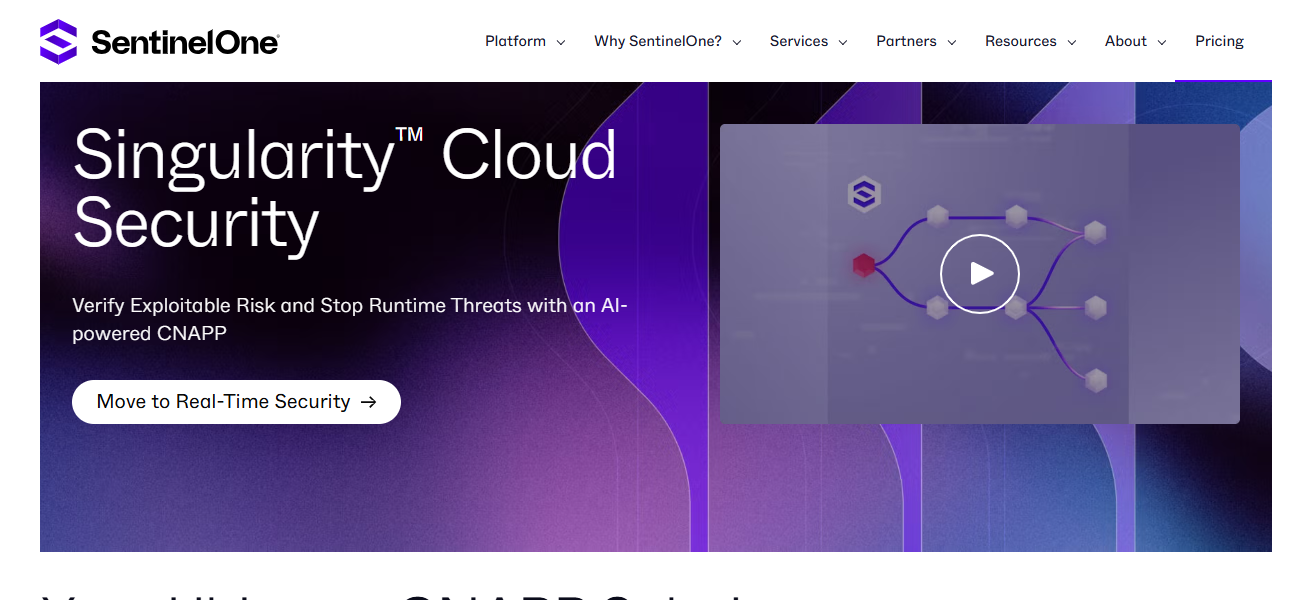
Without organizations shifting to a cloud-first practices, the agent-less and agent-based approach reconciles to multilayer support across various cloud security functions. This has without a doubt reduced alert lethargy and helped improve incident management.
Features:
Detection with AI: Applies artificial intelligence techniques to discover threats accurately.
Automated actions: Takes pre-defined actions such as quarantining and removing threats from affected systems.
Generalized agent/device telemetry: Integrates cloud and endpoint log information for enhanced context.
Collaboration with DevOps: Integrates within continuous integration and continuous delivery to apply security controls throughout development.
| Pros | Cons |
|---|---|
| AI-driven threat detection and autonomous remediation. | Less mature in pure cloud posture posture management. |
| Unified agentless and agent-based approaches. | Advanced features may increase pricing. |
| Close integration with endpoint and cloud security. | Learning curve for advanced analytics. |
| Strong behavior-based detection reduces false positives. | Cloud workload visibility not as deep as some competitors. |
6. McAfee MVISION Cloud
McAfee MVISION Cloud is a cloud access security broker (CASB) and cloud security platform designed to secure and manage compliance of data over SaaS, PaaS, and IaaS.
With MVISION Cloud, users gain deep data loss prevention (DLP) and threat protection, alongside mitigation and protective governance controls.
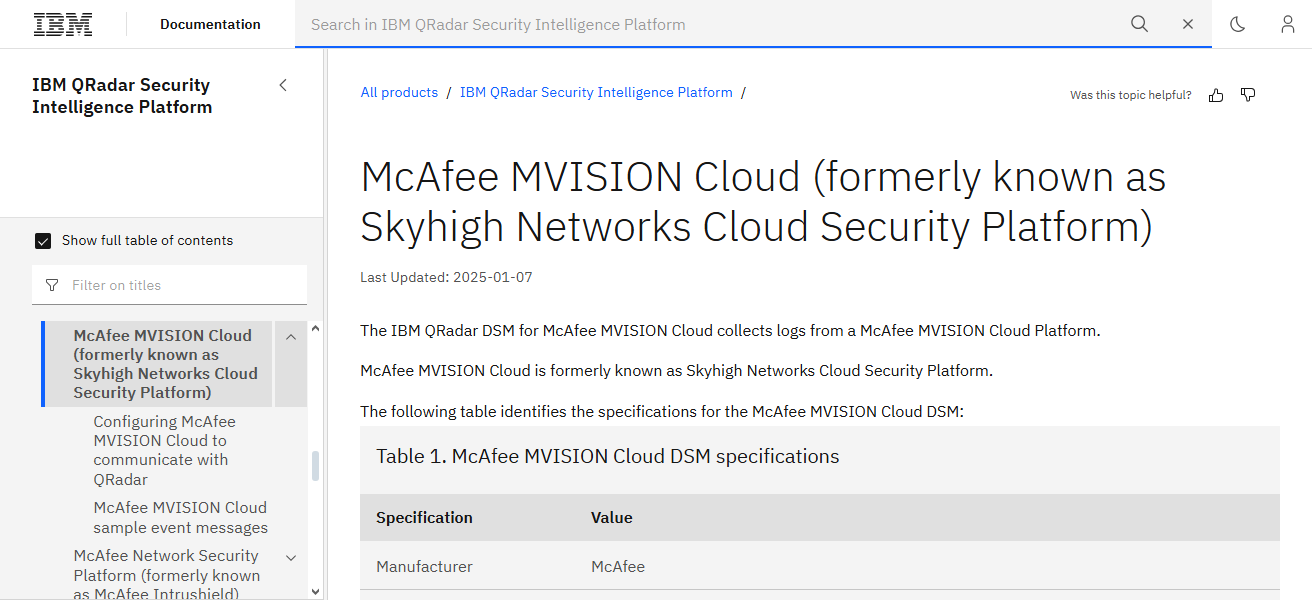
MVISION Cloud provides protection from unauthorized access and data exfiltration while also giving insight into shadow IT and risky users and enforcement of policy across corporate and personal devices.
With MVISION Cloud’s integrations with various cloud service, security posture will be maintained, and regulations will be met, increasing protection over data within a mutable cloud space.
Features:
CASB and data protection: Advanced data loss prevention for SaaS, PaaS, and IaaS service offerings.
User risk monitoring: Observes and controls risky actions and unauthorized access.
Shadow IT detection: Identifies and manages unsanctioned cloud applications.
Automated compliance: Assists with GDPR, HIPAA, SOX and other regulations using predefined controls.
| Pros | Cons |
|---|---|
| Excellent CASB capabilities with DLP and governance. | UI can be complex for new security teams. |
| Strong data loss prevention and user activity monitoring. | Advanced configuration options require expertise. |
| Visibility across SaaS, PaaS, and IaaS. | Occasionally performance lags reported. |
| Good compliance support for regulated industries. | Integration complexity with some cloud services. |
7. Cisco Cloudlock
Cisco Cloudlock is a cloud-based custodial access security broker and cloud security service provider focused on protecting SaaS applications, data, and user access.
It allows organizations to track and manage cloud security activities within Salesforce, Microsoft 365, Google Workspace, and other applications to mitigate and manage security risks.
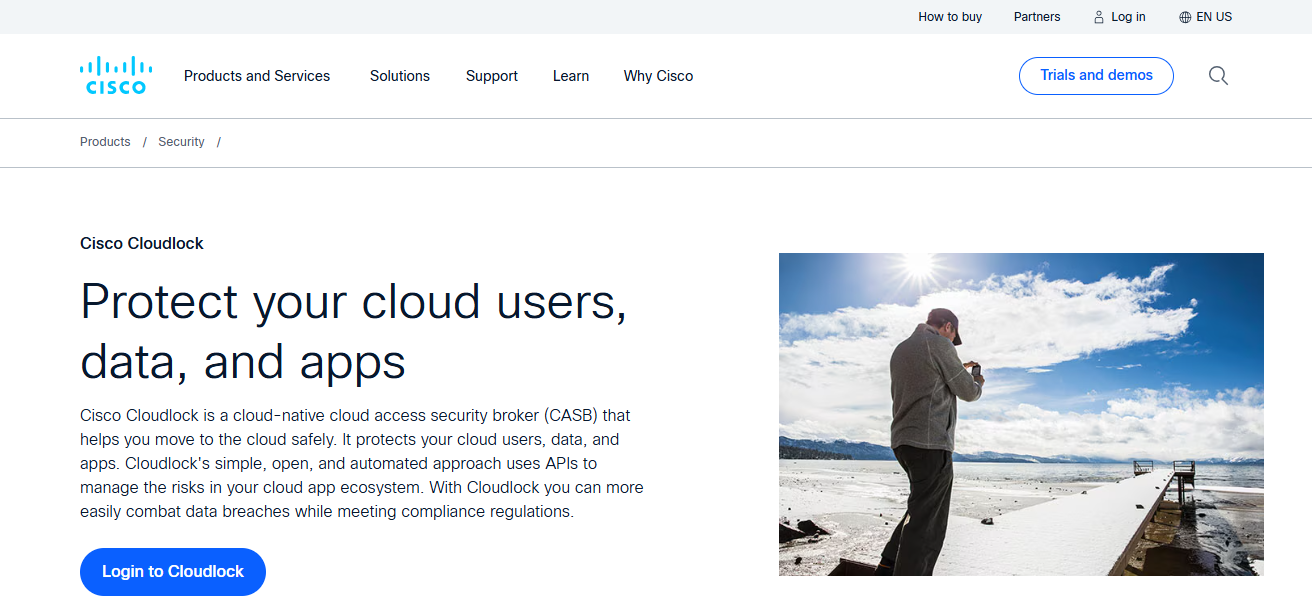
Cloudlock provides contextual risk analysis to recognize anomalous activities and/or account takeovers. There are fine-tuned risk configurations for data exfiltration, threat mitigation, and gap closure.
Cisco Cloudlock is tailored to large enterprises needing basic cloud security and risk mitigation, as it is agentless and provides easy deployment and API-based integrations.
Features:
API-based CASB: Safeguards SaaS applications without needing agent installation.
Threat detection: Finds compromised accounts and unsafe activities.
Data loss prevention: Keeps sensitive cloud data within the environment.
App governance: Oversees the access and OAuth applications linked to business accounts.
| Pros | Cons |
|---|---|
| Lightweight, API-based CASB — no agents required. | Limited workload runtime defense compared to others. |
| Rapid deployment for SaaS security. | Best suited for SaaS; less strong in IaaS security. |
| Strong threat detection and behavior analytics. | Fewer advanced network security features. |
| Good data loss prevention and compliance monitoring. | Some customers report manual tuning needed. |
8. Sophos Cloud Optix
Sophos Cloud Optix utilizes AI-driven analytics and automated response actions to deliver security and compliance monitoring for the cloud.
It maintains continuous visibility into workloads, network setups, and user actions across AWS, Azure, and Google Cloud.
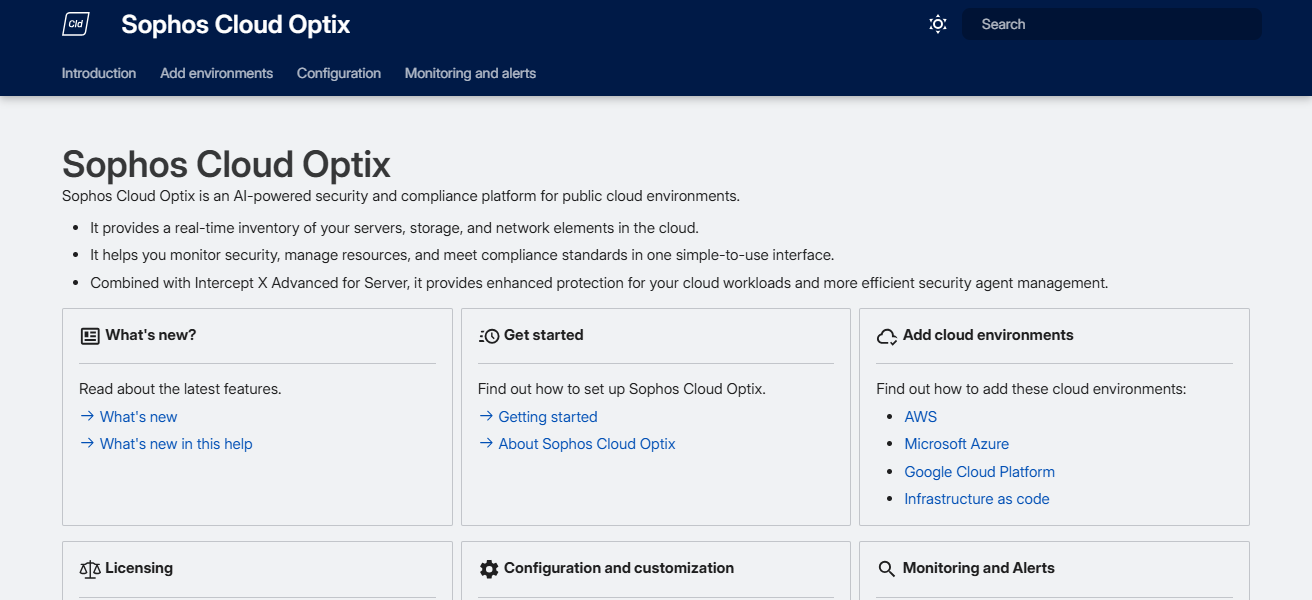
Cloud Optix detects security gaps, compliance issues, and misconfigurations, offering actionable guidance to address these issues and respond effectively.
It proactively identifies potentially harmful activities to prevent breaches. With easy-to-use dashboards and guidance, Cloud Optix minimizes cloud security challenges for security teams and DevOps, expediting the processes of risk and governance.
Features:
AI-powered cloud visibility: Charts security risk mapped infrastructure.
Configuration & compliance checks: Notifications for violations of configuration and industry standards.
Automated remediation guidance: Provides resolution instructions for issues.
Integration with Sophos Firewalls: Merges firewall information with cloud posture data.
| Pros | Cons |
|---|---|
| AI-powered visibility and misconfiguration detection. | Not as feature-rich for large enterprise use cases. |
| Automated guidance for remediation. | Can trigger false positives if not tuned. |
| Simple dashboard and usability. | Limited runtime threat protection features. |
| Supports major cloud providers. | Advanced compliance automation can lag behind peers. |
9. IBM Security Cloud Pak
The IBM Security Cloud Pak for Security is an enterprise-grade platform that integrates security tools to detect, investigate, and respond to security events across hybrid cloud environments.
It consolidates and analyzes diverse security data, including on-prem and public cloud, for investigative analysts to detect security threats more efficiently.
Cloud Pak also automates and orchestrates incident response workflow to simplify and streamline response activity.
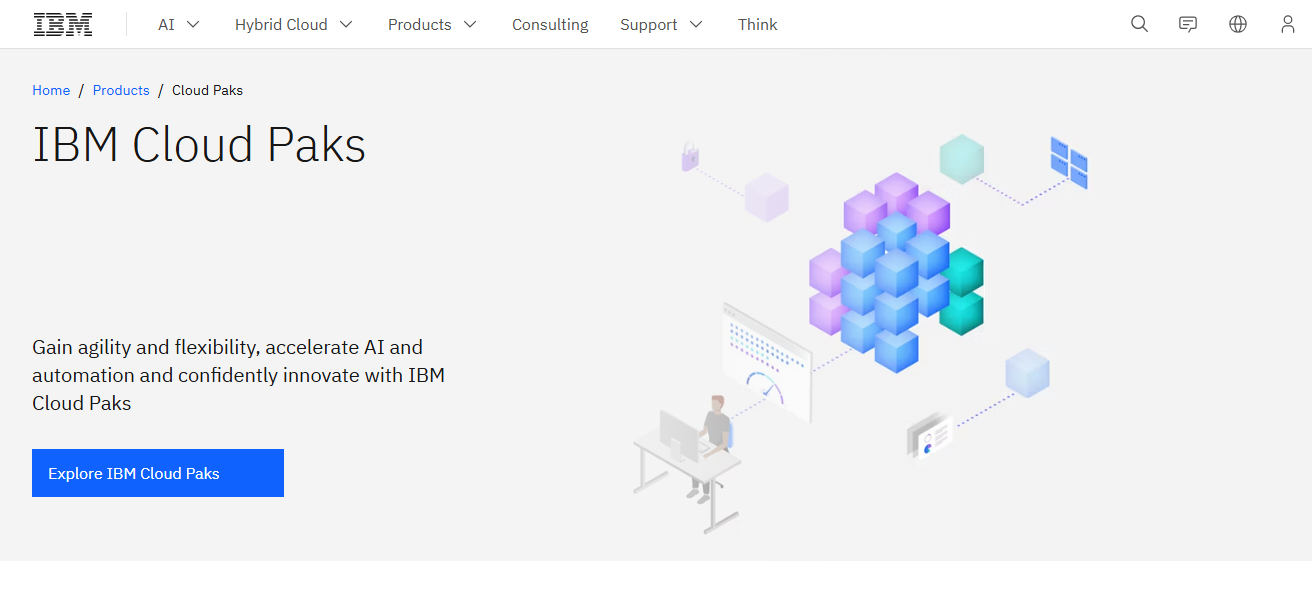
It facilitates threat intel sharing and risk assessment and monitors activities for compliance to allow organizations to customize and automate security workflow.
IBM’s around cloud security and cloud infrastructure provides containerized deployments and, support for complex Kubernetes.
Features:
Unified security platform: Integrates data across applications, networks, endpoints, and cloud workloads.
Threat investigation & response: SOAR workflows for faster remediation processes.
Hybrid cloud support: Supports on-prem, private, and public cloud environments.
Automation orchestration: Uses playbooks and machine learning to lessening manual workloads.
| Pros | Cons |
|---|---|
| Enterprise-grade security with orchestration & analytics. | Complex setup — suited for mature security teams. |
| Integrates security data from hybrid sources. | Higher total cost of ownership. |
| Automation and threat hunting capabilities. | Can be overkill for small/mid-sized orgs. |
| Scalable with container & Kubernetes support. | Requires skilled administrators. |
10. Zscaler Cloud Security
Zscaler’s offering consists of a secure access service edge(SASE) product which offers zero-trust security enforcement without traditional or legacy networking equipment.
SASE includes a secure web gateway, cloud firewall solutions, and data protection, which secures users and devices from any internet access.
Its zero-trust principles are enforced by analyzing and evaluating context, identity, and other data fields associated with access control authentication.
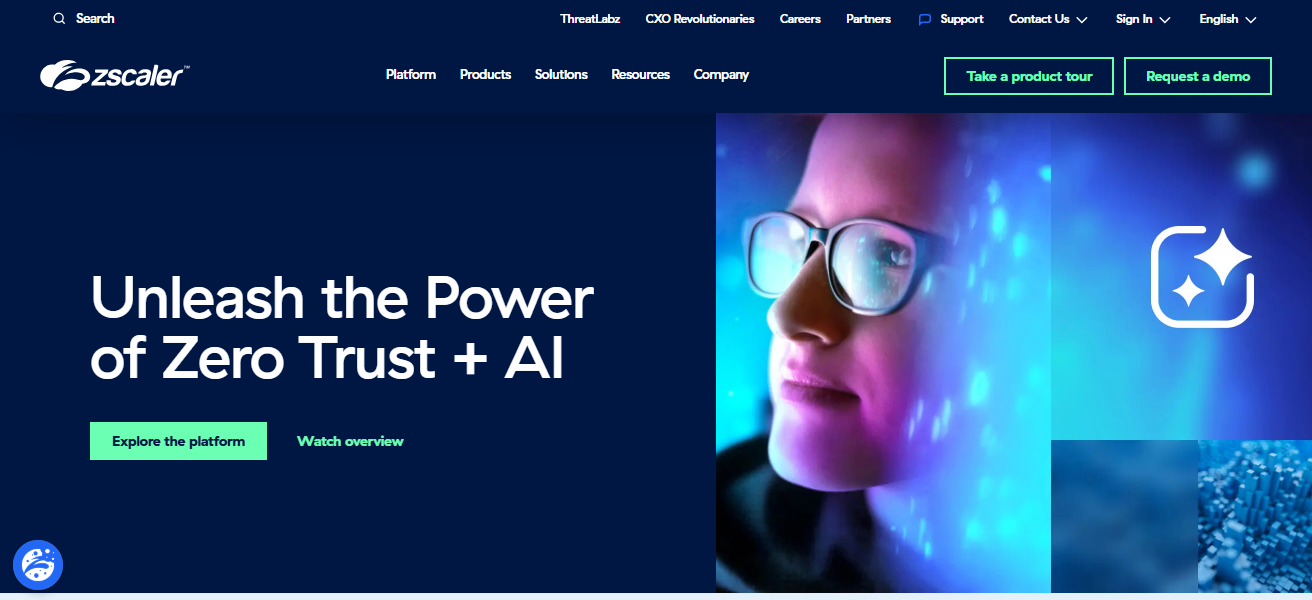
The system’s data protection capabilities are enhanced by cloud solutions’ global reach, which simplifies security tasks and lowers latency.
Data loss and propagation of malware are successfully blocked by inspecting SSLs and by Zscaler’s active defense against other various cyber threats.
The system operationalizes secure cloud adoption while reducing the complexity of regular system operations.
Features:
SASE / zero-trust architecture: Ensures secure access to cloud applications with no backhaul of data.
Secure Web Gateway (SWG): Analyzes and filters web traffic, eliminating harmful elements.
Cloud firewall and SSL inspection: Exposed to hidden threats from encrypted traffic.
Data protection & DLP: Ensures that sensitive data is not exfiltrated throughout users and cloud services.
| Pros | Cons |
|---|---|
| True cloud-native SASE with zero-trust principles. | Subscription pricing can be high for small orgs. |
| Comprehensive secure web gateway + data protection. | Limited deep workload protection compared to CNSPs. |
| SSL inspection with real-time threat blocking. | Some granular cloud workload security features missing. |
| Global scale with minimal latency. | Learning curve for network security teams new to SASE. |
How To Choose Best Cloud Security Solutions
Identify Your Cloud Environment Establish whether your cloud environment is SaaS, IaaS, PaaS, or hybrid cloud. Opt for a solution that accommodates the certain cloud providers you are dependent on (AWS, Azure, Google Cloud, and so on).
Identify Security Requirements Establish whether you require posture management, workload protection, CASB (data protection), runtime defense, or zero-trust access. Features should be prioritized according to the risk profile and compliance needs.
Ensure Visibility & Control Look for a solution that offers real-time visibility on configurations, user behavior, and threats. Robust policy controls and automatic enforcement reduce the manual workload.
Assess Compliance Support Select software that aids you in meeting the mandates for GDPR, HIPAA, PCI DSS, ISO 27001. Built in reporting and auditing features are an advantage.
Ability to Detect and Respond to Threats It is advisable to select a solution that has ML or AI based detection to identify advanced threats is favorable. Automated response and integration to SIEM/SOAR tools enhance the response time.
Ease of Integration: Should catalogue data from your current infrastructure such as DevOps pipelines, identity providers and monitoring tools.
Conclsuion
In conclusion Selecting ideal solution for cloud security is critical for safeguarding information, workloads, and apps.
With the proper solution, you gained visibility, ensured compliance, and defended against the hostile vectors in cloud-enabled environments.
By analyzing the features, scalability, and security requirements, a company can effectively defend its cloud security and its ongoing advancement.
FAQ
Cloud security solutions are tools and platforms that protect cloud-based data, applications, and infrastructure from cyber threats, misconfigurations, and unauthorized access
They help prevent data breaches, ensure compliance, detect threats in real time, and secure workloads across public, private, and hybrid cloud environments.
Key features include threat detection, compliance monitoring, workload protection, data loss prevention, identity security, and automated remediation.
Yes, many cloud security tools offer scalable pricing and simplified management, making them suitable for startups and small businesses
Most modern solutions support multi-cloud platforms such as AWS, Microsoft Azure, and Google Cloud for unified security management.