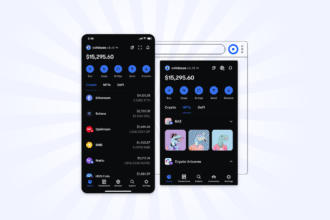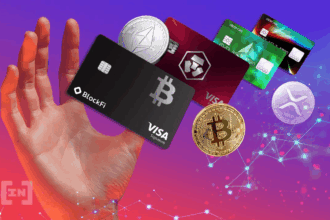
In this article, I will examine the best crypto card-issuing platforms that enable individuals to conveniently spend digital assets across everyday activities.
These platforms close the divide between cryptocurrencies and everyday payment options with secure and rewardable crypto cards. They emphasize ease of use, worldwide acceptance, and effortless conversion of crypto to fiat.
Key Points & Best Crypto Card Issuing Platforms
| Platform | Key Point |
|---|---|
| Crypto.com Card | Up to 5% cashback rewards on purchases |
| Binance Card | Direct integration with Binance exchange for instant conversion |
| Coinbase Card | Supports spending across 100+ countries with Visa |
| Bitget Wallet Card | Seamless Apple Pay & Google Pay compatibility |
| Wirex Card | Offers multi-currency accounts including fiat and crypto |
| Nexo Card | Earn interest on crypto holdings while spending |
| Revolut Card | Instant crypto-to-fiat exchange with low fees |
| BlockFi Card | Provides Bitcoin rewards instead of cashback |
| Paycent Card | Dual-wallet system for crypto and fiat flexibility |
| Monolith Card | Ethereum-based card with DeFi integration |
10 Best Crypto Card Issuing Platforms
1. Crypto.com Card
Crypto.com’s VISA-issued debit cards allow users to spend their crypto-derived assets and earn perks. Users receive cashback with every purchase and may earn up to 8% and receive cryptocurrency with the card tier cashback rates reflect increasing from 1% to 8%, depending on the tier cashback tier.
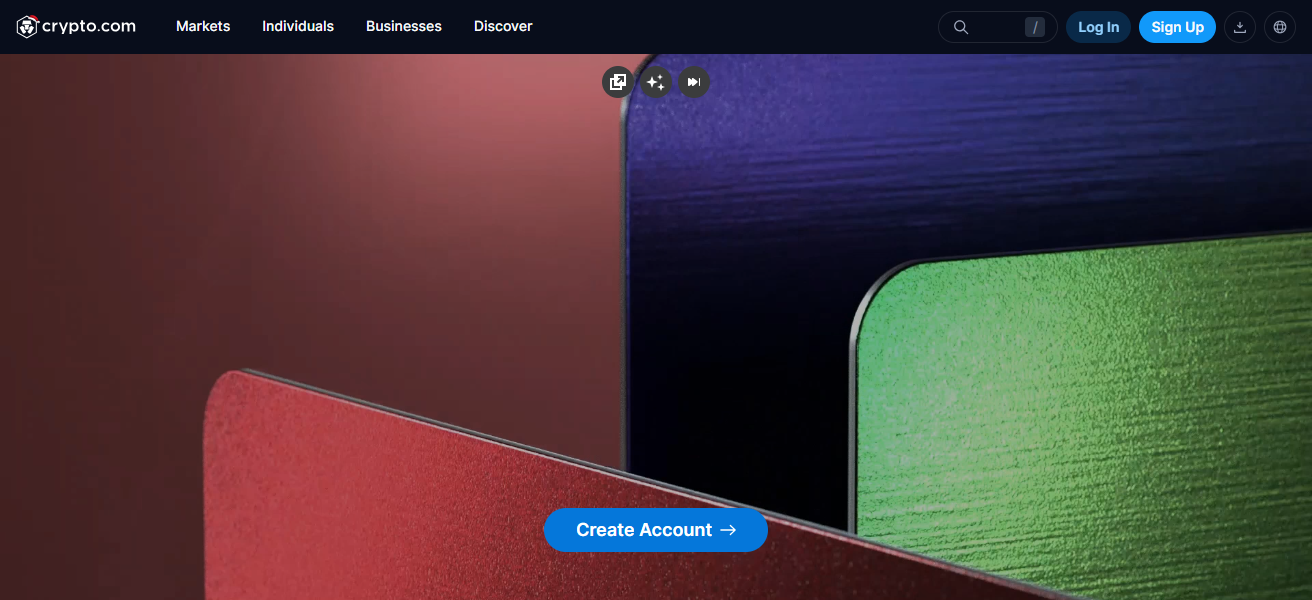
The Crypto.com card cashback cryptocurrency is instantly debitcard. This card supports many fiat currencies. This card is ideal since it is highly versatile.
It is great for users who want to earn crypto with everyday purchases. Netflix, and Amazon Prime reimbursements, crypto perks, and crypto utility.
Features Crypto.com Card
Tiered Reward System: There are a variety of cards that are available in different tiers and that provide different perks, such as up to 8% cashback, depending on the amount of CRO that one stakes.
Perk Benefits: Higher tier cards provide rebate perks on Spotify, Netflix, and Amazon Prime.
Global Visa Support: Visa will process these cards globally.
Automatic Crypto–Fiat Conversion: The crypto that is being spent gets converted to the local fiat automatically at the check out, so that the holder does not have to spend crypto manually.
| Pros | Cons |
|---|---|
| High cashback rewards (up to 8%) on spending | Requires CRO staking to maximize benefits |
| Multiple card tiers with added perks (Spotify, Netflix) | Benefits vary greatly by tier |
| No annual fee on most tiers | Staking lock-up can reduce liquidity |
| Global Visa acceptance | Complex rewards structure for new users |
| Easy conversion from crypto to fiat | Some regions may have limited availability |
2. Binance Card
Binance Card, you can access and spend the cryptocurrencies in your Binance account. Supported and automatically converted at the point of sale are Bitcoin (BTC), Binance Coin (BNB), and Binance USD (BUSD).
Up to 8% in redeemable BNB is cashback that is automatically earned on qualifying purchases. Users of this card have seamless integration with Binance top-ups including access to the company’s Earn feature.
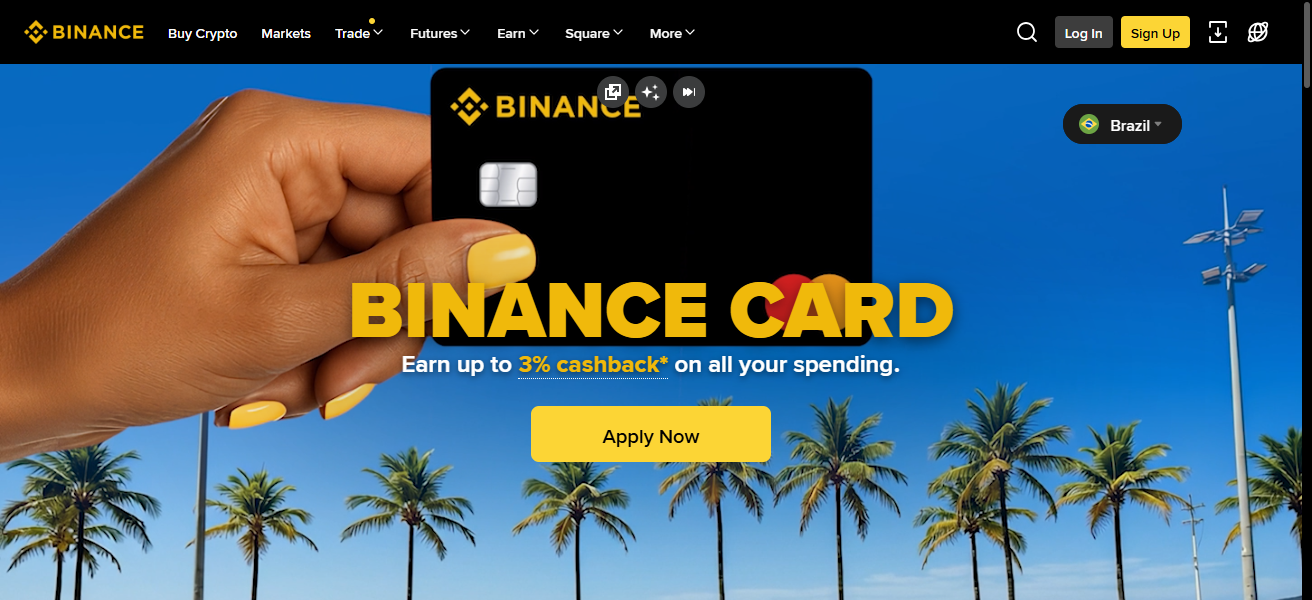
It’s a card that is globally accepted and it is a great option for those that spend their cryptocurrency often and/or those that already use Binance services
Features Binance Card
Cashback Rewards: Receive cashback on eligible purchases as BNB, up to ~8% (varies by spend).
Direct Wallet Integration: You can spend directly from your Binance balance, without the need to manually swap for fiat.
Auto Conversion at POS: At the point of sale, your crypto will be converted to fiat automatically.
Broad Crypto Support: The card works with Binance’s major assets, such as BTC, BNB, and BUSD.
| Pros | Cons |
|---|---|
| Cashback rewards (up to ~8%) | Dependent on Binance account activity |
| Easy spending directly from Binance balance | Conversion happens at point of sale (may incur spread) |
| Supports major cryptos like BTC & BNB | Not available in all countries |
| Integrates with Binance ecosystem | Rewards capped on certain spend categories |
| No issuance fee in many regions | Needs Binance KYC and account verification |
3. Coinbase Card
Due to its simplicity and accessibility, the Coinbase Card offers spend capabilities for over 30 cryptocurrencies, allowing users to seamlessly spend crypto within their Coinbase wallets.
Users earn crypto on their majors via a cash-back rewards system, although the crypto-back rates primarily depend on the location and are subject to different promotions.
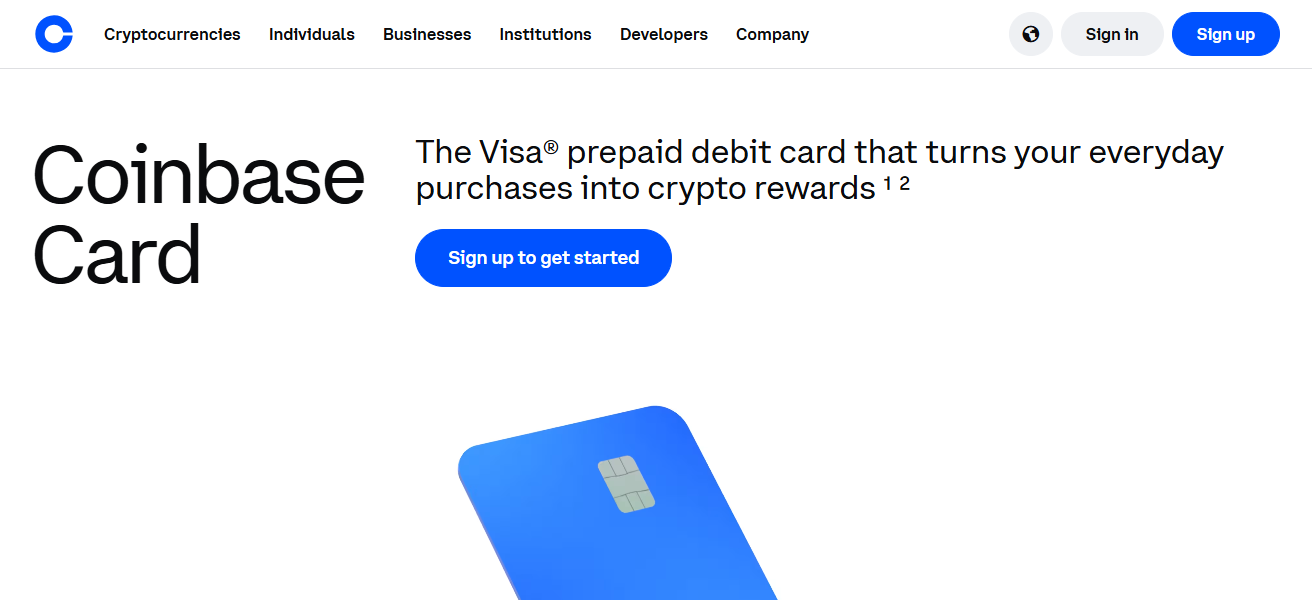
The Coinbase app offers holistic transaction insights, spending control functionalities, and instant crypto conversion.
Although the card provides a lower cash-back rewards rate versus competitors, the Coinbase Card offers a higher ease of spending with crypto and is highly compliant with cryptocurrency regulations, pertaining to all users within the crypto ecosystems.
Features Coinbase Card
Multi-Crypto Spending: You can spend over 30 different cryptocurrencies with the card. The cryptocurrency spent will be converted to fiat at the point of sale.
Real-Time Tracking: The card is connected to an app, and instant notifications will be provided when a transaction occurs. The app is available from Coinbase.
Crypto Rewards: With the card, you can receive BTC or another cryptocurrency as a reward for purchases you make.
Secure & Regulated: The card is built within the secured and compliant structure of Coinbase.
| Pros | Cons |
|---|---|
| Cashback rewards (up to ~8%) | Dependent on Binance account activity |
| Easy spending directly from Binance balance | Conversion happens at point of sale (may incur spread) |
| Supports major cryptos like BTC & BNB | Not available in all countries |
| Integrates with Binance ecosystem | Rewards capped on certain spend categories |
| No issuance fee in many regions | Needs Binance KYC and account verification |
4. Bitget Wallet Card
The Bitget Wallet Card is one of the several wallets within the Bitget Wallet ecosystem, aiming to combine the security of a decentralized wallet with the ability to spend money in the real world.
Users can effortlessly spend supported cryptocurrency at any merchant point-of-sale (PoS) terminals. Users can gain better/beneficial cashbacks, obtain select tokens as rewards, enjoy flexible top-ups and transfers from the wallet to the card.
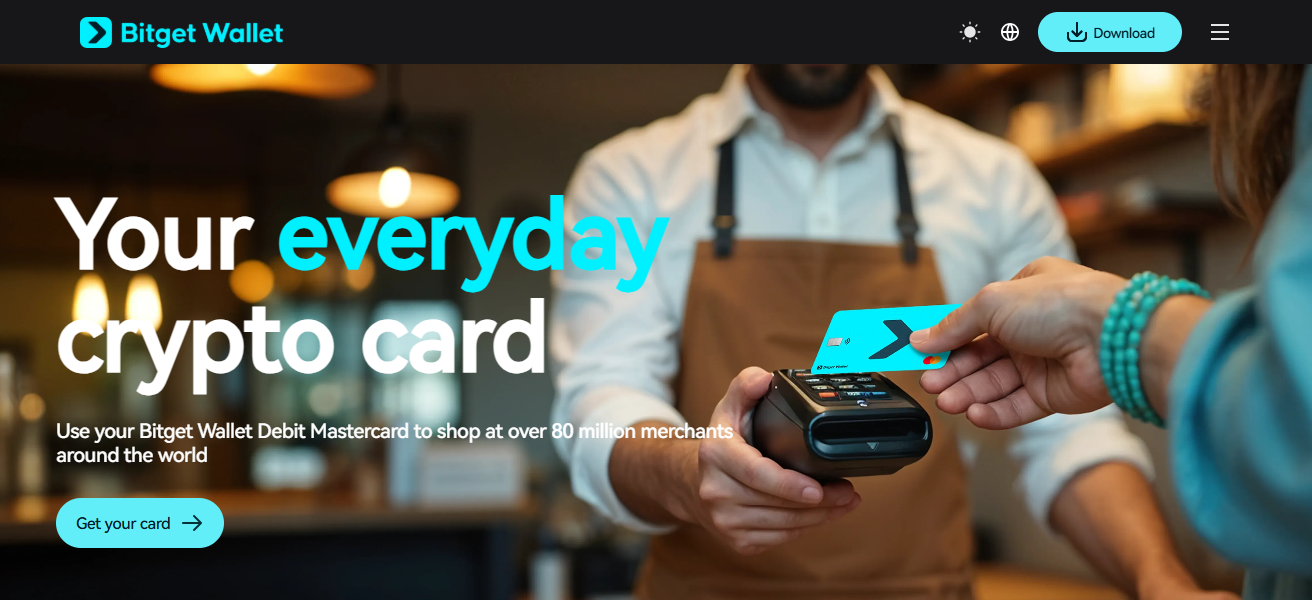
With emphasis placed on enhancing the user experience, it is designed to suit spenders who prefer self-custodied crypto assets. Its compatibility with services from Bitget further establishes a competitive offering for traders and/or average users.
Features Bitget Wallet Card
Wallet-Centric Usage: Wallets are very useful in spending and are directly connected to your Bitget Wallet.
Multi-Chain Compatibility: There are assets from different chains.
On-the-Fly Conversion: Converts your crypto to fiat at the point of sale.
Rewards Potential: For certain spendings, they provide cashback, other reward tokens, or both.
| Pros | Cons |
|---|---|
| Seamless spend from Bitget Wallet | Relatively new with evolving features |
| Multi-chain support | Rewards and perks not as established |
| Rewards/cashback potential | Limited geographic coverage |
| Wallet-to-card transfer flexibility | User experience depends on app updates |
| Good for decentralized wallet users | Not as widely accepted as big cards |
5. Wirex Card
Wirex Card, receive up to 8% Cryptoback rewards on your in-store purchases as you enjoy the advantages of spending cryptocurrency as if it were a bank currency, it is using a bank card.
Wirex keeps multiple wallet balances in crypto and traditional bank currencies, and automatically completes currency conversions on your behalf at the best rates through the Wirex exchange.
Also, Wirex offers some of its users the ability to purchase crypto without paying a transaction fee or earn interest on crypto after storing it in a Wirex wallet, plus the clients data is protected by governmental authorities.
The card is offered by both Visa and Mastercard, and its hybrid wallet technology and customer focus is why the company is a frontrunner for offering crypto bank cards.
Features Wirex Card
Cryptoback Rewards: For in-person spends, you can earn crypto as the reward and they are also cashback.
Multi-Asset Wallet: You can have multiple crypto and fiat wallets in a single platform.
Immediate Conversion: At point-of-sale, crypto is automatically converted to fiat.
Various Cards Options: You can choose to have a Visa or a Mastercard.
| Pros | Cons |
|---|---|
| Cryptoback rewards up to ~8% | Some fees on exchange or ATM withdrawal |
| Supports multiple tokens and fiat wallets | Rewards vary by region |
| Fee-free crypto buys for certain users | Not as strong reward tiers as others |
| Visa/Mastercard options available | Lower cashback on some assets |
| Hybrid crypto + traditional accounts | Regulatory availability varies globally |
6. Nexo Card
The Nexo Card is part of the Nexo ecosystem, where users can borrow against their crypto, spend crypto, and also access the platform’s credit line, all without the need to sell their digital assets.
Users can avoid selling and, therefore, avoid crypto tax consequences as they pay with fiat. Great benefits of the card include the ability to earn 2% cashback in NEXO tokens, flexible repayment periods, and low-cost loans based on Nexo’s loyalty tiers.
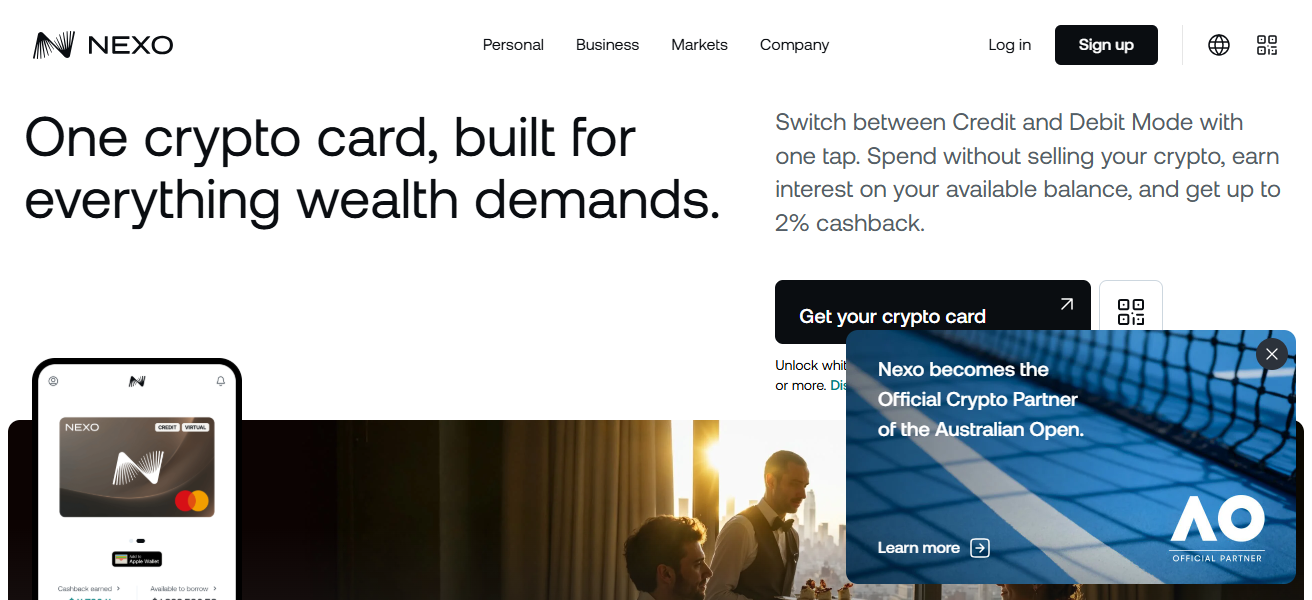
The card has no annual fees and premium members can access airport lounges. This is a great option for long-term crypto holders that need to access cash without selling their crypto.
Features Nexo Card
Credit Line Spending: You can use your crypto as a collateral, negating the need to sell it.
Cashback in Nexo Tokens: They will give you a cashback of ~2% in their native tokens.
No Annual Fee: For basic use, there is usually no annual fee.
Loan Integration: Nexo’s lending products can be used to provide flexibility while spending.
| Pros | Cons |
|---|---|
| Spend crypto without selling (credit line) | Must use Nexo ecosystem to unlock benefits |
| Up to ~2% cashback in NEXO tokens | Lower cashback than some competitors |
| No annual fee | Interest/costs apply if using credit line |
| Useful for hodlers avoiding taxable sales | Rewards are token-specific |
| Includes premium perks at higher tiers | Availability limited by region |
7. Revolut Card
The Revolut prepares users to hold crypto, as crypto cards tend to actually be. Revolut users can spend crypto, as it can be converted to fiat currency with market rates, at any instant in the app and have auto checkout set to convert to fiat.
The card has different cash back perks based on user subscription. The banking features and budgeting tools, overall, make the card a top contender
for a consumer looking for a card that can operate in both the crypto world with traditional finance. It is top of the pack for consumers who travel a lot and are remote.
Features Revolut Card
Multi-Currency Support: You can spend in different fiat currencies and from your crypto within the app as well.
Travel-Friendly: Depending on your plan, low Fees are charged.
In-App Budget Tools: Analytics and Budgeting tools are included in the app.
Cashback and Other Benefits: Varies depending on which tier you are subscribed to.
| Pros | Cons |
|---|---|
| Multi-currency spending & budgeting tools | Crypto must be converted manually or auto |
| Instant conversion | Not a pure crypto rewards card |
| Great for travel & everyday spending | Crypto support limited to in-app holdings |
| Cashback & perks by subscription plan | Fees for higher features/subscriptions |
| Easy app experience | Not ideal for deep crypto earners |
8. BlockFi Card
BlockFi Card, it is simple to earn up to 3% back in Bitcoin (BTC) on eligible purchases, earning rewards automatically, and no fees whatsoever! That includes no foreign transaction fees and no annual fees, and to top it off, rewards are paid out in crypto each month.
Rewards accumulation becomes effortless for investors since the card is linked to a BlockFi account. Other spending crypto cards would encourage you to spend BTC, while BlockFi would earn you more BTC just to use it.
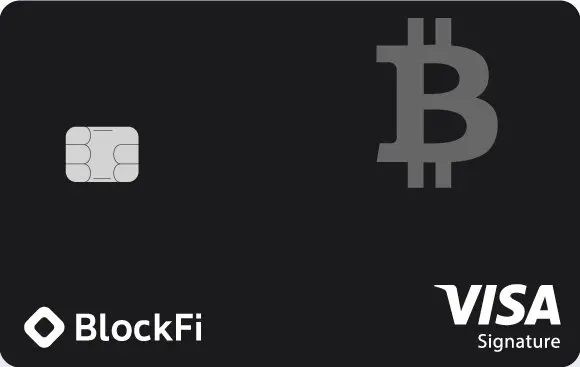
For customers who predominantly want to passively earn BTC, this card is a top tier choose for effortless Bitcoin and simplicity.
Features BlockFi Card
Rewards in BTC: You receive about 3% back in BTC on all purchases.
No Annual Fee Payments: No fees to keep the card every year.
No Foreign Transaction Fees: Having it is great if you tend to spend abroad.
Earnings are Bitcoin: Each month the reward structure is simple.
| Pros | Cons |
|---|---|
| Earn up to ~3% BTC rewards on purchases | Limited reward types (mainly BTC) |
| No annual fee | Lower overall cashback compared to others |
| No foreign transaction fees | Tied to BlockFi account balance |
| Simple rewards structure | Regional availability limited |
| Monthly crypto rewards | Not ideal for multi-crypto earners |
9. Paycent Card
Paycent Wallet has an international debit crypto card called the Paycent Card. Card holders can spend crypto and fiat for purchases and spend with any currency that balances can be kept and converted. The card has cashback and great rates for currency conversion.

The card can be topped off on the app. Customers can be budgeted with the card and be sent alerts for transactions. The card has international support and features best for flexible cross border transactions.
Paycent Card
Cryptocurrency & Traditional Currency Spending Allowance: You can spend the crypto and cash in your wallet.
Global Reach: Works anywhere in the world a Mastercard can be used.
Cashable without a Hassle: You can quickly transfer money to the card.
Rewards for Spending: You can get cash back on certain purchases.
| Pros | Cons |
|---|---|
| Supports crypto + fiat wallet spending | Cashback and perks not industry-leading |
| Mastercard acceptance worldwide | Fees for some transactions |
| Easy top-up from wallet | Not as popular or widely recognized |
| Budgeting and transaction alerts | Limited advanced rewards programs |
| Good for international use | Not all cryptos supported for spending |
10. Monolith Card
Monolith’s Visa card connects directly to an Ethereum wallet to spend ETH and ERC-20 tokens with instant conversion. It offers an emphasis on decentralization and user control with no custody and transparency.
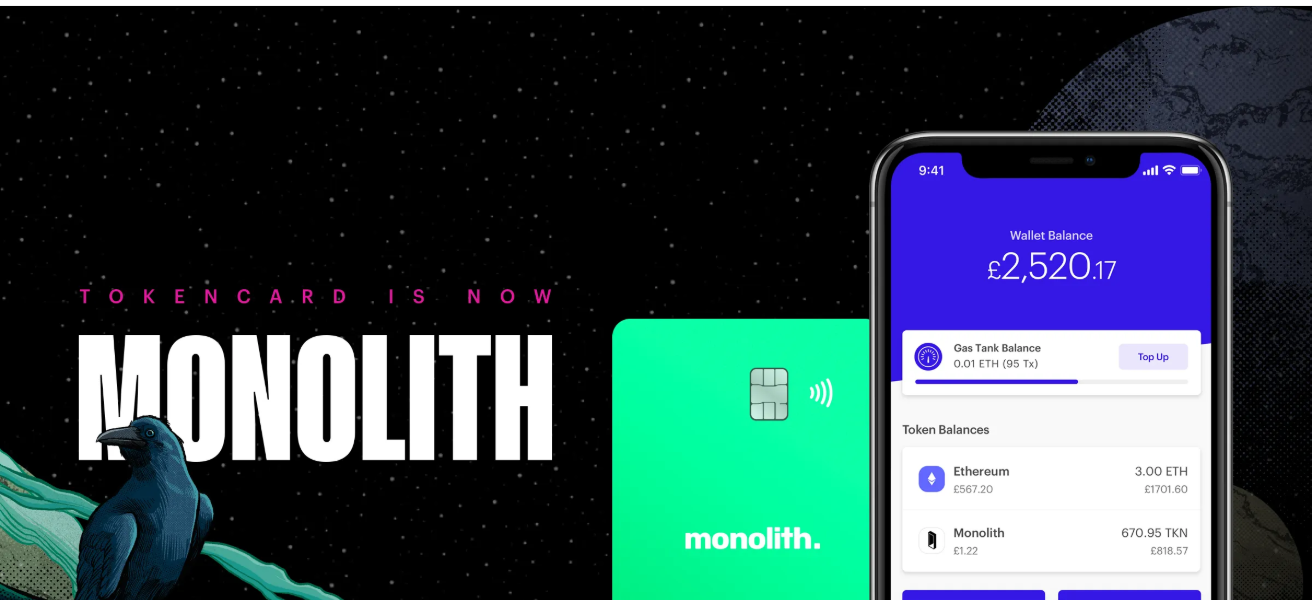
Users earn TKN tokens and can access DeFi from the app. Strong DeFi integration and emphasis on self-custody makes the card great for on-chain users.
It’s for users who want to seamlessly spend from a self-custodied wallet with real-time asset control. It’s the perfect option for experienced users who know how to manage a wallet.
Features Monolith Card
Ethereum and Other Tokens Compatible: You can spend them.
You Keep Your Keys: You can keep your private keys.
Spend and Earn Tokens: You get more incentives if you keep spending.
Global Reach: You can use it anywhere in the world Visa is accepted.
| Pros | Cons |
|---|---|
| On-the-fly conversion from ETH/ERC-20 | Only supports Ethereum ecosystem assets |
| Self-custody & DeFi integration | Not beginner-friendly |
| Earn TKN rewards | Rewards less competitive in fiat terms |
| Visa acceptance | Limited user base & support |
| Strong for DeFi users | Not ideal if you prefer centralized wallets |
Conclsuion
In summary, the Best Crypto Card Issuing Platforms help you spend your cryptocurrencies during your everyday purchases.
They make crypto-to-fiat conversion easy, and come with global acceptance and good rewards. Choosing the card that suits you best will depend on your spending habits, the assets the card supports, and the card’s availability in your region.
FAQ
A crypto card is a payment card (debit/credit) that lets you spend cryptocurrencies by converting them into fiat at the point of sale, just like a regular card.
They link to your crypto wallet/exchange account and automatically convert your chosen crypto to local currency when you make a purchase.
Fees vary by provider — common ones include issuance, ATM withdrawal, conversion spreads, and foreign transaction fees.
Yes — many cards offer cashback rewards paid in crypto or tokens, often tied to spending levels or staking requirements.
Availability depends on the issuer and local regulations; some are limited to specific regions or countries.