This article will talk about the Best Crypto Exchanges for Professional Crypto Arbitrage. Selecting an exchange is important to increase profits, mitigate risks, and perform trades.
- Key Points & Best Crypto Exchanges For Professional Crypto Arbitrage
- 10 Best Crypto Exchanges For Professional Crypto Arbitrage
- How We Choose Best Crypto Exchanges For Professional Crypto Arbitrage
- Cocnlsuion
- FAQ
I will talk about the best exchanges, including Binance, Bybit, Kraken, KuCoin, OKX, and others, and discuss what makes them good for professional arbitrage, including their features, liquidity, trading pairs and trading tools.
Key Points & Best Crypto Exchanges For Professional Crypto Arbitrage
| Exchange | Key Point |
|---|---|
| Binance | Deep liquidity across multiple pairs |
| Bybit | Advanced derivatives trading options |
| Kraken | Strong regulatory compliance |
| KuCoin | Wide range of altcoins |
| OKX | High-speed API connectivity |
| Gate.io | Extensive token listings |
| Bitfinex | Robust margin trading features |
| Coinbase Pro | Strong fiat on/off ramps |
| Huobi | Global market coverage |
| MEXC | Low trading fees |
10 Best Crypto Exchanges For Professional Crypto Arbitrage
1. Binance
According to trading volume, Binance is the largest cryptocurrency exchange in the world, making it incredibly advantageous for professional arbitrage trading. Binances liquidity is so great that even the biggest trades result in no slippage.
There is also a massive offering of cryptocurrencies, multiple advanced order types, and spot, future, and margin trading, making Binance perfect for arbitrage trading.
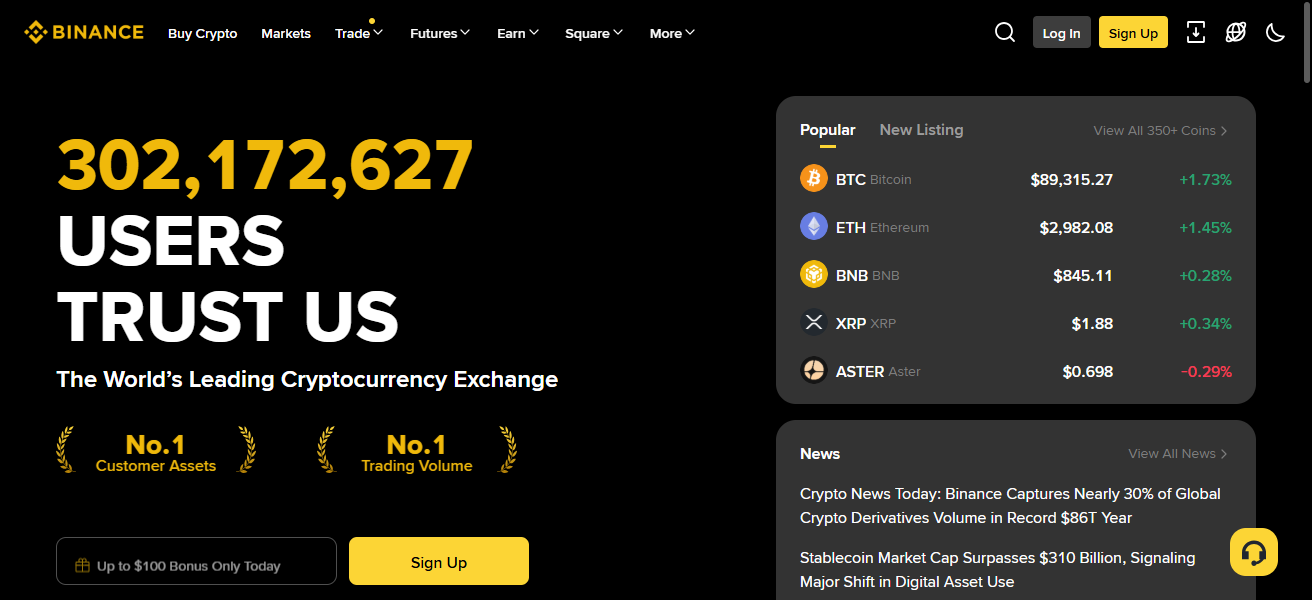
Binance also has a low fee on transactions and multiple real time APIs, automated trading bots use these to increase profits.
Finally, their presence in multiple jurisdictions allows arbitrage professionals to make trades on different exchanges, giving Binance the performance and flexibility of an exchange to make it valuable for arbitrage trading.
Features Binance
High Liquidity: Having the highest trading volume in the world allows Binance to conduct large arbitrage trading without slippage.
Varied Holdings: Being able to participate in spot, margin, futures, and options trading allows the pursuance of various arbitrage strategies across different markets.
No Down Time: Binance’s advanced APIs allow professional traders and developers to automate trading strategies and conduct arbitrage without any manual downtime.
Hundreds of Crypto Options: Binance enables arbitrage opportunities across multiple crypto markets as there are numerous trading pairs.
| Pros | Cons |
|---|---|
| Largest crypto exchange by volume, ensuring deep liquidity and minimal slippage. | Complex interface may be overwhelming for beginners. |
| Supports spot, futures, and margin trading for diverse arbitrage strategies. | High trading volume can attract temporary network congestion during market spikes. |
| Competitive trading fees and multiple fiat on-ramps. | KYC requirements can slow down new account setup. |
| Advanced API for automated arbitrage trading. | Regulatory scrutiny in some countries may restrict access. |
| Wide range of cryptocurrencies and trading pairs. | Withdrawal limits may apply for new accounts. |
2. Bybit
Traders have quickly started using Bybit because of its strong platform for derivatives. Bybit’s engine facilitates high-speed trading with low latency, which makes trading multiple times in a row more efficient.
Bybit allows traders to fully take advantage of the arbitrage between the derivative and spot markets.
Bybit also enables cross-asset trading, which helps in making derivative trading pairs more efficient. Overall trading automation is critical for professional arbitrage traders.
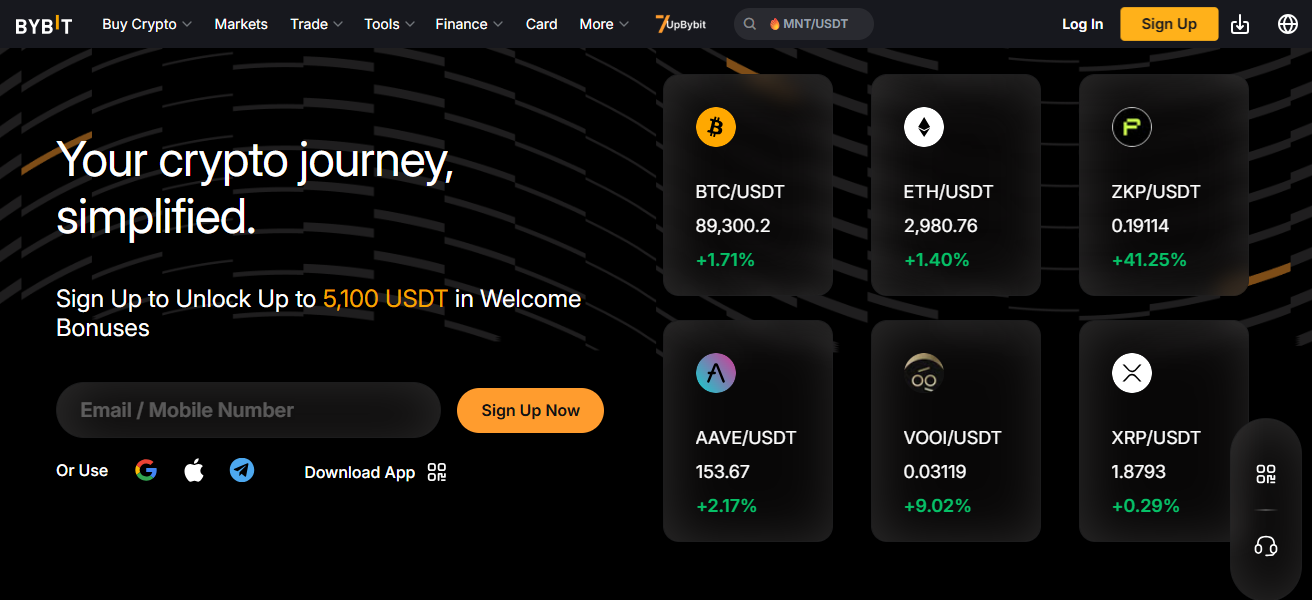
Control over automation means more profits and opportunities, and Bybit allows that. Bybit makes sure that slippage is minimal and the markets have tight spreads
Which means their platform is more desirable to traders who value speed. Bybit is a professional trader’s top choice for investing in derivatives.
Features Bybit
Trading in Derivatives: Trading in perpetual and futures contracts allows hedging and arbitrage to occur on the derivative and spot markets.
High Speed Matching Engine: Bybit’s low latency engine allows arbitrage opportunities to be executed in a calculated and time efficient manner.
Streamlined Automation: Automation of trading strategies are made easier as bot driven arbitrage strategies are made possible through API accessibility.
Low Slippage: Improvement of major crypto pairs in slippage provides a higher margin of profit for professional crypto traders.
| Pros | Cons |
|---|---|
| High-speed trading engine suitable for high-frequency arbitrage. | Limited spot market liquidity compared to Binance or Coinbase Pro. |
| Offers futures, perpetual contracts, and margin trading. | Fewer fiat deposit options than larger exchanges. |
| Low latency and tight spreads reduce slippage. | Some advanced features may be challenging for new traders. |
| Robust API for automation and bot trading. | Regulatory restrictions in certain regions. |
| Frequent trading incentives and promotions. | Limited variety of altcoins for some arbitrage strategies. |
3. Kraken
Kraken is a veteran exchange with a fantastic reputation in reliability and transparency. Their liquidity for the higher market cap coins is deep enough to facilitate large trades without worrying about slippage.
Kraken offers a spot and futures market with margin features making the exchange perfect for complex trades.
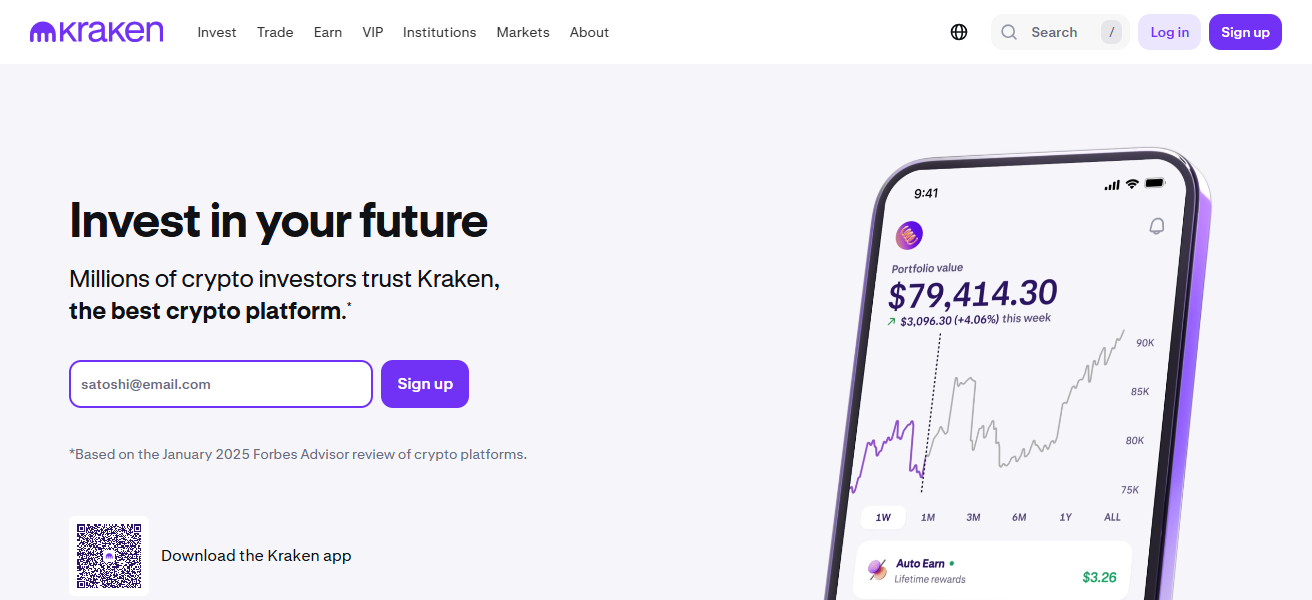
More experienced traders can take advantage of Kraken’s advanced API features to automate trades and take advantage of price discrepancies.
Kraken is competitively priced with strong regulatory oversight and security features. Kraken is one of the few exchanges with global fiat on and off ramps making it the perfect choice for professionals with cross market arbitrage.
Features Kraken
Trustworthy and Secure: Kraken is fully regulated giving it a strong reputation in the market leading to a higher degree of trust.
Trading in Spot and Futures: Having access to cross market arbitrage strategies provides opportunities for trading to occur on multiple levels.
Mainstream Coins: The abundance of currencies everyday crypto traders are interested in provides liquidity in mainstream currency trading.
Robust Functions: Kraken’s features allow the continuous operation of crypto trading bots.
| Pros | Cons |
|---|---|
| High liquidity for major crypto pairs, minimizing slippage. | Smaller selection of altcoins compared to Binance or KuCoin. |
| Offers spot, futures, and margin trading. | Fees are slightly higher for certain trades. |
| Strong security and regulatory compliance. | API can be slower than competitors for high-frequency trading. |
| Supports automated trading via API. | Withdrawal processing times can be slower in some regions. |
| Transparent operations and fiat support for cross-exchange arbitrage. | UI may seem outdated compared to modern exchanges. |
4. KuCoin
KuCoin is an all-purpose cryptocurrency exchange with the most altcoins and usability features. KuCoin’s liquidity suffices for the most professional arbitrage.
KuCoin has futures, margin and spot trading. Also, KuCoin provides high frequency APIs to trade. KuCoin has low trading fees and even gives trading incentive bonuses.

The exchange has lending and staking features to increase profitability. KuCoin has numerous fiat gateways to quickly trade. KuCoin has good liquidity, low fees and numerous trading pairs for arbitrage.
Features KuCoin
Variety of Altcoins: Good for niche arbitrage, as multiple coins are available.
Spot, Margin, & Futures: Variety of trading types available for more sophisticated cooldown stratagems.
Automated Trading: High-frequency trading options are available through APIs.
Low Fees: Low fees spoiled arbitrage trading.
| Pros | Cons |
|---|---|
| Wide range of altcoins and trading pairs. | Lower liquidity on some altcoins may increase slippage. |
| Supports spot, margin, and futures trading. | Customer support may be slower during high-demand periods. |
| Advanced API for automated trading. | Regulatory compliance less strict, posing some risk. |
| Low fees and occasional trading incentives. | Interface can be confusing for beginners. |
| Multiple fiat gateways and asset transfer options. | Not always ideal for U.S. users due to restrictions. |
5. OKX
Professional arbitrage traders love OKX for its industry-leading trading tools and variety of crypto trading pairs.
OKX also offers spot trading, futures, perpetual swaps, and margin trading, allowing traders to make arbitrage plays on many different trading pairs.
There is also high liquidity and minimal trading slippage. OKX has one of the best trading APIs and is one of the best exchanges for executing automated trading strategies.
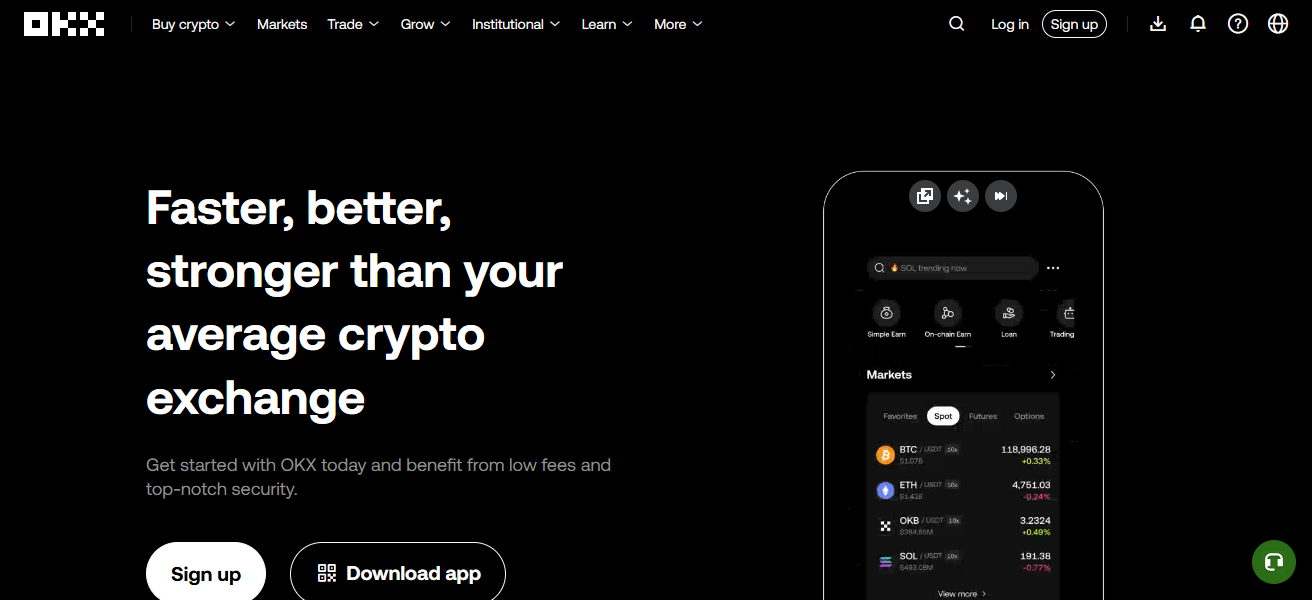
With OKX’s global presence and multiple fiat on-ramps, traders can easily move their funds between exchanges.
OKX is one of the most flexible professional trading solutions, having advanced risk management features, detailed analytics, high security, and high frequency trading incentives.
Features OKX
Varied Trade Types: Spot and margin trading, as well as futures and perpetuals, allow for any needed arbitrage.
Excellent Global Cash: Global liquidity provides for no slippage on trades across all coins.
Better API: Executing automated arbitrage strategies is available to advanced traders as well.
Fiat Convertibility: Eases the process of cross-exchange arbitrage.
| Pros | Cons |
|---|---|
| Offers spot, futures, perpetual swaps, and margin trading. | Some advanced trading tools may be complex for beginners. |
| Deep liquidity for major cryptocurrencies. | Customer support can be slow during peak hours. |
| Robust API for automated arbitrage. | Regulatory restrictions in some countries. |
| Competitive fees and trading incentives. | Platform features may overwhelm new traders. |
| Multiple fiat on-ramps and global accessibility. | Altcoin selection smaller than KuCoin. |
6. Gate.io
Gate.io has been in the market for a long time and has high trading volumes and liquidity, making it suitable for pro traders. You can trade a variety of derivatives, including spots, futures and options.
Even though they trade with low margins, the trading fees are significantly lower, making it even more profitable for them.
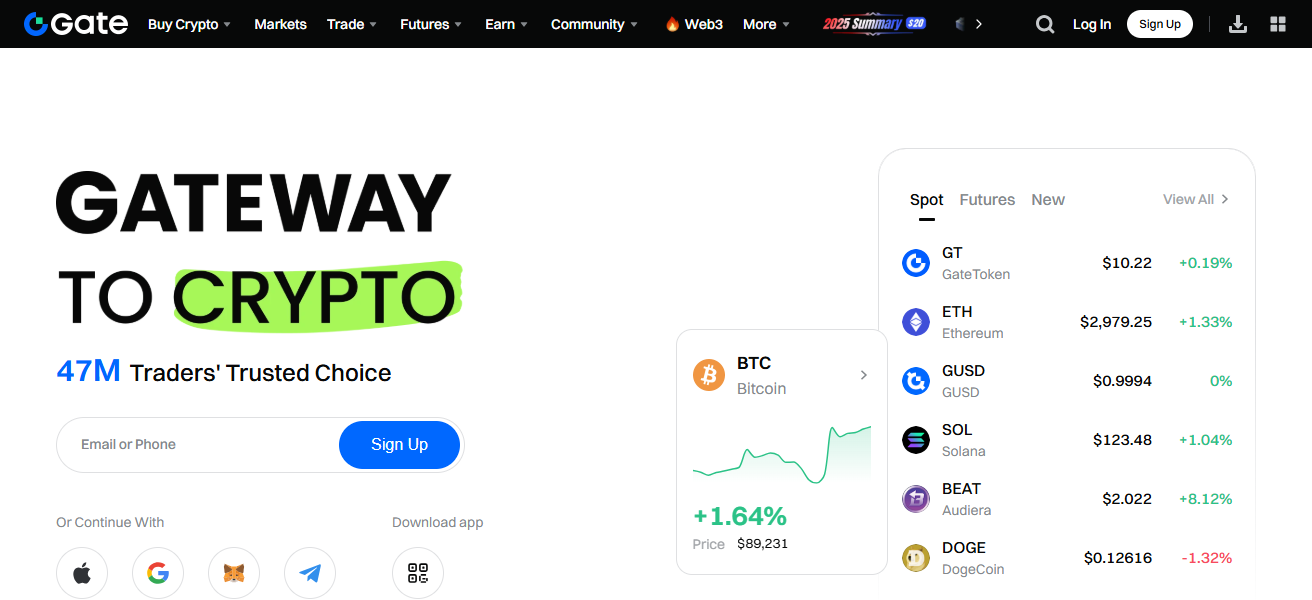
Their API charges them with many integrated trading options. Lastly, Gate.io offers many cross border payment options and has a secure and transparent trading experience.
The trading fees are low and they often run promotional trading events, making it a valuable trading platform.
Overall, they seem to offer professional traders the opportunity to perform arb trading against a large number of complex trading strategies.
Features Gate.io
Varied Trading Pairs: For any pertinent arbitrage, the multitude of coins and pairs allows for many strategies.
Numerous Trading Types: Available options are spot, margin, futures, and options.
API for Bots: Gate.io allows for automated trading.
Incentives: Funds make trading more profitable August and the trading contests promote participation.
| Pros | Cons |
|---|---|
| Supports spot, futures, margin, and options trading. | Interface can feel cluttered to new users. |
| API access for automated arbitrage. | Liquidity lower for certain altcoins. |
| Wide cryptocurrency coverage. | Trading fees slightly higher than top-tier exchanges. |
| Low slippage on major pairs. | Limited fiat deposit options in some regions. |
| Promotions and flexible order types increase profitability. | Not widely known in Western markets, may affect fiat operations. |
7. Bitfinex
Bitfinex has been in the industry for a long time, which is why they are the most well-known for their high liquidity and high volume business. It’s no surprise that they are highly regarded for professional level arbitrage trading.
They have spot trading, margin trading, and derivatives trading which allow for a seamless exploitation of price irregularities in the market. They have a high volume of various trading pairs which allow for a more varied trading opportunity.
Even for big trades, their trading volume is high enough that slippage will be a non-issue. Their ability to accept and withdraw cryptocurrency is highly regarded, and allows for seamless inter exchange arbitrage.
They are highly rated for their accessibility, security, and transparency which allows for a seamless trading experience. This is why they are the most recommended for complex arbitrage trades involving many digital currencies.
Features Bitfinex
Significant Depth of Market: Allows for large arbitrage trades to be completed with no slippage.
Spot, Margin, and Derivatives: Cross-market arbitrage is available through all advanced trading methods.
Better API: For high-frequency arbitrage trading strategies bot-trading is most useful. Advanced APIs allow portability.
Fiat Integration: Eases Deposits and Withdrawals to Facilitate Cross-Exchange Arbitrage.
| Pros | Cons |
|---|---|
| Deep liquidity for high-volume trades. | Interface can be complicated for beginners. |
| Supports spot, margin, and derivatives trading. | Regulatory scrutiny in some regions. |
| Advanced order types and high-speed API. | Limited altcoin variety compared to KuCoin. |
| Low spreads minimize slippage. | Customer support may not be as fast as Binance or OKX. |
| Fiat support facilitates cross-exchange arbitrage. | Some features may require verification delays. |
8. Coinbase Pro
Coinbase Pro is an exchange regulated within the United States having a good reputation in the industry for its security and reliability making it an excellent choice for professional arbitrage.
Although it has a smaller selection of altcoins available, it has greater liquidity in the larger market cap coins which is more beneficial for larger trades.
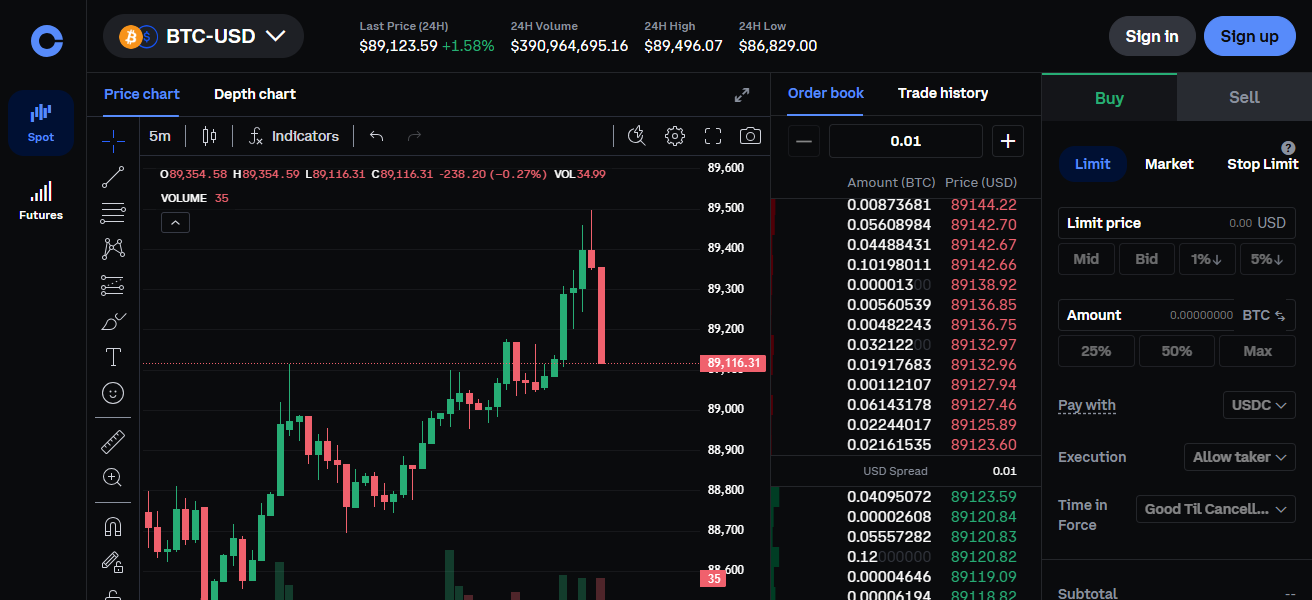
Coinbase Pro has spot and margin trading available as well as a well-designed API for automating trading bots. Their insurance and regulatory compliance increases trust for their institutional and professional customers.
The platform has a very well designed and simple on and off ramp which aids customers in cross exchange arbitrage and their fees are very competitive which increases the viability for profiting within higher volumes.
Coinbase Pro has extreme reliability and stability making it an excellent choice for arbitrage opportunities in the United States and in other countries.
Features Coinbase Pro
Regulated and Secure: Gives Trust to Users Engaging in Professional Arbitrage.
High Liquidity: Minimized Slippage Through Deep Order Books in Major Cryptos.
API Support: Increased Arbitrage Strategy Execution Through Automation.
Fiat On-Ramp/Off-Ramp: Eases Fund Transfers to Other Exchanges for Arbitrage.
| Pros | Cons |
|---|---|
| U.S.-regulated, highly secure and reliable. | Limited altcoin selection compared to Binance or KuCoin. |
| Deep liquidity for major cryptocurrencies. | Trading fees higher than some other professional platforms. |
| Spot and margin trading available. | API trading limits may restrict high-frequency strategies. |
| Robust API for automation. | Cross-border transfers may be slower than decentralized exchanges. |
| Simple fiat on-ramp/out for arbitrage. | Less suitable for small or emerging altcoin arbitrage. |
9. Huobi
Huobi is an established exchange with a global presence and an extensive range of cryptocurrencies available for arbitrage trading.
They support spot, margin, and futures trading, enabling numerous trading strategies. Huobi’s considerable depth and minimal bid-ask spreads reduce slippage for professional traders
While the platform’s sophisticated APIs support the automated execution of arbitrage trading strategies. Alternatively, each user’s Huobi account can trade automatically via the platform’s proprietary trading bots.
Huobi’s quick and cost-efficient exchanges support numerous arbitrage and cross-exchange trading automated strategies.
With rapid, cost-efficient, and most importantly, secure trading transactions across its trading infrastructure and strong reputation for platform security, Huobi is a top exchange for professional arbitrage trading.
Features Huobi
Extensive Coin Support: Diverse Opportunities in Arbitrage With Cryptos.
Spot, Margin and Futures: Multiple Opportunities to Exploit Price Differences.
API Automation: Facilitate Arbitrage Strategy Automation Through Bots.
Global Fiat Support: Enables Cross-Exchange Arbitrage.
| Pros | Cons |
|---|---|
| Wide cryptocurrency selection. | Regulatory restrictions in certain regions. |
| Spot, margin, and futures trading available. | Platform can feel complex for beginners. |
| High liquidity and tight spreads for major coins. | Withdrawal limits may apply for large trades. |
| API support for automated arbitrage. | Some altcoin pairs may have lower liquidity. |
| Multiple fiat pairs and fast transfers. | Less popular in Western markets, affecting fiat arbitrage. |
10. MEXC
MEXC ranks among the fastest-growing exchanges, and with their considerable listings and high liquidity profile, this can be utilized for professional arbitrage.
They have spot, margin, and futures trading which allows for more ways to capture price differences.
Furthermore, MEXC has APIs, which are useful for high-frequency trading required for more complicated arbitrage.
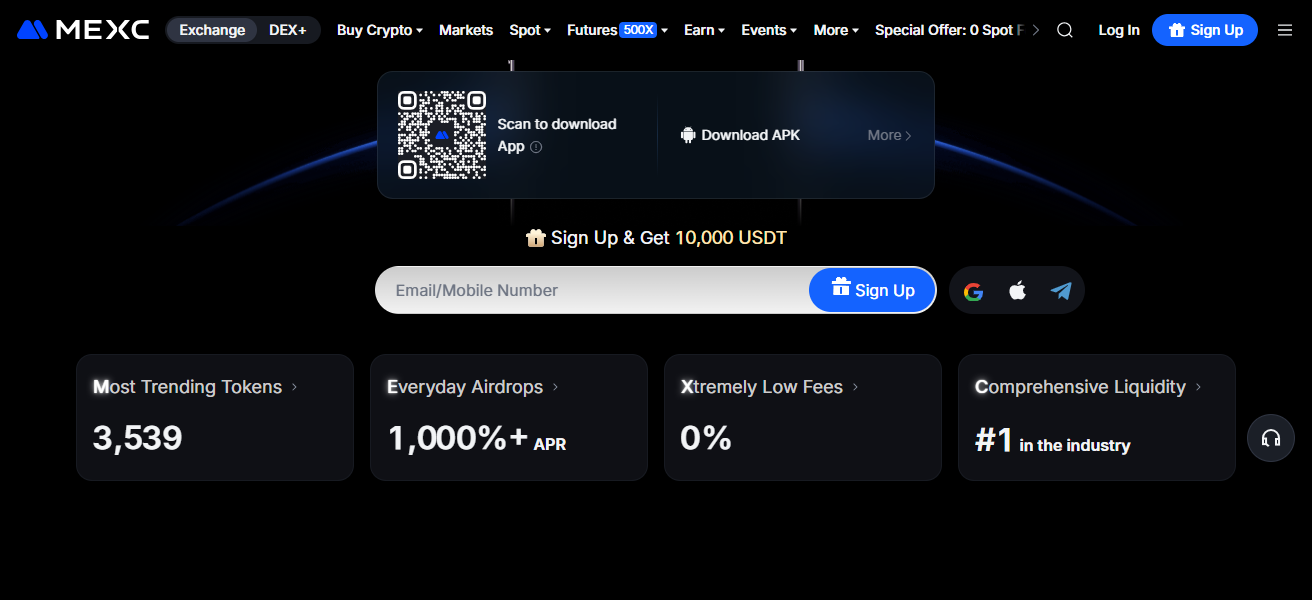
Furthermore, efficient cross-exchange trading is also allowed by MEXC’s fast deposit and withdrawal systems.
Also, MEXC allows for instant trading and their fees are lower which allows for better profit margins.
Coupled with great security, and an easy to use interface, their service will be great for professional arbitrage trading with a combination of the major, and some of the newer, cryptocurrencies.
They are differentiated by the variety of what they offer to more advanced trading systems with a high degree of speed and automation.
Features MEXC
Large Altcoin Selection: Multiple Cryptos Available for Profitable Arbitrage.
Spot, Margin and Futures Trading: Complex Strategizing for Arbitrage Activities.
API Access: Fast Execution of Trading for Automation.
Fast Deposits and Withdrawals: Fund Movement in Cross-Exchange Arbitrage. Easy of Use.
| Pros | Cons |
|---|---|
| Extensive altcoin listings. | Liquidity lower on smaller altcoins. |
| Spot, margin, and futures trading available. | Regulatory oversight less strict, increasing risk. |
| API access for automated arbitrage. | User interface less refined than top-tier exchanges. |
| Competitive fees and frequent promotions. | Some fiat gateways are limited in certain countries. |
| Fast deposits and withdrawals. | Not as well-known globally, potentially limiting arbitrage options. |
How We Choose Best Crypto Exchanges For Professional Crypto Arbitrage
Liquidity: A high volume of transactions ensures minimal slippage on larger arbitrage trades.
Markets and Trading Pairs: A vast selection of currencies, including spot, margin, and derivatives, is required for various arbitrage opportunities.
Low Fees and Tight Spreads: For high frequency trades, costs are reduced and profitability is increased.
Automation & API Support: Important for high frequency. Necessary for bot driven arbitrage strategies.
Security and Regulation: Your funds are protected with strong compliance and security from reliable crypto exchanges.
Rapid Deposit and Withdrawal: For efficient cross-exchange transfers required for arbitrage.
Global Reach: More regions means more arbitrage opportunities on the various markets
Cocnlsuion
In closing, the selection of the exchange is important in the field of professional crypto arbitrage. Exchanges such as Binance, Bybit, Kraken, KuCoin, and OKX have the best liquidity, trading instruments, and low costs with API support; thus, are the best for profit maximization.
Knowing the different attributes of every exchange helps a trader perform arbitrage in a safe, effective, and profitable manner in different tiers of global markets.
FAQ
Crypto arbitrage is the practice of buying a cryptocurrency on one exchange at a lower price and selling it on another at a higher price to profit from price differences.
Top exchanges include Binance, Bybit, Kraken, KuCoin, OKX, Gate.io, Bitfinex, Coinbase Pro, Huobi, and MEXC.
High liquidity ensures minimal slippage and allows executing large trades efficiently without affecting the market price.
Yes, trading and withdrawal fees can reduce arbitrage margins, so low-fee exchanges are preferred.
Yes, most professional exchanges provide API access for bots to execute fast, high-frequency arbitrage strategies.