In this article, I will examine the Best Crypto Protocols For Programmable Finance (DeFi 2.0) and look at platforms transforming decentralized finance.
These protocols offer Automated Liquidity and Yield Optimization, Secure Lending, and Programmable Smart Contract capabilities,
Allowing users and developers to devise advanced, composable financial strategies. We will focus on top protocols, including Uniswap v3, Aave v3, Curve, and others.
Key Points & Best Crypto Protocols For Programmable Finance (DeFi 2.0)
| Protocol | Key Features / Innovations |
|---|---|
| Uniswap v3 | Concentrated liquidity, customizable fee tiers, and improved capital efficiency |
| Aave v3 | Cross-chain asset transfers, gas optimization, and risk management enhancements |
| Curve Finance | Optimized for stablecoin swaps with low slippage and DAO governance |
| Balancer v2 | Flexible AMM pools, programmable liquidity, and gas-efficient architecture |
| SushiSwap | Multi-chain support, yield farming, and BentoBox for dApps |
| Convex Finance | Boosts Curve staking rewards and simplifies yield optimization |
| Yearn Finance | Automated yield strategies and vaults for passive income |
| Tokemak | Liquidity direction protocol allowing DAOs to control liquidity deployment |
| OlympusDAO | Protocol-owned liquidity and bonding mechanism for treasury growth |
| Chainlink | Decentralized oracle network enabling secure data feeds for smart contracts |
10 Best Crypto Protocols For Programmable Finance (DeFi 2.0)
1. Uniswap v3
Uniswap v3 was a turning point for decentralized exchanges due to its introduction of concentrated liquidity and multiple fees.
Liquidity providers (LPs) can now use a portion of their capital within custom price ranges, which increases slippage for traders.
The multiple fee tiers mitigate the different risk appetites for LPs and trading pairs. The AMM model allows seamless token swaps.
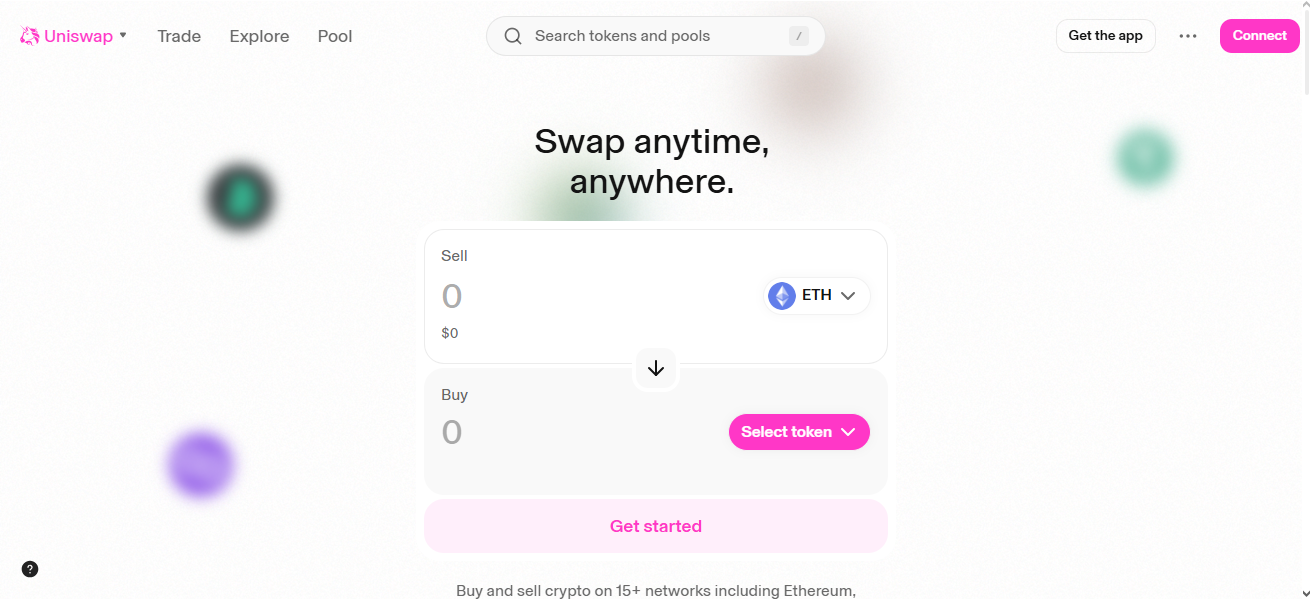
With the SDK and layer 3 products, Uniswap v3 and its composability with other protocols are at the forefront of programmable finance.
Developers can build sophisticated financial products, programmable advanced liquidity and automated yield farming.
| Feature | Description |
|---|---|
| Concentrated Liquidity | Liquidity providers can allocate capital to specific price ranges, increasing capital efficiency. |
| Multiple Fee Tiers | Offers different fee levels for various trading pairs to optimize LP earnings. |
| Automated Market Maker (AMM) | Facilitates token swaps without an order book. |
| Composability | Integrates easily with other DeFi protocols for advanced strategies. |
| Reduced Slippage | Improves trade execution for large trades within targeted liquidity ranges. |
2. Aave v3
Aave v3 is among the top decentralized protocols for lending and borrowing, letting customers earn interest on their deposits and borrow assets with overcollateralization.
This latest version is the first to implement the “Portal” feature which enables users to shift liquidity and over collateralized debt across different blockchains with ease.
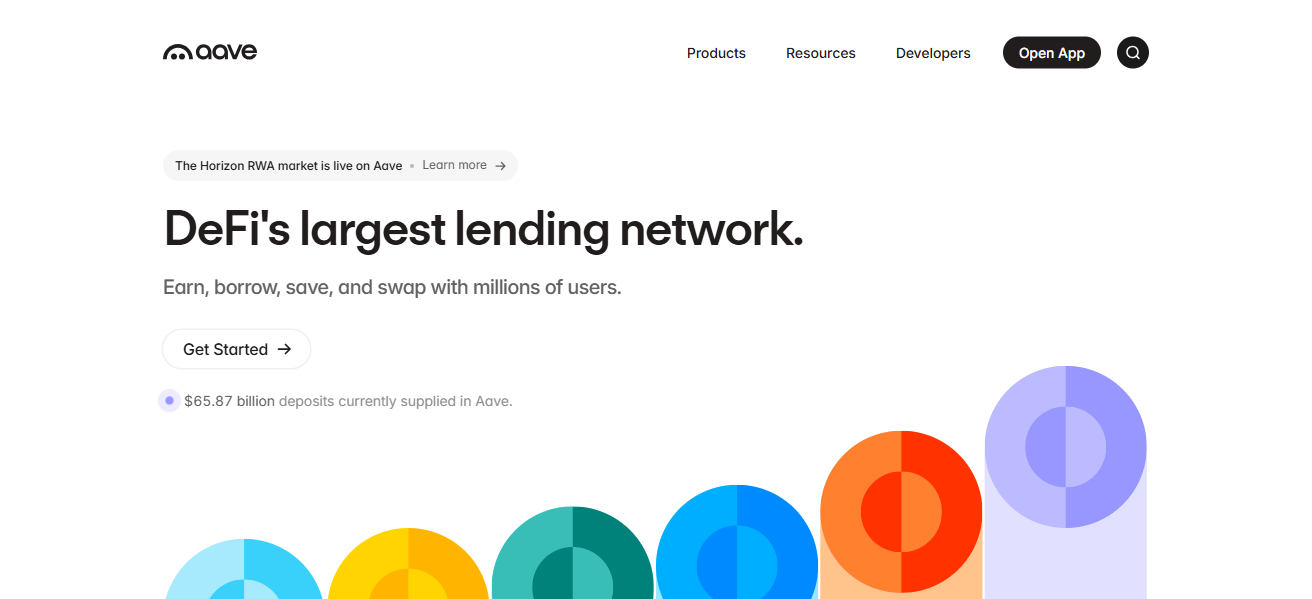
Other innovations such as the high-efficiency mode lets borrowers optimize their capital by offering one collateral and obtaining numerous loans.
Advanced risk management like the isolation mode lowers the risk of over collateralized volatile assets. This permissionless and programmable model is the reason Aave v3 is the industry standard for DeFi 2.0 and sophisticated financial automation.
| Feature | Description |
|---|---|
| Lending & Borrowing | Users can deposit assets to earn interest and borrow against collateral. |
| Isolation Mode | Allows volatile assets to be added safely without risking the whole protocol. |
| High-Efficiency Mode | Single assets can be used as collateral for multiple loans. |
| Cross-Chain Portals | Enables movement of liquidity and debt across different blockchains. |
| Flash Loans | Permissionless, instant loans with no collateral for advanced DeFi strategies. |
3. Curve Finance
Curve Finance focuses on trading stablecoins with little slippage and very low charges. With its unique bonding curve and AMM design, Curve Finance optimize stablecoin swaps, providing liquidity providers with low impermanent loss.
Curve Finance pools get lots of liquidity that ends up being locked as collateral in other DeFi protocols. This liquidity contributes to the liquidity providers yield generation.
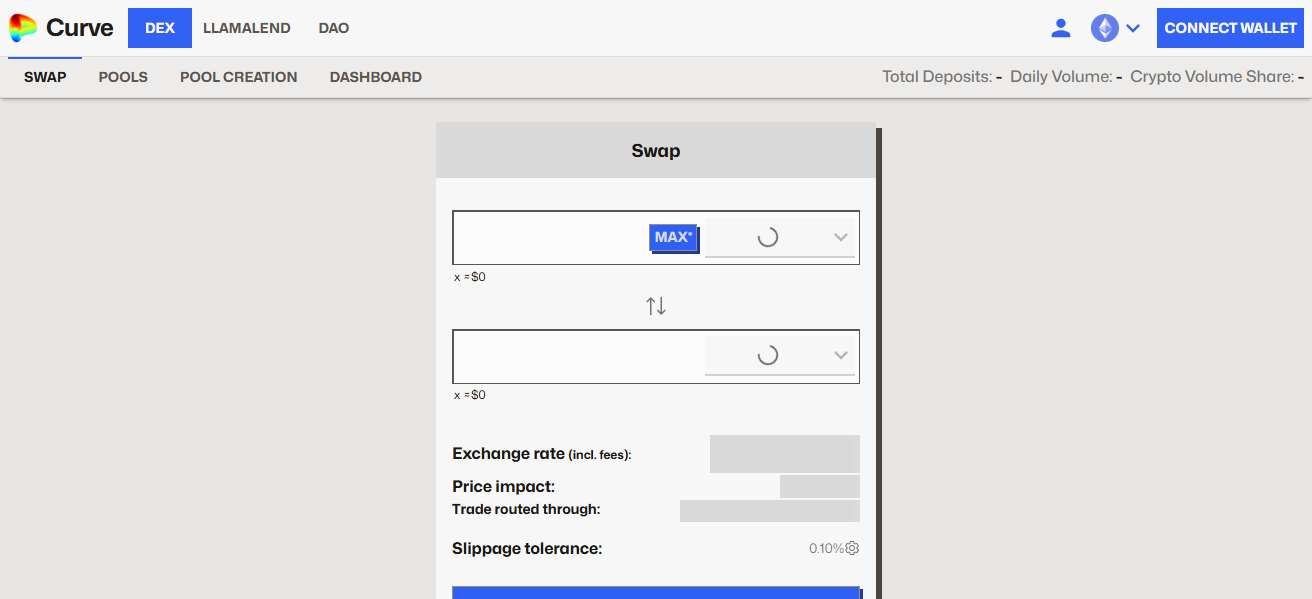
The governance token, CRV, uses boost mechanisms and staking rewards to encourage long-term commitment.
This Curve Governance token offers programmable money through partnerships with Protocols like Convex Finance and Yearn Finance, automated yield farming, liquidity management, and stablecoin arbitrage activities in the DeFi 2.0 ecosystem.
| Feature | Description |
|---|---|
| Stablecoin Optimization | Designed for low-slippage stablecoin and similar-asset swaps. |
| Low Fees | Reduces trading costs for high-volume liquidity pools. |
| Liquidity Pool Incentives | CRV token rewards encourage participation and staking. |
| Composability | Integrates with Convex, Yearn, and other protocols for advanced yield strategies. |
| Impermanent Loss Reduction | Pool design minimizes LP risk in stablecoin swaps. |
4. Balancer v2
Automated portfolio management has gotten better with Balancer v2. It allows multiple tokens in a single liquidity pool with custom weighted configurations to facilitate automation.
Its AMM design offers flexible compositions for the pools, which helps to minimize trading costs and impermanent loss for LPs.
Version 2 has improved on the separation of the pool and asset management logic and increased capital efficiency with the support of composable DeFi apps.
Dynamic fee structures are designed to encourage liquidity provision and to cover trading costs. Balancer programmable pools are able to rebalance and manage smart portfolio strategies, which pair with lending protocols and yield optimizers.
These capabilities are vital for DeFi 2.0, as they help develop automated index funds and multi-asset trading strategies.
| Feature | Description |
|---|---|
| Multi-Token Pools | Supports flexible pools with multiple assets and weightings. |
| Customizable Fees | Dynamic fee structures incentivize liquidity provision. |
| Smart Pools | Automatically rebalance and adjust asset weights for optimal returns. |
| Capital Efficiency | Separation of pool and asset management reduces unused capital. |
| DeFi Integration | Supports complex strategies including index funds and composable protocols. |
5. SushiSwap
SushiSwap operates as a decentralized exchange and a DeFi ecosystem. SushiSwap is more than just token swaps.
It offers lending, staking, and yield farming. SushiSwap uses an automated market maker model (AMM) which allows liquidity providers (LPs) to earn rewards by supplying liquidity.
The Onsen program rewards SushiSwap liquidity providers as they stake to provide liquidity to new projects.
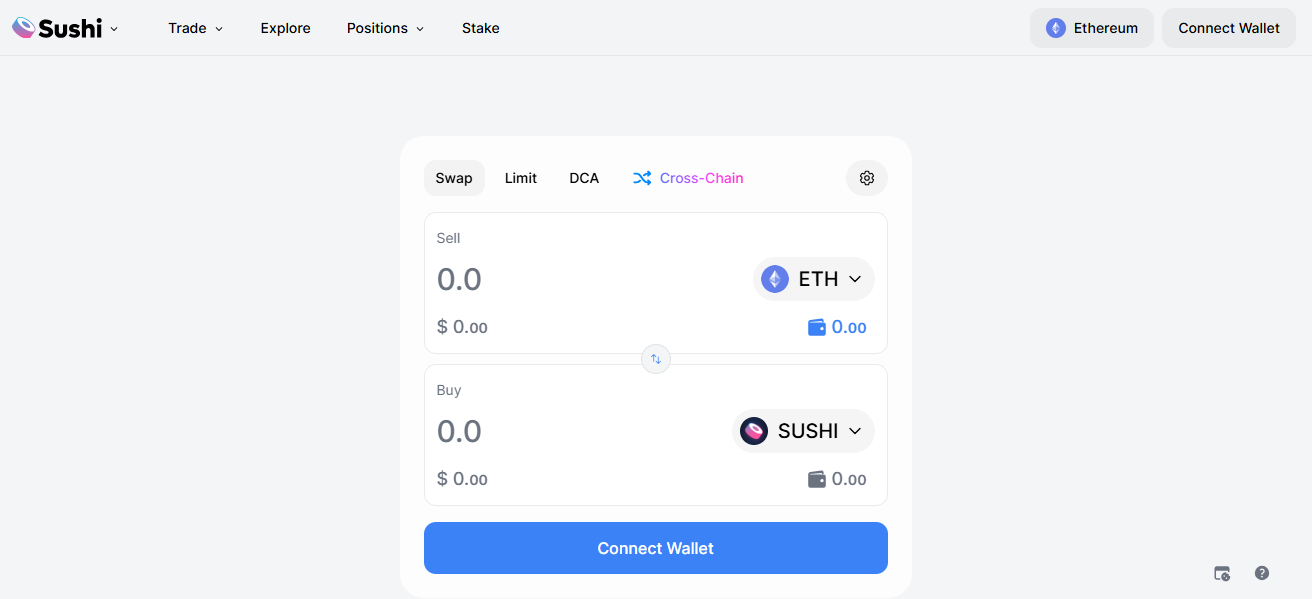
SushiSwap manages liquidity with a vault system, called BentoBox, and uses Kashi lending pairs for flexible leverage and borrowing.
The decentralized governance system for SushiSwap and its protocols uses SUSHI tokens. SushiSwap offers complex DeFi 2.0 applications with cross-protocol composable liquidity management, automated yield strategies, and multi-chain assets.
| Feature | Description |
|---|---|
| AMM DEX | Facilitates decentralized token swaps with liquidity provider rewards. |
| Onsen Program | Incentivizes new projects and liquidity pools. |
| BentoBox Vault | Maximizes capital efficiency for lending and yield strategies. |
| Kashi Lending | Flexible lending and leveraged trading pairs. |
| Community Governance | SUSHI token holders participate in protocol decisions. |
6. Convex Finance
Convex Finance improves yield farming for Curve LPs, and allows users to stake CRV and LP tokens for boosted rewards. Convex is able to pool user stakes without individual participants CRV emissions, thus lowering gas prices and profitabilty.
Convex’s Curve integrations, along with other protocols, provides programmable yield strategies where smart contracts self-optimize and reinvest rewards.
With governance over yield distribution and reinvestment readily accessible, Convex became a top used system for DeFi 2.0 to easily and automatically yield farm, as well as composable yield farming.
| Feature | Description |
|---|---|
| Curve Yield Optimization | Boosts CRV rewards for LPs automatically. |
| Reward Aggregation | Pools user stakes to maximize emissions and reduce gas fees. |
| Simplified Participation | Allows users to earn rewards without managing multiple positions. |
| Composability | Integrates with Curve and other DeFi protocols for advanced strategies. |
| Governance Participation | Users can engage in Curve governance via Convex. |
7. Yearn Finance
Yearn Finance enables users to automate the yield optimizing process over several different DeFi protocols.
Users can deposit assets into “vaults” that perform complicated investment strategy automation. Smart contracts automate the process of reallocating funds and comparing the possible yields over different lending
liquidity, and farming protocols, saving users the work of constantly adjusting their strategy to maximize yields. Yearn Finance minimizes gas costs by their unique capital movement.
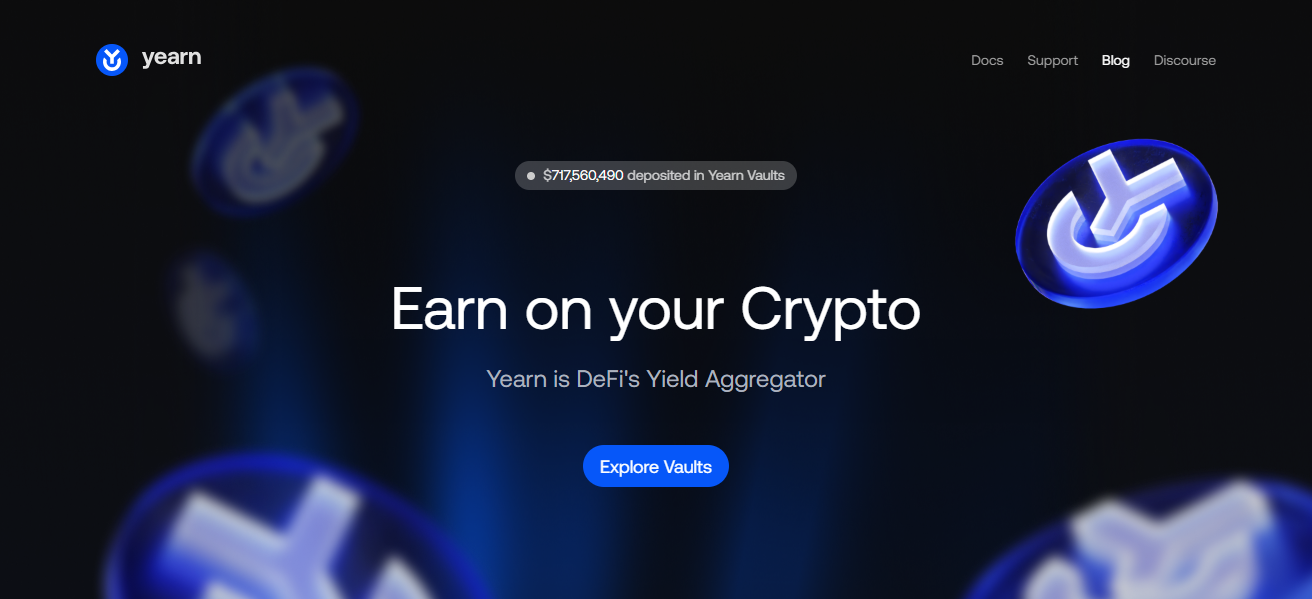
YFI, their governance token, lets users vote on suggested alterations to investment strategies. They abstract a large part of DeFi manual operations, making profit from programmable finance without any work.
Vaults, strategies, and partnerships with protocols such as Curve and Aave incorporate automation, composability, and risk management principles as described in DeFi 2.0.
| Feature | Description |
|---|---|
| Vaults | Automates yield optimization across multiple DeFi protocols. |
| Strategy Automation | Smart contracts reallocate funds to maximize returns. |
| Gas Optimization | Batch transactions reduce user costs. |
| Composability | Integrates with Curve, Aave, and other protocols. |
| Governance | YFI token holders vote on new strategies and vault parameters. |
8. Tokemak
Tokemak supplying decentralized liquidity infrastructure directs capital to protocols looking for liquidity and works as a liquidity router for DeFi.
The Tokemak “reactors” enables the token holders to stake their assets and vote on which liquidity departure point to optimize.
This capital flows at a higher efficiency across the DeFi ecosystem. Tokemak incentivizes the long-term provisioning of liquidity.
DeFi protocols and applications access liquidity for swaps, lending, and yield strategies through Tokemak’s abstracted liquidity management.
Tokemak programmable liquidity management through customizable, automatic mechanisms, and access absolute control over the liquidity, yield-optimizing across protocols. This transforms capital management flows between the DeFi protocols, aligning with the DeFi 2.0 vision.
| Feature | Description |
|---|---|
| Liquidity Routing | Directs liquidity to protocols that need it. |
| Reactor Staking | Users stake assets to control liquidity allocation. |
| Capital Efficiency | Reduces impermanent loss and improves trading execution. |
| Incentivization | Rewards participants for providing liquidity. |
| Programmable Liquidity | Supports automated, optimized liquidity deployment for DeFi 2.0. |
9. OlympusDAO
OlympusDAO employs innovative DeFi 2.0 designed with decentralized reserve currency protocols. Besides being speculative, the native OHM token is backed by a slice of a basket of reserve assets, and OlympusDAO employs a new bonding mechanism.
The new bonding mechanism incentivizes long-term liquidity provisioning, which is very innovative for OlympusDAO.
Treasuries backing the model stabilizes the protocol and incentivizes network growth. “Staking + bonding + treasury management” serve as the pillars for new programmability and automate financial strategies.
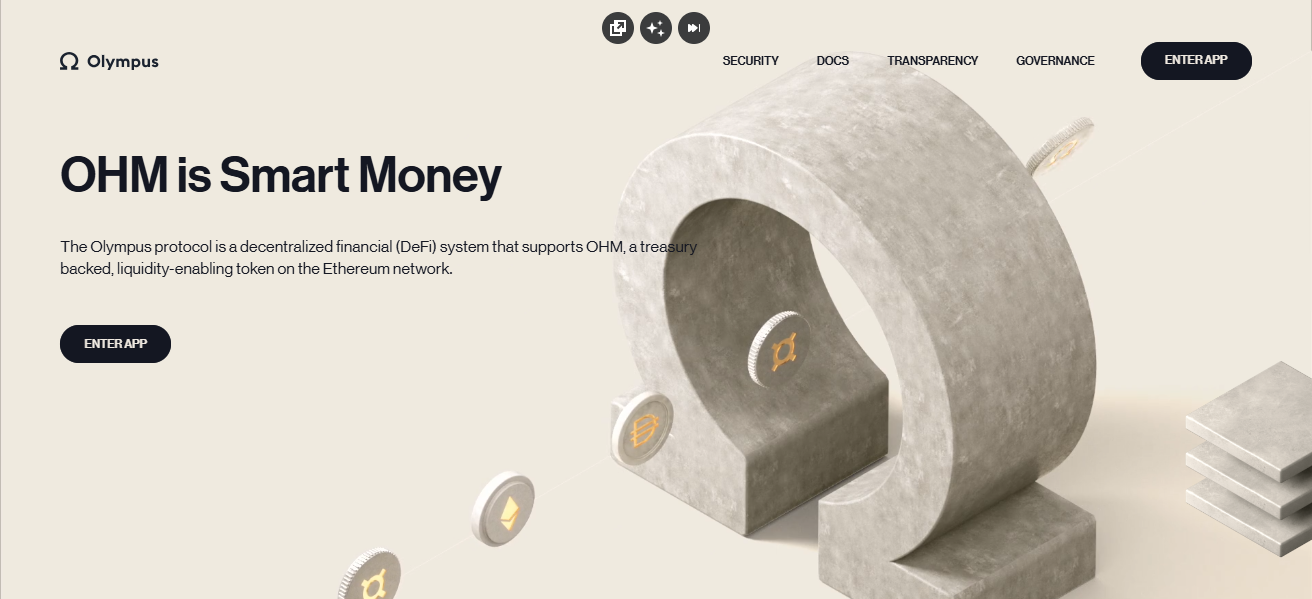
This is a very innovative structure and primitive DeFi 2.0 designed with decentralized reserve currency protocols.
This has incentivized a lot of new DeFi 2.0 protocols and designed them to align self-sustaining automated financial ecosystems.
| Feature | Description |
|---|---|
| Reserve-Backed Token | OHM is backed by a basket of assets rather than being purely speculative. |
| Bonding Mechanism | Users acquire OHM at discounted prices in exchange for assets. |
| Staking Rewards | Encourages long-term participation in the protocol. |
| Treasury Management | Protocol-owned assets stabilize the ecosystem. |
| DeFi 2.0 Model | Enables automated financial strategies and self-sustaining liquidity. |
10. Chainlink
Chainlink integrates and integrates blockchain technology with weather updates and event smart contracts through programmable finance.
Chainlink secures a real-time data feed through its network of decentralized oracles which touches on pivotal data for loans, derivatives, and real-time insurance using programmable cash.
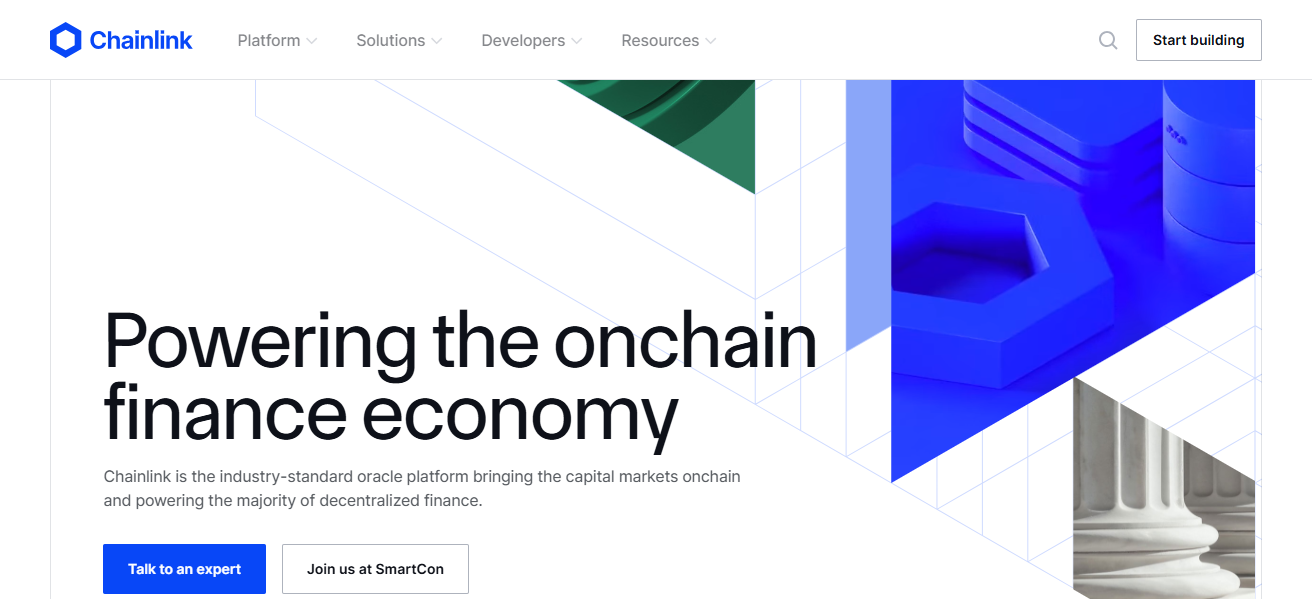
Chainlink provides potential embedded synthesis tools, such as VRF and automation (Keepers), which allow advanced programmable cash to be responsive to current market conditions.
Chainlink is important for interoperability through its programmable financial network and automates DeFi applications.
| Feature | Description |
|---|---|
| Decentralized Oracles | Provides secure, tamper-proof off-chain data to smart contracts. |
| Price Feeds | Reliable data for DeFi lending, derivatives, and trading protocols. |
| Verifiable Randomness (VRF) | Enables secure, provably fair random numbers for applications. |
| Automation (Keepers) | Executes predefined actions based on real-world events. |
| Composability | Supports programmable finance by connecting on-chain protocols with off-chain data. |
Cocnlsuion
In conclsuion Primary crypto protocols focused on programmable finance (DeFi 2.0) provide users with automated, efficient, and composable financial tools.
Uniswap, Aave, Curve, and Yearn focus on optimizing liquidity, yield, and capital efficiency. For governance and treasury management, Convex, Tokemak, and OlympusDAO provide enhanced strategies.
Chainlink provides the essential off-chain data connectivity, making all these protocols indispensable for the building blocks of the next generation of decentralized finance.
FAQ
They are next-gen decentralized finance platforms focusing on automation, capital efficiency, and composability for programmable finance.
Aave v3 and Kashi (SushiSwap) allow users to lend, borrow, and leverage assets.
Yearn Finance, Convex Finance, and Tokemak automate yield farming and liquidity management.
Chainlink provides decentralized oracles, VRF, and automation for reliable on-chain data.
It creates treasury-backed, self-sustaining protocols with bonding and staking mechanisms