
This article will discuss which are the Best Crypto Treasury Management Tools which allow Companies, DAOs, and other Institutions which need to manage Digital Assets to do so safely.
These tools automate treasury functions to provide ease of asset management, including features like, asset tracking, secure custody, reporting automation, and governance.
Selecting the correct crypto treasury management system is critical to achieving greater financial visibility and control, safety, and efficiency in today’s digital accelerated ecosystem.
Key Points & Best Crypto Treasury Management Tools
| Tool | Key Point |
|---|---|
| Breezing | Automates reconciliation across wallets and exchanges |
| Multis | Multi-signature approvals for secure team transactions |
| Coinshift | Advanced reporting tailored for DAOs and Web3 startups |
| Gnosis Safe | Modular smart contract wallet infrastructure |
| Fireblocks | Institutional-grade custody with MPC technology |
| Bitwave | Crypto-native accounting and tax compliance integration |
| Tres Finance | Real-time visibility into treasury balances and flows |
| Koinly Business | Automated tax reporting for corporate crypto holdings |
| Ledger Enterprise | Hardware-secured treasury operations for enterprises |
| Tokeny | Tokenization platform enabling compliant asset issuance |
10 Best Crypto Treasury Management Tools
1. Breezing
Breezing is accounting and treasury subledger automation software that streamlines the financial operations of companies and accountants who hold crypto assets.
Breezing automates the syncing of transactions to accounting software such as Xero and Quickbooks from wallets, exchanges and blockchains, minimizing error and reducing manual processes.
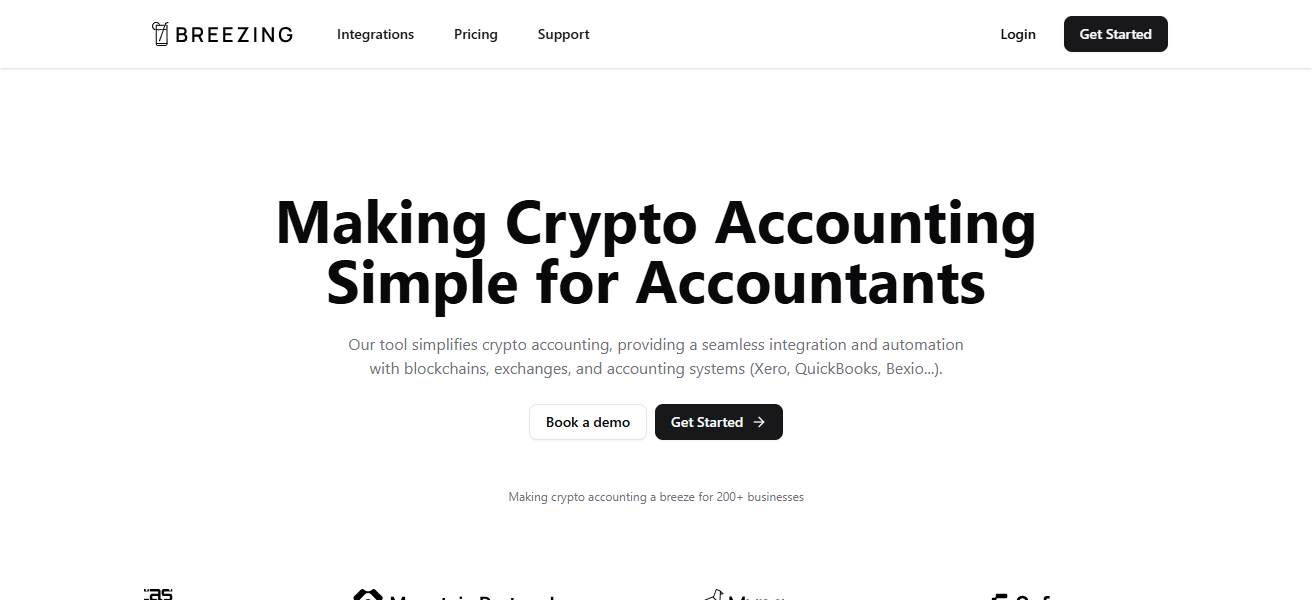
Breezing’s crypto-accounting tracking portfolio balance, transaction categorization, and the ability to produce audit-ready documents and records makes preparing financial statements easier.
Because of its crypto-accounting integration and Transparent Public Audit, it is an asset to corporate treasury departments who, within the corporate treasury functions of finance, hold digital assets.
Features Breezing
- Automated Transaction Sync – Transfers and records information from wallets, exchanges, and chains without difficulties.
- Accounting Integration – Links with conventional software like QuickBooks and Xero.
- Audit-Ready Records – Automatically produces clean records for upcoming compliance and reviews and audits.
- Real-Time Portfolio Insights – Provides visibility for balances and movements.
| Pros | Cons |
|---|---|
| Automates transaction imports from wallets & exchanges | Focused mainly on accounting—less on multi-sig custody |
| Integrates with traditional accounting systems | Limited advanced treasury workflows |
| Reduces manual bookkeeping errors | Not ideal for full treasury governance |
| Helps create audit-ready records | Might require accountant setup |
2. Multis
Multis is a cryptocurrency wallet and treasury management service tailored to organizations that require partnership control over their assets and collaborating.
Multis eliminates the risks that come with single-point-of-failure governance with its multi-sig model and tiered governance.
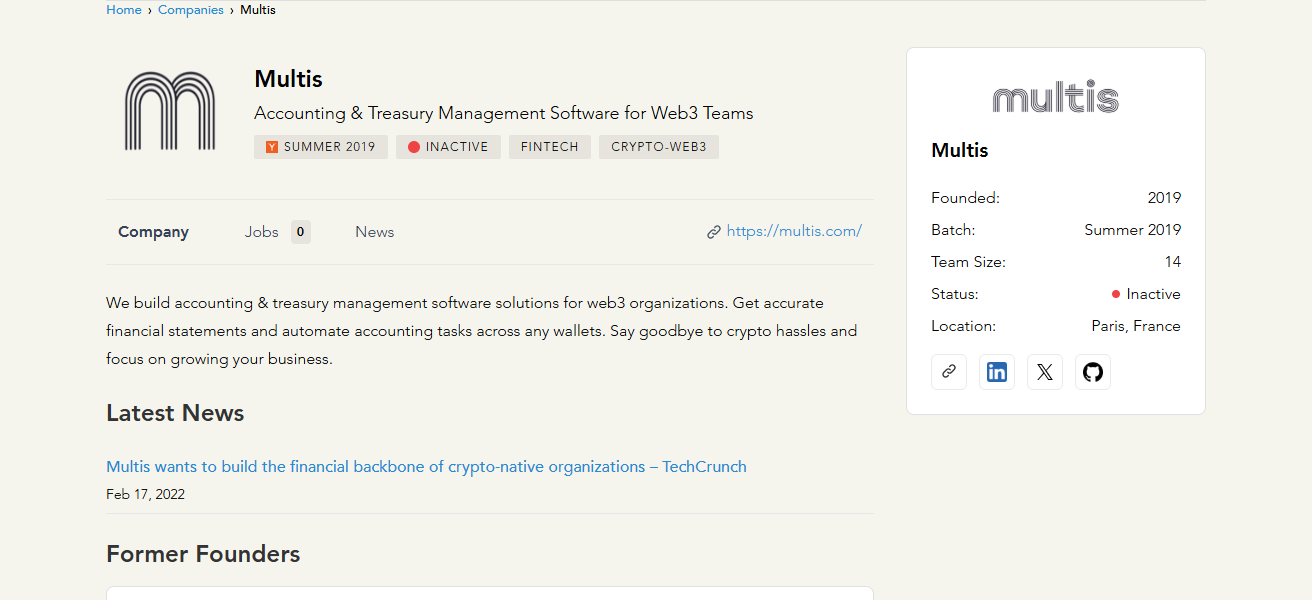
This model is very helpful for DAOs and companies with multiple executives that need to approve movements of capital, reimbursements, and operational payments.
With on-chain custody and varying governance structures, Multis balances the responsibility and risk of treasury management across blockchains.
Features Multis
- Multi-Signature Wallet – Provides a safe authorization of transactions by requiring a number of approvals.
- Collaborative Governance – Tailored for teams, DAOs, and shared control arrangements.
- Multi-Chain Support – Operates on a number of different blockchain networks.
- User Access Management – Adjustable signing rules and role permissions.
| Pros | Cons |
|---|---|
| Multi-signature security for shared governance | Setup complexity for non-technical users |
| Reduces risk of unauthorized spending | Fewer advanced analytics features |
| Designed for teams and DAOs | Workflow features are basic compared to enterprise tools |
| Supports multiple blockchains | Requires multiple signers for transactions (slower) |
3. Coinshift
A multi-chain treasury management application, Coinshift manages treasuries across many wallets and smart contracts.
It’s non-custodial and consolidates safes, displaying them on one dashboard for easy control and management of treasury payments, payroll, and budgeting.

Total control of multi-sig, finance teams can automate payouts, transfer seamlessly, and generate reports in a fraction of the time.
Coinshift has on-chain accounting and cash-flow insights so customers can easily and efficiently control their crypto treasury.
Features Coinshift
- Unified Treasury Dashboard – A single hub for consolidation of all on-chain assets and wallets.
- Batch Payments & Payroll – Perform mass payment transactions.
- Real-Time Reporting – Instant access to data to assess transactions and monitor activity.
- Non-Custodial Control – Control the operations while you retain full custody of the assets.
| Pros | Cons |
|---|---|
| Unified, multi-chain treasury dashboard | Can be complex for small projects |
| Supports mass payouts & payroll | Pricing may be high for startups |
| Real-time portfolio & cash-flow insights | Advanced setup needed |
| Non-custodial control | Learning curve for non-finance teams |
4. Gnosis Safe
Gnosis Safe has gained a great amount of trust as a multi-signature smart contract wallet allowing organization to protect their crypto assets with collective control.
Spending crypto assets is only allowed during the transaction as the system requires a certain amount of signers to approve each transaction allowing a greater level of security from unauthorized spending.

The Safe software is customizable with modules that support treasury workflows, transaction batching, and governance control integrations, which adds to its usability when it comes to DAOs, foundations, and team-managed treasuries.
Enterprises leverage to Safe to implement internal control and manage digital assets with minimal operational risk while transparent audit trails.
Features Gnosis Safe
- Smart Contract Multi-Sig – Digital assets are stored securely on-chain with a wallet that requires multiple signatures to access.
- Modular Extensions – Additional governance, batching, and automation modules can be appended.
- Audit Transparency – All events recorded on the blockchain for scrutiny.
- Role-Based Controls – Signer roles and transaction limits are customizable.
| Pros | Cons |
|---|---|
| Strong multi-sig security | Primarily a wallet—requires add-ons for extra tools |
| Transparent on-chain governance | Not a full treasury accounting suite |
| Widely adopted and audited | Needs integrations for advanced reporting |
| Good for DAOs & teams | Limited built-in automation |
5. Fireblocks
Fireblocks is a custody and treasury digital asset service focused on ensuring the safety and security of digital asset operations for institutional clients.
Protecting digital asset operations and private keys is complex. Fireblocks utilizes industry-leading cryptography, including multi-party computation (MPC) and other security industry certifications that eliminate single points of compromise for the industry.
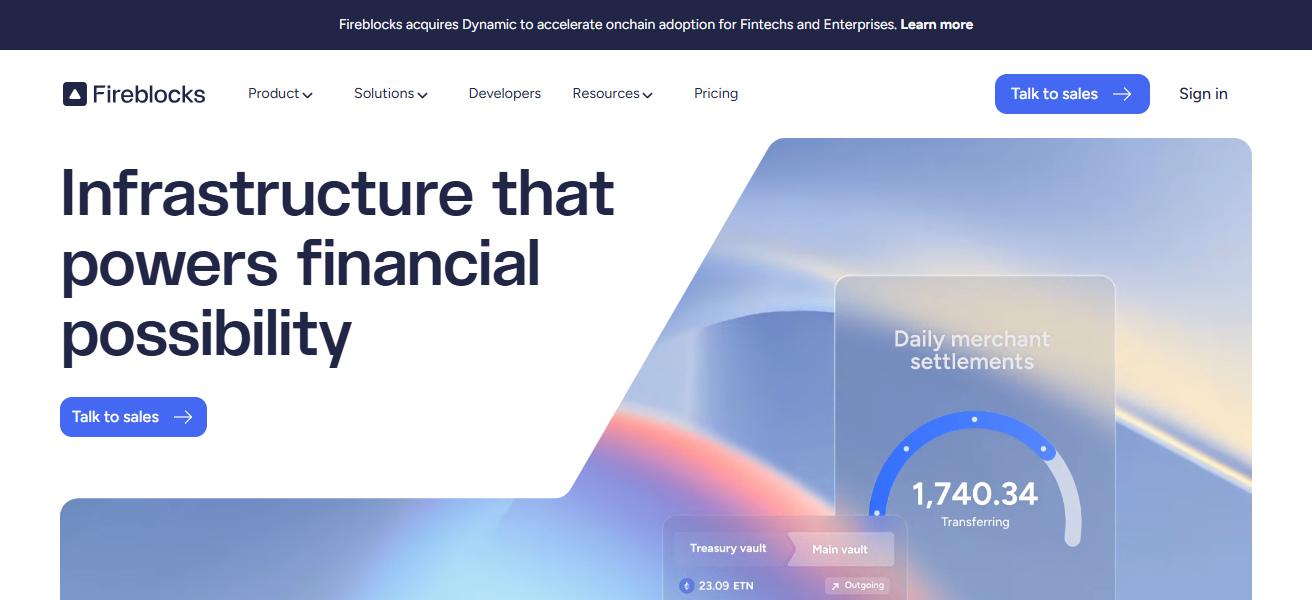
Fireblocks customers can wallet, sandbox governance and automation compliance, and manage seamless workflows with controls.
Fireblocks provides a secure liquidity transfer network, which enables customers to access and manage digital asset counterparty integrations. Fireblocks is a digital asset treasury and custody solution for enterprises.
Features Fireblocks
- MPC Key Security – Handles keys using secure multi-party computation.
- Secure Transfer Network – Moves rapidly and securely between parties.
- Policy & Compliance Engine – Apply rules on outbound transaction flows.
- Liquidity & Integration Access – Access to crypto exchanges and DeFi.
| Pros | Cons |
|---|---|
| Institutional-grade security (MPC) | Can be expensive for small teams |
| Connects to exchanges & DeFi | Overkill for basic treasury needs |
| Automated compliance workflows | Complex initial setup |
| Centralized policy controls | Requires training for operations teams |
6. Bitwave
Bitwave is an enterprise-centric crypto finance operation platform that automates accounting, compliance, and reporting for digital asset holdings.
It receives and integrates transaction data for corporate systems and produces real-time, fully compliant audit records for GAAP and IFRS.
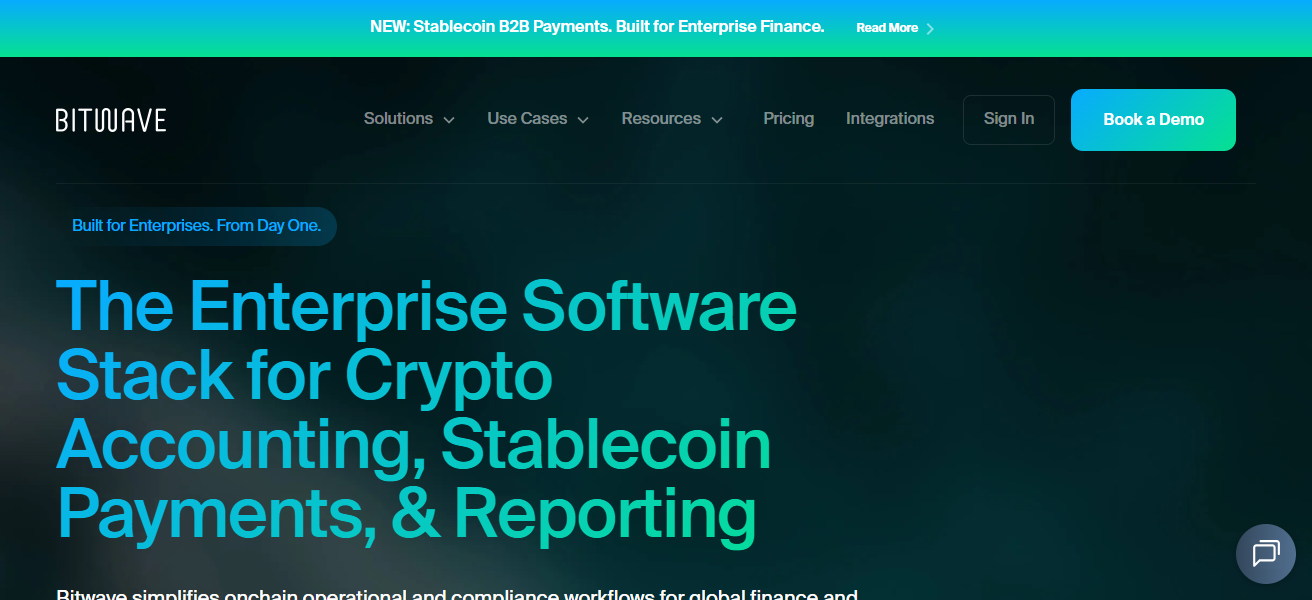
Automation by Bitwave diminishes the supply of manual reconciliation and margin for error during the retention of complex treasury activities for crypto-heavy companies.
Although Bitwave is meant for finance teams and not individual crypto traders, the platform’s infrastructure is still quite helpful for any business that has crypto assets on its balance sheet.
Features Bitwave
- Automated Accounting – Auto transaction syncing with ledgers.
- Tax & Reporting Tools – Global compliant tax calculations.
- Integration with ERP Systems – Compatible with enterprise financial systems.
- Reconciliation Automation – Minimizes manual record matching.
| Pros | Cons |
|---|---|
| Enterprise-focused accounting automation | Mainly accounting—less custody control |
| GAAP/IFRS compliant reporting | High cost for small businesses |
| Saves manual reconciliation time | Strong accounting background often required |
| Integrates with corporate systems | Not primarily a wallet or multi-sig platform |
7. Tres Finance
Tres Finance is a specially devised treasury and crypto finance platform built for protocols, enterprises and institutional teams.
It functions to centralize asset tracking,Expense management, invoicing and financial reporting administrators across exchanges, wallets, and blockchains.
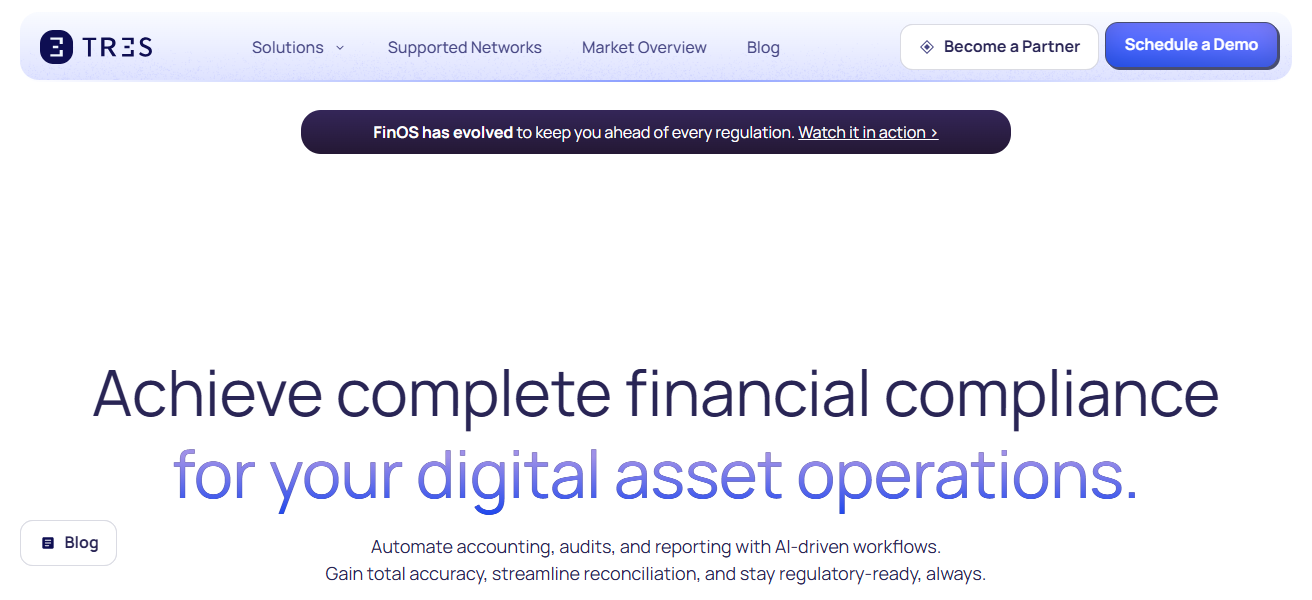
Tres finance automates audits and regulatory compliances to help the finance team close the books faster and more accurately.
With a re investment focus and deep integration to ERP systems, the platform is built for complex corporate environments needing immediate insight into on-chain and off-chain activities.
Features Tres Finance
- Centralized Data Hub – Wallets, exchanges, and smart contracts aggregation.
- Financial Reporting Suite – Audit summarization and statement generation.
- Expense & Invoicing Tools – Supports business expenditure and billing.
- Compliance Support – Assists teams with regulations.
| Pros | Cons |
|---|---|
| Centralizes tracking across wallets & exchanges | Might be feature-heavy for small teams |
| Automated reconciliation | Pricing could be high |
| Supports audit-ready reporting | Learning curve for new users |
| Helps with regulatory compliance | Not all features needed for simple treasuries |
8. Koinly Business
Koinly Business is an automated crypto tax and accounting solution specifically designed for companies to monitor, report, and balance activities involving digital assets such as cryptocurrency.
It assimilates transaction information, calculates costs down to the minutiae, determines gains/losses, and reports taxes for multiple jurisdictions.
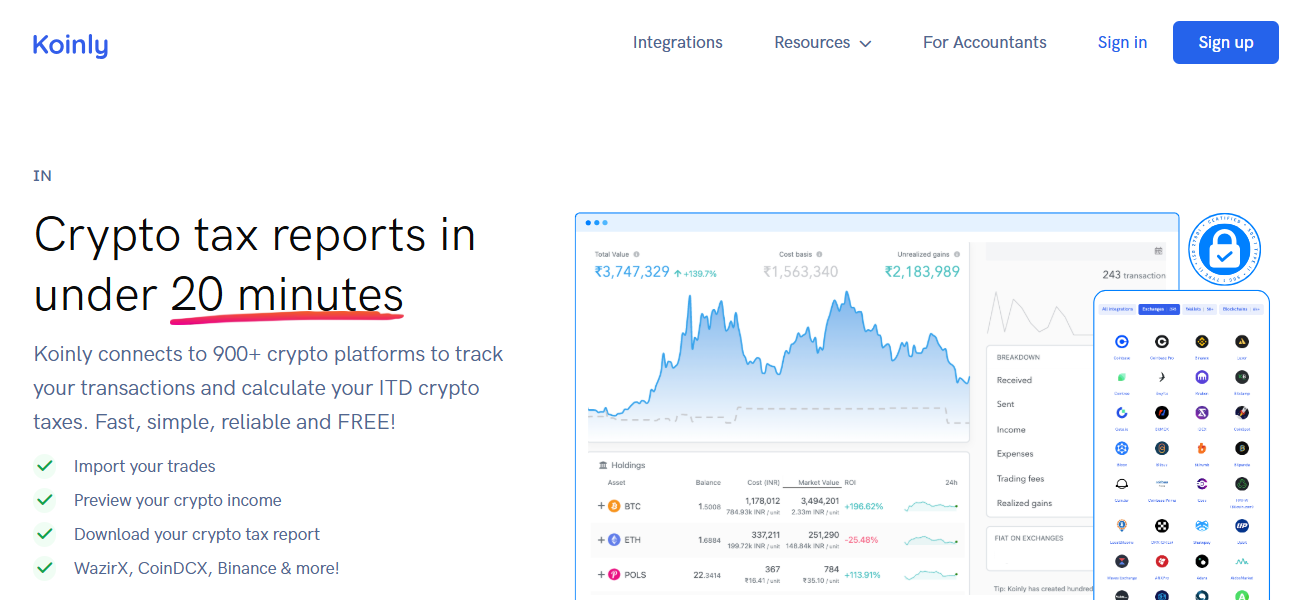
Finance teams can create reports for compliance, transfer accounting results to related software, and keep treasury records accurate with minimal direct data input.
Automation features assist in tax compliance and, in corporate settings, facilitate other treasury management functions as well.
Features Koinly Business
- Tax Calculation Engine – Computes gains and losses across borders.
- Auto Import Sync – Integrates exchanges and wallets for data syncing.
- Exportable Reports – Provides tax and accounting documents for teams.
- Cost Basis Management – Monitors the basis across multiple transactions so that there is proper attribution of costs.
| Pros | Cons |
|---|---|
| Strong tax reporting automation | Primarily tax-focused — not full treasury |
| Multi-jurisdiction calculation support | Not designed for operational payouts |
| Syncs with wallets & exchanges | Limited governance tools |
| Exportable compliance reports | Less useful without accounting integration |
9. Ledger Enterprise
Ledger Enterprise is designed for financial entities and allows them to control and securely manage their digital assets through a mix of self-managed systems and digital self-custody.
Ledger Enterprise allows organizations to control governance and operational activities through a blend of custom software and self-managed systems.
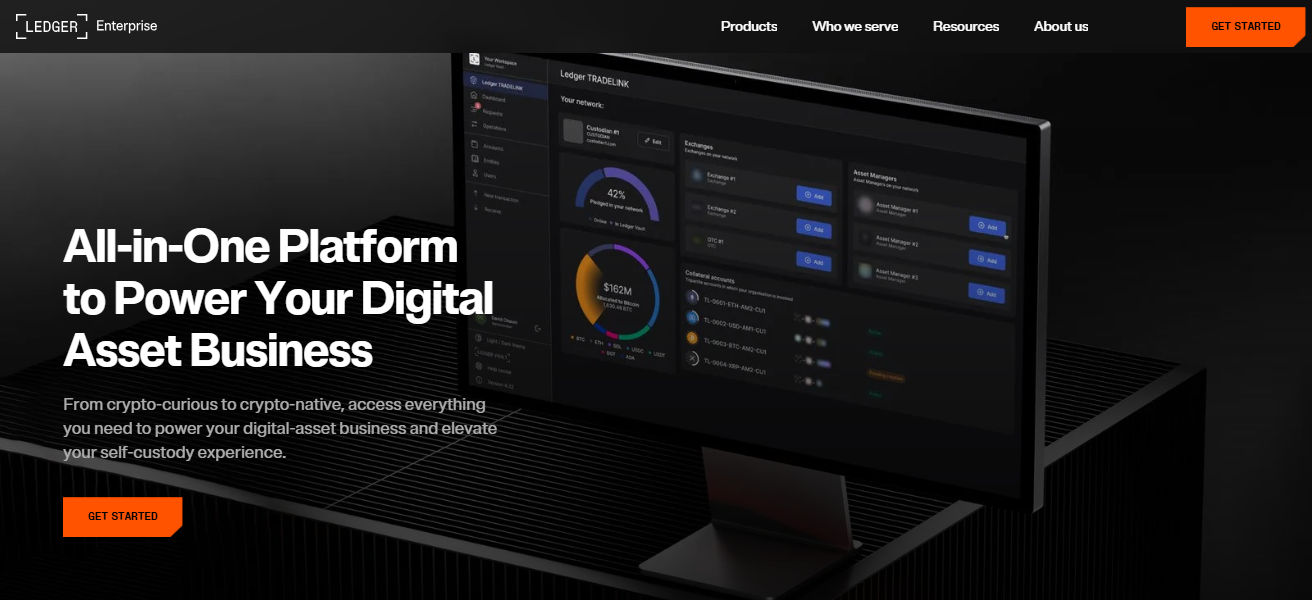
Enterprises can manage tens of millions in crypto asset portfolios and conduct virtually limitless transactions through compliance-report automation and support for thousands of digital assets. The platform is designed so organizations don’t need to work with any third party custodians.
Features Ledger Enterprise
- Institutional Self-Custody – A secure self-custody solution based on the combination of both hardware and software for enterprises.
- Access Governance – Role-based controls with approval workflows.
- Asset Support Diversity – Thousands of tokens and chains are supported.
- Secure Signing Environment – High-security signing of keys is done offline.
| Pros | Cons |
|---|---|
| Institutional custody & self-custody security | Focus is custody—less on analytics |
| Supports thousands of assets | Need external tools for reporting |
| Strong audit trail | Hardware dependency |
| Control & compliance features | Not a full treasury workspace |
10. Tokeny
Tokeny is designed as an on-chain finance operating system and focuses on compliant asset tokenization and lifecycle management.
It allows organizations to issue, manage, and trade tokenized securities and other financial instruments on blockchains while remaining compliant.
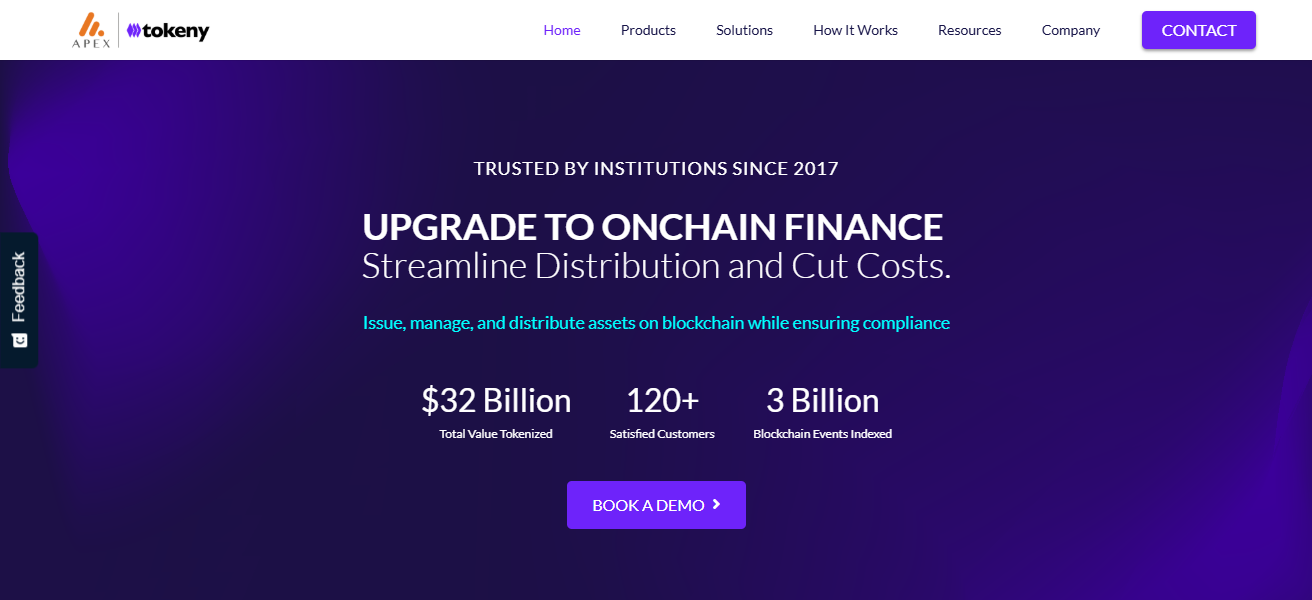
Tokeny automates the token issuance, onboarding of investors, transfer rules, and corporate actions to streamline the management of any treasury operations tied to tokenized assets.
It is not a traditional treasury dashboard, but its treasury token lifecycle management instruments help financial teams incorporate digital assets into the corporate and treasury workflows.
Features Tokeny
- Token Issuance Platform – A compliant tool for the creation of tokenized assets.
- Investor Onboarding – Workflows for KYC/AML and access control.
- Transfer Rule Enforcement – Automates restrictions and compliance logic.
- Token Lifecycle Management – From issuance to corporate actions.
| Pros | Cons |
|---|---|
| Excellent for compliant token issuance | Not a classic treasury tool |
| Automates investor onboarding & transfers | Not focused on wallet management |
| Strong compliance features | Limited traditional treasury insights |
| Token lifecycle support | Needs integrations for full treasury ops |
How We Choose Best Crypto Treasury Management Tools
- Security & Custody Model — Digital assets’ safety is of greatest concern, for which we choose tools with best custody self-custodial options and advanced security like MPC and multi-signature wallets.
- Treasury Functionality — Essential treasury functions of every platform like Tracking assets, making payments and payroll, budgeting, and their approval workflows.
- Accounting & Reporting — Tools with a good ability to integrate with accounting as well as generate reports that are audit compliant and current.
- Multi-Chain & Asset Support — Multi-blockchain support and a broad array of tokens are imperative for adaptable treasury management.
- Governance & Access Control — Function role based permissions, approval limits and transaction policies are essential for treasuries managed by teams.
- Compliance & Regulation — Tools are considered for features that ease tax reporting, audit facilitation and regulation compliance.
- Ease of Use & Integration — Control dashboards and integration with wallets, exchanges, and ERPs should be simple.
- Scalability & Reliability — We prefer these tools for treasury management best as they handle large transaction volume efficiently.
Conclusion
In closing, the Best Crypto Treasury Management Tools simplify the ways companies can store, track, and account for digital assets.
Multi-signature security and automated accounting with compliance support lead to greater visibility and financial control.
Striking a balance between the appropriate level of complexity, size and operational requirements for your organization determines the most suitable tool and results in optimal crypto treasury management.
FAQ
A platform that helps organizations track, secure, manage, and report on digital asset holdings and related financial operations.
To improve security, automate reporting, maintain compliance, and streamline treasury operations for crypto assets.
Security, multi-chain support, reporting & accounting integration, approvals/governance, and compliance capabilities.
Some are (e.g., Multis, Breezing), but enterprise tools (like Fireblocks, Ledger Enterprise) may be complex and costly.
Most tools support several chains, but exact compatibility varies by platform.