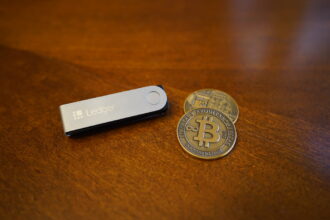
In this article, I will discuss the Best Crypto Wallets with Smart Contract Wallet Support. With the rise of DeFi, NFTs, and blockchain applications, having a wallet that not only stores crypto securely but also supports smart contracts has become essential.
- Key Points & Best Crypto Wallets With Smart Contract Wallet Support
- 10 Best Crypto Wallets With Smart Contract Wallet Support
- 1. Safe Wallet
- 2. Coinbase Smart Wallet
- 3. MetaMask + Smart Contract Extensions
- 4. Trust Wallet
- 5. Rainbow Wallet
- 6. Zerion
- 7. Ambire Wallet
- 8. Openfort
- 9. Sequence Wallet
- 10. Pillar Wallet
- Conclusion
- FAQ
These wallets enable automated transactions, dApp interactions, and enhanced security for both beginners and advanced users.
Key Points & Best Crypto Wallets With Smart Contract Wallet Support
| Wallet | Key Point |
|---|---|
| Safe | Multisig protection for teams and high-value traders |
| Coinbase Smart Wallet | Simple integration with DeFi apps for newcomers |
| MetaMask + Smart Contract Extensions | Widely used wallet with dApp and DeFi support |
| Trust Wallet | Mobile-first wallet with smart contract interaction |
| Rainbow Wallet | User-friendly Ethereum wallet with NFT and DeFi support |
| Zerion | Portfolio management plus smart contract DeFi trading |
| Ambire Wallet | Gas fee optimization and smart contract automation |
| Openfort | Embedded smart accounts for enterprises and developers |
| Sequence Wallet | Smart contract wallet tailored for Web3 gaming |
| Pillar Wallet | Community-driven smart wallet with DeFi and NFT support |
10 Best Crypto Wallets With Smart Contract Wallet Support
1. Safe Wallet
Safe Wallet specializes in smart contracts, multi-signature, and keeping digital assets safe. Customers can perform complex transactions on-chain.
Safe Wallet is good for businesses and advanced users. Money is safe with multi-approvals, so unauthorized access is not a problem.
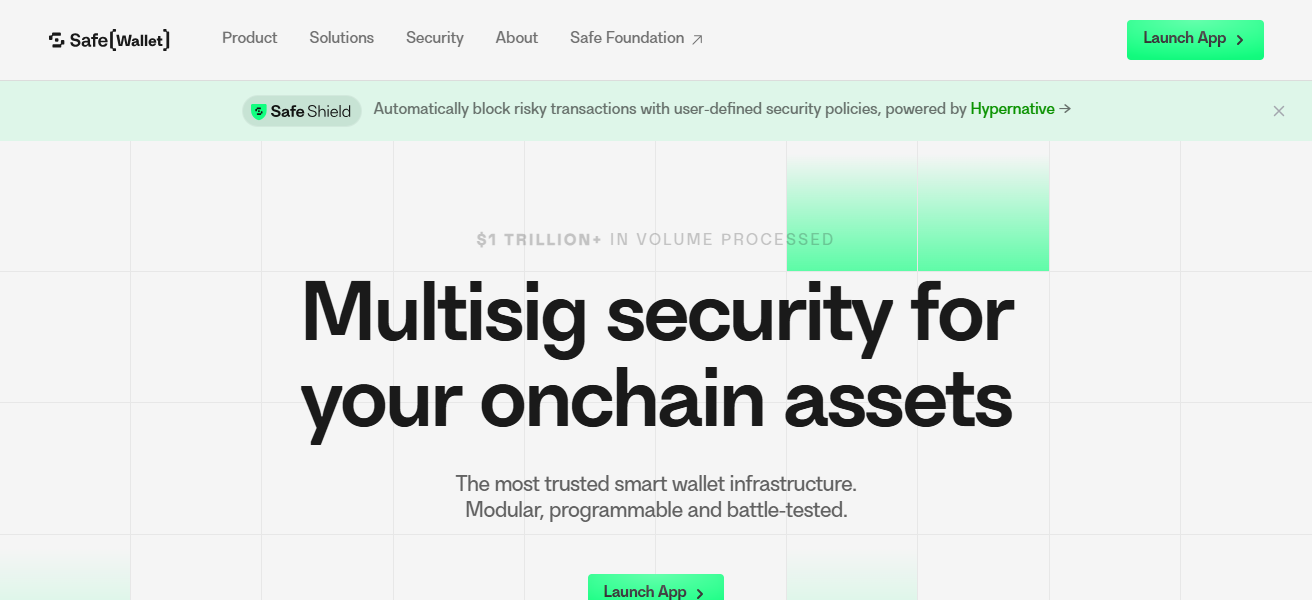
The user-friendly design makes it easy to deploy contracts and manage tokens, so users can interact with decentralized finance.
The system is regularly updated and works with all major blockchains, so customers can count on smart contract support and overall safety.
Safe Wallet Features
- Multi-Signature Security: Fund safety / transaction approvals require multiple signers.
- Smart Contract Support: Wallet executes sophisticated transactions on the blockchain with automation.
- Multi-Chain Functionality: Flexible and diverse asset management across multiple blockchains.
- Business-Friendly Features: Collaborative controls for large portfolio management at the team / organizational level.
| Pros | Cons |
|---|---|
| Multi-signature security ensures funds are highly protected. | Can be complex for beginners due to advanced features. |
| Supports smart contracts and on-chain automation. | Limited mobile functionality compared to some other wallets. |
| Compatible with major blockchains for diverse asset management. | Requires understanding of transaction approvals and signatures. |
| Ideal for businesses and advanced users managing large portfolios. | Slightly slower for simple transactions due to security layers. |
2. Coinbase Smart Wallet
Coinbase Smarkt Wallet merges wallet designs that are sleak and simple with the ability to use computer programs that execute smart contracts.
It enables users to engage with dApps in a secure manner, and use a number of different cryptographic assets across multiple blockchain networks.
The wallet uses automatic recovery methods, and because of how easily it’s linked with the Coinbase platform, it is beneficial to crypto users of all levels.
It’s smart contract features allow transactional automation, manage tokens, and make recurring payments directly from the wallet.
Funds and smart contract engagements are safe with consistent crypto audits and reliable encryption.
Coinbase Smart Wallet Features
- User-Friendly Design: Streamlined access to smart contracts and DeFi functionalities.
- Multi-Chain Token Support: Token management across different chains.
- Scheduled Transactions: Automation of smart contracts and recurring payments.
- Built-In Protection: Encryption, recovery, and other features of the Coinbase ecosystem.
| Pros | Cons |
|---|---|
| Beginner-friendly interface with easy smart contract execution. | Less customizable for advanced contract operations. |
| Multi-chain support allows handling of various crypto assets. | Limited dApp integration compared to other wallets like MetaMask. |
| Secure with Coinbase’s reputation and recovery features. | Primarily mobile-focused; desktop options are limited. |
| Enables automated transactions and token management. | Privacy is slightly lower due to Coinbase ecosystem tracking. |
3. MetaMask + Smart Contract Extensions
MetaMask is an Ever-expanding ethereum compatible wallet service and browser extension for managing blockchain assets that is compatible with virtually every major web 3.0 application.
Users can create and interact with their own smart contracts anytime right from their wallet. The app and web browser plugin makes the service easy to use with most decentralized exchanges and NFT platforms.
The wallet is considered secure and offers features like local key storage. MetaMask offers versatility by allowing the combination of their smart contracts with any other wallet contracts.
MetaMask remains one of the most frequently updated Ethereum wallets. It is also one of the best wallets for managing and securing ethereum blockchain assets.
MetaMask + Smart Contract Extensions Features
- EVM & Ethereum Support: Access to Ethereum and all blockchains that support the EVM.
- Smart Contract Execution: Upload and manage smart contracts.
- Integrated dApps: Seamless access to decentralized apps and DeFi services on mobile and the web.
- Developers Extensions: Contract capabilities can be enhanced with custom extensions from developers.
| Pros | Cons |
|---|---|
| Extensive Ethereum and EVM-compatible chain support. | Users must manage private keys securely themselves. |
| Browser and mobile integration for dApps and DeFi. | Complex interface for beginners unfamiliar with smart contracts. |
| Supports deploying and executing smart contracts directly. | Vulnerable to phishing if not careful. |
| Highly customizable with extensions and developer tools. | Gas fees can be high on Ethereum mainnet. |
4. Trust Wallet
The user-friendly Trust Wallet is a mobile wallet that lets users manage their cryptocurrencies effortlessly. They have full access to decentralized apps, DeFi services, and the ability to buy and sell their crypto.
Trust Wallet fits the needs of mobile users because it offers a Web3 browser so that users can connect to any smart contract apps right from Trust Wallet.
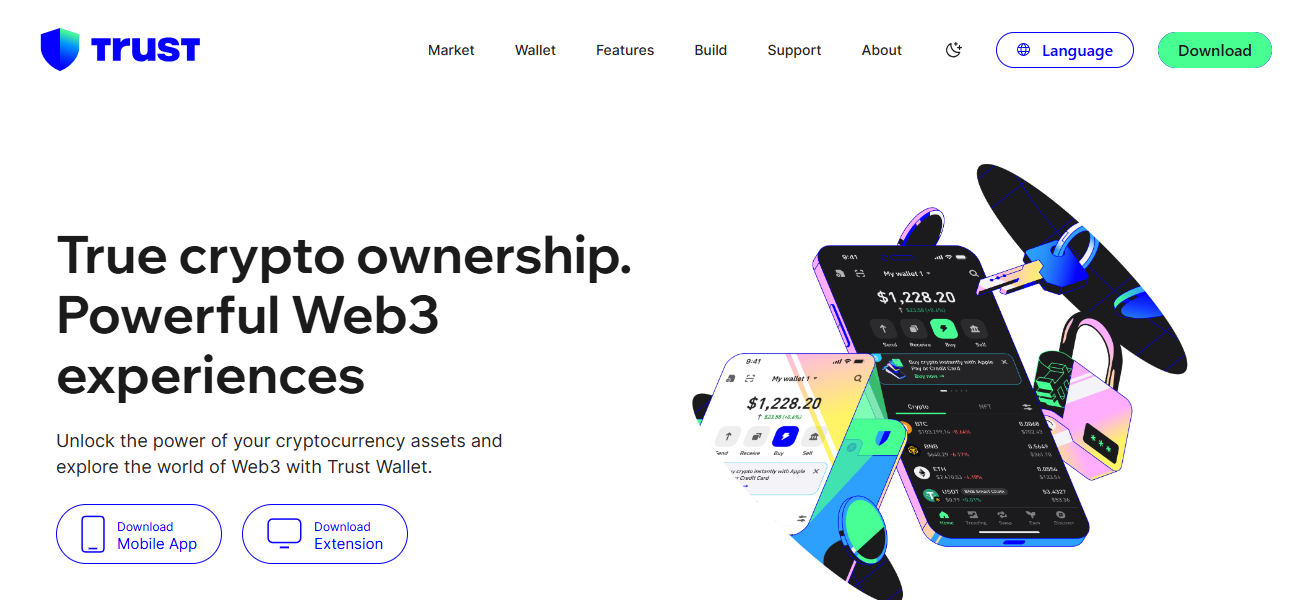
They also offer industry leading security measures by storing encrypted private keys locally on user devices and provide an additional security layer with biometric logins. Lastly, Trust Wallet is a reliable wallet because it has consistent updates and has an active user base.
Trust Wallet Features
- Multi-Chain & Token Support: Trust wallet functions with multiple chains and cryptocurrencies.
- Built-in Web3 Browser: Users can access DeFi applications and smart contracts.
- Secure Key Storage: Users’ private keys are encrypted and stored on their devices.
- User-Friendly Design: Users can easily manage staking and NFTs.
| Pros | Cons |
|---|---|
| Multi-chain support with built-in Web3 browser for dApps. | Mobile-only wallet; desktop use is limited. |
| Secure with local key storage and optional biometrics. | Advanced smart contract operations can be less intuitive. |
| Supports staking, DeFi, and NFT interactions. | Customer support can be slow at times. |
| User-friendly for beginners and intermediate users. | Recovery depends entirely on seed phrase. |
5. Rainbow Wallet
Rainbow Wallet supports Ethereum assets and provides users with a straightforward way to interact with smart contracts.
Users have the ability to send, receive and manage their tokens, as well as connect to DeFi services and NFT marketplaces.
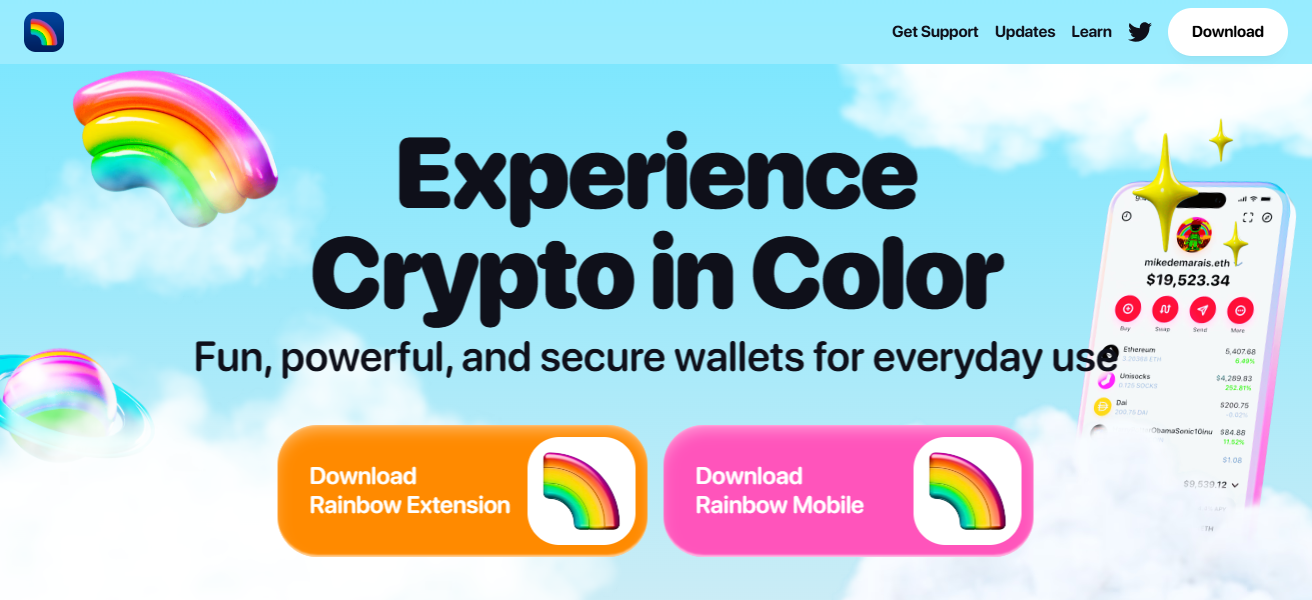
With its simplified smart contract functionality, Rainbow Wallet is perfect for novice users and active traders. Wallet provides enhanced security with encrypted key storage and optional biometric authentication.
With integration of top DeFi protocols, users of Rainbow Wallet can automate their transactions, stake tokens, and safely navigate decentralized applications all within a single mobile wallet.
Rainbow Wallet Features
- Ethereum-Focused Wallet: Rainbow Wallet is designed for Ethereum cryptocurrencies and NFTs.
- Smart Contract Compatibility: Users can easily access DeFi protocols and perform other automated actions.
- Encrypted Local Storage: Wallet keys are encrypted and can be secured via fingerprint.
- DeFi & NFT Integration: Wallet enables seamless access to various DeFi and NFT applications for trading.
| Pros | Cons |
|---|---|
| Intuitive interface for Ethereum assets and NFTs. | Limited to Ethereum and EVM-compatible chains. |
| Secure with encrypted key storage and biometrics. | Lacks multi-signature support for high-security needs. |
| Simplifies smart contract and DeFi interactions. | Less suitable for managing large multi-chain portfolios. |
| Integrated with popular DeFi and NFT platforms. | Advanced customization features are limited. |
6. Zerion
Zerion aims to simplify DeFi management through its smart contract wallet design. Users are able to analyze, invest, and manage their portfolios through one easy-to-use interface.
The smart contract automation provides asset swaps, lending, and staking, allowing users to utilize multiple protocols.
Zerion’s local key storage and data encryption provide security that doesn’t detract from the wallet’s design.
It supports automated management strategies across multiple chains, making it versatile for users with layered asset portfolios.
Zerion Features
- DeFi Portfolio Management: Consolidates and manages investments in diverse protocols in one location.
- Smart Contract Support: Users are able to schedule swaps, and other actions such as staking and lending.
- Multi-Chain Compatibility: Wallet is supportive of Ethereum and other leading blockchains.
- Analytics Tools: Users can view detailed data of their investments and the smart contracts they’ve used.
| Pros | Cons |
|---|---|
| All-in-one DeFi portfolio management with smart contract support. | Mainly focused on DeFi; not ideal for general crypto transactions. |
| Multi-chain and multi-protocol integration. | Limited mobile features compared to desktop interface. |
| Automates asset swaps, staking, and lending. | Requires some DeFi knowledge for optimal use. |
| User-friendly interface for portfolio tracking and analytics. | Fees depend on network activity during contract execution. |
7. Ambire Wallet
Ambire Wallet (formerly AdEx) is focused on smart contract security for DeFi customers. Automated smart contract creation and execution, token portfolio management, and dApp interaction are all possible with the automated smart contract creation and execution.
Usability and security are heightened due to the multi-chain support and the integration of hardware wallets.
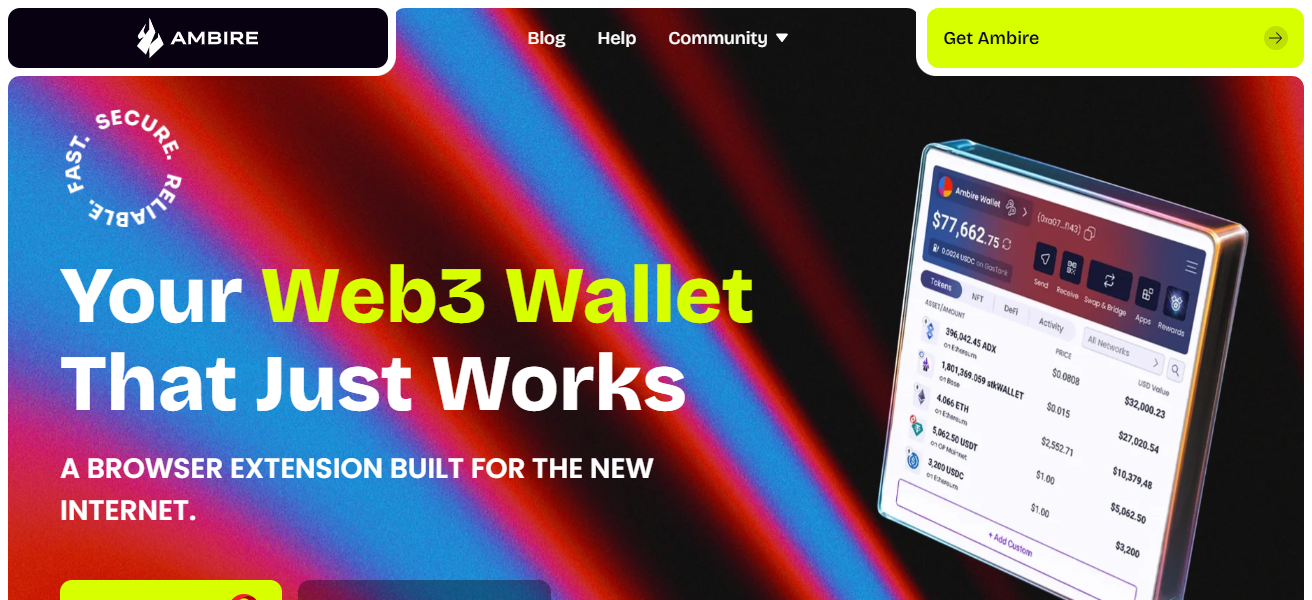
Wallet analytics and smart contract performance monitoring are additional features for asset and portfolio management.
With its emphasis on privacy, local key storage, and strong encryption, Ambire Wallet is ideal for sophisticated users who want smart contract capabilities while retaining full control over their money; it is also ideal for users who need privacy.
Ambire Wallet Features
- Smart Contract Automation: Enables smart contracts for users who want more advanced capabilities.
- Multi-Chain Support: Users can manage their assets across different chains.
- Hardware Wallet Integration: Users can improve their security by using cold storage wallet devices.
- Analytics & Monitoring: Records tracks smart contract activities and asset performance.
| Pros | Cons |
|---|---|
| Strong focus on smart contract automation for DeFi users. | Mobile interface can be slightly less polished. |
| Multi-chain support with hardware wallet integration. | Not as beginner-friendly as Coinbase or Rainbow. |
| Analytics tools help monitor contract interactions and portfolio. | Smaller user base, meaning less community support. |
| Secure with encrypted local key storage and privacy-focused design. | Advanced features may overwhelm casual users. |
8. Openfort
Openfort is a blockchain wallet tailored for game devs and NFT use cases featuring full smart contract capabilities. It enables automated management of in-game assets and execution of on-chain transactions.
Users, including game devs and players, can manage NFTs, tokens, and DeFi elements directly through the wallet.
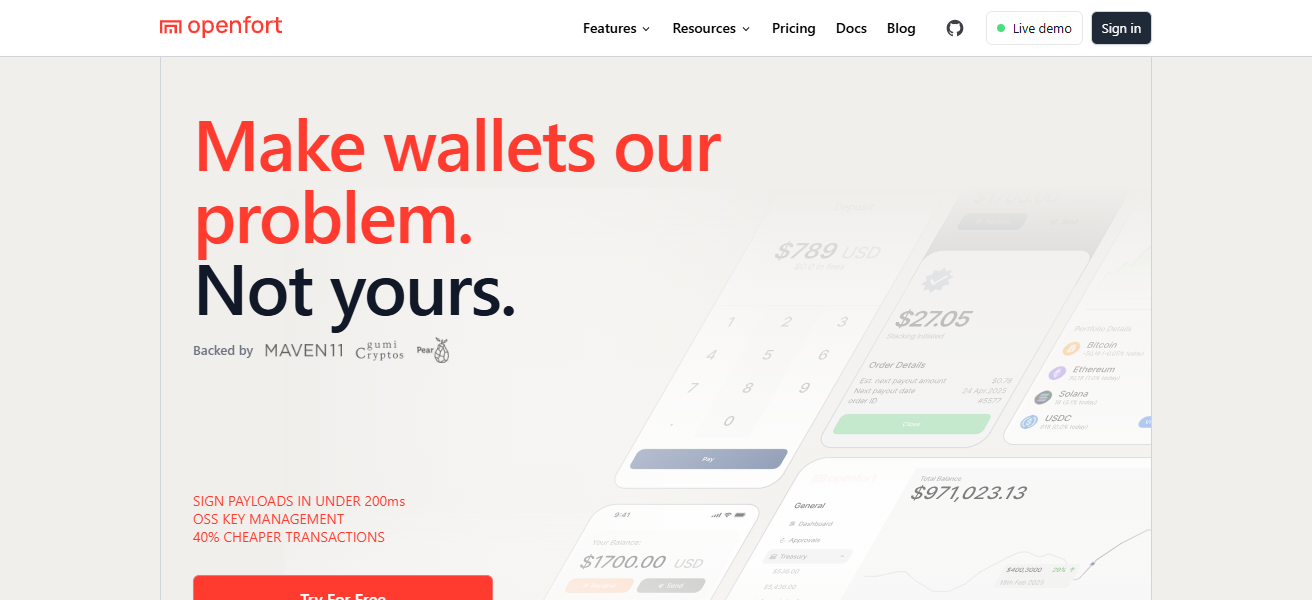
Openfort prioritizes security with encrypted private key storage and the execution of smart contracts with permissions.
The wallet’s seamless integration with web3 games and applications streamlines the experience for users who want a wallet that safely combines traditional gaming with decentralized blockchain functionalities.
Openfort Features
- NFT & Gaming Focus: Tailored for management of NFTs and blockchain game assets.
- Smart Contract Execution: Safely Automates the operation of in-game assets and tokens.
- Permissioned Transactions: Provides a secure and safe way to interact with and manage a contract.
- Seamless Web3 Integration: Effectively manages the convergence of traditional and blockchain-based gaming
| Pros | Cons |
|---|---|
| Optimized for NFT and blockchain game interactions. | Niche use-case; less useful for general crypto management. |
| Supports automated in-game asset and token management. | Limited multi-chain support beyond gaming platforms. |
| Secure with permissioned smart contract execution. | Mobile and desktop interface can be complex for beginners. |
| Bridges traditional gaming with blockchain safely. | Not ideal for DeFi-heavy users. |
9. Sequence Wallet
The Sequence Wallet combines the latest smart contract technology with user friendly features to make DeFi and NFT interactions seamless.
It is the first of its kind multi-chain smart contract wallet, allowing users to secure transactions, automated contract interactions, batch payments, and more.
Sequence Wallet’s innovative features train users in gas efficient and socially recoverable smart wallet use.
Additionally, their architecture is developer friendly and creates frictionless integration with decentralized applications (dApps) to support advanced, multi-faceted DeFi strategies.
Sequence encrypts user funds and contract operations with local key storage to guarantee security at all times.
Sequence Wallet Features
- Next-Gen Smart Contract Wallet: Provides a user-friendly way to execute a batch of transactions for DeFi, NFTs, and others.
- Multi-Chain Operations: Facilitates asset transactions on different blockchain platforms.
- Social Recovery & Gas Optimization: Improves user experience and reduces transaction costs.
- Developer-Friendly Architecture: Provides a design that focuses on interoperability with DeFi and dApps
| Pros | Cons |
|---|---|
| Next-gen smart contract wallet for DeFi and NFTs. | Relatively new; smaller user community. |
| Multi-chain support and batch transaction capabilities. | Advanced features may confuse beginners. |
| Social recovery and gas optimization improve usability. | Limited third-party dApp integrations outside main chains. |
| Developer-friendly architecture for seamless contract interaction. | Some features require understanding of smart contract logic. |
10. Pillar Wallet
Designed for easy management of crypto assets and dApps, Pillar Wallet offers intuitive smart contract management. Users can engage with DeFi protocols, carry out automated trades, and control cross-chain token swaps.
Pillar Wallet prioritizes security through encrypted user data, local key storage, and optional biometric verification.
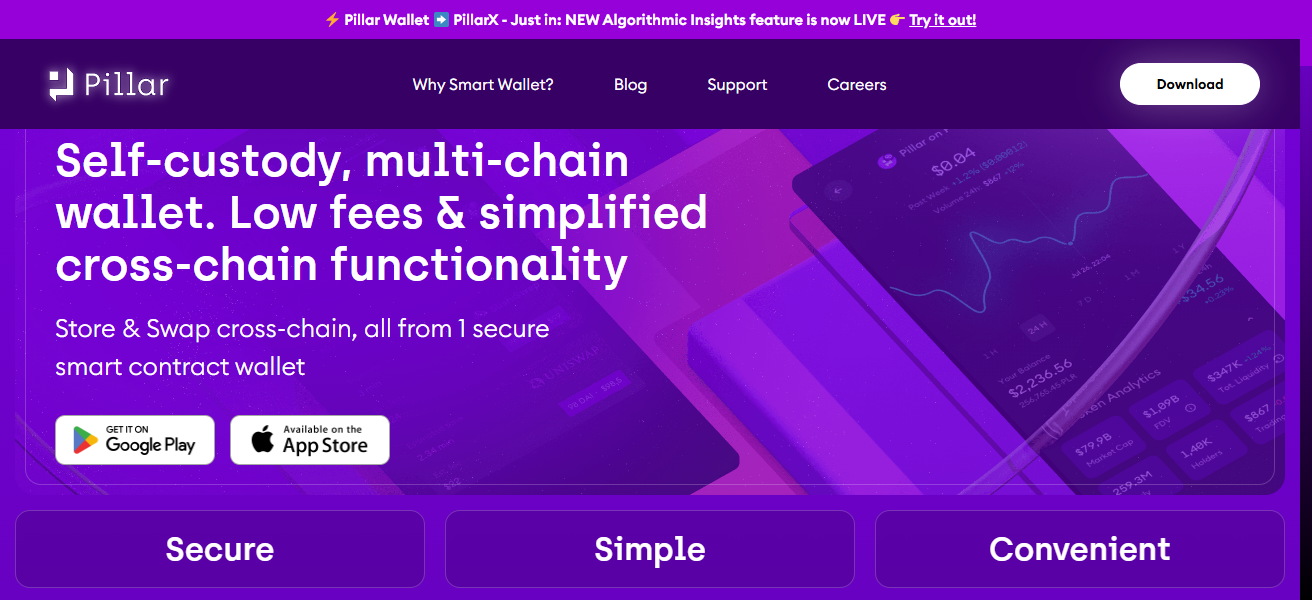
Whether you’re a beginner or a smart contract pro, Pillar’s easy UI guides you through. It’s reliable and versatile with features like social recovery and portfolio tracking. Safety and effortless management of digital assets are Pillar Wallet’s priorities.
Pillar Wallet Features
- User-Friendly Interface: Provides a straightforward approach to interacting with smart contracts and DeFi.
- Multi-Chain Token Management: Manages the wide-ranging assets on different blockchains.
- Secure & Private: Provides a combination of key storage, encryption, and social recovery for the wallet.
- Automated Transactions: Efficiently manages recurring payments and avoids running a user’s portfolio.
| Pros | Cons |
|---|---|
| User-friendly interface with DeFi and smart contract support. | Less widely adopted than MetaMask or Trust Wallet. |
| Multi-chain token management with automated transactions. | Mobile-first design; desktop options are limited. |
| Secure with local key storage, encryption, and social recovery. | Advanced portfolio tracking features are limited. |
| Suitable for both beginners and intermediate crypto users. | Some features may require additional learning for full utilization. |
Conclusion
To sum up, selecting Best Crypto Wallets with Smart Contract Wallet Support is critical when managing crypto, DeFi, and NFTs securely.
MetaMask, Safe Wallet, and Trust Wallet stand out with their smart contract functionalities, multi-chain support, and security. These wallets allow users of all levels to interact with blockchain applications easily and securely.
FAQ
A wallet that allows you to store crypto and execute smart contracts or automated blockchain transactions.
They enable DeFi interactions, automated payments, and secure dApp usage, not just crypto storage.
Yes, most use local key storage, encryption, and multi-signature support for added security.