In this article, I will talk about the Best Alternatives to Cryptomus that offer users safe, flexible, and richly featured services beyond simple crypto payments.
- What Is Cryptomus?
- Key Points & Best Cryptomus Alternatives
- 10 Best Cryptomus Alternatives
- 1. Gate.io
- 2. Zengo Wallet
- 3. Binance
- 4. Coinbase Exchange
- 5. Uphold
- 6. Kraken
- 7. OKX
- 8. BitMart
- 9. Crypto.com
- 10. KuCoin
- Are Cryptomus Alternatives Safe To Use?
- Why look for Cryptomus alternatives in 2026?
- Key Factors To Consider When Choosing a Cryptomus Alternative
- Conclsuion
- FAQ
These platforms offer varied cryptocurrency exposure and advanced trading tools and security, catering to newbies, traders, and merchants.
Reviewing these alternatives will enable you to make an informed decision on the most appropriate platform to manage, trade or spend your digital assets.
What Is Cryptomus?
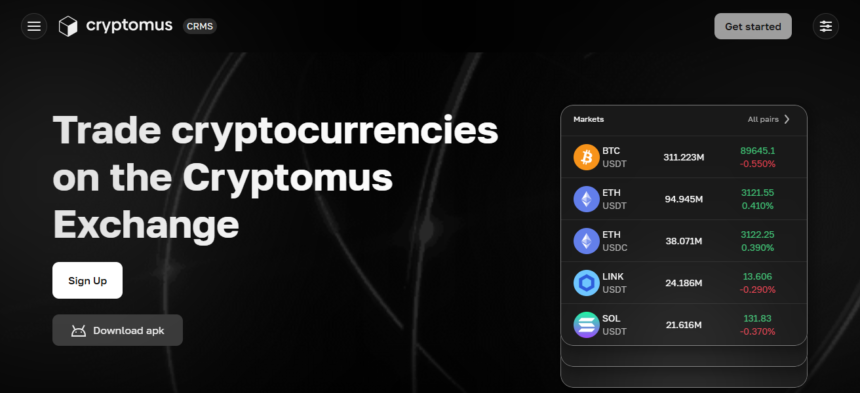
Cryptomus is a payment processing platform that enables merchants and businesses to accept payments made in cryptocurrency.
With payment processing gateways that include invoicing features, cryptocurrency is seamlessly converted to fiat, thus avoiding risks associated with price volatility.
Supporting a variety of cryptocurrencies, this platform is fully oriented on making crypto payments more accessible in the fields of e-commerce, retail, and services.
Though it offers businesses the payment processing tools to capture the demand of the trading and cryptocurrency asset management, the platform’s primary focus is on crypto payments.
Thus it is a secure and efficient option to businesses or organizations that seek to properly manage their crypto and expand their accepted payment methods.
Key Points & Best Cryptomus Alternatives
| Alternative | Key Point |
|---|---|
| Gate.io | Wide range of cryptocurrencies & strong security |
| Zengo Wallet | Non-custodial wallet with advanced keyless security |
| Binance | Largest exchange with low fees and diverse features |
| Coinbase Exchange | Beginner-friendly interface and strong regulatory compliance |
| Uphold | Supports crypto, stocks, and precious metals in one platform |
| Kraken | High liquidity, staking options, and strong reputation |
| OKX | Advanced trading tools and competitive interest rates |
| BitMart | Global exchange with wide token availability |
| Crypto.com | Integrated app with Visa card and cashback rewards |
| KuCoin | Popular for altcoins and community-driven features |
10 Best Cryptomus Alternatives
1. Gate.io
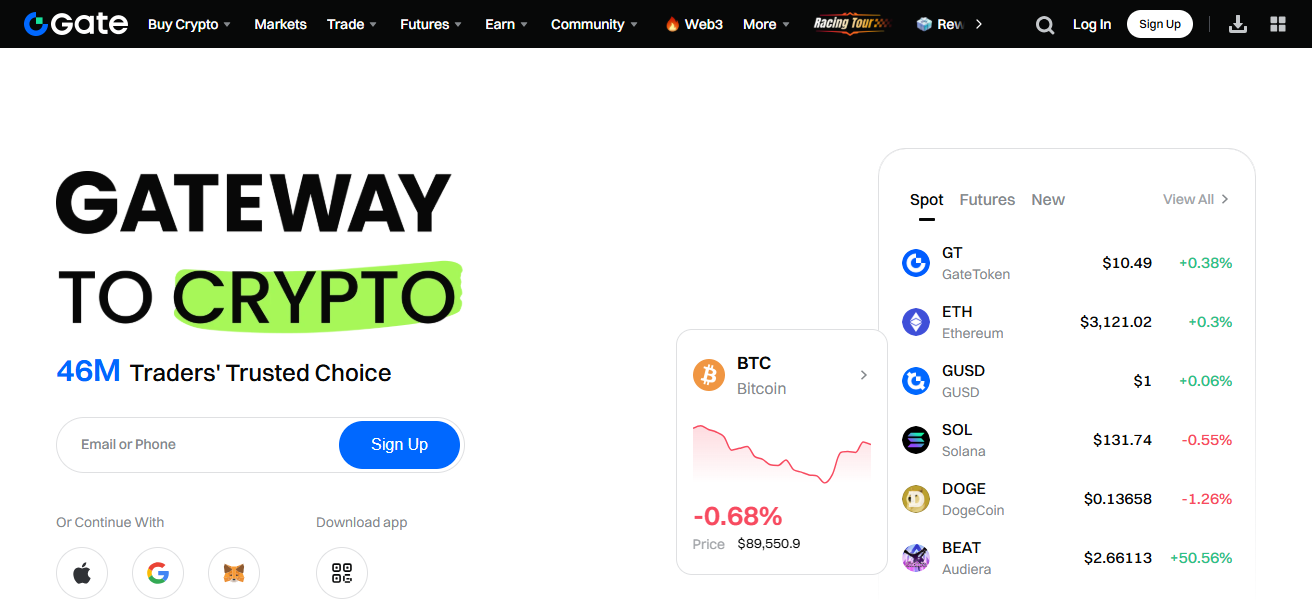
Gate.io is also considered one of the best alternatives to Cryptomus due to the volume of trading depth and coverage of the global market.
Unlike Cryptomus which is primarily a crypto payments option, Gate.io is a fully fledged crypto exchange offering spot, futures, margin and other financial trading products on the platform.
Its greatest differentiating strength is listing new and innovative criptocurrencies early, allowing users to purchase coins before they are readily available on other major exchanges.
With strong security, ample liquidity, and advanced trading features, Gate.io is best for customers that want more than a basic crypto payment option.
| Feature | Description |
|---|---|
| Advanced Trading | Supports spot, futures, margin, and options trading |
| Early Token Listings | Access to new and emerging cryptocurrencies |
| High Liquidity | Smooth execution for high-volume trades |
| Global Access | Available to users in many countries |
Pros And Cons Gate.io
Pros
- Early token access – New, innovative cryptocurrencies are listed before other major exchanges.
- Advanced trading options – Provides the flexibility of trading using spot, futures, margin, and structured products.
- High liquidity – Great for traders that venture in large, active volumes.
- Global availability – Open to many countries and has large market coverage.
Cons
- Complex interface – Overwhelming for users who are just starting out.
- Limited fiat support – Not great in terms of facilitating quick bank deposits across a lot of regions.
- Regulatory uncertainty – Has less regulation in comparison to platforms based in the US.
- Customer support delays – Correspondences might take a while for users to get to, especially during peak times.
2. Zengo Wallet
Zengo Wallet is the best Cryptomus alternative for users who want to manage crypto assets privately and securely without the hassle of traditional private keys.
Zengo and Cryptomus have different focuses. While Cryptomus mainly offers payment processing for merchants
Zengo has keyless security that features cutting-edge crypto technology to mitigate the risks associated with seed phrase theft and loss.
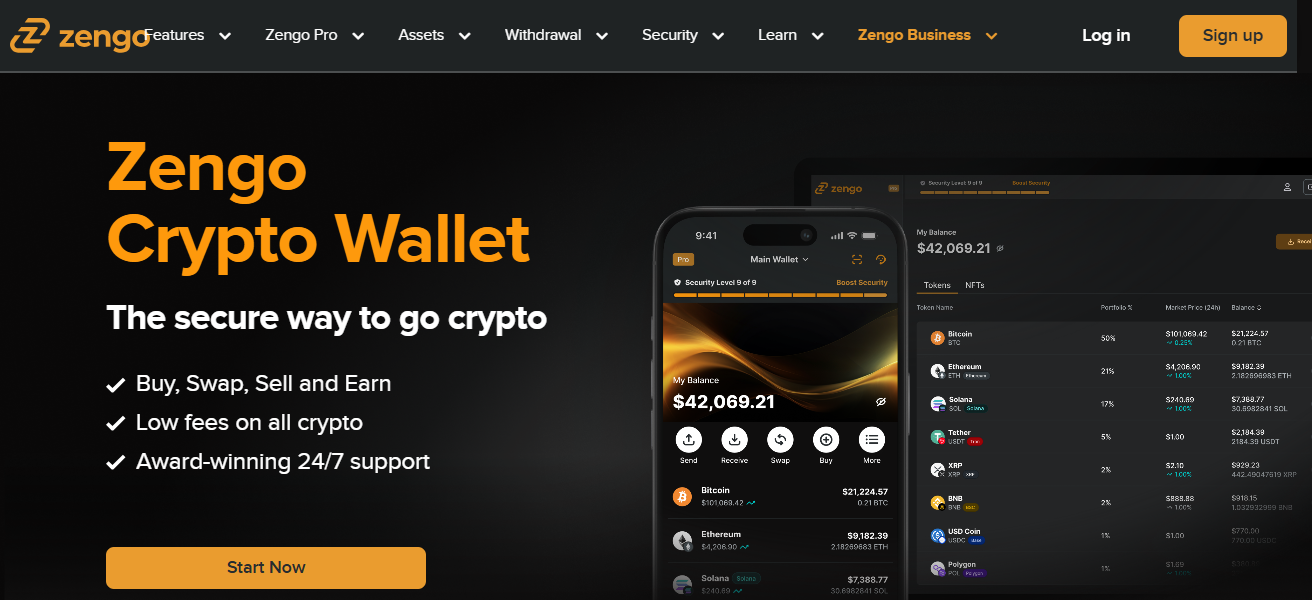
The best thing about Zengo is that it offers excellent security and protection while providing the mobile-centric experience that even the most novice users will be able to use to self-custody.
Considering that Zengo supports buying, selling, and managing crypto assets directly from the wallet, it is a much safer and user-orientated alternative to crypto payment-centric wallets.
| Feature | Description |
|---|---|
| Keyless Security | No seed phrases, reducing loss and theft risk |
| Self-Custody Wallet | Full control of crypto assets |
| Mobile-First Design | Optimized for smartphones |
| Built-in Crypto Purchase | Buy and sell crypto directly in the app |
Pros And Cons Zengo Wallet
Pros
- Keyless security – Eliminates user error noise by getting rid of seed phrases.
- Beginner-friendly – Straightforward mobile interface; great for the average user.
- Strong self-custody – Users are free to self-control without the burden of tedious overhead.
- Built-in buy/sell features – Third-party applications are not necessary.
Cons
- Mobile-only – There is no desktop version.
- Limited advanced tools – This platform is not geared for professional traders.
- Smaller asset range – There is a limited variety of cryptocurrencies supported.
- Not merchant-focused – Does not have payment gateway features like Cryptomus.
3. Binance
When it comes to the best alternatives to Cryptomus, few can compare to Binance. Unlike Cryptomus, which primarily focuses on providing basic payment services to merchants, Binance has developed an entire ecosystem surrounding digital assets.
Binance is a single platform that provides liquidity, offers an extensive array of advanced trading features, and allows the purchase of thousands of cryptocurrencies.
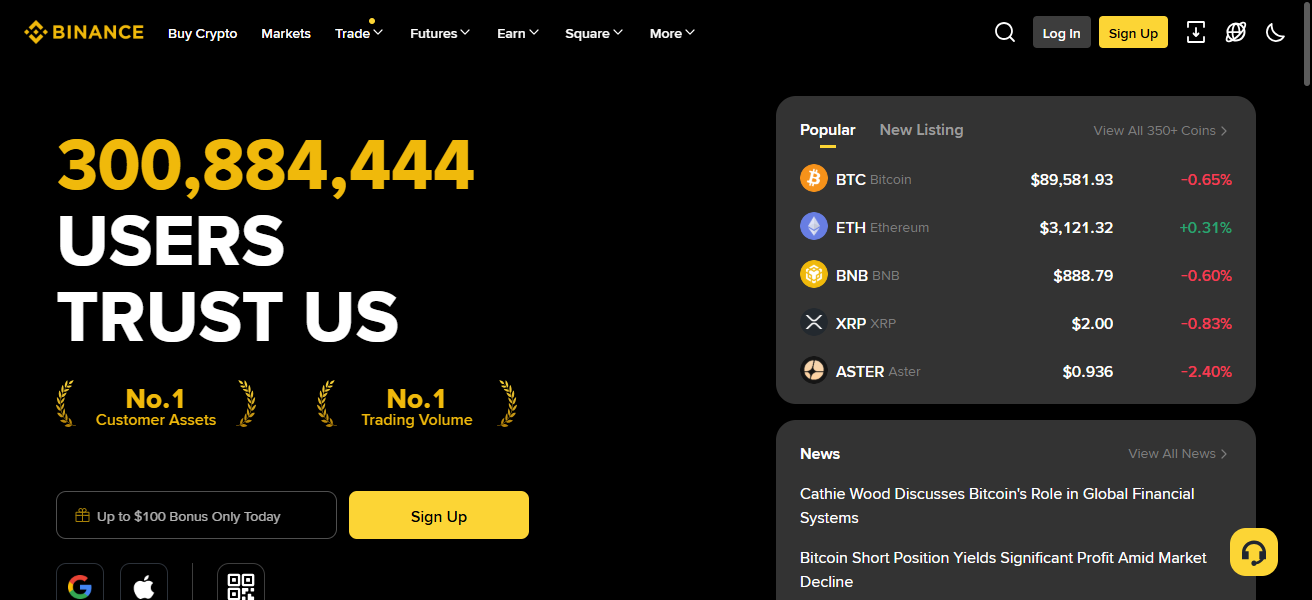
What differentiates the platform is the ability to trade, make payments, earn interest on crypto, and stake on the a single exchange. Because of this, customers can easily and efficiently manage, access, and circulate their crypto assets.
For customers looking for a platform with the ability to scale and offer diversified services, Binance provides the best option.
| Feature | Description |
|---|---|
| Massive Asset Support | Hundreds of cryptocurrencies available |
| Low Trading Fees | Competitive costs for frequent traders |
| All-in-One Platform | Trading, staking, savings, and payments |
| High Market Liquidity | Fast trade execution |
Pros And Cons Binance
Pros
- Large liquidity – Results in seamless and fast transactions.
- Unified ecosystem – Offers trading, earning, staking, and payments.
- Varied asset base – Hundreds of available cryptocurrencies.
- Affordable fee structure – Pricing is competitive and low.
Cons
- Regulatory hurdles – Operation limitations in certain areas.
- Difficult system – Advanced features could be frustrating for newbies.
- Delayed account access – Compliance checks could limit access to accounts temporarily.
- Support workload – High volume leads to longer response times.
4. Coinbase Exchange
Coinbase Exchange offers reliability, transparency, and adherence to regulations in the crypto payment processor market. Coinbase vs. Cryptomus shows that Coinbase focuses on global crypto trading and asset management accessibility.
A unique aspect of Coinbase is the high level of user trust stemming from transparent fee policies, insured custodial storage, and adherence to regulatory compliance.
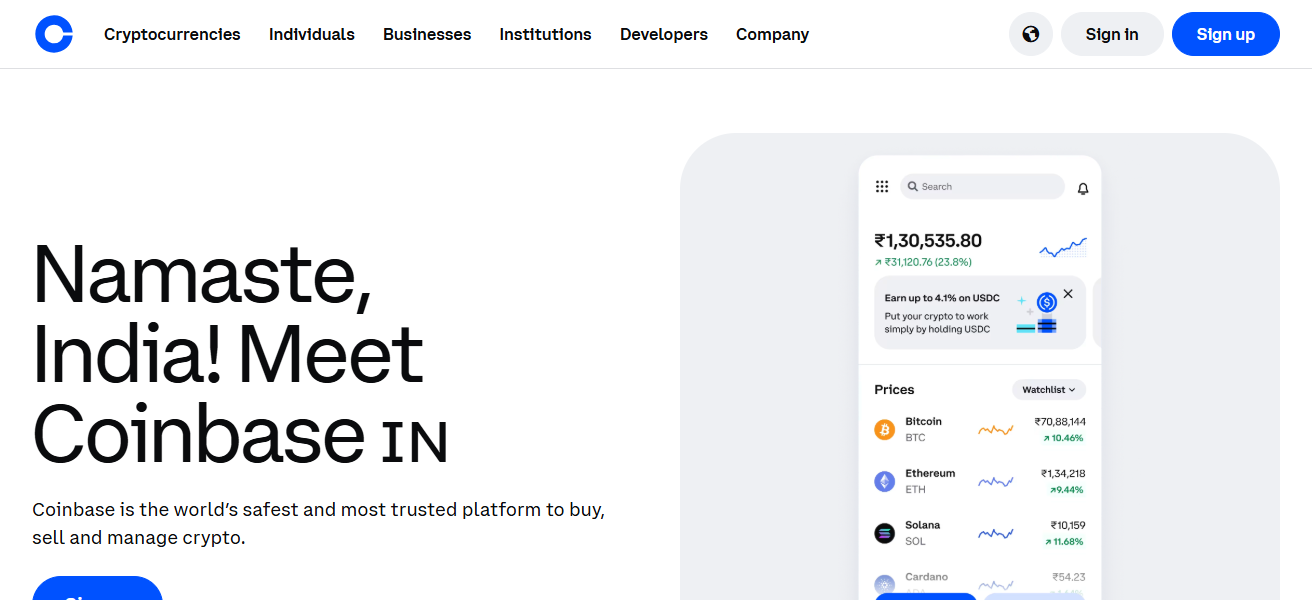
This especially attracts newbies and institutional users. Coinbase is an excellent choice as it offers high security, user-friendliness, and educational resources, providing users a dependable and easier alternative in the crypto space outside of crypto payments.
| Feature | Description |
|---|---|
| Regulatory Compliance | Operates under strict financial regulations |
| Beginner-Friendly UI | Easy navigation for new users |
| Insured Custody | Extra protection for stored assets |
| Educational Tools | Learn crypto while trading |
Pros And Cons Coinbase Exchange
Pros
- Very regulated – Compliance increases user trust.
- Simple to use – Great for beginners and institutions.
- Insured custody – Provides extra security for assets that are stored.
- Available education – Offers tutorials to understand crypto for new users.
Cons
- Increased cost – Prices are higher than competitors.
- Basic tools available – Not suitable for advanced trading.
- Gradual addition – Caution is exercised when adding new tokens.
- Limited availability – Certain features are not available in some countries.
5. Uphold
Uphold is one of the most flexible payment systems, compared to other alternative systems like Cryptomus. Cryptomus is primarily used by merchants that accept digital crypto.
On the other hand, Uphold allows you to convert crypto, fiat, and even metals. Uphold is distinct in that it has a trading model that is capable of trading anything to anything at the instant.
There is no need for a complicated trading platform, which is beneficial to most people who would like to manage their assets.
Uphold is one of the best and most flexible payment systems because of their transparent pricing and support for diverse assets.
| Feature | Description |
|---|---|
| Multi-Asset Trading | Crypto, fiat, and precious metals |
| Instant Conversions | Swap assets without order books |
| Transparent Pricing | Fees shown before transactions |
| Simple User Interface | Designed for casual users |
Pros And Cons Uphold
Pros
- Support for multiple assets – Allows the trading of cryptocurrencies, fiat, and metals.
- Immediate conversions – Users can change their assets without complicated trading.
- Transparent pricing – Fee visibility prior to transactions.
- Beginner-friendly – User-friendly design catering to novice traders.
Cons
- Higher spreads – Trading costs could be considerably higher.
- Limited charting tools – Not ideal for technical trading.
- Fewer crypto pairs – Selection is smaller compared to major competitors.
- Not merchant-focused – No dedicated crypto payment gateways.
6. Kraken
Users with high regards to security, reliability, and professional trading features best consider the alternative Kraken offers.
While Cryptomus’ strong focus is on crypto payment solutions, Kraken has ap and established trading ecosystem with deep liquidity, margin trading, and multiple order types.
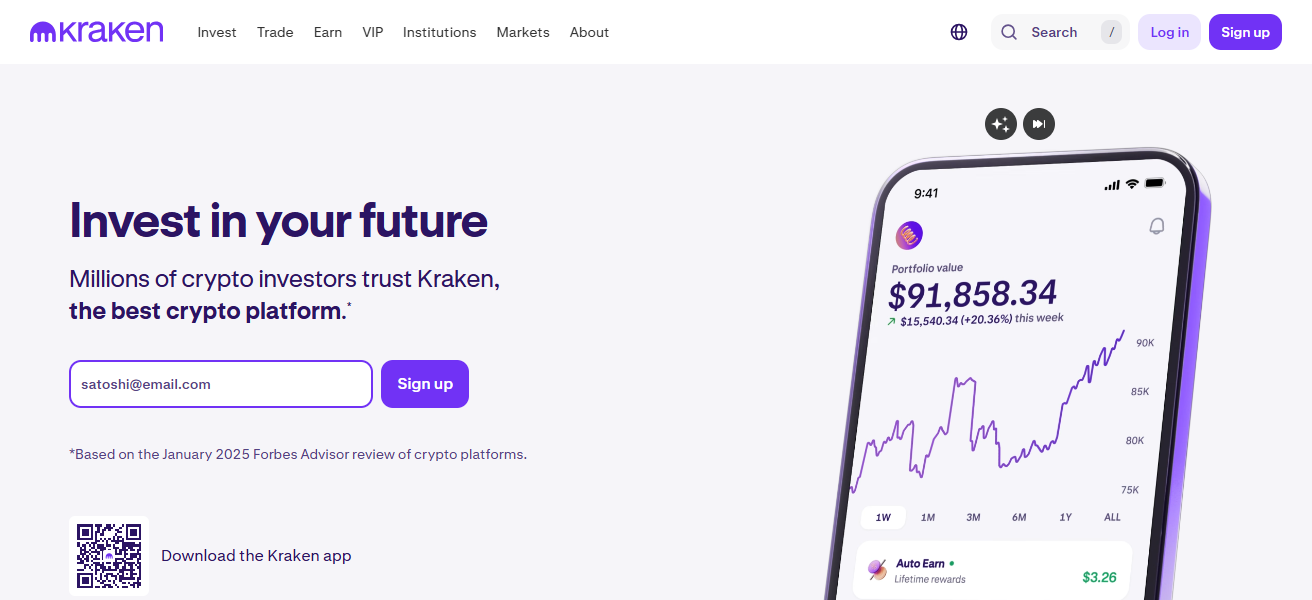
Operational transparency and security are universally valued and best among the traded. Kraken is trusted and used by institutions with serious trading needs.
Furthermore, Kraken has efficient growing and managing features with their robust staking and detailed market tools. Hence, Kraken best fits users looking to maintain stable assets with values beyond payment processing.
| Feature | Description |
|---|---|
| High Security Standards | Strong focus on asset protection |
| Advanced Order Types | Suitable for professional traders |
| Margin & Futures Trading | Supports leveraged trading |
| Crypto Staking | Earn passive income on holdings |
Pros And Cons Kraken
Pros
- Strong security record – Established trust through the years.
- Advanced trading tools – Offers instruments for pro traders.
- Margin and futures trading – Offers complimentary advanced trading.
- Reliable staking options – Passive earning securely.
Cons
- Interface learning curve – Not very beginner-friendly.
- Slower verification – Approving accounts can be slow.
- Limited instant buying options – Not beginner-friendly.
- Fewer promotional features – Less competitive rewards ecosystem.
7. OKX
OKX is certainly one of the most excellent alternatives to Cryptomus for users seeking both advanced trading and decentralized finance (DeFi) capabilities on the same interface.
To explain this note is important to highlight that unlike Cryptomus that is majorly focused on a tool for crypto payment processing, OKX incorporates spot and derivatives trading alongside DeFi tools and a self-custody Web3 wallet.
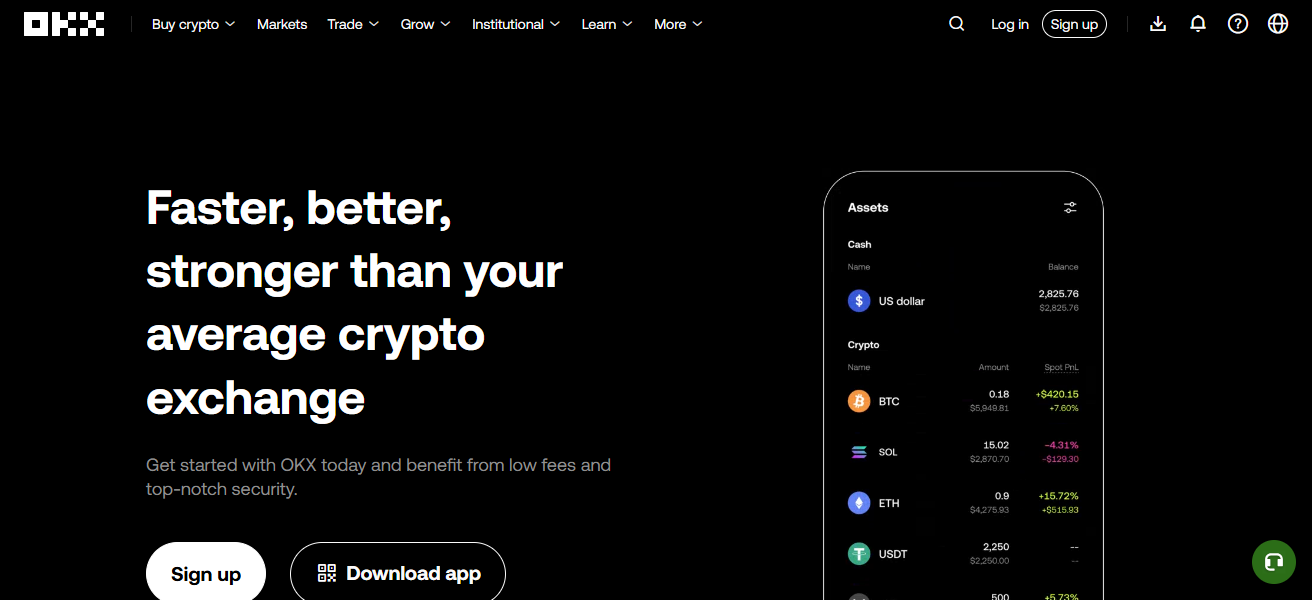
One of its key unique advantages is the seamless integration between centralized exchange offerings and on-chain elements, enabling users to transfer and utilize their digital assets without leaving the ecosystem.
Given its solid liquidity, innovativeness in products, and a strong emphasis on modern use cases for crypto integration, OKX is without doubt the most ideal for users looking for flexibility other than payment.
| Feature | Description |
|---|---|
| CEX + DeFi Integration | Centralized and decentralized tools |
| Web3 Wallet | Self-custody with DeFi access |
| Derivatives Trading | Futures and options available |
| High Liquidity Markets | Efficient price execution |
Pros And Cons OKX
Pros
- CEX and DeFi integration – Trade and access Web3 from one place.
- Powerful derivatives market – Futures and options market is strong.
- Self-custody wallet – More control over your assets.
- Innovative features – Focused on the modern use cases for crypto.
Cons
- Complex platform – Not beginner-friendly.
- Regional restrictions – Some countries have limited access.
- Limited fiat options – Depositing via bank transfers isn’t an option sometimes.
- Steep learning curve – DeFi tools require experience.
8. BitMart
Traders aiming to diversify their portfolio have the option of using BitMart that is an excellent alternative to Cryptomus. As Cryptomus is mainly crypto payment processor for merchants, BitMart is a crypto exchange that adds new niche and emerging cryptos, and very frequently gets new listings.
What sets BitMart apart is the ability of users to trade new tokens that are not on major exchanges yet, and therefore have much more growth potential.
With user-friendly interfaces and access to a number of trading pairs, BitMart is for customers looking to branch into new markets, and not just for crypto payment processor.
| Feature | Description |
|---|---|
| Emerging Token Access | Lists niche and new cryptocurrencies |
| Global User Support | Available in multiple regions |
| Spot & Futures Trading | Multiple trading options |
| Simple Trading Interface | Easy for active traders |
Pros And Cons BitMart
Pros
- Early altcoin listings – Niche and new projects are accessible.
- Global reach – Many users from different areas are supported.
- Multiple trading pairs – Beneficial for traders focused on altcoins.
- User-friendly trading interface – Traders can navigate with ease.
- Cons
- Lower liquidity – Not as much as highly ranked exchanges.
- Security history concerns – Issues from the past lead to less trustworthy users.
- Limited fiat gateways – Not as beginner friendly for deposit purposes.
- Basic customer support – Issues take longer to resolve.
9. Crypto.com
Crypto.com is a good alternative to Cryptomus for customers looking to integrate the use of cryptocurrency into their daily transactions and activities, not just payment acceptance. Company Cryptomus primary focus is on providing services to merchants.
Crypto.com specializes in the unique ability to merge the trading and earning of cryptocurrency with real-life spending through the use of their app.
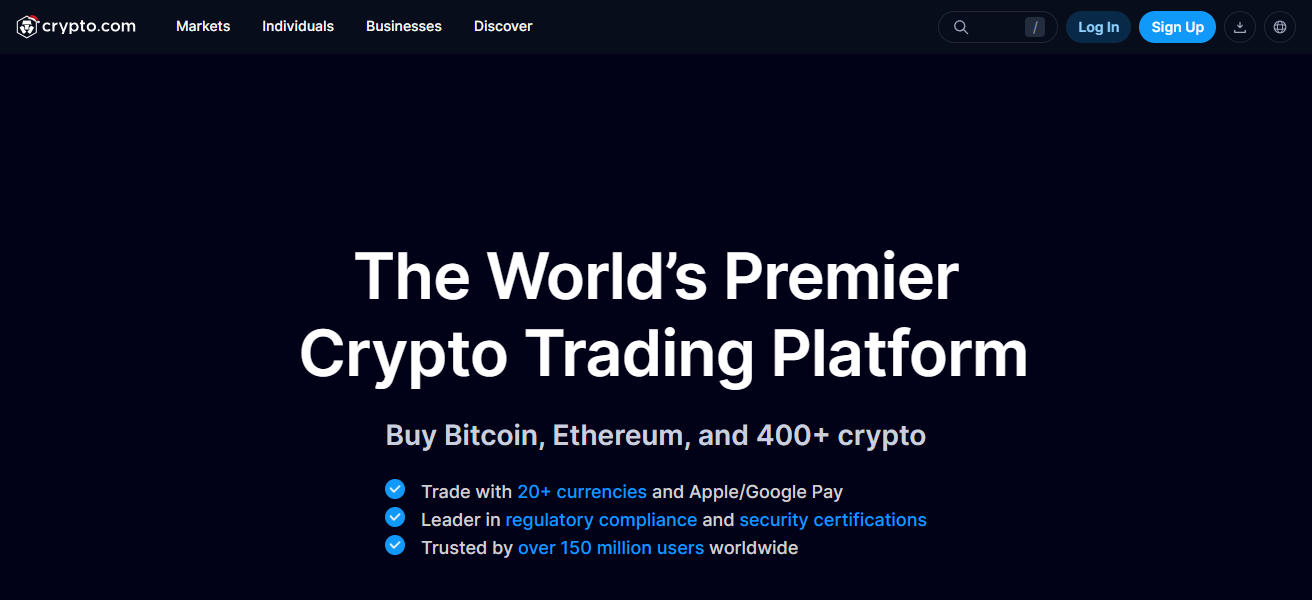
What sets Crypto.com apart is the ability to easily buy, and sell, stake or spend crypto, and control all of it in one app.
Crypto.com is tailored for customers who want to use a crypto platform for excessive use in daily activities, not just for payment processing, and want a streamlined user experience complete with earning and broad asset access.
| Feature | Description |
|---|---|
| Crypto Spending Tools | Designed for daily crypto usage |
| Staking & Rewards | Multiple earning options |
| Mobile App Ecosystem | Trade, earn, and manage assets |
| Wide Asset Support | Supports popular cryptocurrencies |
Pros And Cons Crypto.com
Pros
- Everyday crypto usage – Made for earning and spending.
- Strong mobile app – All in one experience.
- Multiple earning options – Gain via staking and various reward programs.
- Brand credibility – Well-known all over the world.
Cons
- Complex fee structure – Difficult to see the actual cost of everything.
- App-focused design – Users on the desktop are somewhat limited.
- Rewards conditions – Certain benefits require holding on to CRO tokens.
- Customer support delays – Due to lots of users the support is taken longer
10. KuCoin
KuCoin is a good alternative competitor to Cryptomus when users are looking for more than just a crypto payment processing system.
While Cryptomus is a system for accepting crypto payments, KuCoin’s flexibility, community approach, and wide range of digital assets make it a great choice.

KuCoin’s most significant advantages are its ability to let users explore new and upcoming cryptocurrencies early and trade, earn, and receive passive income all off the same account.
Because of this, it is highly flexible and has a great deal of growth potential, and is perfect for users who are looking for more than just merchant-oriented crypto payment processing.
| Feature | Description |
|---|---|
| Large Altcoin Selection | Focus on emerging projects |
| Passive Income Tools | Staking, lending, and earn programs |
| User-Friendly Platform | Balanced for beginners and traders |
| Global Accessibility | Broad international user base |
Pros And Cons KuCoin
Pros
- Wide altcoin selection – Strong focus on new and emerging projects.
- Passive income features – Earn income through staking and lending.
- User-friendly trading tools – Balanced for starters and experienced traders.
- Global accessibility – Serviceable in a majority of the world.
Cons
- Regulatory uncertainty – Not fully compliant in all jurisdictions.
- Security concerns – Historical hacks cloud the platform’s reputation.
- Limited fiat on-ramps – Customer bank accounts may be restricted.
- Support response time– Teams may become swamped and delays in their replies may occur.
Are Cryptomus Alternatives Safe To Use?
The majority of Cryptomus alternatives focus on user safety which results in implementing high-end security features meant to mitigate risks associated with loss of digital assets.
Most of these platforms use cold storage strategies to keep most of their funds offline so as to mitigate cyber attack risks.
Two-step authentication is an additional safeguard to protect your account whose security is predicated on a password.
In addition, reputable alternatives also implement compliance and internal risk management frameworks to mitigate the risk of fraud and unauthorized use.
In any case, the safety still, to a great deal, depends on the service provider’s credibility, transparency, and history.
For most users, choosing a well-known and established service provider with good security practices results in lower risks and more peace of mind when managing or transacting with their cryptocurrency assets.
Why look for Cryptomus alternatives in 2026?
Especially with large amounts of crypto within the same transactions, clients may desire lower average transaction fees to improve profitability and lower operational expenditures.
Improved uptime ensures that customers maintain their trust with the business by always having operational reliable transactions, delays and downtime won’t affect the business.
The more supported blockchains there are, the more merchants will be able to accept different types of cryptocurrencies.
Sophisticated APIs are crucial for automation and seamless integration. The more sophisticated the compliance features are, the more businesses will be able to manage their risk and regulatory obligations to securely scale their crypto payment operations to a global level.
Key Factors To Consider When Choosing a Cryptomus Alternative
Functionality For what specific function do you want to spend? Is it to receive crypto payments, perform transactions, stake, or manage digital assets? Some options center around merchants, while others are designed for traders or other users.
Protection Measures Seek options that have implemented robust security arrangements like cold storage, multi-factor authentication, self-custody, or keyless access to protect your assets.
Coins and Tokens Supported Ensure their services cover the currencies and tokens you intend to work with, particularly those linked to stablecoins or rising altcoins.
Costs and Cost Clarity Evaluate what their transaction, withdrawal and other possible hidden fees are. Structures with clear costs are unlikely to leave you with surprises.
User Accessibility Most systems have a digital interface and having a clear one is a must, especially for a user that is a novice. Advanced users may favor systems that have additional functions for more complex digital trading.
Fiat Currency Integration (If Applicable) Whether the platform allows bank payments, cards, or deposits, check what arrangements have been made for easy onboarding and withdrawals.
Country Availability Ensure the service is operational in your country and avoid possible legal implications by confirming that the service is institutionally compliant with your country.
Conclsuion
To sum up, the best Cryptomus alternatives combine security, technology, and value for more than just crypto transaction capabilities.
Binance, Coinbase, Gate.io, and Zengo Wallet platforms work with all traders, and even newbies, and offer various crypto, strong protection and simplicity of interphase, security, and flexibility.
Whether for spending, trading, or asset control, the final choice for an alternative is a matter of purpose, your needs.
FAQ
They are platforms that let you manage, trade, or accept cryptocurrencies beyond Cryptomus.
Binance, Coinbase, Gate.io, Kraken, OKX, Crypto.com, KuCoin, BitMart, Uphold, and Zengo Wallet.
Yes, if you choose reputable platforms with strong security and compliance.
Coinbase, Uphold, and Zengo Wallet are user-friendly and secure for newcomers.
Yes, some alternatives support merchant tools, wallets, or fiat conversions.