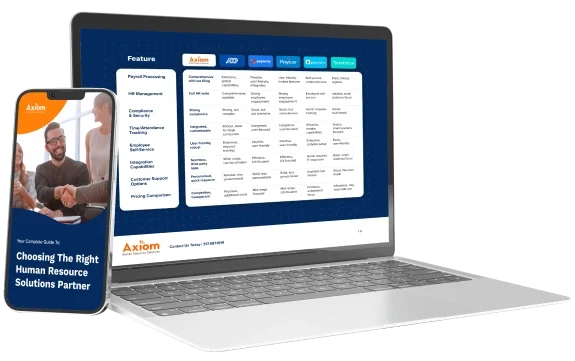
This article will review the best embedded Payroll APIs for SaaS. The embedded payroll APIs for SaaS help software companies easily integrate payroll features into their products.
- Key Points & Best Embedded Payroll APIs For SaaS Platforms
- 10 Best Embedded Payroll APIs For SaaS Platforms
- 1. Gusto Embedded Payroll
- 2. Check
- 3. Rollfi
- 4. Salsa
- 5. ADP API
- 6. Paychex Flex API
- 7. Square Payroll API
- 8. OnPay API
- 9. Rippling API
- 10. Papaya Global API
- How To Choose Best Embedded Payroll APIs for SaaS Platforms
- Conclusion
- FAQ
Embedded payroll APIs help SaaS platforms provide automated payroll processing, tax compliance, and employee payment services without the need to construct complex payroll infrastructure, increasing the employee experience, scalability, and overall business growth.
Key Points & Best Embedded Payroll APIs For SaaS Platforms
| Payroll API | Key Point |
|---|---|
| Gusto Embedded Payroll | Robust API with compliance automation |
| Check | Developer-first payroll infrastructure |
| Rollfi | Integrated benefits + Canadian support |
| Salsa | Modern API with flexible integrations |
| ADP API | Enterprise-grade payroll & HR tools |
| Paychex Flex API | Scalable payroll for SMBs |
| Square Payroll API | Easy integration for small businesses |
| OnPay API | Affordable payroll with tax filing |
| Rippling API | Unified HR, IT, and payroll platform |
| Papaya Global API | Global payroll & compliance coverage |
10 Best Embedded Payroll APIs For SaaS Platforms
1. Gusto Embedded Payroll
Companies can integrate payroll services with Gusto Embedded Payroll. Gusto lets even small SaaS companies integrate and customize payroll functionality with their own tools and user experience and has created payroll services designed for employees and contractors, tax filing, payroll processing, and benefits.
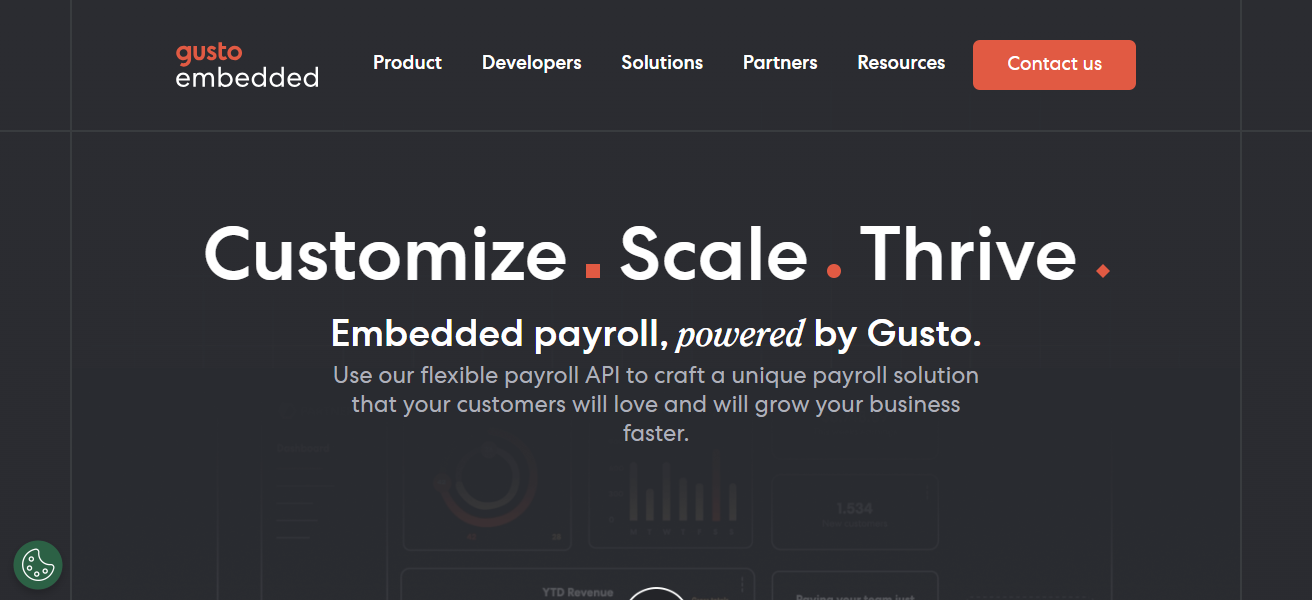
The integrations allow users to stay within the app and not have to switch to Gusto’s interface. Integrations let developers have complete command of the payroll processes and customize the automations, while Gusto takes care of the payroll-related legalities.
With Gusto having years of experience and an excellent reputation, SaaS companies can integrate payroll services that increase user satisfaction and user retention.
Features Gusto Embedded Payroll
Full payroll processing – Handles all payroll processes (taxes, direct deposit, payroll runs, tax filings) so partners may incorporate complete payroll into their applications.
Developer-friendly API and SDKs – Extensive APIs, webhooks, and SDKs with adaptable workflows that enable developers to tailor payroll experiences.
Compliance automation – Built-in compliance with federal, state, and local tax laws to reduce both risk and manual work.
Embedded partner support – Documentation, partner resources, and example code help SaaS teams to more rapidly launch payroll features and support them in the future.
| Pros | Cons |
|---|---|
| Easy-to-use payroll and tax automation designed for developers and partners. | Limited advanced customization for complex enterprise features. |
| Strong payroll compliance automation (tax filing, year-end forms). | Primarily U.S.-centric — limited international global payroll. |
| Good documentation and embedded partner support. | Pricing may be high for smaller SaaS startups. |
| Integrates HR, benefits, and time tracking alongside payroll. | API ecosystem smaller compared with legacy players like ADP. |
2. Check
Check is an integrated payroll and HR API, enabling SaaS products to provide payroll service without the need to develop payroll infrastructure.
It offers endpoints to programmatically manage payroll executions, employee onboarding, tax computations, and garnishment workflows securely.
Tailored for vertical SaaS, Check’s API is built with a primary emphasis on scalability and compliance, enabling developers to deeply embed payroll within their application.
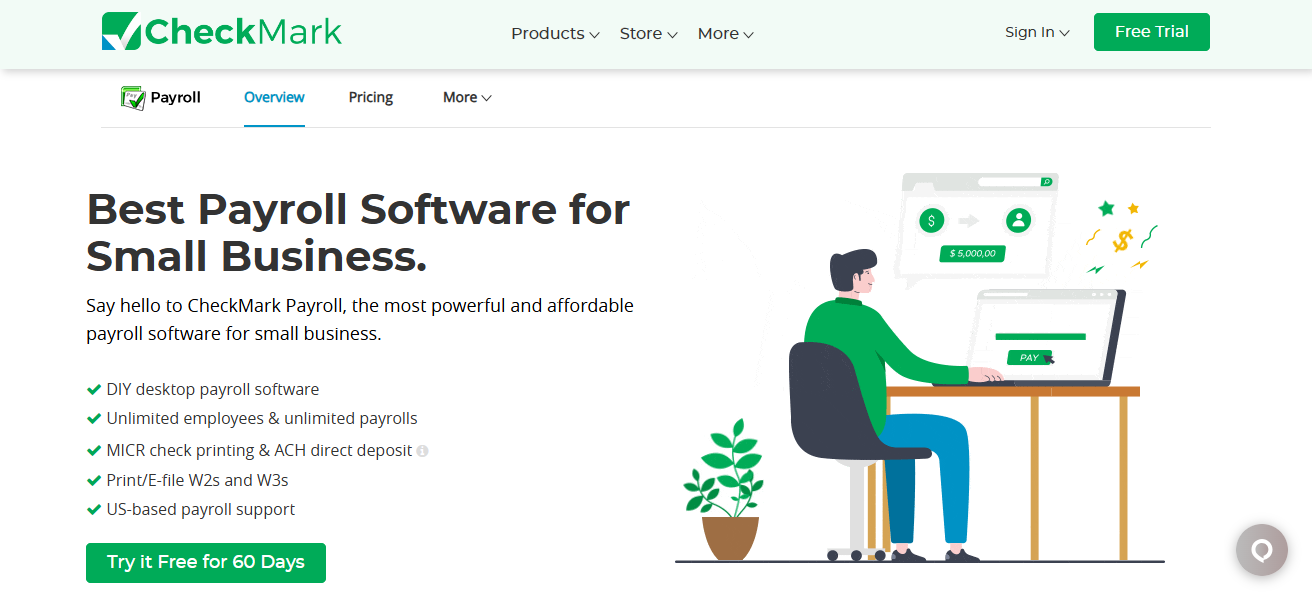
The infrastructure assumes the liability associated with federal, state, and local payroll tax obligations, streamlining the compliance burden.
Check’s embedded model allows platforms to offer seamless payroll capabilities, enhancing the perception of a cohesive product, and unlocking new revenue opportunities with payroll-driven services.
Features Check (Payroll-as-a-Service API)
Payroll-as-a-Service primary focus – Created to enable developers to construct complete payroll products (pay calculations, tax filings, money movement) directly into SaaS platforms.
Payroll tax compliance and filings – Automates federal and state payroll tax compliance so SaaS applications can offer this crucial functionality without building it themselves.
Developer-oriented payroll tools – Provides REST APIs and contemporary developer tools that are centered on payroll workflows instead of legacy data synchronization alone.
| Pros | Cons |
|---|---|
| Built specifically as an embedded API for vertical SaaS and fintech. | Newer in the market — ecosystem & community smaller. |
| Handles tax compliance, reporting, and payroll workflows programmatically. | Less brand recognition compared to legacy payroll providers. |
| Scalable and developer-first with modern API design. | May lack some advanced HR modules (benefits, time off). |
| Reduces engineering burden for payroll infrastructure. | Pricing transparency varies by usage tier. |
3. Rollfi
Rollfi makes payroll accessible. For SaaS companies and FinTech rollfi has developed modern payroll and benifits platforms with APIs that cut out the need to spend time and resources creating payroll functionalities.
Rollfi has fully developed APIs to onboard customers and their employees and automate payroll for both W2 and 1099 workers. Rollfi has customers in every state and handles all tax payments, filings, and payroll compliance.
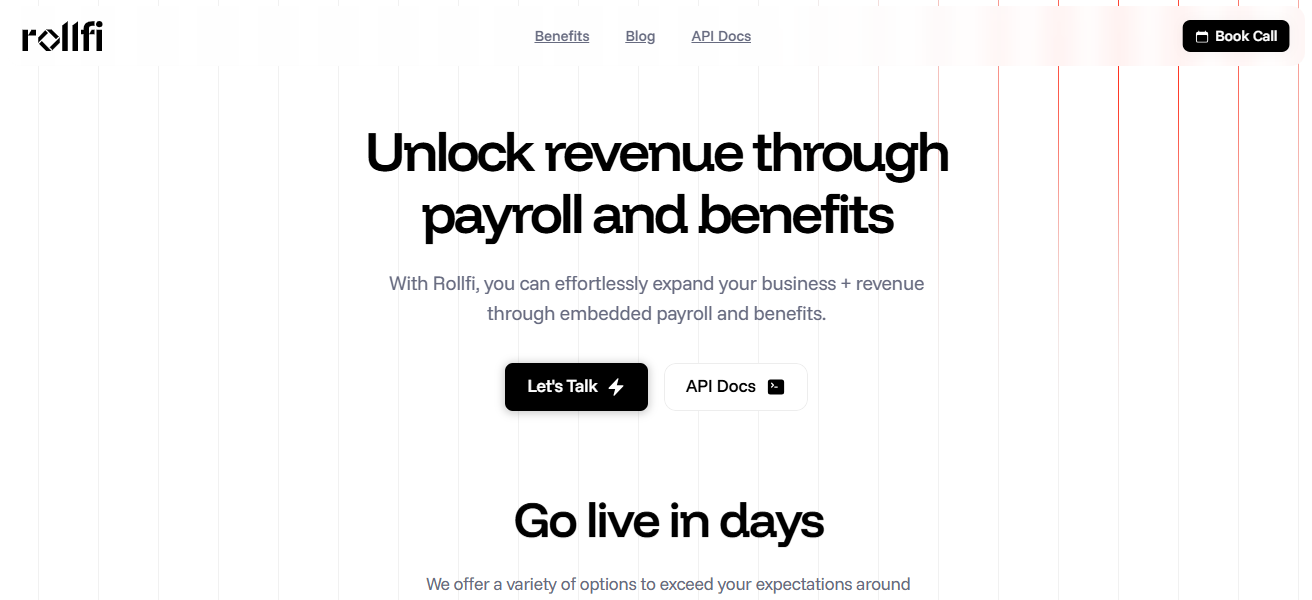
For the customers that require it, Rollfi is able to move money, offer payroll products, and customize the frontend. Rollfi is creating payroll and benifits APIs to ease the onboarding to software systems, significantly improving the revenue capabilities of software platforms.
Features Rollfi
Comprehensive payroll API—Payroll, tax, employee record, and compliance automation is accessible through various endpoints.
Time-to-market acceleration—Designed for streamlining engineering work with straightforward documentation and developer toolsets.
Integrated benefits support—Rollfi provides benefits and payroll tax integration workflow automation and payroll.
Flexible customizations—Designed for SaaS applications that wish to have configurable payroll logic and workflows for embedding.
| Pros | Cons |
|---|---|
| Modern payroll infrastructure with multi-state support. | Still growing; fewer pre-built enterprise features. |
| Integrated benefits and money-movement capabilities. | Limited documentation depth compared to older APIs. |
| API designed for fast integration and vertical SaaS. | Smaller partner ecosystem. |
| Handles tax payment & filings automatically. | Support and SLAs may be less mature for global use. |
4. Salsa
Salsa provides embedded payroll infrastructure for SaaS companies that want to implement payroll in a matter of days using APIs and embeddable UI components.
With Salsa’s REST and GraphQL APIs and optional UI elements, developers can onboard employers and employees, run payroll, and manage pay policies directly in their application.
Salsa serves both U.S. and Canadian payroll, automates overtime and compliance, and offers either hosted or deeply integrated experiences, reducing the engineering lift.
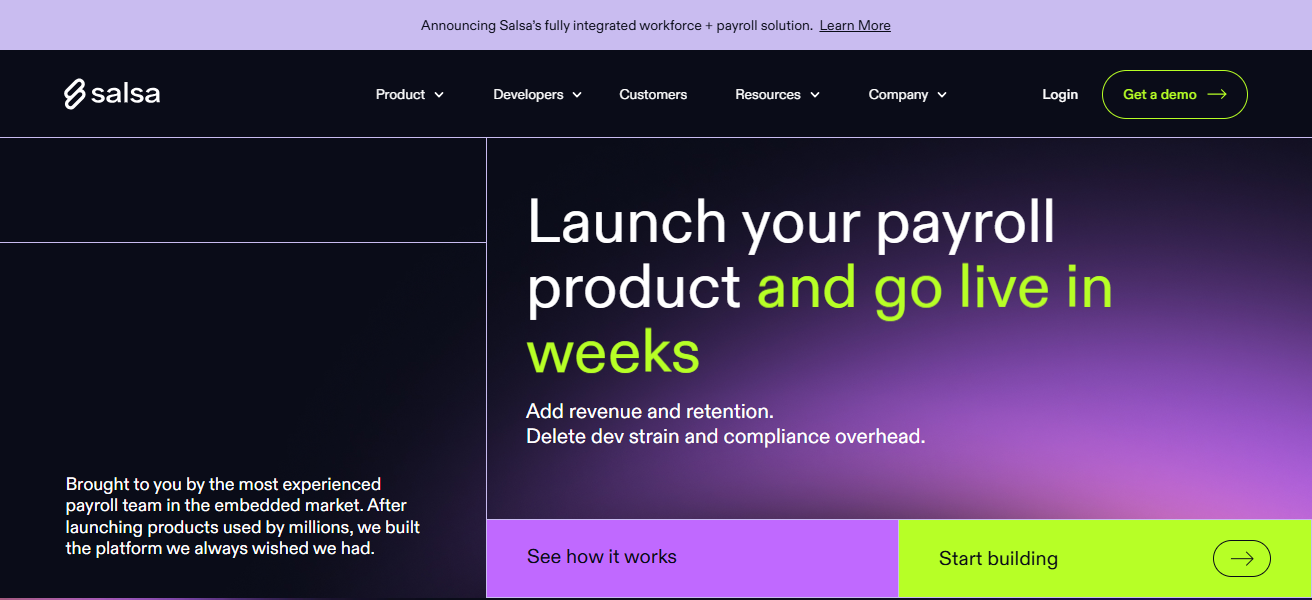
As a result, their focus on modular integration allows SaaS companies to quickly enter the market and enhance their payroll offering from minimal to fully custom.
Features Salsa (Embedded Payroll)
REST & GraphQL API options—Provides modern API systems to obtain and control payroll, time-off, and compliance data.
US & Canada payroll support—Manages payroll processes for both the U.S. and Canada with single integration.
Embedded UI tools—Streamlining embedding by having optional pre-built UI components that lessen the frontend workload.
Compliance automation—Overtime, time-off and PTO policies automate to lessen payroll manual adjustments.
| Pros | Cons |
|---|---|
| REST & GraphQL APIs with optional UI components for faster launch. | May require additional engineering for deep custom UI. |
| Supports both U.S. and Canadian payroll workflows. | Advanced compliance for complex multinational payroll may be limited. |
| Flexible modular design for startups to large SaaS. | May not offer as many HR features as legacy systems. |
| Good developer experience and documentation. | Growing ecosystem, not as large as ADP/Rippling. |
5. ADP API
ADP has great payroll and workforce management APIs that let ADP’s SaaS partners incorporate payroll, time, and HR data into their systems.
ADP APIs cover essential payroll functionalities such as pay and tax data retrieval, employee record management, and workflow automation, all while maintaining compliance and scalability that mid and enterprise companies require.
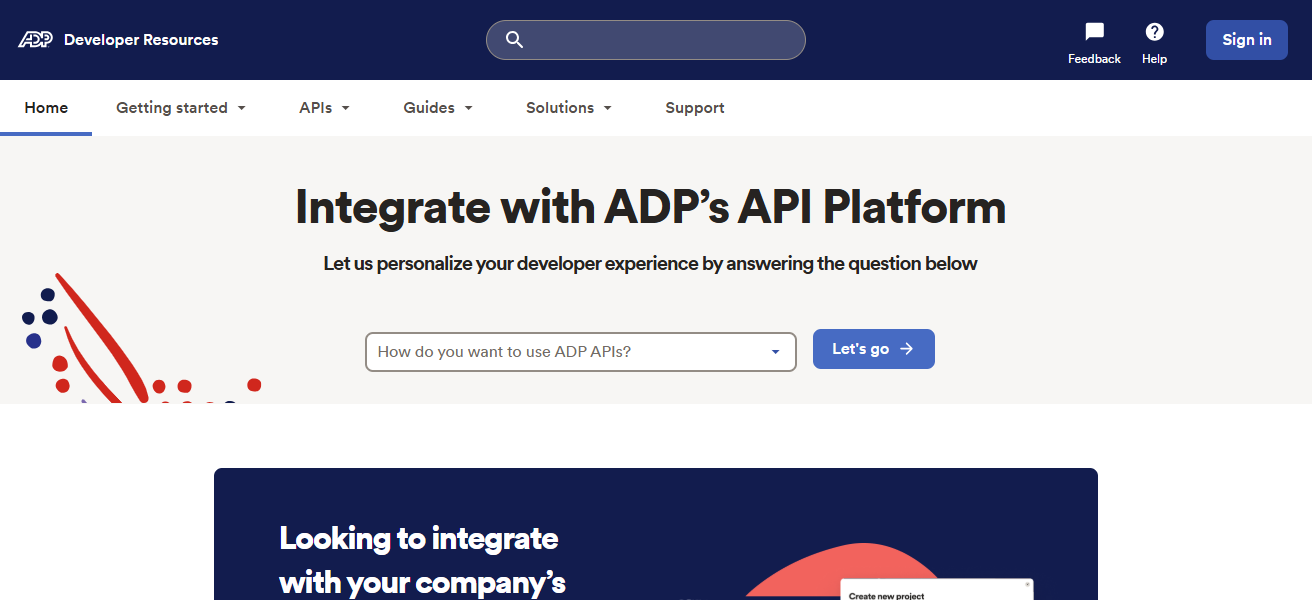
With extensive experience as a global payroll provider, ADP has developed APIs that account for complexities of payroll and tax filing management in each country.
Platforms can use these APIs to enhance their products with payroll capabilities while using ADP’s extensive partner network and solid infrastructure.
Features ADP API
Payroll & HRIS integration – Most APIs have capabilities for payroll processing, human resources information systems, tax information, employee data, and time data.
International payroll capabilities – Strong compliance and local payroll logic for multi-country and international use cases.
Diverse partnerships – Large developer network and integration capabilities across other HR and financial systems.
Enterprise – Able to grow with small and medium-sized businesses and large enterprises due to modular API design.
| Pros | Cons |
|---|---|
| Highly established and trusted payroll provider. | Complex onboarding for developers and longer integration cycles. |
| Extensive API coverage, includes payroll, HR, time, and tax data. | Pricing can be high, especially for smaller SaaS. |
| Handles compliance across U.S. states and international markets. | Developer experience less modern than newer payroll APIs. |
| Large partner ecosystem and support. | Documentation and versioning can be fragmented. |
6. Paychex Flex API
The Paychex Flex API collection enables developers to access Paychex Flex payroll, HR, and benefits data and allows SaaS applications to interface with employee records and payroll, and compensation data.
Paychex Flex offers flexible, modular payroll and HR solutions that scale with businesses. Paychex Flex can also handle tax filing, benefits administration, and compliance workflows.
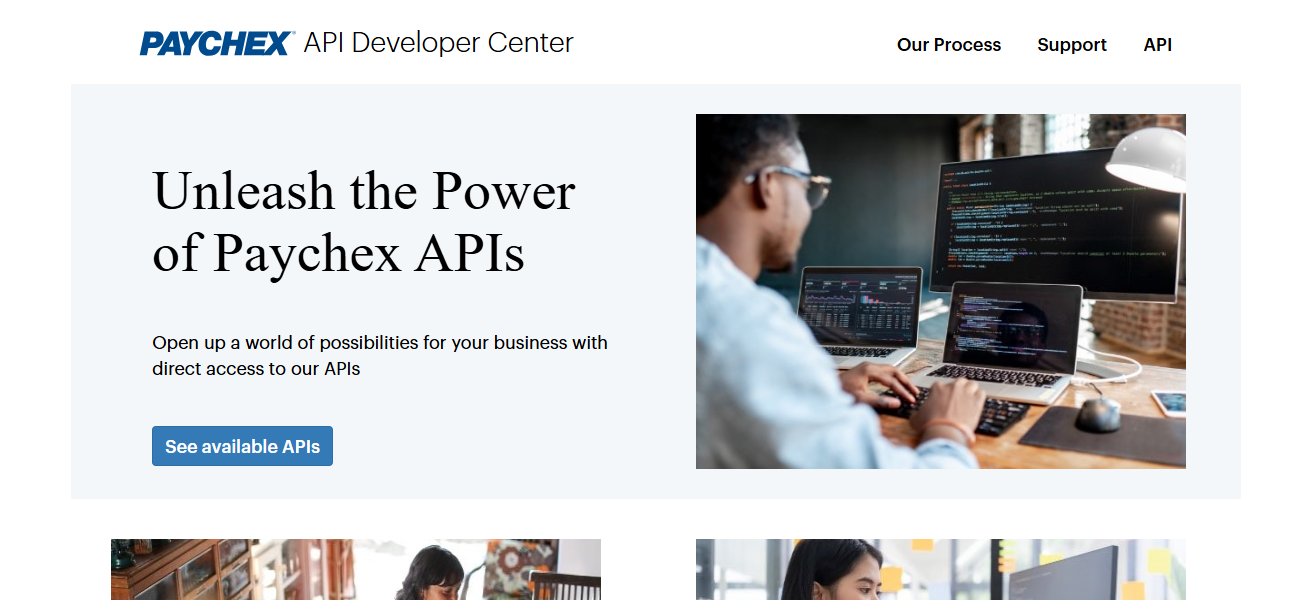
Platforms can streamline workflows, retrieve payroll reports, and incorporate pay data into wider business operations using the API.
In mid-market and SMB ecosystems that need tight HR/payroll integration within their products, the API is unique.
Features Paychex Flex API
Payroll & HR data synchronization – API enables applications to sync payroll runs and employee profiles and HR data across other SaaS applications.
REST API – Uses JSON and OAuth 2.0, which makes it secure and compatible with modern dev stacks.
Includes time & benefits – Collaborates with related HR modules to provide more complete workforce management.
Built for scale – Geared for systems that require payroll and HR capability for a large number of employees and compliance complexity.
| Pros | Cons |
|---|---|
| Strong payroll + HR + benefits integration capabilities. | Not as developer-friendly as modern API-first products. |
| Good for SMB and mid-market payroll needs. | Limited global payroll outside North America. |
| Integration with employee data and reporting workflows. | SLAs and support may vary by plan tier. |
| Mature service with long track record. | Customization can be complex. |
7. Square Payroll API
Square Payroll offers APIs so that organizations can include payroll automation into their current systems. With payroll automation, organizations can set up employees, calculate wages, and give employees direct deposit instructions.
Small and retail business can take advantage of Square Payroll because of their close connections with Square. However, Square Payroll’s APIs also help other businesses with payroll automation.
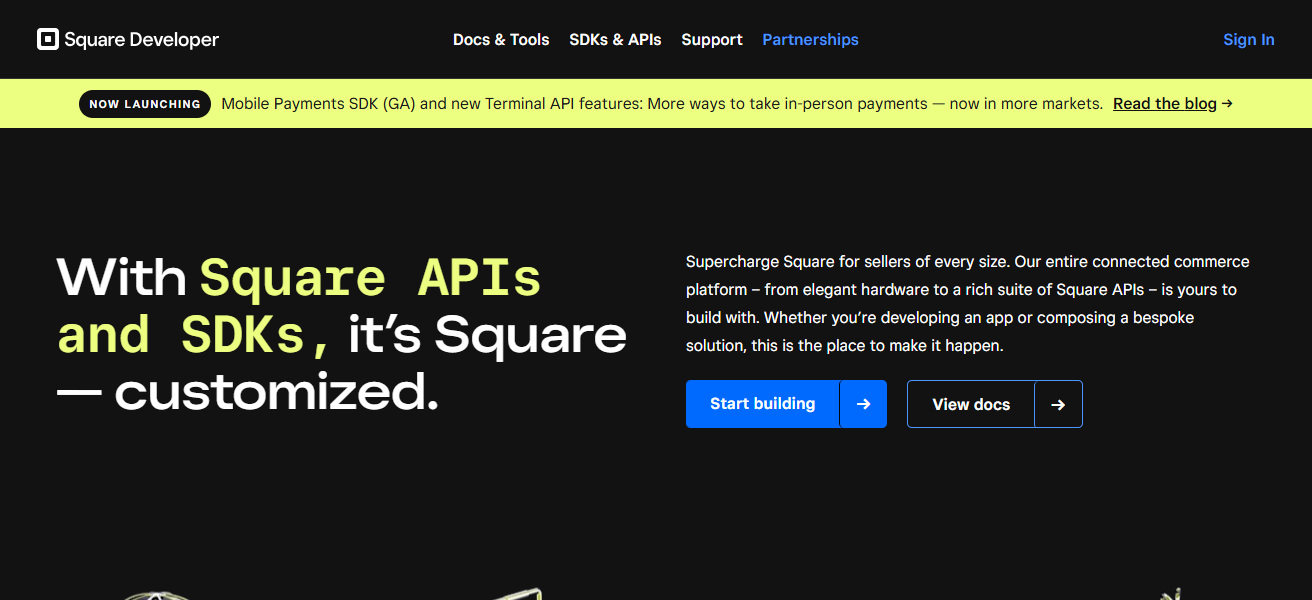
These businesses can offer their customers payroll automation for employees that are hourly or salaried. These payroll systems also automate tax filings and track payroll benefits. Thanks to Square, businesses can offer their customers payroll automation services.
Features Square Payroll API
Payroll syncs to payment transactions – Works with Square’s POS and payments to seamlessly collect data on hours and tips.
Automated payroll tax & deposits – Tax remittance and federal and state filings, employee direct deposits.
Employee self-service features – Gusto has allowed employees self-service features such as access to pay stubs and tax documents via API endpoints.
Quick setup for SMBs – Gusto has quick setup targeting small-business focused SaaS products where simplicity and tie-ins to payments is essential.
| Pros | Cons |
|---|---|
| Excellent integration with payments ecosystem (Square POS). | Best suited to U.S. small businesses — limited enterprise scope. |
| Simple pricing and payroll setup for hourly/salaried workers. | Not built as a full general-purpose payroll API. |
| Good for retail and service-oriented SaaS products. | Few advanced HR or compliance automation features. |
| Easy to embed for payment + payroll use cases. | Documentation less comprehensive than larger payroll APIs. |
8. OnPay API
OnPay is a provider of Payroll as a Service APIs that help embed payroll functionalities directly into a SaaS platform. With OnPay customers can automate employee payroll runs, tax calculations, and tax filings.
OnPay is designed for small and medium businesses and focuses on ease of use and affordability with unlimited payroll runs.
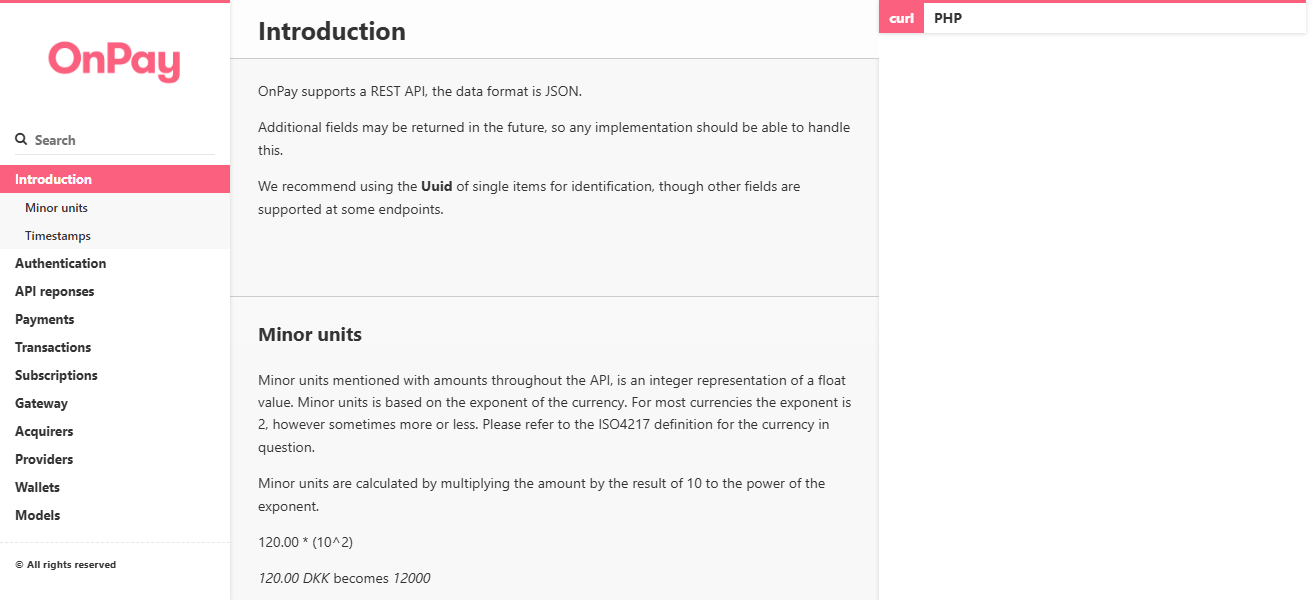
Embedded OnPay customers can natively offer payroll processing, automated compliance, and payroll benefits tracking with less development effort.
Payroll APIs minimize manual data entry and provide a better payroll processing and tax compliance experience for your clients’ employees.
Features OnPay API
Simple payroll workflow APIs – OnPay’s API has endpoints for initiating payroll runs, managing employee wages, and compliance.
Unlimited payroll runs – OnPay designed the API to allow company’s the ability to run payroll as needed, and does not limit the number of API calls for payroll creation.
Affordable option – OnPay’s target is SMB’s, where they focus on workloads that include complete payroll features.
| Pros | Cons |
|---|---|
| Simple, straightforward payroll API with unlimited runs. | Smaller feature set compared to enterprise systems. |
| Affordable pricing for SMB focus. | Minimal global payroll support. |
| Easy to use and embed for basic payroll needs. | Developer ecosystem and integrations limited. |
| Handles tax filings and compliance within the U.S. | Few advanced HR add-ons (benefits, PTO, etc.). |
9. Rippling API
Rippling APIs facilitate the integration of payroll, HR, benefits, and IT management services into SaaS and internal systems.
One of the finest features of Rippling is global payroll, which includes compliant payroll processing for various nations and data-shifting synchronization.
Developers can use the APIs to automate onboarding, running payroll, paying taxes, and rendering workforce data.
Rippling’s cohesive approach is preferable for systems designed for bigger enterprises and more complicated demands to provide embedded payroll and/or advanced workforce and benefits data.
Features Rippling API
Global payroll capabilities – Rippling supports multi-country payroll compliance and EOR (Employer Of Record) scenarios.
Automation workflows – Rippling is the most automized with triggers and integrations of workflows that span multiple systems.
Large integration ecosystem – Rippling works with over 500 different applications and is one of the most integrated with HR, IT, and finance tools.
| Pros | Cons |
|---|---|
| Unified payroll, HR, benefits, and IT management API. | Can be expensive for SaaS startups. |
| Strong global payroll support + multi-country compliance. | Integration complexity and learning curve are higher. |
| Deep automation across workforce lifecycle. | Overkill for simple payroll needs. |
| Large ecosystem and partner support. | Documentation can be overwhelming. |
10. Papaya Global API
Papaya Global offers APIs centered on worldwide payroll and payments which enable SaaS companies to handle payroll payments and compliance for more than 160 countries.
Its APIs facilitate direct payments for payroll, payments to contractors and employees in multiple currencies, and automated compliance with respect to local labor and tax laws.
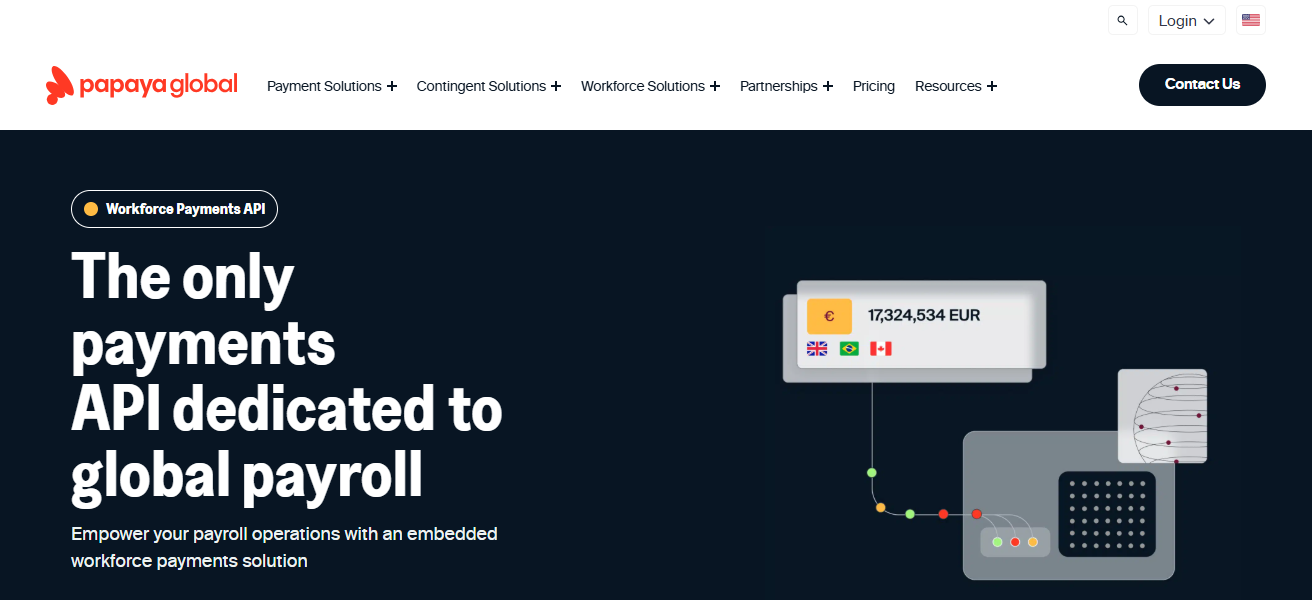
Papaya Global offers developers payroll payments APIs that enable the integration of payments of payroll and related functionalities, such as updating employee records, controlling payment scheduling, and processing payments for payroll in their platforms.
For platforms that need to service international employees, or have automated cross border payroll compliance requirements, this is the first API suite that is truly global.
Features Papaya Global API
Global payroll payments API – Lets SaaS applications handle payroll disbursement to over 160 countries while controlling the currency.
Worker details & payment control – APIs to change worker details, schedule payments, and run payment simulations.
Bank-level security – Payroll payment streams to employees and contractors are secure and encrypted.
Sandbox & testing environment – Tools for developers to test and confirm their integration works before going live.
| Pros | Cons |
|---|---|
| Built for global payroll and workforce payments. | Complex pricing for multinational payroll footprints. |
| Supports pay in multiple currencies with compliance automation. | Developer onboarding may be slower due to complex features. |
| Ideal for SaaS targeting global workforces. | Not as lightweight for simple U.S.-only payroll. |
| Strong compliance in local labor/tax regulations. | Smaller ecosystem than ADP/Rippling. |
How To Choose Best Embedded Payroll APIs for SaaS Platforms
API-first design – Look for APIs that are well documented, modern and have toolkits for easier integration.
Payroll compliance automation – Automate the calculations and submissions of tax filings and compliances by jurisdiction.
Fully embedded experience – APIs that integrate payroll as a white label service are ideal.
Geographic payroll coverage – Look for APIs by providers whose coverage fits your geographic payroll needs, U.S. only to global.
Employee and contractor support – Availability of full-time employees, contractors, hourly, salaried, and mix workforce models support is crucial.
Scalability and performance – APIs should be able to seamless handle increasing payroll volume and peak payroll cycles.
Security and data protection – Check for encryption, reliable SSO, compliance with SOC 2, and data privacy regulations.
Pricing and revenue alignment – Target pricing models that fit with your SaaS and revenue strategy.
Conclusion
To sum up, the Best Embedded Payroll APIs for SaaS Platforms enable companies to provide users with a seamless and compliant payroll experience directly through their applications.
With the right Payroll API, SaaS companies can minimize development efforts, maintain tax compliance, facilitate growth, and boost customer retention.
The right embedded payroll solution will serve as a long-term solution for effective workforce and financial management.
FAQ
An embedded payroll API allows SaaS platforms to integrate payroll processing directly into their application.
They reduce development effort, ensure compliance, and provide a seamless in-app payroll experience for users.
Yes, leading providers use encryption, OAuth authentication, and SOC 2–compliant security standards.
Most APIs automate tax calculations, filings, and year-end forms to ensure regulatory compliance.
Yes, many APIs support both full-time employees and independent contractors.