In this article, I will review the Best Fashion Tech Platform that is revolutionizing how we shop, create, and interact with fashion.
These platforms are changing the game with AI-driven personalization, virtual try-ons, and sustainable innovations.
I will examine the features and benefits of these platforms and how they assist brands and consumers in adapting to the rapidly changing fashion industry.
Key Points & Best Fashion Tech Platforms
| Fashion Tech Platform | Key Point |
|---|---|
| Luxe.AI | AI-driven personalized fashion recommendations |
| Fashwell | AI-powered trend forecasting and style recognition |
| Fit Analytics | Virtual fitting rooms for accurate sizing |
| True Fit | Data-driven personalization for online shopping |
| Farfetch | Luxury fashion marketplace with tech-driven curation |
| Stitch Fix | Algorithm-based personal styling service |
| Zalando | AI-powered fashion discovery and sustainability focus |
| The Fabricant | Digital-only fashion house creating virtual clothing |
| GreenBlueBrown Apparels | Sustainable fashion merging AR with eco-conscious practices |
| CLO Virtual Fashion | 3D garment visualization and design software |
10 Best Fashion Tech Platforms
1. Luxe.AI
Luxe.ai is a new player in the fashion tech industry focused on improving the shopping experience using personalization and discovery driven by artificial intelligence.
Although the company does not have much public documentation detailing their services, they work with fashion retailers using machine learning to analyze customers’ shopping habits.
This helps brands predict with better accuracy what styles and pieces a customer may prefer to purchase based on their previous shopping behaviors and styles in conjunction with their purchase trends, driving up conversion and engagement and alleviating customers’ indecisiveness.
To enhance the customer shopping experience, brands often embed these services onto their websites to provide customers with smarter fashion recommendations, tailored collections, and lookbooks.
Luxe.AI Features
- Tailored Collections Creates Smart Collections and Look Books for individual users.
- Trend Prediction Uses real-time data to find and recommend related fashion products.
- Machine Learning Trains models to aid customers in finding fashion products that best fit their style and preferences.
- Sales Optimizer Integrates with online stores to strengthen user experience and improve sales.
| Pros | Cons |
|---|---|
| AI-driven personalized recommendations improve conversion and engagement. | Limited public documentation makes adoption clarity difficult. |
| Helps reduce customer decision fatigue through curated suggestions. | As an emerging platform, integrations and scalability may be limited. |
| Enhances e-commerce experience with smart collections and lookbooks. | May require significant customization for different retailers. |
| Can leverage trend data for dynamic product suggestions. | Smaller user base compared to established competitors. |
2. Fashwell
Fashwell, a fashion tech firm, focuses on artificial intelligence and computer vision for visual product discovery. It can help users look for items from a retailer’s inventory by having users upload photos of clothing or accompanying accessories.
Deep learning model Fashwell has on hand can identify features of the fashion item such as style, pattern, color, and type of clothing, making the shopping experience more intuitive and discovery fueled.
This platform works best for fashion retailers who want to reduce product discovery friction and enhance customer satisfaction by providing pertinent recommendations.
Fashwell Features
- Visual Search Users can find products that match an uploaded image.
- Pattern Recognition Determines style, color, pattern, and garment category using AI.
- Advanced Search Helps customers with product discovery by browsing through categories and using filters to find a product.
- Brand Support Assists customers in incorporating Fashwell search technology into their apps and websites.
| Pros | Cons |
|---|---|
| Advanced visual search using AI and computer vision. | Requires large product image databases to be effective. |
| Recognizes style, pattern, color, and garment type accurately. | Integration with existing e-commerce platforms can be complex. |
| Improves product discovery and reduces friction for shoppers. | Limited brand awareness outside fashion tech circles. |
| Enhances customer satisfaction with relevant recommendations. | Dependent on high-quality images for accurate matching. |
3. Fit Analytics
Fit Analytics, using machine learning, provides online clothing and shoe retailers with sophisticated sizing and fit solutions.
The company’s flagship product, Fit Finder, uses shopper insights, former orders, return analytics, and body model data to tailor size recommendations to individual shoppers.
This AI sizing assistant mitigates one of the major challenges of e-commerce: sizing issues, which contribute to massive return costs.
By providing individualized size recommendations at checkout and on product pages, Fit Analytics streamlines and enhances the global shopping experience, boosting conversions, and minimizing returns.
Fit Analytics Features
- Size Prediction Uses a fit model to recommend the best size for each customer.
- E-commerce Return Improvement Increases consumer fit by decreasing online returns.
- Size Guidance Provides guidance during the checkout process.
- Cross-Category Analytics Functions within apparel, footwear, and other fashion categories.
| Pros | Cons |
|---|---|
| Provides accurate sizing recommendations using AI and ML. | Initial setup may require retailer data integration. |
| Reduces returns and increases conversion rates. | Relies on customer-provided measurements or previous purchase data. |
| Improves user confidence and shopping experience. | May not account for unusual body shapes or niche sizing needs. |
| Integrates with online apparel and footwear platforms easily. | Smaller retailers may find subscription costs high. |
4. True Fit
True Fit is an industry leader in AI personalization platforms that enable customers to buy clothing and shoes that actually fit by removing guesswork.
The platform generates personalized fit and size recommendations through connections to one of the largest datasets in the fashion industry, comprising billions of purchase, return, and product attribute datasets.
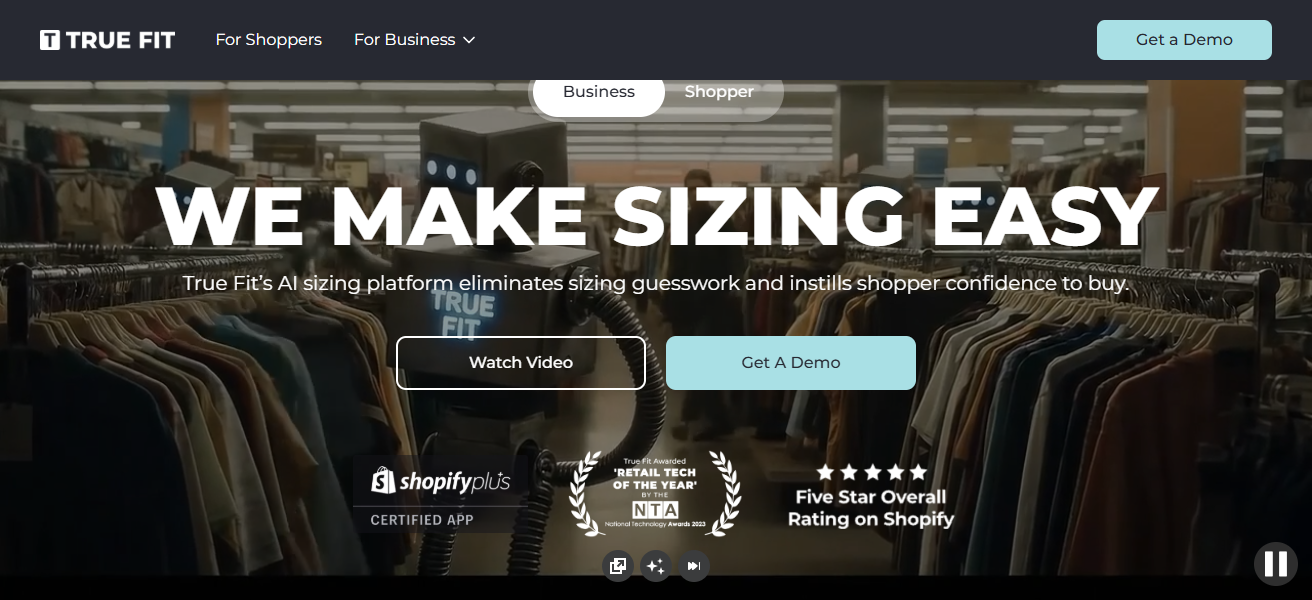
The platform’s AI evaluates product data, customer preferences, and shopping behavior to identify the preferred size for each product in real-time.
Retailers using True Fit obtain improved customer loyalty, increased conversion rates, and reduced return rates since customers know that the size they order will fit.
True Fit Features
- Data-Driven Fit Guidance: Leverages big data to suggest appropriate sizes.
- Personalization Engine: Focuses on shopper behavior, likes, and buying patterns.
- Return Minimization: Provides fit guidance to reduce return rates.
- Brand Integration: Efficiently scales to retailers of various sizes and types.
| Pros | Cons |
|---|---|
| AI-driven personalized sizing and fit guidance. | Privacy concerns with handling massive purchase and personal data. |
| Reduces returns and improves customer loyalty. | Implementation can be complex for small brands. |
| Uses extensive fashion datasets for accurate predictions. | May not cover all niche brands or new products immediately. |
| Supports large-scale retail operations efficiently. | Dependent on data quality from retailers and shoppers. |
5. Farfetch
Farfetch is an international luxury fashion e-commerce company that integrates high-end technology and retail. It connects customers with unique products via an online marketplace from global boutiques and brands.
From real-time visualization and augmented reality try-on tools to the personalization technology that recommends products based on individual shopper preferences, Farfetch invests in fashion-tech to create streamlined, luxury shopping experiences.
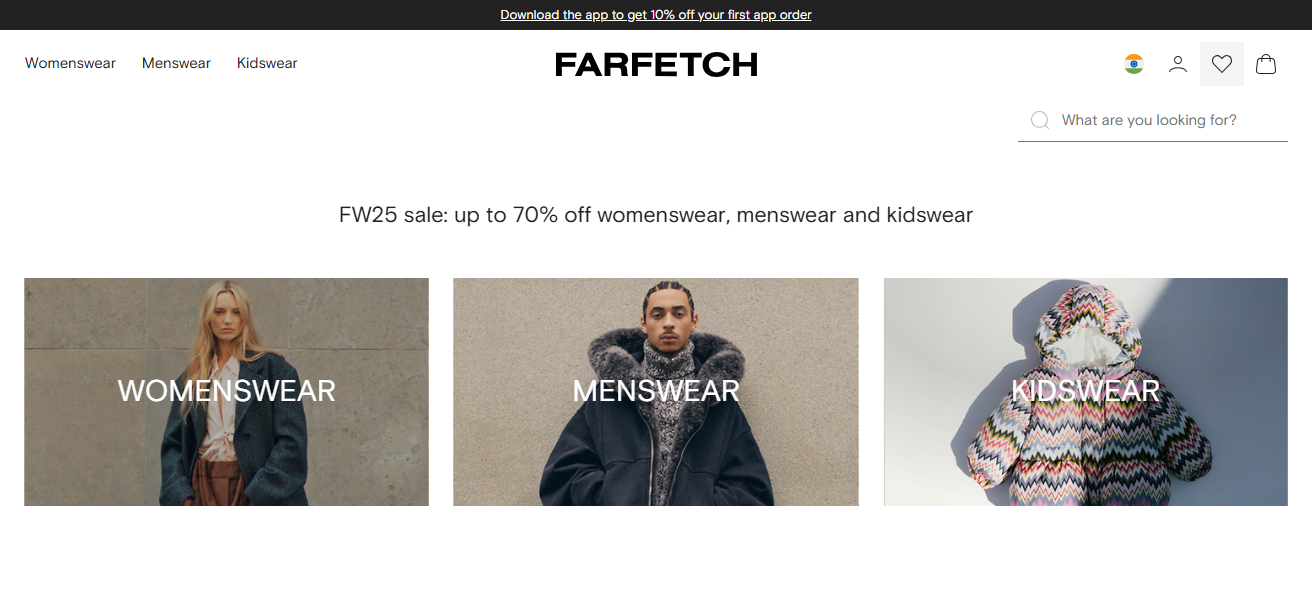
Advanced analytics, inclusive fashion discovery, and global seamless logistics to partner brands help Farfetch remain digital luxury retail and experiential fashion commerce industry leaders.
Farfetch Features
- Luxury Marketplace: Links customers to middle and premium luxury retailers.
- AI Personalization: Based on preferences and behavior, products are recommended.
- AR & Visual Tools: Users can virtually try pieces and access visual search.
- Advanced Analytics: Brands receive data on customers and patterns.
| Pros | Cons |
|---|---|
| Global marketplace connecting consumers with luxury brands. | High competition from other luxury e-commerce platforms. |
| Integrates AI for personalization and AR try-on features. | May be overwhelming for casual shoppers with large catalog. |
| Supports seamless global logistics and analytics for brands. | Focused primarily on luxury, limiting mainstream appeal. |
| Enhances shopping with tech-driven discovery and recommendations. | Some tech features may require high-speed internet and devices. |
6. Stitch Fix
Stitch Fix employs a combination of machine learning and human stylists to offer personalized services. Using an algorithm, customer preferences, sizes, and reviews are analyzed after completing a style quiz. Styling boxes, referred to as “Fixes”, are sent to customers.
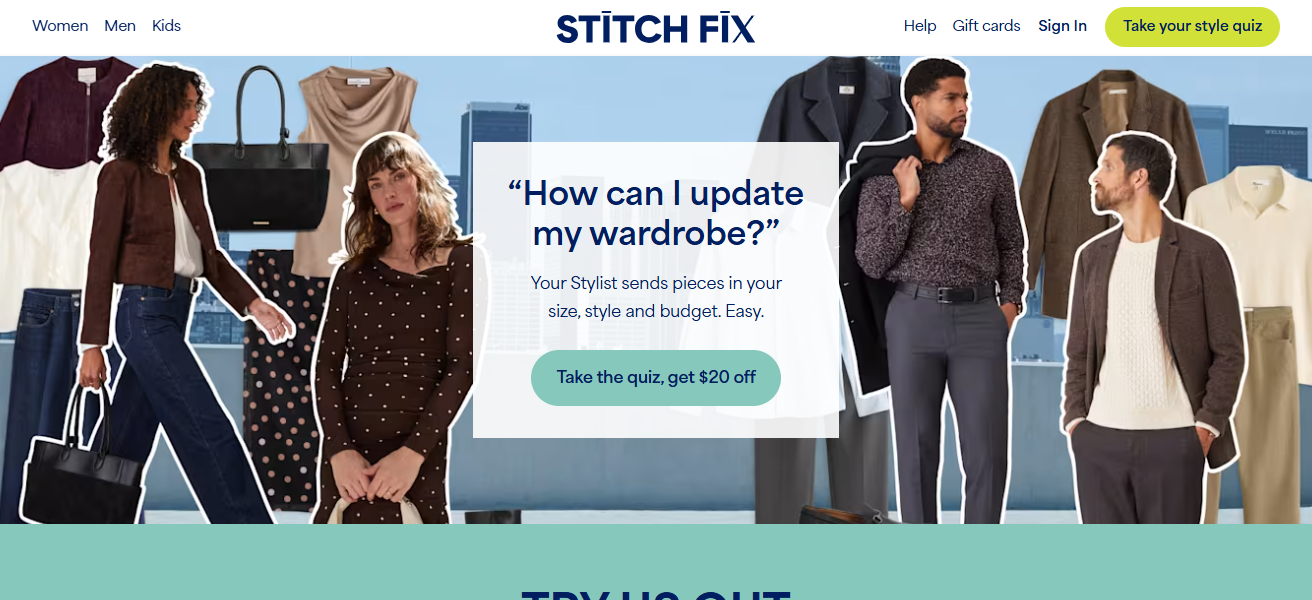
Recommendation systems are developed through customer feedback, purchasing history, and fit data. This allows Stitch Fix to create a unique customer experience that is a blend of artificial intelligence and human reasoning.
Stitch Fix is also able to scale personalized fashion, thanks to its technology that predicts and optimizes fashion trends.
Stitch Fix Features
- Hybrid Styling: Merges artificial intelligence with human stylists.
- Personalized Boxes: Customized clothing selections (Fixes) are sent to consumers.
- Continuous Learning: Future suggestions improve from consumer input.
- Trend Forecasting: Enables retailers to streamline inventory and anticipates demand.
| Pros | Cons |
|---|---|
| Combines AI with human stylists for personalized curation. | May not suit shoppers wanting full control over choices. |
| Continuous learning improves recommendations over time. | Subscription or styling fee may deter some users. |
| Forecasts trends and optimizes inventory for retailers. | Dependent on customer feedback for algorithm accuracy. |
| Makes fashion accessible at scale with hybrid AI-human approach. | Limited to regions where service operates physically or logistically. |
7. Zalando
Zalando, one of the largest online fashion retailers in Europe, uses tech like machine learning to better customer experience. More than just a marketplace, Zalando creates technology for fit, virtual try-ons, and personalized shopping.
Zalando’s systems analyze purchase/return records and recommend suitable sizes, while 3D avatars assist customers in visualizing how clothes fit.

With AI styling and personalized recommendations, Zalando’s tech-focused strategy improves digital shopping for customers and increases satisfaction, all while lowering the number of returned items.
Zalando Features
- AI-Driven Recommendations: Recommends products and sizes tailored to each shopper.
- Virtual Try-On: Customers see clothes on 3D avatars of their own body types.
- Data Insights: Offer analytics that enhance the consumer experience and minimize returns.
- Marketplace Integration: Enables seamless brand discovery across multiple retailers.-
| Pros | Cons |
|---|---|
| Advanced AI-driven fit and size recommendations. | Primarily focused on European market. |
| Virtual try-ons and 3D avatars enhance shopping experience. | Smaller brands may struggle to get visibility on platform. |
| Reduces returns and improves customer satisfaction. | Integration with external systems may be challenging. |
| Personalization in apps and digital tools improves engagement. | High-tech features may require newer devices or software updates. |
8. The Fabricant
The Fabricant, a first-of-its-kind digital fashion house, designs high-end clothes that exist purely in the digital realm.
Rather than relying on the old-model physical production, The Fabricant employs cutting-edge 3D software to create couture-level pieces that feature realistic textures, fluid movement, and outfits that can be worn in digital spaces, including social media, AR, and the metaverse.
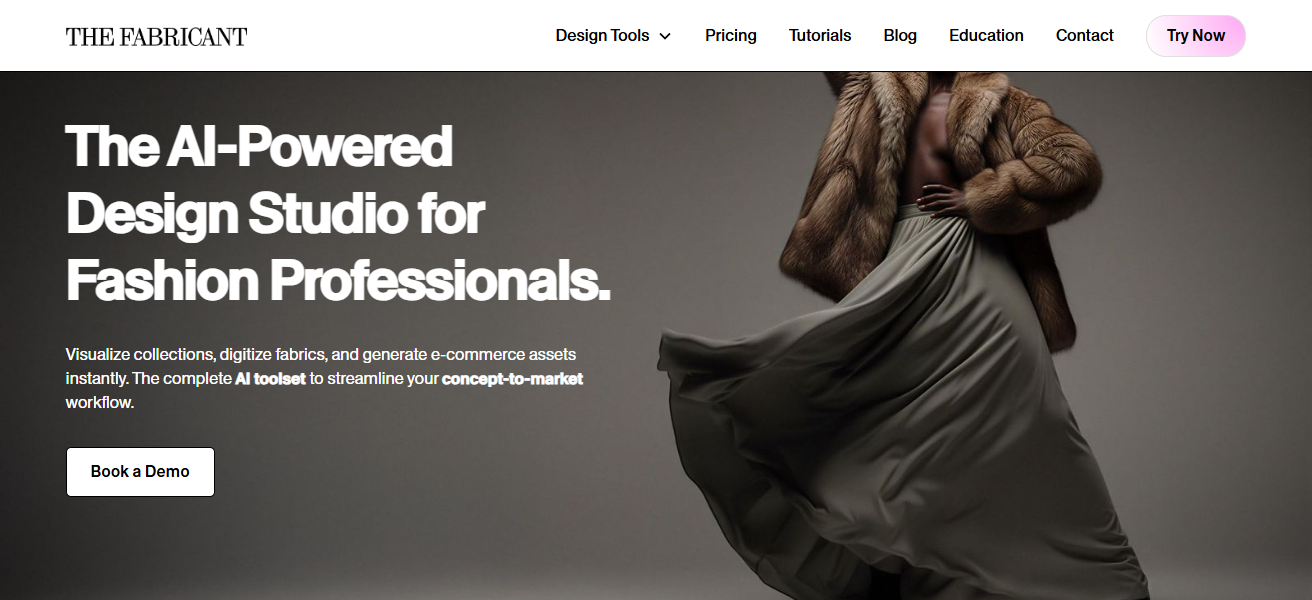
Digital designs are frequently purchased in the form of NFTs to dress avatars, participate in digital fashion shows, partner with major-label collaborations, and more.
By working exclusively in the realm of digital apparel, The Fabricant is a leader in the fields of fashion innovation, sustainable practices, and in the ever-expanding landscape of creative virtual expression.
The Fabricant Features
- Digital-Only Fashion: Only Creates garments for virtual environments.
- 3D Design Tools: Creates virtual environments for the realistic simulation of textures, drape, and movement.
- NFT Integration: Sells virtual garment fashion of as digital collectibles and assets.
- Virtual Experiences: Used in metaverse, AR, social media, and digital fashion shows.
| Pros | Cons |
|---|---|
| Creates purely digital, sustainable fashion items. | Limited appeal outside virtual worlds or digital fashion enthusiasts. |
| Reduces physical production costs and environmental impact. | Dependent on NFT marketplaces or virtual platforms for sales. |
| Enables creative expression in the metaverse and AR/VR environments. | Learning curve for traditional fashion designers to adopt digital tools. |
| Partnerships with brands for virtual fashion shows and campaigns. | Monetization largely depends on digital asset value trends. |
9. GreenBlueBrown Apparels
GreenBlueBrown Apparels is part of a fast-growing category of sustainable fashion brands leveraging innovation to reduce their environmental footprint.
While disruption through technology such as AI is still some-time off for the industry, GreenBlueBrown combines sustainable digital strategy (e.g. supply chain transparency, sourcing non-harmful materials, ethical supply chain management) with eco-conscious customer engagement.

Companies of this sort educate their customers, track the life-cycle of their products, and measure their eco-impact.
By integrating digital practices with ecological responsibility, GreenBlueBrown Apparels exemplifies how fashion technology is advancing sustainable and responsible traceability in the apparel industry.
GreenBlueBrown Apparels Features
- Sustainable Materials: Focuses on eco-friendly and ethical sourcing.
- Transparent Supply Chain: Provides insight into production and environmental impact.
- Lifecycle Tracking: Provides digital tools to track the garments of a brand throughout the production and sale.
- Consumer Education: Promotes conscious shopping and increases the awareness of sustainability
| Pros | Cons |
|---|---|
| Focus on sustainable and eco-friendly apparel production. | Not primarily a tech platform; AI/ML features may be limited. |
| Transparent supply chains and ethical sourcing. | May have higher production costs due to sustainability focus. |
| Integrates digital tools for lifecycle tracking and consumer education. | Limited scale compared to large fashion tech companies. |
| Appeals to eco-conscious consumers and promotes responsible shopping. | Marketing and adoption require educating consumers on sustainability value. |
10. CLO Virtual Fashion
CLO Virtual Fashion offers designers the ability to build and simulate garments in a 3D space with the option to create a physical sample.
The designers can use fabric behavior simulations to CLO has teams to rapidly iterate design within a van and simulate multiple design variations in real time.
This digital process streamlines the prototyping process and cuts early stage physical samples. Because of this digital workflow CLO has become popular for brands and studios aiming to tech precise design with creative freedom.
CLO Virtual Fashion Features
- 3D Garment Simulation: Designs and visualizes clothes digitally before production.
- Realistic Fabric Behavior: Simulates drape, stretch, and texture for accurate representation.
- Collaboration Tools: Provides virtual collaborative workspaces for multiple designers or teams.
- Cost & Waste Reduction: Reduces the need for physical prototyping and other materials to save waste.
| Pros | Cons |
|---|---|
| Enables 3D design, visualization, and simulation of garments digitally. | Requires technical skill and training to use effectively. |
| Reduces material waste and prototyping costs. | High software cost may be prohibitive for small designers. |
| Accelerates time-to-market with rapid iteration of designs. | Rendering complex designs may need high-performance computers. |
| Supports collaboration across design teams virtually. | Less relevant for brands producing mainly physical-only lines. |
How To Choose The Best Fashion Tech Platform
Business Needs Alignment – Make sure the platform suits your brand’s goals, be it personalization, sizing, sustainability, and virtual fashion.
AI & Personalization Capabilities – Focus on AI-based recommendations, visual search, and predictive analytics that foster customer experience.
Integration Ease – See if the platform integrates nicely with your e-commerce, ERP, or design tools.
Scalability – Pick a platform that continues to suit your business as it growsand can accommodate traffic or product increases.
Data Accuracy & Analytics – Ensure it gives reliable size and trend recommendations, and analyzes data effectively.
User Experience Enhancement – Options like virtual try-on and 3D models boost user engagement.
Sustainability & Ethical Practices – If sustainability matters, evaluate platforms that have digital fashion, and can be used with supply chain tracing.
Cost & ROI – Compare the value you would get from the hours saved or revenue you’d gain to the subscription, setup, or per-transaction fees.
Support & Updates – Make sure they offer good customer support and regular platform updates to keep your tech as future proof as possible.
Conclusion
In summary, Best Fashion Tech Platforms, combining AI, 3D design, personalization, and sustainability, continue to transform the fashion industry.
They assist brands in optimizing customer experience, minimizing returns, and accelerating innovation.
These platforms are imperative for virtual fashion, sizing suggestions, and sustainable practices, helping brands stay competitive in the rapidly evolving and tech-centered fashion industry.
FAQ
A fashion tech platform uses technology like AI, 3D design, or data analytics to improve shopping, design, and retail processes.
They enhance personalization, reduce returns, optimize inventory, and improve customer experience.
Platforms like Luxe.AI, True Fit, and Fit Analytics specialize in AI-powered product and size suggestions.
Yes, platforms like The Fabricant and GreenBlueBrown reduce waste and support eco-friendly practices.