
This article analyzes liquid staking derivatives protocols that enable crypto users to earn rewards from staking while keeping their funds liquid. I will review the leading LSD platforms
Their key features and benefits, the associated risks, and how the platforms help users maximize their returns using the available DeFi tools without having their assets in a custodial state.
Selecting The Optimal Liquid Staking Derivative (LSD) Protocols for Earning Passive Income
- Evaluate Security of the Protocol: LSD protocols should consist of well-audited smart contracts and/or reputable validators with strong security histories.
- Assess Staking Incentives: Analyze the APY and the reward structures of the protocols, and the potential for future earning.
- Analyze Liquidity: LSD protocols should have sufficient liquidity so that staked derivatives can be traded or used in DeFi quickly.
- Evaluate Supported Networks: Analyze the LSD protocols and the networks where LSDs are being offered. E.g. Ethereum, Solana, and Polygon.
- Analyze Token Usability: Review whether staked tokens (stETH, rETH, and mSOL) are usable in DeFi.
- Evaluate Decentralization: LSD protocols that use decentralized validators and have community governance are preferred.
- Analyze Costs: Evaluate the staking, withdrawal, and using costs to the protocols to maximize passive income potential.
- Evaluate DeFi Links: LSDs that link to DeFi lending, yield farming, and liquidity are preferred.
- Assess Trustworthiness: LSD protocols with strong community trust and adoption, and have been in the market for long periods are preferred.
- Evaluate the Risks: Evaluate smart contract, market, and staking validator risks.
Key Points & Best Liquid Staking Derivatives (LSD) Protocols for Passive Income
| Best Liquid Staking Derivatives (LSD) Protocols | Explanation |
|---|---|
| Lido Finance | Leading Ethereum staking protocol offering stETH liquidity and passive yield opportunities. |
| Rocket Pool | Decentralized Ethereum staking network providing rETH rewards with validator flexibility. |
| Coinbase Wrapped Staked ETH | Exchange-backed staking derivative providing cbETH liquidity and Ethereum rewards. |
| Frax Ether | Innovative LSD protocol combining frxETH and sfrxETH for optimized yields. |
| StakeWise | Community-driven Ethereum staking platform offering osETH and flexible staking solutions. |
| Ankr Staking | Multi-chain liquid staking provider delivering aETH tokens and earning opportunities. |
| Binance Staked ETH | Centralized staking solution offering BETH derivatives and Ethereum passive income. |
| Marinade Finance | Solana liquid staking protocol providing mSOL tokens and staking rewards. |
| Jito | Solana MEV-powered LSD protocol offering JitoSOL with enhanced returns. |
| Stader Labs | Multi-chain staking platform enabling liquid staking across various blockchain networks. |
10 Best Liquid Staking Derivatives (LSD) Protocols for Passive Income
1. Lido Finance
One of the leading platforms that offers liquid staking is Lido Finance. They specialize in Ethereum staking. Users can stake ETH with Lido Finance and in return get stETH tokens. These tokens represent the staked ETH and rewards. Traditional staking means users would earn rewards, but would have illiquid assets.
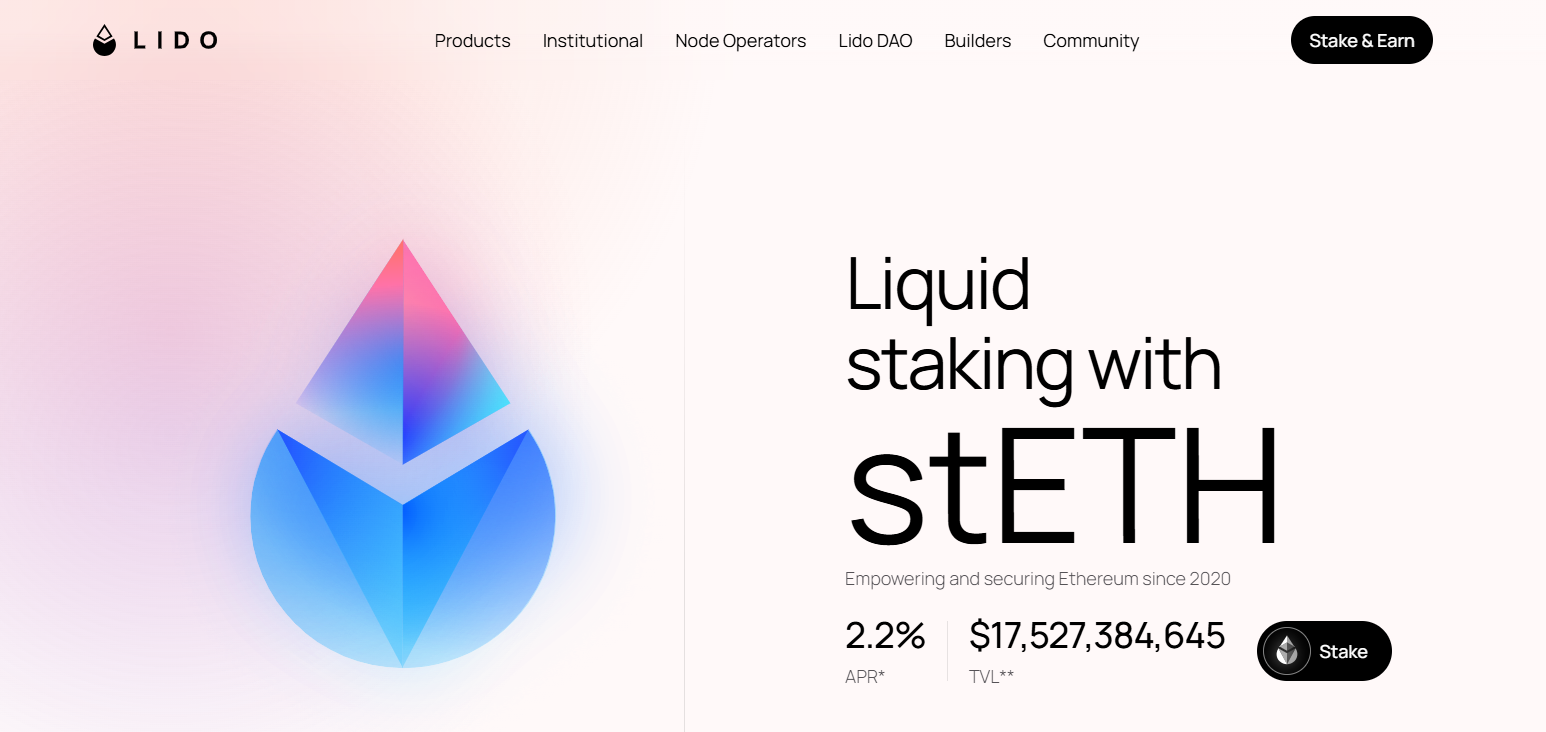
Lido Finance allows users to stake ETH and use the stETH tokens to lend, trade, and farm in DeFi protocols. They would earn rewards from staking and also generate DeFi returns.
Lido Finance is among the Best Liquid Staking Derivatives (LSD) Protocols for Passive Income for all of the above reasons combined with their participant-centric design that means users no longer have to run their own validators to participate in Ethereum staking.
Lido Finance Features
- Ethereum Liquid Staking: ETH can be staked in exchange for stETH tokens, with no risk of losing out on staking rewards.
- DeFi Usability: stETH tokens can be utilized in lending, trading, and liquidity farming activities.
- No Validator Management Effort: Ethereum staking can be done without the overhead of running your own validators.
- Asset Usability: stETH holders can use their assets in DeFi, offering users the best of both worlds.
- Market Adoption: Lido is one of the most utilized LSDs with lots of ecosystem support.
| Pros | Cons |
|---|---|
| Provides easy Ethereum staking without managing validators. | High market concentration creates decentralization concerns. |
| stETH token offers strong DeFi integration opportunities. | Smart contract risks may affect user funds. |
| Large ecosystem with high liquidity and adoption. | Ethereum staking withdrawals depend on network conditions. |
| Users earn staking rewards while maintaining liquidity. | stETH price may temporarily differ from ETH value. |
| Supports multiple DeFi applications and platforms. | Dominance may create risks for Ethereum ecosystem diversity. |
2. Rocket Pool
For the individual Ethereum stakers and aspiring node operators, Rocket Pool is another excellent option. Rocket Pool staking offers rETH tokens, which provides stakers with liquidity and will continue to earn rewards from the Rocket Pool staking validators.
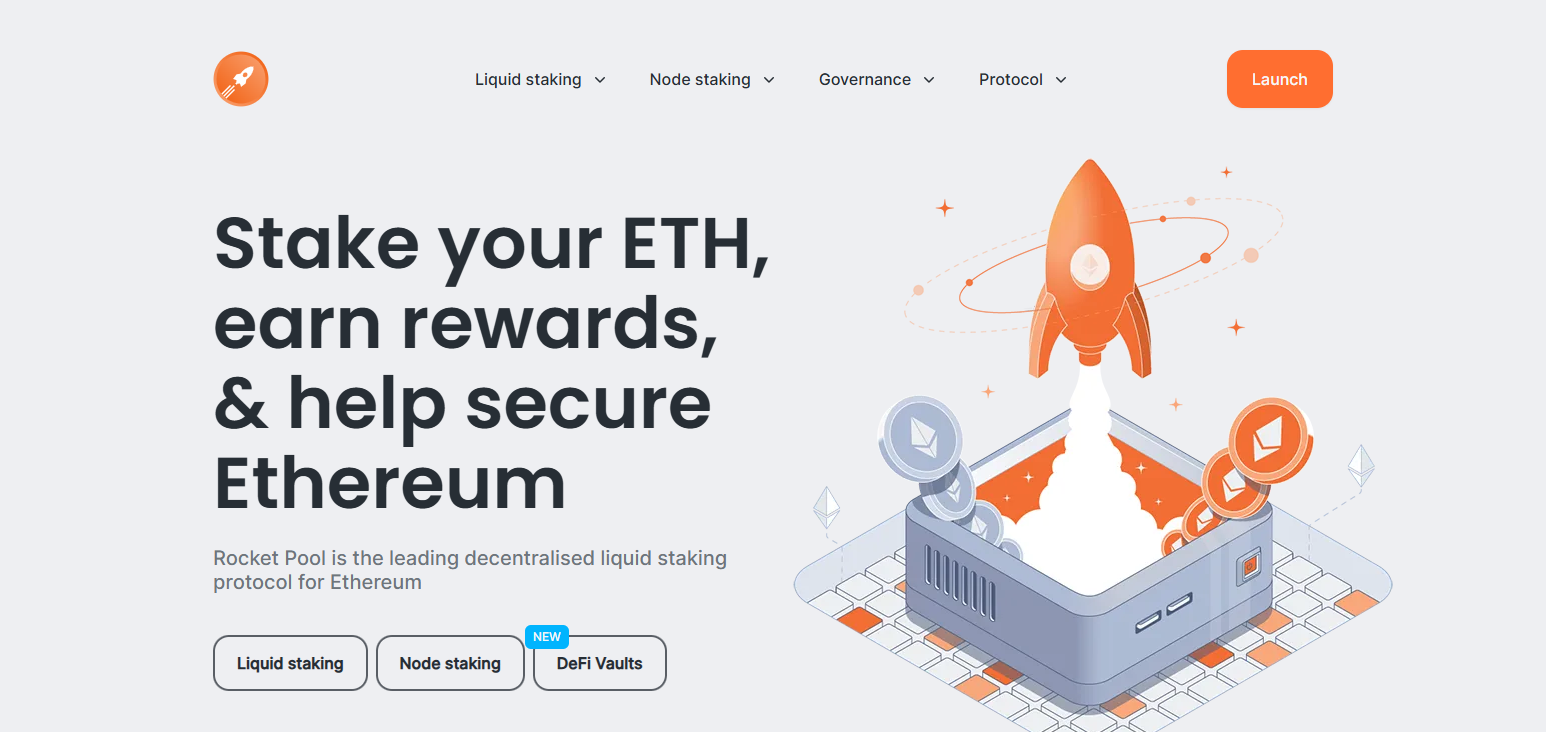
Rocket Pool especially values decentralization and will allow a member of their community to run an Ethereum node without committing the full amount of Ethereum.
Rocket Pool is unique for its staking, safety, and decentralized design and flexible earning and passive income opportunities, which is why it easily ranks among the Best Liquid Staking Derivatives (LSD) Protocols for Passive Income.
Rocket Pool Features
- Decentralized Staking Network: Community-based Ethereum staking with decentralization at the core.
- rETH Rewards: staked ETH is rewarded with rETH tokens.
- Node Operators Welcome: Lower the capital threshold for users to run their own Ethereum nodes.
- Security Improved: A network of distributed validators increases the security and transparency of the staking network.
- Enjoy your Tokens: Liquid staking rewards users with staking rewards and the continued usability of their tokens.
| Pros | Cons |
|---|---|
| Strong focus on decentralization and community participation. | Lower liquidity compared with larger LSD providers. |
| rETH allows users to earn staking rewards. | Node operation requires technical knowledge. |
| Supports independent Ethereum validator operators. | Rewards can vary based on validator performance. |
| Reduces barriers for running Ethereum nodes. | Platform complexity may confuse beginners. |
| Transparent staking model improves user confidence. | rETH adoption is smaller than stETH. |
3. Coinbase Wrapped Staked ETH (cbETH)
Coinbase Wrapped Staked ETH (cbETH) is a liquid staking derivative created by Coinbase. cbETH allows Coinbase customers to participate in staking without having to give up access to their assets.
Once customers convert Staked ETH to cbETH, they can transfer, trade, and use cbETH in DeFi applications. cbETH solves the problem associated with locked Ethereum staking and creatively builds on flexibility.

cbETH is also one of the most popular Liquid Staking Derivatives (LSD) Protocols for Passive Income since it provides a staking solution with a high level of security and assurance.
Coinbase Wrapped Staked ETH (cbETH) Features
- Exchange Staking: A simple solution to Ethereum staking made possible by the Coinbase infrastructure.
- cbETH Liquid Token: Staked ETH.tokens of cbETH are transferable and st ETH is liquidity.
- cbETH for DeFi: Staked cbETH can be utilized in supported DeFi apps.
- Secure Staking: cbETH offers the security of Coinbase in an institutional staking solution.
- User Friendly: Ethereum staking made easy for users that need a simple solution.
| Pros | Cons |
|---|---|
| Simple staking process through Coinbase platform. | Relies on centralized exchange infrastructure. |
| Provides secure custody and institutional support. | Users have less control over validators. |
| cbETH can be traded and used in DeFi. | Centralization creates additional counterparty risks. |
| Beginner-friendly interface for new investors. | Availability depends on Coinbase-supported regions. |
| Strong brand reputation and user trust. | Fees may reduce overall staking returns. |
4. Frax Ether
Frax Finance Frax Ether is a liquid staking protocol that allows users to receive frxETH and sfrxETH. frxETH is used by customers to represent their deposited Ethereum. sfrxETH allows users to passively earn staking yields.

The protocol focuses on staked ETH liquidity and is part of the tokenized liquid staking framework offered by Frax. Frax Ether is one of the Best Liquid Staking Derivatives (LSD) Protocols for Passive Income because it allows users to earn passive yields and enhances DeFi opportunities.
Frax Ether Features
- Dual Token System: Provides flexible staking strategies with frxETH and sfrxETH tokens.
- Yield Generation: Passive income is possible from staking on the platform.
- DeFi Integration: Merges liquid staking and other Frax DeFi offerings.
- Ethereum Liquidity: Improves ETHs usefulness while keeping staking.
- Reward Auto-Compounding: sfrxETH automatically compounds staking yield.
| Pros | Cons |
|---|---|
| Offers flexible frxETH and sfrxETH staking options. | Smaller ecosystem compared with Lido and Rocket Pool. |
| Provides competitive staking yield opportunities. | Frax ecosystem complexity may challenge beginners. |
| Integrates with multiple DeFi applications. | Smart contract risks remain possible. |
| Improves ETH liquidity through tokenized staking. | Lower liquidity during extreme market conditions. |
| Automated yield accumulation through sfrxETH. | Depends on Frax protocol stability. |
5. StakeWise
StakeWise offers a solution for users to stake their ETH on a decentralized Ethereum staking platform. Users receive liquid staking tokens, osETH, and have the option to stake their assets passively.
StakeWise is highly focused on providing flexibility to the staking solutions it provides, and also helps customers through the use of independent validators with the staking management tools it provides.

StakeWise is a transparent staking solution with a high level of participation, which is why it is categorized as one of the Best Liquid Staking Derivatives (LSD) Protocols for Passive Income.
StakeWise Features
- Community ETH Staking: Transparent ETH staking solutions focused on the community.
- osETH Liquid Token: Users gain access to liquid staking rewards via osETH.
- Validator Independence: Participants enable independent validators in the staking space.
- Flexible Staking Choices: Customizability is offered to fit various staking needs.
- Reward Control: Manage and optimize staking with performance tools.
| Pros | Cons |
|---|---|
| Decentralized staking approach with transparency. | Lower popularity compared with major LSD platforms. |
| Provides osETH liquid staking token. | Limited liquidity compared with leading competitors. |
| Supports independent validator participation. | Requires understanding of staking mechanisms. |
| Offers flexible staking management tools. | Smaller community and ecosystem adoption. |
| Encourages distributed Ethereum validation. | Potential smart contract vulnerabilities exist. |
6. Ankr Staking
Ankr Staking offers multi-chain liquid staking. Ankr provides a way for users to earn liquid blockchain rewards and keeps their assets liquid. With tokens like aETH, users can stake Ethereum without locking their funds.

Ankr works with various blockchains and Web3 infrastructure tools and combines both. For users considering the Best Liquid Staking Derivative (LSD) Protocols for Passive Income, Ankr stands out with its wide support for networks.
Ankr Staking Features
- Liquid Staking No Boundaries: Liquid staking can be offered on numerous blockchains.
- aETH Liquid Token: Token provides liquid staking representation of staked Ethereum.
- Web3 Staking & Building: Staking is integrated into Web3 building and blockchain solutions.
- Reward Earning: Users may earn rewards with liquid token staking.
- Beyond Ethereum: Accessible staking is offered on multiple blockchains.
| Pros | Cons |
|---|---|
| Supports multiple blockchain networks. | Liquidity varies across supported assets. |
| Provides convenient liquid staking solutions. | Less focused on Ethereum compared with competitors. |
| Combines staking with Web3 infrastructure services. | Platform complexity may affect new users. |
| Allows users to earn rewards without locking assets. | Token demand depends on ecosystem growth. |
| Offers broad blockchain ecosystem coverage. | Market competition among LSD providers is high. |
7. Binance Staked ETH (BETH)
Binance Staked ETH (BETH) gives users a way to stake Ethereum in a centralized way through Binance and obtain a liquid staking solution. Users receive BETH tokens that represent their staked ETH and their rewards.

BETH can be used to trade and perform other services throughout the Binance ecosystem. Part of the Best Liquid Staking Derivatives (LSD) Protocols for Passive Income list, Binance BETH is widely used for its easy and friendly staking solution.
Binance Staked ETH (BETH) Features
- Centralized Staking: Simple Ethereum staking is offered on the Binance platform.
- BETH Reward Token: Rewards are received and represent both the stake and rewards.
- Binance Access: Use it throughout the Binance platform and services.
- Quick and Easy for Beginners: Staking is simplified and easy for a first time user.
- Reliable Platform Support: You get the benefit of Binance’s infrastructure.
| Pros | Cons |
|---|---|
| Easy Ethereum staking through Binance platform. | Centralized platform dependency creates risks. |
| Provides simple BETH reward tracking. | Users rely on Binance’s security systems. |
| Integrates with Binance trading ecosystem. | Regulatory restrictions may impact availability. |
| Suitable for beginners entering staking. | Lower decentralization compared with DeFi protocols. |
| Large exchange infrastructure supports liquidity. | Withdrawal policies depend on Binance rules. |
8. Marinade Finance
Marinade Finance is the top liquid staking protocol on Solana. Marinade allows users to stake and receive staked SOL as mSOL tokens, while mSOL is usable in other DeFi applications.
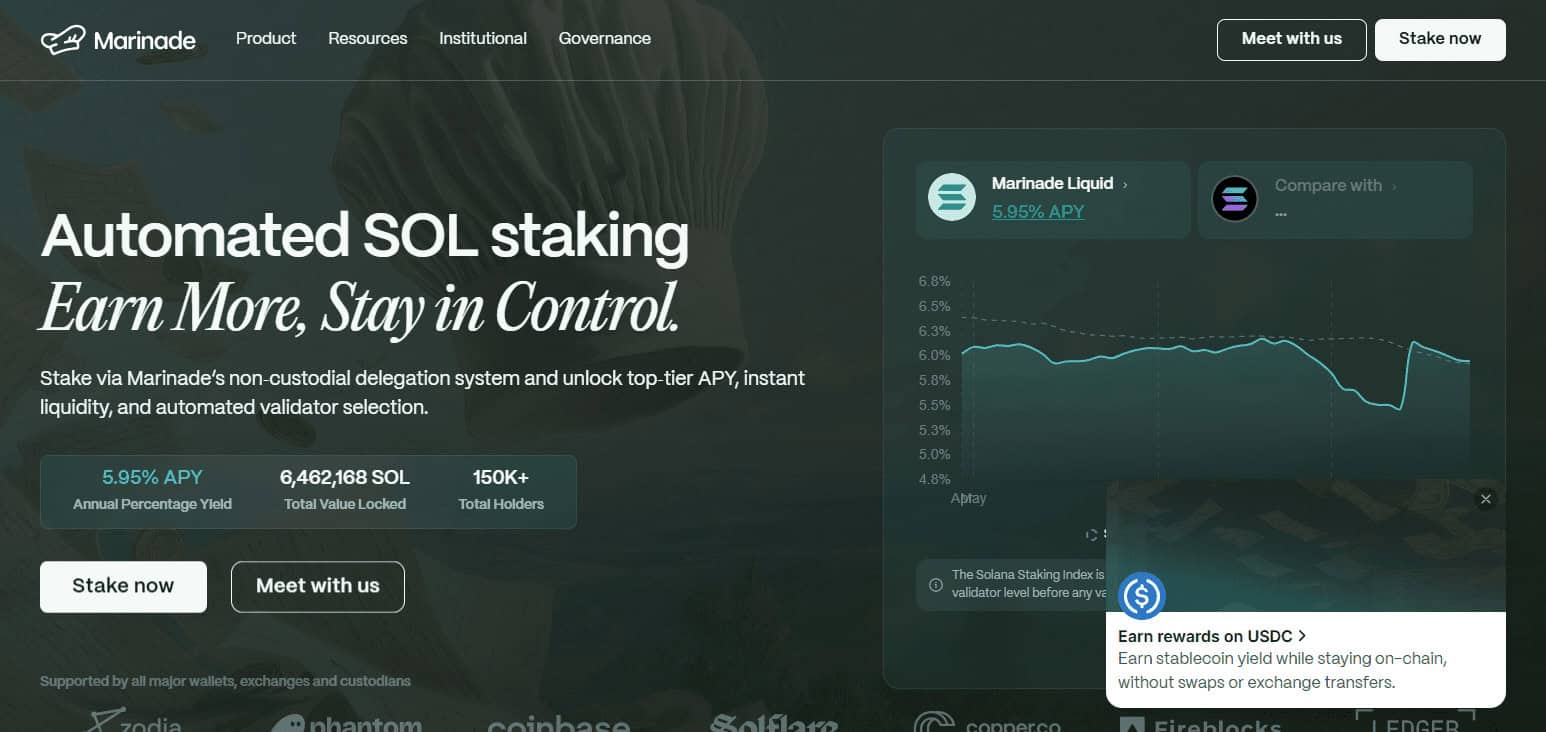
Marinade adds more liquidity and helps the Solana ecosystem participate in lending, trading, and yield farming. Marinade is added to the Best Liquid Staking Derivatives (LSD) Protocols for Passive Income list for its great staked SOL solution while keeping assets flexible.
Marinade Finance Features
- Solana Liquid Staking: Users can stake SOL to mint mSOL.
- DeFi Compatibility: mSOL can be used on Solana lending and liquidity platforms.
- Flexible SOL Management: Staking rewards can be earned while keeping SOL usable.
- Community Governance: The platform participants can vote on changes on the platform.
- Enhanced Solana Liquidity: Encourages more liquidity and greater involvement in the Solana ecosystem.
| Pros | Cons |
|---|---|
| Leading liquid staking solution for Solana. | Solana network risks can affect performance. |
| mSOL provides DeFi usability and liquidity. | Smaller ecosystem compared with Ethereum LSDs. |
| Supports community-driven governance. | SOL price volatility impacts returns. |
| Helps increase Solana staking participation. | Smart contract vulnerabilities remain possible. |
| Enables flexible SOL staking strategies. | Liquidity may change during market volatility. |
9. Jito
Combining staking rewards with MEV opportunities, Jito is a Solana-based liquid staking protocol. Those who stake SOL with Jito receive JitoSOL tokens, which are liquid and reward holders with both staking and MEV rewards.

Jito captures additional value from network activity in order to maximize returns. Jito is placed among the Best Liquid Staking Derivatives (LSD) Protocols for Passive Income for providing the highest staking rewards in the Solana ecosystem.
Jito Features
- MEV Reward Integration: Staking rewards and Solana MEV income opportunities are integrated.
- JitoSOL Token: Staked SOL assets can be represented by liquid staking.
- Higher Yield Potential: More network value can be captured due to MEV.
- Solana Ecosystem Support: Helps improve liquidity for all Solana-based DeFi.
- Transparent Reward Model: Staking and MEV rewards are made clear.
| Pros | Cons |
|---|---|
| Combines staking rewards with MEV opportunities. | MEV rewards can fluctuate over time. |
| JitoSOL provides liquid Solana staking access. | Depends heavily on Solana ecosystem performance. |
| Potential for higher yield generation. | More complex reward structure for beginners. |
| Improves Solana DeFi liquidity. | Smart contract and protocol risks exist. |
| Transparent MEV reward mechanism. | Limited adoption compared with Ethereum LSDs. |
10. Stader Labs
A multi-chain liquid staking protocol, Stader Labs serves Ethereum, Polygon, and BNB Chain networks, among others.

Liquid staking tokens are received after staking and can be utilized in DeFi. Improved staking and reward optimization are a focus for Stader. Stader is also among the Best Liquid Staking Derivatives (LSD) Protocols for Passive Income due to their multi-chain, flexible staking options.
Stader Labs Features
- Multi-Chain Liquid Staking: Ethereum, Polygon, and BNB Chain liquid staking can be done here.
- Flexible Staking Tokens: Liquid tokens can be used anywhere in DeFi.
- Reward Optimization: Staking rewards can be optimized.
- Cross-Chain Expansion: Staking can be done on different blockchain networks.
- User-Friendly Platform: Liquid staking is simple and easy to utilize.
| Pros | Cons |
|---|---|
| Supports multiple blockchain staking networks. | Multi-chain approach increases complexity. |
| Provides flexible liquid staking tokens. | Liquidity differs between supported networks. |
| Helps optimize staking rewards. | Smaller market share than major providers. |
| Offers user-friendly staking experience. | Platform security risks remain possible. |
| Expands staking opportunities across ecosystems. | Cross-chain risks may affect operations. |
Conclusion
To Conclude Those Offering The Best Liquid Staking Derivatives (LSD) for Passive Income allow the user to earn staking rewards while maintaining the flexibility of the asset. Lido Finance and
Rocket Pool and now Frax Ether and Marinade Finance are forging the way for more liquidity and DeFi. The user must be strategic about security and fees and evaluate the rewards and risks offered by each LSD protocol being used to earn passive income over the long term.
FAQ
How do LSD Protocols help generate passive income?
LSD protocols generate passive income by staking users’ crypto assets on proof-of-stake networks and distributing validator rewards. Users can earn staking returns while using derivative tokens for additional DeFi opportunities.
Which are the Best Liquid Staking Derivatives (LSD) Protocols for Passive Income?
Some of the top LSD protocols include Lido Finance, Rocket Pool, Coinbase Wrapped Staked ETH, Frax Ether, StakeWise, Ankr Staking, Binance BETH, Marinade Finance, Jito, and Stader Labs.
Why is Lido Finance considered a leading LSD protocol?
Lido Finance is popular because it allows Ethereum users to stake ETH and receive stETH tokens. Users can earn staking rewards while using stETH across various DeFi platforms.
What is the difference between liquid staking and traditional staking?
Traditional staking locks crypto assets and limits their usage, while liquid staking provides derivative tokens that maintain liquidity and allow users to participate in other DeFi activities.