
This article will cover the top P2P Lending Platforms in India to Earn Passive Interest Income. Investments in peer to peer (P2P) lending platforms are becoming more popular. This is a good way to earn higher returns than keeping money in a savings account or in fixed deposits.
Most P2P lending platforms are designed to help people earn passive income. Learn about the features, functions, advantages, and risks of the most P2P lending platforms.
What is P2P Lending?
Peer-to-peer (P2P) lending is a system of digital finance that connects borrowers and individual funders without using an intermediary bank. P2P lending uses online platforms to create a market. Investors are able to make a loan and receive interest on the loan.
This creates passive income. P2P lending uses risk assessment tools and credit score assessment tools. These make P2P lending less risky than other types of lending. P2P lending is also a great option for people that want higher returns on their investment than normal, risk free savings accounts.
Why Choose P2P Lending for Passive Income?
- Attractive Yields – P2P lending has better returns when looking at the interest rates against traditional savings and fixed deposits.
- Portfolio Diversification – Segments risk of your portfolio by including other investment sources that generate income.
- Low Investment Tenures – Almost anyone can start venturing into this investment since the barriers to entry are less.
- Monthly Income – The steady interest payments lend well to a positive stream of income.
- Convenience – The entire investment process is digital with no paper work.
Key Points & Best P2P Lending Platforms in India for Earning Passive Interest Income
| Platform | Explanation |
|---|---|
| Faircent | Connects borrowers and investors, offering attractive returns through diversified lending. |
| LenDenClub | Provides quick investments with automated portfolios and competitive interest earnings. |
| LiquiLoans | Offers diversified lending opportunities with technology-driven credit risk assessments. |
| Lendbox | Enables investors to earn passive income through carefully screened borrowers. |
| RupeeCircle | Provides secure lending options with transparent borrower evaluation and returns. |
| i2iFunding | Offers fixed-income opportunities through diversified peer lending investment portfolios. |
| Finzy | Connects investors with verified borrowers seeking personal and business loans. |
| LendDenMark | Helps investors generate regular income through digital lending opportunities efficiently. |
| IndiaP2P | Provides alternative investment options with risk-managed peer lending portfolios available. |
| BridgeFin Technologies | Facilitates peer lending investments with technology-driven credit evaluation and management. |
10 Best P2P Lending Platforms in India for Earning Passive Interest Income
1. Faircent
Faircent was one of the first P2P platforms in India, and they have direct borrower / investor contact. Faircent helps you spread your investments by offering business and consumer loans in addition to the personal loans that most P2P platforms focus on.
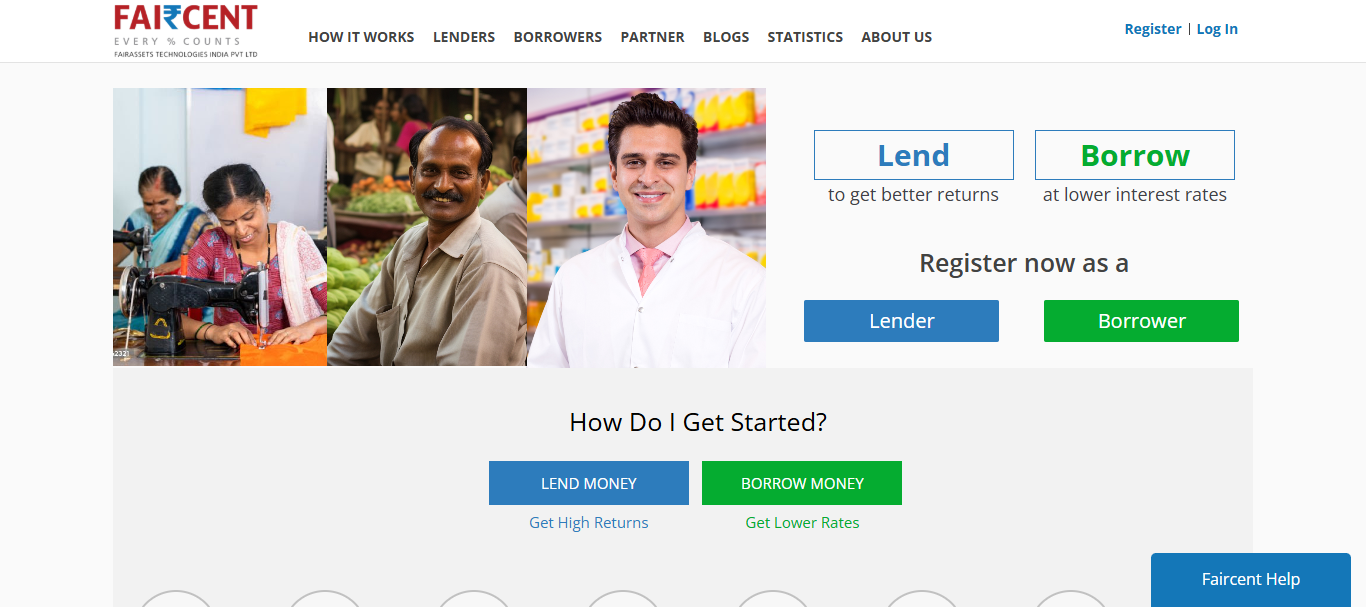
Faircent helps you spread your risk by allowing you to pick loans or create a diversified portfolio. With Faircent, you can earn passive income that is more than the interest you would earn on a fixed deposit.
Faircent Pros & Cons
| Pros | Cons |
|---|---|
| One of India’s oldest and trusted P2P lending platforms. | Returns are not guaranteed and depend on borrower repayments. |
| Offers diversified lending across multiple loan categories. | Loan defaults can impact overall portfolio performance. |
| Advanced borrower verification and credit assessment process. | Limited liquidity compared to traditional investment products. |
| Investors can manually select borrowers or automate investments. | Some loans may have longer repayment periods. |
| Potentially higher returns than fixed deposits and savings accounts. | Requires diversification to reduce investment risk effectively. |
2. LenDenClub
LenDenClub is an easy to use P2P lending app that has gained a lot of recent popularity and has several automated investing features. The app also allows you to invest a small amount of money, and it automatically distributes your money to multiple borrowers.
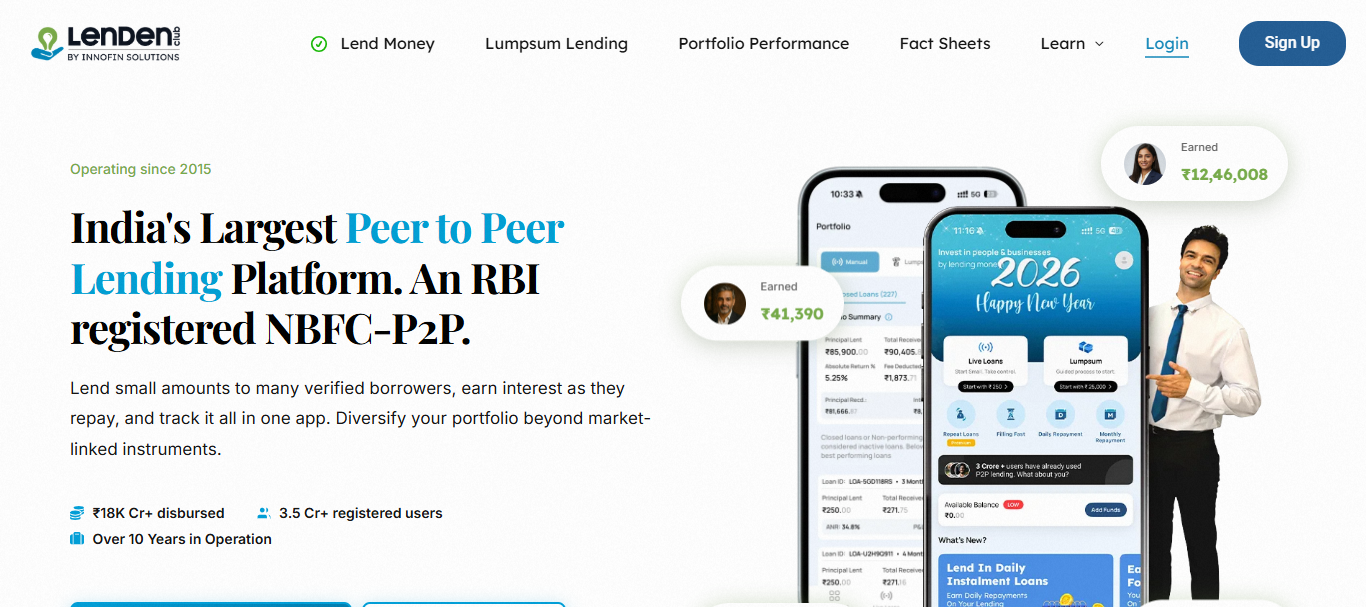
LenDenClub simplifies the investing experience by offering a rapid and easy-to-use app, by managing and analyzing the risk of borrowers for you, and by offering diversified lending.
LenDenClub Pros & Cons
| Pros | Cons |
| User-friendly mobile app with seamless investment experience. | Returns may fluctuate depending on borrower repayment behavior. |
| Low minimum investment requirement for beginners. | Platform fees can slightly reduce net earnings. |
| Automated portfolio allocation reduces manual effort. | Early withdrawals may not always be available. |
| Quick onboarding and paperless investment process. | Short-term loans still carry default risks. |
| Transparent dashboard for tracking investments and earnings. | Heavy reliance on technology and platform performance. |
3. LiquiLoans
LiquiLoans is a great option for P2P lending because it has a unique and technology based approach to the assessment of credit and management of loans. LiquiLoans helps you diversify your borrower risk by offering a variety of lending portfolios.
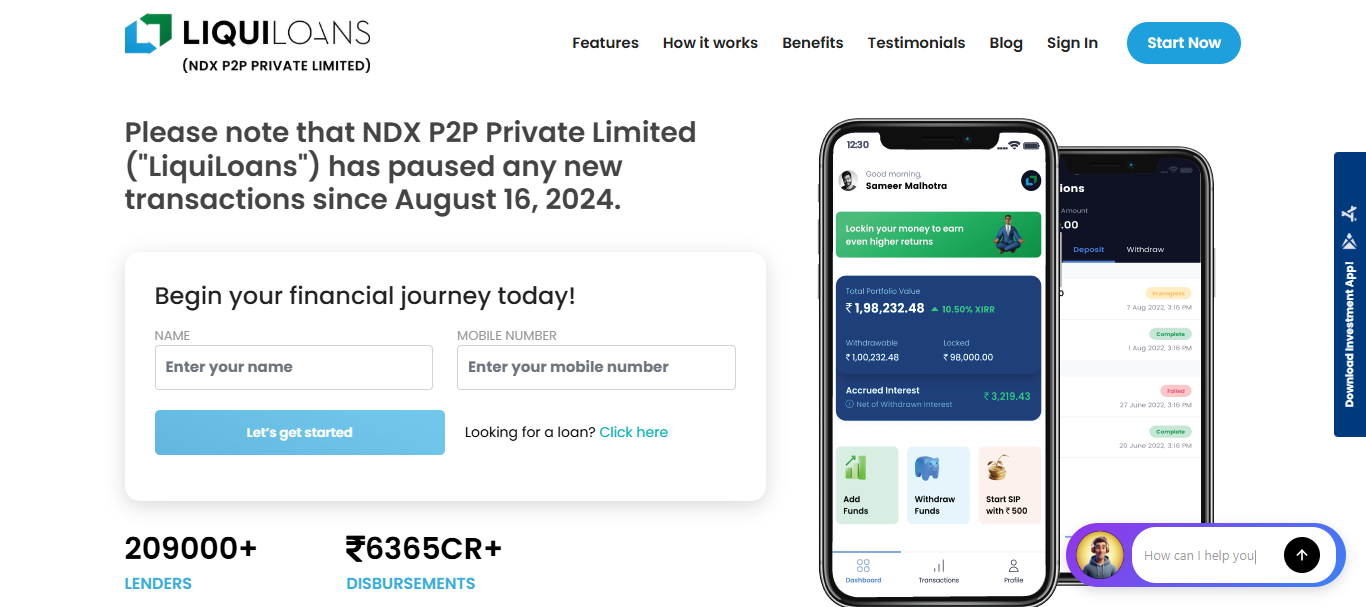
LiquiLoans works hard to analyze borrower profiles and their ability to repay loans, and focuses on the management of liquidity and portfolios. This allows you to lend money and earn a consistent income while managing your risk.
LiquiLoans Pros & Cons
| Pros | Cons |
| Technology-driven credit assessment improves borrower selection. | Higher returns involve increased investment risk. |
| Diversified lending portfolios minimize single borrower exposure. | Secondary liquidity options may be limited. |
| Detailed portfolio management and tracking tools available. | Platform performance depends on economic conditions. |
| Simple digital investment process for passive investors. | Credit defaults can impact expected returns. |
| Focuses on data-based lending decisions and risk management. | P2P investments are not covered by deposit insurance. |
4. Lendbox
Lendbox’s borrower screening and risk management systems earn high marks. Lendbox utilizes data analytics and a form of credit scoring to analyze loan applicants more comprehensively. Investors can spread their capital to an adequate number of borrowers and loan types, minimizing the risk individual defaults pose.
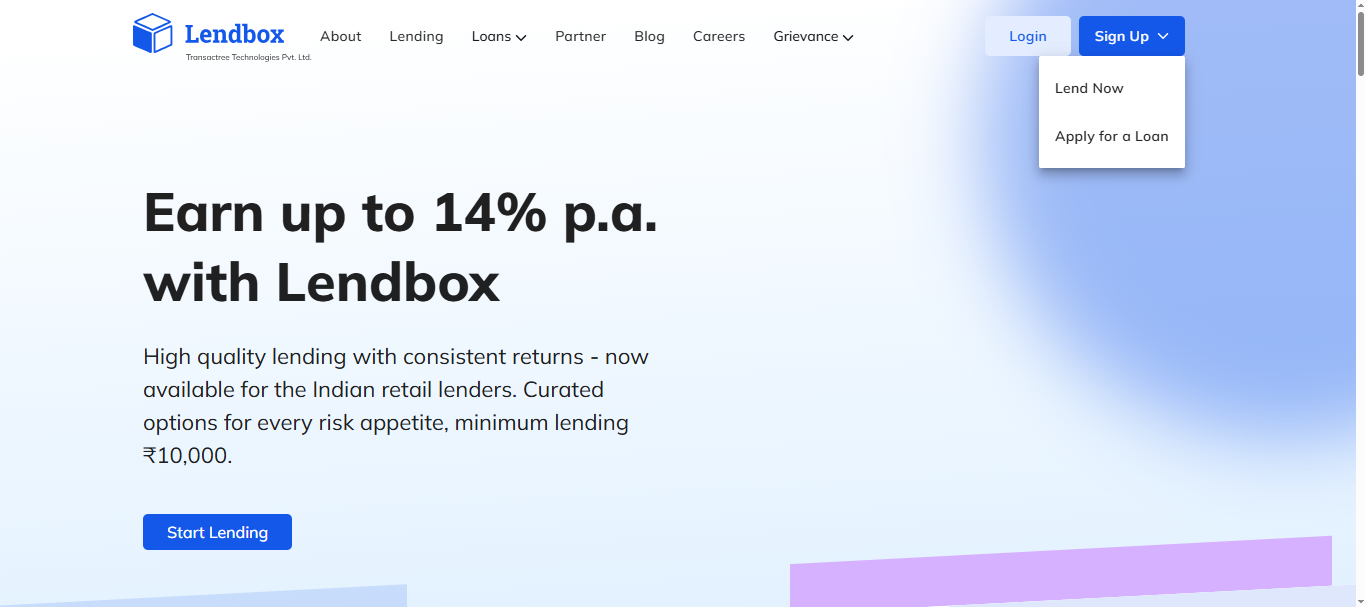
Lendbox also provides performance reports and insights for your portfolio, enabling an informed approach to investing as a form of passive income through peer-to-peer (P2P) lending.
Lendbox Pros & Cons
| Pros | Cons |
| Strong borrower screening and risk evaluation systems. | Market downturns can affect borrower repayment capacity. |
| Diversification across multiple loan categories available. | Returns are subject to credit risks and defaults. |
| Detailed investment reports and performance analytics. | Some investments may have long lock-in periods. |
| Data-driven credit scoring improves loan quality. | Limited liquidity compared to mutual funds. |
| Suitable for investors seeking stable passive income. | Requires continuous monitoring of investment performance. |
5. RupeeCircle
RupeeCircle prioritizes a secure investment experience for lenders by integrating transparency in its systems. RupeeCircle verifies borrower data and classifies risk based on a borrower’s credit and repayment histories.

Detailed borrower profiles allow investors to select loans that correspond to their personal risk levels. Transparent fees and portfolio diversification lead to an increased utility for investors looking for alternate income opportunities beyond traditional banking and fixed income investments.
RupeeCircle Pros & Cons
| Pros | Cons |
| Transparent borrower profiles and risk categorization. | Returns depend heavily on borrower repayment discipline. |
| Secure lending environment with borrower verification. | Liquidity may be lower than traditional investments. |
| Flexible portfolio diversification options available. | Not ideal for investors seeking guaranteed returns. |
| Clear fee structure with transparent processes. | Economic changes can influence default rates. |
| Suitable for investors with varying risk preferences. | Requires patience for long-term wealth creation. |
6. i2iFunding
Investors using i2iFunding can allocate their funds to many borrowers and several industries. i2iFunding was created to help facilitate fixed income opportunities, and perhaps, at the same time, help create systems that support lending and the income associated with it.
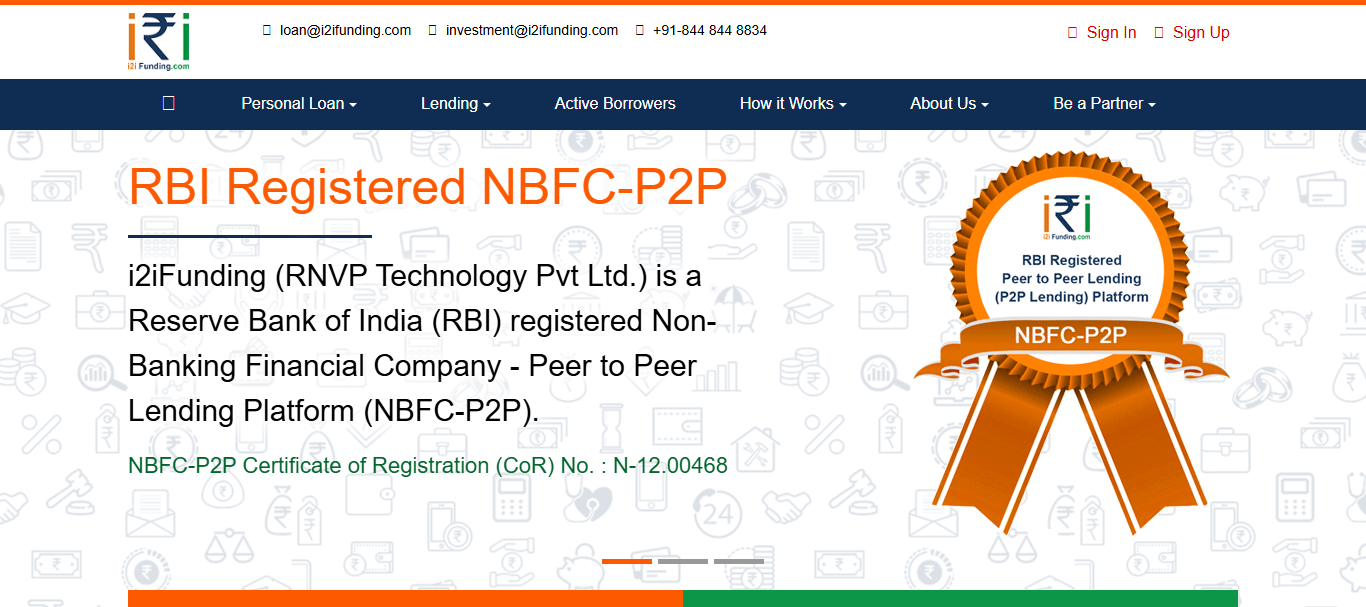
The borrower assessment system at i2iFunding includes credit and income assessments and risk classification. i2iFunding can help people interested in earning passive income from digital lending, due to an intuitive system that tracks portfolio performance.
i2iFunding Pros & Cons
| Pros | Cons |
| Diversified lending across industries and borrower profiles. | Potential delays in repayments may occur occasionally. |
| Attractive fixed-income opportunities for passive investors. | Default risks remain despite diversification efforts. |
| User-friendly dashboard for monitoring investments. | Limited liquidity compared to publicly traded assets. |
| Strong borrower evaluation and verification methods. | Returns are not protected by government guarantees. |
| Helps build long-term alternative investment portfolios. | Requires understanding of credit and lending risks. |
7. Finzy
Finzy is popular for bringing together investors and validated borrowers in need of personal and business funds. The system focuses on responsible lending and balances the risk of going into default using advanced systems of credit evaluation.
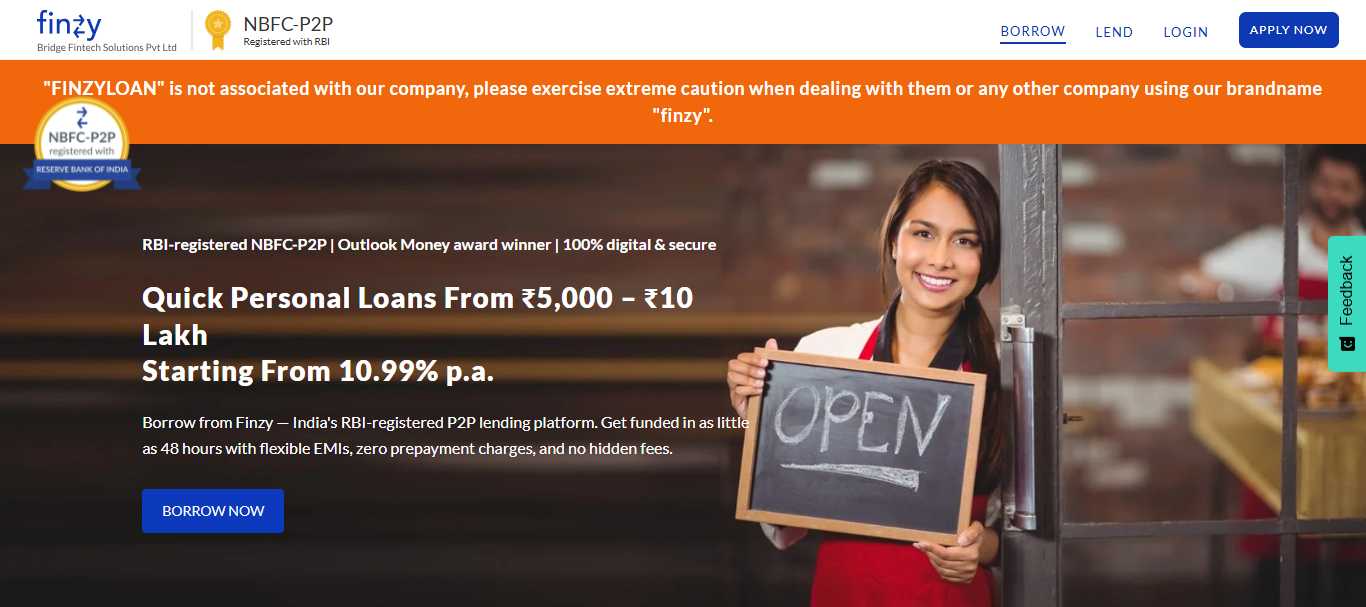
Finzy displays information on its users and provides various investment opportunities, enabling users to build their own portfolios.
The ease of use combined with the transparency of the investment procedures makes the system a great alternative for users seeking to get higher returns when compared to traditional savings and fixed deposit systems.
Finzy Pros & Cons
| Pros | Cons |
| Verified borrowers reduce chances of investment fraud. | Returns may decline during economic slowdowns. |
| Multiple investment choices and customized portfolios. | Investor capital remains exposed to borrower defaults. |
| Transparent lending and investment procedures. | P2P investments are less liquid than bank deposits. |
| Easy-to-use platform suitable for beginners. | Not suitable for highly conservative investors. |
| Potentially higher returns than conventional savings products. | Loan recovery processes can take considerable time. |
8. LendDenMark
LendDenMark is a digital lending system enables users to earn passive income on a continuous basis by providing lending opportunities of diversified nature. The system employs methods of credit assessment that harness various technologies, and improves users’ investment security by performing due diligence on borrowers.

Users are able to select throughout different borrowers and different risk categories, thereby allowing users to obtain a lower risk for their portfolio. LendDenMark also helps users to stay up to date with their portfolio through real time updates on payment progress and due dates.
LendDenMark Pros & Cons
| Pros | Cons |
| Technology-based credit assessment enhances investment security. | Returns can vary depending on portfolio quality. |
| Real-time tracking of repayments and earnings. | Limited exit options before loan maturity. |
| Diversification across borrowers reduces overall risk. | Investors bear credit and default risks. |
| Digital investment process with minimal paperwork. | P2P lending regulations may evolve over time. |
| Suitable for generating regular passive income. | Requires diversification to manage investment risks. |
9. IndiaP2P
India P2P helps users to diversify their portfolio beyond bank and stock market investments. This system focuses on risk management by performing due diligence on borrowers and promotes diversification of the portfolio.

Users have access to varied lending opportunities and may select based on their personal risk preferences along with their expected returns. Transparency and dedication are the core principles of India P2P along with helping the user to easily manage their portfolio to earn a passive income.
IndiaP2P Pros & Cons
| Pros | Cons |
| Encourages diversification beyond traditional investment products. | Lower liquidity than stocks and mutual funds. |
| Transparent reporting and investment insights provided. | Returns are not guaranteed or fixed. |
| Strong focus on risk management practices. | Borrower defaults can affect investment performance. |
| Investors can choose preferred risk-return profiles. | Requires patience and long-term investment mindset. |
| Easy access to alternative fixed-income opportunities. | Limited awareness compared to larger P2P platforms. |
10. BridgeFin Technologies
BridgeFin Technologies uses computer technology and credit analytics to enhance security and ease for investors looking to invest in peer-to-peer lending. This includes the development of tools to help investors analyze borrowers and assess risk in the context of efficient portfolio management.

BridgeFin Technologies assists its users in making highly profitable investments by providing diversified investment opportunities and supplemental information about the borrowers.
With the help of innovative technology, BridgeFin Technologies attracts individuals looking to earn stable passive income, especially in a rapidly growing P2P lending market in India.
BridgeFin Technologies Pros & Cons
| Pros | Cons |
| Uses modern credit analytics for borrower evaluation. | Returns depend on successful borrower repayments. |
| Diversified investment opportunities for passive investors. | Market conditions can impact loan performance. |
| Detailed borrower information supports informed decisions. | P2P lending carries inherent credit risks. |
| Technology-driven platform improves investment efficiency. | Liquidity remains lower than traditional financial products. |
| Suitable for long-term alternative income generation. | Platform growth and market adoption are still developing. |
Benefits of Best P2P Lending Platforms in India for Earning Passive Interest Income
- Potentially Higher Returns – Compared to a traditional savings account, you might see a better return.
- Portfolio Diversification – Investors can choose a wide array of loan types and can finance loans to many different borrowers.
- Investment Income with Less Management – Investors can earn interest without the need to manage their investment on a daily basis.
- Flexible Investment Sizes – Investors can choose a loan of any size and can choose how much to loan based on their goals.
- Borrower Transparency – Investors can view borrower information such as their profile, credit score, and repayment history.
- Auto Lending – Funds will automatically be allocated to many different borrowers.
- Mobile Investment Management – Investments, repayments, and portfolios can be viewed at any time.
Future of Best P2P Lending Platforms in India for Earning Passive Interest Income
- P2P Lending Integration with Fintech – The adoption of digital lending technologies will integrate P2P lending into more Indian businesses.
- Rise in Yield Hunger – Investors have increasingly become desperate in the search for higher yield investments.
- More Intelligent Credit Assessment – The risk assessment of borrowers will become increasingly easier with AI and data analytics.
- Broader Investment Choices and Risk Appetite – P2P lending will have risk to reward opportunities.
- Regulatory Evolution and Risk Appetite – More regulation with the RBI will mean more participants in the market.
Conclusion
In Conclusion P2P lending offers a good investment option for Indian investors looking for better streams of income than traditional savings. Options like Faircent, LenDenClub, and LiquiLoans allow users choices in types of lending, the amount lent, and returns.
The risks should be evaluated, diversification across borrowers is recommended, and selection of only RBI compliant sites is a must. Research and management of a P2P lending scheme can offer a good source of passive income with an a good risk/return profile.
FAQ
Is P2P lending legal in India?
Yes, P2P lending is legal and regulated by the Reserve Bank of India (RBI).
How do investors earn money from P2P lending?
Investors earn interest income from borrowers’ monthly repayments on their loans.
Which is the best P2P lending platform in India?
Popular options include Faircent, LenDenClub, LiquiLoans, and Lendbox.
What returns can I expect from P2P investments?
Returns generally range between 8% and 15% annually, depending on risk.
Is P2P lending safer than fixed deposits?
No, P2P lending carries credit and default risks unlike bank fixed deposits.