This article focuses on the Best Privacy Engineering Automation Tools to assist organizations in achieving compliance faster, preserving sensitive data efficiently, and automating privacy workflows.
These tools automate data mapping, consent, and DSAR processes while complying with the privacy regulations of GDPR, CCPA, and LGPD.
Selecting the optimum platform will cut down on manual workload and improve the efficiency of data governance.
Key Points & Best Privacy Engineering Automation Tools
| Tool | Key Point |
|---|---|
| OneTrust | Comprehensive privacy management with consent tracking, data mapping, and regulatory compliance automation. |
| BigID | AI-driven data discovery to identify, classify, and protect sensitive information across systems. |
| TrustArc | Scalable compliance automation for GDPR, CCPA, and global privacy laws with risk assessment workflows. |
| Securiti.ai | PrivacyOps automation enabling real-time data subject rights fulfillment and governance. |
| DataGrail | Streamlined DSAR management with automated workflows for consumer privacy requests. |
| Osano | Consent management platform offering cookie compliance and vendor risk monitoring. |
| MineOS | User-centric privacy automation empowering individuals to manage and delete personal data. |
| Privado | Developer-focused privacy engineering with code scanning to detect data flows and risks. |
| Collibra | Data governance integration ensuring privacy compliance is embedded into enterprise data pipelines. |
| Ethical | AI-powered compliance monitoring to continuously track regulatory changes and automate updates. |
10 Best Privacy Engineering Automation Tools
1. OneTrust
OneTrust is the 1 global privacy platform and the only one that provides automation for compliance with global regulations like GDPR and CCPA.
It is the only platform that has integrated data mapping, consent and preference management, vendor risk assessments, and automated reporting into one solution.
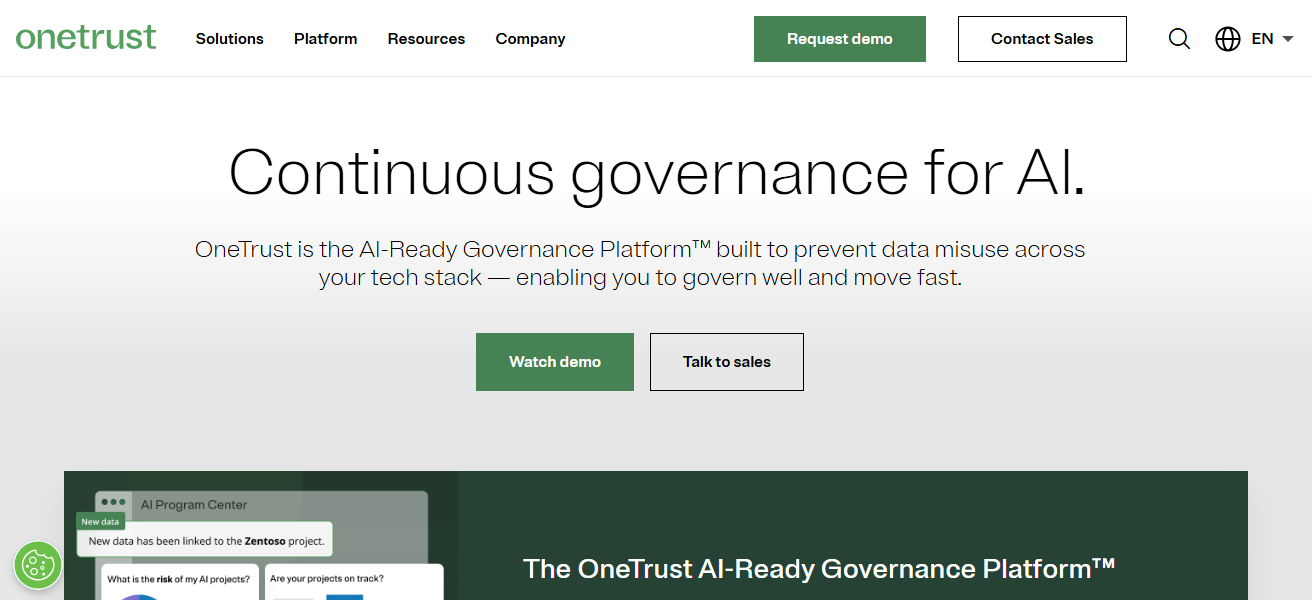
With the modular nature, organizations can align privacy governance with business needs, automate manual processes, and maintain governance at scale.
Features OneTrust
Automated Data Mapping & Discovery – Scans systems to inventory personal and sensitive data for compliance visibility.
Consent & Preference Management – Gauges and manages user consent lifecycle track through websites and app.
DSAR (Data Subject Access Request) Handling – Fully automation of requests subjects and/or deletion.
Privacy Impact & Risk Assessments – Assist with privacy impact, risk scoring, notifications and reporting.
| Pros | Cons |
|---|---|
| Comprehensive privacy management covering GDPR, CCPA, HIPAA, and more. | Can be complex to implement for smaller organizations. |
| Strong automation for consent, DSARs, and vendor risk. | High cost compared to competitors. |
| Large ecosystem with integrations across enterprise tools. | Requires dedicated training for full adoption. |
2. BigID
BigID helps entities find and identify sensitive personal information using AI technology. BigID provides technology and services to help entities automate and analyze the privacy and risk data from data inventories, privacy risk assessments, and data requests.
These factors enable organizations to process and comply with the obligations and other provisions of the privacy and data protection regulations
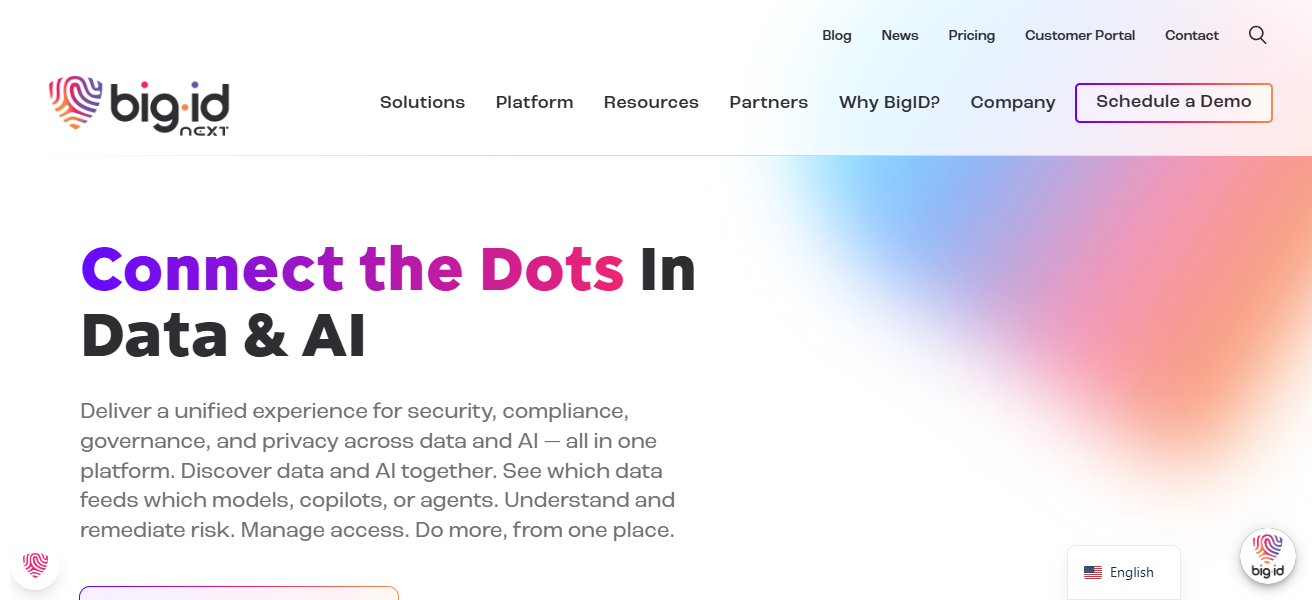
And automate the process of updating and generating processing records. BigID services work best with organizations that have large amounts of sensitive information.
Features BigID
AI-Driven Data Discovery & Classification – Applies machine learning to discover and classify personal data and sensitive data across environments.
Automated Data Mapping – Shows, creates and maintains updated map of where personal data resides.
Consent & DSAR Automation – Assistance in user consent and automation of access and deletion of subjects workflow.
Regulatory Risk & Compliance Tools – Includes adaptive risk registers, privacy posture monitoring, and privacy oversight of vendors.
| Pros | Cons |
|---|---|
| AI-driven data discovery across structured and unstructured sources. | Resource-intensive for large-scale deployments. |
| Strong classification of sensitive data. | May require customization for niche compliance needs. |
| Scales well for enterprises with diverse data systems. | Steep learning curve for new users |
3. TrustArc
TrustArc provides tools to ease the privacy compliance strife with integrated automated data inventories, risk assessments, and data regulatory guidance.
Support for worldwide privacy laws and impact assessments, along with the production of compliance reports, allows organizations to better manage and document consent.
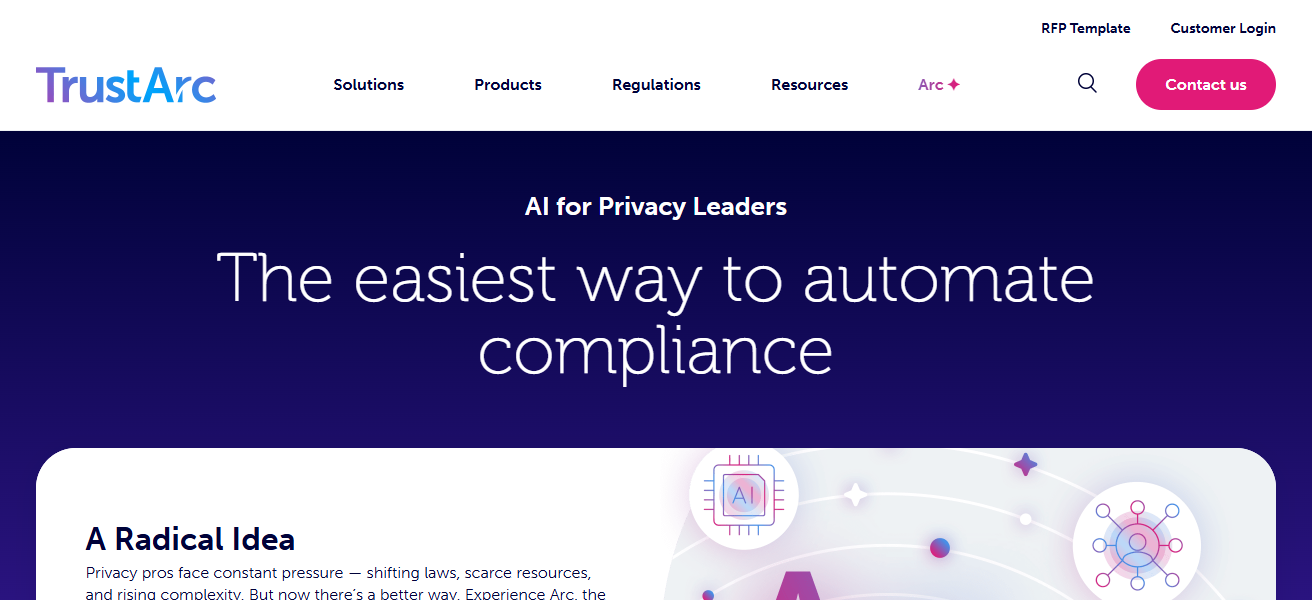
TrustArc is particularly effective for organizations that require a formalized risk management approach paired with more streamlined and iterative processes to demonstrate compliance with privacy obligations across multiple jurisdictions.
Features TrustArc
Privacy & Compliance Automation – Streamlines the centralization of privacy processes with automated workflow for assessments and record keeping.
Automated Data Inventory & Mapping – Monitors corporate data assets and every activity engaged in compliance program
Global Regulation Support – Assists organizations in compliance with GDPR, CCPA, and other ISO standard
Vendor & Risk Management – Identifies and manages 3rd party privacy risks and creates compliance artifacts.
| Pros | Cons |
|---|---|
| Flexible compliance automation for multiple jurisdictions. | Interface less modern compared to rivals. |
| Risk assessment workflows streamline audits. | Limited developer-focused features. |
| Strong reputation in privacy consulting. | Can feel slower in innovation compared to newer entrants. |
4. Securiti.ai
Securiti.ai has an AI-enabled PrivacyOps platform that automates key privacy responsibilities like data discovery, classification, consent lifecycle management, and subject access requests.
It continuously creates and updates data maps and processing inventories, automates workflows, and helps organizations achieve continuous compliance.
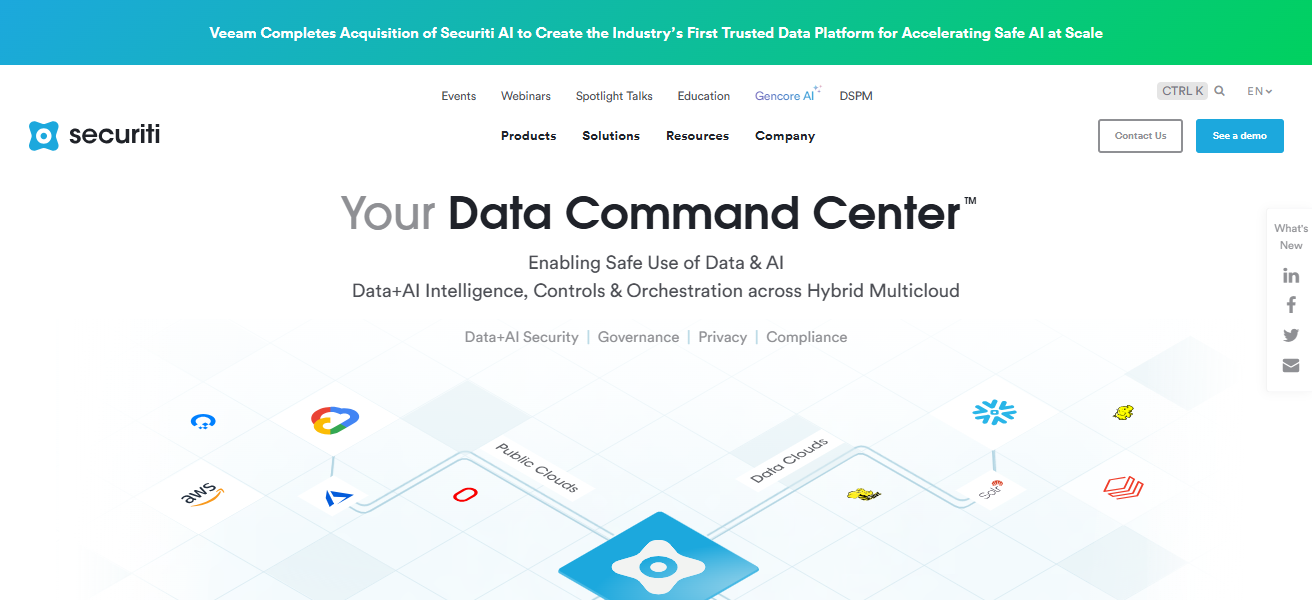
Companies leverage it to minimize manual work, facilitate policy enforcement, and enhance risk visibility across multiclouds and within an integrated privacy and security framework.
Features Securiti.ai
Automated Data Discovery & Relationship Mapping – Constructs people data graphs and catalogs sensitive data.
DSAR & Identity Workflows – Automated fulfillment of rights requests, and verifies subject identity.
Consent Lifecycle Orchestration – Captures and manages consent, and offers streamlined options for revoking, and modifying consent.
Privacy Impact Automation & Policies – Employs automated privacy-by-design assessments and breach response, along with programmable policy updates.
| Pros | Cons |
|---|---|
| PrivacyOps automation for DSARs and governance. | Relatively new compared to legacy players. |
| Real-time compliance monitoring. | May require integration effort with legacy systems. |
| Strong AI capabilities for automation. | Pricing not transparent. |
5. DataGrail
DataGrail is prioritizing privacy automation integration for mid-market and mid-SaaS companies through automation with hundreds of linked systems to facilitate DSAR workflows.
It uses automation to find and track personal data, document consent and create evidence for compliance.
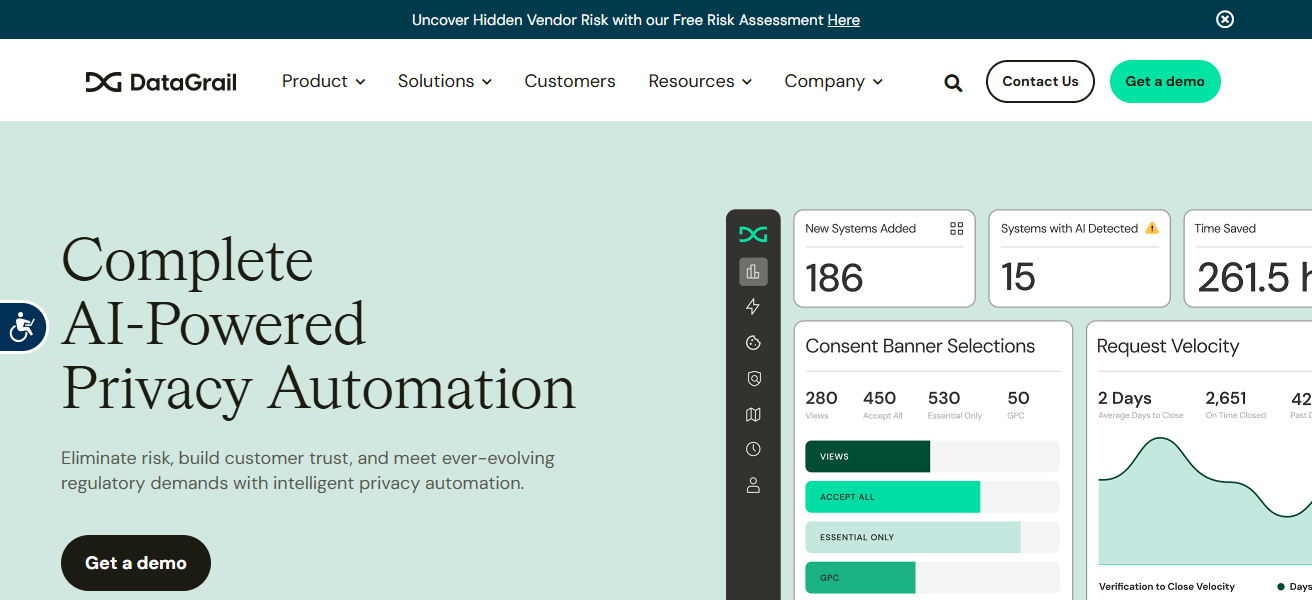
This minimizes manual touchpoints in processing DSARs and in consent management while keeping in scope the regulations.
Features DataGrail
Live Data Mapping & Inventory – Self-identifies user personal data sources and offers curated privacy maps.
DSAR/DSR Automation – Efficiently manages and fulfills all components of data subject requests, including access, and deletion.
Consent Management & Cookie Compliance – Offers no-code consent banners, trackers control, and global regulation compliant consent.
Real-Time Monitoring & Reporting – Designed for monitoring program status and compliance.
| Pros | Cons |
|---|---|
| Streamlined DSAR management with automated workflows. | Focused mainly on DSARs, less broad than OneTrust. |
| Easy-to-use interface for compliance teams. | Limited global compliance coverage. |
| Strong integrations with SaaS platforms. | May not scale well for large enterprises. |
6. Osano
Osano provides a simple user experience, making it a prime candidate for small to medium sized businesses and web-based companies who need to manage their privacy consents and compliances quickly.
Cookie consent banners, automated DSAR retrieval handling, as well as monitoring for vendor risk are all features provided to customers.
Osano enables organizations to remain compliant with more than 50 global privacy legislation and provides a sense of technical simplicity.
This allows companies with little privacy governing experience to manage these privacy obligations with ease.
Features Osano
Cookie & Consent Management – Makes it easier to create and control cookie consent banners, and to manage consent.
DSAR & Subject Rights Automation – In one place, centralizes and automates the workflow to respond to privacy requests.
Automated Data Mapping & Classification – Assists to identify \& filter and prioritize the location of personal data dispersed in different systems.
Vendor Privacy Risk Monitoring – Measures and monitors the privacy practices of vendors and their legal changes.
| Pros | Cons |
|---|---|
| Strong consent management and cookie compliance. | Narrower scope compared to full-suite platforms. |
| Quick deployment for websites. | Less enterprise-grade for complex data governance. |
| Affordable pricing for SMBs. | Limited advanced automation features. |
7. MineOS
The MineOS integrated risk management system consists of privacy management automation, data discovery and classification, data mapping, and automation of subject access request workflows.
The MineOS autonomous privacy system uses intel agents to monitor sensitive data and create policies, while also compiling and sustaining current data maps.
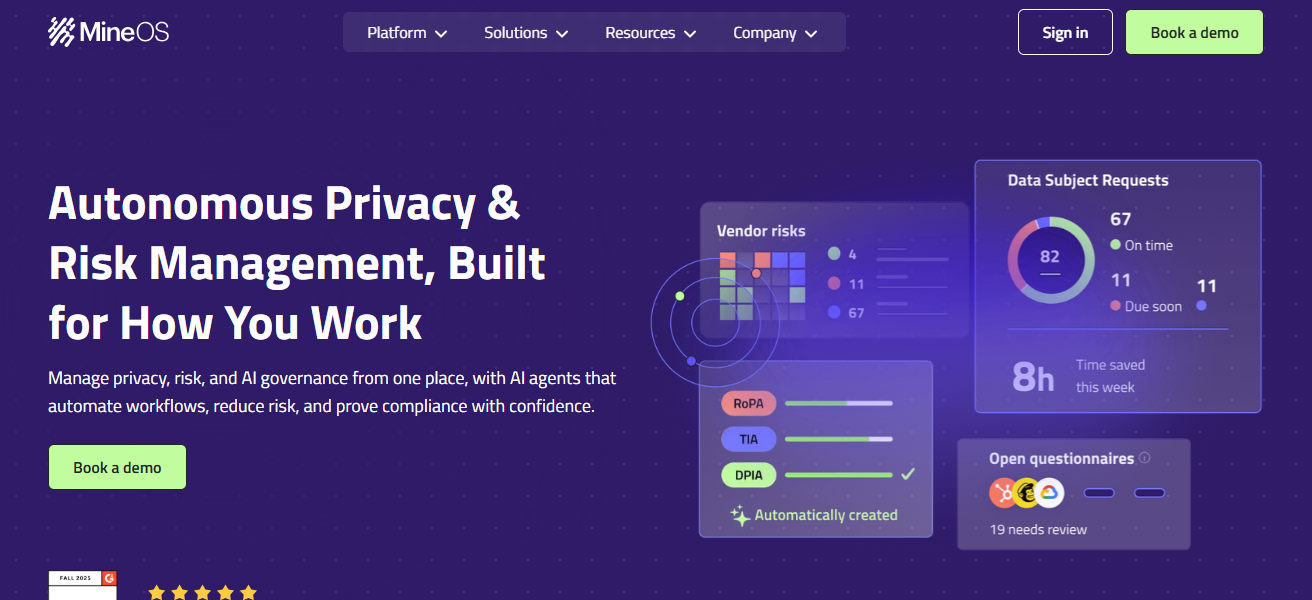
Mine OS assists privacy and security divisions in managing compliance and risk through less manual workloads and maximized visibility of data across different systems.
Features MineOS
DSAR & Consent Automation – Automates the workflow of subject rights and consents.
Real-Time Scanning for Personal Data – Actively locates where PII is stored in different systems.
Privacy Impact Insights – Provides analytics and reporting for estimating the risk of non-compliance.
Customizable Compliance Workflows – Empowers organizations to customize privacy compliance workflows.
| Pros | Cons |
|---|---|
| User-centric privacy automation empowering individuals. | Consumer-focused, less enterprise-ready. |
| Simple interface for data deletion requests. | Limited integrations with enterprise systems. |
| Transparency-first approach. | Not ideal for large-scale compliance automation. |
8. Privado
Privado (Privado AI) utilizes AI agents to transform how privacy compliance is done with generating dynamic data maps. Assessments are done in real-time and websites and apps are continuously-behaviorally-scanned/assessed.
Engineering zero manual privacy practices. By utilizing AI to pinpoint data flows, regulatory gaps, consent issues, and real-time risks, operational efficiencies are gained.
This system enables teams to keep compliance documents current and lessen the likelihood of uncontrolled environmental compliance aberrations.
Features Privado
Developer-First Privacy Automation – Embeds privacy automation directly into the development.
AI-Driven Privacy Scans – Conducts simulations to test for the existence of consent and compliance across different systems.
Pipeline Privacy Validation – Identifies gaps in anonymization and access control for exceptions prior to production deployment.
Cross-Border Compliance Testing – Checks compliance with the laws of different jurisdictions in the privacy of CI/CD pipelines.
| Pros | Cons |
|---|---|
| Developer-focused privacy engineering with code scanning. | Newer tool, ecosystem still growing. |
| Detects data flows in codebases. | Requires developer adoption to be effective. |
| Supports privacy by design principles. | May lack enterprise-level governance features. |
9. Collibra
Collibra offers a privacy and data governance platform that integrates metadata, data lineage, and compliance monitoring.
Automated workflows assist privacy teams in policy enforcement, activity monitoring access control, and audit trail management.
By integrating privacy actions with data governance, Collibra enables organizations to align their privacy strategies with overall data quality and operational priorities within the organization.
Features Collibra
Sensitive Data Discovery – Finds and keeps records of sensitive data in different systems.
Automated Compliance Reporting – Creates reports and dashboards automatically and systematically in sync with the privacy and governance procedures.
Risk Assessment and Mitigation Tools – Assists in constructing and implementing data privacy policies across the organization.
Data Governance Integration – Merges privacy workflow integration with other data governance activities.
| Pros | Cons |
|---|---|
| Strong data governance integration. | Expensive for smaller organizations. |
| Enterprise-grade scalability. | Complex setup and requires expertise. |
| Privacy embedded into pipelines. | Focused more on data governance than privacy-specific automation. |
10. Ethical
Ethical” tools refer to those whose focus is on using and sharing data ethically, keeping a data privacy impact assessment, and exercising data transparency.
These tools concern automated risk assessments, assessments of ethical use, and policy enforcement of various compliance requirements and standards.
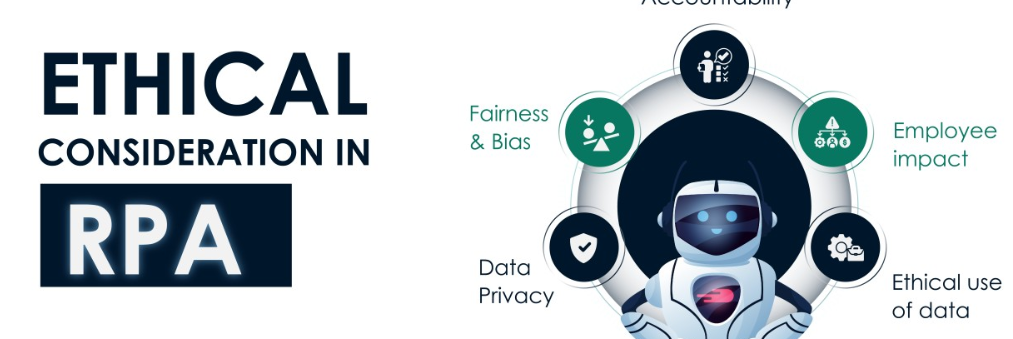
They assist teams in assessing not only legal compliance, but also other data processing impact on citizens and society, incorporating ethics into technical workflows.
Features Ethical (ex. Ethyca)
Automated Privacy Requests – Fully automates the handling of DSARs and compliance reporting.
Real-Time Data Intelligence – Data discovery and classification remains in compliance with regulations.
Consent Enforcement Across Systems – Real-time cross-system applications of consent preferences.
AI Model Governance and Compliance – Data controlled by AI models is subject to privacy and consent regulations.
| Pros | Cons |
|---|---|
| AI-powered compliance monitoring. | Less established compared to big players. |
| Tracks regulatory changes automatically. | Limited brand recognition. |
| Continuous updates for evolving laws. | May lack deep integrations with enterprise systems. |
How We Choose Best Privacy Engineering Automation Tools
Compliance Coverage – Confirm the tool supports GDPR, CCPA, LGPD, India DPDPA, and applicable others.
Automation Capabilities – Find automated DSAR handling, consent management, data mapping, and risk assessments.
Scalability – Pick tools that can accommodate your data volume, and that can adapt as your organization grows.
Integration – See if the tool can be linked with your existing systems like CRM, ERP, cloud storage, and other applications.
User Friendly – Select tools that offer simple dashboards and workflows designed for legal, IT, and privacy teams.
Reporting & Auditing – Should be able to generate dashboards, audit logs, and reports for the fulfilment of compliance obligations.
Cost vs Value – Look for the cost of licensing and compare it to the features and to the expected benefits to be gained.
Vendor Support & Updates – Support with timely documentation and uninterrupted changes to fulfill compliance are crucial.
Cocnlsuion
To summarize, Best Privacy Engineering Automation Tools help in compliance, automating privacy protection tasks, and protecting privacy data.
Tools with DSAR, consent, and data mapping automation help users eliminate trade-offs with efficiency and compliance risk. Tools selection varies with business size, needs, and privacy objectives.
FAQ
It’s software that automates privacy tasks like data discovery, consent tracking, subject access requests, and compliance reporting.
To ensure regulatory compliance, reduce manual work, improve data governance, and manage privacy risks efficiently.
Key features include automated DSAR workflows, data mapping/discovery, consent management, risk assessments, and compliance reporting.
Yes — most leading privacy tools support global privacy laws including GDPR, CCPA, LGPD, and others.
Some (like Osano and DataGrail) are tailored for SMBs, while others (OneTrust, Collibra) are better for enterprises.