In this article, I will talk about the Top Tools for Revenue Leakage Detection for Financial Teams. Revenue Leakage must get attention from the finance team because the finance team must protect the organization’s profit.
- Key Points & Best Revenue Leakage Detection Tools for Finance Teams
- 10 Best Revenue Leakage Detection Tools for Finance Teams
- 1. AI Revenue Leakage Detector (LogicBalls)
- 2. Panorad AI Revenue Leakage Agent
- 3. Optimus Safeguard Framework
- 4. AppZen
- 5. Zuora Revenue
- 6. Chargebee Revenue Recognition
- 7. BlackLine
- 8. Trintech Cadency
- 9. Workiva
- 10. Oracle Revenue Management Cloud
- How We Choose Best Revenue Leakage Detection Tools for Finance Teams
- FAQ
Revenue Leakage impacts the profit without the finance team realizing it. Repairing the damage is also the responsibility of the finance team.
Loss recovery is done easily by utilizing specialized tools that automate the processes of compliance, detection, and revenue recovery. We’ll examine some of the best tools available for protecting your finances.
Key Points & Best Revenue Leakage Detection Tools for Finance Teams
| Tool | Key Point |
|---|---|
| AI Revenue Leakage Detector (LogicBalls) | Free AI-powered tool that detects leaks in transaction data, pricing, and contracts |
| Panorad AI Revenue Leakage Agent | Enterprise-ready AI assistant for finance and telecom, analyzing large datasets quickly |
| Optimus Safeguard Framework | Lifecycle mapping approach to identify billing errors, pricing gaps, and contract noncompliance |
| AppZen | AI-driven spend auditing that prevents leakage in expense reports and vendor payments |
| Zuora Revenue | Automated revenue recognition ensuring compliance and reducing leakage from manual errors |
| Chargebee Revenue Recognition | Subscription billing accuracy with automated reconciliation to prevent missed revenue |
| BlackLine | Continuous accounting platform that detects reconciliation gaps and financial leakage |
| Trintech Cadency | End-to-end financial close automation reducing leakage from manual reporting errors |
| Workiva | Connected reporting and compliance that prevents leakage through audit-ready transparency |
| Oracle Revenue Management Cloud | Cloud-native automation for revenue recognition and contract compliance |
10 Best Revenue Leakage Detection Tools for Finance Teams
1. AI Revenue Leakage Detector (LogicBalls)
LogicBalls uses Artificial Intelligence to analyze billing practices. It customarily finds patterns that allow it to detect billing anomolies within contract specifications.
Anomolies are caught in real time when the software analyzes transactional processes. It detects subscription activities to identify contract anomolies.
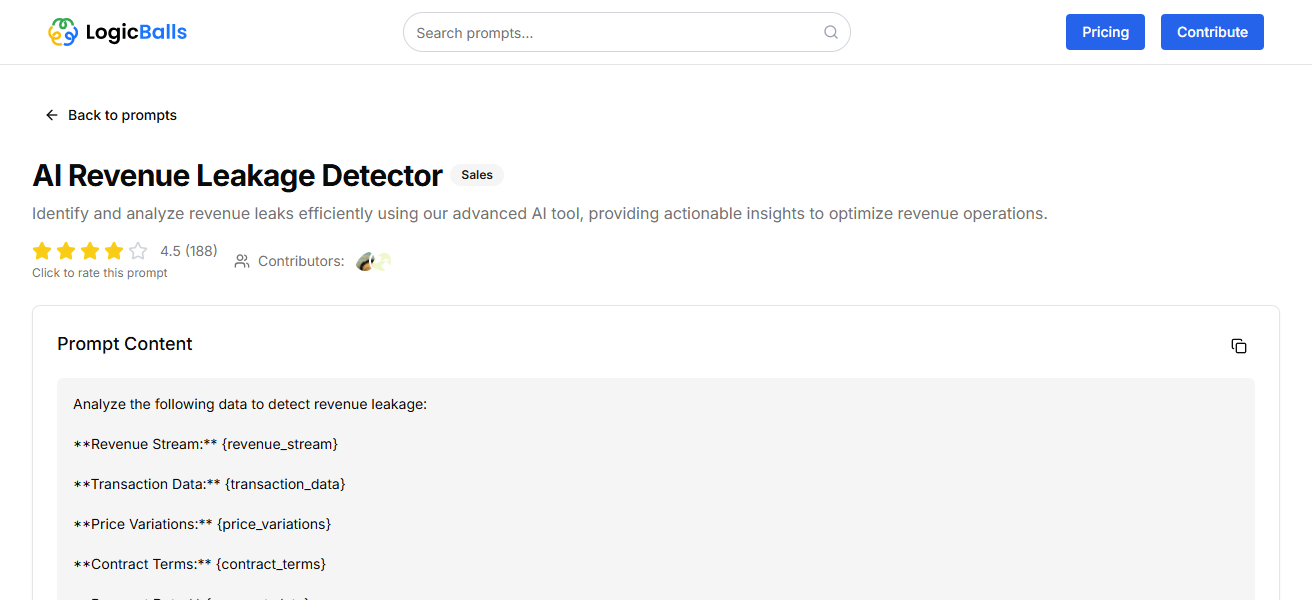
The software correlates with both finance management and customer relationships service software customarily used by finance teams.
It allows them to find loss patterns to make resource allocation suggestions. Other forensic audit technologies only detect historical patterns and are vastly inferior to LogicBalls in forensic AI.
Features AI Revenue Leakage Detector (LogicBalls)
AI-driven anomaly detection — Works to find anomalies in a billing cycle or revenue stream which could indicate revenue leakage in ML processing.
Real-time monitoring — Looks through transactions and flags a transaction for review before the end of the month.
ERP & CRM integration — Integrates across revenue systems to lateralize revenue data.
Predictive forecasting — Revenue leakage risk can be predicted so revenue leakage can be prevented.
| Pros | Cons |
|---|---|
| AI‑powered continuous monitoring finds hidden revenue anomalies fast. | May require substantial configuration for complex billing structures. |
| Integrates with ERP/CRM systems, centralizing data analysis. | Higher cost compared to basic rule‑based leakage tools. |
| Predictive analytics help forecast future revenue risk. | Teams may need training to interpret advanced insights. |
| Real‑time alerts reduce financial leakage quickly. | Initial data setup can be time‑intensive. |
2. Panorad AI Revenue Leakage Agent
Panorad AI Revenue Leakage Agent focuses on billing cycles, subscriptions, and usage reports and uses machine learning technology to uncover problems.
This Revenue Leakage Agent analyzes and narrows issues related to contracts, invoices, and invoices. Provides value and alerts finance teams.
With its operational cloud model, this Revenue Leakage Agent can serve multiple clients with complicated pricing strategies.
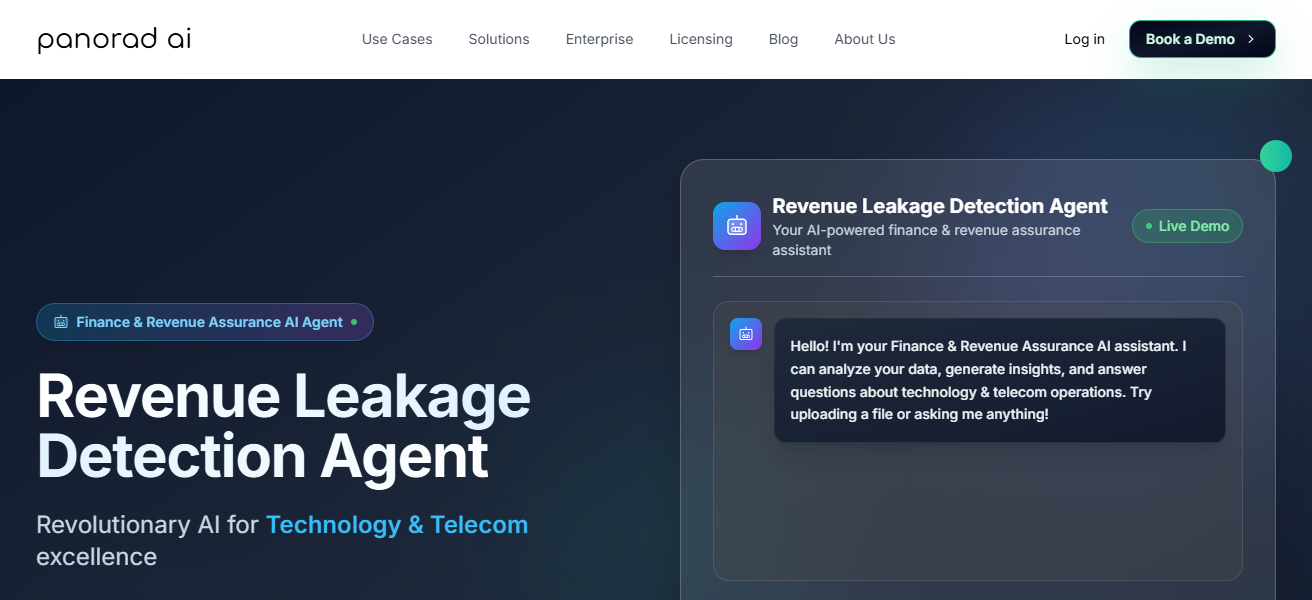
This agent prioritizes cloud operational automation to minimize administrative burdens of revenue recognition and to increase accuracy.
Panorad’s agents can track discrepancies through interactive dashboards and analyzed the patterns over time, allowing teams to identify the problems more quickly. This helps prevent the loss of profit. This also helps boost overall efficiency.
Features Panorad AI Revenue Leakage Agent
ML analytics — Implements the learning of previous data sets to enhance revenue leakage detection.
Usage & contract validation — It analyzes the actual usage of a resource and validates billing to find discrepancies.
Visual dashboards — Identifying a trend and leakage point is made easy.
Workflow automation — Discomfort and time are mitigated when alerts are automated for manual reconciliation.
| Pros | Cons |
|---|---|
| Uses machine learning to detect inconsistencies across billing & usage. | May generate false positives until ML models are trained. |
| Cloud‑based with scalable architecture. | AI accuracy depends on quality of historical data. |
| Visual dashboards simplify analysis of revenue gaps. | Smaller organizations may find pricing high. |
| Automated workflows reduce manual reconciliation. | Integration with legacy systems may need custom work. |
3. Optimus Safeguard Framework
The Optimus Safeguard Framework provides unmatched revenue integrity solutions. There is a compliance check, a transaction monitor, and exception management.
What sets Safeguard apart is how it allows finance teams to customize and implement leakage detection strategies in case of leakage.
It captures revenue risk in sales, finance, and operations and provides preventive and corrective controls. It also supports multi-currency, subscription, and contract-based models, making it applicable globally.
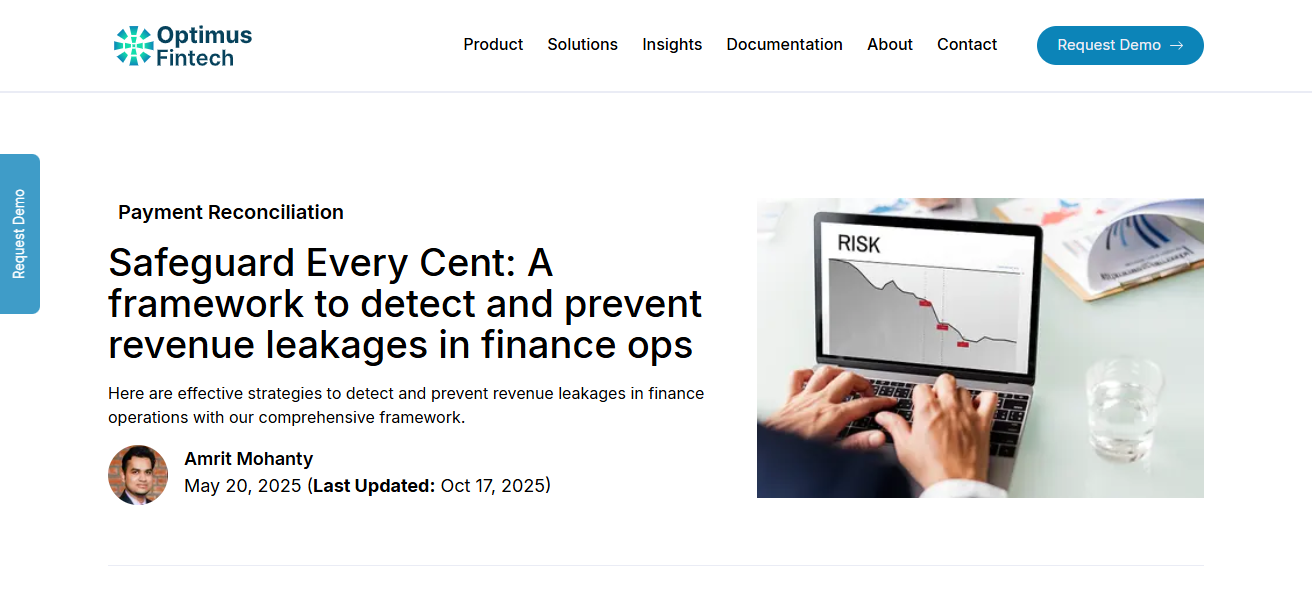
Its solid reporting and audit functions enable finance teams to prove compliance during regulatory examinations.
Optimus detects potential errors and losses, reducing leakage of revenue and optimizing revenue recognition.
Features Optimus Safeguard Framework
Policy-aligned controls — Finance teams can implement leakage detection controls governing their internal policy.
End-to-end visibility — Revenue risk is captured across the sales cycle, billing, and accounting.
Exception & compliance management — Outlier anomalies are flagged so audit trails can be reviewed.
| Pros | Cons |
|---|---|
| Framework‑based controls tailor leakage strategies to business needs. | Setup complexity — requires expert implementation. |
| Comprehensive compliance monitoring (internal & external). | Less suitable for very small teams or startups. |
| Monitors multiple revenue streams & policy adherence. | Reporting UI can feel cluttered for first‑time users. |
| Strong audit trails support regulatory reviews. | Customization may extend deployment time. |
4. AppZen
AppZen focuses on artificial intelligence expense auditing and identification of revenue/leakage detection.
AppZen’s platform automatically reviews invoices, contracts, and expense reports for discrepancies, duplicate billing, and revenue that has not been billed.
Finance teams receive anomaly detection improving revenue recognition accuracy, and do not have to perform anomaly reviews.
AppZen partnered with ERP software such as SAP and Oracle, facilitating interdepartmental financial transaction supervision.
AppZen’s AI software improves detection from the activity of their financial transactions. AppZen’s compliance reporting, audit-ready documentation, and reporting provided optimal promotional tools for large businesses and rapid-growth companies.
Features AppZen
Automated invoice auditing — Scans documents to check for duplicate expenses and missing revenue.
Anomaly notifications — Discrepancy notifications are sent to team members immediately.
Integrated ERP — Consolidated oversight with the most popular accounting software.
Adaptive learning — The model becomes more precise with more financial information.
| Pros | Cons |
|---|---|
| AI audits invoices & expenses to find revenue leakage fast. | Expense focus may shift attention from core revenue streams. |
| Real‑time anomaly detection minimizes manual checks. | Requires good ERP integration; some systems need connectors. |
| Improves compliance with automated audit‑ready reports. | Pricing might be premium for smaller firms. |
| Continuously learns from financial patterns. | False positives occur early in deployment. |
5. Zuora Revenue
Automatically recognizing revenue and preventing leakage for subscription-based businesses is the main focus of Zuora Revenue’s automated revenue recognition system.
It is transparent about the company’s deferred revenue and the revenue cycle billing. The system is compliant with ASC 606 and IFRS 15 and is able to monitor amendments to the contract, revenue recognition billing discrepancies, discounted billing, and usage-based billing to ensure leakage is contained.
The finance team can use analytics dash boards to see the company’s revenue, churn, and forecast revenue leakage and their predictive analytics.
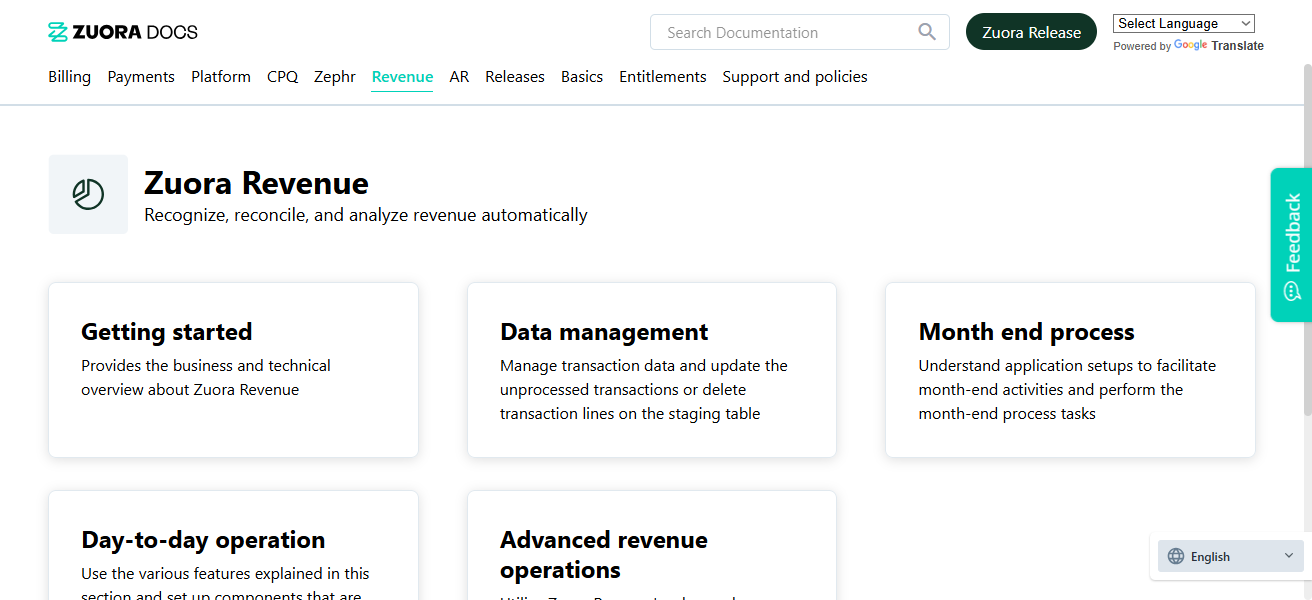
Due to its automated revenue recognition system’s ability to calculate revenue, Zuora Revenue is able to produce revenue reporting that is accurate and predictable.
The system is able to distinguish and mitigate discrepancies in revenue recognition from the other automated processes to close the businesses financial reporting in an timely manner.
The revenue system is integrated with the billing and CRM systems to allow the businesses to properly map their revenue to expenses.
Features Zuora Revenue
Revenue engine — Specifically designed for repetitive subscriber-based business models.
Revenue recognition automation — Recognizes revenue with a complex timetable and the correct regulations (ASC 606/IFRS 15).
Monitoring contract changes — Detects modifications that may result in revenue leakage.
Managing deferred revenue — Reports and manages deferred revenue lifecycle.
| Pros | Cons |
|---|---|
| Built for subscription & recurring revenue businesses. | Can be overkill for non‑subscription models. |
| Automation of revenue allocation and compliance (ASC 606/IFRS 15). | Setup complexity for multi‑product bundles. |
| Strong tracking of deferred revenue and billing anomalies. | Needs good CRM/billing data hygiene to function well. |
| Forecasting tools detect future leakage points. | Custom reporting may require experts. |
6. Chargebee Revenue Recognition
Chargebee Revenue Recognition Software is targeted toward subscription and SaaS companies and consists of tracking revenue accurately and preventing revenue leakage.
This software takes care of automated revenue allocations, the recognition of revenue, and the management of the deferred revenue across multi streams of revenue.
This software is able to keep track of subscription lifecycle events and the discrepancies that revolve around upgrades and downgrades as well as cancellations that the software is able to track threats of losing revenue.
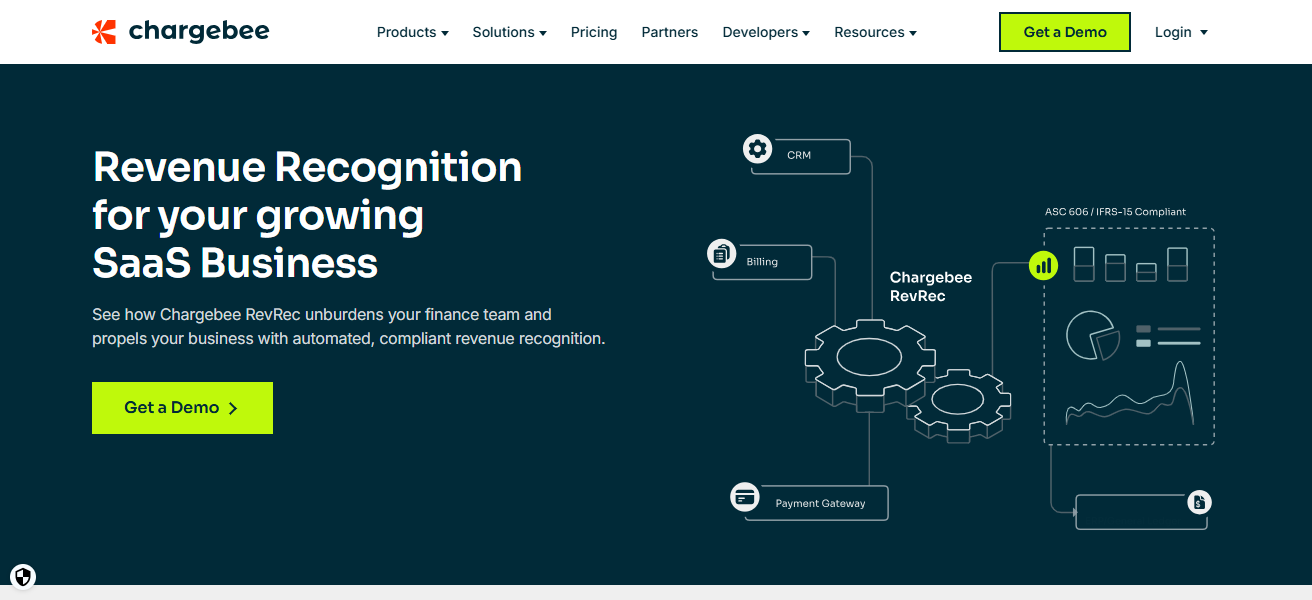
Chargebee gives finance teams easy-to-use audit trails and reports that are ready to go for compliance with standards of ASC 606/IFRS 15.
This software can integrate with payment processors, billing software, and accounting software systems to ensure that the revenue recognition process is automated. This software promotes finance teams to recover and lose revenue.
Features Chargebee Revenue Recognition
Managing subscription lifecycle — Handles upgrades, downgrades, cancellations, and renewals.
Automated recognition & allocation — Revenue allocation across accounting periods is more effective.
Compliance reporting — Reports with unambiguous trails for compliance assurance are fully transparent.
Billing and payments integration — Recognition and charge alignment is consistent.
| Pros | Cons |
|---|---|
| Excellent for SaaS & subscription lifecycle events. | Limited value outside subscription billing. |
| Automated revenue recognition & audit trails. | Advanced features need higher plan tiers. |
| Detects churn‑related leakage quickly. | Integration quirks with older accounting systems. |
| ASC 606/IFRS 15 compliance baked in. | Reporting UI less flexible than specialized BI tools. |
7. BlackLine
BlackLine provides finance automation features such as revenue leakage detection, reconciliation, and account monitoring.
Using the technology to streamline invoice and journal, as well as revenue alignment, BlackLine removes the friction typically associated with reconciliation.
By closing the gaps and monitoring revenue leakage before the end of the month, BlackLine mitigates month-end missing revenue exposure. Audit completions and centralized control allow finance teams to use workflow automation with ease.
The solution has the ability to integrate with all primary ERP systems, as well as integrate with global entities.
BlackLine improves the ability of companies to manage their revenue, as well as gain visibility and processing efficiencies, by providing automated reconciliation and other real-time anomaly detection tools.
Features BlackLine
Automated account reconciliations — Balances accounts and identifies mismatches that may indicate leakage.
Continuous automation — Accounts are reviewed and any discrepancies are corrected prior to closure.
Centralized workflow orchestration – Coordinates tasks of all finance units.
Robust audit trails – Compliance and reviews are logged and changes are traced.
| Pros | Cons |
|---|---|
| Strong reconciliation automation reduces leakage risk. | Focused on accounting close, not frontline billing. |
| Continuous monitoring flags mismatches early. | Requires ERP integration and config. |
| Centralizes workflows across global finance teams. | May feel expensive for mid‑market. |
| Provides robust audit trails & compliance reporting. | Training time needed for full utilization. |
8. Trintech Cadency
Trintech Cadency is financial close and compliance solution that solves revenue leakage through automated account reconciliations and transaction monitoring.
It assists finance teams in spotting discrepancies in invoicing, deferred revenue, and revenue recognition.
Workflow automation and AI analytics help identify and fix errors faster. Dashboards create visibility in high risk areas prompting action before issues worsen.
The solution is designed for multi-entity, multi-currency, and regulation compliance with ready-to-audit reports.
Trintech Cadency minimizes manual reconciliations and leakage through streamlined integration with ERP systems, elevating financial governance to a level where organizations can rely on revenue data for decisions.
Features Trintech Cadency
Automated financial close – Closes cycles and identifies errors.
AI-backed analytics – Leakage detection through pattern analysis.
Multi-entity, multi-currency support – Fits global firms.
Dashboards & risk scoring – High-risk accounts or transactions are monitored.
| Pros | Cons |
|---|---|
| Automated reconciliation & workflow management. | Geared toward larger enterprises. |
| AI analytics identify revenue discrepancies. | Implementation can be lengthy. |
| Provides dashboards showing high‑risk areas. | Smaller teams may not use full capabilities. |
| Multi‑entity & multi‑currency ready. | Custom reports may need professional support. |
9. Workiva
Workiva’s connected assurance covering reporting, compliance, and analytics functions offers protection against financial leakage and improves financial integrity.
The platform brings together and consolidates information from multiple systems, helping finance teams uncover and address anomalies around contracts, invoices, and revenue recognition.
Workiva mitigates the risk of revenue leakage due to humans through the automation of reconciliations, regulatory reporting, and audit completion.
The platform’s features enable review and collaboration of internal controls across multiple departments against revenue leakage and protect gaps.
The platform has no size and sector constraints, including large enterprises needing ongoing compliance around ASC 606/IFRS 15.
Workiva helps finance professionals ensure revenue accurate records are kept and provides oversight.
Features Workiva
Connected data platform – Integrated finance data aids in leakage computing.
Linked reporting & disclosure – Reports can be anchored to real revenue figures.
Collaborative review workflows – Findings allow team communication.
Audit and compliance support – Provides datasets to regulators and auditors.
| Pros | Cons |
|---|---|
| Connects data from systems for consolidated revenue visibility. | Not solely focused on revenue leakage. |
| Strong compliance & audit documentation capabilities. | Can be expensive for small finance teams. |
| Collaborative tools improve review workflows. | Requires some onboarding & dashboard configuration. |
| Automation reduces manual reconciliation errors. | Analytics depth varies by subscription level. |
10. Oracle Revenue Management Cloud
Oracle Revenue Management Cloud is equipped with tools for automated revenue recognition, leakage management, and compliance automation.
With revenue loss foregone due to contract, billing, and invoicing discrepancies, Oracle Revenue Management Cloud’s revenue loss is powered by- billed and automated.
The platform automatically allocates revenue, and deferrals and adjustments are made to complex revenue streams. Oracle’s powerful revenue engineering with ASC 606 and IFRS 15 reporting tools.
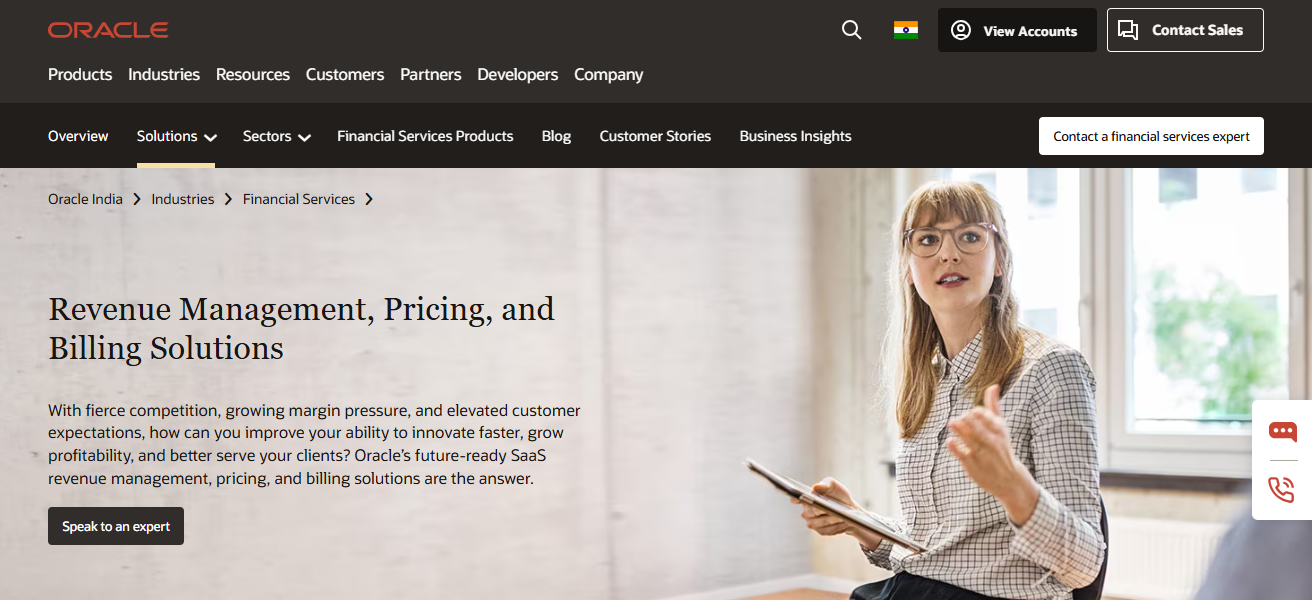
Finance teams gain real time dashboards with flexible and predictive insights powered by seamless ERP integration for transparency.
With automated AI analytics and compliance, Oracle Revenue Management Cloud aids organizations to mitigate leakage and optimize revenue recognition while maintaining sound financial control.
Features Oracle Revenue Management Cloud
Comprehensive revenue lifecycle automation – Covers adjustments, recognitions, and billing.
AI-enhanced anomaly detection – Fast detection of deviations using analytics.
Global compliance engine – ASC 606, IFRS 15, and multi-jurisdictional standard support.
Enterprise scalability – Managed extensive data and complex product assortment.
| Pros | Cons |
|---|---|
| End‑to‑end revenue lifecycle automation. | Complex setup for legacy enterprise environments. |
| Real‑time anomaly detection with predictive insights. | Broad ERP ecosystem can feel overwhelming. |
| Strong compliance support (ASC 606/IFRS 15). | Licensing & total cost can be high. |
| Scales for global, multi‑product businesses. | Maintenance & upgrades need expert support. |
How We Choose Best Revenue Leakage Detection Tools for Finance Teams
Business model alignment – Confirm that the tool is compatible with your model of income (subscription, usage, one-time sale).
Ability to Combine – Investigate whether it consolidate with your ERP, CRM, billing, and accounting systems.
Automation & artificial intelligence functionalities – Detection of anomalies, predictive analysis, and automated workflows to mitigate human risk.
Consistency – Verify adherence to ASC 606 and IFRS 15 for proper revenue recognition.
Ability to Scale – Opt for a tool that can accommodate multiples, currencies, and growth.
Comprehensive Reporting & Audit Trails – The software is required to offer an array of formatted dashboards with notifications and reports good for compliance.
User-friendly & Training – User interface friendliness is important as is the tool’s ability is to train and support finance teams.
Price Vs. Value – Compare the total cost with the revenue that can be lost, and the time and efficiencies to be obtained.
FAQ
A software solution that identifies gaps, inconsistencies, or errors in billing, payments, contracts, and recognition that could cause revenue loss.
To automate detection of billing errors, improve revenue recognition accuracy, reduce manual checks, and protect profitability.
AI models analyze patterns, flag anomalies, and predict potential losses faster than manual reviews.
Yes—most integrate with ERPs (SAP, Oracle), billing systems, CRM, and accounting platforms.
Many support ASC 606/IFRS 15 compliance with audit trails and standardized reporting.