In this article, I will look at the Best Shared Sequencer Networks in 2026, exploring the top projects that are revolutionizing the scalability, transaction ordering, and rollup interoperability of blockchain. We will present their main features, security models, rollup compatibility, performance and current development state.
This guide will help readers to understand how these networks function, what makes each project unique, and their significance in the changing landscape of blockchain.
Key Points & Best Shared Sequencer Networks
| Project | Explanation |
|---|---|
| Espresso Systems | Provides decentralized sequencing infrastructure enabling rollups to share ordering, improving interoperability and fairness. |
| Astria | Offers shared sequencing infrastructure allowing rollups to access decentralized transaction ordering services. |
| Radius | Develops shared sequencing solutions designed to improve rollup security and transaction ordering. |
| Rome Protocol | Connects rollups through shared sequencing, enabling composability and coordinated cross-chain transaction execution. |
| Flashbots | Builds Ethereum infrastructure promoting transparent transaction ordering, MEV protection, and fair block building. |
| AltLayer | Provides rollup infrastructure, including shared sequencing options, supporting scalable and customizable blockchain applications. |
| NodeKit | Develops modular blockchain infrastructure supporting shared sequencing and interoperable rollup ecosystems. |
| Cero Network | Explores decentralized sequencing infrastructure to support scalable rollups and cross-chain transaction coordination. |
| Metro | Focuses on shared sequencing infrastructure designed to coordinate transactions across multiple blockchain rollups. |
| Init4 | Researches decentralized coordination mechanisms supporting shared sequencing and improved blockchain interoperability. |
10 Best Shared Sequencer Networks In 2026
1. Espresso Systems
Espresso Systems is building out shared sequencing and fast finality infrastructure designed to improve coordination between blockchain rollups. Its HotShot consensus protocol allows validators to agree on the order of transactions and provide cryptographic finality. Rollup Compatibility: Espresso is built to support various rollup architectures, such as those based on OP Stack and Arbitrum.
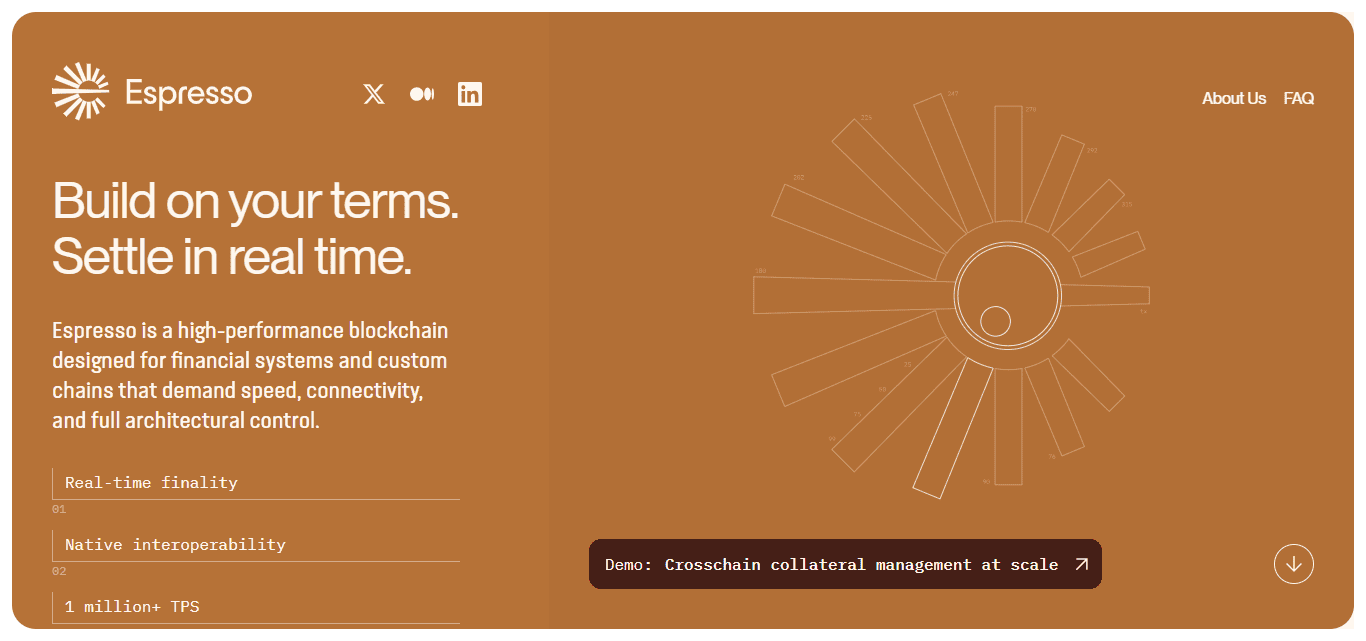
Security Model: Its BFT consensus and proof-of-stake validator model protects transaction ordering from conflicting confirmations. Performance: The protocol aims at sub-second finality under appropriate network conditions. Current State: Espresso has moved to mainnet deployment with ecosystem integrations and network decentralization as key evaluation criteria.
Espresso Systems Feature
| Feature | Explanation |
|---|---|
| Decentralized Sequencing | Coordinates transaction ordering through a decentralized validator network. |
| HotShot Consensus | Uses Byzantine Fault Tolerant consensus to establish agreement and transaction finality. |
| Rollup Integration | Supports integrations designed to connect multiple rollup architectures to shared sequencing. |
| Fast Finality | Provides rapid confirmation of transaction ordering, helping applications coordinate across rollups. |
2. Astria
Astria built a modular shared sequencing network that would allow multiple rollups to share access to common transaction ordering, while not giving up their execution environments.
Its architecture decouples sequencing from execution, and leverages Celestia for data availability. Rollup Compatibility The design was targeting application-specific rollups with shared ordering and improved cross-rollup composability.

Security Model: The sequencing consensus and data availability were different security elements, with final guaranties depending on the architecture and the underlying networks.
Performance : Its design was to provide fast transaction pre-confirmations and reduce coordination complexity across rollups. Current Status: Astria was shutdown in December 2025 and should be described as a historical project, not an active network in 2026.
Astria Feature
| Feature | Explanation |
|---|---|
| Shared Sequencing | Designed to provide common transaction ordering services for multiple rollups. |
| Modular Architecture | Separates transaction sequencing from execution and data availability. |
| Celestia Integration | Uses Celestia-based data availability in its documented architectural design. |
| Cross-Rollup Coordination | Aimed to improve transaction coordination and composability between independent rollups. |
3. Radius
Radius focuses on secure sequencing to protect rollup users from transaction censorship and malicious maximal extractable value (MEV). It uses cryptographic techniques to encrypt transactions and at the same time establish their order.
Rollup Compatibility: Radius details the compatibility with rollup ecosystems such as OP Stack, Arbitrum Orbit, Polygon CDK and other modular environments. Security Model: Delayed encryption, zero-knowledge proofs and transaction pre-confirmations reduce frontrunning, sandwich attacks and censorship.

Performance: Fast preconfirmations are aimed at improving transaction certainty and cross-rollup coordination. Current Status : Development progress shown in documented testnet experiments but check current production availability before claiming full mainnet deployment.
Radius Feature
| Feature | Explanation |
|---|---|
| Encrypted Transactions | Designed to protect transaction contents during sequencing and reduce harmful information leakage. |
| MEV Protection | Aims to limit frontrunning, sandwich attacks, and exploitative transaction ordering. |
| Cryptographic Verification | Uses cryptographic techniques to support secure transaction ordering and verification. |
| Rollup Compatibility | Designed with modular rollup architectures and integration flexibility in mind. |
4. Rome Protocol
The Rome Protocol has been investigating the possibility of leveraging Solana infrastructure to enable shared sequencing and interoperability across Ethereum rollups. The larger goal is to make it easier to coordinate transactions across different execution environments, which could enable more composable applications.
Rollup Compatibility: Designed to connect ethereum rollups to infrastructure on Solana, specific supported networks will depend on the integrations deployed. Security Model: Security is based on the sequencing design, the consensus guaranties provided by the underlying network, and how rollups verify and settle transaction commitments.
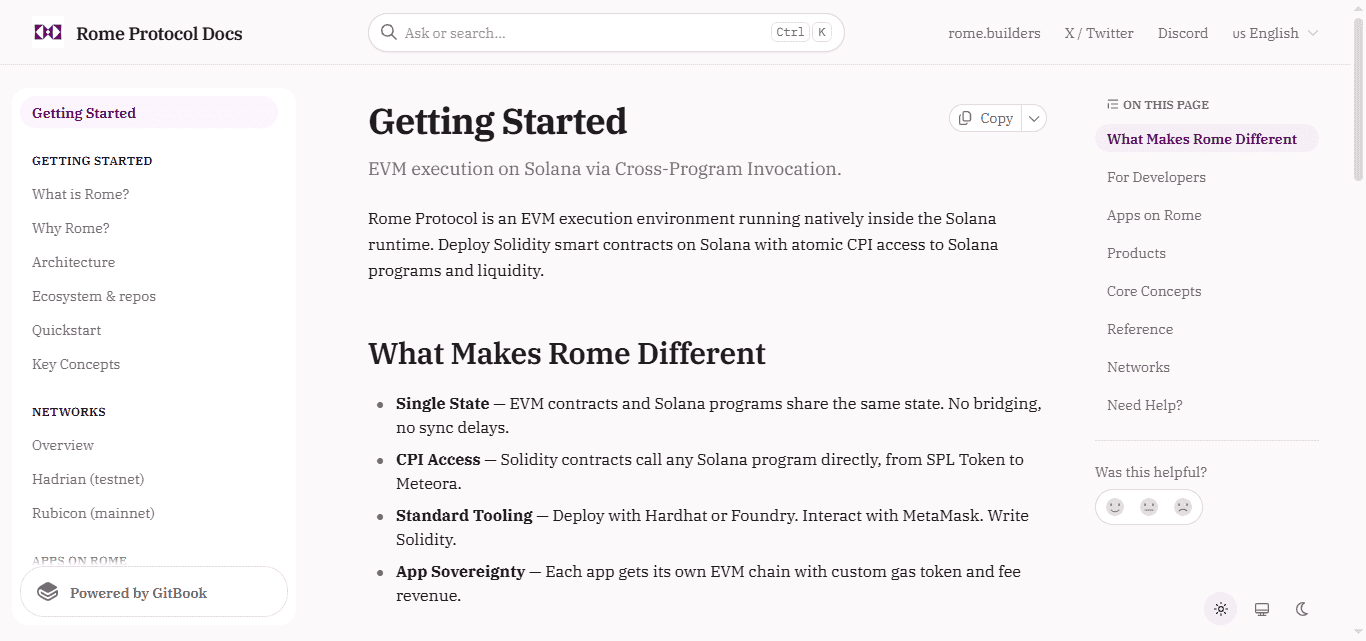
Performance: Using Solana’s transaction-processing infrastructure should allow for fast coordination but will need to validate project-specific benchmarks. Current Status: Before declaring Rome production-ready in 2026, check the latest official documentation and deployment announcements.
Rome Protocol Feature
| Feature | Explanation |
|---|---|
| Solana-Based Infrastructure | Explores Solana infrastructure for coordinating transactions across blockchain ecosystems. |
| Shared Sequencing | Aims to provide common transaction ordering for participating rollups. |
| Cross-Chain Composability | Targets coordinated interactions between Ethereum rollups and Solana-based applications. |
| Transaction Coordination | Seeks to simplify communication and execution coordination across supported blockchain environments. |
5. Flashbots
Flashbots is a group that builds Ethereum infrastructure and conducts research on transparent block building, transaction ordering, and the management of maximal extractable value (MEV). Its SUAVE research examined a decentralized environment for transaction preference and cross-domain block-building coordination.
Rollup Compatibility Flashbots’ wider research is targeting Ethereum and potentially multiple blockchain environments but the compatibility will depend on the specific product or implementation. Security Model: Rather than a universal shared-sequencer security model, its approaches focus on reducing harmful information asymmetry and increasing transparency.
Performance : Efficiency depends on the architecture of the specific block building and transaction ordering . Current Status Distinguish between active Flashbots products and experimental SUAVE components; not all Flashbots projects are automatically a live shared sequencer.
Flashbots Feature
| Feature | Explanation |
|---|---|
| MEV Research | Studies maximal extractable value and its effects on blockchain transaction ordering. |
| Transparent Block Building | Develops infrastructure that improves transparency in Ethereum block construction. |
| Builder Infrastructure | Provides tools and systems supporting specialized Ethereum block-building workflows. |
| SUAVE Research | Explored decentralized block-building and transaction-preference coordination across blockchain domains. |
6. AltLayer
AltLayer offers modular rollup infrastructure that allows for enhanced flexibility in deployment, decentralization, and interoperability. Its restaked rollup architecture combines services for state verification, faster finality and decentralized sequencing via components like VITAL, MACH and SQUAD.
Rollup Compatibility: AltLayer supports OP Stack, Arbitrum Orbit, ZK Stack and Polygon CDK . Security Model: Its architecture enables verification and economic security through actively validated services and EigenLayer restaking mechanisms.

Performance: Designed to provide fast finality and customizable rollup infrastructure to improve application responsiveness. Current Status: AltLayer documents its rollup infrastructure and sequencing components, but the deployment and integration status of each service should be verified before assuming every feature is live.
AltLayer Feature
| Feature | Explanation |
|---|---|
| Restaked Rollups | Provides infrastructure using restaking mechanisms to support rollup security services. |
| Decentralized Sequencing | SQUAD supports decentralized sequencing services for compatible rollup deployments. |
| Fast Finality | MACH is designed to provide faster finality through actively validated services. |
| Modular Rollup Deployment | Supports customizable rollup infrastructure and integration with different blockchain stacks. |
7. NodeKit
NodeKit SEQ is a shared sequencer subnet project that coordinates transaction messages between blockchains. Its architecture incorporates a blockchain-based framework for sequencing, aiming to ease the communication between participating rollups and chains.
Rollup Compatibility: The project discusses how NodeKit based chains will communicate with compatible rollups, but the scope of integration will depend on the implementation. Security Model: Security is based on the consensus and sequencing architecture of the subnet; further validation is required for production-grade guaranties.

Performance: The NodeKit’s Arcadia design specifies approximately 250 ms preconfirmations, but this is not to be taken as an independently verified end-to-end network latency. Current Status: The software is marked alpha in its public repository and is not production safe so deployment maturity is an important consideration.
NodeKit Feature
| Feature | Explanation |
|---|---|
| Shared Sequencing | NodeKit SEQ explores shared sequencing infrastructure for coordinating transactions across chains. |
| Cross-Chain Messaging | Aims to facilitate communication between connected blockchain environments. |
| Avalanche-Based Architecture | Its infrastructure has explored subnet-based designs within the Avalanche ecosystem. |
| Rapid Preconfirmations | Its Arcadia design describes fast preconfirmations, subject to implementation and network conditions. |
8. Cero Network
When new blockchain sequencing systems is discussed, Cero Network is often brought up, but there is not much trustworthy, detailed public documentation available about its current architecture. Before considering it as one of the major shared sequencer networks, one should look at its official technical resources and development activity.

Rollup Compatibility: Verify specific supported rollup stacks and production integrations. Security Model: Validator requirements, consensus design, transaction censorship protections, and settlement guaranties should be based on technical documentation, not assumptions.
Performance: No verified throughput or finality benchmark should be quoted without a credible source. Current Status: Please verify development status, testnet/mainnet availability and ecosystem adoption independently. Only include as an emerging candidate if there is supporting evidence.
Cero Network Feature
| Feature | Explanation |
|---|---|
| Sequencing Infrastructure | Requires official documentation to establish its specific shared sequencing capabilities. |
| Rollup Integration | Supported rollup frameworks and integrations need independent verification. |
| Security Architecture | Validator design and consensus guarantees should be confirmed through technical documentation. |
| Performance Evaluation | Throughput and finality should be reported only when reliable benchmarks are available. |
9. Metro
Metro is another name that needs to be checked carefully before being added to a definitive list of shared sequencer networks. A credible project profile should determine whether it runs a shared sequencing protocol, provides related middleware, or is some other kind of blockchain infrastructure.
Rollup Compatibility: Find out what rollup frameworks it supports and real-life integrations from official documentation. Security Model: Review the consensus protocol, rules for validator participation, censorship-resistance mechanisms, and settlement assumptions.

Performance: When supporting numbers are published, report measured transaction throughput, ordering latency or finality. Where we’re at: Before declaring it active or production-ready in 2026, check its official website, repository activity, and the latest network announcements. Avoid unsupported technical assertions.
Metro Feature
| Feature | Explanation |
|---|---|
| Transaction Ordering | Its specific transaction-ordering capabilities require confirmation from official project resources. |
| Rollup Compatibility | Supported rollup architectures and integrations need verification. |
| Consensus Design | Validator participation and sequencing security should be assessed using published specifications. |
| Network Performance | Latency, throughput, and finality require independently supported measurements. |
10. Init4
Init4 should be judged by the same technical and operational criteria as other shared sequencing projects. However, no sufficiently reliable public evidence of its exact shared-sequencer implementation, supported rollups and current deployment status is available in the sources reviewed here.
Rollup Compatibility: See which networks and rollup frameworks are supported by an official integration. Security Model: Review key technical sources and document only the consensus mechanism, assumptions on validators, and guaranties on transaction ordering.
Performance: Only include latency, throughput, and finality numbers where reproducible benchmarks exist. Current Status: Check the latest official announcements and development repository before labeling it as active, testnet-only or production-ready. This makes the comparison clear and fact-based.
Init4 Feature
| Feature | Explanation |
|---|---|
| Sequencing Research | Its precise shared sequencing implementation requires confirmation from primary sources. |
| Rollup Compatibility | Specific supported networks and rollup integrations should be verified. |
| Security Mechanisms | Consensus design and transaction-ordering guarantees require technical evidence. |
| Development Activity | Current repositories, documentation, and announcements can establish its development and deployment status. |
Conclusion
To summarize The Top Shared Sequencer Networks in 2026 are driving blockchain scalability, transaction coordination and rollup interoperability forward. Others are working on shared sequencing and decentralized infrastructure such as Espresso Systems, Radius, Rome Protocol, and AltLayer.
Before selecting a network, assess its security model, rollup compatibility, performance, and present development status. As blockchain technology matures, shared sequencing may be a key enabler of a more interconnected, efficient, and scalable ecosystem.
FAQ
How do shared sequencers work?
They coordinate transaction ordering across participating rollups using shared infrastructure and consensus mechanisms.
What are the main benefits of shared sequencing?
Benefits include improved interoperability, coordinated transactions, faster preconfirmations, and potentially fairer transaction ordering.
How do shared sequencers improve security?
Security depends on consensus design, validator participation, cryptographic verification, and settlement assumptions.
Are shared sequencers compatible with all rollups?
No. Compatibility depends on each network’s architecture, integration requirements, and supported rollup frameworks.