This article will cover the Best Software for Enterprise Workflow Intelligence, which helps organizations streamline processes, automate, and increase efficiency.
- key Points & Best Software For Enterprise Workflow Intelligence
- 10 Best Software For Enterprise Workflow Intelligence
- 1. ClickUp
- 2. Freshservice
- 3. Kissflow
- 4. Pipefy
- 5. Nintex
- 6. Zoho Creator
- 7. Smartsheet
- 8. Wrike
- 9. ProcessMaker
- 10. Monday.com
- How We Choose Best Software for Enterprise Workflow Intelligence
- Conclusion
- FAQ
Selecting software that enhances collaboration, workflow tracking, and decision-making through data is important.
These tools, ranging from project management to AI-driven insights, empower enterprises to optimize their operations and boost productivity.
key Points & Best Software For Enterprise Workflow Intelligence
| Software | Key Point |
|---|---|
| ClickUp | All-in-one platform for tasks, docs, goals, and workflow automation |
| Freshservice | IT service management with automated workflows and ticketing |
| Kissflow | No-code workflow builder for quick automation across departments |
| Pipefy | Customizable process templates to standardize workflows |
| Nintex | Advanced automation with robotic process automation (RPA) |
| Zoho Creator | Low-code app development integrated with workflow automation |
| Smartsheet | Spreadsheet-style workflow management with dashboards and reporting |
| Wrike | Collaboration-focused workflows with real-time visibility |
| ProcessMaker | Enterprise-grade BPM for complex workflow automation |
| Monday.com | Visual workflow boards with integrations and automation |
10 Best Software For Enterprise Workflow Intelligence
1. ClickUp
ClickUp facilitates project management, task management, and teamwork using the integrated enterprise workflow analytics platform.
Custom dashboards, Gantt charts, and automations allow teams to streamline processes and minimize manual efforts. ClickUp integrates with most apps and provides AI insights to allow teams to track processes in real-time.
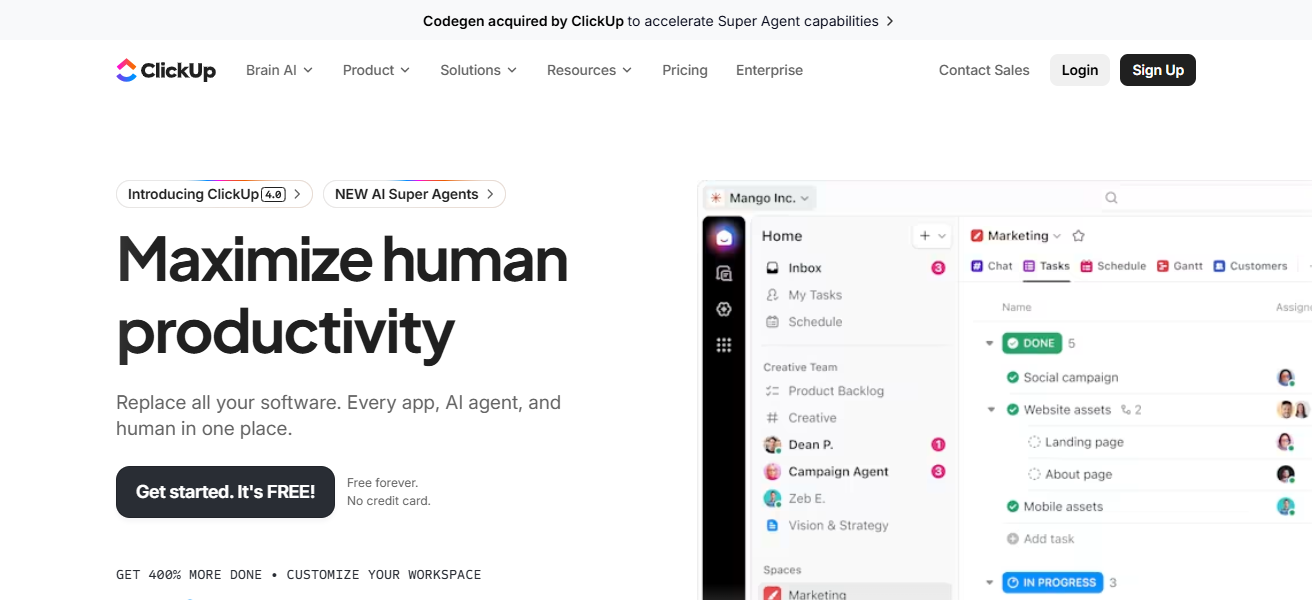
ClickUp is suitable for small to large companies and provides seamless teamwork, communication, task management, and prioritization, along with complex processes and data analytics.
Features ClickUp
Task and Project Management – Teams can manage their work by using lists, boards, and gantt charts. This feature improves work visibility and task execution.
Customizable Dashboards – Users can create customized dashboards that track their goals, key performance indicators, and project progress in real-time.
Automation Tools – Users can automate the completion of repetitive actions, such as the assigning and status updating of tasks, in order to reduce the amount of work done manually.
Integrations and AI Insights – Users can take advantage of sophisticated integrations with popular software to drive insights from the AI in order to make better decisions about their workflows.
| Pros | Cons |
|---|---|
| All-in-one platform combining project management, task tracking, and collaboration. | Can be overwhelming for beginners due to extensive features. |
| Customizable dashboards, Gantt charts, and automation tools. | Some advanced automation features require higher-tier plans. |
| Integrates with popular apps for workflow optimization. | Occasional performance lag with large projects. |
| AI-powered insights for real-time monitoring. | Mobile app can be less intuitive than desktop. |
| Suitable for teams of all sizes, enabling data-driven decision-making. | Learning curve for mastering advanced features. |
2. Freshservice
Freshservice is an ITSM solution that operates in the cloud and is perfect for enterprises that want to automate their processes and manage workflows efficiently.
Besides workflows and process automation, incident management, problem management, and change management are available.
Because of the platform’s AI-driven automation, less human intervention is required. There are self-service portals, ticketing systems, and analytics that are thorough, allowing for operational visibility.
Multiple enterprise tools are supported for integration, allowing teams to optimize workflows, service delivery, and compliance and operational standards.
Features Freshservice
ITSM Workflow Automation – Freshservice automates incidents, problems, changes, and service requests to ensure that consistent service is guaranteed.
Self-Service Portal – Users can manage issues using the self-service portal without having to contact IT to submit a service request.
AI-Powered Ticketing – Service efficiency is increased with the use of AI to suggest an answer to the user, categorize the tickets, and help improve the service.
Analytics and Reporting – IT leaders can track and measure performance reports and dashboards to understand issues and trends.
| Pros | Cons |
|---|---|
| Cloud-based ITSM platform with automated workflows. | Primarily focused on IT teams; less suitable for general project management. |
| Supports incident, problem, and change management. | Some users find customization options limited. |
| AI-driven automation reduces manual tasks. | Pricing can be high for smaller teams. |
| Self-service portals and ticketing improve service efficiency. | Integration setup may require technical knowledge. |
| Provides detailed analytics for operational insights. | Reporting features can be less flexible than competitors. |
3. Kissflow
Kissflow is an adaptable process automation and workflow system for large enterprises, offering end-to-end digital transformation. It helps companies build workflows and manage them without having to code.
With a drag-and-drop interface, companies can build custom processes, monitor workflow, and analyze data.
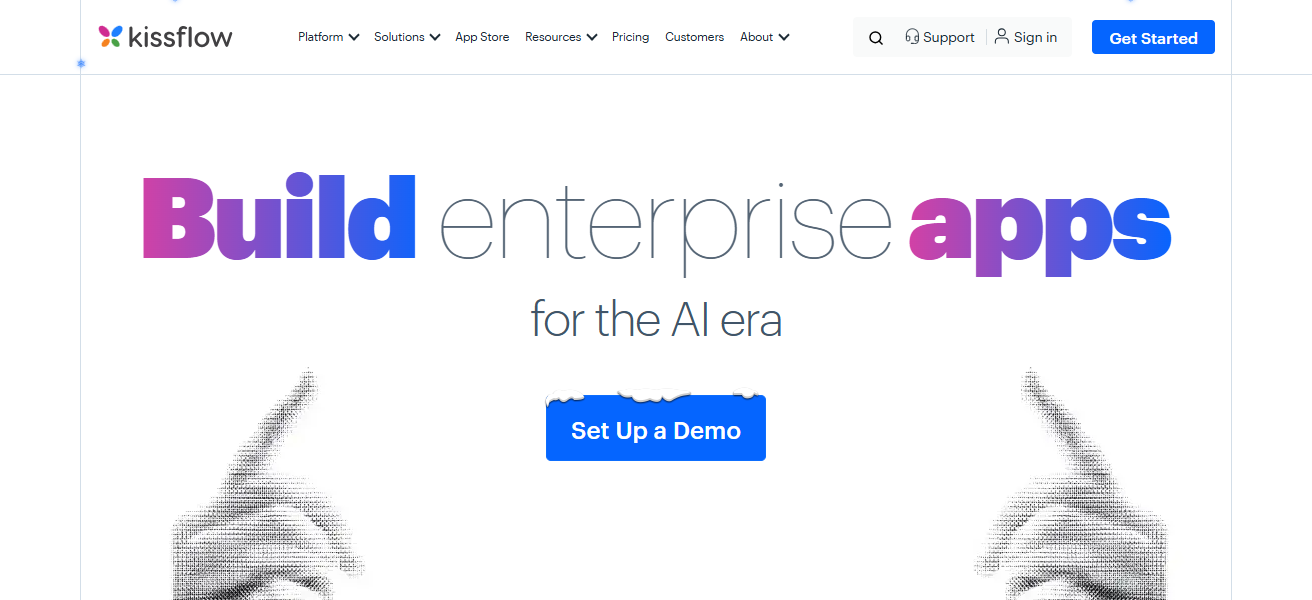
With Kissflow, teams can improve operational collaboration, identify and resolve process bottlenecks, and optimize workflows to improve overall teamwork.
It provides workflow automation for large organizations across a variety of functions, including marketing, HR, finance, and IT.
Features Kissflow
Drag-and-Drop Workflow Builder – The visual interface with drag and drop movements can be used to create and adjust workflows without having to manually enter any code.
Process Tracking and Monitoring – This feature allows real-time tracking of task status and the identification of bottlenecks in various departments.
AI-Driven Process Intelligence – Reports on inefficiencies and provides suggestions for improved operational optimization.
Cross-Functional Collaboration – A centralized space for teams (like HR, finance, and marketing) to communicate.
| Pros | Cons |
|---|---|
| No-code/low-code platform for workflow automation. | Can be pricey for large teams with many workflows. |
| Visual drag-and-drop interface simplifies process design. | Limited offline access and mobile functionality. |
| AI-driven insights identify bottlenecks and optimize processes. | Some advanced features require technical expertise. |
| Suitable for multiple departments: HR, finance, marketing, IT. | Reporting and analytics may lack depth for enterprise-scale data. |
| Enhances collaboration and ensures seamless workflow intelligence. | Integrations may be limited compared to larger platforms. |
4. Pipefy
Pipefy provides customizable automations and central task management to streamline complex processes for enterprises.
Users can create, manage, and refine their automations using flexible low-code automations, custom templates, and tracking tools.
Additionally, Pipefy provides visual process mapping and reports to improve transparency and decision-making.
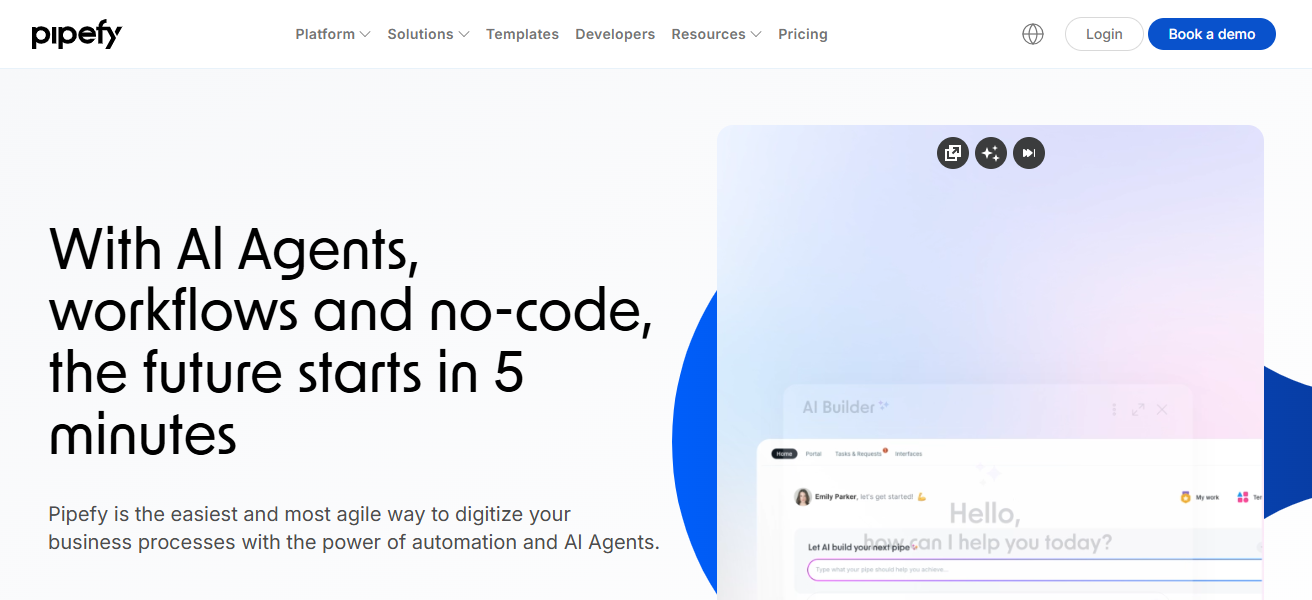
By automating workflows between Pipefy and other enterprise apps, teams can reduce manual errors, optimize processes, and ensure adherence to company policies.
Its adaptable design helps all teams, including HR, finance, and customer service, enhance productivity across the organization.
Features Pipefy
Custom Workflow Templates – Pre-built templates enable quick standardization of business processes.
Low-Code Automation – Automate major actions such as approvals, notifications, and task assignments with little coding.
Visual Process Mapping – Transparent and visual stages represent the flow of work.
Enterprise Integrations – Integrates with Slack, Jira, and other CRMs for seamless workflows
| Pros | Cons |
|---|---|
| Centralized task management and workflow automation. | Can be complex to set up for large organizations. |
| Customizable templates and low-code automation tools. | Limited offline functionality. |
| Visual process mapping enhances transparency. | Reporting features can be basic in standard plans. |
| Integrates with major enterprise apps for seamless operations. | Advanced automation may require premium plans. |
| Scalable across multiple departments, improving productivity. | May have a learning curve for non-technical users. |
5. Nintex
Nintex specializes in intelligence and automation services within business workflow and simplification. Its workflow generation and process mapping tools, along with AI analytics, help identify and suggest improvement areas.
With seamless integration with big enterprise systems, Nintex aids in task automation with strategic data accessibility.
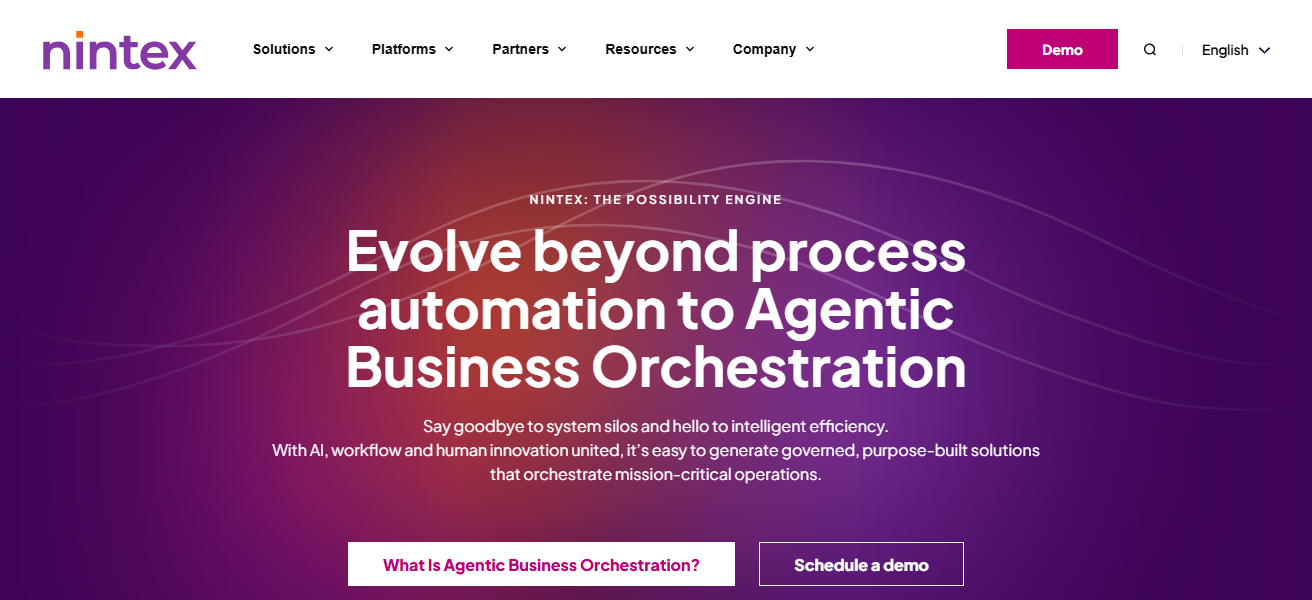
Its low-code/no-code feature provides teams with the ability to rapidly and autonomously enhance and adapt workflow scalability.
Overall enterprise operational efficiency, inter-departmental collaboration, and error reduction increase, leading to quicker decision making and improved resource allocation.
Features Nintex
End-to-End Workflow Automation – Automates processes, from simple approvals to more intricate, multi-step tasks.
Process Mapping & Discovery – Using visual aids, discover and document processes that need improvement.
Document Generation – Contract, report, and form creation from workflow information is automated.
Advanced Analytics – Gaps, bottlenecks, and optimizations are identified with AI for improved workflows.
| Pros | Cons |
|---|---|
| Powerful workflow automation and process intelligence. | Premium pricing may be prohibitive for small teams. |
| No-code/low-code environment for quick workflow creation. | Some features require separate add-ons. |
| AI-driven analytics help identify inefficiencies. | Learning curve for complex workflow automation. |
| Seamless integration with enterprise applications. | Customization options can be overwhelming. |
| Enhances collaboration and operational efficiency across departments. | Limited free trial options. |
6. Zoho Creator
Zoho Creator is designed for building enterprise apps and automating workflows using low-code approaches. It allows teams to build custom workflows, automate processes, and handle data without the need for complex programming.
With the ability to integrate with other apps from Zoho and third-party services, users can execute processes without disruption.
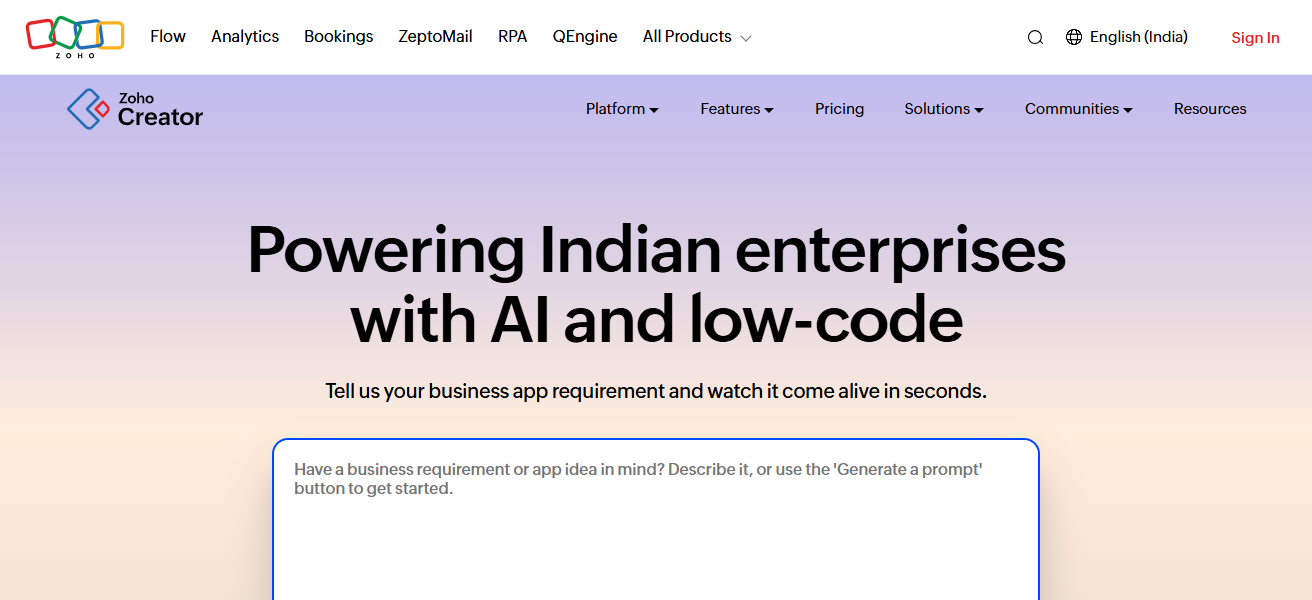
Creator helps identify and improve operational efficiencies through its reporting and analytics. Zoho Creator is great for digital transformation and process intelligence in departments like HR, finance, sales, and operations.
Features Zoho Creator
Low-Code App Builder – Develop bespoke enterprise applications to meet distinct workflow needs.
Workflow Automation – Plans actions, prompts tasks, and automates notifications to streamline workflows.
Integration Hub – Unified the enterprise system with Zoho suite and external applications.
Data Reporting & Dashboards – Gives analytical perspectives and reports to monitor performance and trends.
| Pros | Cons |
|---|---|
| Low-code platform for custom applications and workflow automation. | Limited features for highly complex enterprise processes. |
| Integrates with Zoho apps and third-party tools. | UI can feel cluttered for new users. |
| Analytics and reporting provide actionable insights. | Advanced automation may require coding knowledge. |
| Enables digital transformation across departments. | Mobile app features are slightly restricted. |
| Simplifies repetitive tasks and improves process efficiency. | Scalability can be limited for very large enterprises. |
7. Smartsheet
Smartsheet is a collaborative work management tool designed to enhance enterprise workflow intelligence via project tracking and process automation.
It integrates automation with Gantt charts and dashboards to track tasks like a spreadsheet. With real-time collaboration, resource reporting, and reporting visibility into business processes, Smartsheet streamlines operations.
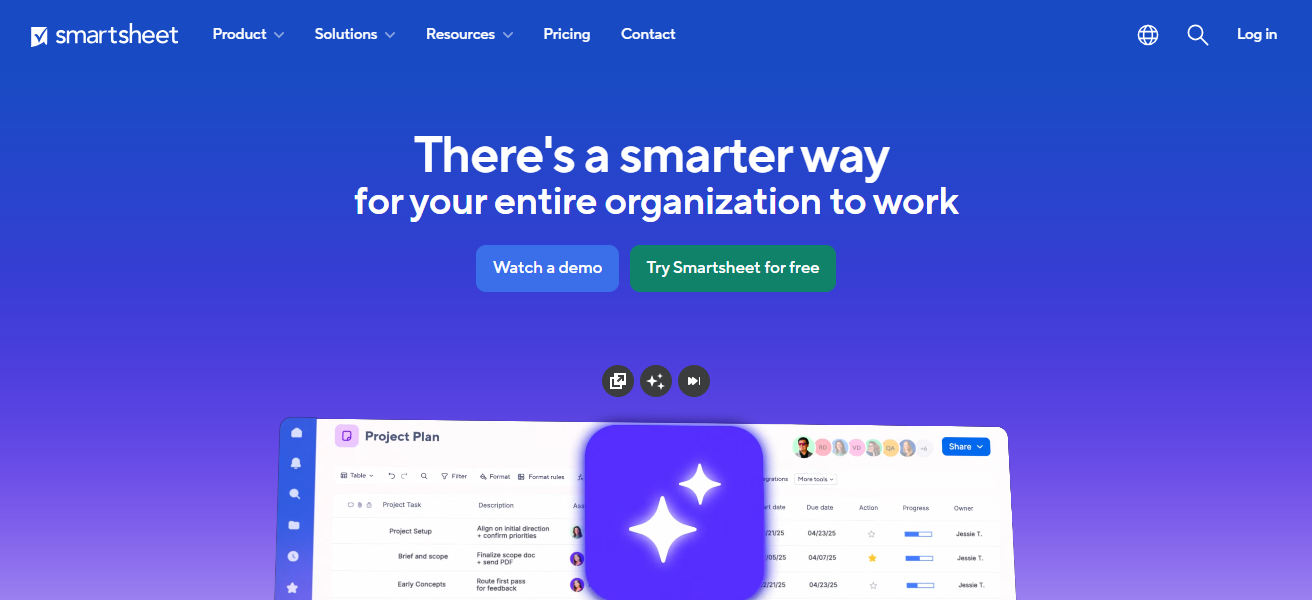
Smartsheet’s enterprise resource planning integrations improve efficiency, mitigate manual work, and enhance accountability.
Smartsheet’s cross-functional capacity enables organizations to streamline workflows, improve decision-making via data analytics, and enhance productivity.
Features Smartsheet
Grid and Sheet Based Work Views – Merges the ease of spreadsheets with the functionality of workflow trackers.
Automated Workflows – Streamline processes through the use of alerts and reminders, as well as the automation of tasks.
Interactive Dashboards and Reports – Visual reports and dashboards offer insights into performance indicators.
Resource Management Tools – Manage team workloads, allocation, and project schedules to execute balance
| Pros | Cons |
|---|---|
| Combines spreadsheet functionality with project management tools. | Can feel too spreadsheet-like for teams seeking visual dashboards. |
| Gantt charts, dashboards, and automation improve task tracking. | Premium plans are expensive for small teams. |
| Real-time collaboration and resource allocation. | Some users report steep learning curve. |
| Integrates with enterprise applications for workflow optimization. | Limited AI-driven automation compared to competitors. |
| Provides clear visibility into business operations. | Offline access is limited. |
8. Wrike
Wrike is a comprehensive project and workflow management program designed for businesses aiming for optimization and collaboration. It offers task management and automation, along with dashboards and reporting functionality for enhanced operational effectiveness.
With Gantt charts, Kanban boards, and workload management, Wrike helps teams optimize resource allocation. Wrike streamlines processes, enhances communication, and improves decision-making, making
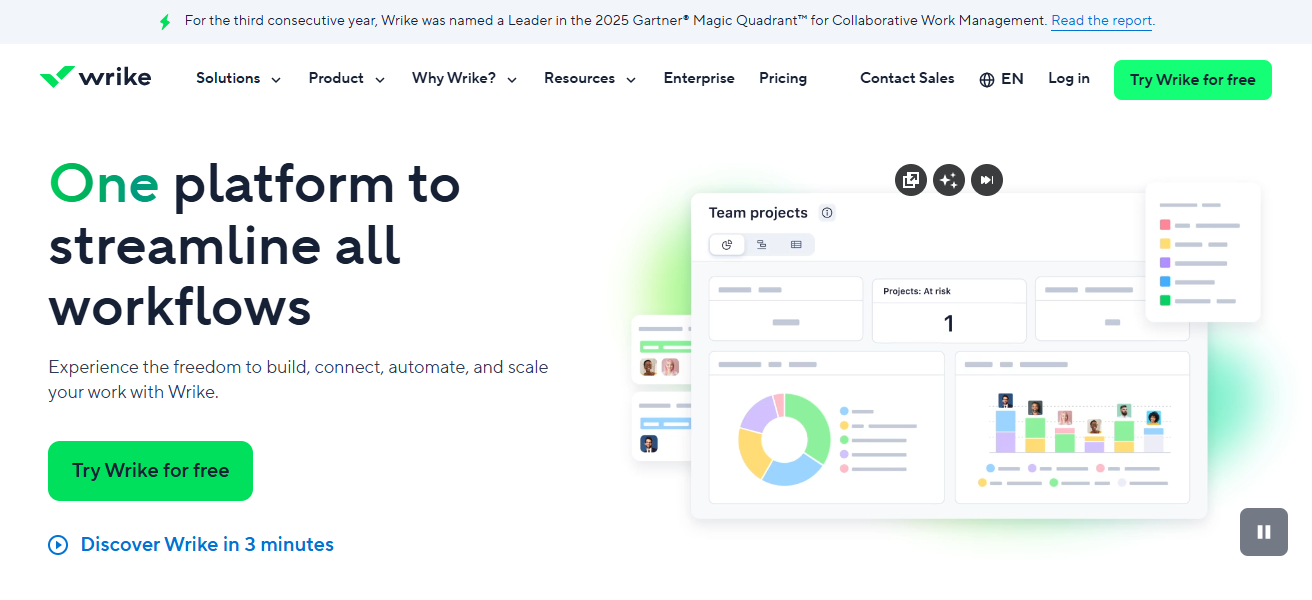
Wrike best suited for intricate environments involving multiple teams. Add-on integrations with third-party tools prolong workflow, while AI insights and automation pinpoint workflow complications.
Features Wrike
Multi-View Task Tracking – Offers Kanban boards, Gantt charts, and list views to accommodate various team workflow preferences.
Real-Time Dashboards – Dynamic dashboards offer visibility into live progress and status of tasks and projects.
Workload and Resource Management – Distributes and balances team resources across an entire project or multiple projects.
Custom Workflows and Automation – Set and modify business requirements with conditional automation and project stages.
| Pros | Cons |
|---|---|
| Robust project and workflow management with task tracking. | Can be complex for beginners due to many features. |
| Real-time dashboards and reporting enhance decision-making. | High learning curve for advanced functionalities. |
| Supports Gantt charts, Kanban boards, and workload management. | Pricing may be high for large enterprises. |
| AI-driven insights help identify bottlenecks. | Mobile app has limited features compared to desktop. |
| Integrates with multiple third-party applications. | Some users find customization options limited. |
9. ProcessMaker
ProcessMaker enables businesses to manage their complex workflows by designing, automating, and streamlining their business processes.
With a wide range of features like improvement real-time analytics, low-code app creation, and visual model creation, businesses can integrate their enterprise systems to solve complex tasks, eliminating the need for tedious manual processes.
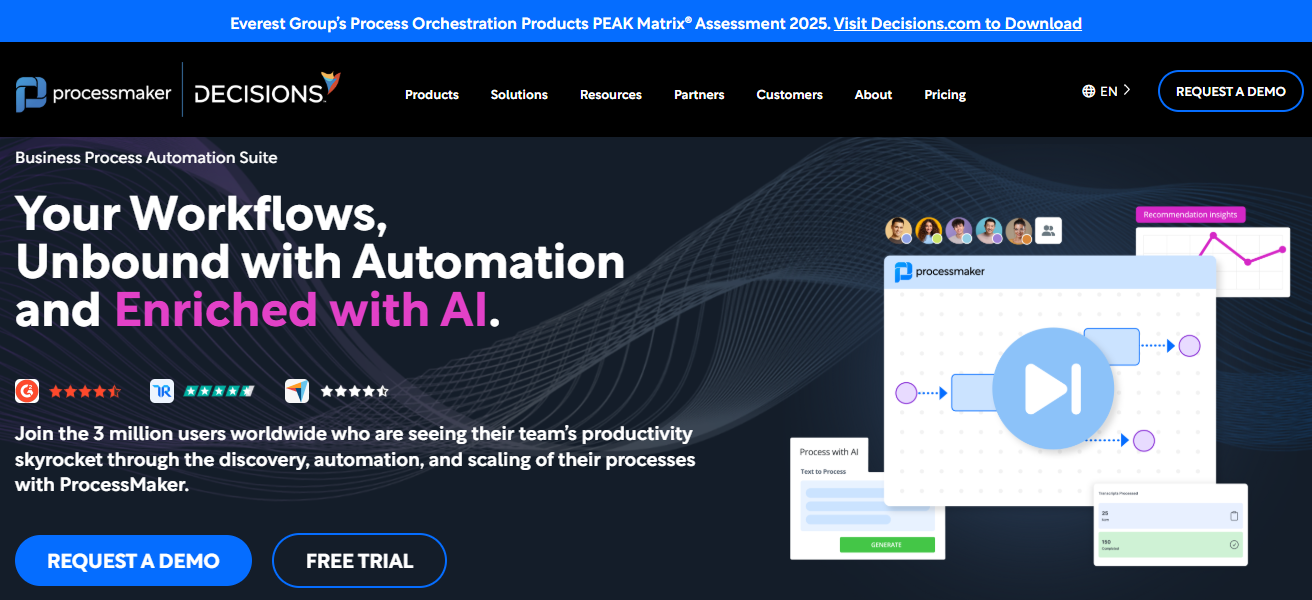
ProcessMaker enhances transparency and compliance, while the flexibility of its platform allows cross-departmental expansion for scalable processes in finance, human resources, and customer service.
Ultimately, streamlined workflows offer businesses increased productivity, operational intelligence, and faster approval processes.
Features ProcessMaker
BPM Workflow Designer – Offers a drag-and-drop functionality for users to create intricate and multi-step business processes.
Low-Code Integration Tools – Provides connectors for enterprise systems, including ERPs, CRMs, and databases.
Real-Time Monitoring and Alerts – Automation alerts for delays and issues. Performance monitoring is continuous.
Audit Trails & Compliance – Records comprehensive logs of actions taken within a process for governance and auditing.
| Pros | Cons |
|---|---|
| Low-code BPM platform for workflow automation. | Advanced features require technical expertise. |
| Visual process modeling simplifies complex workflows. | Limited pre-built templates for non-technical users. |
| Real-time analytics for performance monitoring. | User interface may feel outdated compared to competitors. |
| Seamless integration with enterprise systems. | Premium pricing for large-scale deployments. |
| Scalable across multiple departments for efficiency. | Limited AI-driven insights in basic plans. |
10. Monday.com
Monday.com is an agile enterprise workflow automation tool that streamlines project management, task tracking, and team collaboration. It uses automation, as well as customizable dashboards and boards, to ensure efficient workflows.
Monday.com provides teams with the ability to track progress, report in real time, and manage resource allocation via their operational visual interface.
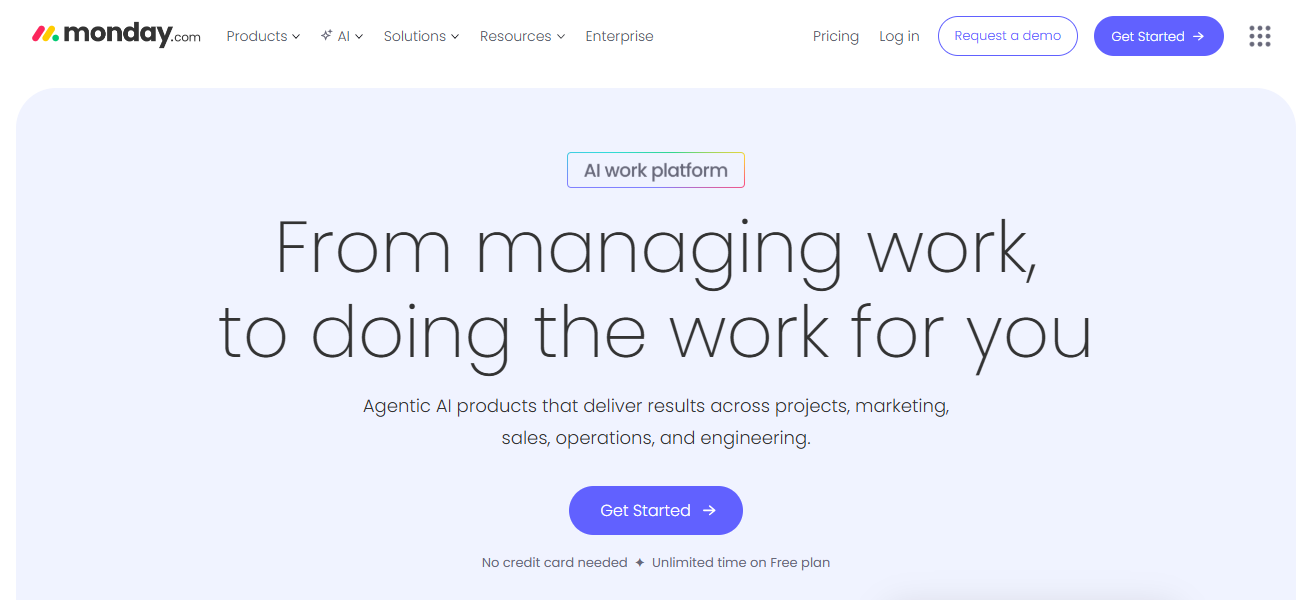
Its automation and integrations with key enterprise software reduce process inefficiencies and eliminate repetitive work. Cont.
Monday.com is suitable for marketing, HR, IT, and operations, helping enterprises improve cross-function collaboration, optimize workflows, and make data backed decisions for growth.
Features Monday.com
Customizable Boards – Create workflow boards specific to teams, projects, or business functions.
Automations & Notifications – Set actions to be performed automatically, such as status changes and reminders or alerts.
Cross-Platform Integrations – Integrate with tools such as Slack, Zoom, and CRM systems to streamline your work.
Visual Reporting & Dashboards – Get customizable dashboards to see insights on project status, updated, and team capacity.
| Pros | Cons |
|---|---|
| Flexible platform for project management and workflow automation. | Can be expensive for enterprises requiring full features. |
| Customizable boards and dashboards for team tracking. | Complex setup for multi-department workflows. |
| Integrates with popular enterprise tools. | Advanced automation requires higher-tier plans. |
| Improves cross-functional collaboration and decision-making. | Can feel overwhelming for new users due to many features. |
| Provides real-time reports and progress monitoring. | Offline access is limited. |
How We Choose Best Software for Enterprise Workflow Intelligence
Identify Business Needs – Determine the size of the teams, department requirements, and the processes that need to be automated.
User Friendly – Look for software that has an intuitive interface. Also, check if there is a low-code or no-code option to allow for easier adoption.
AI and Automation – Determine if the software has the ability to support automated workflows, task routing, and AI driven insights.
Integration – Check if you can connect the software to the current tools you use such as your CRM, ERP, and communication tools.
Scalability – Select software that can support your organization as it grows and is capable of managing complex workflows.
Analytics and Reporting – The software must have the ability to provide you with real-time insights, dashboards, and KPIs.
Security and Compliance – Look for data protection, audit trail, and compliance to be sure of your data.
Cost and Value – Determine if the usage of the software is worth it, and evaluate the pricing of the software based on features and the enterprise’s ROI.
Conclusion
To sum up, Best Software for Enterprise Workflow Intelligence is crucial for process automation, improving collaboration, and supporting automation-driven decision making.
ClickUp, Freshservice, and Monday.com enable organizations to streamline workflows, eliminate time-consuming tasks, and enhance productivity.
Selecting the appropriate platform facilitates scalable, effective operations and fosters business growth in today’s competitive landscape.
FAQ
It’s a tool that automates, monitors, and optimizes business processes to improve efficiency and collaboration.
It reduces manual tasks, identifies bottlenecks, improves decision-making, and increases productivity.
ClickUp, Freshservice, Kissflow, Pipefy, Nintex, Zoho Creator, Smartsheet, Wrike, ProcessMaker, Monday.com.
Automation, AI insights, integrations, dashboards, reporting, and scalability.
Yes, many platforms like ClickUp and Zoho Creator are scalable for small to large teams.