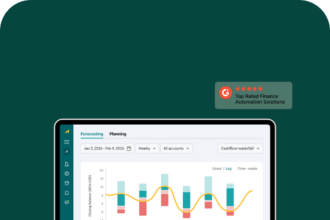
This article will cover the most effective applications for the monitoring of third party compliance and how such tools assist organizations in managing vendor-related risks, fulfilling regulatory requirements, and being prepared for audits.
As companies continue to rely on outside partnerships, effective compliance monitoring solutions are critical to provide transparency, ongoing monitoring, and managing risks to make sure there is no new exposure in any of the third parties involved.
Key Points & Best Software For Third-Party Compliance Monitoring
| Software | Key Point |
|---|---|
| ComplyScore | AI-powered risk scoring and automated compliance tracking |
| AuditBoard | Enterprise-grade audit and compliance management with real-time dashboards |
| Vanta | Continuous monitoring for SOC 2, ISO 27001, HIPAA frameworks |
| Drata | Automated evidence collection and compliance workflow integration |
| Hyperproof | Streamlined risk management with customizable frameworks |
| OneTrust | Supports 50+ frameworks with vendor governance and automated assessments |
| LogicGate Risk Cloud | Flexible GRC platform with workflow automation |
| Sprinto | Automates compliance across 20+ frameworks with real-time alerts |
| PowerDMS | Policy and compliance management with training resources |
| SecureFrame | Continuous monitoring and automated remediation for vendor compliance |
10 Best Software For Third-Party Compliance Monitoring
1. ComplyScore
ComplyScore® is an AI-based risk management and compliance monitoring platform that assists enterprises in evaluating, tracking, and managing vendor and supplier risks from onboarding to ongoing performance monitoring.
Its comprehensive solutions feature automated evidence collection, adjustable risk models, and vendor compliance dashboards mapped to regulations like the GDPR, HIPAA, and PCI DSS.
With everything prioritizing sustained oversight, regulatory alignment, and dynamic risk scoring, ComplyScore manages to keep third-party programs audit-ready and adaptable to new threats.
ComplyScore Features
- AI Risk Assessment: Implements an AI-based system that reviews and updates scores for third-party risks.
- GDPR and HIPAA Support: Compliance with GDPR, HIPAA, PCI DSS, and other regulations is built into the system.
- Automated Vendor Proof Acquisition: Reduces the amount of vendor compliance proof and documentation collection done manually.
- Dashboards: Describes the visualizations of the compliance performance of each vendor and the risks associated with them.
| Pros | Cons |
|---|---|
| Strong AI-driven third-party risk scoring and continuous monitoring | Pricing is enterprise-focused and may be high for small businesses |
| Supports global regulations like GDPR, HIPAA, and PCI DSS | Implementation can take time for complex vendor ecosystems |
| Automated vendor onboarding and evidence collection | Limited appeal for organizations needing lightweight compliance tools |
| Centralized dashboards improve vendor visibility | Requires trained compliance teams to maximize value |
2. AuditBoard
AuditBoard is a GRC (governance, risk, and compliance) solution that streamlines the audits, risks, and compliance processes, including third-party oversight.
It facilitates the integration of processes with custom risk assessment tools, workflows, and real-time reporting to enhance visibility on the vendor and compliance controls.
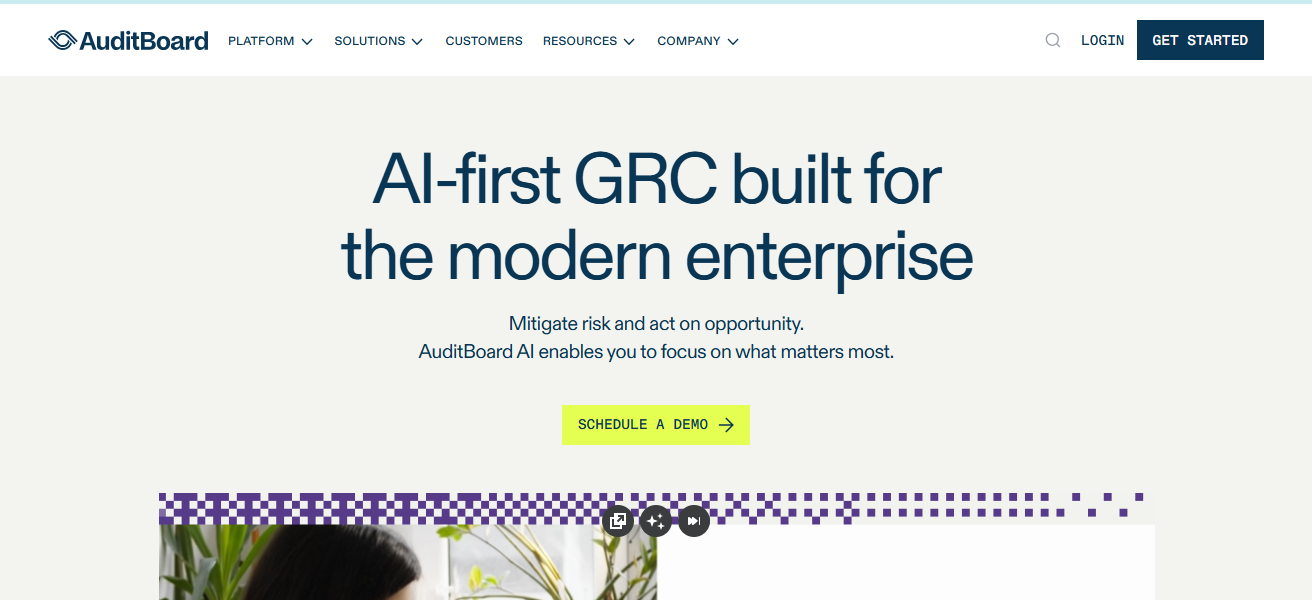
The AuditBoard’s enterprise-level features cater to sophisticated regulatory needs and internal audit teams by automating the collection of compliance evidence, monitoring the effectiveness of controls, and reporting so that compliance managers help manage third-party risk.
AuditBoard Features
- Integrated GRC Platform: Combines audit, risk, and compliance into a single dashboard.
- Risk Assessments: Customized vendor control evaluations and scoring are available.
- Workload Automation: Inter audit partner collaboration and workflow automation are used to alleviate audit-related tasks.
- Third-party Compliance Status: Updated live reporting for audit preparedness.
| Pros | Cons |
|---|---|
| Enterprise-grade GRC platform with robust audit capabilities | Overkill for startups or small compliance teams |
| Strong integration between audit, risk, and compliance | Customization may require configuration expertise |
| Real-time reporting improves third-party oversight | Higher learning curve compared to automation-only tools |
| Scales well for complex regulatory environments | Pricing transparency is limited |
3. Vanta
Vanta is one of the leading compliance automation platforms which handles continuous compliance as well as third-party monitoring for startups and scaling companies.
It integrates with cloud infrastructure and various SaaS applications to monitor controls on a continuous basis, automate the collection of evidence, and show status dashboards.
Vanta helps companies with regulatory requirements and audit readiness for various frameworks, including SOC 2 and ISO 27001.
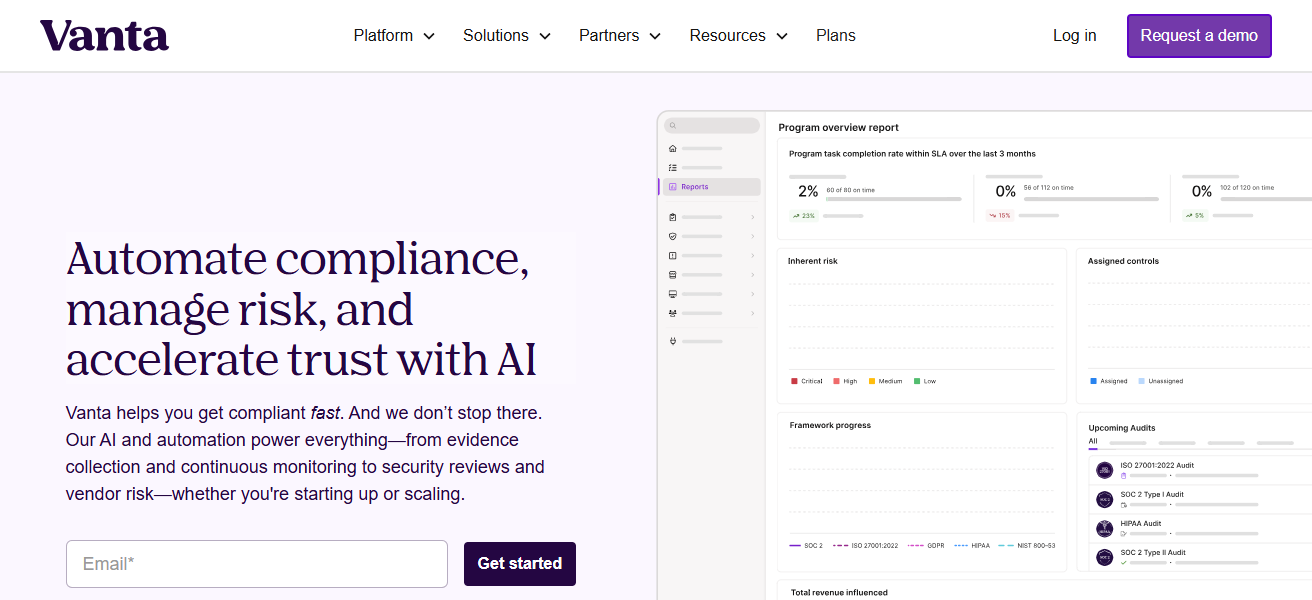
Vanta’s users are able to review vendor gaps and posture compliance gaps with the aid of automated alerts and the integration ecosystem.
Vanta Features
- Monitoring: Vanta provides continuous monitoring of compliance controls and security across various cloud applications.
- Automated Evidence Collection: The tool automatically collects evidence for audits.
- SOC 2 Support: Vanta provides support for other widely used frameworks, such as SOC 2, ISO 27001, and more.
- Cloud Monitoring: Vanta integrates with major providers of cloud-based SaaS applications and infrastructure.
| Pros | Cons |
|---|---|
| Easy to use and ideal for startups and SaaS companies | Limited advanced third-party risk analytics |
| Automated evidence collection reduces manual work | Less suitable for highly regulated enterprises |
| Supports SOC 2, ISO 27001, and similar frameworks | Vendor risk workflows are relatively basic |
| Fast audit readiness and clear dashboards | Customization options are somewhat restricted |
4. Drata
Drata is an automation tool that focuses on the monitoring of compliance controls and the collection of evidence that pertains to compliance internally and externally across IT ecosystems.
It automates audit preparedness by embedding itself within an organization’s tech stack and SaaS applications to record security control snapshots, create automated compliance tests, and provide ongoing monitoring of compliance drifts within the organization.
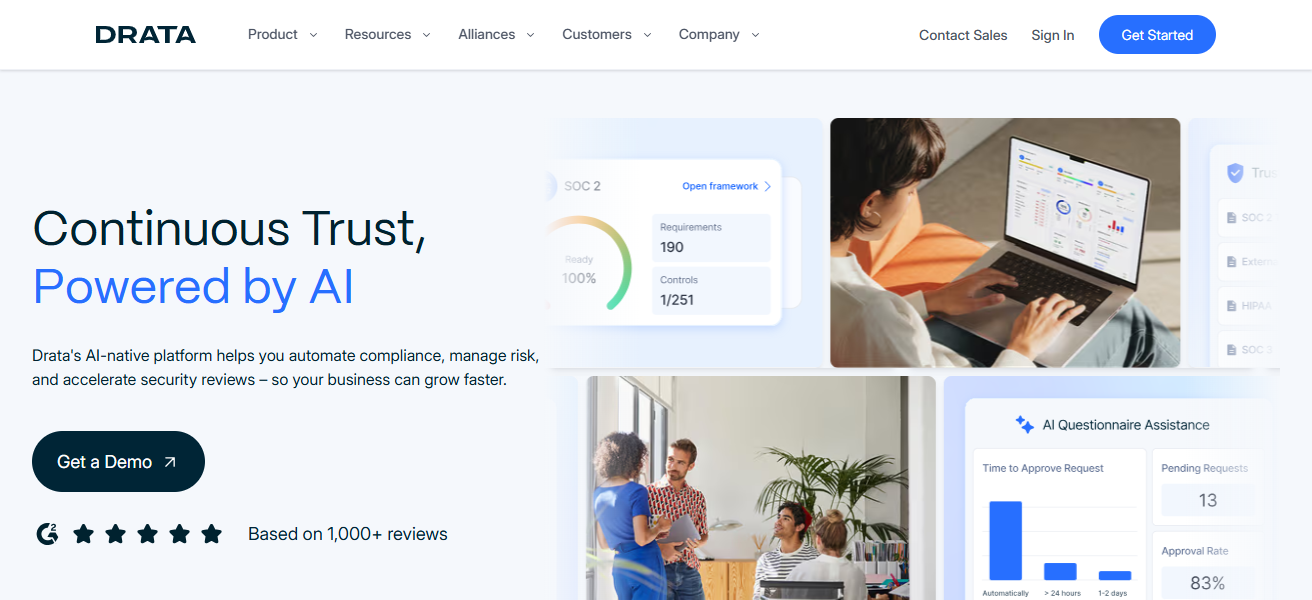
Drata is compatible with numerous compliance frameworks and standards, including SOC 2, ISO 27001, and HIPAA, allowing companies to lessen the burden of performing
Tasks that require the collection of manual evidence, while still having the ability to monitor the compliance position of their vendors and provide operational control(s) against increased risks.
Drata Features
- Control Monitoring: Periodically reviews security controls across IT and cloud environments.
- Automated Test Generation: Decreases the need for manual testing by providing automated control check tests.
- Drift Detection: Notifies teams when compliance controls are out of the required specification.
- Dashboard Insights: Provides a centralized overview of control effectiveness and vendor compliance.
| Pros | Cons |
|---|---|
| Continuous compliance monitoring with real-time alerts | Focused mainly on security frameworks |
| Strong integrations with cloud and SaaS tools | Limited policy management features |
| Reduces audit preparation time significantly | Advanced reporting may need add-ons |
| Good visibility into control health and drift | Pricing may rise with scaling needs |
5. Hyperproof
Hyperproof functions as a compliance operations platform that brings together control mapping, evidence orchestration, and workflow automation across compliance frameworks.
It helps teams automate the collection of evidence from integrated tools, and it features dashboards that monitor and report compliance over time, including progress and risks.
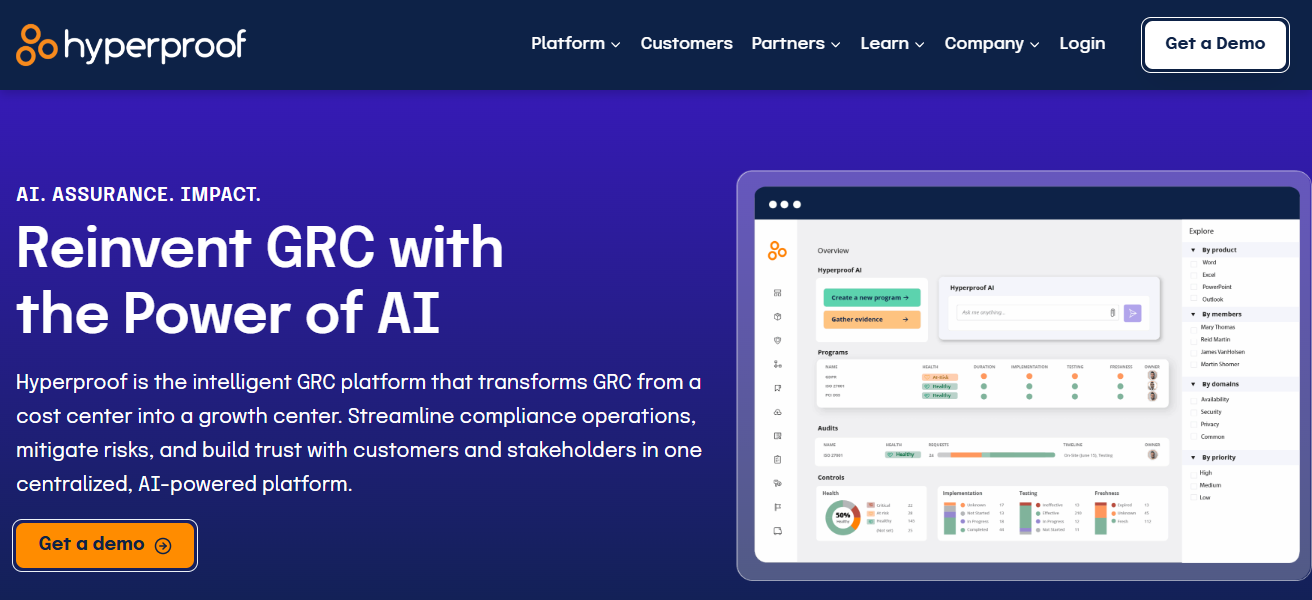
Hyperproof’s collaborative workspace simplifies third-party compliance teams’ coordination of evidence assessments, control docs, and audit prep through automation.
Its emphasis on cross-framework support and real-time status updates is especially beneficial for large companies managing a variety of regulatory requirements.
Hyperproof Features
- Evidence Orchestration: Automates the collection and organization of evidence for audits.
- Control Mapping: Simplifies compliance by aligning controls across different frameworks.
- Collaborative Workspace: Provides a single hub for teams to manage and collaborate on documents and tasks.
- Real-Time Status Tracking: Provides insight into compliance and displays risk progress.
| Pros | Cons |
|---|---|
| Excellent control mapping across multiple frameworks | Interface can feel complex for new users |
| Strong collaboration and workflow automation | Less emphasis on automated vendor discovery |
| Flexible evidence orchestration | Setup requires careful planning |
| Ideal for multi-framework compliance teams | Smaller companies may not use full feature set |
6. OneTrust
OneTrust is a robust trust and compliance platform equipped with advanced privacy, risk, and third-party management solutions. It aids companies in handling global standards for vendor assessments, policy compliance, and regulations management.
OneTrust streamlines risk scoring, centralizes evidence with control documents, and integrates workflows across privacy, security, and compliance.
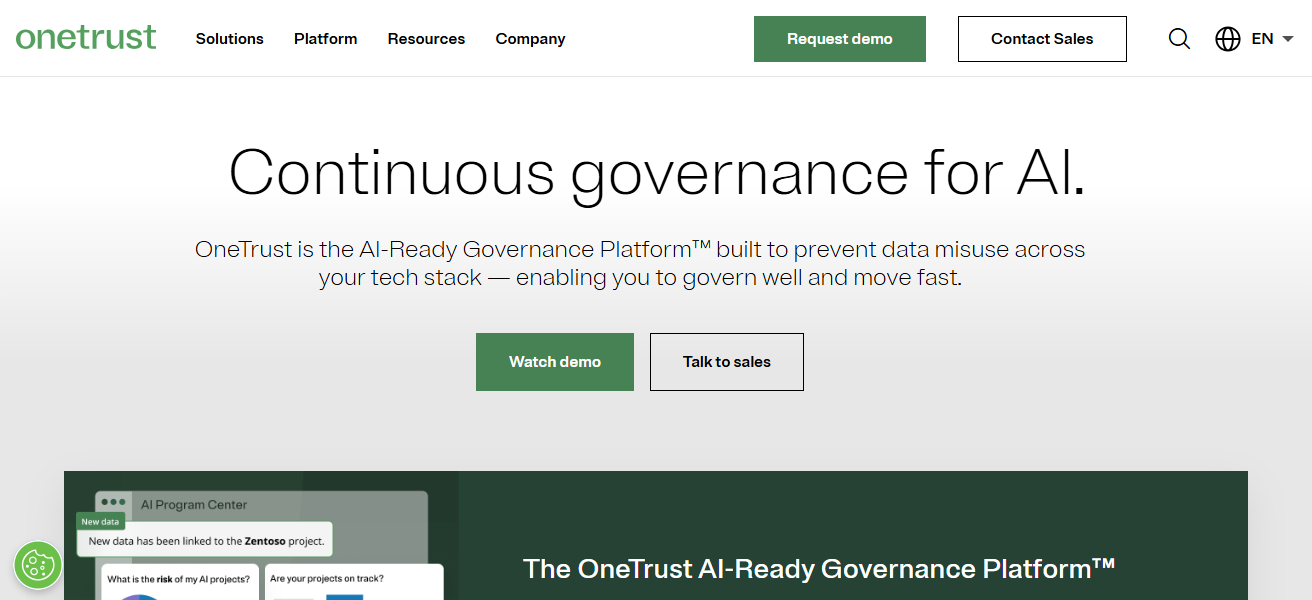
Its comprehensive suite is tailored for large organizations needing extensive, scalable compliance solutions, inclusive of consent management, AI governance, and third-party risk monitoring, with a strong focus on managing vendor relationships.
OneTrust Features
- Vendor Risk Management: Evaluates third parties’ risk using in-built questionnaires and scoring.
- Privacy & Security Integration: Merges privacy compliance with security and vendor oversight.
- Automated Risk Scoring: Calculates risk based on vendor responses.
- Regulatory Coverage: Fulfills international compliance requirements including GDPR, CCPA, etc.
| Pros | Cons |
|---|---|
| Comprehensive third-party risk and privacy management | Platform complexity can be overwhelming |
| Strong global regulatory coverage | High cost for full feature access |
| Scales well for large enterprises | Implementation timelines can be long |
| Unified privacy, security, and compliance tools | Requires dedicated compliance resources |
7. LogicGate Risk Cloud
LogicGate Risk Cloud uses a no-code system to allow users to create adaptable workflows for GRC (governance, risk, and compliance) and third-party risk management.
Utilizing a drag-and-drop system, users can design customized risk assessments, automate vendors’ onboarding and monitoring, and score third-party risks.
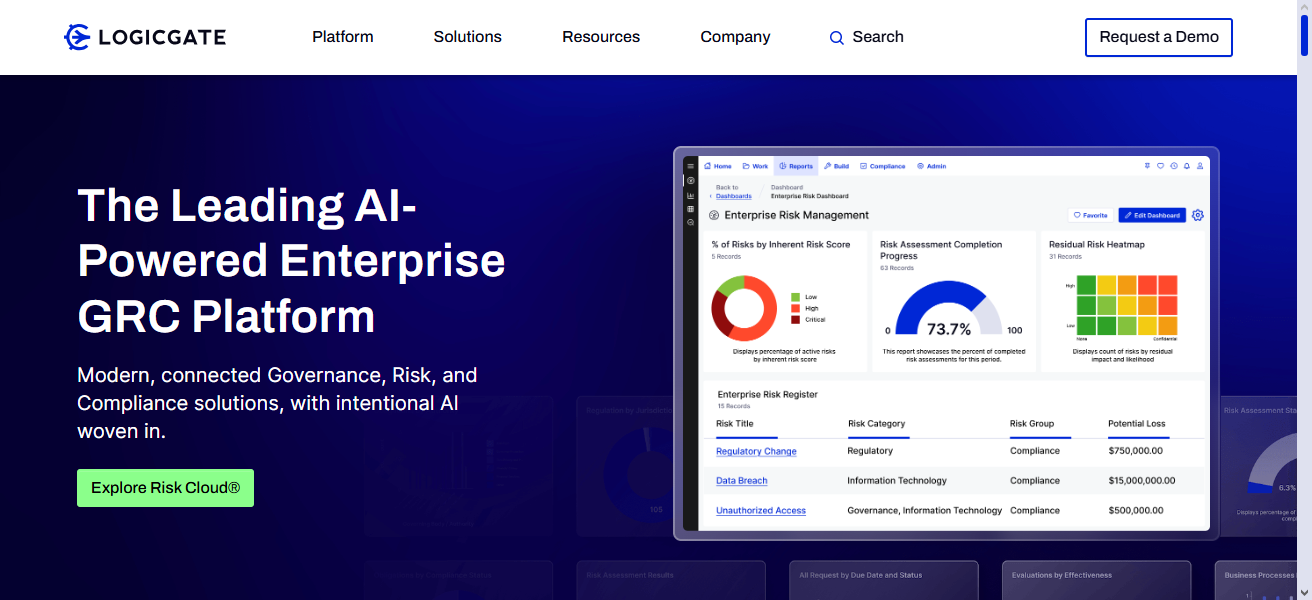
The platform integrates vendors’ compliance information, identifies which vendors require additional monitoring, and improves visibility across risk assessments.
This versatility is particularly useful for organizations needing to frequently and quickly update compliance workflows with minimal IT or developer support.
LogicGate Risk Cloud Features
- No-Code Workflow Builder: Allows teams to develop bespoke compliance and risk workflows without programming.
- Dynamic Risk Assessments: Automates vendor risk assessments based on configurable logic.
- Centralized Risk Data: Consolidates third-party data into a single repository for improved visibility.
- Drag-and-Drop Interface: Enhances user experience by allowing straightforward compliance workflow and process design.
| Pros | Cons |
|---|---|
| Highly customizable no-code GRC workflows | Initial setup requires process design |
| Flexible third-party risk assessments | Out-of-the-box templates may need tweaking |
| Drag-and-drop interface empowers compliance teams | Reporting depth depends on customization |
| Adaptable to evolving compliance needs | Less automation than AI-driven platforms |
8. Sprinto
Sprinto identifies potential compliance automation solutions. It automates the processes of monitoring controls, assessing risk, and gathering evidence for in-house as well as external compliance reporting.
It connects with cloud service platforms and creates real-time visual dashboards, compliance scorecards, and alerts to support teams in efficiently assessing and monitoring the compliance posture of vendors.
Sprinto assists in maintaining audit readiness with minimized documentation for frameworks such as SOC 2 and GDPR. It streamlines vendor oversight with automation and insight reporting.
Sprinto Features
- Real-time Alerts: Immediately notifies teams when there are issues or gaps in compliance.
- Cloud Integrations: Continuously monitors and connects with infrastructure and service tools.
- Compliance Scoring: Assesses and provides total scores on the compliance posture of third parties.
- Audit Readiness Tools: Rapidly assist in preparing documents and reports needed for outside audits.
| Pros | Cons |
|---|---|
| Real-time compliance monitoring and alerts | Limited advanced vendor risk modeling |
| Easy integrations with cloud services | Best suited for tech-centric organizations |
| Simplifies audit readiness for SMEs | Fewer enterprise-level governance features |
| Clear compliance scoring dashboards | Custom framework support may be limited |
9. PowerDMS
PowerDMS specializes in the effective management of policies and compliance as a management system. PowerDMS assists companies in the creation, structuring, and monitoring of compliance documents related to policies, training, and accreditation.
While it does have some features of a third-party risk management tool, PowerDMS does streamline the distribution of policies, version control, and auditing to demonstrate adherence to compliance, both internally and externally.
PowerDMS ensures that all employees have a consistent understanding of the policies and procedures, and it supports role-based access to policies and compliance documentation.
It also helps to streamline the documentation workflows, which are the foundation of third-party compliance programs.
PowerDMS Features
- Policy Management: Centralizes and disseminates compliance policies to various teams and vendors.
- Version Control: Facilitates documentation auditing and change tracking.
- Training and Accreditation: Assists with tracking compliance-related training and certifications.
- Access Controls: Enforces policy review and update permissions based on user roles.
| Pros | Cons |
|---|---|
| Excellent policy and document management | Not a dedicated third-party risk platform |
| Strong audit trails and version control | Limited automated risk assessment features |
| Useful for regulated and public sector organizations | Vendor monitoring is largely manual |
| Improves policy compliance consistency | Less focus on real-time compliance metrics |
10. SecureFrame
Since its founding in April 2020, SecureFrame has focused on building long-lasting relationships with compliance automation customers, helping them to achieve and maintain certifications such as SOC 2 and ISO 27001.
SecureFrame accomplishes this through automating workflows, continuous control monitoring, and evidence collection. SecureFrame streamlines the auditing process by automating the evidence collection process.
As part of the SecureFrame suite, customers gain access to vendor risk assessments. This allows teams to assess and manage third-party compliance alongside internal controls. This unique combination of offerings enhances the readiness of compliance programs to audits.
SecureFrame Features
- Automated Compliance Workflows: Built-in process automation to reduce manual tasks during audits.
- Continuous Control Monitoring: Real-time tracking of compliance controls across various systems.
- Vendor Assessments: Gaps in third-party controls are measured and internal audits are supplemented.
- Framework Support: Assists in obtaining and maintaining certifications, including SOC 2 and ISO 27001.
| Pros | Cons |
|---|---|
| Automates SOC 2 and ISO 27001 compliance | Limited support for niche regulations |
| Built-in vendor risk assessments | Less flexible for non-standard workflows |
| Continuous control monitoring improves audit readiness | Custom reporting options are basic |
| Easy integration with cloud infrastructure | Best suited for SaaS-focused companies |
Cocnsluion
In cocnsluion Choosing the best software for third-party compliance monitoring allows organization to avoid vendor risk, stay compliant with regulations, and ease the audit process.
The best software provides automated monitoring, real-time visibility, and dynamic risk assessment to scale with the business.
A good compliance monitoring platform helps businesses improve governance and strengthen partnerships through operational resilience.
FAQ
It’s a tool that helps organizations assess, track, and manage compliance and risk associated with vendors and external partners.
To reduce vendor risks, ensure regulatory compliance, automate audits, and maintain control over external dependencies.
Key features include automated evidence collection, risk scoring, real-time dashboards, and framework support like SOC 2 or GDPR.
Yes — tools like Vanta and Sprinto are suited for startups, while enterprise-grade products like OneTrust and AuditBoard serve larger organizations.
Most modern platforms automate evidence gathering and reporting, significantly simplifying audits.