
In this post , I will talk about the most effective tools for managing vendor due diligence and how these tools assist companies in optimizing the risk assessment process.
- Key Points & Best Technology Platforms For Third-Party Risk Scoring
- 10 Best Technology Platforms For Third-Party Risk Scoring
- 1. Alessa
- 2. ComplyScore® by Atlas Systems
- 3. SmartSuite
- 4. Aravo
- 5. ProcessUnity
- 6. MetricStream
- 7. Prevalent
- 8. OneTrust
- 9. Coupa Risk Assess
- 10. RiskRecon by Mastercard
- How To Choose Best Software For Vendor Due Diligence Management
- Cocnsluion
- FAQ
It is important to select the right solution for tracking the compliance, financial viability, and operational efficiency of a vendor.
I will examine major attributes, advantages, and aspects pertaining to the software of effective vendor risk management.
Key Points & Best Technology Platforms For Third-Party Risk Scoring
| Platform | Key Point |
|---|---|
| Alessa | Unified AML compliance with real-time risk scoring |
| ComplyScore® by Atlas Systems | Audit-ready compliance and faster vendor onboarding |
| SmartSuite | Automated due diligence and continuous vendor monitoring |
| Aravo | Scalable vendor lifecycle management with configurable risk templates |
| ProcessUnity | Integrated risk scoring with workflow automation |
| MetricStream | Enterprise-grade GRC platform with advanced analytics |
| Prevalent | Comprehensive vendor risk assessments and monitoring |
| OneTrust | Privacy, compliance, and ESG risk integration |
| Coupa Risk Assess | Supplier risk scoring tied to procurement workflows |
| RiskRecon by Mastercard | Cybersecurity-focused continuous monitoring of third parties |
10 Best Technology Platforms For Third-Party Risk Scoring
1. Alessa
Alessa serves as an industry frontrunner in third-party risk scoring and compliance management.
Alessa employs artificial intelligence (AI) and automation to track risks, compliance, and operational issues with suppliers.
Alessa customizes risk scoring frameworks to assist organizations in assessing third-party partners, allowing organizations to mitigate risks.
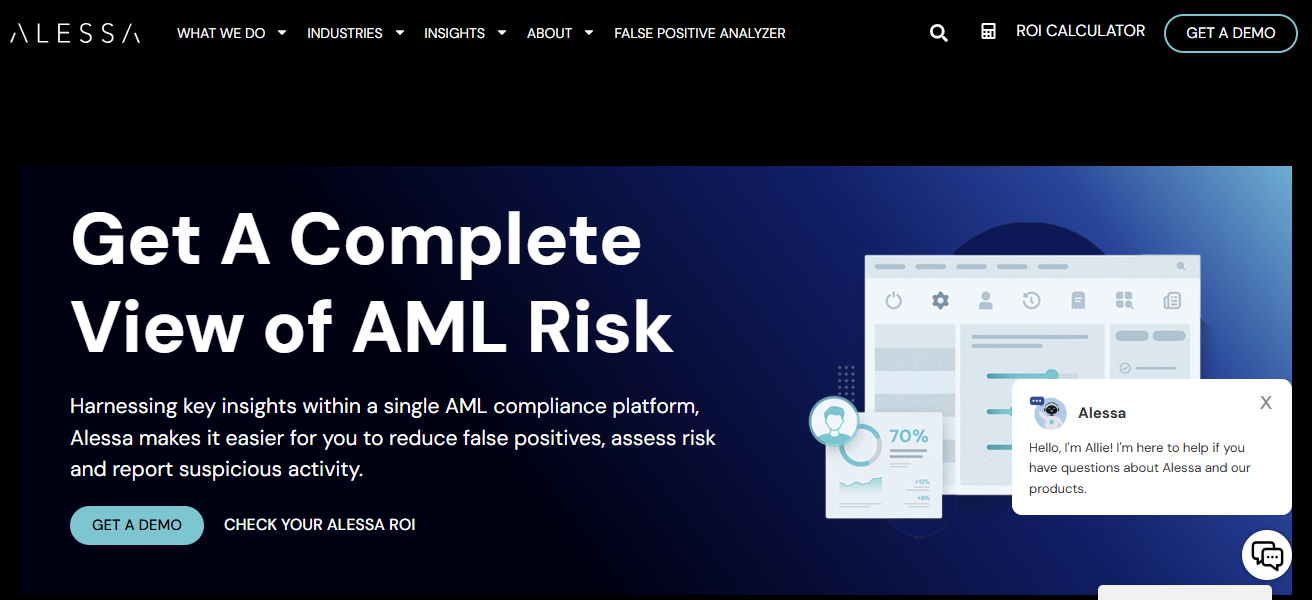
Alessa offers smart dashboards that provide real-time data and automated alerts to facilitate decision-making.
By blending risk, compliance, and audit processes, Alessa empowers organizations to manage compliance, optimize operational risk, and improve overall third-party governance.
Alessa Features
- Advanced Risk Scoring Engine: Alessa uses AI and analytics to assess third-party risk to the business along the compliance, financial, and operational lines.
- Automated Monitoring: Alessa tracks and analyzes third-party risk and notifies the business of operational changes to the risk in real-time.
- Integrated Compliance & Audit: Alessa integrates the management of risk and compliance with auditing into a single platform.
- Customizable Dashboards: Alessa offers customizable dashboards to meet the visualization and reporting requirements of the business.
| Pros | Cons |
|---|---|
| Advanced AI-driven risk scoring for third-party assessments. | Can be complex for small businesses due to extensive features. |
| Real-time monitoring and automated alerts for proactive risk management. | Higher cost compared to simpler risk management tools. |
| Customizable dashboards for tracking compliance and operational risk. | Implementation and onboarding may require dedicated resources. |
| Integrates risk, compliance, and audit processes in a single platform. | Some users may find reporting options overwhelming initially. |
2. ComplyScore® by Atlas Systems
ComplyScore®, developed by Atlas Systems, streamlines the assessment of risk from third parties via a single risk scoring engine. It provides insights on the performance of sellers, their compliance, and the risk regulation issues.
Featuring automatic workflows and real-time scoring, the system assists firms in rapidly spotting high-risk third parties.
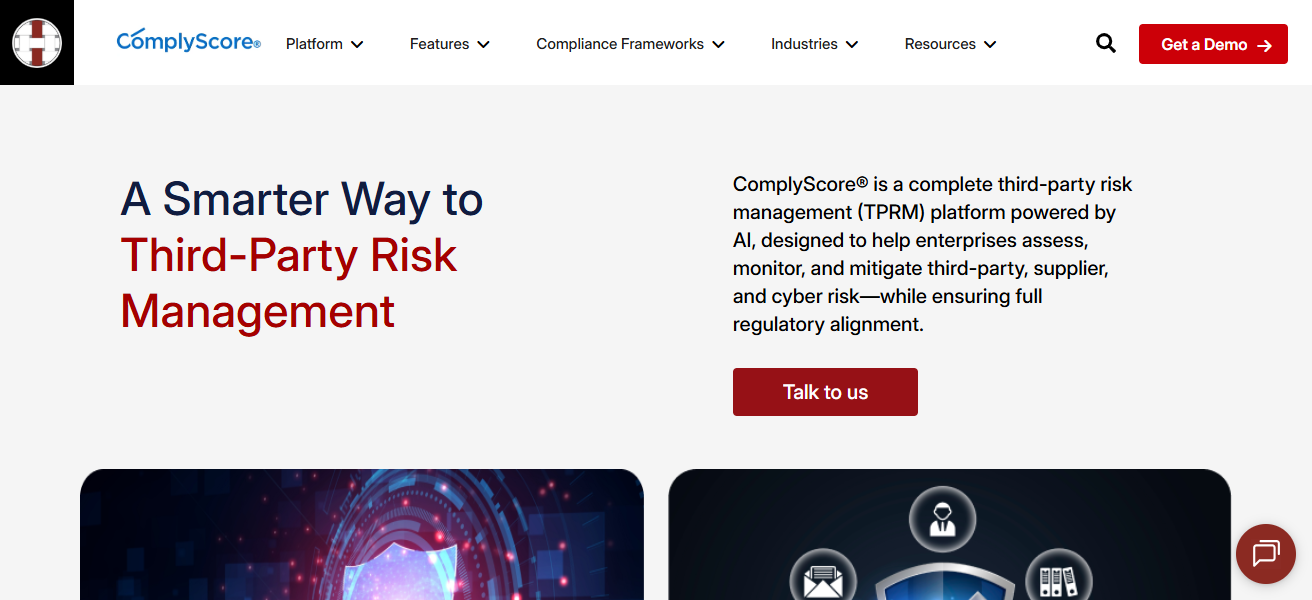
In addition, ComplyScore® provides users with extensive reports and benchmarking features, aiding companies in focusing on their most critical mitigation actions.
It monitors continuously and integrates with other compliance systems, which diminishes operational interruptions and enhances decision-making with a reduction in gaps.
ComplyScore® by Atlas Systems Features
- Centralized Risk Scoring: ComplyScore unifies the scoring of vendors into a single engine for compliance and performance.
- Automated Workflows: ComplyScore reduces operational workloads by automating the assessment of vendors.
- Benchmarking Tools: ComplyScore enables risk evaluation of a vendor in comparison to the industry or an internally defined standard.
- Actionable Reporting: ComplyScore provides concise and clear reporting to assist in decision-making and support prioritization of risk.
| Pros | Cons |
|---|---|
| Centralized risk scoring engine simplifies vendor evaluation. | Limited advanced automation compared to larger enterprise platforms. |
| Automated workflows and benchmarking tools for prioritizing high-risk vendors. | Smaller user community and fewer integration options. |
| Provides actionable insights for compliance and regulatory monitoring. | May require additional modules for full risk lifecycle coverage. |
| User-friendly interface for streamlined decision-making. | Advanced customization may require technical support. |
3. SmartSuite
SmartSuite customizes third-party risk scoring with flexible workflows and automated assessments. It helps organizations to map, monitor, and evaluate vendor risk across compliance, cybersecurity, and operational risk.
SmartSuite’s visual dashboards offer risk insight and predictive analytics for better decision-making. The platform’s predictive analytics integrated risk data from multiple sources.
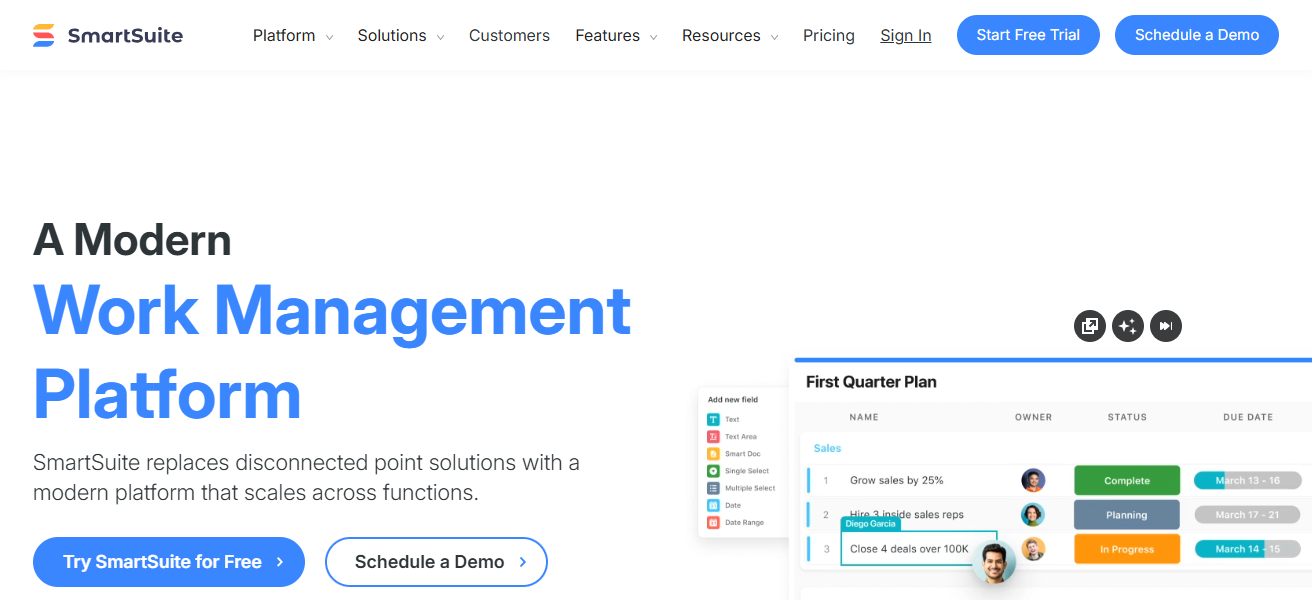
SmartSuite improves accuracy, visibility, and efficiency in third party risk management by reducing manual processes and repetitive tasks, as well as offering a collaborative environment.
SmartSuite Features
- Custom Workflow Builder: SmartSuite enables businesses to develop and implement customized workflows for risk assessment.
- Data Integration: SmartSuite consolidates risk information from a variety of sources.
- Predictive Analytics: SmartSuite provides the ability to forecast potential third-party risk by analyzing relevant past and current data.
- Visual Dashboards: SmartSuite offers dashboards for the visualization of the risk scoring data.
| Pros | Cons |
|---|---|
| Customizable workflows to suit different risk assessment needs. | Initial configuration can be time-consuming for complex environments. |
| Predictive analytics for better vendor risk visibility. | Learning curve for users new to risk scoring platforms. |
| Visual dashboards for clear, actionable insights. | Limited out-of-the-box industry-specific templates. |
| Integrates data from multiple sources for centralized monitoring. | Advanced features may require higher-tier subscriptions. |
4. Aravo
Aravo is an automated third-party risk management system that tracks supplier risk and lessens risk with ease. Aravo’s risk scoring assesses vendors on finances, regulations, and operations.
Aravo increases efficiency and flexibility by automating workflows, which helps risk assessments, and cutting back on the manual steps needed.
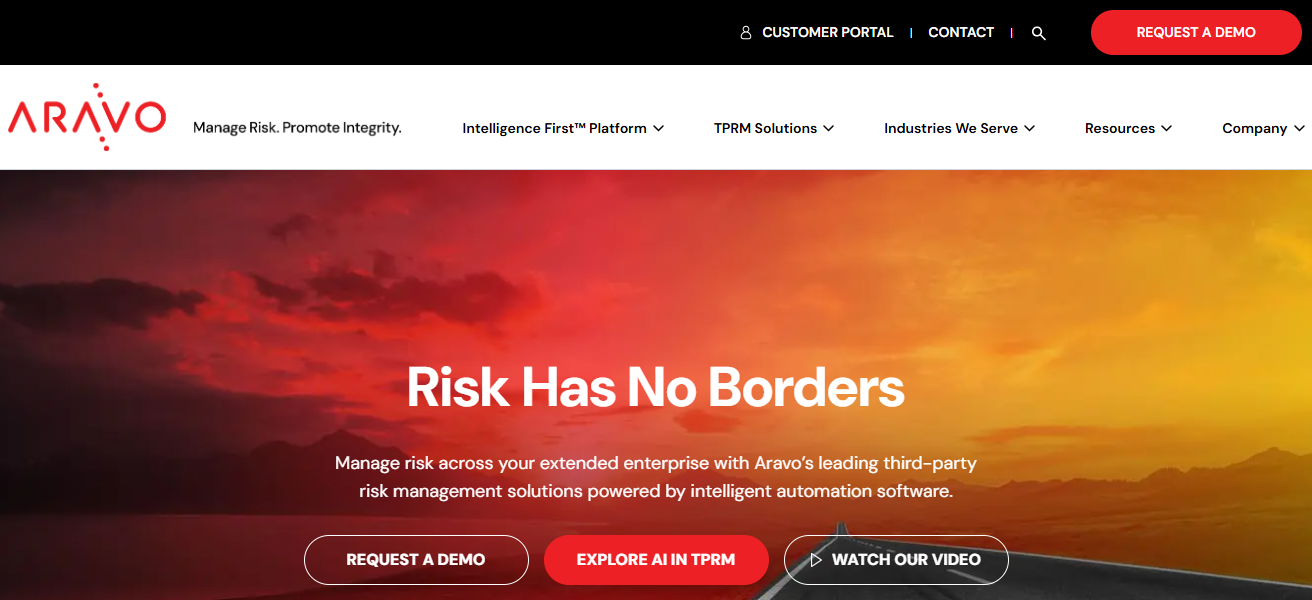
Clients can see and assess their own risk dashboards. Companies can see and reduce risks by managing their vendors.
Aravo improves compliance and decision-making throughout the third-party ecosystem by integrating with enterprise systems and using analytics.
Aravo Features
- Holistic Risk Assessment: Examines vendors on financial, operational, and compliance risk factors.
- Automated Onboarding: Third-party qualification and approval processes are simplified and sped up.
- Real-Time Risk Insights: Current risk exposure and trends are displayed through dashboards.
- Enterprise Integration: Seamless data flow with other business systems.
| Pros | Cons |
|---|---|
| Robust risk scoring for financial, operational, and compliance factors. | Interface can feel complex for first-time users. |
| Automated workflows streamline vendor onboarding and monitoring. | Implementation may take longer for large organizations. |
| Centralized dashboards for real-time risk visibility. | Customization can require technical expertise. |
| Integrates with enterprise systems for seamless reporting. | Premium pricing may not suit small or mid-sized companies. |
5. ProcessUnity
ProcessUnity offers a robust third-party risk management system, particularly strong in automated vendor risk scoring.
It seamlessly automates vendor assessments, questionnaires, and continuous monitoring for uniform third-party risk assessments.
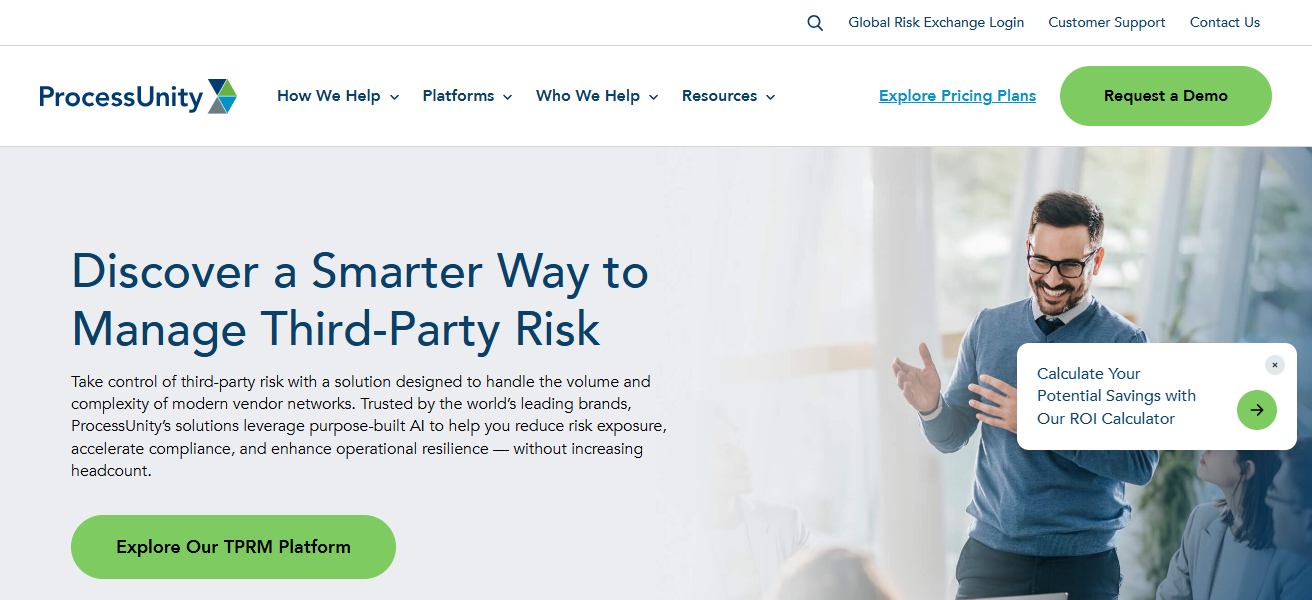
Organizations can configure scoring criteria to assess and rank vendors on compliance, cyber risk, and operational risk.
Actionable insights in ProcessUnity’s dashboards and reports help prioritize mitigation. The system’s adaptability to existing enterprise systems explains its popularity among large organizations to support regulatory compliance, reduce risk, and manage supplier networks proactively.
ProcessUnity Features
- Configurable Scoring Models: Scoring customization based on an organization’s risk focus can be done.
- Continuous Monitoring: Real-time updates of risk profiles for vendors and associated new threats.
- Automated Assessments: Without any manual work, assessments can be sent, and answers can be collected.
- Advanced Reporting: Risk reports detailing mitigation plans are provided.
| Pros | Cons |
|---|---|
| Automated assessments and continuous monitoring of vendors. | May be too advanced for small-scale vendor networks. |
| Configurable risk scoring for compliance, cybersecurity, and operations. | Some advanced reporting options require additional setup. |
| Dashboards and reporting provide actionable risk insights. | Integration with legacy systems may require technical effort. |
| Flexible platform for scaling with organizational needs. | Initial learning curve for non-technical users. |
6. MetricStream
MetricStream is an established name in enterprise risk management and third-party risk scoring. It helps with the assessment, monitoring, and mitigation of supplier risk across various
Dimensions, including compliance, finance, and operations, through a unified approach. Organizations can set their own risk priorities through configurable scoring in the risk scoring engine, which helps assess and manage supplier risk.
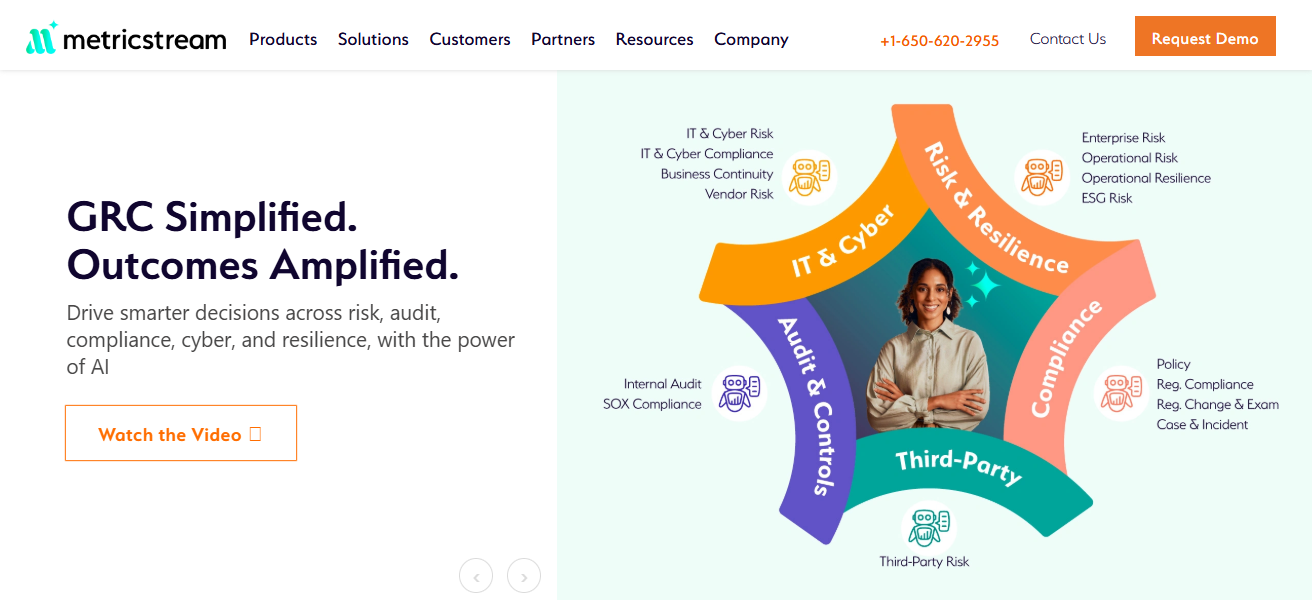
The platform includes reporting, dashboards, and real-time visibility through automated alerts. With a mix of regulatory intelligence, workflow automation, and analytics
MetricStream helps organizations optimize vendor risk management, make better decisions, and mitigate the risk associated with third-party vendors.
MetricStream Features
- Unified Risk Framework: Integration of third-party risk with enterprise risk management.
- Dynamic Risk Scoring: Risk scores are updated automatically based on new information or alterations.
- Compliance Management Tools: Monitoring regulation and standard adherence by vendors.
- Real-Time Dashboards: Offers visual insights for fast decisions.
| Pros | Cons |
|---|---|
| Unified framework for third-party risk and enterprise risk management. | Can be expensive for smaller companies. |
| Configurable risk scoring and weighted scoring system. | Implementation can be time-intensive. |
| Real-time dashboards and automated alerts for proactive mitigation. | Complexity may require dedicated training. |
| Combines analytics, workflow automation, and regulatory intelligence. | Overwhelming for organizations with limited risk management teams. |
7. Prevalent
Prevalent is a focused third-party risk management system specializing in vendor risk scoring and mitigation.
It assists in vendor evaluations through automated assessments, ongoing surveillance, and comprehensive scoring on the compliance, financial, and cybersecurity levels.
Thanks to Prevalent’s user-friendly dashboards, organizations can assess risk exposure and focus on high-risk vendors.
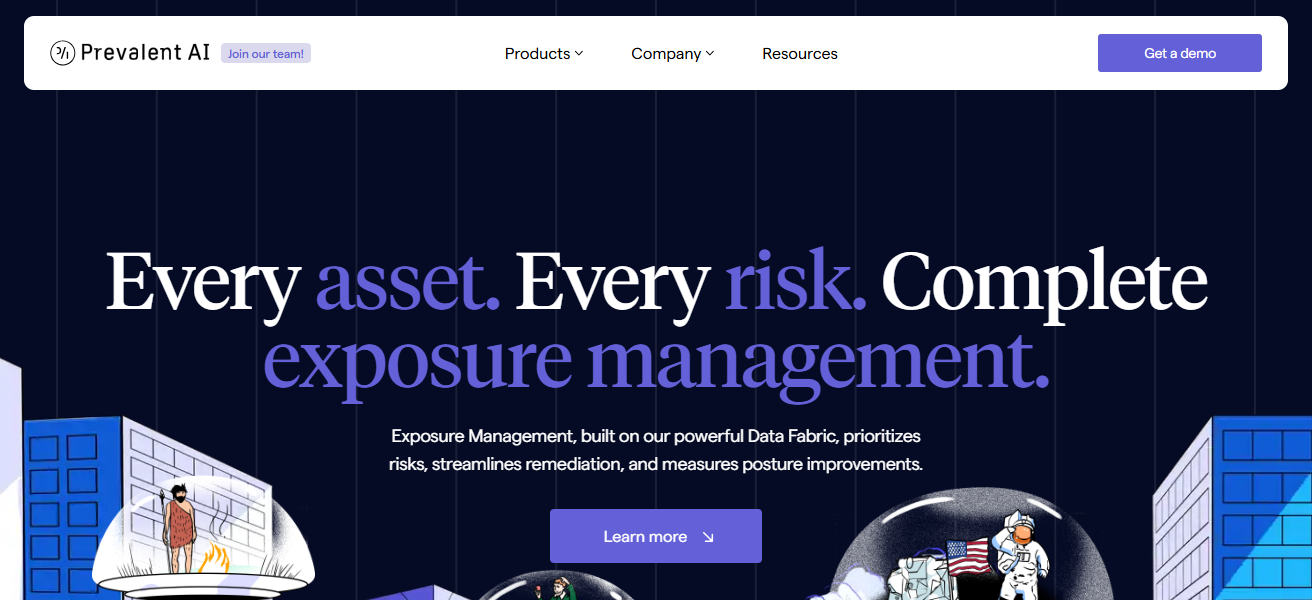
The system’s flexibility in integration improves reporting by allowing the consolidation of data from multiple sources.
Prevalent’s intelligent reporting, automation, and analytics compliance helps businesses streamline operational risk, improve governance, and strengthen the overall supplier ecosystem.
Prevalent Features
- Continuous Risk Monitoring: Updates third-party profiles using the most recent data.
- Automated Vendor Assessments: The manual collection of data is lessened with the use of automation.
- Scalable Risk Scoring: A risk scoring framework that is flexible and adaptable across various industries.
- Centralized Risk Repository: Merging governance, reporting, and risk information is the name of the game.
| Pros | Cons |
|---|---|
| Automated assessments and continuous vendor monitoring. | May not cover highly specialized industry-specific risks out of the box. |
| Robust scoring framework for compliance, cybersecurity, and financial risk. | Advanced analytics features may require higher-tier subscriptions. |
| Intuitive dashboards for quick risk visualization. | Integration with some legacy systems can be challenging. |
| Data consolidation from multiple sources improves accuracy. | Some users may find reporting templates limited without customization. |
8. OneTrust
The primary focus of OneTrust is privacy, security, and compliance with regulations. It is one of the best platforms for scoring vendor risks from third parties.
It helps organizations automate the assessment of vendor risks, manage obligations of compliance, and evaluate third parties by the risks they pose.
OneTrust provides real-time dashboards and automated alerts for the mitigation of risks. Companies can data from several third parties because of the strong integration features.
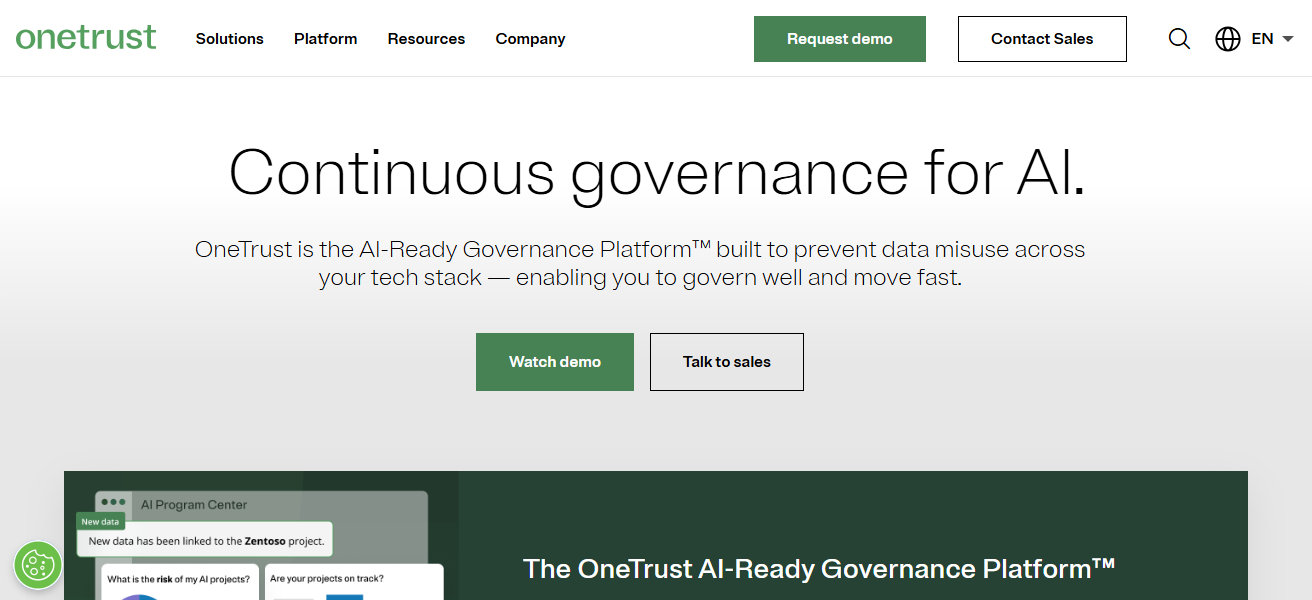
The intelligent risk management, automation, and compliance tools provided by OneTrust, fosters effective decision-making to improve the governance of vendor relationships.
OneTrust Features
- Privacy & Security Focus: In evaluating vendors, compliance, and data privacy are pivotal.
- Automated Risk Assessments: Assessments, results, and even the collection process can be automated.
- Dashboard & Alerts: Dashboard and alerts for oncoming threats.
- Integration Flexibility: GRC, procurement, security, and other tools can be integrated.
| Pros | Cons |
|---|---|
| Strong focus on privacy, security, and regulatory compliance. | Can be expensive for smaller vendors. |
| Automated risk assessments and scoring reduce manual effort. | Some features may overlap with other compliance tools. |
| Real-time dashboards with actionable alerts for risk mitigation. | Steeper learning curve for non-privacy-focused users. |
| Flexible integrations for centralized risk monitoring. | Advanced customization may require technical expertise. |
9. Coupa Risk Assess
Coupa Risk Assess aids companies in assessing and managing third-party risks concentrating on financial, operational, and regulatory risk. The application offers automated risk scoring, predictive analytics and continuous monitoring to provide possible vendor threat.
Dashboard and reporting features help organizations manage risk and visualize Ad data through trend analysis.
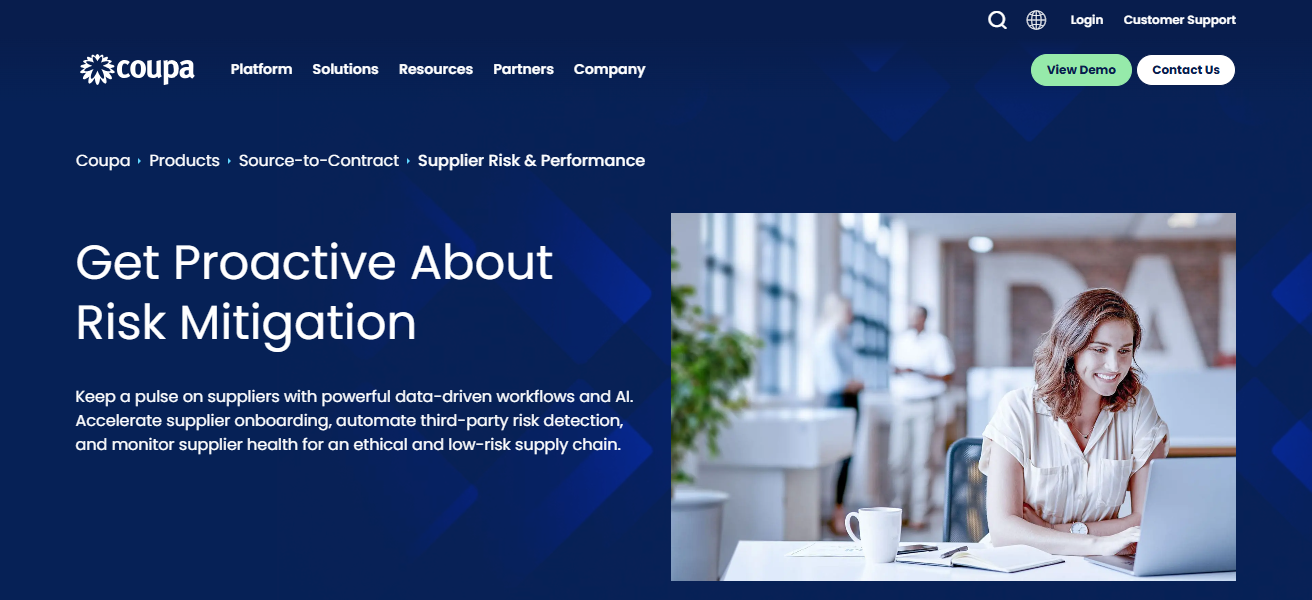
Integrated with enterprise and procurement systems, Coupa Risk Assess provides a more comprehensive picture of supplier risk.
The app improves operational resilience, compliance, and the strategic management of third parties by simplifying assessments and providing clear, actionable insights.
Coupa Risk Assess Features
- Procurement Integration: Automated procurement system-supplier data integration.
- Predictive Risk Analytics: Analytics trickling vendor risk anticipation.
- Continuous Monitoring: Risk scores are actionable and up-to-date via frequent reassessments.
- User-Friendly Interface: Dashboards are intuitive, so data flows cross-functionally.
| Pros | Cons |
|---|---|
| Automated risk scoring and continuous vendor monitoring. | Some features may be limited in basic plans. |
| Predictive analytics to identify potential supplier vulnerabilities. | Can require additional modules for full risk lifecycle management. |
| Integrates seamlessly with procurement and enterprise systems. | Initial setup may be resource-intensive for large supplier networks. |
| User-friendly dashboards for visualization and decision-making. | Advanced customization may need IT support. |
10. RiskRecon by Mastercard
RiskRecon, a Mastercard company, provides cutting-edge, third-party risk scoring solutions, specializing in cybersecurity and operational efficacy.
RiskRecon provides actionable insights and evaluates vendors from objective data. Vendors are scored by RiskRecon, and organizations are assisted in threat mitigation by the scoring framework with high-prioritized risks.
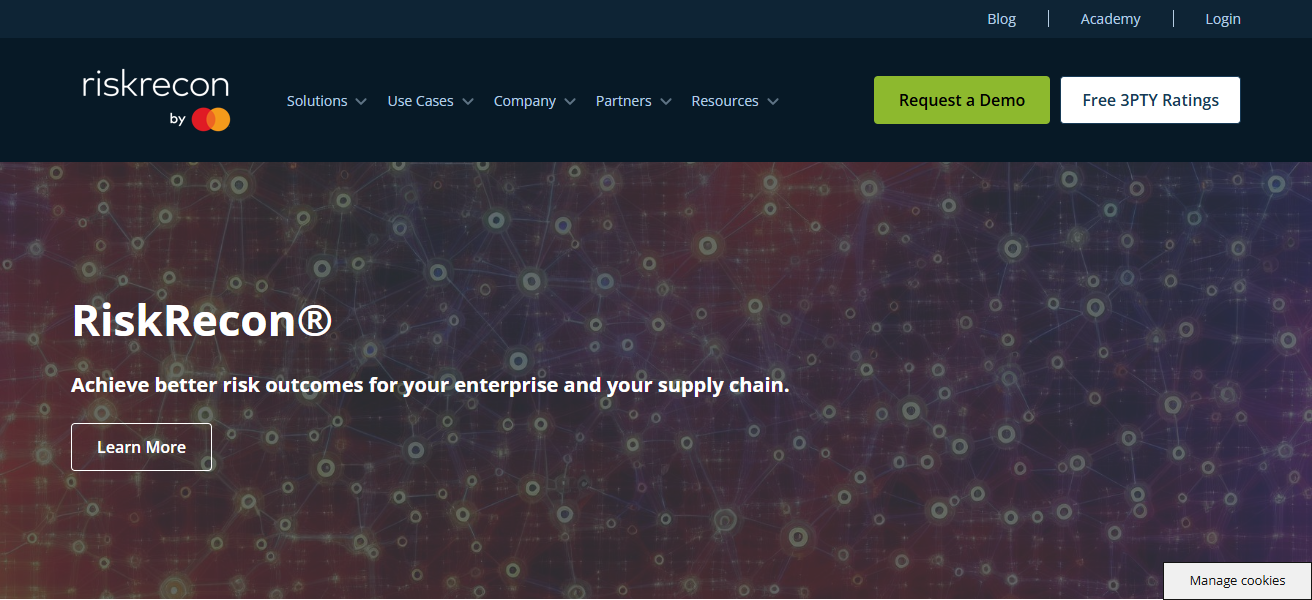
The platform provides dashboards, alerts that are automated, and enterprise system integration for optimized monitoring.
RiskRecon, with a combination of analytics, objective risk metrics, and continuous oversight, guides organizations in bolstering the security of their suppliers, staying compliant, and making smart decisions regarding risk management.
RiskRecon by Mastercard Features
- Cybersecurity Focused: In-depth evaluation of third-party cyber risk using deep analysis of external attack surfaces.
- Objective Risk Scoring: Based on measurable indicators. Unlike the self-serving bias, RiskRecon is not a offering.
- Seamless Alerts & Reporting: Timely alerts emphasize the risk for quick.
| Pros | Cons |
|---|---|
| Focused on cybersecurity and operational performance. | May not cover non-cyber operational risks comprehensively. |
| Continuous vendor evaluation using objective data. | Premium pricing can be a barrier for small businesses. |
| Provides actionable insights to prioritize high-risk vendors. | Integration with legacy systems may require technical effort. |
| Dashboards, alerts, and analytics for proactive risk mitigation. | Limited features for financial or regulatory risk compared to broader platforms. |
How To Choose Best Software For Vendor Due Diligence Management
Define Risk Priorities: Identify the crucial vendor risks to hone in on compliance, financial, and operational.
Scalability: The software should be able to accommodate an expanding vendor network.
Automation Capabilities: Choose software that automates assessments, continuous monitoring, and reporting to minimize manual labor.
Integration Options: Verify the software’s compatibility with your ERP, procurement, and GRC to achieve automated seamless data transfer.
Adjustable Risk Scoring: Custom flexibility to score based on individual organizational risk, and regulatory compliant factors.
Regulatory Compliance Support: Ensure that the software adheres to the applicable industry regulations, audit, and reporting standards.
User-friendly Interface: Intuitive interface and dashboards for users to streamline information processing and decision-making.
Real-time monitoring: Active surveillance of vendors to discover and report potential new risks.
Reporting and analytics: High-quality reporting and visualization of data to research risk, compliance, and operational gaps.
Vendor Collaboration Tools: Features that facilitate the completion of questionnaires, documents, and communications with external vendors.
Security and data protection: Ensure data protection, compliance, and the right to privacy is in place.
Cost and ROI: Consider the vendor’s software licensing and implementation costs, then add your organizational efficiencies.
Cocnsluion
To conclude, selecting the appropriate software helps organizations minimize third-party risk and meet regulatory obligations.
The ideal software improves vendor assessments, automates risk evaluation, and aids in decision making.
By choosing a software with good risk scoring, integration, and reporting features, organizations can improve vendor collaborations, boost operational resilience, and achieve compliance in a sustainable manner.
FAQ
It helps organizations assess, monitor, and manage third-party vendor risks efficiently.
It reduces compliance, financial, operational, and cybersecurity risks from third-party vendors.
Businesses working with multiple vendors, suppliers, or third-party service providers.
Risk scoring, automation, reporting, compliance tracking, and continuous monitoring.
Yes, it helps meet industry regulations and audit requirements.