
This article focuses on the Best Wallet-as-a-Service (WaaS) Providers and the assistance offered to companies in embedding crypto wallets that are safe, scalable, and easy to use.
- Key Points & Best Wallet-as-a-Service (WaaS) Providers
- 10 Best Wallet-as-a-Service (WaaS) Providers
- 1. Safeheron
- 2. Fireblocks
- 3. CoinsDo
- 4. BitGo
- 5. Ledger Enterprise
- 6. Alchemy Pay
- 7. Circle
- 8. MetaMask Institutional
- 9. Komainu
- 10. Zengo
- How To Choose The Best Wallet-as-a-Service (WaaS) Providers
- Conclusion
- FAQ
The WaaS systems facilitate the processes of wallet setup, key handling, and interaction with the blockchain so that businesses can offer digital assets more quickly without compromising on security, regulatory, and operational levels.
Key Points & Best Wallet-as-a-Service (WaaS) Providers
Safeheron: Secure multi‑party computation wallet infrastructure enabling institutions to safeguard digital assets collaboratively.
Fireblocks: Enterprise platform providing secure transfer, storage, and issuance of digital assets across blockchains.
CoinsDo: Wallet infrastructure solution offering customizable, secure, and scalable digital asset management for businesses.
BitGo: Institutional digital asset custodian delivering security, compliance, and insurance for cryptocurrency holdings.
Ledger Enterprise: Enterprise‑grade custody solution leveraging Ledger’s hardware security for managing large crypto portfolios safely.
Alchemy Pay: Payment gateway bridging fiat and crypto, enabling seamless transactions for merchants and consumers worldwide.
Circle: Fintech company behind USDC stablecoin, offering payment, treasury, and blockchain‑based financial services.
MetaMask Institutional: Institutional version of MetaMask wallet providing compliance, custody integrations, and secure DeFi access.
Komainu: Regulated digital asset custodian offering secure storage solutions tailored for institutional investors globally.
Zengo: Consumer crypto wallet using advanced MPC technology to eliminate seed phrases and enhance security.
10 Best Wallet-as-a-Service (WaaS) Providers
1. Safeheron
Safeheron provides top-tier wallet infrastructure specializing in secure self-custody solutions for enterprises using open-source multi-party computation (MPC) wallets.
When integrated into a business, Safeheron’s WaaS solution adds layers of security to wallets by distributing private keys to different parties, removing single points of failure, and enabling collaborative control over the management of digital assets.
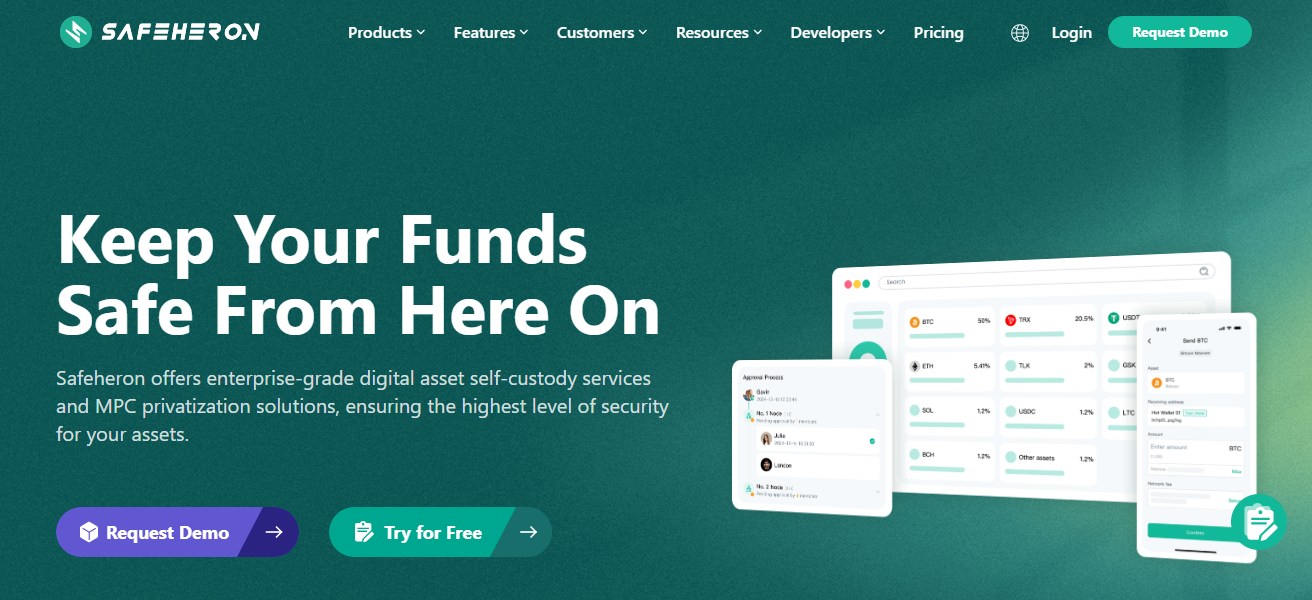
Developers can use Safeheron’s APIs and SDKs to configure their own custom MPC wallets, making it more efficient to handle digital assets without having to design story them from a security standpoint.
For technology-oriented teams and regulated industries that require control and traceable custody, Safeheron’s transparency and customizable solution provides a great degree of flexibility.
Safeheron Features
- MPC security that decentralizes the splitting of a private key to eliminate any potential failure timelines.
- Open-source accessibility, that allows both auditing and customizing.
- SDK and API for adaptable wallet integration and construction.
- Multi-party co-management for enterprises needing cooperative control.
| Pros | Cons |
|---|---|
| Strong MPC-based security with key splitting. | Smaller ecosystem vs larger incumbents. |
| Transparent and customizable open-source approach. | Requires technical integration effort. |
| Great for enterprises wanting full control. | Documentation may be less mature than larger providers. |
| Supports multi-party key co-management. | Less brand recognition than legacy custodians. |
| Flexible API/SDK for bespoke wallets. | Integration costs can be high for small teams. |
2. Fireblocks
Fireblocks is one of the leading WaaS platforms for institutions, offering enterprise-grade wallet infrastructure with industry-leading MPC-CMP (Multi-Party Computation with Cryptographic Multi-Party) key management.
Its solution allows businesses to create, manage, and embed wallets at scale while maintaining robust security through hardware isolation and policy-based controls.
Fireblocks supports hundreds of blockchains, high-volume transactions, and features like staking and DeFi connectivity.
By abstracting complex wallet and key operations, Fireblocks enables financial services, fintechs, and exchanges to launch wallet services faster and with strong governance and compliance capabilities.
Fireblocks Features
- Advanced MPC-CMP key management for custodial wallets and non-custodial wallets plus added security.
- Extensive blockchain and asset support to facilitate cross-chain transactions.
- Governance and compliance controls including policy and whitelist controls.
- DeFi integration for advanced functionality including staking and liquidity.
| Pros | Cons |
|---|---|
| Enterprise-grade security with MPC-CMP key management. | Higher price point aimed at large clients. |
| Wide blockchain and asset support. | Onboarding may be complex for startups. |
| Built-in compliance & governance tools. | Slightly heavy for simple use cases. |
| Fast provisioning of wallets and operations. | Learning curve for advanced features. |
| Strong reputation and ecosystem integrations. | Less suitable for small developers. |
3. CoinsDo
CoinsDo offers a WaaS platform for institutions and businesses in managing digital assets, providing users with self-custody wallets powered by MPC (Multi-Party Computation) cryptography, automated address generation, withdrawals, and support for multiple blockchains.
CoinsDo streamlines the wallet infrastructure integration process for businesses by providing intuitive APIs and cross-platform solutions, enabling them to avoid building integrations from the ground up, while optimizing for security, operation quality, and scalability.
CoinsDo’s MPC cryptography splits private keys into multiple shards, eliminating single points of failure, lowering risk while facilitating rapid iterations.
These functionalities position CoinsDo strongly with digital asset service providers, including asset management companies, banks, companies in the gaming industry, and exchanges.
CoinsDo Features
- Automated wallet functions including unlimited address generation and withdrawal operations.
- MPC cryptographic key security for lower potential risk.
- Flexible and easy to use APIs for fast deployment.
- Cross-chain asset use capabilities for expansive digital asset holdings.
| Pros | Cons |
|---|---|
| MPC-based security with automated workflows. | Market presence smaller than major incumbents. |
| Easy API for wallet deployment. | Limited third-party integrations. |
| Designed for scalability and corporate needs. | Documentation still evolving. |
| Cross-chain support. | Fewer advanced enterprise features. |
| Good for asset managers and exchanges. | Less brand trust compared to top legacy players. |
4. BitGo
BitGo has Wallet-as-a-Service, which helps businesses integrate wallet creation, address generation for end users, and self-custody scaling into their services.
It provides custodial and non-custodial wallet models and combines self-custody hot wallets, optional cold storage, and liquidity.
Focused on security, BitGo offers Whitelisting, velocity controls, role-based access, and scalable APIs. Its security features help customers avoid hiring expensive blockchain engineers.
Businesses can customize wallet infrastructure to meet their operational and compliance requirements.
BitGo Features
- Flexible modular APIs for the construction of custom wallets and the management of scaling.
- Support for custodial wallets and self-custody decentralized wallets based on the unique use case.
- Enterprise-level advanced permissioning and role-based controls.
- Traded asset integrations and high flexibility for wallet support across a range of assets.
| Pros | Cons |
|---|---|
| Mature, trusted custody and wallet platform. | Fee structure may be complex. |
| Strong security controls and permissions. | Not as developer-centric for quick prototyping. |
| Supports both custodial and self-custody models. | Some integrations require enterprise contracts. |
| Robust compliance tools. | Less flexible for lightweight apps. |
| Large asset support and reliability. | Onboarding time can be longer. |
5. Ledger Enterprise
Ledger Enterprise is a division of Ledger that offers the company’s secure wallet ecosystem by integrating the firm’s hardware wallet security into enterprise and institutional business models.
It provides businesses, such as exchanges, asset managers, and custodians, institutional-grade crypto custody, multisig, and digital asset security services.
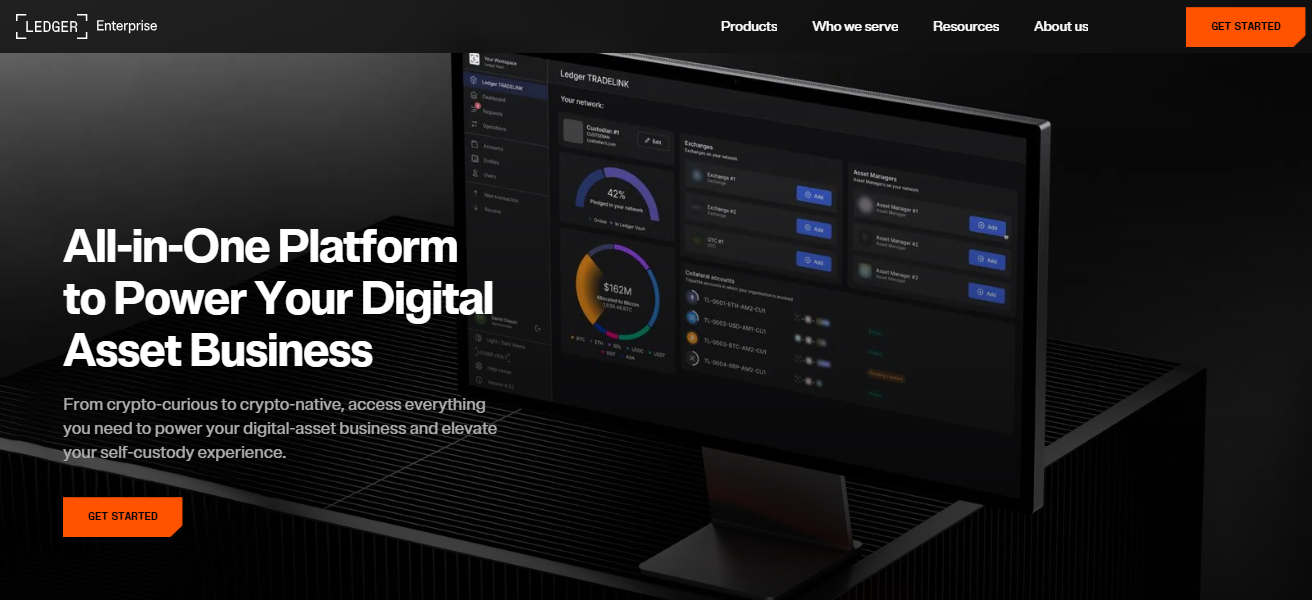
Ledger Enterprise’s platforms are hack and mismanagement resilient and protect asset with integrated secure signing workflows, governance, and operational controls.
Ledger Enterprise supports thousands of tokens and focuses on asset protection. While Ledger Enterprise isn’t a typical WaaS, in the API-first way, it does offer enterprises key management and wallet security that are built into their digital asset infrastructure.
Ledger Enterprise Features
- Hardware-grade security backbone built using ledger secure elements.
- Enterprise-grade multisig & workflows for institutional clientele.
- Support of thousands of digital assets & tokens.
- Compliance & governance for regulated environments. Enterprise-grade governance & compliance tooling.
| Pros | Cons |
|---|---|
| Hardware-grade security for enterprise. | Not purely a developer-first WaaS API. |
| Strong governance and signing workflows. | Integration needs hardware coordination. |
| Supports many digital assets. | Less flexible for fully cloud-native apps. |
| Familiar brand and proven tech. | More focused on custody than full wallet services. |
| Secure key management systems. | Requires operational discipline. |
6. Alchemy Pay
Alchemy Pay helps companies integrate crypto into their payment systems, creating crypto-to-fiat payment gateways for digital asset payment solutions. They operate in over 173 countries.
Alchemy Pay’s infrastructure provides seamless integrated crypto payment solutions, fiat payment solutions, and digital wallet payment solutions.
Through backend plug-and-play payment solutions, developers can facilitate digital wallet solutions that support both cryptocurrencies and fiat currencies.
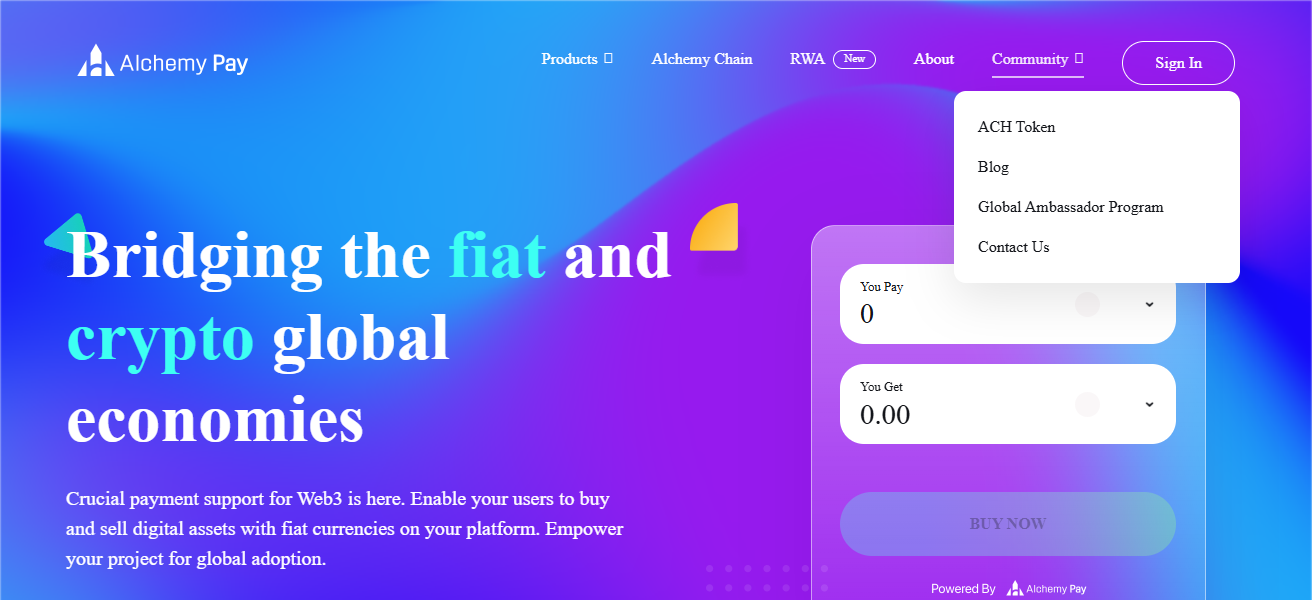
This streamlines payment processes for customers and enhances payment functionalities for businesses.
Alchemy Pay may not fit into a traditional wallet provider category, but their integrated payment systems and wallet solutions provide a flexible digital asset payment solution for businesses.
Alchemy Pay Features
- Scaled crypto-to-fiat bridging for on/off-ramp solutions.
- Commerce platform wallet integration with payment capabilities.
- Payments across all regions and currencies.
- User onboarding and transactional simplification via API.
| Pros | Cons |
|---|---|
| Bridges crypto and fiat payments. | Not a traditional wallet provider. |
| Easy payment and pay-in/on-ramp tools. | Wallet functionality is secondary. |
| Wide global payment acceptance. | Limited direct wallet controls. |
| Good for commerce and apps needing fiat flows. | May need extra providers for full custody. |
| Reduces compliance complexity for payments. | Not focused on deep institutional use cases. |
7. Circle
Circle’s wallet infrastructure allows businesses to deploy and manage in-app wallets at an enterprise level using APIs and SDKs that abstract the complexities of blockchain.
Its WaaS solution prioritizes streamlined wallet deployment, secure management of wallets via compliance-driven MPC key management, and user experience optimizations such as gas abstraction and MDL (most of the time log) user credentials.
Circle’s infrastructure allows developers to rapidly and securely onboard users while supporting compliance and operational flexibility across different blockchain networks.
This makes it an ideal fit for commerce platforms, fintech applications, and blockchain-enabled services of all kinds that want to integrate wallet functionalities for the global digital asset commerce ecosystem without needing deep blockchain knowledge.
Circle Features
- Wallet APIs for developers that are simple to integrate.
- MPC compliant key management with built-in compliance.
- User experience optimization & integration with stablecoins.
- Digital assets and money global movement tools.
| Pros | Cons |
|---|---|
| Easy wallet deployment via APIs/SDKs. | Strongest for applications anchored in stablecoins. |
| MPC key management with compliance focus. | May be less flexible for custom blockchain logic. |
| Good onboarding and developer tools. | Feature depth varies by region. |
| Built for global fintech platforms. | Innovation pace tied to core offerings. |
| Strong focus on user experience. | Not pure institutional custody. |
8. MetaMask Institutional
MetaMask Institutional is the enterprise version of the MetaMask wallet, designed specifically for institutions that require enterprise-level controls, custody integrations, and access to Web3/DeFi.
MMI combines the familiar MetaMask user experience with custom institutional features such as multi-signature workflows, portfolio dashboards, and enhanced reporting, as well as integrations with custody/ MPC partners.
MMI serves funds, trading desks, and enterprises to use decentralized finance (DeFi) and manage cross-EVM (Ethereum Virtual Machine) compliant and operationally governed assets.
MMI connects institutional decentralized finance (DeFi) to workflows and makes Web3 and DeFi safe and accessible for professional users.
MetaMask Institutional (MMI) Features
- Compliance, audit, and other governance tools for institutions.
- Access controls & multi-signature approval.
- DeFi & Web3 access support for enterprises.
- Reporting & dashboards for enterprise portfolios.
| Pros | Cons |
|---|---|
| Familiar MetaMask UX with enterprise controls. | Primarily focused on EVM ecosystems. |
| Institutional governance and reporting. | Not standalone custody; integrates with providers. |
| Easy Web3 & DeFi access. | Less suited for non-Web3 use cases. |
| Good for funds and trading desks. | Requires integrations for full wallet services. |
| Multi-signature and compliance workflows. | Limited support outside major chains. |
9. Komainu
Komainu is a digital asset platform that prioritizes custody, especially for institutional-grade clients, offering integrated custody, bank-grade security, regulatory compliance, and separate on-chain wallets.
The platform’s architecture integrates MPC and HSM wallet technology with compliance and governance oversight within a bankruptcy-remote protective framework.
While Komainu’s focus is broader than simple WaaS, it provides custodians with unique wallet infrastructure to help them manage digital assets with strong risk controls
Integrated reporting, and optimum capital efficiency through features like Komainu Connect, which provides trading and liquidity services.
This unique combination of features positions Komainu as a reliable partner for institutional clients that require sophisticated custody and operational integration.
Komainu Features
- Rigorous security & bank-grade custody frameworks.
- MPC and HSM hybrid security modules.
- On-chain wallets with segregated and risk-controlled units.
- Institutional clientele governance, compliance, and regulatory frameworks.
| Pros | Cons |
|---|---|
| Bank-grade custody and regulatory focus. | Strong custody emphasis over pure wallet API. |
| MPC + HSM security hybrid. | More suitable for large institutions. |
| Segregated wallets and risk controls. | Limited for lightweight app integrations. |
| Designed for compliance and auditability. | Not ideal for rapid prototyping. |
| Deep governance tooling. | Complex onboarding. |
10. Zengo
Zengo builds self-custodial wallets with the most innovative crypto technology including MPC migitating the need for seed phrases, making it safer and easier for individuals and businesses.
Spliting key materials into multiple independent shares, Zengo’s wallets protect crypto from losing it all and phishing attacks.
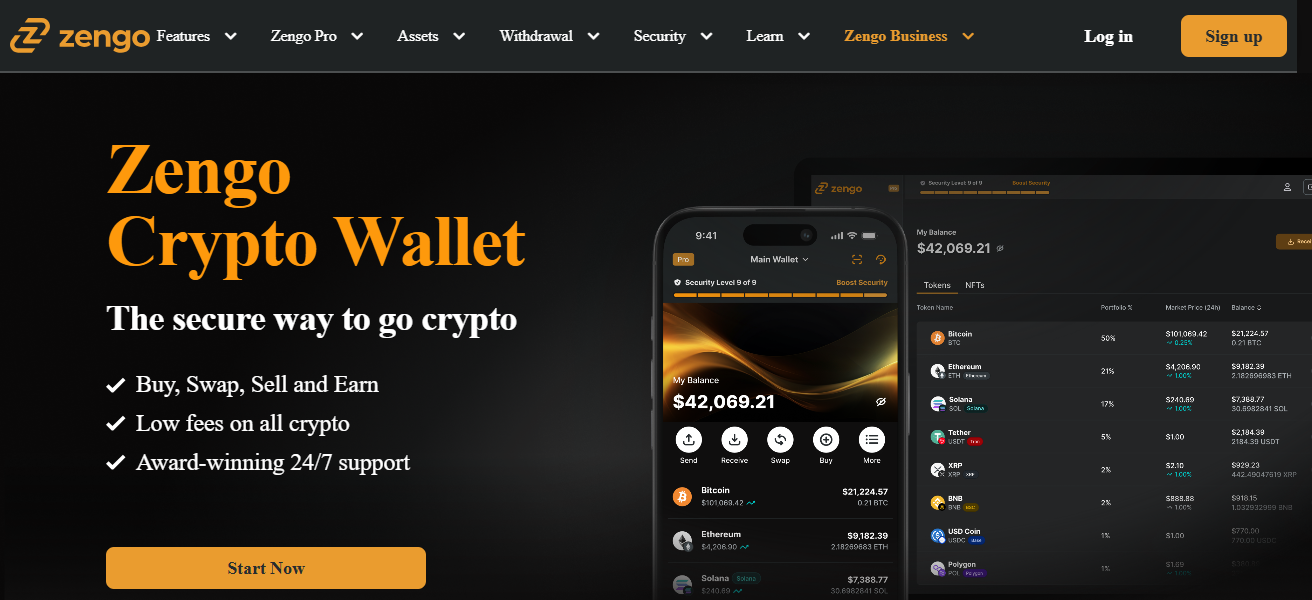
Instead of seed phrases, Zengo’s recovery system uses multi factor authentication which makes access to the wallets easier and more secure.
Zengo wallets prove that the MPC model and WaaS concepts can deliver secure, institutional-grade protection to the majority of users, even if it’s mainly focused on consumers.
Zengo Features
- MPC self-custody with no seed phrases, minimizing loss potential.
- Simple design and wallet experience tailored for mobile.
- Multi-factor authentication for secure recovery.
- Everyday users benefit from anti-phishing and other advanced security measures.
| Pros | Cons |
|---|---|
| MPC self-custody without seed phrases. | Primarily consumer-focused. |
| Easy recovery and user-friendly security. | Limited enterprise tooling and APIs. |
| Strong anti-phishing protections. | Not built for large institutional scaling. |
| Mobile-first and intuitive. | Not full developer WaaS ecosystem. |
| Simplified key management for users. | Fewer supported protocols than enterprise rivals. |
How To Choose The Best Wallet-as-a-Service (WaaS) Providers
Security/Breach Prediction & Key Control Providers should have the ability to use the industry standard (MPC, HSM, multisig) and also implement the custody model you need (self custody/custodial).
Developer Resources & APIs Rich, easy to access, and documented APIs/SDKs should exist in order to make the wallet integration process as efficient and easy as possible.
Coverage of Tags and Blockchains The provider you choose should also be able to provide coverage of blockchains and tokens to match the needs of your business in the future.
Compliance and Governance Capabilities Providers should have the ability provide KYC/AML, access controls, whitelists, audit logs, and policy controls.
Scalability & Performance The provider should be able to handle a very high volume of transactions in order to meet future business goals.
User Wallet Features & Experience User wallets are more widely and easily adopted and used when good UX (address management, recovery options, gas abstraction) are in place.
Ecosystem Integrations The functionality of your wallet solution can be enhanced when it can integrate with DeFi, staking, exchanges, and liquidity solutions.
Conclusion
To conclude, top Wallet-as-a-Service (WaaS) Providers give companies safe, scalable, and seamless wallet options.
With proprietary advanced key management, multi-chain and compliance solutions, these providers support companies in quickly mitigating potential risks and improving user experience.
WaaS gives companies control over their crypto activities in a rapidly expanding blockchain ecosystem.
FAQ
A WaaS provider offers ready-made wallet infrastructure that businesses can integrate via APIs.
Exchanges, fintech apps, enterprises, and Web3 platforms needing secure wallet solutions.
They use MPC, multisig, or HSM technology to protect private keys and transactions.
Yes, most providers support multiple blockchains and a wide range of digital assets.
Absolutely. WaaS reduces development time and costs while providing enterprise-grade security.