This article will focus on the Best Wallets for Custody-Grade Asset Segregation. The wallets discussed will be secure, regulated, and innovative, making them suitable for all types of institutions.
These wallets offer cutting-edge technology, strict compliance, and insurance-backed protection for the safety, segregation, and transparency of digital assets.
From Fireblocks to Custodia Bank, each has distinct offerings for the custody management of digital assets at an institutional level.
Key Points & Best Wallets for Custody-Grade Asset Segregation
Fireblocks – Provides institutional-grade security with multi-party computation ensuring segregated custody of digital assets.
BitGo – Offers regulated custody solutions with advanced segregation protocols and insurance-backed digital asset protection.
Anchorage Digital – Delivers qualified custody with strict segregation standards, meeting institutional compliance and regulatory requirements.
Ledger Enterprise – Hardware-based custody wallet enabling asset segregation through secure enclave and enterprise-grade governance controls.
Copper – Implements ClearLoop technology for segregated custody, reducing counterparty risk in institutional trading environments.
Coinbase Custody – Provides regulated custody services with strong segregation mechanisms and insurance coverage for institutional investors.
Hex Trust – Offers fully licensed custody with advanced segregation frameworks tailored for banks and financial institutions.
Metaco Harmonize – Enables secure custody orchestration with asset segregation across multiple infrastructures and compliance environments.
Komainu – Joint venture custody solution ensuring strict segregation of client assets under regulated institutional frameworks.
Custodia Bank – Provides digital asset custody with legal segregation, combining traditional banking safeguards with blockchain infrastructure.
10 Best Wallets for Custody-Grade Asset Segregation
1. Fireblocks
Fireblocks is one of the top wallet solutions for institutions looking to manage and protect digital assets. Using multi-party computation (MPC) technology, Fireblocks avoids single points of failure and keeps the assets segregated and safe.
Fireblocks is compatible with many cryptocurrencies and trading platforms, making it optimal for asset managers, banks, and exchanges.
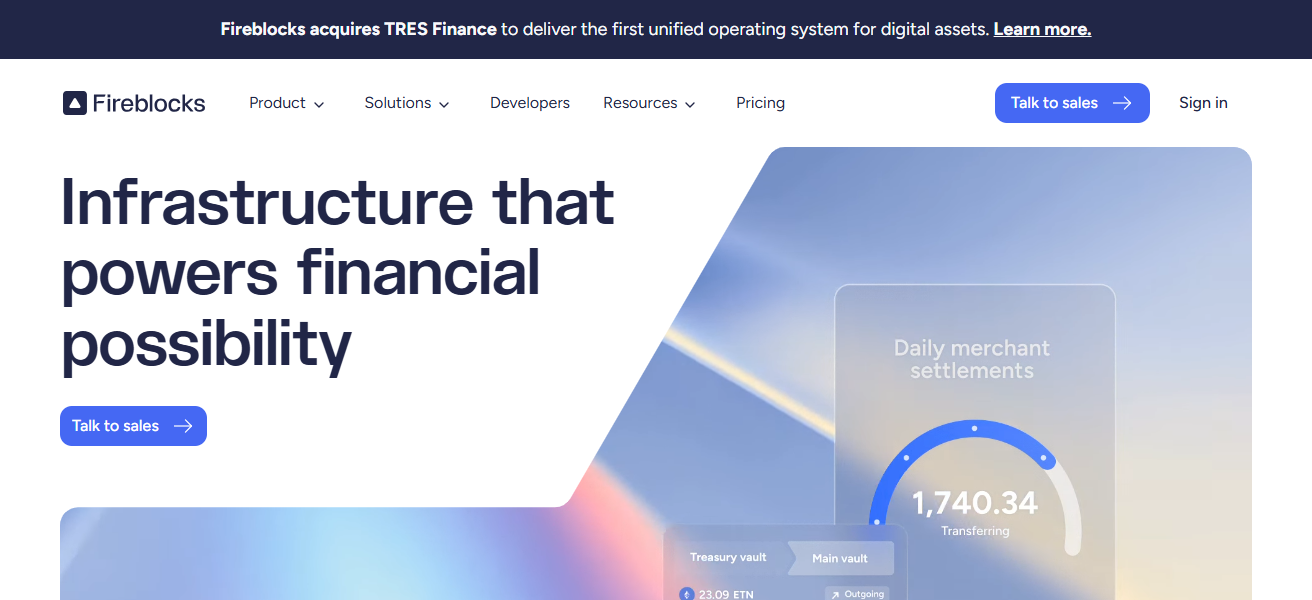
The governance suite allows institutions to create policies, permissions, and approval workflows to mitigate operational risk. Fireblocks is ideal for organizations that need secure custody and scalable advanced security.
Fireblocks offers institutions peace of mind with its regulatory compliance, insurance coverage, and scalable advanced security.
| Pros | Cons |
|---|---|
| Advanced MPC technology ensures strong security and asset segregation. | Complex setup may require technical expertise. |
| Insurance-backed custody provides institutional confidence. | Higher costs compared to retail custody solutions. |
| Governance tools allow permissions and approval workflows. | Limited accessibility for smaller investors. |
| Wide cryptocurrency support with trading platform integration. | Dependence on institutional infrastructure for full functionality. |
2. BitGo
One of the longest standing providers of digital asset custody services is BitGo. They provide regulated and insured custody service solutions.
They provide multi-signature wallet services, which ensures that no single entity has the ability to access or move any of the assets.
BitGo practices asset segregation, which reduces counterparty risk. Compliance with US regulations and holding a SOC 2 Type II certification is beneficial to US institutions.
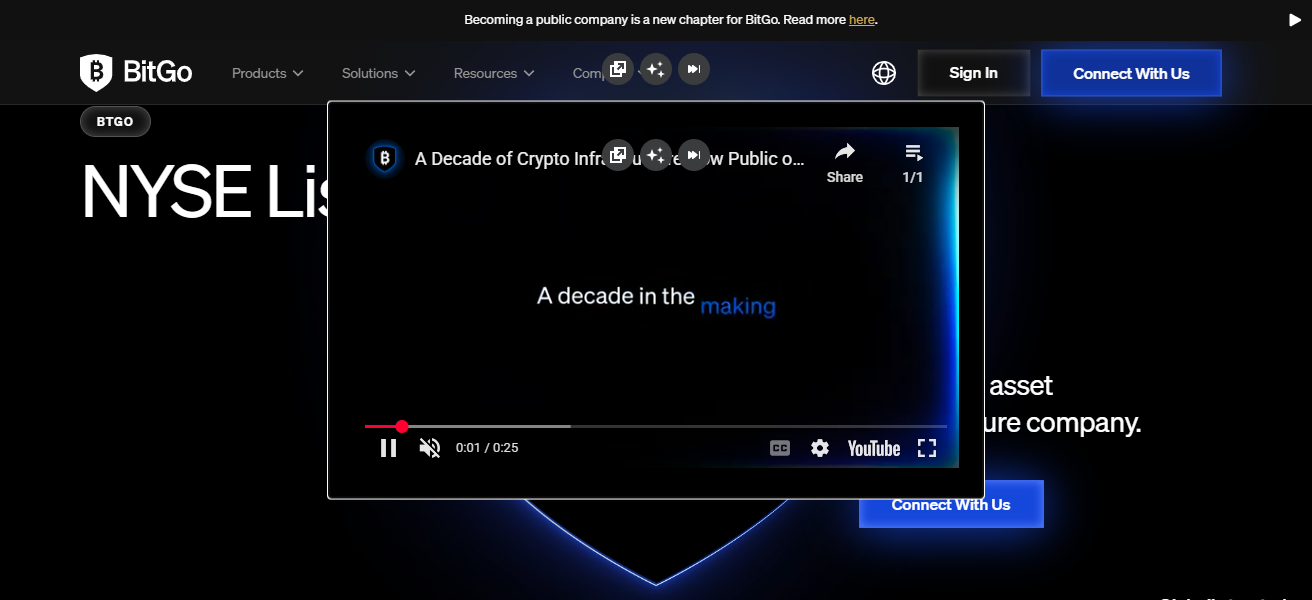
BitGo provides customizable policies, transparency with advanced reporting, and role-based access. BitGo is insured against theft and hacks, which makes them a reliable custody service for institutional investors.
They have a long-standing custodial reputation which makes them a cornerstone service provider for custody-grade asset management.
| Pros | Cons |
|---|---|
| Multi-signature wallets enhance transaction security. | Services mainly tailored for institutions, not individuals. |
| SOC 2 Type II compliance ensures regulatory trust. | Transaction speed may be slower due to multi-signature requirements. |
| Insurance coverage against hacks and theft. | Higher fees compared to basic wallet providers. |
| Long-standing reputation in digital asset custody. | Limited flexibility for DeFi integrations. |
3. Anchorage Digital
Anchorage Digital is an innovation-focused federally regulated digital asset bank with custody services for qualified institutions.
They provide full compliance asset segregation for clients, which fosters lower systematic risk associated with segregation.
Anchorage utilizes state-of-the-art digital asset protection with advanced cryptography and hardware security modules.
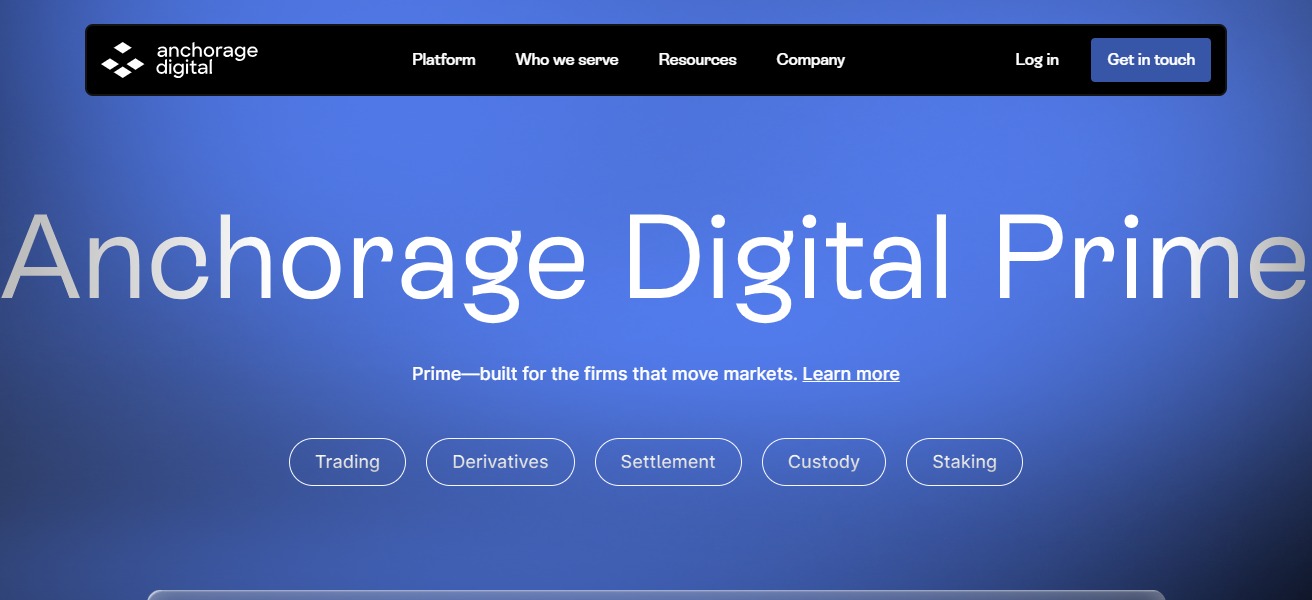
Anchorage Digital’s platform fosters asset governance with customized approval and workflow automation, and advanced institutional reporting.
They are known for providing hybrid services in traditional finance and blockchain, such as custody, lending, and staking.
Facilities regulated under U.S. banking laws are especially attractive to institutions, and Anchorage Digital combines regulation and innovation for firm asset segregation.
| Pros | Cons |
|---|---|
| Federally chartered bank status ensures regulatory compliance. | Access restricted to institutional clients only. |
| Strict segregation standards reduce systemic risks. | Regulatory processes may slow innovation. |
| Advanced cryptographic and hardware security modules. | Higher operational costs compared to non-bank custodians. |
| Offers lending and staking alongside custody. | Limited global availability outside U.S. jurisdiction. |
4. Ledger Enterprise
Ledger Enterprise strengthens the protection offered by Ledger hardware wallets with institutional-level custody solutions.
It facilitates asset segregation using secure enclaves and governance frameworks, ensuring client assets are kept apart and protected.
Institutions can set and manage custody operations using role-based access controls, approval workflows, and monitoring tools.
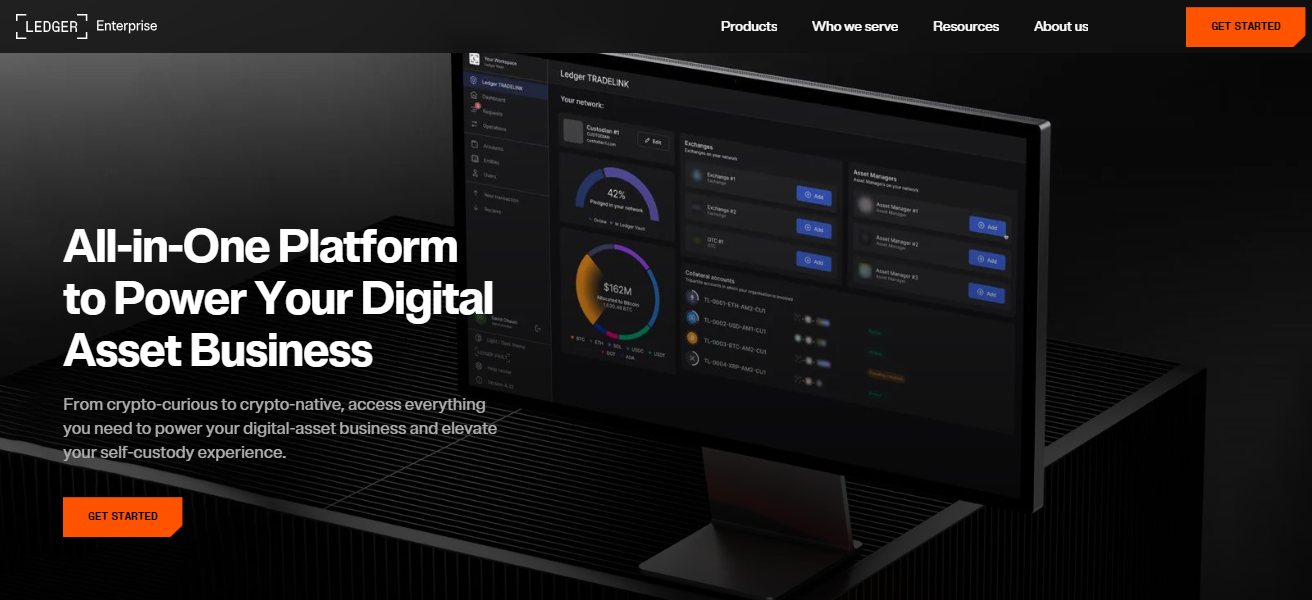
Ledger Enterprise can be seamlessly integrated with pre-existing financial systems, providing customization to banks, asset managers, and corporations.
Its hardware-based solutions reduce the risk of online threats, and its compliance solutions meet regulatory needs.
Ledger Enterprise provides the right combination of usability and protection to custody-grade asset segregation solutions.
| Pros | Cons |
|---|---|
| Hardware-based custody minimizes online attack risks. | Requires specialized hardware infrastructure. |
| Secure enclaves ensure asset segregation. | Less flexible for smaller institutions. |
| Role-based access controls and workflows enhance governance. | May lack advanced DeFi integrations. |
| Integrates with financial infrastructures seamlessly. | Higher upfront costs for deployment. |
5. Copper
Copper is a digital custody solution provider with a reputation for security thanks to its ClearLoop technology, which offers segregated custody.
ClearLoop streamlines institutional trading across multiple exchanges while avoiding asset movement, thus lowering counterparty risk.
Copper’s security is complemented by advanced encryption and multi-party computation, which safeguard segregated holdings.
Copper’s platform is designed for institutional use and integrates advanced compliance, reporting, and governance.
For asset managers and funds, Copper’s insured custody solution brings added comfort. For trading efficiency and security with custody-grade segregation,
Copper closes the gap. For digital asset management, institutions rely on Copper for innovative risk mitigation.
| Pros | Cons |
|---|---|
| ClearLoop technology enables segregated custody while trading. | Limited adoption compared to larger custodians. |
| Reduces counterparty risk significantly. | May require integration with supported exchanges only. |
| Uses MPC and encryption for secure holdings. | Higher costs for premium services. |
| Insurance-backed custody provides institutional confidence. | Focused mainly on institutional clients. |
6. Coinbase Custody
Based in the United States, Coinbase Custody offers protective services to institutional investors who desire safe segregation of their assets.
Coinbase Custody is regulated and provides qualified custody insurance for digital assets. Coinbase Custody is a strict custody service, meaning Coinbase Custody is a separate entity, and Coinbase Custody Client assets are not comingled with funds on the exchange.
Institutions also obtain certain governance services, such as the establishment of custom approval and reporting workflows related to regulatory compliance.
It is also quite flexible in terms of supporting various digital currencies. For such customers, Coinbase Custody remains a leading and trustworthy choice due to solid safety and transparency compliance on all levels.
| Pros | Cons |
|---|---|
| Operates under U.S. regulatory frameworks. | Limited global regulatory coverage outside U.S. |
| Strict segregation of client assets. | Higher fees compared to retail wallets. |
| Insurance coverage for digital assets. | Restricted primarily to institutional investors. |
| Governance tools for workflows and compliance reporting. | Limited flexibility for DeFi and non-traditional assets. |
7. Hex Trust
Hex Trust guarantees digital asset custody for banks, asset managers, and financial institutions. Hex Trust has obtained multiple licenses and focuses on compliance and regulatory frameworks.
Hex Trust offers its clients advanced segregation solutions, keeping their assets differentiated and safe on the platform.
Hex Trust’s platform provides governance tools such as user roles, access permissions, and approval and reporting workflows.
Hex Trust integrates custody with trading and DeFi platforms. This combination allows institutions to optimize asset management and control.
Hex Trust also offers insurance-backed custody for protection against theft and hacks. Hex Trust is ideal for custody-grade asset segregation with its regulatory compliance and institutional-grade security.
| Pros | Cons |
|---|---|
| Licensed custodian across multiple jurisdictions. | Services mainly focused on large institutions. |
| Advanced segregation frameworks ensure security. | Higher costs compared to smaller custodians. |
| Governance tools with role-based access and reporting. | Limited accessibility for retail investors. |
| Insurance-backed custody adds protection. | Regional licensing may restrict global operations. |
8. Metaco Harmonize
Harmonize, from Metaco, is an example of a custody orchestration tool that banks and financial institutions focusing on digital assets can use.
It provides custodial services across different infrastructures, also including regulatory compliance.
Since Harmonize is built directly into core banking systems, financial institutions can automate custody management.
Governance tools include approval customization, workflow management, and monitoring and reporting. Metaco incorporates cutting edge cryptography and secure hardware modules to ensure the highest levels of security.
Institutions experience more of this security because Harmonize is flexible to manage multiple digital assets and custodial models.
Harmonize builds the gap between blockchain and traditional banking systems and is the world’s most trusted custody-grade bank solution for digital asset custodial services.
| Pros | Cons |
|---|---|
| Custody orchestration across multiple infrastructures. | Complex integration with banking systems. |
| Seamless integration with core banking platforms. | Requires institutional-level resources. |
| Customizable workflows, monitoring, and reporting. | Limited availability for smaller firms. |
| Advanced cryptography and hardware modules for security. | Higher implementation costs. |
9. Komainu
Nomura, Ledger, and CoinShares provide joint venture Komainu, which offers custody solutions. Komainu operates under global regulations and keeps institutional client assets separated.
Komainu focuses on these services for compliance. Komainu provides governance, approvals, reports, and monitoring tools.
Komainu helps institutional clients, corporations, and funds with all digital assets. Insurance-backed custody defends against theft and hacks.
Komainu offers custody solutions built on traditional finance and blockchain. Komainu is a regulated provider of custodial asset segregation which helps institutional clients.
| Pros | Cons |
|---|---|
| Joint venture backed by Nomura, Ledger, and CoinShares. | Limited to institutional investors. |
| Regulated custody with strict segregation standards. | Higher fees compared to retail solutions. |
| Governance tools including workflows and monitoring. | Limited DeFi integration options. |
| Insurance-backed protection against theft and hacks. | Global expansion still developing. |
10. Custodia Bank
Custodia Bank specializes in blockchain-based banking and custody services. To aid your operational and custody compliance reporting, Custodia provides tools for Governance, Reporting, and Transparency (GPRT).
To assist banks, funds, and corporates, Custodia has integrated multiple digital assets into its custody platform.
As a digital bank, Custodia adheres to U.S. regulations, giving institutions the compliance certainty they require.
Custodia segregates your assets with additional protection from theft and hacks through insured custody. By integrating banking services with blockchain technology, Custodia gives institutions a digital bank they can rely on.
| Pros | Cons |
|---|---|
| Operates as a regulated digital asset bank. | Restricted mainly to U.S. jurisdiction. |
| Legal segregation ensures transparency. | Higher operational costs compared to non-bank custodians. |
| Combines traditional banking safeguards with blockchain. | Limited flexibility for experimental assets. |
| Insurance-backed custody for institutional confidence. | Focused primarily on large institutions. |
Conclsuion
To summarize, the Best Wallets for Custody-Grade Asset Segregation offer institutions lock, stock, and barrel digital asset safekeeping solutions that are compliant and insured.
The techno-legal safekeeping Fireblocks, BitGo, Anchorage Digital, and Custodia Bank add technology and digital asset segregation transparency to reduce financial segregation risks.
With these wallets, banks, funds, and corporations can navigate the digital complexity of finance with confidence.
FAQ
It is the practice of keeping client assets separate, ensuring security, compliance, and reduced counterparty risk.
They provide regulated, insured, and secure solutions for managing large digital asset portfolios.
Most are designed for institutions, though some offer limited individual access.
Yes, leading providers include insurance coverage against theft and hacks.