
In this article, I will be talking about the best alternative to Zoho Operations Suite for companies that want to utilize smarter, more efficient ways to manage their operations.
- Key Poinst & Best Zoho Operations Suite Alternatives
- 10 Best Zoho Operations Suite Alternatives
- 1. Salesforce
- 2. HubSpot
- 3. Odoo
- 4. Freshworks
- 5. SAP Business One
- 6. Microsoft Dynamics 365
- 7. Monday.com
- 8. Oracle NetSuite
- 9. Bitrix24
- 10. Insightly
- How To Choose Best Zoho Operations Suite Alternatives
- Conclusion
- FAQ
Picking the right suite for your business can be a challenge considering the vast number of options available.
I will identify some of the best alternatives which provide great features, enhanced automation, and flawless integrations for business workflow optimization and effortless data based business decisions.
Key Poinst & Best Zoho Operations Suite Alternatives
| Alternative | Key Point |
|---|---|
| Salesforce | Enterprise-grade CRM ecosystem with advanced AI-driven analytics and automation |
| HubSpot | Inbound marketing and sales platform with free CRM and strong content tools |
| Odoo | Modular open-source ERP covering finance, HR, inventory, and manufacturing |
| Freshworks | Unified customer engagement suite with intuitive UI for support and sales |
| SAP Business One | Robust ERP for SMBs offering deep financial and supply chain management |
| Microsoft Dynamics 365 | Cloud-first business apps integrating CRM, ERP, and AI insights |
| Monday.com | Visual project and workflow management with automation and integrations |
| Oracle NetSuite | Comprehensive cloud ERP for global operations, compliance, and scalability |
| Bitrix24 | All-in-one collaboration suite with CRM, project tools, and intranet features |
| Insightly | CRM + project management hybrid tailored for mid-sized businesses |
10 Best Zoho Operations Suite Alternatives
1. Salesforce
Salesforce’s unparalleled scalability and strong ecosystem make it one of the best alternatives to the Zoho Operations Suite and, in many cases, even better than Zoho.
Salesforce also takes the crown for highly customizable business workflows, in-depth analytics, and the ability to integrate with hundreds of third-party applications
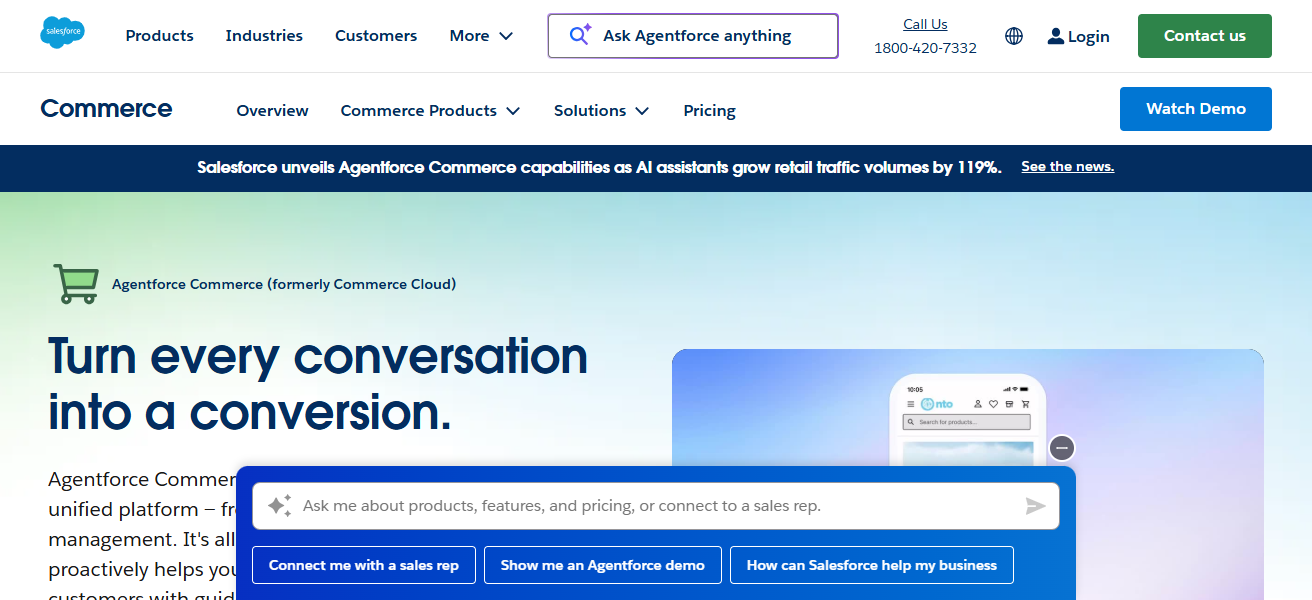
Which makes it a more seamless solution for any size business. Salesforce’s AI tools and automation work to enhance and streamline the sales, marketing, and service processes.
Moreover, the Salesforce platform’s exceptional Swift collaboration features focus on real-time business and data-based smart collaboration.
Salesforce Features
- Customizable CRM: Provides adjustable sales, service, and marketing modules to match specific business requirements.
- AI & Analytics: Encourage predictive-driven reporting with Einstein AI to drive actionable reporting.
- Third-Party Integrations: Smoothly integrates over a hundred applications and services to enhance platform capabilities.
- Automation Tools: Optimize workflows with the automation of lead and customer support management.
| Pros | Cons |
|---|---|
| Highly scalable and customizable for businesses of all sizes. | Can be expensive, especially for small businesses. |
| Extensive ecosystem with hundreds of third-party integrations. | Steeper learning curve for new users. |
| Advanced analytics and AI-driven insights. | Complexity can make implementation longer. |
| Strong automation tools for sales, marketing, and service processes. | Customization may require developer support. |
2. HubSpot
A primary competitor of Zoho Operations Suite is HubSpot because of its easy-to-navigate, comprehensive platform features.
Aside from being a one-stop-shop for marketing, sales, service, and CRM, HubSpot has automated processes, advanced analytics, and integrations to optimize operational efficiency.
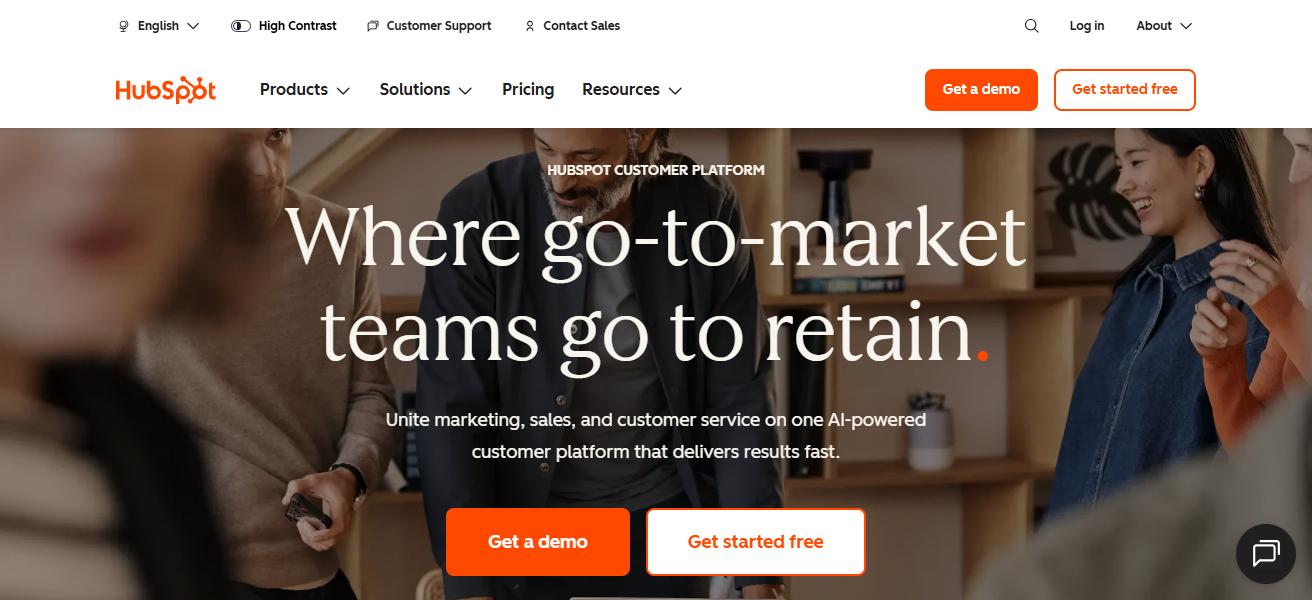
In contrast to Zoho, HubSpot prioritizes inbound marketing and customer engagement, helping teams analyze and manage leads to boost productivity. These features make HubSpot a better option for growing companies than Zoho.
HubSpot Features
- All-in-One Platform: Integrate CRM, marketing, sales, and customer service functions in a single platform.
- Inbound Marketing Focus: Lead nurturing, email marketing, and content marketing response analytics.
- Ease of Use: Learning curve to usage is very short, with little to no platform onboarding needed.
- Automation & Analytics: Automate tasks, and analyze reporting to track sales and marketing performance.
| Pros | Cons |
|---|---|
| All-in-one platform combining CRM, marketing, sales, and service tools. | Some advanced features are only available in premium plans. |
| User-friendly interface with easy onboarding. | Limited customization compared to enterprise-focused platforms. |
| Strong focus on inbound marketing and lead nurturing. | Analytics and reporting may be less advanced than specialized ERP tools. |
| Seamless integration with popular apps and software. | Can become expensive as contacts grow. |
3. Odoo
Odoo stands out as the most prominent competitor to Zoho Operations Suite, given its modular, fully-open source construction.
Odoo operates differently than most competitors, allowing its customers to select customized apps, be it accounting, inventory, CRM, or eCommerce.
Customers are able to build their operational systems from the ground up. Its strong automation, flexibility, and real-time reporting drive inter-departmental collaboration.
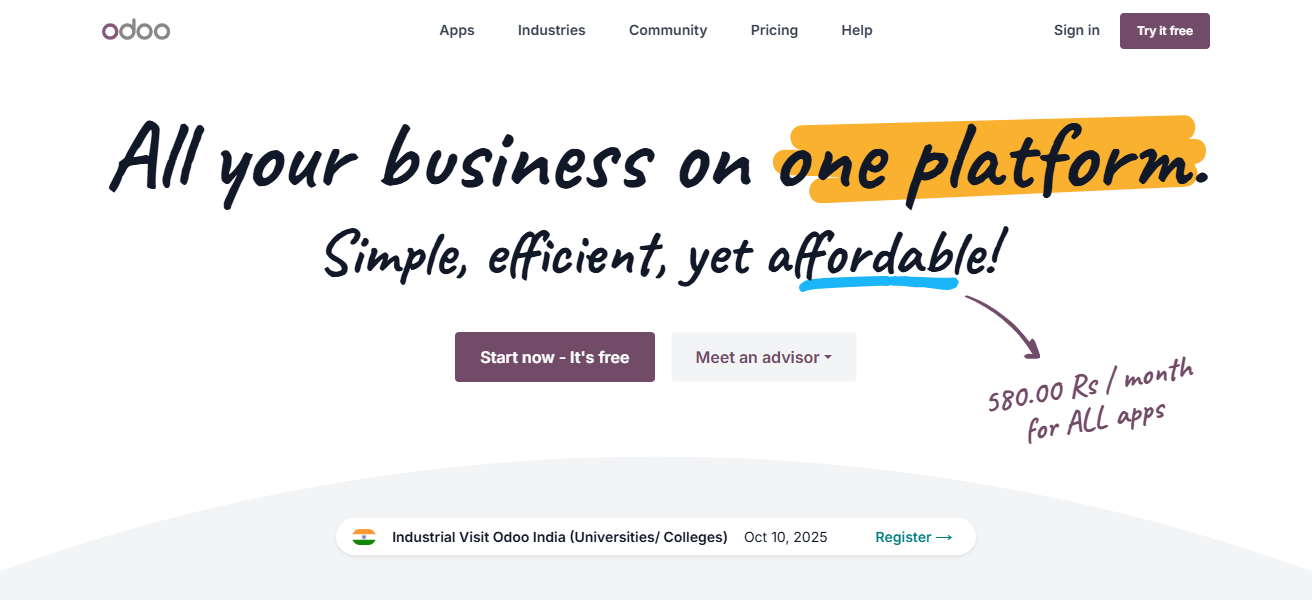
Continued adaptability and process control make Odoo an attractive alternative to Zoho. Odoo becomes particularly appealing for larger firms with greater demands searching for an economical, customizable, and scalable replacement.
Odoo Features
- Modular Architecture: Selective integration of business modules, like CRM, accounting, inventory, or eCommerce.
- Open-Source Flexibility: Free to modify the platform to better support specific operational workflows.
- Automation Features: Workflow automation on sales, inventory, and manufacturing processes is available.
- Real-Time Reporting: Active dashboards with up-to-date reporting on interdepartmental processes and activities.
| Pros | Cons |
|---|---|
| Fully modular and open-source, allowing customization of apps. | Implementation can be complex for beginners. |
| Covers a wide range of business operations, including accounting, inventory, and CRM. | User interface can feel less polished than competitors. |
| Scalable for businesses of all sizes. | Advanced features may require technical expertise. |
| Strong automation and real-time reporting capabilities. | Community support can be inconsistent for niche modules. |
4. Freshworks
Freshworks is more focused on customer operations, allowing it to stand out as a simple alternative to Zoho Operations Suite.
Unlike Zoho, Freshworks offers a user-friendly platform that integrates CRM, IT service management, and customer support.
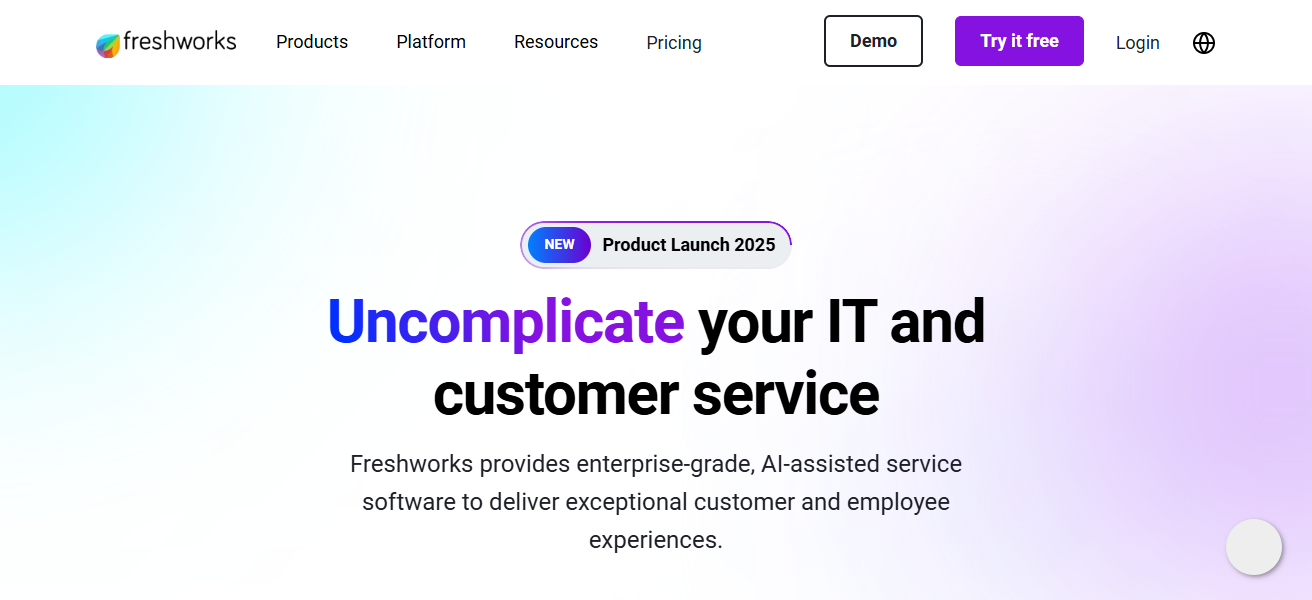
It offers a suite that requires little to no setup so that teams can adopt it easily. Freshworks increases efficiency and decision-making through automation, intelligent ticketing, and real time analytics.
This outstanding customer focus and streamline workflows is a great reason for choosing Freshworks over Zoho.
Freshworks Features
- Simplified CRM: Manages customer relationships, tickets, and engagements effortlessly.
- Smart Automation: AI streamlines lead scoring, ticket assignment, and actionable insight generation.
- Omnichannel: Integration of email, chat, phone and social for customer communications.
- Simplified Workflows: Lessens the burden of repetitive tasks on sales, marketing, and service.
| Pros | Cons |
|---|---|
| Intuitive and easy-to-use platform for CRM and customer support. | Limited advanced ERP capabilities compared to larger suites. |
| AI-powered automation enhances productivity. | Smaller ecosystem of third-party integrations. |
| Streamlined workflows for sales, marketing, and service teams. | Reporting and analytics can be basic for enterprise needs. |
| Quick adoption with minimal setup required. | Customization options are limited. |
5. SAP Business One
Due to its enterprise-level business model that suits growing companies, SAP Business One is considered one of the best alternatives to the Zoho Operations Suite.
Deep integration across finance, inventory, sales, and production, and real-time, unified operational insights are features SAP Business One offers that Zoho doesn’t.
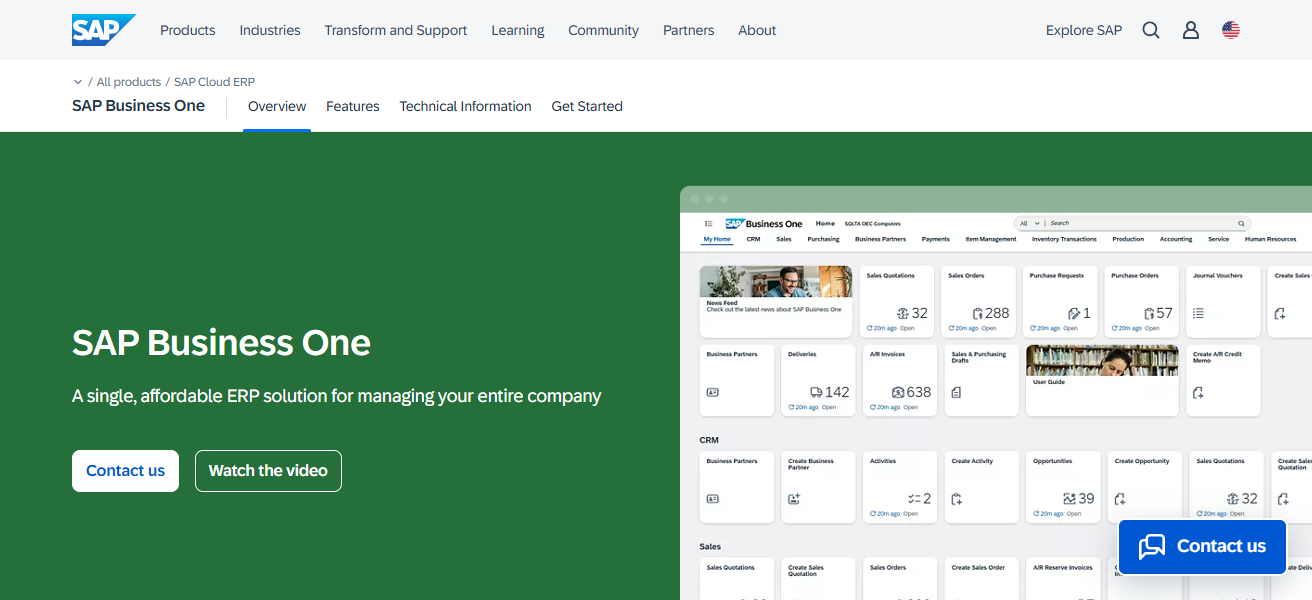
SAP Business One’s advanced reporting, customizable dashboards, and robust compliance features provide precise data-driven decision-making.
Businesses looking for a strong alternative to Zoho can count on SAP Business One’s flexibility to manage complicated business processes and scalability.
SAP Business One Features
- Complete ERP: High-level integration of finance, inventory, sales, and operations in a single solution.
- Advanced Reporting: Streamlines decision making with tailored dashboards and reports.
- Scalability: Addresses the needs of growing companies, with compliance for international markets.
- Process Automation: Streamlines the supply chain and other business workflows.
| Pros | Cons |
|---|---|
| Enterprise-grade solution with deep integration across departments. | Implementation can be time-consuming and expensive. |
| Advanced reporting and analytics for informed decision-making. | Smaller businesses may find it too complex. |
| Scalable and supports global operations with compliance features. | Requires training and specialized knowledge for users. |
| Handles complex business processes efficiently. | Upgrades and maintenance can be costly. |
6. Microsoft Dynamics 365
Microsoft Dynamics 365 stands out among competitors like Zoho Operations Suite primarily due to its embedded partnership with Microsoft, making software integration with other Microsoft products extremely efficient.
Unlike Zoho, Dynamics 365 is a dual-function ERP and CRM tool. This single tool allows users to implement and manage multiple functions within a business, including sales, finance, customer service, and operations.
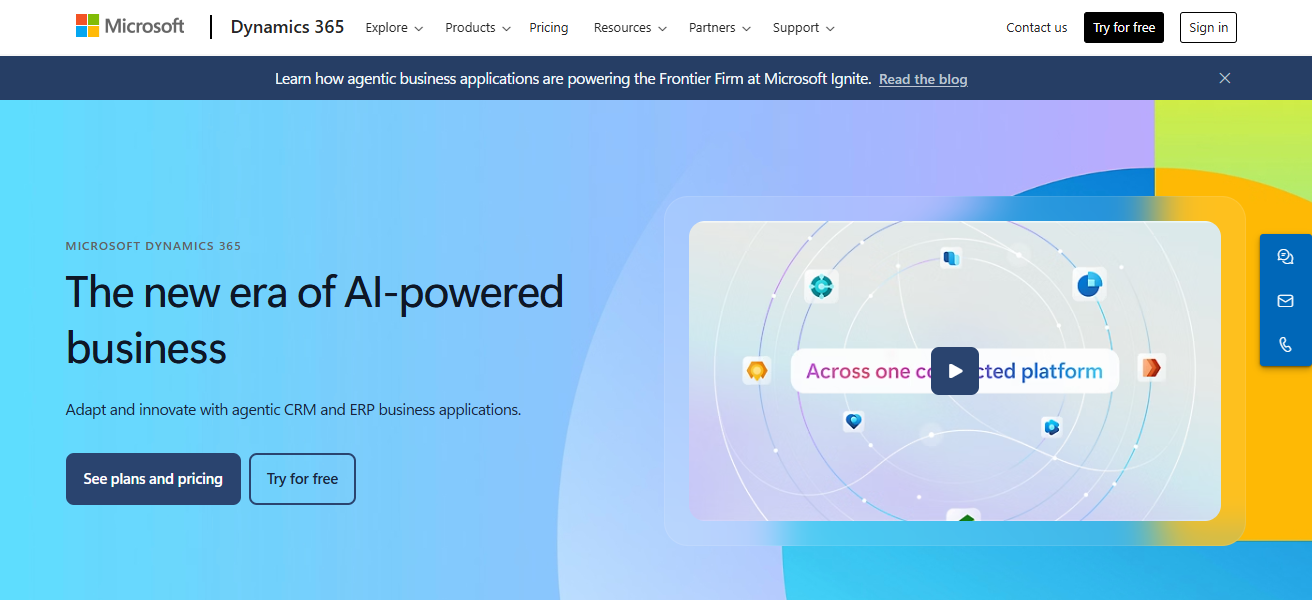
Microsoft Dynamics ERP also allows deep integration with other Microsoft products making it a highly scalable option.
Other Microsoft products also offer automation and customizable workflows for better data-driven decision making.
Microsoft Dynamics 365 Features
- Integrated CRM & ERP: Customer management, sales, finance, and operations into one experience.
- Full Microsoft Integration: Native integration with Office 365, Teams, and Power BI.
- AI & Automation: Smarter predictions and increased operational efficiency.
- Enterprise Scalability: Flexible enough to manage business processes, workflows, and unique industry specifications.
| Pros | Cons |
|---|---|
| Seamless integration with Microsoft tools like Office 365 and Teams. | Can be expensive for small businesses. |
| Combines CRM and ERP functionalities in one platform. | Customization may require technical expertise. |
| AI-driven insights and advanced automation for productivity. | Implementation complexity is high for larger organizations. |
| Highly scalable for growing enterprises. | User interface can be overwhelming for new users. |
7. Monday.com
Leading alternatives for Zoho Operations Suite have to be Monday.com due to its high flexibility and visually appealing work management platform.
Unlike Zoho, Monday offers teams the ability to create custom workflows, monitor projects and automate tasks with their operational boards and dashboards.
Managing operations is also easy with real time collaboration and integrations with various applications.
Monday.com also combines project management, CRM and work automation, which increases productivity and makes it easier for businesses to streamline their processes. It is therefore more convenient than Zoho.
Monday.com Features
- Visual Work Management: Drag-and-drop dashboards for easy tracking of projects, tasks, and processes.
- Workflow Automation: Automates repetitive tasks across teams.
- Communication & Collaboration: Real-time chat updates, shared documents, and team communications.
- Integrations: Syncs with other tools like Slack and Google Workspace for uninterrupted workflows.
| Pros | Cons |
|---|---|
| Highly visual and flexible platform for work management. | Limited native accounting or financial modules. |
| Customizable workflows and automation tools. | May require multiple add-ons for full functionality. |
| Real-time collaboration and task tracking. | Can become expensive with large teams. |
| Intuitive drag-and-drop interface suitable for all team sizes. | Not as strong in ERP-specific processes like inventory or procurement. |
8. Oracle NetSuite
NetSuite, an Oracle Company, is one of the best alternatives compared to Zoho Operations Suite due to its advanced cloud-based ERP solutions that are geared specifically for mid-sized and growing companies.
While Zoho lacks integration, NetSuite provides fully integrated modules for finance, CRM, inventory, and eCommerce, all of which allow businesses to monitor their operations in real-time.
Leveraging global compliance, automation, and advanced analytics, businesses can improve their decision-making processes.
Therefore, Oracle NetSuite provides a unique value compared to Zoho, given the platform’s ability to unite complex processes and its scalability.
Oracle NetSuite Features
- All-In-One ERP: Finance, CRM, inventory, and eCommerce all in one Cloud Platform.
- Global Coverage: Supports multiple currencies, taxes, and other cross-border compliances.
- Automation & Analytics: Optimizes processes with reporting and smart automation.
- Expandable Framework: Tailored for growing mid and large enterprises with advanced operational needs.
| Pros | Cons |
|---|---|
| Comprehensive cloud-based ERP covering finance, CRM, and eCommerce. | Expensive for small businesses. |
| Advanced automation and real-time analytics. | Implementation and customization require technical support. |
| Scalable for global operations with compliance management. | Learning curve can be steep. |
| Unifies complex business processes into one platform. | Monthly subscription costs can add up quickly. |
9. Bitrix24
Bitrix24 has emerged as a solid replacement for Zoho Operations Suite, given its all-in-one collaboration and business management functionalities.
Where Zoho fails to provide an integrated solution, Bitrix24 addresses this gap for small and medium-sized businesses through its seamless integration of CRM, project management, team communication, and workflow automation.
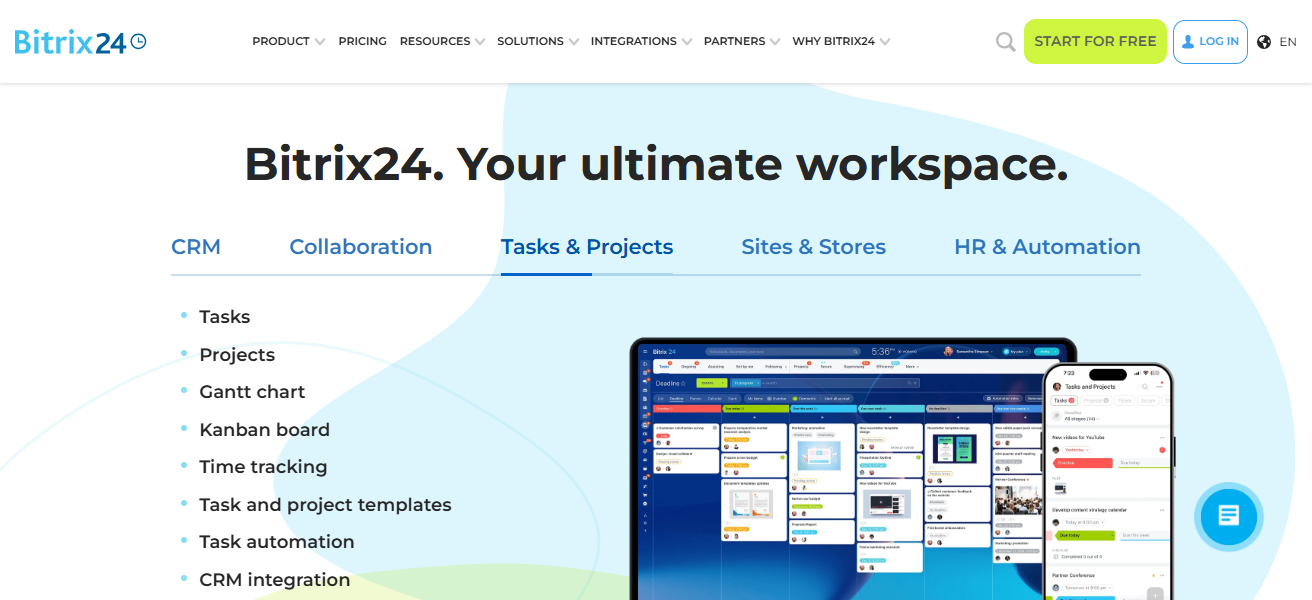
Its distinct focus on social collaboration, among other features, helps teams boost productivity through chat, video, and activity streams.
Bitrix24’s extensive task management, customizable dashboards, and streamlined operational features present users with a flexibly affordable alternative to Zoho.
Bitrix24 Features
- Single Interface Collaboration: Integrates CRM with project management, communication, and file sharing.
- Social Collaboration: Chat, video conferencing, and activity streams foster social interaction.
- Advanced Task & Workflow Management: Includes productivity tracking, and customizable dashboards.
- Budget Friendly: Includes a free plan and very affordable options for small and mid-sized teams.
| Pros | Cons |
|---|---|
| Combines CRM, project management, and collaboration tools in one platform. | User interface can feel cluttered due to many features. |
| Social collaboration tools enhance team communication. | Limited advanced ERP functionality. |
| Customizable dashboards and task management options. | Performance may slow with large teams or databases. |
| Cost-effective alternative with strong workflow automation. | Support can be limited on free or lower-tier plans. |
10. Insightly
Insightly has proven to be an effective competitor to Zoho Operations Suite due to its strong project management and CRM-centric operations.
Insightly, unlike its competitors, provides a seamless link between customer information, sales, and project execution, guaranteeing that each customer interaction produces tangible business results.
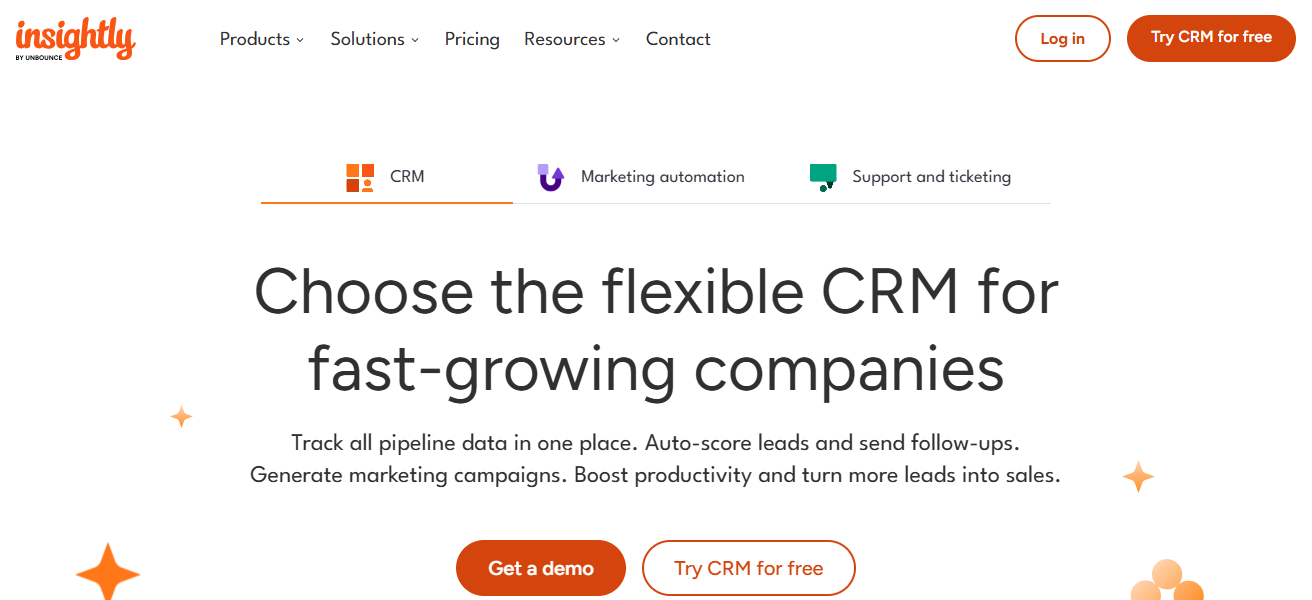
Insightly’s sophisticated workflow automation, customizable dashboards, and integrated organizational analytics help teams stay focused and make end-data decisions.
Insightly is a better, more efficient, and more sophisticated choice than Zoho, thanks to the unprecedented combination of project management and CRM all under one roof.
Insightly Features
- Integrated CRM & Project Management: Links project execution to customer data.
- Workflow Automation: Automates pipeline processes for sales, tasks, and follow-ups.
- Custom Dashboards: Analytics and operational insights in real-time.
- SME Friendly: Ideal for small and mid-sized businesses with a high growth operational scope.
| Pros | Cons |
|---|---|
| Combines CRM and project management for a seamless workflow. | May lack advanced ERP features for larger enterprises. |
| Strong workflow automation and customizable dashboards. | Limited third-party integrations compared to larger platforms. |
| Helps link customer data directly to project execution. | Reporting can be less advanced for complex operations. |
| Easy to use and suitable for small to mid-sized businesses. | Scaling for very large teams may require additional tools. |
How To Choose Best Zoho Operations Suite Alternatives
Identify Your Business Core Functions. Determine which of the following needs to be fully covered: CRM, project management, finance, support, etc.
Assess Business Size. Determine which of the following best fits your current headcount and growth objectives: the platform.
Customization. Determine which of the following best fits the ability to customize their workflows, dashboards, and modules to your needs: the platform.
Evaluate Integrations. Determine which of the following best fits ability to integrate with the current tools, apps, and comms the business is using: the platform.
Consider Automation. Determine which of the following best fits the level of automation, reporting, and AI tools: the platform.
Compare Pricing. Determine which of the following best fits the total cost of ownership: the platform
Test Free Trials. Determine which of the following best fits outcomes expectations based on their pricing models: the platform.
Conclusion
To wrap up, selecting the most appropriate alternative to Zoho Operations Suite should consider the business’s specific needs, size, and workflow.
Salesforce, HubSpot, Odoo, and other comparable platforms have distinct offerings, automation, and flexibility to enhance operational efficiency.
Through considering customization options, integration, and user-friendliness, businesses can determine the optimal solution to boost operational efficiency, improve collaboration and support decision making through the effective use of data.
FAQ
A platform that offers similar business management features like CRM and automation.
To get better scalability, customization, integrations, or pricing options.
Bitrix24 or Monday.com, due to ease of use and affordability.
Salesforce, SAP Business One, or Oracle NetSuite for advanced ERP capabilities.