
This article mainly addresses the Cloud Cost Optimization Tools Auto-Scaling Infrastructure Spend. When businesses invest in these tools, they help keep costs down while increasing performance.
These tools help eliminate wasteful infrastructure spending while analyzing and automating scaling. From optimization with AI to multi-cloud management, businesses will see an increase in scalability and efficiency as well as cost predictability in cloud systems.
Key Points & Cloud Cost Optimization Tools Auto-Scaling Infrastructure Spend
| Cloud Cost Optimization Tool | Explanation |
|---|---|
| AWS Cost Explorer | Analyzes cloud spending trends and identifies opportunities for reducing infrastructure costs efficiently. |
| Google Cloud Cost Management | Tracks usage expenses and provides recommendations to optimize Google Cloud resource spending. |
| Azure Cost Management | Helps monitor Azure expenses and control cloud budgets through detailed insights. |
| CloudHealth by VMware | Provides multi-cloud visibility, governance, and automated cost optimization strategies effectively. |
| Cloudability | Enables financial teams to manage cloud costs with powerful analytics tools. |
| Spot by NetApp | Uses automation to optimize cloud resources and reduce infrastructure expenses. |
| Kubecost | Monitors Kubernetes costs and improves resource allocation across cloud environments. |
| Harness Cloud Cost Management | Automates cloud optimization with intelligent recommendations and spending controls. |
| CAST AI | Optimizes Kubernetes infrastructure through automation, scaling, and workload management. |
| Densify | Uses AI recommendations to rightsize resources and minimize cloud waste. |
10 Cloud Cost Optimization Tools Auto-Scaling Infrastructure Spend
1. AWS Cost Explorer
AWS Cost Explorer is an excellent tool for managing costs on Amazon Web Services. It has features to view spending and usage data, including trends and predictive structures, to highlight costs that can be reduced. Users have the ability to filter data by services, accounts, regions, and workloads.
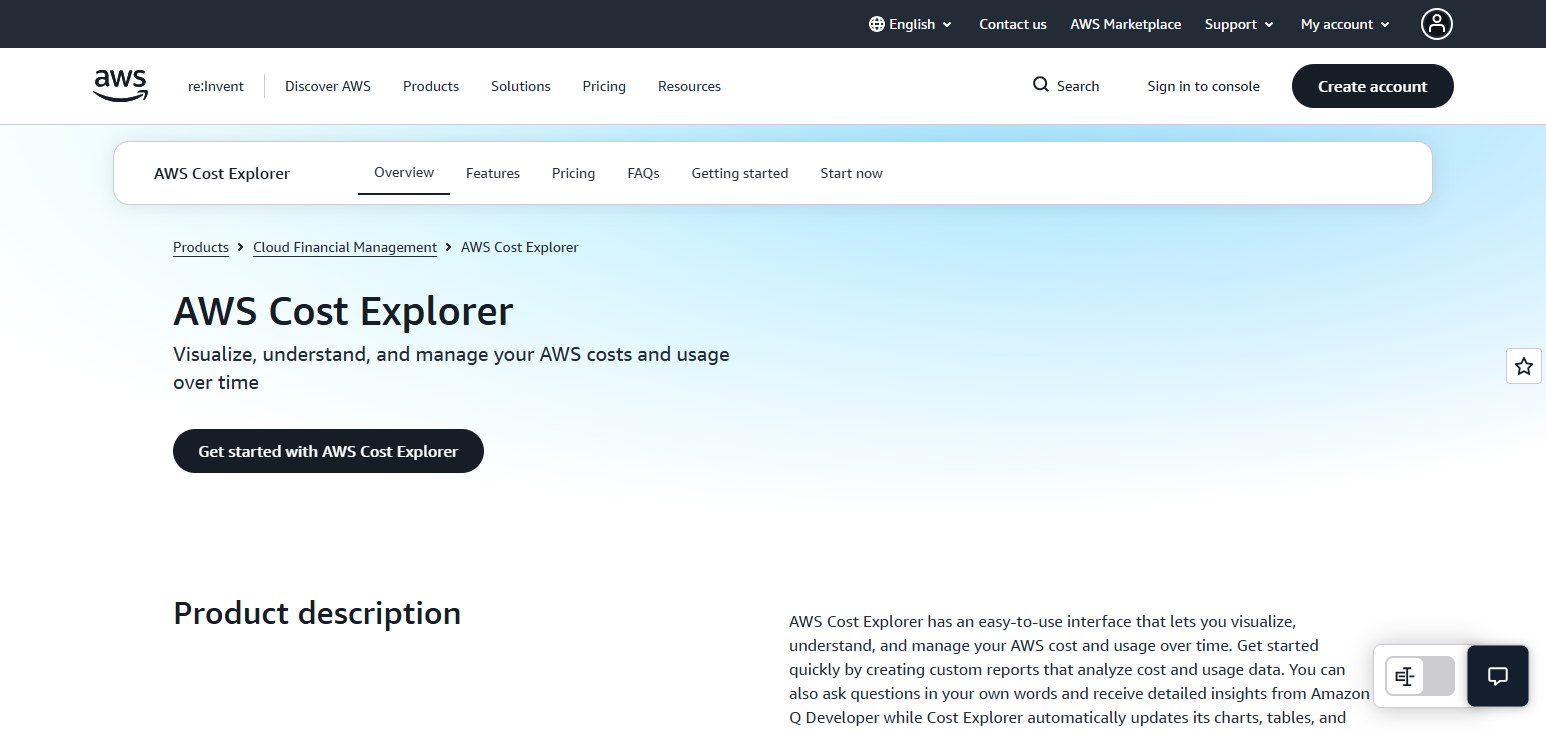
Resource usage patterns enable auto-scaling, and the tool helps teams make adjustments to the level of infrastructure of AWS based on the actual demand for service. This helps eliminate waste in AWS, while ensuring that the performance and reliability of the service is not compromised.
AWS Cost Explorer – Key Features
- Cost Tracking Analytics: A tool to analyze spending by AWS services and how resources are consumed.
- Cost Predictions: Projects future cloud costs based on past usage and spending.
- Customized Cost Reports: Cost reports can be filtered by account, service, region, tags, or workload.
- Cost Reduction Recommendations: Expensive resources are highlighted, and infrastructure costs are recommended to be minimized.
- AWS Billing Integration: This tool utilizes AWS billing services for cloud cost management.
| Pros | Cons |
|---|---|
| Provides detailed AWS spending analysis with flexible cost visualization reports. | Limited functionality outside AWS cloud environments and services. |
| Helps identify unused resources and reduce unnecessary infrastructure expenses. | Requires AWS knowledge to interpret complex cost data effectively. |
| Supports forecasting to improve future cloud budget planning. | Advanced optimization features may require additional AWS tools. |
| Enables workload-based cost tracking for better resource management. | Large organizations may need third-party tools for deeper insights. |
| Integrates easily with AWS billing and usage reports. | Does not provide fully automated resource optimization capabilities. |
2. Google Cloud Cost Management
Google Cloud Cost Management provides organizations with the ability to better manage costs associated with Google Cloud services. Features such as custom spending budgets and a more thorough view of resource consumption help explain costs associated with over-provisioned workloads.

Automated, cost-saving measures help the optimization of infrastructure in the cloud. Organizations employ Google Cloud Cost Management along with auto-scaling techniques to better manage cloud costs by ensuring resources are only provisioned based on demand.
Google Cloud Cost Management – Key Features
- Google Cloud Expenses Tracking: Google Cloud costs can be tracked by project and service level.
- Budget Creation: Organizations can set budgets and will be notified if budgets are surpassed.
- Cost Recommendations: Recommendations are made for decreasing cloud costs and increasing cloud policy.
- Resource Monitoring: Cloud costs are monitored by compute, storage, and network resources.
- Dynamic Resource Management: Resource costs are balanced to match the needs of the workload.
| Pros | Cons |
|---|---|
| Offers detailed Google Cloud spending visibility and resource analysis. | Primarily designed for Google Cloud users only. |
| Provides automated recommendations for reducing unnecessary cloud costs. | Beginners may find advanced features difficult to configure. |
| Supports budgeting alerts and financial governance controls. | Limited multi-cloud cost management capabilities. |
| Helps optimize compute, storage, and workload utilization efficiently. | Requires proper setup for accurate cost reporting. |
| Improves cloud spending control through real-time insights. | Some optimization features need additional Google Cloud services. |
3. Azure Cost Management
Azure Cost Management offers tools to understand and reduce spending in Azure across multiple Cloud environments. It has advanced budgeting tools, cost alerts, and utilization reports which help Azure customers maintain financial control.
It has also identified spending behavior and provides recommendations for resource rightsizing, removal of idle resources, and workload optimizations.
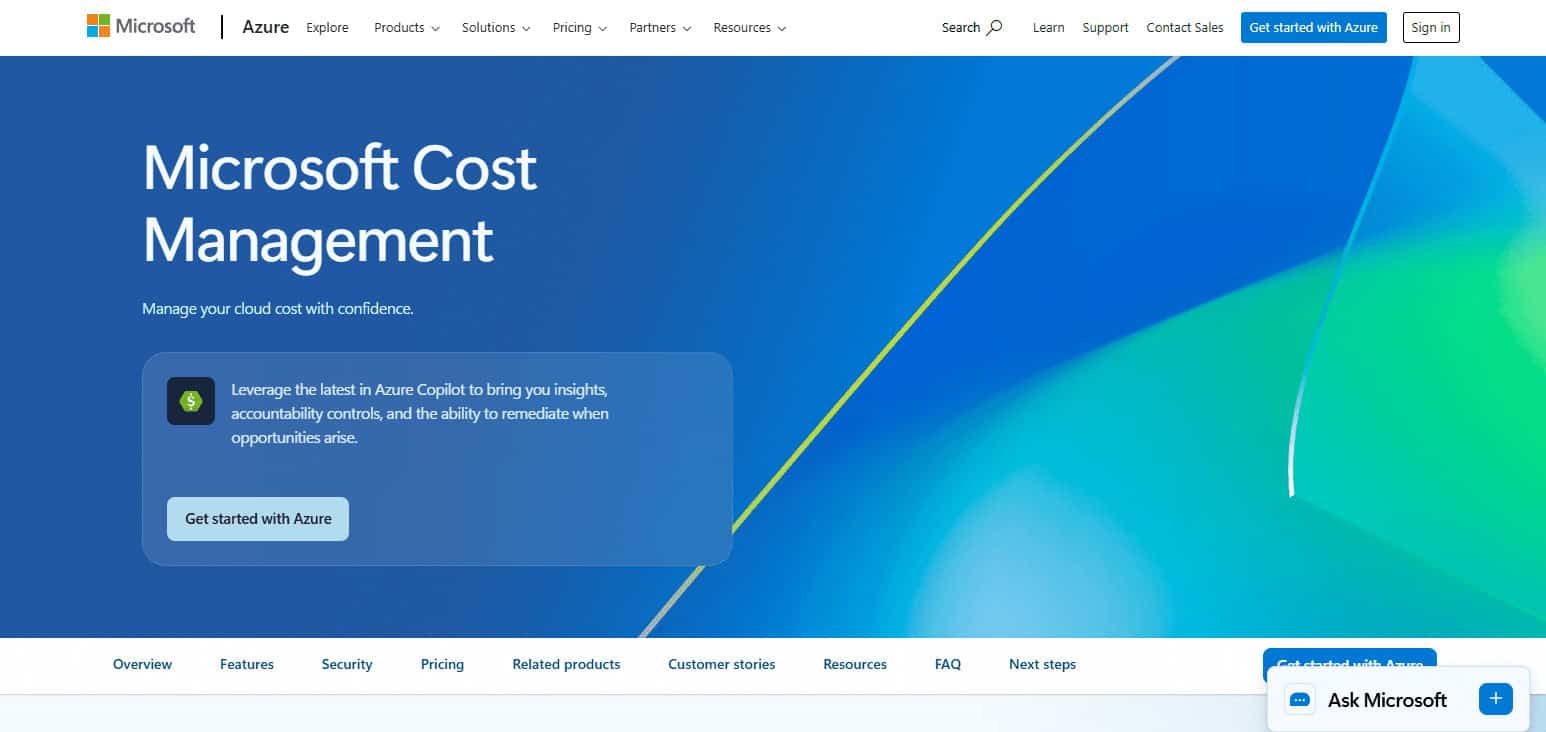
With regard to flexible infrastructure and auto-scaling, Azure Cost Management also helps organizations determine resource demand and adjust Scalable Cloud resources appropriately.
Given the increased usage of AI resources as well as increased use of Cloud-native applications, this tool helps organizations implement cost controls while balancing the performance, making Azure operations less expensive, predictable, and sustainable.
Azure Cost Management – Key Features
- Cost Tracking: The cost of all Azure resources and their usage can be monitored.
- Budget Notifications: Spending limits can be set, and notifications can be sent once the budget is reached.
- Rightsizing Recommendations: Recommendations are provided for removing surplus Azure resources.
- Financial Control: To maintain financial control of an organization’s Azure resources, cloud governance is provided.
- Cost Management Integration: Cost management workflows are enhanced by connections to Azure services.
| Pros | Cons |
|---|---|
| Provides strong budgeting and cost monitoring features for Azure users. | Mainly focused on Microsoft Azure environments. |
| Helps identify expensive workloads and optimization opportunities. | Advanced analytics require Azure expertise. |
| Supports cost alerts to prevent unexpected cloud expenses. | Limited automation compared with specialized optimization platforms. |
| Integrates well with Microsoft cloud ecosystem services. | Large environments may require additional management solutions. |
| Improves financial control through detailed usage reports. | Cost recommendations may require manual implementation. |
4. CloudHealth by VMware
CloudHealth by VMware is a multi-cloud resource optimization platform that allows large organizations to effectively manage complex multi-cloud environments. It combines spending and security data and resource utilization across multiple providers.
Organizations can analyze workloads and identify idle resources and utilize automated optimization to incur cost savings. CloudHealth can be auto-scaled and, by the nature of CloudHealth infrastructure, provides organizations insight into the behavior of workloads and how resources are performed.
As most organizations now adopt Hybrid architecture and Multi-Cloud configurations, CloudHealth enables teams to keep the Cloud operating successfully and cost effectively.
CloudHealth by VMware – Key Features
- Multi-Cloud Management – Visibility of AWS, Azure, Google Cloud, and hybrid.
- Cost Governance – Creates controls on how much the enterprise spends on the cloud.
- Resource Optimization – Finds waste and offers improvements to save costs.
- Performance Monitoring – Analyzes performance of workloads and the costs of the cloud.
- Automated Reporting – Produces comprehensive cloud financial and operational reports.
| Pros | Cons |
|---|---|
| Provides centralized visibility across multiple cloud platforms. | Can be expensive for small businesses and startups. |
| Supports hybrid cloud governance and compliance management. | Requires configuration before achieving accurate insights. |
| Helps optimize resources through advanced analytics. | Interface may appear complex for new users. |
| Improves cloud financial management across departments. | Some advanced features require premium plans. |
| Supports enterprise-scale cloud optimization strategies. | Implementation may require technical expertise. |
5. Cloudability
Cloudability provides financial management for cloud services. It offers tools for analytics, cost reporting, and financial governance for cloud services. Usage reports help teams identify cost optimization opportunities.
Cloudability analyzes the trends and patterns in cloud services usage and manages the auto scaling infrastructure. Organizations can avoid over-provisioning.
Many organizations have adopted services from Cloudability. It helps maintain an efficient cloud operation, provides expense forecasting, and provides accountability. Cloudability provides cost control, scalability, and performance in a balanced approach.
Cloudability – Key Features
- Cloud Financial Analytics – Analytics on the spend and use of cloud resources.
- Cost Allocation – Distribution of cloud costs to teams and projects.
- Budget Forecasting – Future costs based on previous spend data.
- Multi-Cloud Visibility – Viewing capabilities across cloud providers.
- Optimization Recommendations – Recommendations to improve infrastructure efficiency.
| Pros | Cons |
|---|---|
| Offers detailed cloud financial analytics and reporting. | Pricing may be high for smaller organizations. |
| Helps allocate cloud costs across teams and projects. | Requires training for effective usage. |
| Supports multi-cloud expense visibility and optimization. | Automated optimization options are limited compared with AI tools. |
| Improves accountability for cloud spending management. | Initial setup can be time-consuming. |
| Provides valuable forecasting and budgeting capabilities. | Best suited for enterprise-level cloud environments. |
6. Spot by NetApp
Spot by NetApp helps manage cloud infrastructure in a cost-efficient manner by providing automation and manages services using machine learning.
The platform analyzes workload and matches the computing demand. The platform provides cost optimizations for cloud instances, Kubernetes clusters, and cloud containers.

The automation features provide an intelligent control of scaling services and an optimization for resource spending. It helps the teams of an organization achieve efficiency in the cloud
While maintaining accessibility for the applications. The services provided by Spot help provide a balanced approach in cost savings and cloud flexibility.
Spot by NetApp – Key Features
- AI Optimizations – Learning models used to improve overall cloud resource usage.
- Dynamic Auto-Scaling – Adjusts infrastructure based on real-time workload needs.
- Cloud Instance Optimization – Cost-based resource selection for cloud-based applications.
- Kubernetes Optimization – Container workload and Kubernetes spending optimization.
- Cost Reduction – Finds opportunities to save without any manual work.
| Pros | Cons |
|---|---|
| Uses automation to reduce cloud infrastructure costs significantly. | Advanced features may require technical expertise. |
| Dynamically adjusts resources based on workload demand. | Mainly focused on compute and Kubernetes optimization. |
| Helps maximize cloud efficiency through machine learning. | Dependency on automation may require monitoring. |
| Supports auto-scaling for modern cloud applications. | Not ideal for simple cloud environments. |
| Reduces over-provisioning through intelligent resource management. | Pricing structure may be complex for some users. |
7. Kubecost
Kubecost is a cost management tool for Kubernetes. With the ability for teams to visualize the use of cloud resources in real time, Kubecost is beneficial to a lot of Kubernetes and cloud users.
This is particularly true for the teams that have the ability to use tools to analyze and improve the use of cloud resources, enabling the team to eliminate wasteful spending on the cloud, and for the environments that automatically scale.

Teams that are constantly thinking of the efficiency of resources also benefit. Kubecost works by providing insight on the cost tradeoffs and by analyzing the many areas of Kubernetes. Companies that are increasingly dependent on the use of cloud resources and containerized applications have a lot to gain.
Many companies experience the benefit of increased efficiency and the effective use of cloud resources through the reporting and the optimization recommendations provided by Kubecost.
Kubecost – Key Features
- Kubernetes Cost Monitoring – Monitoring costs across clusters, namespaces, workloads, and apps.
- Resource Insights – Visibility into patterns of resource consumption within Kubernetes.
- Cost Allocation – Helps teams know the costs by application and department.
- Efficiency Analysis – Analysis of Kubernetes on over and under allocated resources.
- Cloud Optimization Support: Enhances the management of container infrastructure and costs.
| Pros | Cons |
|---|---|
| Provides real-time Kubernetes cost visibility and monitoring. | Limited usefulness outside Kubernetes environments. |
| Helps optimize container resource allocation effectively. | Requires Kubernetes expertise for implementation. |
| Supports workload-level cost tracking and reporting. | Advanced features require paid versions. |
| Improves Kubernetes financial governance and efficiency. | Setup complexity increases with large clusters. |
| Helps identify inefficient resource consumption patterns. | Does not manage all cloud infrastructure costs. |
8. Harness Cloud Cost Management
Harness Cloud Cost Management assists companies in managing cloud costs. Unlike other products, this software makes cloud cost management easier by automatically making recommendations for the use and management of cloud resources.
Harness Cloud Cost Management works by identifying the areas of the cloud that are dominated by waste and recommends either eliminating the resource or making it more efficient.
This tool prioritizes the use and management of cloud resources in a way that is compatible with the workflows of the DevOps team.
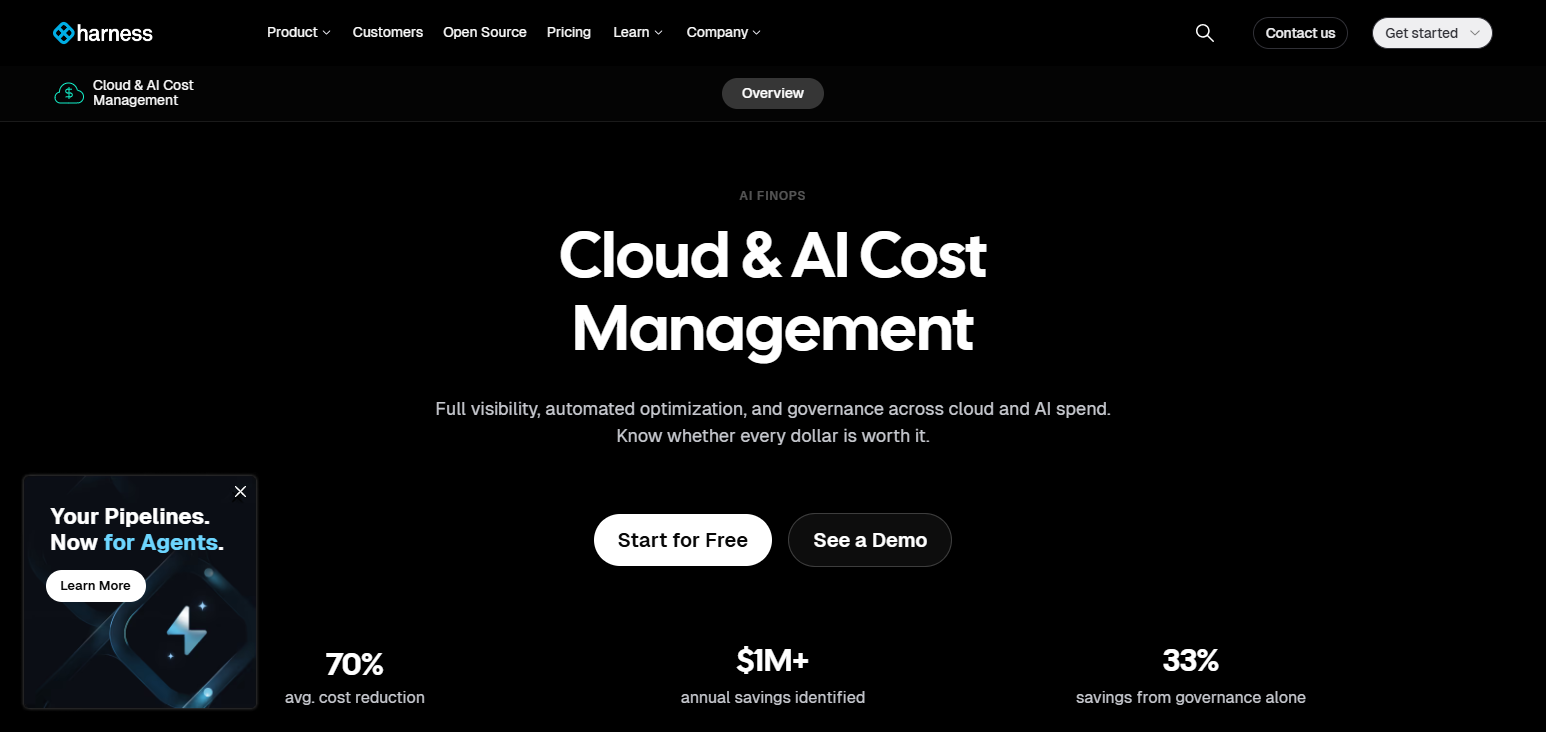
This tool also works with cloud infrastructure that automatically scales. Companies that have recognized the utility of using cloud services for their operations also appreciate the demand for their services.
This tool is also helpful for companies that lack the staff to manage cloud resources. Leveraging the automation of this tool facilitates the cloud resources to be optimized on a constant basis.
Use Cloud Cost Management – Key Features
- Automated Cost Monitoring: Monitors cloud spending on a continuous basis and applies advanced automation.
- Waste Identification: Recognizes resources with no utility and infrastructure cost inefficiencies.
- DevOps Integration: Integrates cloud cost management into development operations.
- Optimization Recommendations: Shares recommendations for the reduction of cloud costs.
- Continuous Cost Control: Allows for the ongoing monitoring and enhancement of cloud operations.
| Pros | Cons |
|---|---|
| Automates cloud cost monitoring and optimization processes. | May require DevOps knowledge for maximum benefits. |
| Provides intelligent recommendations for reducing expenses. | Pricing can be higher for smaller teams. |
| Integrates with modern CI/CD and DevOps workflows. | Initial configuration may require technical effort. |
| Helps manage cloud spending continuously. | Some features are unnecessary for simple workloads. |
| Improves resource efficiency through automation. | Limited customization compared with some enterprise tools. |
9. CAST AI
CAST AI’s main purpose is to provide an AI driven, cloud optimization service, improving the efficiency of cloud usage for Kubernetes.
Using CAST AI, businesses are able to spend less on cloud usage by allowing the application to analyze workloads, dynamically adjust required computing resources, and optimize the efficiency of computing resources, all automatically.

CAST AI enables each business to achieve better auto-scaling by evaluating their application and adjusting the underlying infrastructure in real-time. CAST AI eases the management of Kubernetes for cloud providers by working with many.
Finally, as the demand for AI and container based workloads increases, CAST AI is an excellent choice for businesses by providing automated performance and cost optimizations for cloud infrastructure.
CAST AI – Key Features
- AI Cloud Optimization: Automates the optimization of Kubernetes workloads using artificial intelligence.
- Automated Resource Scaling: Changes the needed computing resources based on the demands of the application.
- Multi-Cloud Kubernetes: Supports the use of numerous cloud platforms.
- Real-Time Infrastructure Optimization: Evaluates workloads to optimize efficiency on an ongoing basis.
- Cost Optimization: Automates cloud cost savings by dynamically adjusting resources.
| Pros | Cons |
|---|---|
| Uses AI automation to optimize Kubernetes infrastructure costs. | Primarily focused on Kubernetes workloads. |
| Provides real-time resource optimization and scaling. | Requires technical knowledge for deployment. |
| Supports multiple cloud providers for flexibility. | May not fit smaller cloud environments. |
| Reduces cloud waste through intelligent recommendations. | AI-based automation requires proper configuration. |
| Improves Kubernetes performance and operational efficiency. | Some advanced capabilities require premium subscriptions. |
10. Densify
Densify optimally adjusts cloud infrastructure resources by using artificial intelligence and cloud cost analytics. Densify solves the issue of wasted cost by eliminating over-provisioning and recommending the optimal sizing of virtual machines, cloud resources, and servers.
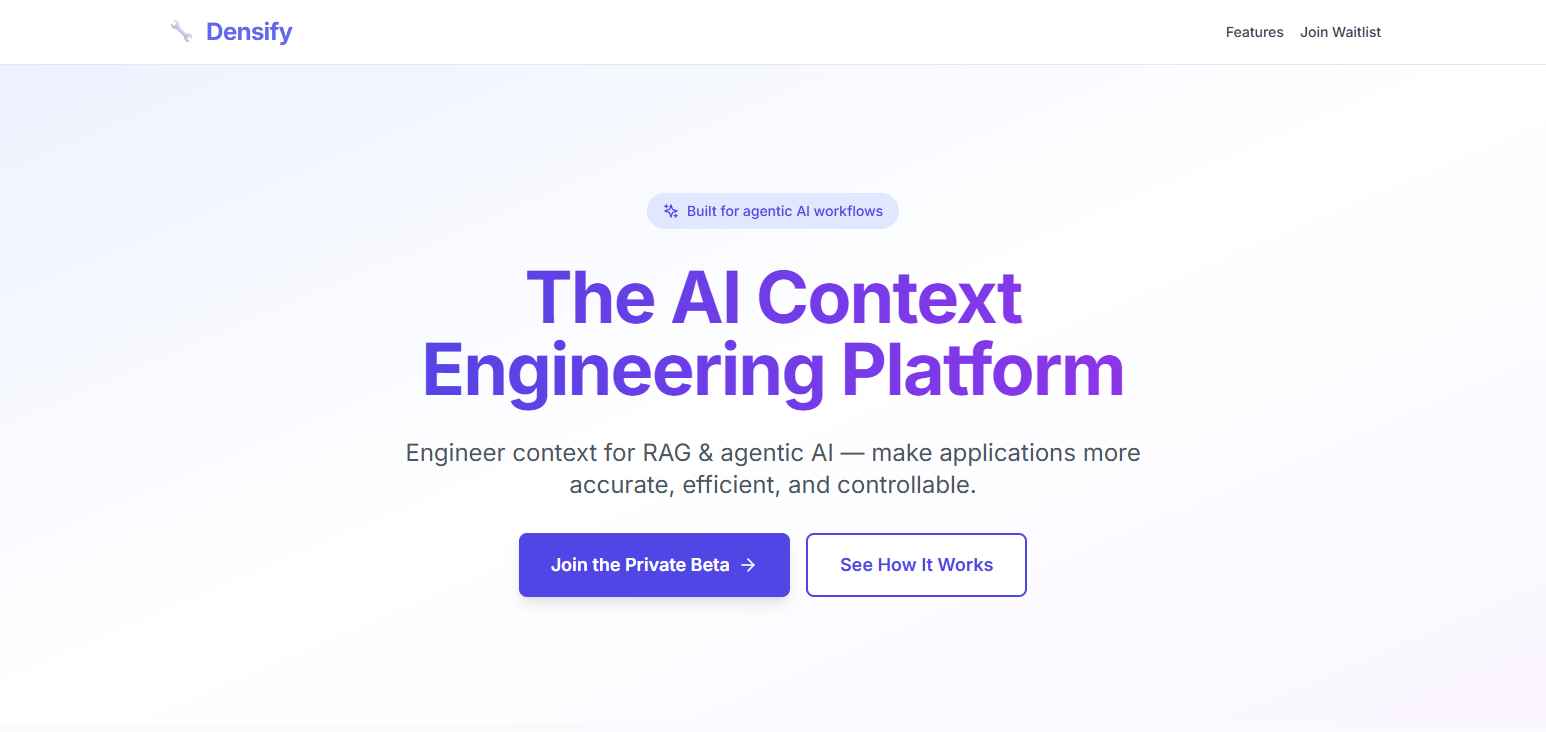
Densify provides the capability of scaling with demand without the issue of wasted resources. Densify is favored by many large corporations for their cloud optimization, due to the ease of use of the combination of automation and AI analytics for the sizing and provisioning of resources.
Densify ensures that the necessary resources for cloud computing are not expensive, while also enabling infrastructure for cloud computing resource demand at an optimal level.
Densify – Key Features
- AI Resource Recommendations: Employs artificial intelligence and predictive analytics to recommend resource configurations.
- Cloud Rightsizing: Assists in choosing the appropriate computing resources to avoid excess provisioning.
- Hybrid Cloud Optimization: Provides optimization in both public and private cloud services.
- Workload Assessment: Evaluates the needs of an application to better plan cloud infrastructure.
- Proactive Cost Management: Predicts the need for resources and enhances the efficiency of cloud operations.
| Pros | Cons |
|---|---|
| Uses AI predictions to improve cloud resource utilization. | Can be complex for beginners to understand. |
| Helps eliminate over-provisioning and unnecessary spending. | Requires accurate workload data for recommendations. |
| Supports hybrid and multi-cloud optimization strategies. | Implementation may require technical assistance. |
| Provides intelligent rightsizing recommendations for workloads. | Pricing may not suit small businesses. |
| Improves infrastructure efficiency through predictive analytics. | Does not directly automate every optimization action. |
Conclsuion
In conclusion, Cloud Cost Optimization Tools Auto-Scaling Infrastructure Spend provide automation to improve resource allocation according to demand, reduce waste, and preserve performance. These tools use automation and AI for insight and real-time resource demand.
As more organizations use the cloud, these tools will allow the company to use the cloud more cost effectively, more easily grow the use of the cloud to meet requirements, and develop a more cost-efficient cloud structure.
FAQ
How do these tools support auto-scaling?
They analyze workload demand and automatically adjust resources based on usage.
Which cloud providers support cost optimization tools?
AWS, Google Cloud, Microsoft Azure, and multi-cloud platforms support these tools.
Can cloud optimization tools reduce infrastructure costs?
Yes, they identify waste, optimize resources, and prevent over-provisioning expenses.
Are AI-based cloud optimization tools effective?
Yes, AI tools provide predictive insights and automated cost-saving recommendations.