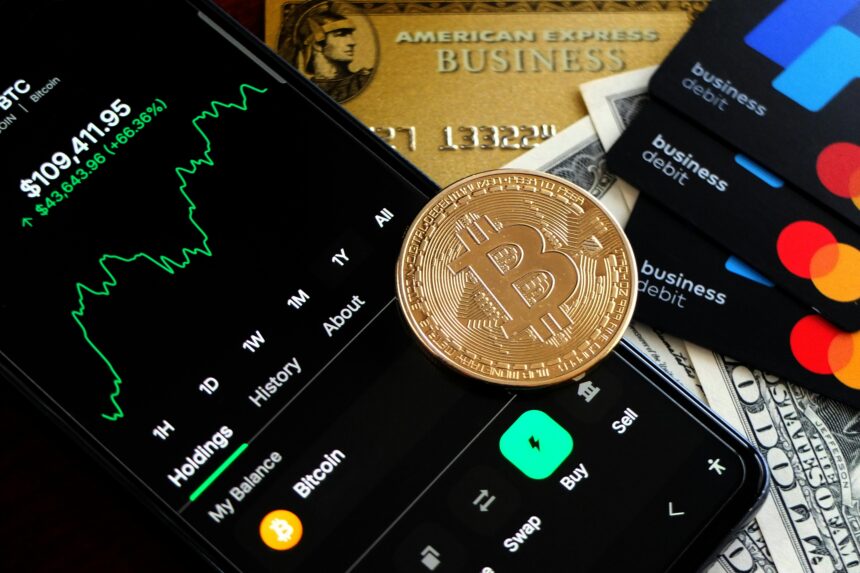
This article discusses the impact of the new decentralized checkout systems on online payments, including the new, faster, cheaper, and more secure(safe).
These systems, built on blockchain technology, cut out the middleman, and realize payments anywhere in the world in real time, all while eliminating the costs and fees associated.
As online commerce faces a never seen before crescendo, these decentralized checkout systems are at the heart of transforming online.
key Points & Decentralized Checkout Systems Transforming Online Payments
| System / Platform | Key Point / Transformation |
|---|---|
| Ripple (XRP) | Enables real-time, low-cost cross-border payments, reducing reliance on traditional banks |
| Stellar (XLM) | Focuses on financial inclusion by connecting unbanked populations with affordable digital payments |
| Celo | Mobile-first blockchain designed for decentralized payments, making crypto transactions accessible via smartphones |
| BitPay | Provides merchants with decentralized crypto checkout solutions, allowing direct Bitcoin and altcoin payments |
| Request Network | Decentralized invoicing and payment requests, enabling peer-to-peer transactions without intermediaries |
| Utrust | Combines blockchain payments with buyer protection, bridging crypto and fiat for eCommerce |
| Dash | Offers instant, low-fee digital payments suitable for everyday purchases and online checkouts |
| OpenBazaar | Peer-to-peer decentralized marketplace with crypto checkout, eliminating centralized eCommerce platforms |
| Origin Protocol | Decentralized eCommerce infrastructure enabling direct crypto payments between buyers and sellers |
| Bakkt | Provides decentralized digital asset checkout solutions, integrating crypto into mainstream retail payments |
10 Decentralized Checkout Systems Transforming Online Payments
1. Ripple (XRP)
Ripple (XRP) has worked to create a cross-border settlement network aimed at global commerce and making online payments cheaper and quicker.
With the XRP Ledger, companies get to automate their payments and have their transactions processed in a couple of seconds.
Unlike traditional banking, Ripple does not have a decentralized structure and does not have to work with third parties, making cross-border payment transactions a lot cheaper.
Ripple’s ecosystem performs real-time transactions with smart payment routing. Overall, Ripple provides a new standard for digital merchant and payment processing with transparency, quick payment routing and real-time payments.
| Feature | Description |
|---|---|
| Fast Settlement | Transactions settle in 3–5 seconds for instant checkout. |
| Low Fees | Very small transaction costs make payments efficient. |
| Cross-Border Support | Designed for global payments and multi-currency transfers. |
| Decentralized Ledger | Uses the XRP Ledger for secure, trustless operations. |
| Liquidity Solutions | Provides on-demand liquidity for merchants. |
| High Scalability | Supports thousands of transactions per second (TPS). |
2. Stellar (XLM)
Stellar (XLM) offer decentralized, low-cost payment solutions for online stores that allow for quick, global microtransactions.
Designed to connect to a wide range of end-users, Stellars networks allow for tokenized payments, multicurrency, peer-to-merchant payments, and and transactional payment transfers without a third party.
Checkouts that use Stellar allow for real time payments and transparent fees while accepting stablecoins and fiat. Stellars DEX also provides easy currency a currency conversion at the time of transaction.
Stellar allows a merchant to offer payments in different currencies and for their users to pay in different currencies.
Stellar is a useful cross border payment solution for digitally native businesses, subscription services, and cross border commerce.
| Feature | Description |
|---|---|
| Cheap Transactions | Ultra-low fees suitable for microtransactions. |
| Fast Payments | Near-instant confirmations for smooth checkout. |
| Multi-Currency Support | Enables tokenized fiat, crypto, and stablecoin payments. |
| Decentralized Exchange (DEX) | Built-in DEX helps convert currencies during checkout. |
| Global Accessibility | Ideal for cross-border commerce and remittances. |
| Transparent Ledger | Provides clear, immutable payment tracking. |
3. Celo
Celo is a mobile-first blockchain that enables decentralized payments at the point of sale in online stores. This is particularly useful in developing countries.
Celo is also is very accessible because users can transfer money using their mobile phone numbers and can use stablecoins, like the cUSD, to mitigate the impacts of unstable inflation during the purchase.
Merchants receive instant payments and instant payment settlements that are mobile compatible without the devices overheating.
Celo is built for low powered devices to enable financial inclusion globally. Celo is built for decentralized commerce, low powered devices, cross border payments, and mobile retail. Celo enables businesses to offer a low cost decentralized payment solutions at the point of sale.
| Feature | Description |
|---|---|
| Mobile-First Design | Optimized for mobile payments and lightweight devices. |
| Phone Number Wallets | Users can transact using phone numbers as identities. |
| Stablecoin Support | cUSD, cEUR, and others reduce price volatility at checkout. |
| Low Gas Fees | Very cheap to send or receive payments. |
| Rapid Settlement | Fast confirmations ideal for e-commerce. |
| Borderless Payments | Built for global and emerging-market merchants. |
4. BitPay
For merchants to be able to directly accept Bitcoin and other cryptocurrencies, BitPay, the primary crypto payment processor, decouples the payment.
While BitPay utilizes a mixed model, it remains settlement reliant on the dispersed blockchain which lowers dependence on banking systems.
The automated conversion to fiat, low processing fees, and global reach make it attractive. Integrating BitPay’s checkout widgets into online stores allows customers to make secure payments through their digital wallets.
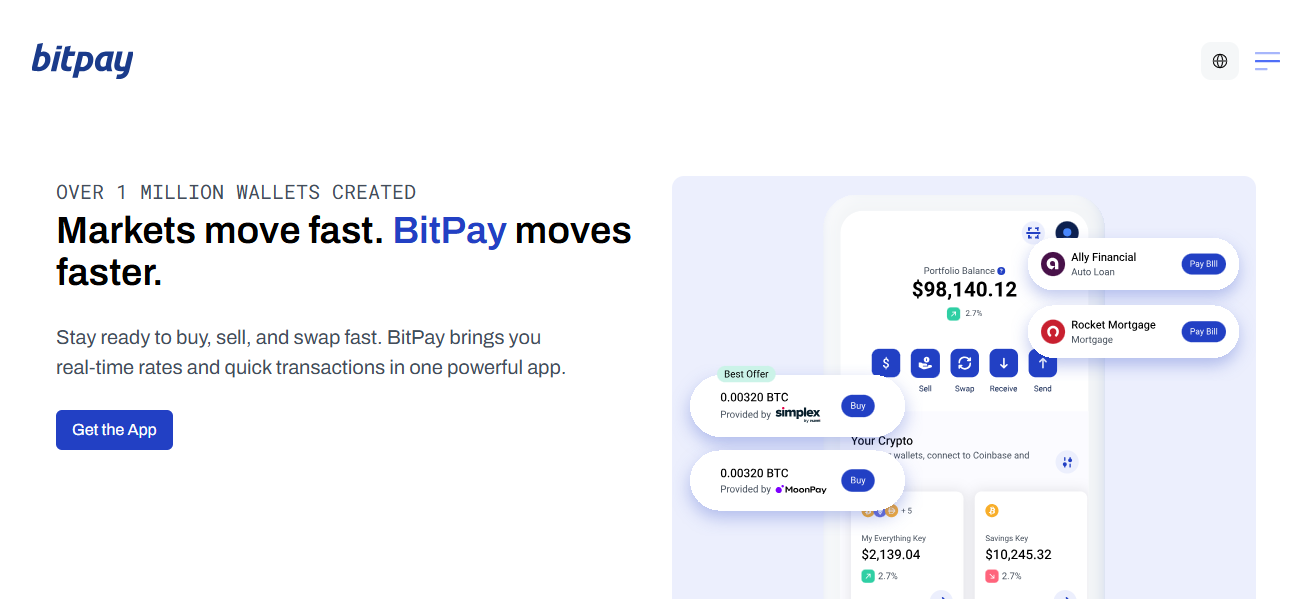
The automated invoicing, fraud- resistant architecture, and settlement tracking provide a dependable conduit from merchants to decentralized assets.
BitPay makes crypto payment processing simple and seamless, so merchants can offer customers an easier, faster, and more affordable way to make online payments.
| Feature | Description |
|---|---|
| Multi-Crypto Support | Accepts BTC, ETH, USDC, and more. |
| Merchant Tools | Invoices, checkout buttons, POS integrations. |
| Instant Conversion | Converts crypto to fiat automatically. |
| Low Processing Fees | Cheaper than credit card processors. |
| Fraud Protection | Blockchain verifiability reduces chargeback risks. |
| Global Acceptance | Works with merchants worldwide. |
5. Request Network
Request Network is a payment protocol that provides efficient invoicing and online checkout alternatives.
As a company on Ethereum, it provides users the ability to create blockchain payment requests that can not only be verified by the receiver, but also unchangeable.
Customers User crypto and stablecoins. Payments automatically create audits as and history as required by law.
Because the system is decentralized, there is no need for middlemen on invoices and the invoicing process can be automated and workflows streamlined.
From an ecommerce perspective, there is no need trusting a payment system as Request permits, and provides to the end user and merchant complete control to both parties over their payment.
Request has also automated digital commerce through payment systems by providing features like recurring payment
Integrations to other accounting systems and the ability to use the Request Network anywhere in the world.
| Feature | Description |
|---|---|
| Decentralized Invoicing | Payment requests stored on-chain. |
| Transparent Audit Trail | Immutable history for accounting and compliance. |
| Multi-Crypto Payments | Accepts ETH, stablecoins, and ERC-20 tokens. |
| Smart Contract Automation | Supports recurring billing and payment workflows. |
| Low-Cost Transfers | Reduced fees through decentralized rails. |
| Global Accessibility | Works for international B2B and B2C payments. |
6. Utrust
This blockchain company has created a custom-made crypto-enabled checkout solution integrated with buyer-protection features.
Utrust has developed a secure digital escrow solution where users can hold unstable digital assets with the click of a button.
Utrust can also be paid in numerous digital assets including crypto assets, where automated conversions to stablecoins and even fiat happen.
Utrust’s payment model is blockchain based and transcends geopolitical borders and payment gateways.
Utrust is also a dispute resolution service provider. Utrust provides a digital checkout service allowing online retailers to accept paid borderless crypto assets and more.
| Feature | Description |
|---|---|
| Secure Escrow System | Funds held safely until transaction completes. |
| Instant Payments | Fast blockchain settlements for checkout. |
| Multi-Coin Support | Accepts numerous cryptocurrencies for payments. |
| Automatic Conversion | Converts crypto to stablecoins or fiat. |
| On-Chain Dispute Resolution | Transparent, decentralized conflict handling. |
| Low Fees | Reduced merchant costs compared to traditional gateways. |
7. Dash
Dash is a digital currency and a payment network. Dash is also the only digital currency with a decentralized infrastructure, meaning that anyone can transact without intermediaries with that payment network.
Dash is also integrated with instant payment solutions where transaction confirmations happen almost instantaneously.
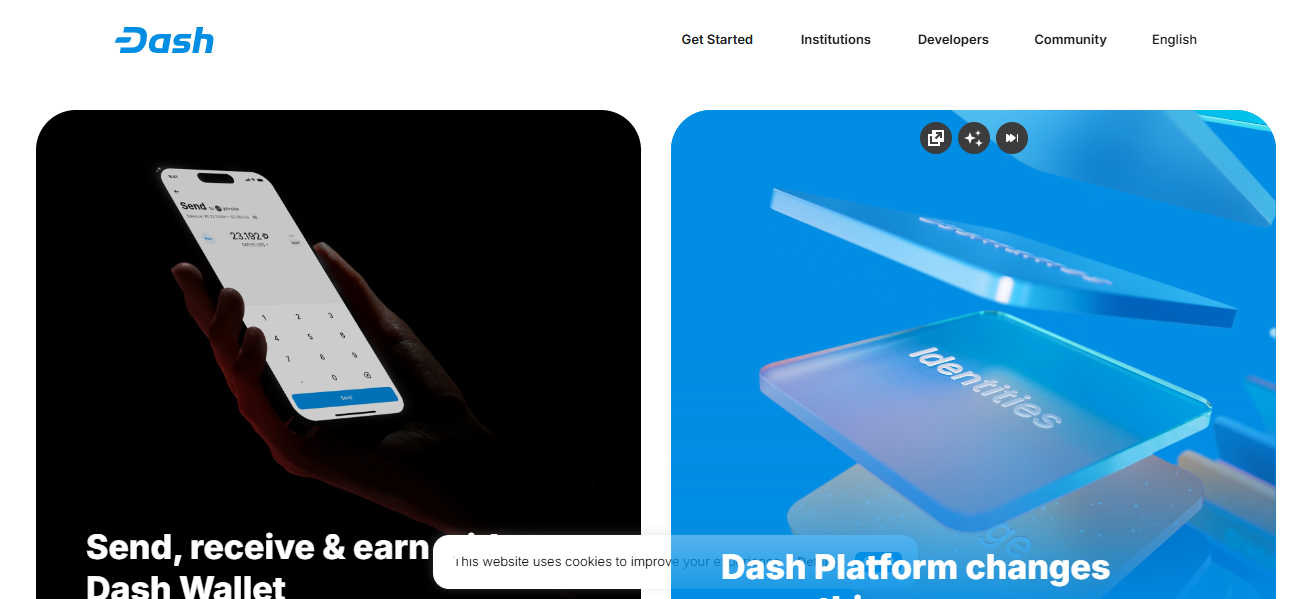
Dash is ideal for online retailers, as it provides predictable transaction fees, high network security and is available globally.
Dash is integrated with most e-commerce platforms, point of sale terminals, and payment service providers.
Dash exhibits a high degree of community focus, making it one of the primary digital currencies for online retailers, including frictionless crypto-enabled checkouts.
| Feature | Description |
|---|---|
| InstantSend | Near-instant transaction confirmations. |
| Low Fees | Ideal for micro- and macro-transactions. |
| High Security | Secured by Masternode network. |
| User-Friendly | Easy wallet setups for online stores. |
| Global Availability | Works worldwide without banking barriers. |
| Decentralized Payments | Direct peer-to-merchant transactions. |
8. OpenBazaar
OpenBazaar is a decentralized peer-to-peer marketplace that has changed the way transactions are handled by removing the need for a traditional point of sale.
Operating on an open-source model, it allows buyers and sellers to interact directly without platform fees, centeralized control, and with unrestricted global access.
Payments are routed through a multi-signature escrow that is secure and trustless, insuring that funds are safe.

OpenBazaar has decentralized the model of commerce by fully removing payment processors and allowing merchants to operate on their own without corporate control.
This model helps users create borderless private transactions without the worry of confidentiality.
| Feature | Description |
|---|---|
| Fully Decentralized | No central server or authority. |
| Peer-to-Peer Marketplace | Direct transactions between buyers and sellers. |
| No Platform Fees | Free to use with no commission. |
| Multi-Sig Escrow | Extra security for payments. |
| Crypto Payments Only | Uses BTC, BCH, ZEC, and more. |
| Censorship Resistant | No restrictions on participation. |
9. Origin Protocol
Origin Protocol allows users to create decentralized commercial and NFT marketplaces which include payment processors for transactions.
Their payment processing is fully automated by using smart contracts to handle purchases, payment splitting, and eliminating intermediaries.
Origin offers merchants the ability to transact directly by accepting stablecoins or crypto in exchange for automated payment processing on a transparent and public ledger.
Their multi-party transaction system for payments allows smart contracts to handle programmable transactions in a fully decentralized manner. Origin Protocol is created to allow merchants to create their digital products.
| Feature | Description |
|---|---|
| Decentralized Marketplace Tools | Enables Web3 e-commerce and NFT stores. |
| Smart Contract Checkout | Automated, trustless payment flows. |
| Stablecoin Payments | Accepts USDC and other ERC-20 assets. |
| Multi-Party Payouts | Split payments to creators, merchants, or partners. |
| Reduced Fees | Lower pricing compared to centralized platforms. |
| Global Reach | Borderless online shopping support. |
10. Bakkt
With the ability to offer their customers the option to pay in cryptocurrency, Bakkt empowers merchants to accept crypto payments through a modern, digital-asset platform with secure and decentralized settlements.
Bakkt still utilizes compliance-friendly features, yet values blockchain’s ability to transact with crypto directly at a fraction of the cost and with greater transparency than the competition.
Bakkt’s customers can now pay with Bitcoin and other digital assets, and with the automatic conversion to fiat, merchants no longer have to worry about volatility.
Merchants can now offer a single checkout solution, thanks to Bakkt’s support for digital cash, tokenized assets, and Loyalty points.
Bakkt streamlines crypto payments for merchants and their customers, improving payment processing for their global market beyond the limitations of the traditional, antiquated banking system.
| Feature | Description |
|---|---|
| Crypto Checkout Support | Accepts Bitcoin and other assets. |
| Secure Settlement | Uses blockchain-backed transaction verification. |
| Automatic Fiat Conversion | Protects merchants from volatility. |
| Multi-Asset Wallet | Supports points, crypto, and gift cards. |
| Compliance-Friendly | Adds regulatory layers for safe commerce. |
| Merchant Integrations | Easy plug-ins for e-commerce platforms. |
Conclsuion
To conclude, the online payment systems in the world today are being reshaped by the decentralized systems which allow for cross market transactions to be completed in a faster, more economical and secure way.
By using blockchain technology, these systems remove a number if middlemen and provide efficiencies to the merchants as well as provide more autonomy to the customers.
Ripple, Stellar, and Celo among others are growing to a point where decentralized systems will form the core of a more digital, inclusive and borderless payment system.
FAQ
They are blockchain-based payment solutions that allow direct, peer-to-peer transactions without banks or intermediaries.
They offer faster settlements, lower fees, and more secure transactions.
Yes. Blockchain technology provides transparency, encryption, and tamper-proof records.
Most decentralized systems support Bitcoin, stablecoins, and various altcoins.
Yes, buyers must use a compatible crypto wallet to complete payments.