In this post , I will focus on the trading and NFT marketplace integrated exchanges. These platforms offer cryptocurrency exchange services along with NFT ecosystems, enabling users to mint, purchase, sell, and trade digital collectibles in one place.
- Key Poinst & Exchanges With built-in NFT marketplaces and Trading
- 10 Exchanges With built-in NFT marketplaces and Trading
- 1. Binance NFT
- 2. Crypto.com NFT
- 3. FTX NFT
- 4. Coinbase NFT
- 5. KuCoin Wonderland
- 6. OKX NFT Marketplace
- 7. Gate.io NFT Magic Box
- 8. Bybit NFT Marketplace
- 9. Huobi NFT (H-NFT)
- 10. Bitfinex Token Sales (NFTs)
- Conclsuion
- FAQ
By adding NFTs into their exchanges, users gain accessibility, security, and convenience, making the platforms integral to the broader use of blockchain technology.
Key Poinst & Exchanges With built-in NFT marketplaces and Trading
Binance NFT Offers integrated marketplace with trading, auctions, and minting directly inside Binance ecosystem.
Crypto.com NFT Provides seamless NFT trading, purchases, and sales linked with Crypto.com’s crypto wallet services.
FTX NFT (before closure) Allowed users to mint, buy, and sell NFTs alongside crypto trading features.
Coinbase NFT Built-in marketplace enabling social engagement, NFT discovery, and trading within Coinbase platform.
KuCoin Wonderland NFT marketplace integrated with KuCoin exchange, supporting trading, minting, and community-driven collections.
OKX NFT Marketplace Offers cross-chain NFT trading, auctions, and integration with OKX’s crypto trading ecosystem.
Gate.io NFT Magic Box Provides curated NFT marketplace with trading, launchpad, and community-driven NFT projects.
Bybit NFT Marketplace Supports NFT trading, gaming assets, and collectibles directly within Bybit’s crypto exchange.
Huobi NFT (H-NFT) Marketplace integrated with Huobi exchange, enabling NFT trading, auctions, and blockchain collectibles.
Bitfinex Token Sales (NFTs) Bitfinex offers tokenized assets, including NFTs, with trading integrated into exchange ecosystem.
10 Exchanges With built-in NFT marketplaces and Trading
1. Binance NFT
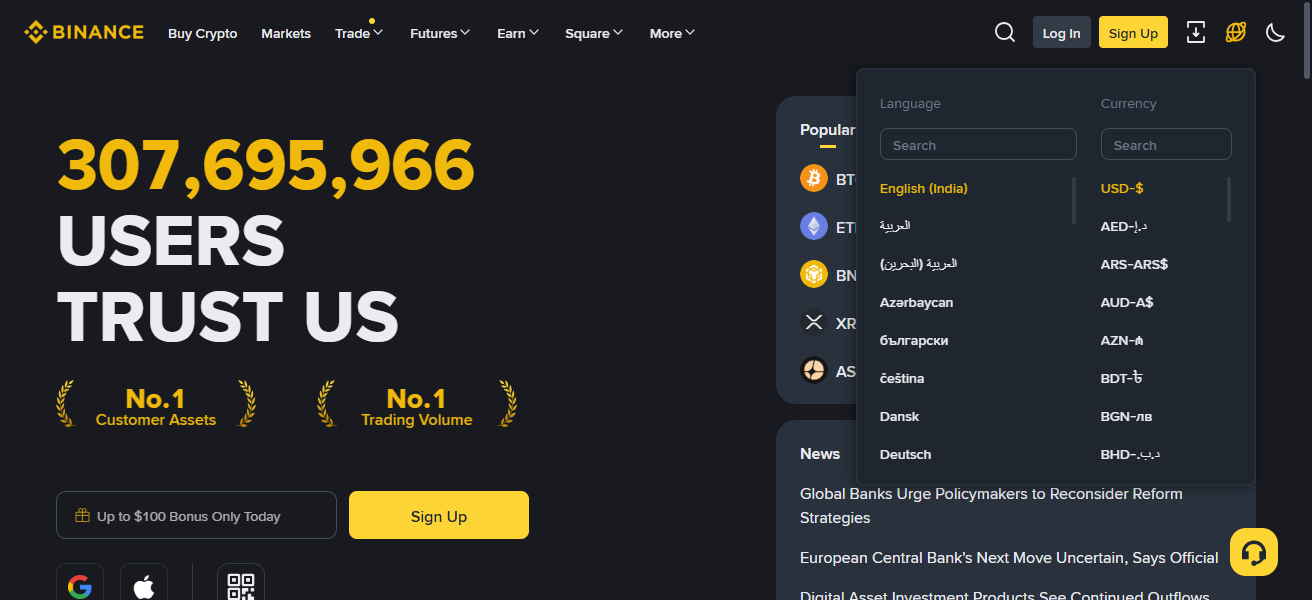
The Binance NFT Marketplace is part of a huge range of services provided by Binance, allowing users to make, purchase, sell, and trade NFTs on a single platform.
Due to its support of multiple blockchains, users will have a low transaction fee range and a wider reach.
The marketplace also includes exclusive drops, mystery boxes, and other gamified features that will attract both collectors and traders.
Because of the Binance global system, compliance and security are also extended to the users of the marketplace.
Users can stake and loan NFTs, so the marketplace goes beyond simple trading and adds other financial functionalities.
Because of its global reach and low barrier to entry, the Binance NFT marketplace is a top NFT Marketplace.
Binance NFT Features
- Unified with Binance ecosystem, NFT creation, trading, and auctions are easy as one, two, three.
- Multiple blockchains are supported, making accessibility and transactional fees favorable.
- Collectors can enjoy exclusive drops, mystery boxes, and gamified experiences.
- NFTs can also be staked and lent, enhancing the financial options available.
| Pros | Cons |
|---|---|
| Integrated with Binance ecosystem for seamless trading and minting. | Limited to Binance’s centralized infrastructure. |
| Supports multiple blockchains with low fees. | Competition from decentralized marketplaces. |
| Offers exclusive drops and gamified experiences. | Regulatory scrutiny may affect availability. |
| Provides staking and lending for NFTs. | Complex features may overwhelm beginners. |
2. Crypto.com NFT
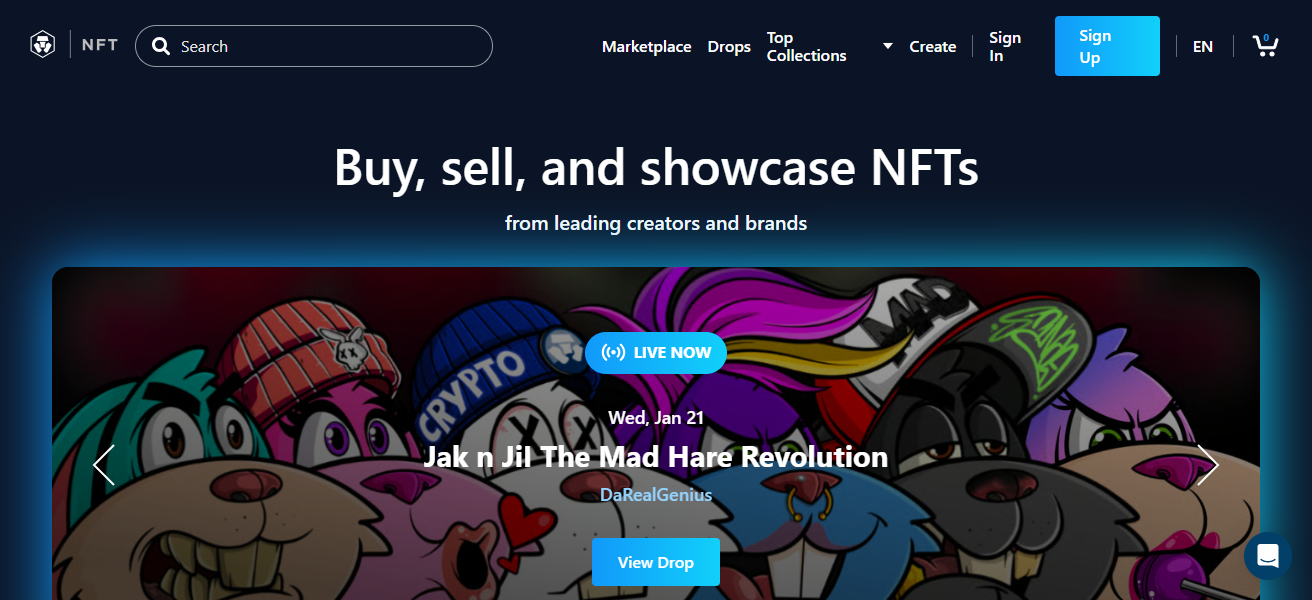
The Crypto.com NFT Marketplace provides a user-friendly platform for both collectors and creators.
Users can mint, buy, and sell NFTs, and take part in exclusive drops from top creators and gamified events, and upcoming Profile Pic (PFP) collections.
The Marketplace is connected to Crypto.com’s wallet and exchange which allows for secure and easy transactions.
The platform’s brand and reach allows for crypto trading and NFT trading to be done simultaneously, providing ease of use for customers and benefited from NFT trading and gaming and a wide range of art and other collectibles.
This makes Crypto.com NFT Marketplace one of the best NFT marketplaces for the general NFT audience.
Crypto.com NFT Features
- Offers minting, buying, and selling NFTs all in one ecosystem, Crypto.com.
- Offers exclusive drops from leading creators and PFP collections.
- Offers an integrated wallet and exchange in Crypto.com for easy and secure trades.
- Offers variety in categories such as art, gaming, and collectibles.
| Pros | Cons |
|---|---|
| Easy integration with Crypto.com wallet and exchange. | Limited blockchain support compared to multi-chain platforms. |
| Features exclusive drops and PFP collections. | Smaller marketplace than Binance or OpenSea. |
| Secure transactions with strong brand reputation. | Centralized structure reduces decentralization benefits. |
| Offers diverse categories like art and gaming. | Liquidity can be lower for niche collections. |
3. FTX NFT
Before shutting down, the FTX NFT Marketplace was an innovative exchange-integrated marketplace for minting NFTs, buying, and selling and also supported NFTs on Ethereum and Solana.
It offered competitive marketplace fees and even allowed users to pay with fiat. The marketplace was available on both FTX.com and FTX.US, making it available to more users.
The Marketplace offered an environment it considered to be safer for buying and selling NFTs because users were able to use their bank and credit card for purchases.
The marketplace was the first example of how centralized exchanges integrated the buying and selling of NFTs.
FTX NFT Features
- FTX supported both Solana and Ethereum with low fee NFTs.
- Offers buying, selling, and minting directly on FTX.com and FTX.US.
- Offers fiat options for payments via bank transfers and credit cards.
- After the collapse of FTX in 2022, the marketplace was also closed.
| Pros | Cons |
|---|---|
| Supported Solana and Ethereum NFTs. | Marketplace shut down after FTX collapse. |
| Allowed fiat payments like bank transfers. | Trust issues due to FTX’s downfall. |
| Integrated with FTX.com and FTX.US. | Limited lifespan reduced adoption. |
| Low fees for transactions. | Users lost confidence in platform reliability. |
4. Coinbase NFT
The Coinbase NFT Marketplace has social Web3 capabilities and combines NFT trading with social engagement components.
Users can easily buy and sell NFTs and use Coinbase’s security and simplicity features to trade NFTs from different marketplaces.
Coinbase NFT Marketplace provides flexibility with custodial and non-custodial wallet integrations and custodial wallet options.
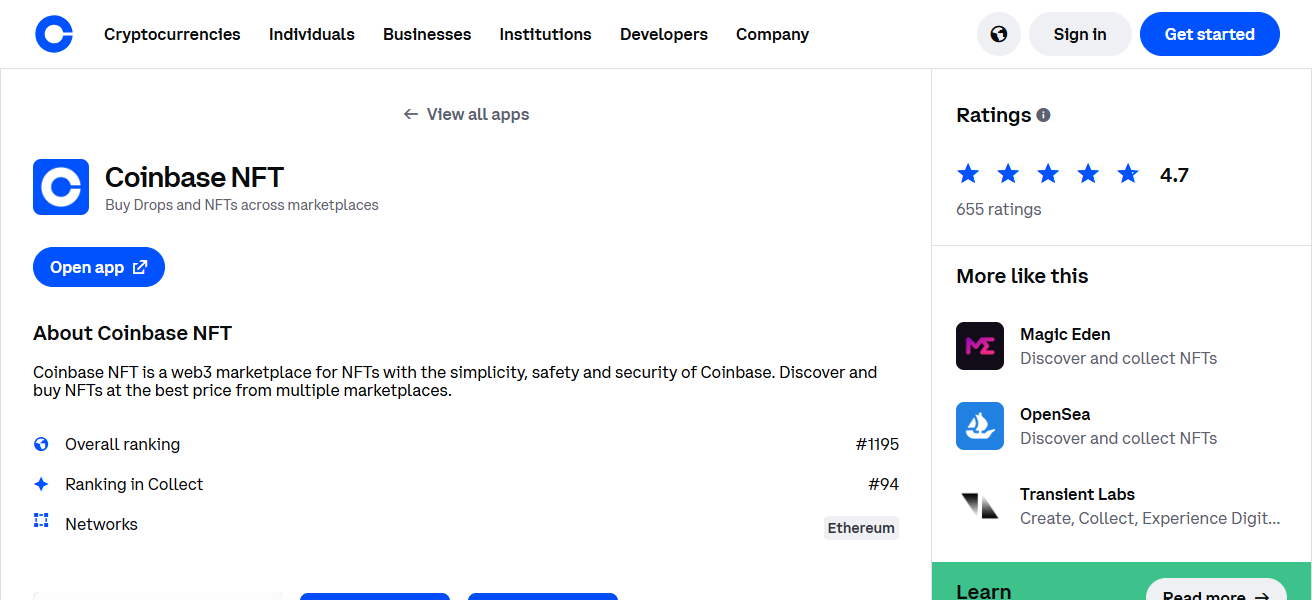
Coinbase NFT Marketplace allows social engagement interactions with social trading and collecting social trading and collecting people can create, follow, and create communities around collections.
There are social engagement interactions with social trading and collecting. There are social engagement interactions with social trading and collecting Coinbase promotes NFT trading to the masses and aims to bring NFT trading to the masses.
Coinbase NFT Features
- Combines trading with community in an all in one Web3 social platform.
- NFTs on Ethereum can be supported with both custodial and noncustodial wallets.
- Social interactions are encouraged between creators and collectors.
- Features advanced trading capabilities but also offers an intuitive platform for beginners.
| Pros | Cons |
|---|---|
| Combines NFT trading with social engagement. | Limited to Ethereum-based NFTs. |
| User-friendly interface for beginners. | Smaller trading volume compared to rivals. |
| Supports custodial and non-custodial wallets. | Social features still under development. |
| Strong security backed by Coinbase. | Adoption slower than expected. |
5. KuCoin Wonderland
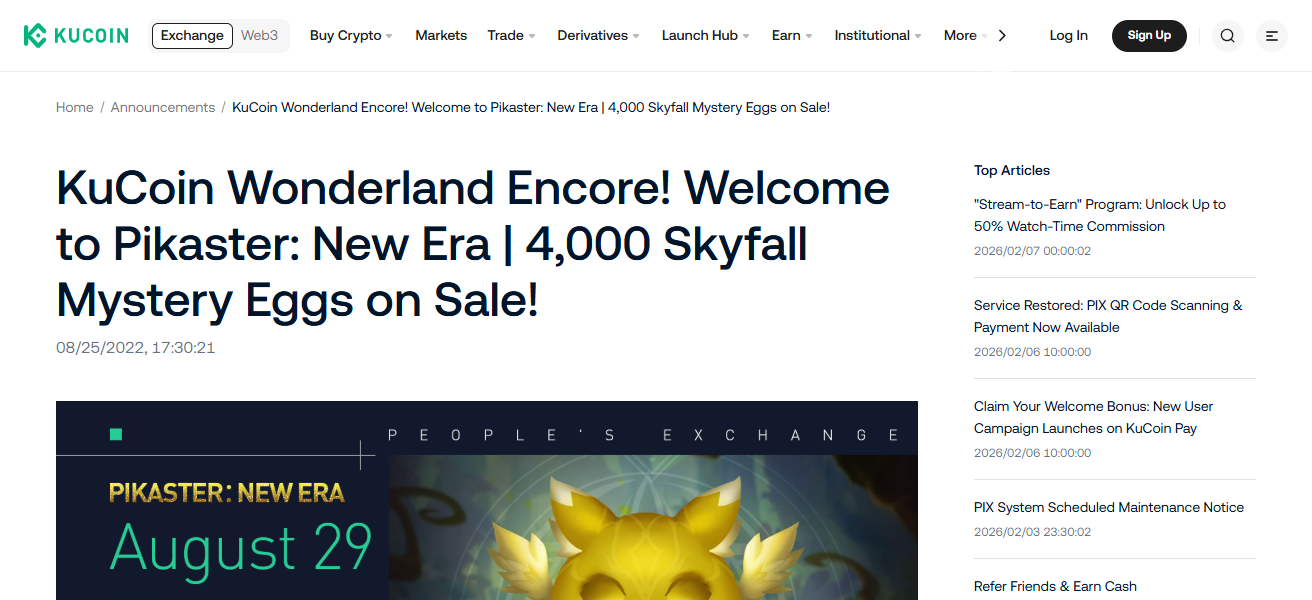
KuCoin Wonderland (or Windvane) is the NFT marketplace of KuCoin. It has features for trading and minting NFTs and has tools for community projects.
The marketplace is geared towards Initial Game Offerings (IGOs) meaning it gives users the ability to access gaming NFTs before the general public.
The marketplace features collections of art, games, and other digital items. KuCoin also connects NFT services with other services on the exchange, so users can trade NFTs for crypto, and vice versa.
While still developing and growing in comparison to other large marketplaces, KuCoin Wonderland encourages community participation and has low fees.
With a focus on gaming NFTs, it will likely become a leading marketplace in relation to blockchain gaming and digital assets, and other innovations.
KuCoin Wonderland Features
- NFTs for gaming are primarily focused on Initial Game Offerings (IGOs).
- Gamified assets, and art NFTs are also in the support of various collections.
- Offers seamless trading between NFTs and crypto with integration into the KuCoin exchange.- Focused on community engagement and participation with minimal cost involvement.
| Pros | Cons |
|---|---|
| Focused on gaming NFTs and IGOs. | Smaller scale compared to major platforms. |
| Supports diverse collections. | Limited global recognition. |
| Integrated with KuCoin exchange. | Liquidity challenges for niche projects. |
| Low fees and community-driven. | Still developing features. |
6. OKX NFT Marketplace
The OKX NFT Marketplace is integrated with various blockchains like Ethereum, Solana, and Polygon and allows users to trade and mint NFTs, along with exclusive NFT drops.
They include collections such as Bored Ape Yacht Club and CryptoPunks. The marketplace has tools to analyze and track trade volume, market trends, and floor prices. OKX has a launchpad to provide early access to NFT collections and new curated NFT projects.
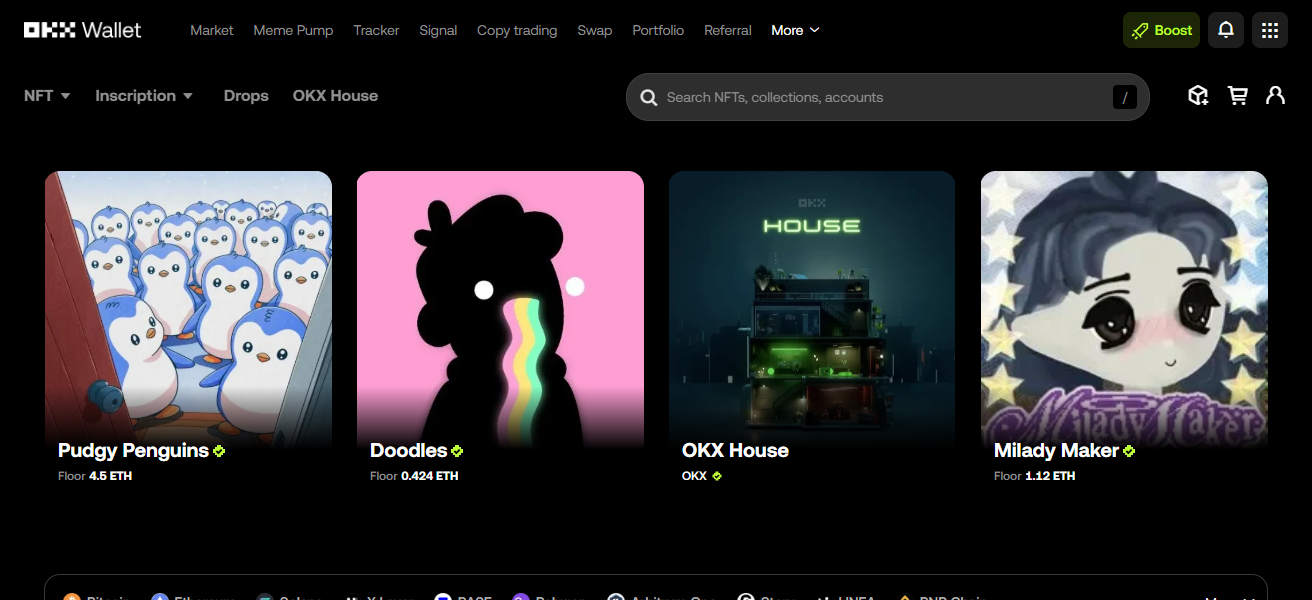
Users can perform cross-chain and secure transactions with the integrated OKX Wallet. OKX combines trading tools and NFTs to give collectors, investors, and creators a one-stop shop in the NFT space.
OKX NFT Marketplace Features
- Offers multi-chain support for Ethereum, Solana, Polygon, etc.
- Offers exclusive drops and other collections like BAYC and CryptoPunks.
- Offers real time data for analytics, floor prices and trading volume.
- Offers a launchpad for access to NFT projects.
| Pros | Cons |
|---|---|
| Multi-chain support across Ethereum, Solana, Polygon. | Competition from larger marketplaces. |
| Offers exclusive drops of top collections. | Complex analytics may deter casual users. |
| Provides real-time market analytics. | Requires OKX Wallet integration. |
| Features launchpad for new projects. | Limited mainstream visibility. |
7. Gate.io NFT Magic Box
Magic Box from Gate.io is a centralized marketplace where users can auction, create, or sell NFTs at a fixed price. Magic Box was one of the first NFT launchpads for new projects.
Users can create NFTs, browse different collections, and take part in other activities like auctions. The marketplace is designed for both beginner and advanced users, as it encourages trading engagement with NFTs.
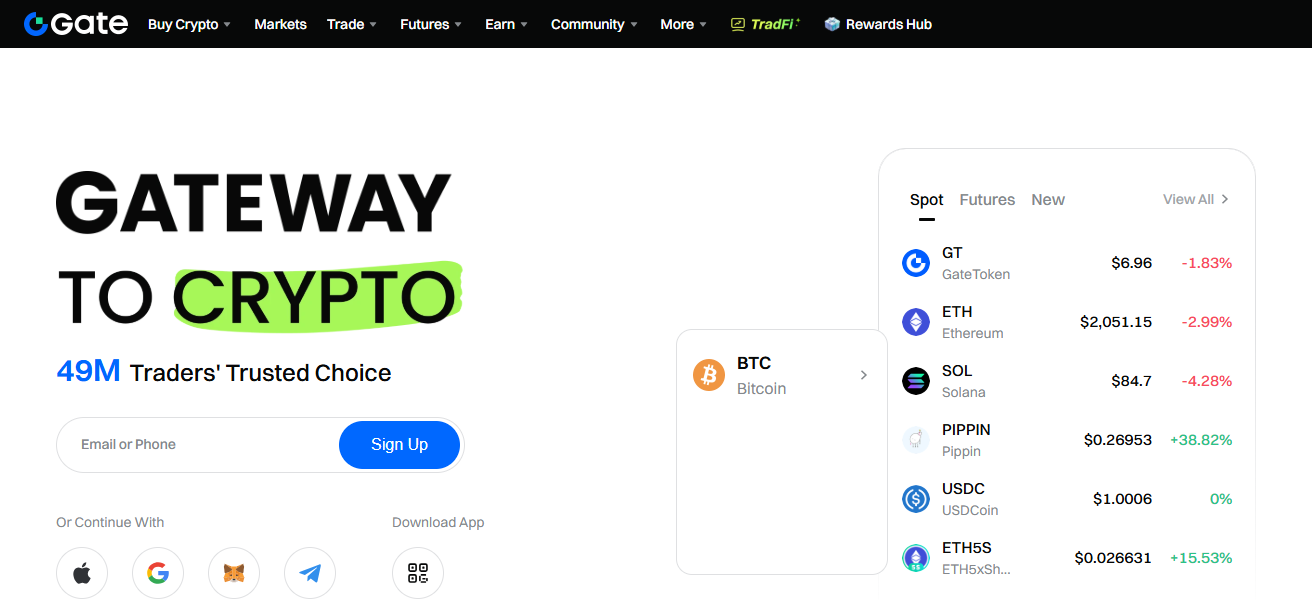
Users can make NFTs using the marketplace in conjunction with Gate.io’s exchange which allows users to trade crypto for NFTs.
Using Gate.io’s innovative and secure infrastructure, Magic Box is now a center for a variety of pioneering NFT projects.
Gate.io NFT Magic Box Features
- Offers auction, fixed price sales, and NFT creation tools.
- Gate.io exchange based for easy trading.
- Offers a collection of assorted curated collections.
- Offers community based support for creative new NFT projects.
| Pros | Cons |
|---|---|
| Offers auctions and fixed-price sales. | Smaller user base than Binance or Coinbase. |
| Integrated with Gate.io exchange. | Limited global exposure. |
| Supports NFT creation tools. | Liquidity can be inconsistent. |
| Curated collections across categories. | Less focus on gaming NFTs. |
8. Bybit NFT Marketplace
The Bybit NFT Marketplace used to provide the ability to trade NFTs related to games and other forms of digital collectibles and art within the exchange environment.
It enabled users to conduct both auctions and sell items at predetermined prices, and sought to draw interest from both the gaming community and collectors.
However, Bybit decided to shut down its marketplace in April 2025 due to decreased market interest and trading volume.
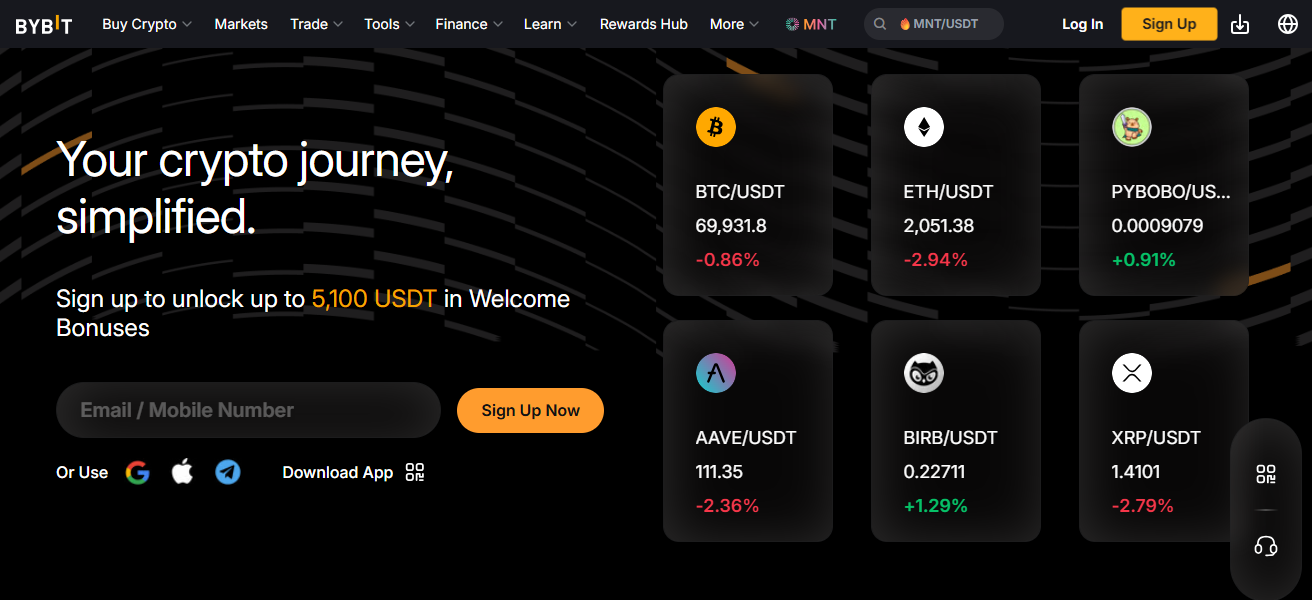
However, Bybit’s marketplace, for all its shortcomings, closed, illustrated early potential of what a marketplace for trading NFTs integrated with crypto services could offer users.
It provided an example of how users accessing NFTs safely and easily through a centralized platform was possible.
However, providing a sustainable solution in these challenging and difficult market conditions presented in recent months with respect to NFTs was difficult.
Bybit NFT Marketplace Features
- Offered trade on gamine, collectable, and art NFTs.
- Offers auctions and fixed pricing for easy access.
- Bybit NFT Marketplace was a part of Bybit’s crypto exchange.
- Closed April 2025 due to decreased trading volumes.
| Pros | Cons |
|---|---|
| Supported gaming assets and collectibles. | Shut down in April 2025. |
| Offered auctions and fixed-price listings. | Declining trading volumes. |
| Integrated with Bybit exchange. | Short-lived marketplace. |
| Accessible for gamers and collectors. | Sustainability issues in NFT downturn. |
9. Huobi NFT (H-NFT)
Huobi pays its respects to the rapidly growing and overwhelming popularity of the NFT market and, in recognition, launched the Huobi NFT Marketplace.
Integrating into the Huobi Exchange Marketplace provided a unique, secure, and easily accessible marketplace to buy, sell, and trade NFTs within the art, gaming, animation, and music categories.
Huobi further developed the NFT market by enhancing the GameFi ecosystem in which NFTs became a fundamental building block for its growth.
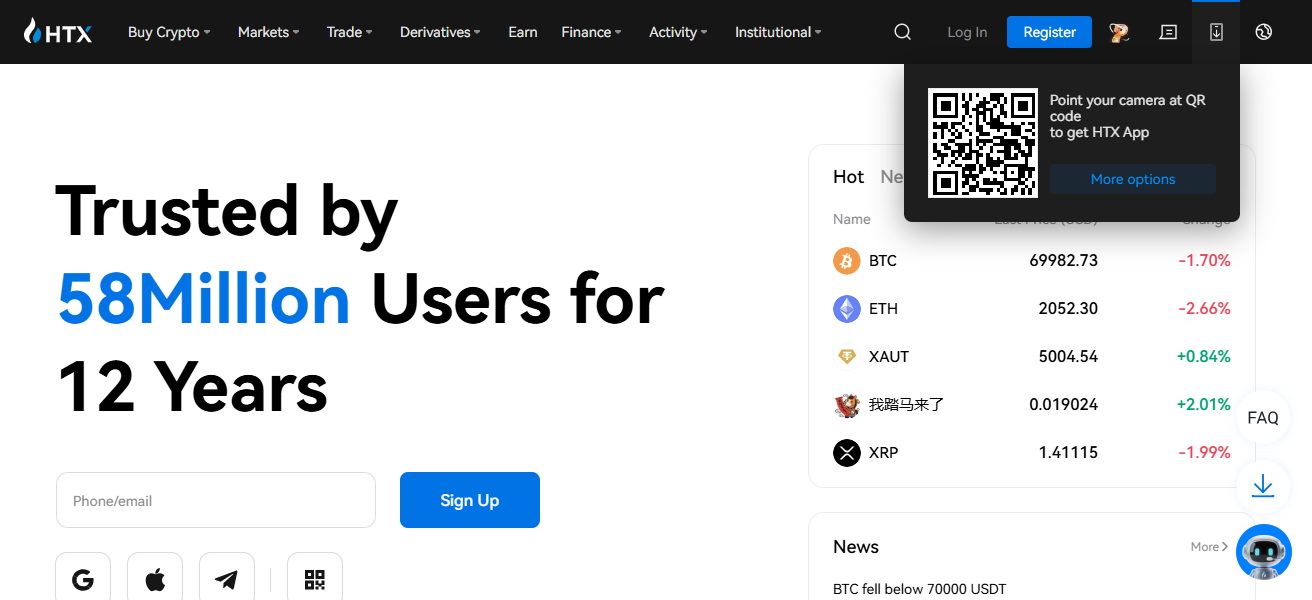
Additionally, we anticipated that traditional fans of collecting and blockchain gamers would be interested in our marketplace.
This move planned to further broaden and enhance Huobi’s market in response to the ongoing, rapidly growing popularity of NFTs.
Huobi NFT (H-NFT) Features
- Focused on the strategy for the expansion of metaverse and GameFi
- Categories supported include art, game, animation and music.
- Huobi exchange integrated for secure trading.
- Huobi’s future growth integrated NFTs to the position.
| Pros | Cons |
|---|---|
| Focused on metaverse and GameFi expansion. | Limited traction compared to competitors. |
| Supported art, gaming, animation, and music. | Smaller marketplace size. |
| Integrated with Huobi exchange. | Regulatory challenges in some regions. |
| Strategic investment in GameFi projects. | Adoption slower outside Asia. |
10. Bitfinex Token Sales (NFTs)
Bitfinex has expanded its services to include NFTs on its token sales platform. Now customers can purchase tokenized assets and NFTs alongside traditional cryptocurrencies.
While it does not compare in size to Binance or Coinbase, Bitfinex has proven to be a safe trading platform for NFTs.
The markets focus on tokenization means digital assets will be represented and traded in ringed form as NFTs.
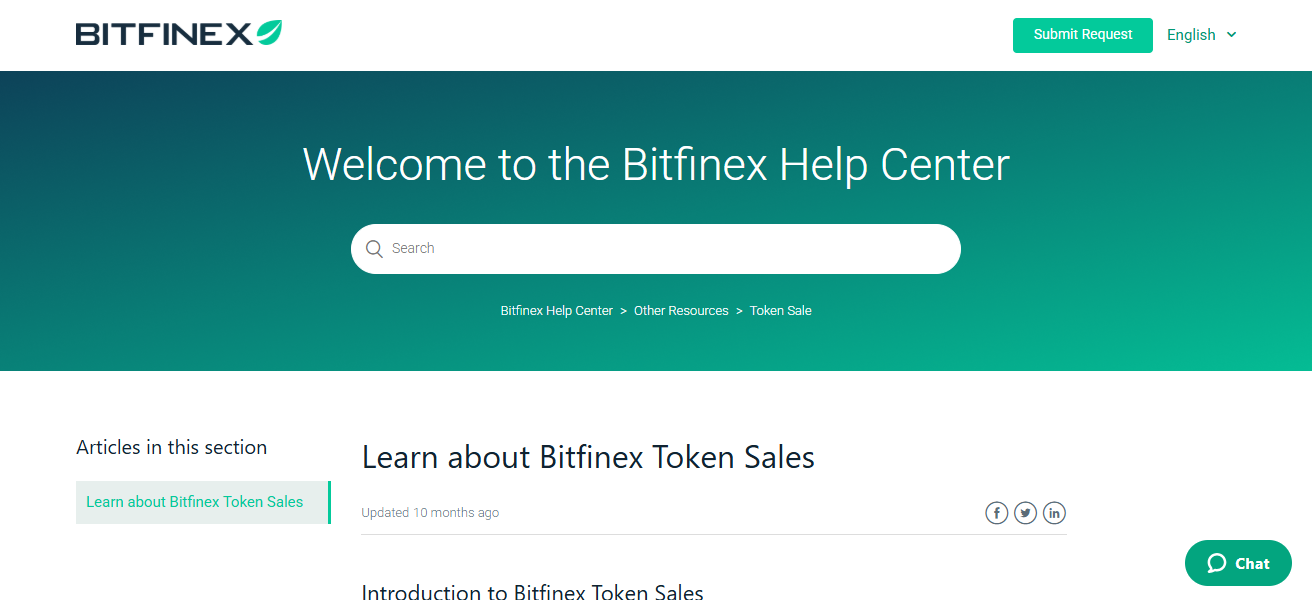
This is the first example of how far Bitfinex is willing to go to help utilize blockchain technology for purposes other than the trading of cryptocurrencies.
With Bitfinex, customers can rely on a robust infrastructure, superior liquidity, and advanced trading instruments.
Flexibility in NFT provision and the first of its kind service of trading NFTs and tokenizing assets is what Bitfinex offers in response to the growing needs of the digital asset marketplace.
Bitfinex Token Sales (NFTs) Features
- Integrated NFTs with the token sales platform.
- Focused on the digital assets being NFTs as a form of tokenization.
- Offered a secure space as Bitfinex’s infrastructure and liquidity.
- Smaller and more scale infused service of token sales with NFT trading.
| Pros | Cons |
|---|---|
| Integrated NFTs within token sales platform. | Smaller scale than Binance or Coinbase. |
| Emphasizes tokenization of digital assets. | Limited NFT variety. |
| Secure environment with Bitfinex infrastructure. | Less mainstream adoption. |
| Advanced trading tools and liquidity. | Niche appeal compared to larger marketplaces. |
Conclsuion
In conclusion, the ability to trade NFTs directly from an exchange’s built-in NFT marketplace has revolutionized the merger of crypto trading and digital collectibles.
Their ability to simplify the journey to mint, purchase, sell, and trade NFTs within the trusted ecosystem of an exchange offers built-in marketplaces excellent competitive advantages.
The ability to access trading and NFT functionality from one location offers enhanced NFT-collector and investor-trader experiences.
These exchange marketplaces will be crucial for the future growth of the integrated blockchain economy.
FAQ
They are crypto exchanges that integrate NFT trading, minting, and auctions directly into their platforms.
It offers convenience, security, and seamless integration with crypto wallets and trading services.
Popular ones include Binance, Crypto.com, Coinbase, KuCoin, OKX, Gate.io, Huobi, and Bitfinex.
Yes, many platforms like Binance and Crypto.com allow users to mint their own NFTs.