
This article will focus on platforms that allow trading in crypto prediction markets and derivatives. These platforms give traders the ability to speculate on real-world events, hedge risks, and take advantage of opportunities in the world of decentralized finance.
By integrating blockchain technology with prediction markets, these platforms provide transparency, accessibility, and innovation to the way people and institutions interact with financial markets focused on events.
Key Points & Platforms For Trading Crypto Prediction Markets and Derivatives
Polymarket Blockchain-based prediction market offering high liquidity, intuitive interface, and global access for event outcomes.
Augur Decentralized prediction market protocol enabling users to create, trade, and settle outcome-based event contracts.
Gnosis Ethereum-powered platform providing customizable prediction markets, governance tools, and decentralized finance integrations for traders worldwide.
Kalshi Regulated U.S. prediction market exchange allowing event-based derivatives trading under Commodity Futures Trading Commission oversight.
Foresight Community-driven prediction market platform designed for DAOs, researchers, and traders to forecast crypto-related events.
Zeitgeist Polkadot-native prediction market protocol enabling scalable, interoperable event forecasting with governance and staking mechanisms.
PlotX Gamified prediction market platform offering crypto derivatives trading, rewards, and automated settlement via smart contracts.
Omen Decentralized prediction market built on Gnosis, enabling transparent event forecasting with liquidity incentives for participants.
Catnip Exchange Experimental prediction market platform focusing on governance decisions, crypto upgrades, and decentralized community-driven outcomes.
SX Network Layer-2 blockchain combining prediction markets, derivatives trading, and decentralized applications for scalable event forecasting.
10 Platforms For Trading Crypto Prediction Markets And Derivatives
1. Polymarket
Polymarket is an example of a prediction market built on a blockchain where users make bets on the outcomes of different types of real-life events.
The platform has lots of liquidity, is easy to navigate, and uses clear and transparent smart contracts for the settlement process.
Users can place bets or “trade” on a wide range of topics, including politics and sports, and can do so with the use of USDC.
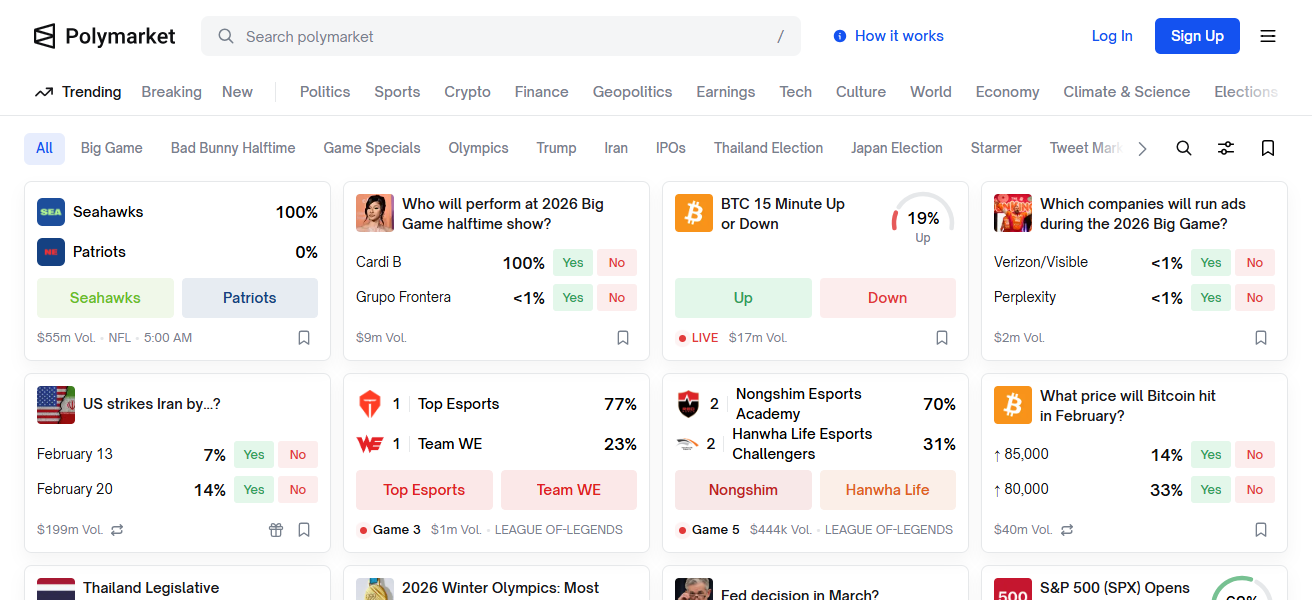
The platform is decentralized, and is, therefore, censorship resistant, and with its large user-count, is considered one of the most active prediction markets in the world.
Polymarket also prioritizes user access since there is no complicated process for users to complete to begin using the market.
The platform allows users to use a combination of crypto and prediction markets to manage risk, express themselves, and monetize their ability to predict events in a secure and clear environment.
Polymarket Features
- Events on various markets bring the liquidity.
- Trading stays stable due to USDC collateral.
- Settlements & transparency on smart contracts
- Simple interface and everyone can trade
| Pros | Cons |
|---|---|
| High liquidity with diverse event markets. | Limited to USDC collateral only. |
| Transparent settlement via smart contracts. | Regulatory uncertainty in some jurisdictions. |
| User-friendly interface for global access. | Not fully decentralized in governance. |
| Wide range of real-world event topics. | Risk of misinformation influencing markets. |
2. Augur
Augur is a decentralized prediction market protocol built on Ethereum aimed at allowing users to make and trade contracts on different outcomes of events.
With Augur, users do not need an intermediary to process the trades as the protocol uses smart contracts to process the settlement of the outcomes of the contracts.
Augur is open-source, allowing any user to create prediction markets for virtually any future event, whether it be elections or financial events.
Its native token, REP, is used to pay users for reporting on, and resolving, disputes regarding the outcomes. Augur has pioneered decentralized forecasting, despite having issues of liquidity.
Its flexibility and transparency are especially appealing to users looking for censorship-resistant alternatives to traditional gambling.
Augur is a clear example of how blockchain can decentralize speculation, democratize the access to information, and create incentives for accurate predictions all over the world.
Augur Features
- Decentralized prediction market on Ethereum
- Unbiased reports due to REP tokens
- Free design and open source market
- Smart contracts finalise the settlements.
| Pros | Cons |
|---|---|
| Fully decentralized Ethereum-based protocol. | Liquidity challenges compared to competitors. |
| Open-source design for custom markets. | Complex user experience for beginners. |
| REP token incentivizes honest reporting. | Slow dispute resolution process. |
| Trustless settlement via smart contracts. | Limited mainstream adoption. |
3. Gnosis
Gnosis is an Ethereum-based platform that offers customizable prediction markets and governance solutions.
It focuses on decentralized forecasting and allows DAOs and different communities to build the markets they need.
Gnosis also integrates with various DeFi protocols to improve liquidity and usability. Its ecosystem includes Omen, a decentralized prediction market on Gnosis, and Omen focuses on transparency and community-driven results.
Gnosis combines prediction markets with governance to help organizations make data-driven decisions using the wisdom of the crowd.
Its modular and interoperable architecture is flexible for developers and traders, and Gnosis is a case study of how prediction markets go beyond speculation into governance and decision-making.
Gnosis Features
- Prediction markets on Ethereum.
- Prediction markets on Ethereum.
- Supports governance and DAO decision-making
- Modular design for developers and traders.
| Pros | Cons |
|---|---|
| Customizable prediction markets for DAOs. | Requires technical knowledge for setup. |
| Strong DeFi integration for liquidity. | Governance complexity may deter casual users. |
| Supports decentralized decision-making. | Limited retail trader appeal. |
| Modular design for developers. | Dependent on Ethereum scalability. |
4. Kalshi
Kalshi is the first CFTC-approved prediction market exchange in the U.S. Because it is regulated like a bank, it can legally offer event-based derivatives trading.
As a user, you can trade contracts based on actual events like inflation, elections, and weather. Being regulated means that big financial companies can trade on the platform, giving it more credibility.
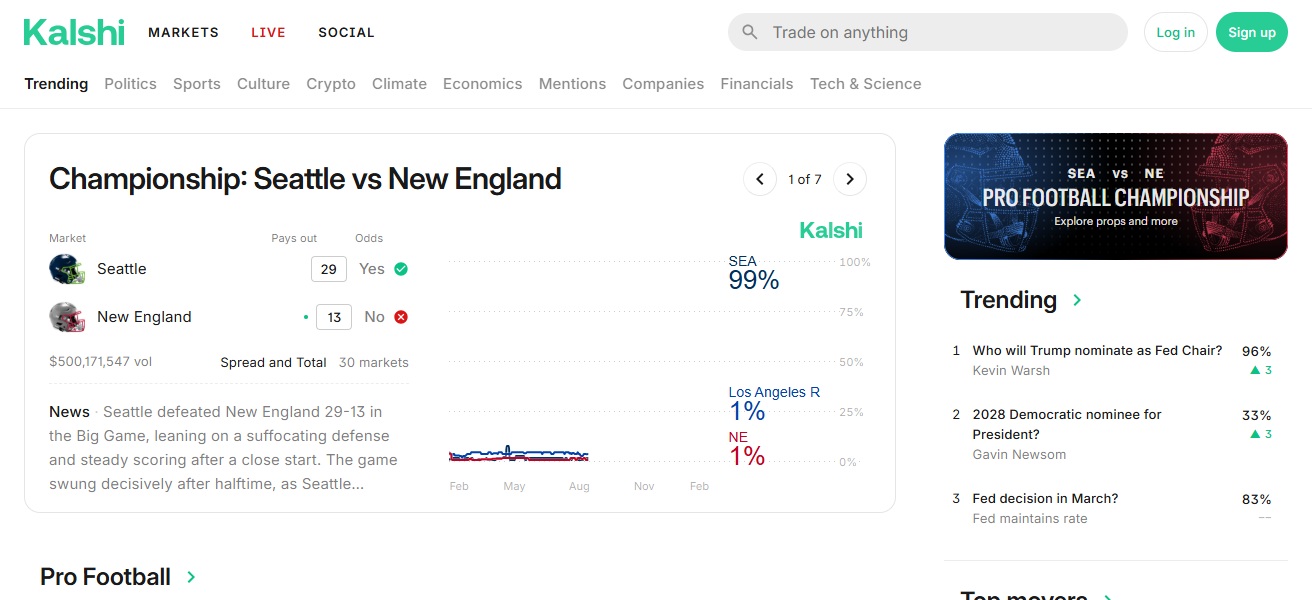
Kalshi combines prediction markets and traditional finance, and gives a safe place to users to speculate and hedge.
The regulatory framework and new event-based trading contracts solidify Kalshi’s position as the premier trading market for traders that need regulation, clarity, and connection to traditional finance.
Kalshi Features
- In a regulated space under the CFTC.
- Derivatives on real-world outcomes of events.
- Provides a safe space for institutional traders.
- Merges Traditional Finance with prediction markets.
| Pros | Cons |
|---|---|
| Regulated under CFTC compliance. | Restricted to U.S. users. |
| Event-based derivatives tied to real-world outcomes. | Limited crypto-native features. |
| Secure environment for institutional traders. | Less flexibility than decentralized platforms. |
| Bridges traditional finance with prediction markets. | Higher barriers to entry for casual users. |
5. Foresight
Foresight is a community prediction market platform tailored for DAOs, researchers, and crypto enthusiasts.
Community predictive markets enable users to contribute knowledge and speculatively trade on the outcomes of future events.
Users of the platform can make predictive markets through linked DAOs, and users can vote on which predictive markets they would like to prioritize.

With automated settlement and transparency, Foresight is linked to the blockchain for governance. With a focus on research and collective intelligence, the platform aims to foster predictive markets knowledge.
The platform is geared towards decentralized organizations and researchers, enabling communities to make predictive trade on crypto events, governance proposals, and events at large.
Foresight Features
- Prediction market based on crowd intelligence.
- Decentralized system for governance of DAOs.
- Simplified settlements on the blockchain.
- Focused on research and collective intelligence.
| Pros | Cons |
|---|---|
| Community-driven collaborative forecasting. | Smaller user base limits liquidity. |
| Supports decentralized governance for DAOs. | Less focus on entertainment markets. |
| Transparent blockchain-based settlement. | Limited mainstream visibility. |
| Research-oriented collective intelligence. | May not appeal to casual speculators. |
6. Zeitgeist
Zeitgeist is a decentralized prediction market protocol designed for Polkadot’s ecosystem. Built on Substrate, Zeitgeist utilizes Polkadot’s decentralized governance as well as cross-chain interoperability.
Special focus is placed on decentralized governance by Zeitgeist so that stakeholders can vote on how the protocol is developed and what markets are instantiated.
Staking and reporting mechanisms are in place to reward participants and honest reporters, respectively.
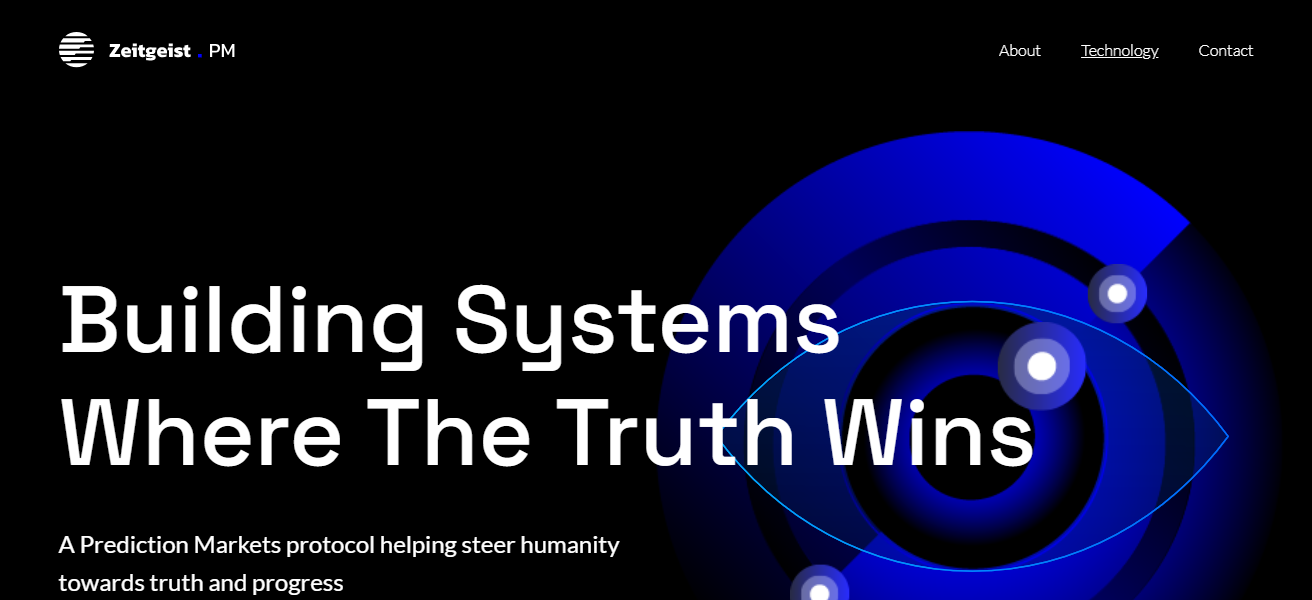
Prediction markets and Polkadot’s scalability combine for an environment that is fast and effective for trading and settlement, and can include crypto events, governance events, and virtually any type of event for trading and forecasting.
Zeitgeist is a leader in decentralized forecasting and a prime example of prediction markets in a multi-chain ecosystem.
Zeitgeist Features
- Prediction market on the Polkadot ecosystem.
- Built on Substrate for easy scalability.
- Integration of governance and staking rewards.
- Multi-chain ecosystem for diverse forecasting.
| Pros | Cons |
|---|---|
| Polkadot-native interoperable protocol. | Still developing ecosystem. |
| Built on Substrate for scalability. | Requires Polkadot familiarity. |
| Governance integration with staking incentives. | Liquidity lower than Ethereum-based platforms. |
| Multi-chain ecosystem for diverse forecasting. | Adoption still in early stages. |
7. PlotX
PlotX is a gamified prediction market platform that blends crypto derivatives trading with gamified crypto derivatives trading.
It allows its users to make predictions and trade outcomes in markets including crypto prices, political elections, and sports outcomes.
PlotX’s prediction markets use automated smart contracts for market fairness and transparency. PlotX incorporates gamification by giving participants in its prediction markets tokens and prizes when they make accurate predictions.
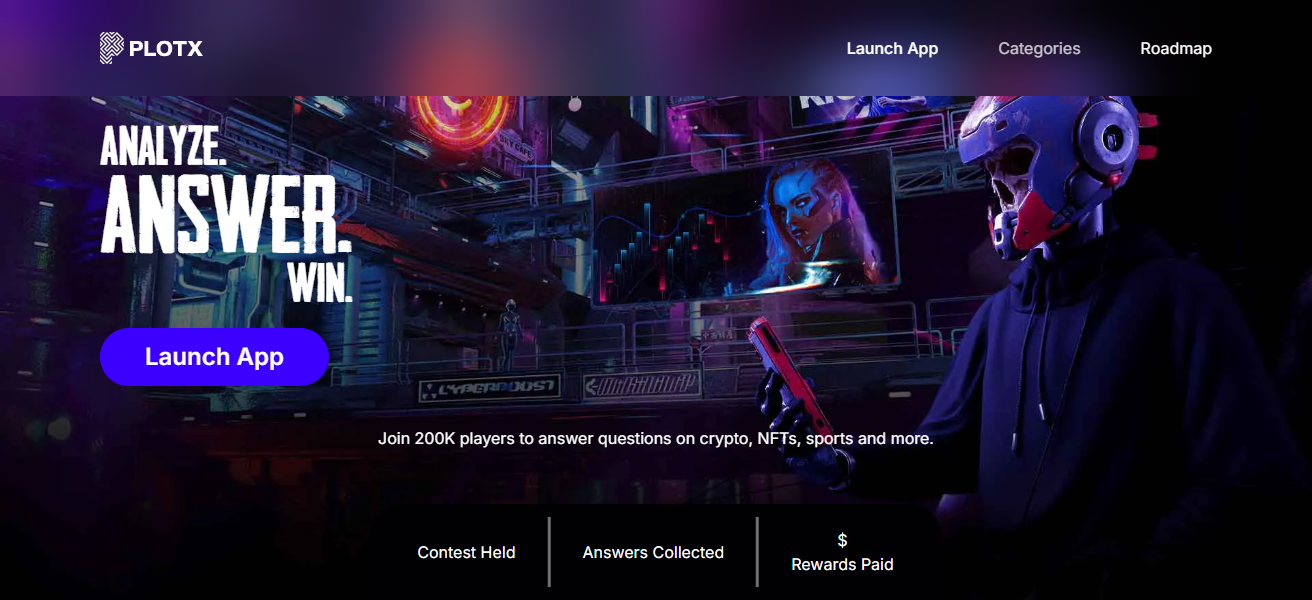
It is a mobile-optimized platform to reach and engage the highest possible users. It uses gamification to make prediction markets more entertaining than traditional guess and sell markets, appealing to both hobby and professional prediction markets players.
It is a fun, simple, and rewarding way to trade derivatives and hedge trading positions in the crypto ecosystem. It also teaches users fundamental prediction markets concepts.
PlotX Features
- Experience of prediction market gamification.
- Smart contracts automate the financial actions.
- Tokens are given for the right predictions.
- A design that is mobile friendly.
| Pros | Cons |
|---|---|
| Gamified prediction market experience. | May feel less serious to professionals. |
| Automated settlement via smart contracts. | Limited event diversity compared to Polymarket. |
| Rewards with tokens for accuracy. | Token volatility affects rewards. |
| Mobile-friendly design for accessibility. | Smaller liquidity pools. |
8. Omen
Omen is a decentralized prediction market running on Gnosis which allows users to trade forecasts on events and provides incentives to users to provide liquidity and trade on forecasts.
This prediction market is community-driven and has transparent decentralized governance that allows for censorship resistance.
Additionally, Omen allows for integrations with other DeFi protocols which provide more liquidity and usability.

Omen runs on Gnosis which provides them with a solid foundation for decentralized predictive analytics. This allows Omen to support markets on crypto events, as well as global events.
Omen is a solid example of what decentralized predictive analytics markets can be when combining DeFi protocols, a transparent community, and a prediction market.
Omen Features
- Prediction market on the Gnosis design.
- Decentralized markets; forecasting is transparent.
- Participants are given liquidity to forecast.
- Predictions integrated with the DeFi’s.
| Pros | Cons |
|---|---|
| Built on Gnosis infrastructure. | Dependent on Gnosis ecosystem growth. |
| Transparent decentralized forecasting. | Liquidity varies across markets. |
| Incentives for liquidity providers. | Complex governance mechanisms. |
| Strong DeFi integration. | Less beginner-friendly interface. |
9. Catnip Exchange
Catnip Exchange is a prediction market experimental platform centered around governance and crypto events. It allows communities to speculate on possible outcomes from protocol updates, governance votes, etc.
It’s designed with a focus on decentralization for user community participation, letting users shape what markets they want to see. Its simple interface encourages users to try new things and innovate.
Catnip is smaller than the large platforms, but still showcases the importance of prediction markets for decentralized governance.
It empowers communities to speculate on important decisions, and in turn, encourages them to be proactive about what will happen next.
Catnip shows the market’s utility for decentralized systems and also illustrates the prediction markets focus on governance beyond speculative purposes.
Catnip Exchange Features
- Governance-focused outcomes.
- Lightweight design for experimentation.
- Market creation through community involvement.
- Decentralized community decision-making supported.
| Pros | Cons |
|---|---|
| Focused on governance-related outcomes. | Limited scope beyond governance. |
| Lightweight design for experimentation. | Smaller scale compared to major platforms. |
| Community-driven market creation. | Low liquidity and adoption. |
| Supports decentralized decision-making. | Not suitable for mainstream speculation. |
10. SX Network
SX Network operates as layer-2 blockchain dedicated to developing prediction markets, derivatives trading, and dApps. It offers quick transactions and low fees.
SX Network has DeFi integrated prediction markets, allowing for a broad range of use cases from speculation to governance.
The ecosystem of SX Network promotes the development of dApps and improves ecosystem interop.
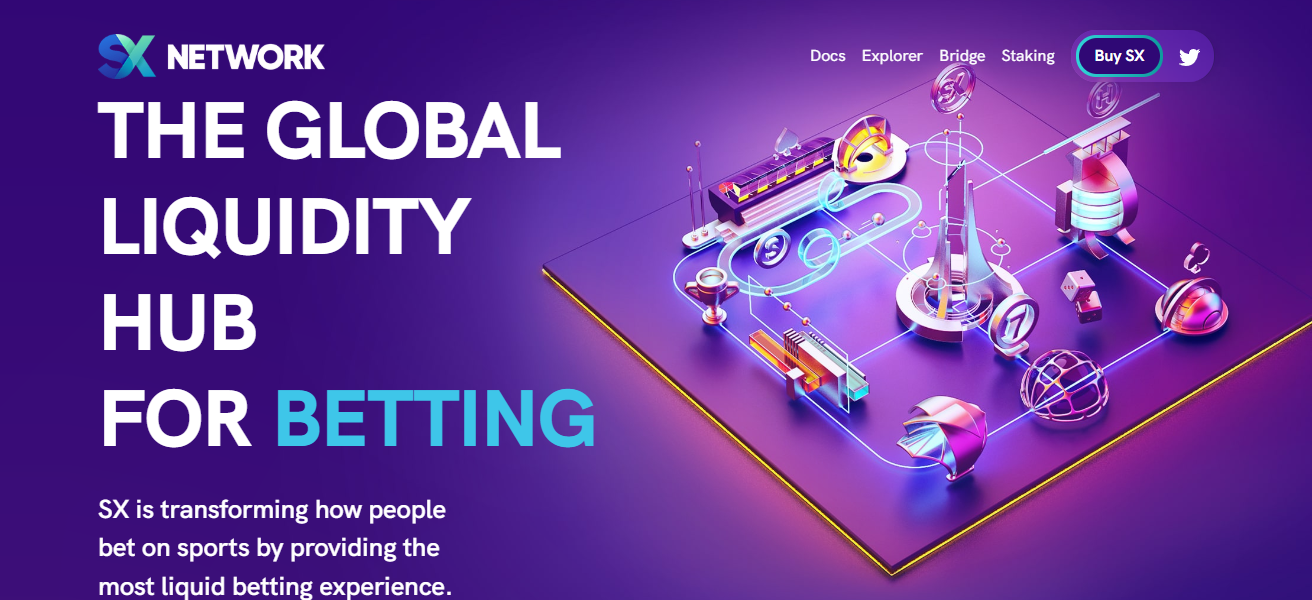
SX Network puts governance power of the ecosystem to the community, so community members can decide how the network will evolve.
By ensuring prediction markets on the blockchain, SX Network provides accessible and efficient forecasting.
SX Network brings evolution to prediction markets and combines speculation, governance, and DeFi in a scalable and simplified environment.
SX Network Features
- Scalability through layer-2 blockchain.
- Prediction markets fused with DeFi.
- Fast transactions + Low fees.
- Integrated governance for community control.
| Pros | Cons |
|---|---|
| Layer-2 blockchain for scalability. | Ecosystem still growing. |
| Combines prediction markets with DeFi. | Limited awareness among traders. |
| Low fees and fast transactions. | Liquidity smaller than Ethereum-based platforms. |
| Governance mechanisms for community influence. | Requires technical knowledge to participate fully. |
Conclusion
To summarize, trading platforms for crypto prediction markets and associated derivatives are changing how people speculate financially and how they govern themselves.
These platforms combine the transparency of blockchain, the decentralized nature of community participation, and the liquidity contracts of event-based contracts for traders and community empowerment.
Ranging from the regulated exchange Kalshi to decentralized markets like Augur and Polymarket, the platforms’ prediction, hedging, and decision-making opportunities are ever-growing in the digital economy.
FAQ
They are platforms where users trade contracts based on outcomes of real-world events.
Derivatives allow speculation or hedging on asset prices without directly owning the underlying cryptocurrency.
Many, like Augur and Gnosis, operate on blockchain for transparency and censorship resistance.
Kalshi is regulated under the U.S. Commodity Futures Trading Commission (CFTC).