This article is all about the top 8 A1 HR software tools used to automate hiring and onboarding processes in a seamless manner These sophisticated platforms leverage artificial intelligence to streamline tasks like recruitment, candidate screening, interview scheduling and employee onboarding.
By streamlining manual work and empowering better decision-making, they reduce time spent hiring and boost productivity for HR teams, creating a more efficient and effective experience for businesses of all sizes.
What Is AI HR Software?
AI HR software uses artificial intelligence to streamline and automate various human resource functions such as hiring, onboarding, recruitment, and employee management.
It helps HR teams by reducing manual tasks like resume screening, candidate shortlisting, interview scheduling, and documentation.
The software improves decision-making through data-driven insights and predictive analytics. It also enhances employee onboarding by automating training workflows and communication,
Making HR processes faster, more efficient, and more accurate while improving overall workforce management and productivity across organizations.
Key Points & Best AI HR Software Tools That Automate Hiring and Onboarding In 2026
- Babblebots – AI HR chatbot automating recruitment conversations, candidate screening, onboarding workflows, improving hiring efficiency significantly faster
- DianaHR – AI HR platform streamlining employee lifecycle management recruitment onboarding and performance tracking automation suite
- Yomly – HR software simplifying payroll, HR administration, employee self-service, and workforce management globally platform solution
- Paradox.ai – conversational AI recruiting assistant automating candidate engagement, scheduling interviews, and hiring workflows efficiently scalable
- Eightfold AI – talent intelligence platform leveraging deep learning for recruiting, internal mobility, and workforce planning
- ClickUp Brain – AI assistant optimizing HR tasks, recruitment workflows, documentation, and team collaboration productivity efficiency
- HireVue – AI video interviewing platform assessing candidates using behavioral analytics, assessments, and predictive hiring insights
- Findem – AI talent platform sourcing candidates using data enrichment, predictive analytics, and skills intelligence automation
- Humanly – conversational recruiting AI automating candidate screening, engagement, and interview scheduling processes efficiently at scale globally
- BrightHire – interview intelligence platform capturing, analyzing, and improving hiring interviews with actionable insights for recruiters teams
10 Best AI HR Software Tools That Automate Hiring and Onboarding In 2026
1. Babblebots
Babblebots is an AI HR automation platform that specializes in conversation-driven recruitment and candiodate engagement chatbots.
It assists HR teams in minimizing the effort required in manual screening by automating the applicant role for initial interactions, answering frequently asked questions and collecting key information about applicants.
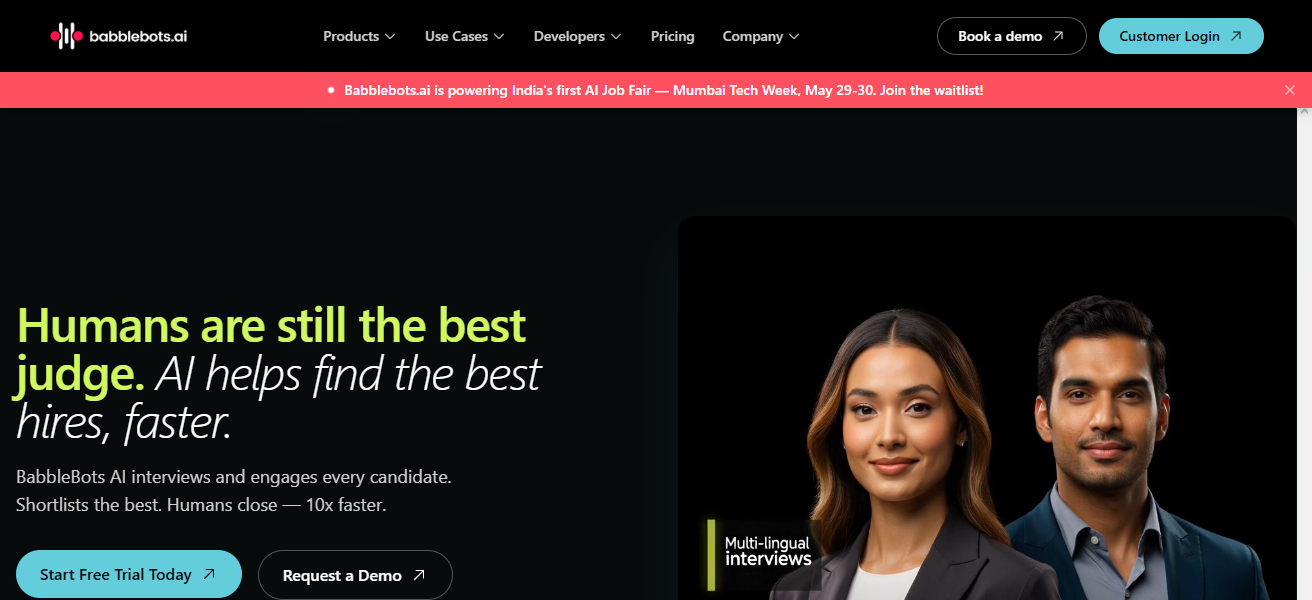
It expedites the hiring process by filtering out candidates before any manual assessment occurs, and it ensures consistency in communication throughout each step of the hiring funnel.
It also helps with onboarding which can streamline boarding processes and is one of the best ways to enable candidates and take a load off administrative task while boosting candidate experience as well as enhancing recruitment for firms among all sizes.
| Pros | Cons |
|---|---|
| Automates candidate conversations efficiently | Limited advanced HR analytics features |
| Reduces recruiter workload significantly | May feel less personal for candidates |
| Speeds up initial screening process | Requires proper chatbot training setup |
| Improves onboarding guidance automation | Not ideal for complex enterprise HR needs |
2. DianaHR
DianaHR is an AI-based HR management platform aimed at simplifying employee lifecycle operations ranging from hiring to onboarding and performance tracking.
This can range from automating simple HR duties like document management, recruitment coordination to updating employee data.

It helps to keep organizations organized around workflow but also aggregates analysis in a central point to give everyone the information they need to make [better) decisions.
DianaHR also improve onboarding by ensuring new hires are informed with the right information and training resources at the right time.
This frees HR to focus human talent, which can optimise the workforce for high performance.
| Pros | Cons |
|---|---|
| Covers full employee lifecycle management | UI may feel complex for beginners |
| Strong automation for HR workflows | Customization can require setup time |
| Improves HR data organization | Smaller ecosystem compared to major HR suites |
| Enhances onboarding and compliance tracking | May not integrate with all tools easily |
3. Yomly
Yomly is an online human resources and payroll system intended to ease workforce management and administrative tasks.
It removes all the manual payroll processing, tracking of attendance and automates employee self-service functions thereby minimising human error.
The software helps HR teams to keep records of employees, benefits received and information regarding compliance in one centralised system.
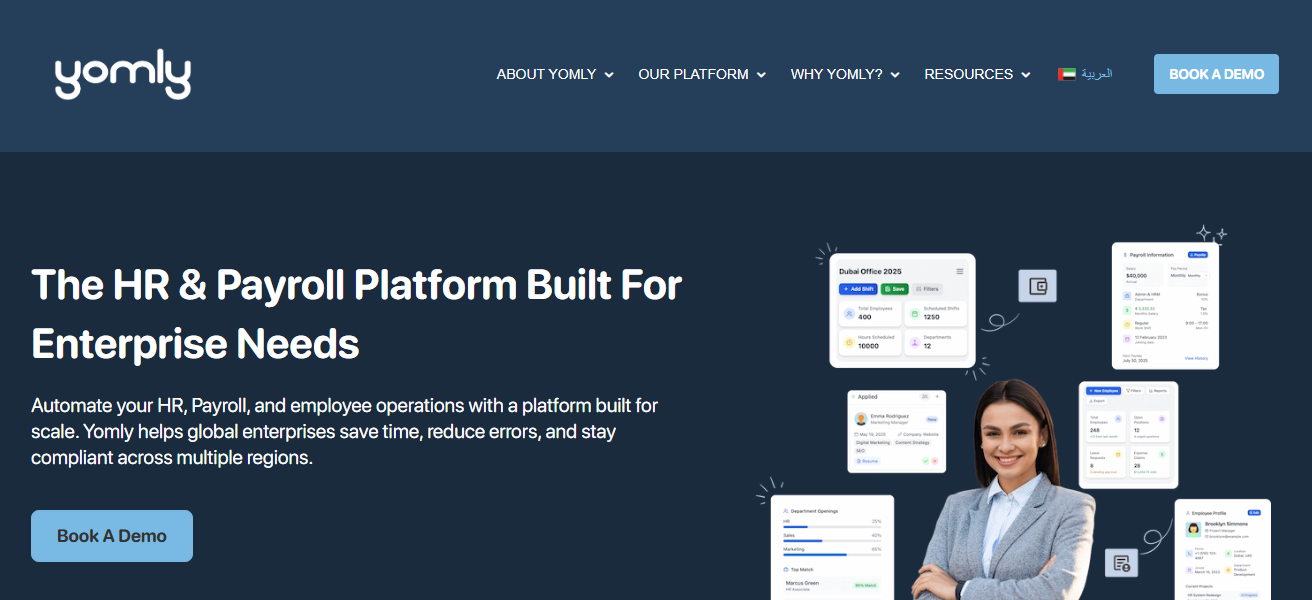
Yomly digitalize documentation and help new hire setup faster on-boarding With its simple design and automation tools, you have a solution to modernise HR operations and enhance organisational productivity and transparency.
| Pros | Cons |
|---|---|
| Strong payroll and HR automation system | Limited AI-driven recruitment features |
| Easy employee self-service access | Reporting tools are somewhat basic |
| Reduces manual HR errors significantly | Advanced customization may be limited |
| Centralized employee data management | Best suited for mid-size companies |
4. Paradox.ai
Paradox. ai is a conversational AI recruiting platform that allows you to engage candidates automatically through intelligent chat assistants.
It performs processes like responding to candidate queries, scheduling interviews and steering applicants through hiring stages without any human intervention.
This considerably cuts down on recruiters workload while enhancing candidate experience with instant responses.
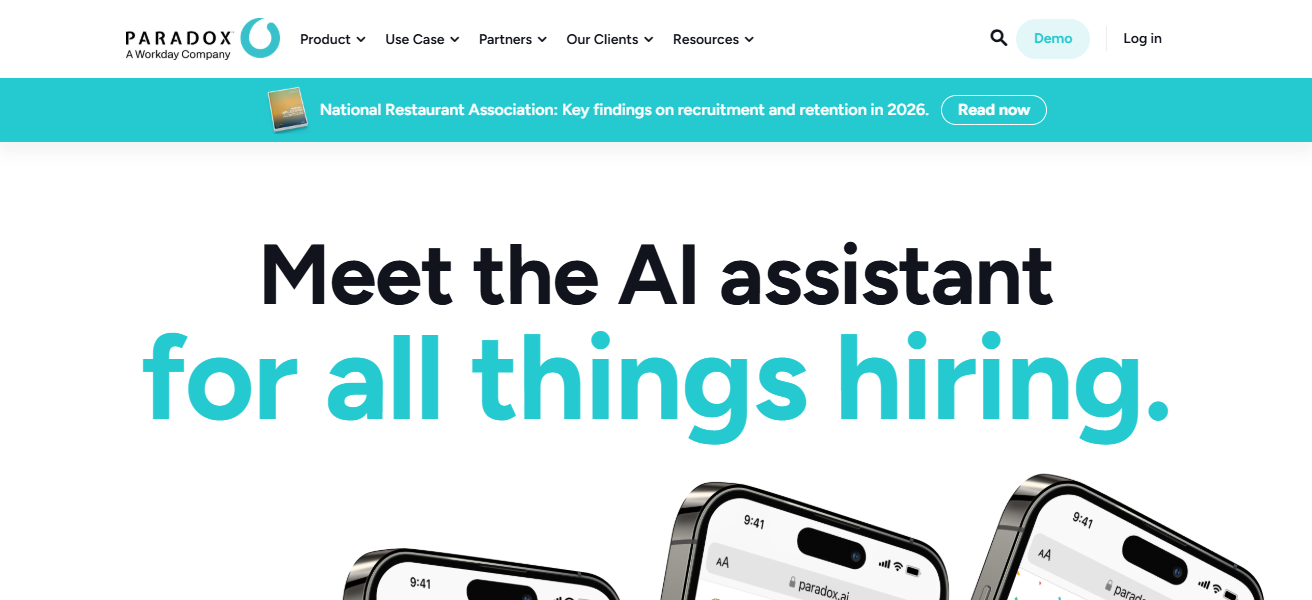
It integrates with all existing HR processes to ensure effortless workflows, saving time and making hiring easier.
Paradox. ai becomes extremely advantageous for those high volume hiring environments which demand a fast, automated and consistent communication along with attracting and retaining top talent successfully.
| Pros | Cons |
|---|---|
| Excellent conversational AI recruiter | High dependency on chatbot interaction |
| Automates interview scheduling smoothly | Less control over manual screening |
| Ideal for high-volume hiring | Can feel robotic for some candidates |
| Integrates well with ATS systems | Pricing may be high for small firms |
5. Eightfold AI
Eightfold AI’s Talent Intelligence Platform uses deep learning to give businesses the ability to recruit, plan for workforce movements and enhance employee engagement through internal mobility.
The better AI numbers use analytics on large datasets to find the free-position candidates from only their skills, and not just resume noise.
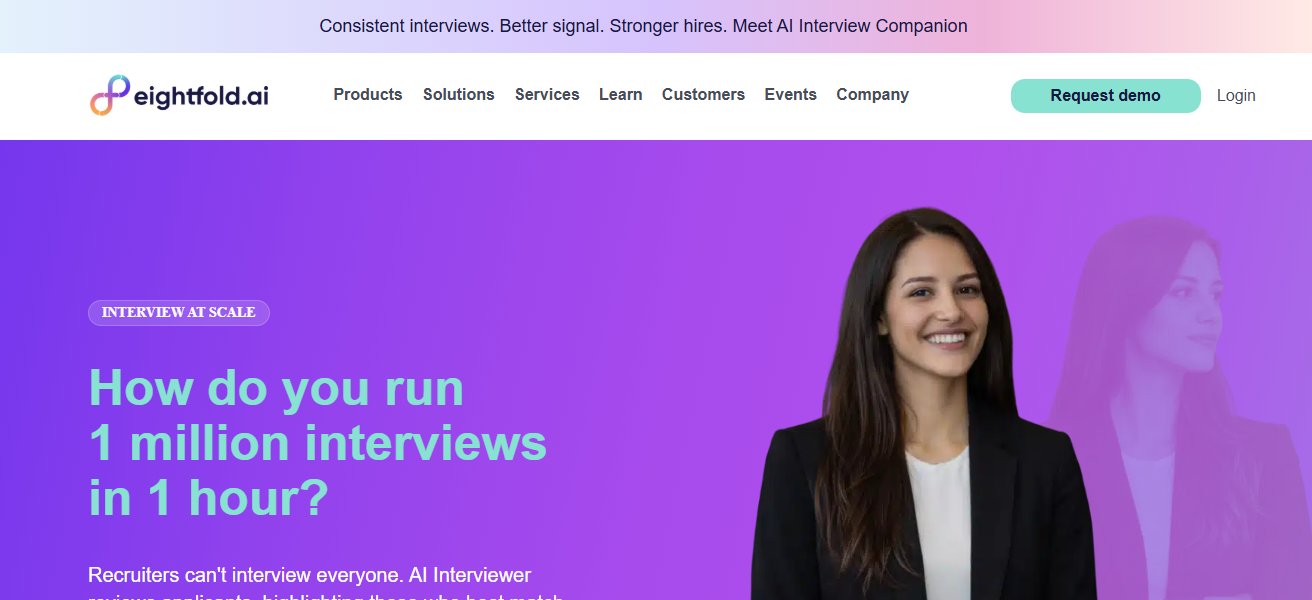
The solution enables companies to democratize and distill the hiring process, rehabilitation of unrecognized profiles, combating bias in hiring decisions during long-term workforce planning.
Now read new technologies that can solve real-word problems. It also aids in onboarding by connecting the skills of the employee with jobs.
Use Eightfold AI to ensure smarter hiring decisions, improve diversity initiatives and build scalable talent pipelines through multinational organizations.
| Pros | Cons |
|---|---|
| Advanced AI-based talent intelligence | Complex implementation process |
| Reduces hiring bias using data | Requires large datasets for best performance |
| Strong internal mobility insights | Expensive for small businesses |
| Excellent workforce planning tools | Learning curve for HR teams |
6. ClickUp Brain
ClickUp Brain Chat Assistant — HubSpot offers its own assistant, aiming at providing HR and team operations support.
Automatic Formulation for Various Tasks like Drafting Job Descriptions or Summarizing Recruitment Notes to Ordering Onboarding Documentation.
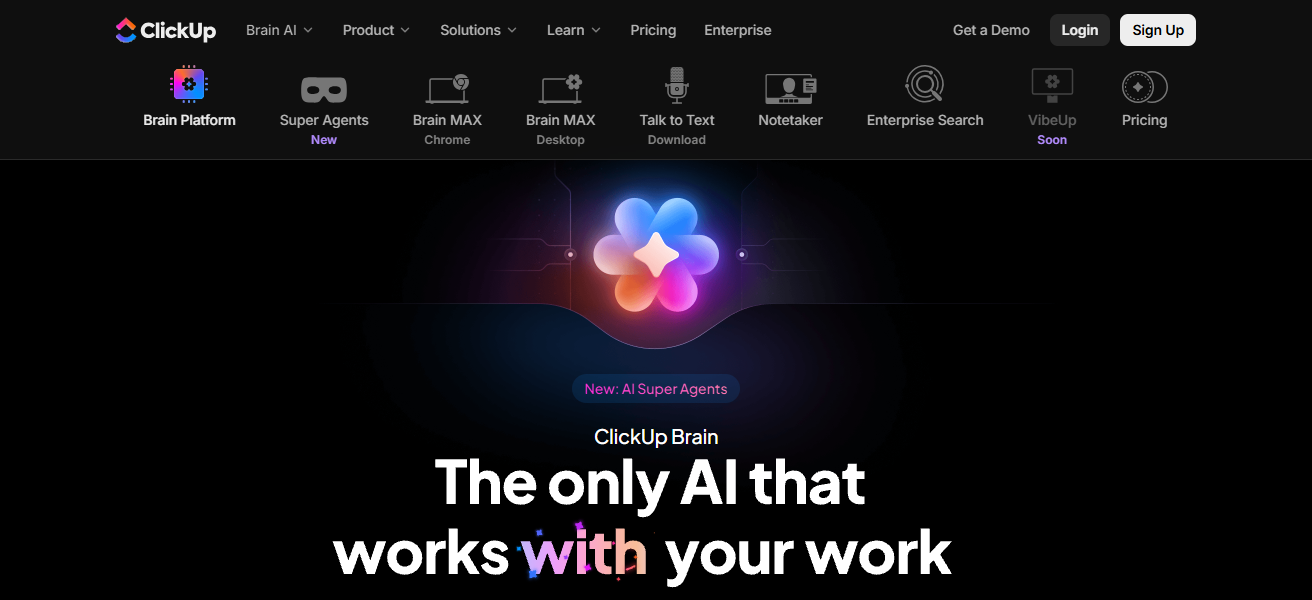
It allows stakeholders to gather insights quickly while automating repetitive administrative work. It helps HR teams with communications, workflow management and decision-making efficiencies.
ClickUp Brain minimizes manual work and enables organizations to be more structured in HR processes with high productivity across recruitment and on-boarding activities.
| Pros | Cons |
|---|---|
| Automates HR documentation tasks | Not a dedicated HR-only platform |
| Improves productivity and collaboration | Requires ClickUp ecosystem dependency |
| Helps generate job descriptions quickly | Limited deep hiring analytics |
| Reduces repetitive HR workload | AI accuracy depends on input quality |
7. HireVue
HireVue a video interviewing and evaluation platform that leverages AI in the modern hiring process.
This system that analyses the candidates based on pre-recorded interviews, behavior-based metrics and skill-based tasks for predicting job performance.
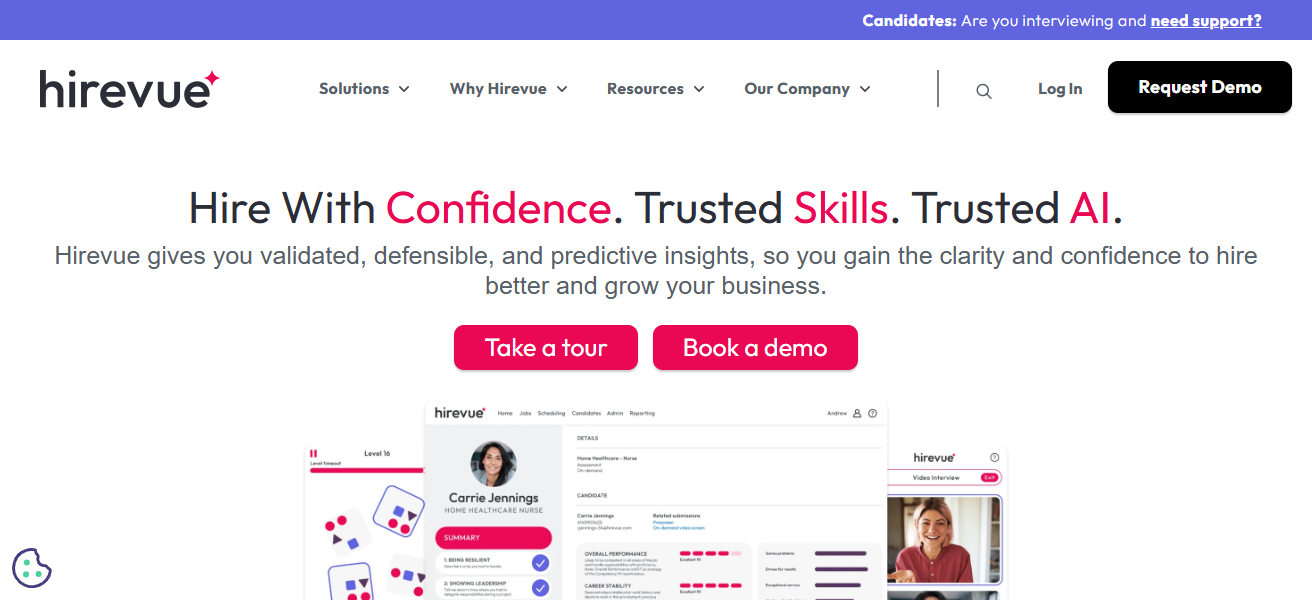
It helps recruiters save the preliminary screening time for applicants by performing the initial screening and ranking efficiently. The automated resume analysis also eliminates bias in hiring due to standardised evaluation.
HireVue enhances onboarding with predictive scores that rank candidates based on their suitability for a position.
The data-driven insights offered by it help organizations make expedient, accurate and scalable hiring decisions.
| Pros | Cons |
|---|---|
| Strong AI video interview analysis | May feel impersonal to candidates |
| Standardizes hiring evaluation process | Bias concerns if not configured properly |
| Saves time in candidate screening | Expensive for small companies |
| Provides predictive hiring insights | Requires strong internet infrastructure |
8. Findem
Findem is a data-driven AI talent acquisition platform that identifies quality candidates through data enrichment and predictive analytics.
Using millions of data points, it builds full profiles of candidates allowing recruiters to identify talent in terms of skills, experience and promise.
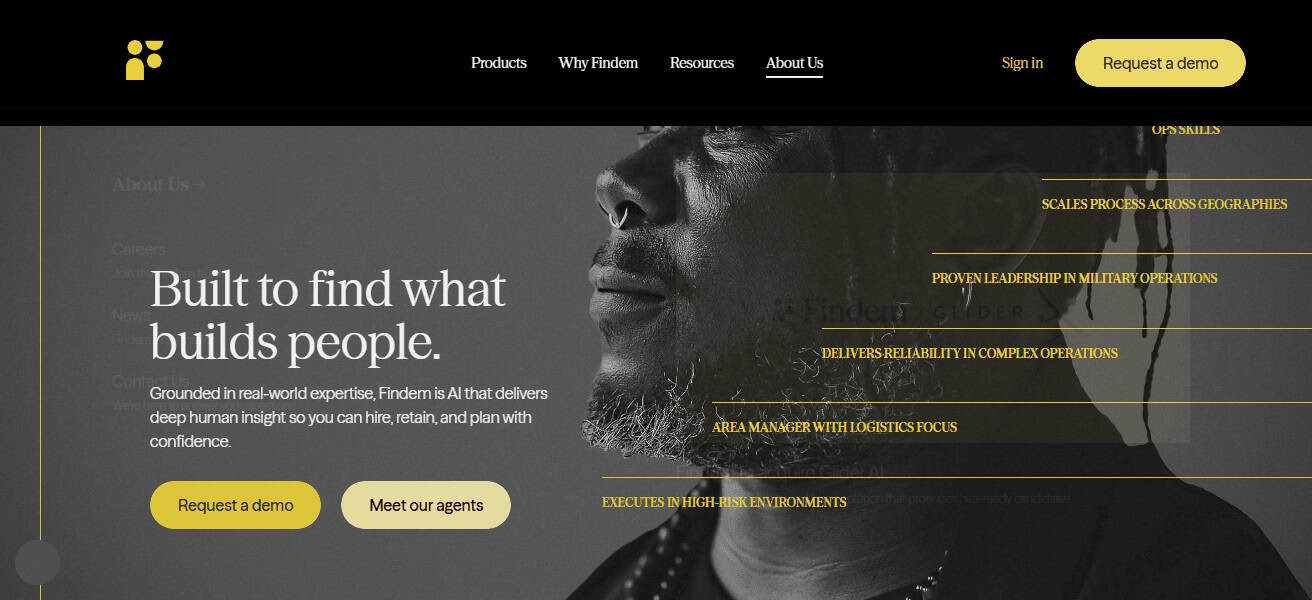
It automates sourcing, speed up time to hire, and increases targeting accuracy. Findem is also offering onboarding based on a better job-fit match.
Its powerful intelligent search features allow HR teams to reach diverse talent pools and enable better hiring decisions in different industries as well as roles.
| Pros | Cons |
|---|---|
| Powerful AI talent sourcing engine | Data dependency for accuracy |
| Builds rich candidate profiles | Interface may feel complex initially |
| Reduces time-to-hire significantly | Limited transparency in AI decisions |
| Improves job-fit matching accuracy | Pricing can be enterprise-focused |
9. Humanly
Humanly (here) to rid you of all your recruiting woes Humanly is a conversational AI assistant with the mission to automate the recruitment processes from candidate screening, engagement, and scheduling all using its patented conversation approach.
The AI Bot interacts real-time with applicants responding to questions and gathering pertinent information prior to the human interviews.
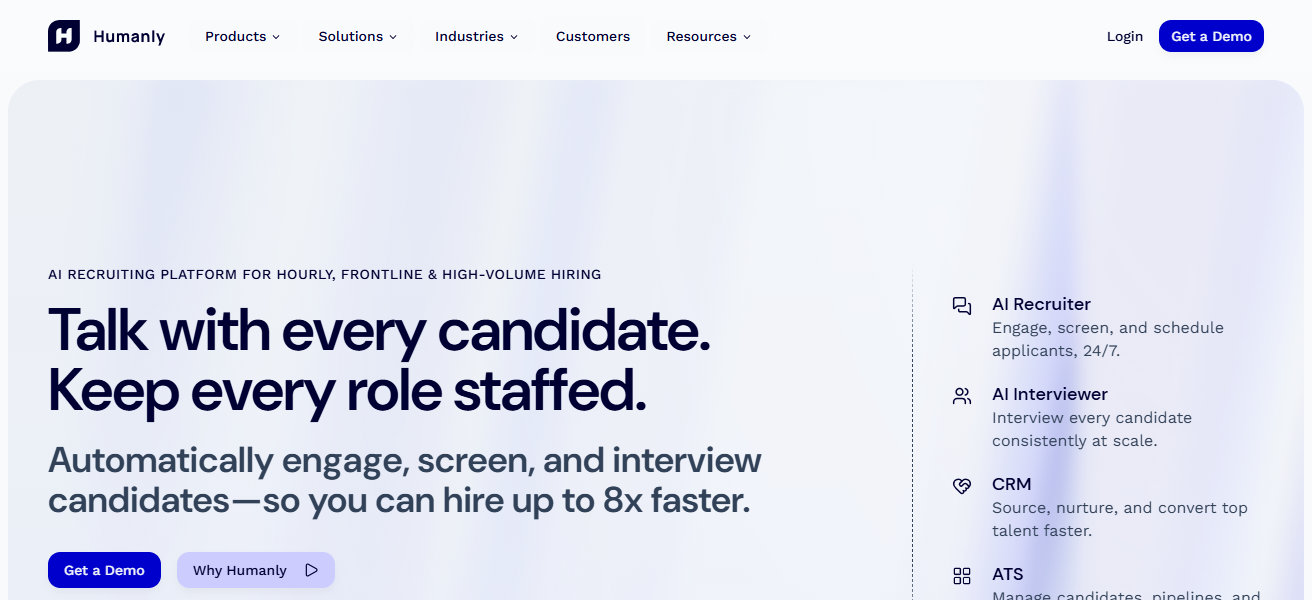
It cuts down on manual coordination tasks to make the recruiting process more effective, while also making it easier (and faster) to communicate.
It also improves candidate experiences by providing tailored communication and updates in good time. It can connect to existing HR tools and simplifies workflows, making it well suited for high-demand hiring environments with speed and automation as key priorities for scaling recruitment operations.
| Pros | Cons |
|---|---|
| Real-time candidate engagement AI | Limited deep HR analytics |
| Automates screening and scheduling | Heavy reliance on chatbot flow |
| Improves candidate experience | May miss nuanced human judgment |
| Integrates with major HR tools | Best for high-volume hiring only |
10. BrightHire
According to BrightHire, its interview intelligence platform helps teams record, transcribe, and analyze interviews in order to improve the quality of hires.
In-depth analytics generate actionable insights into interviewer performance, candidate responses and decision making patterns.
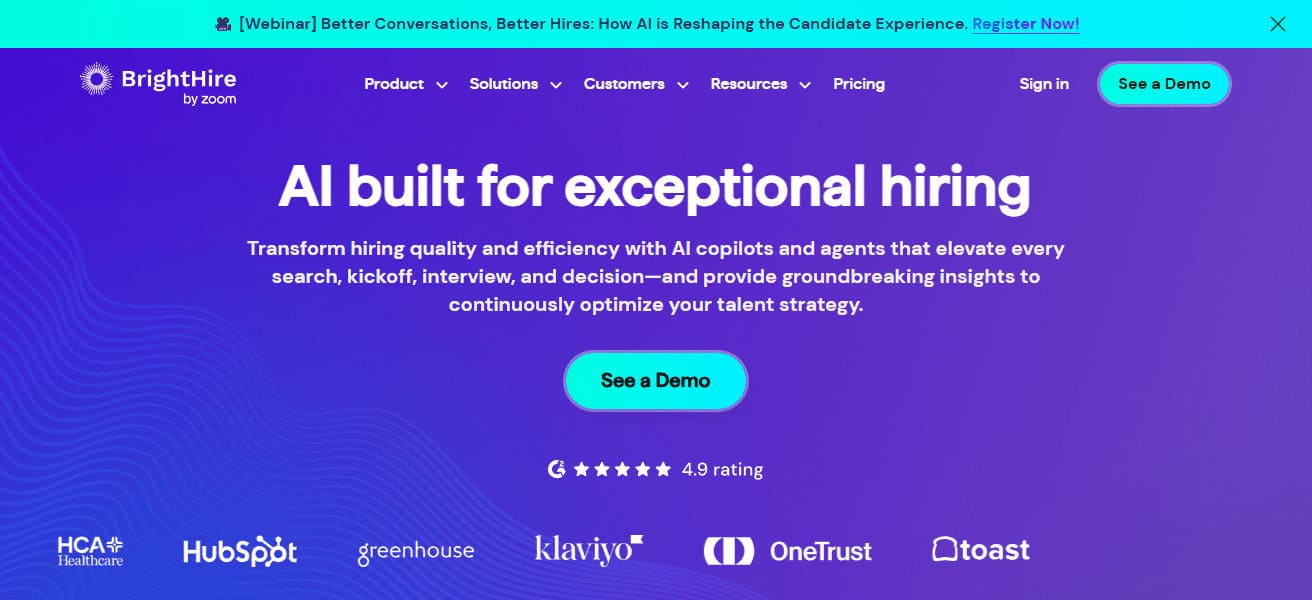
This tool reduces bias, makes hiring more consistent and enhances collaboration in the hiring team. It enhances onboarding by supporting improved candidate selection and fit with job requirements.
It uses AI-driven analytics to help organizations continuously refine their hiring process, create structured conversations during interviews, make the interview process more efficient and evidence-based, optimize talent acquisition in a way that is sustainable for companies.
| Pros | Cons |
|---|---|
| Records and analyzes interviews effectively | Privacy concerns for recorded interviews |
| Improves hiring consistency and fairness | Requires adoption by entire hiring team |
| Provides actionable hiring insights | Limited functionality beyond interviews |
| Reduces interviewer bias | Setup may take time for integration |
How We Choose Best AI HR Software Tools That Automate Hiring and Onboarding
AI Automation Capability: Tools allowing greater automation related to hiring, screening, and onboarding are preferred.
Ease of use – Software should be user-friendly for the HR team to adopt efficiently without extensive technical training.
Time-to-Hire: Tools are picked based on how they shorten the recruitment process and lower manual effort.
Candidate experience- We review how the systems interact and communicate with the candidates.
Integration Ability: Tools that integrate with ATS, HRMS & Pay roll system are preferred.
Data & Analytics: Powerful reporting, insights and decision support with AI logic
Scalability: It should cater to startups, mid-size, and large enterprises as they scale.
Onboard: We prefer the one who make life easier in documents, training and new joiner set-up.
Cost vs Value — We look at pricing in relation to features and overall HR effectiveness enhancement.
Conclsuion
Conclusion AI HR software tools are reforming the recruiting and onboarding process of modern-day companies through automation, speed, and better candidate experience.
These platforms allow the HR teams to take better decisions based on data in addition to minimizing manual work and biasing.
They cover employees from screening to onboarding which make them a one-stop solution for the full-fledged employee lifecycle, thus making organizations more efficient, scalable and well-positioned against competition at this moment of accelerated digital hiring.
FAQ
How does AI help in hiring?
AI screens resumes, matches candidates, schedules interviews, and speeds up the overall recruitment process.
Can AI HR tools improve onboarding?
Yes, they automate document collection, training workflows, and new employee communication processes.
Are AI HR tools suitable for small businesses?
Yes, many tools are scalable and designed for startups, SMEs, and large enterprises.
Do these tools replace HR professionals?
No, they assist HR teams by reducing repetitive tasks, not replacing human decision-making.