
In this article, I will talk about Top Energy Web Alternatives for Green Crypto. The article will focus on blockchain platforms and energy technologies that support sustainability.
We’ll examine their energy efficiency, their use of renewable energy, consensus mechanisms, token utility, scalability, and key features.
This comparison will help readers understand how Powerledger, Algorand, Hedera, Cardano, and other alternatives approach green energy and environmental blockchain solutions.
Key Points
| Top Energy Web Alternatives for Green Crypto | Explanation |
|---|---|
| Powerledger | Blockchain platform enabling transparent renewable energy trading and decentralized electricity markets globally. |
| GridBeyond | AI-powered energy platform optimizing distributed resources, demand response, and renewable electricity management efficiently. |
| Prosume | Decentralized energy platform connecting renewable producers, consumers, and digital marketplaces through blockchain technology. |
| Tezos (XTZ) | Energy-efficient blockchain supporting sustainable applications, smart contracts, and environmentally conscious digital ecosystems globally. |
| Algorand (ALGO) | Low-energy blockchain enabling scalable decentralized applications with strong sustainability and carbon-neutral initiatives. |
| Celo | Mobile-focused blockchain supporting climate initiatives, renewable projects, and sustainable decentralized financial applications globally. |
| Chia (XCH) | Eco-focused blockchain using proof-of-space-and-time to reduce energy consumption compared with traditional mining. |
| Solarcoin (SLR) | Cryptocurrency rewarding verified solar energy generation while promoting renewable electricity adoption worldwide through blockchain. |
| Hedera (HBAR) | Energy-efficient distributed ledger supporting sustainable applications, carbon tracking, and enterprise environmental solutions. |
| Cardano (ADA) | Proof-of-stake blockchain offering energy-efficient infrastructure for sustainable decentralized applications and financial systems. |
| Polkadot (DOT) | Interoperable proof-of-stake network designed for efficient blockchain communication and sustainable decentralized ecosystems globally. |
| BitGreen | Sustainability-focused cryptocurrency rewarding environmentally friendly actions through decentralized financial and community initiatives. |
| Signum (SIGNA) | Energy-efficient blockchain using proof-of-capacity for sustainable transactions, applications, and decentralized ecosystem development. |
| C+Charge | Blockchain-based platform connecting electric vehicle charging payments with carbon credit and sustainability incentives. |
| Ripple (XRP) | Energy-efficient payment network supporting fast transactions and environmentally conscious cross-border financial infrastructure globally. |
15 Top Energy Web Alternatives for Green Crypto
1. Power Ledger
Powerledger is focused on decentralized energy markets, enabling renewable energy generators, businesses, retailers and consumers to participate in energy trading and traceability.
Its blockchain infrastructure allows for peer to peer (P2P) energy trading, renewable energy tracking, environmental commodity markets and 24/7 renewable energy portfolio management.
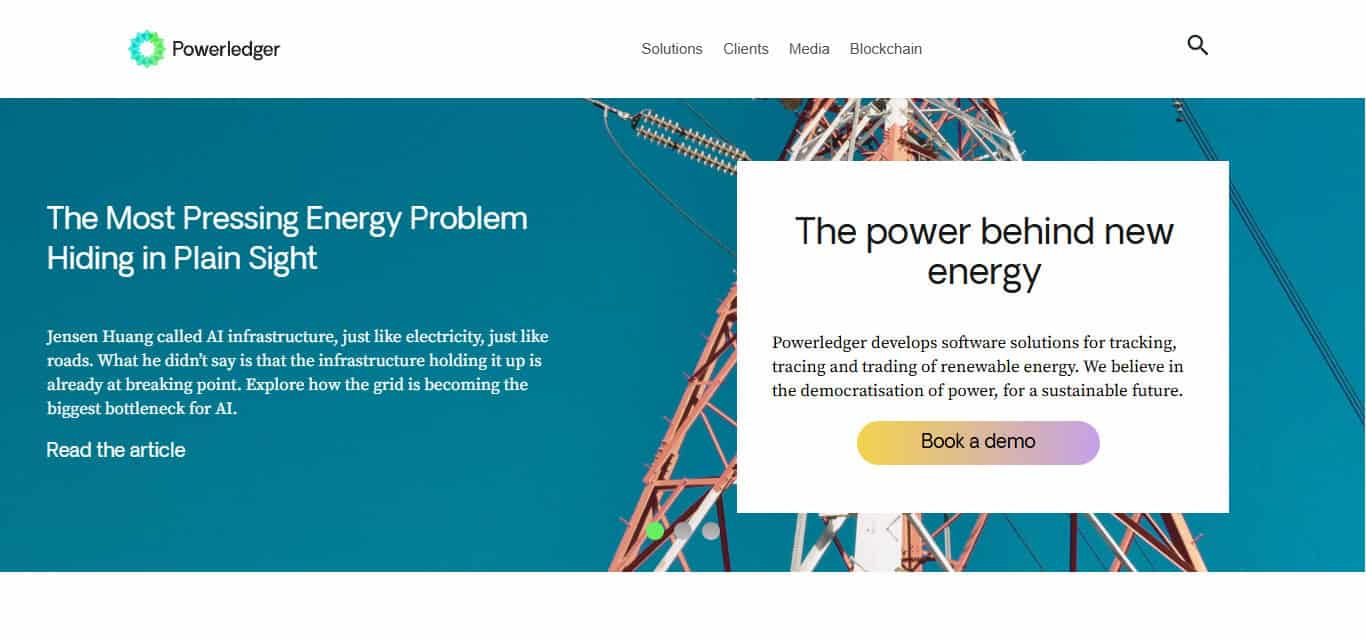
The POWR token is part of its decentralized energy ecosystem and Powerledger has also integrated with Solana. Energy Web is primarily a digital infrastructure platform for energy-sector participants, but Powerledger places greater emphasis on direct energy-market participation
P2P trading and environmental-commodity trading. Its primary green use case is transparent renewable-energy trading and verification.
Powerledger — Key Features
| Feature | Explanation |
|---|---|
| Energy Trading | Supports decentralized renewable-energy trading between market participants. |
| P2P Trading | Enables peer-to-peer electricity exchange and transaction settlement. |
| Renewable Tracking | Helps track and verify renewable-energy generation and consumption. |
| POWR Token | Uses POWR within its blockchain-based energy ecosystem. |
2. GridBeyond
GridBeyond is an energy intelligence platform that manages electricity demand, distributed energy resources, renewable generation, storage and grid flexibility. Rather than acting primarily as a cryptocurrency network, it uses AI, automation and real-time energy data to optimize assets and trade in electricity markets.

Its demand response technology can increase or decrease electricity consumption to help balance the grid, especially when renewable generation is intermittent. It is aimed at businesses, energy consumers, asset owners, renewable generators, storage operators and grid organizations.
GridBeyond’s focus is on smart energy optimization, unlike Energy Web’s blockchain-based infrastructure. The most promising application is to increase the flexibility of the grid and integration of renewables.
GridBeyond — Key Features
| Feature | Explanation |
|---|---|
| AI Optimization | Uses AI and automation to optimize energy consumption and assets. |
| Demand Response | Adjusts energy demand to support electricity-grid balancing. |
| Renewable Integration | Helps businesses manage intermittent renewable-energy resources efficiently. |
| Grid Flexibility | Coordinates distributed energy resources for flexible energy management. |
3. Prosume
Prosume is a blockchain based energy-data management platform that is built around decentralized energy communities and local energy markets. Infrastructure is in place for P2P energy exchange, allowing consumers and prosumers to purchase, share or sell locally generated electricity, including surplus solar power.

The platform also provides functions for energy flow tracing, settlement, sub-billing, energy source certification and grid balancing. Prosume is not primarily a general purpose blockchain token ecosystem, it is focused on energy communities and digital energy services.
Its difference from Energy Web is the focus directly on local energy exchange, community participation and energy-data management. Its primary green use case is traceable sharing of renewable energy.
Prosume — Key Features
| Feature | Explanation |
|---|---|
| P2P Energy | Supports decentralized electricity trading between energy participants. |
| Energy Communities | Connects producers, consumers, and prosumers within local energy markets. |
| Energy Data | Provides tools for monitoring, managing, and tracing energy flows. |
| Renewable Integration | Supports local renewable generation and energy-sharing models. |
4. Tezos (XTZ)
tezos is a proof-of-stake blockchain for intelligent contracts, decentralized applications and on-chain governance with energy demands very different to those of proof-of-work networks. The network uses XTZ for transactions, staking and governance participation.
Its smart-contract infrastructure can support sustainability, environmental assets, digital records and renewable energy markets applications. Whereas Energy Web is built on energy-sector infrastructure

Tezos is a general-purpose blockchain which can support green-energy applications, rather than energy markets only. The governance model also allows for on-chain protocol upgrades. Its relevant green use case is building sustainable applications that require programmable blockchain infrastructure.
Tezos (XTZ) — Key Features
| Feature | Explanation |
|---|---|
| Proof-of-Stake | Uses an energy-efficient proof-of-stake consensus mechanism. |
| Smart Contracts | Supports programmable decentralized applications and blockchain services. |
| On-Chain Governance | Enables stakeholders to participate in protocol governance. |
| XTZ Token | Supports transactions, staking, and network participation. |
5. Algorand (ALGO)
Algorand utilizes Pure Proof-of-Stake (PPoS) which is a consensus mechanism that allows for scalability while maintaining low energy requirements for the network. ALGO is used for transactions, network participation, and ecosystem activities.
Algorand supports smart contract technology and has been used in sustainability applications including carbon-market infrastructure, environmental-data verification and renewable-energy projects.

Its network is designed to provide fast finality and high transaction throughput, with Algorand claiming sub-three second block latency and around 10,000 transactions per second.
Unlike Energy Web, Algorand is a general purpose blockchain platform that can host environmental applications. Green crypto use case: carbon markets, renewable energy infrastructure
Algorand (ALGO) — Key Features
| Feature | Explanation |
|---|---|
| Pure Proof-of-Stake | Uses an energy-efficient consensus mechanism for network security. |
| Smart Contracts | Supports scalable decentralized applications and programmable blockchain solutions. |
| Carbon Applications | Can support carbon markets and environmental asset infrastructure. |
| ALGO Token | Used for transactions, network participation, and ecosystem activities. |
6. Celo
Celo is a proof-of-stake blockchain for decentralized applications, payments and financial services, with CELO as its native network token. Its ecosystem has developed climate-driven projects like carbon markets, environmental finance and sustainability-focused apps.
Celo’s mobile-first design can support accessible decentralized financial services, and its smart-contract capabilities can allow developers to build climate and sustainability applications. Unlike Energy Web, which is focused only on energy-sector infrastructure

Celo is a broader financial and application platform that can host climate-related projects. So, its relevance to green crypto is mainly about climate finance and environmental applications, not direct electricity-grid management. Best use case is sustainable digital finance and climate focused decentralized applications.
Celo — Key Features
| Feature | Explanation |
|---|---|
| Proof-of-Stake | Uses proof-of-stake infrastructure for blockchain network security. |
| Climate Applications | Supports decentralized applications focused on climate and environmental initiatives. |
| Carbon Ecosystem | Provides infrastructure for carbon-related projects and environmental finance. |
| CELO Token | Functions as a core asset within the Celo blockchain ecosystem. |
7. Chia (XCH)
Instead of proof-of-work mining, Chia uses a Proof-of-Space-and-Time, in which network participants allocate unused storage capacity through a farming process. XCH is the native cryptocurrency of the Chia ecosystem.
Its consensus design was developed as an alternative to energy-intensive computational mining, but its environmental footprint is still tied to hardware manufacturing, electricity consumption and storage infrastructure.

Chia is a general purpose blockchain that supports intelligent contracts, tokens and decentralized applications, not an energy-market-specific network.
The difference of Chia is its different consensus and farming model based on storage vs Energy Web. Relevant green use case of it is energy-aware blockchain infrastructure and sustainability-focused applications.
Chia (XCH) — Key Features
| Feature | Explanation |
|---|---|
| Proof-of-Space-and-Time | Uses storage capacity rather than conventional computational mining. |
| Farming | Participants use allocated storage space to secure the network. |
| XCH Token | Serves as the native cryptocurrency of the Chia blockchain. |
| Energy Focus | Provides an alternative consensus approach to energy-intensive proof-of-work. |
8. Solarcoin (SLR)
SolarCoin was created specifically to incentivize solar-energy generation with a blockchain reward system. Its model ties cryptocurrency rewards to verified solar electricity production in an effort to provide solar producers with an additional digital incentive for renewable power generation.

The SolarCoin ecosystem has migrated to Base in 2026 and currently uses SLR/kSLR terminology. SLR balances have been recorded and are ready to be converted into kSLR. So its core sustainability data is tied to verification of solar generation, not general blockchain activity.
SolarCoin is much more narrowly focused on solar than Energy Web. Its primary application is to reward and incentivize solar generation and to create a blockchain-linked incentive for adoption of renewable energy.
Solarcoin (SLR) — Key Features
| Feature | Explanation |
|---|---|
| Solar Focus | Specifically targets solar-energy generation and renewable electricity. |
| Generation Rewards | Connects blockchain rewards with verified solar-energy production. |
| SLR Token | Provides the digital reward mechanism within the SolarCoin ecosystem. |
| Renewable Incentives | Encourages participation in solar generation through digital incentives. |
9. Hedera (HBAR)
Hedera is built on top of hashgraph distributed ledger technology and is designed for high-throughput applications that require low energy. HBAR is the network’s native asset, used for transactions and to pay for network operations.
Hedera has strong sustainability interests including carbon market infrastructure, renewable energy applications, environmental data management and ESG records. Guardian framework will make it possible to generate verifiable digital records for sustainability and carbon related workflow.

Hedera also publishes network level electricity and carbon data via its sustainability dashboard. Hedera is a broader enterprise distributed ledger, unlike Energy Web’s specific energy-sector positioning, providing infrastructure for climate applications. Its best green use cases are carbon tracking, ESG verification, and environmental markets.
Hedera (HBAR) — Key Features
| Feature | Explanation |
|---|---|
| Hashgraph Technology | Uses Hashgraph distributed-ledger technology for network consensus. |
| Energy Efficiency | Designed to provide low-energy distributed-ledger infrastructure. |
| Sustainability Tools | Supports carbon tracking and environmental-data applications. |
| HBAR Token | Used for transactions, network services, and ecosystem participation. |
10. Cardano (ADA)
Cardano is a proof-of-stake blockchain based on the Ouroboros consensus algorithm that leverages stake pools and delegated participation rather than energy-hungry proof-of-work mining. ADA is the native asset of the network and is used for transactions, staking and participation in the ecosystem.

Cardano enables smart-contract functionality for decentralized apps and can be used to support sustainability projects and environmental causes. In terms of its governance and research-driven development, it is different from other specialized energy platforms.
Unlike Energy Web, Cardano is a general purpose blockchain and not infrastructure specifically designed for energy markets. Its relevance to green-crypto is that it provides for energy-efficient blockchain infrastructure and applications that can meet environmental or sustainability objectives.
Cardano (ADA) — Key Features
| Feature | Explanation |
|---|---|
| Proof-of-Stake | Uses Ouroboros proof-of-stake for energy-efficient network security. |
| Smart Contracts | Supports decentralized applications and programmable blockchain solutions. |
| Governance | Provides mechanisms for decentralized ecosystem participation and development. |
| ADA Token | Used for transactions, staking, and network participation. |
11. Polkadot (DOT)
Polkadot is a nominated proof-of-stake model. It offers a multi-chain architecture to connect specialized blockchain networks. DOT is for network governance, staking and other protocol functions.
Its interoperability framework can help specialized applications and blockchain networks communicate, creating opportunities for renewable-energy, environmental-data and sustainability projects. Polkadot’s architecture differs from Energy Web, as it is built as a wider interoperable blockchain ecosystem, rather than a specific network for the energy sector.

The scalability solution is based on linking and coordinating several elements of blockchain. Polkadot can provide the infrastructure for green crypto use cases, such as parachains dedicated to sustainability, systems for environmental data, and interoperable dApps.
Polkadot (DOT) — Key Features
| Feature | Explanation |
|---|---|
| Nominated Proof-of-Stake | Uses nominated staking to secure its blockchain network. |
| Multi-Chain Design | Connects multiple specialized blockchain networks through shared infrastructure. |
| Interoperability | Enables communication and data exchange between connected blockchains. |
| DOT Token | Supports staking, governance, and network-related functions. |
12. BitGreen
BitGreen (BITG) aka Bitcoin Green, was created as a sustainability focused crypto currency, to promote environmentally friendly participation and projects. However, this project has an important current-status disclaimer: per its official website, the project permanently ended in November 2022 and its blockchain stopped generating new blocks.
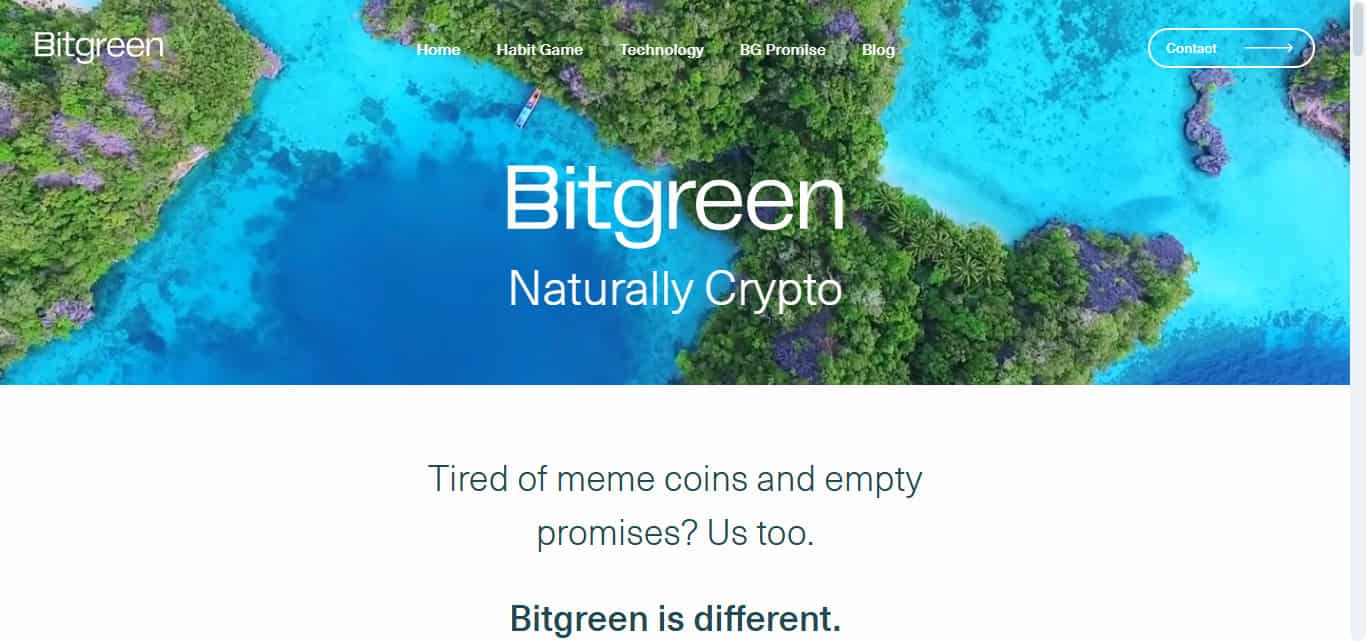
Thus it is not to be projected as an active Energy Web alternative today. The idea historically has been to encourage low-energy participation in cryptocurrency and environmental incentives.
Its model was crypto and community-driven, rather than based on professional energy-market infrastructure, as is the case with Energy Web. Most of the time talking about green-crypto projects it’s of historical relevance today.
BitGreen — Key Features
| Feature | Explanation |
|---|---|
| Green-Crypto Focus | Was designed around environmentally conscious cryptocurrency participation. |
| Sustainability Incentives | Historically promoted rewards connected with environmental activities. |
| BITG Token | Served as the project’s native cryptocurrency. |
| Current Status | The project officially ended in November 2022. |
13. Signum (SIGNA)
Signum is a blockchain ecosystem, which is historically connected to the concepts of Proof-of-Capacity and later Proof-of-Commitment. Here, storage capacity is used for network participation instead of classical computation proof-of-work mining.
SIGNA is a native cryptocurrency and can be used to perform transactions and functions in the ecosystem. The project’s storage-based consensus approach was designed around lower computational requirements than traditional mining models.

Signum is a general blockchain, not a dedicated energy market platform like Energy Web. The relevance for sustainability is mainly due to the alternative consensus approach and the energy conscious design of the network. Its potential green use case is environmentally oriented blockchain infrastructure instead of direct renewable-energy trading.
Signum (SIGNA) — Key Features
| Feature | Explanation |
|---|---|
| Proof-of-Capacity | Uses storage capacity as part of its network consensus model. |
| Energy Efficiency | Designed to require less computational power than traditional mining. |
| SIGNA Token | Serves as the native cryptocurrency for transactions and ecosystem activity. |
| Smart Contracts | Supports blockchain-based programmable transaction functionality. |
14. C+Charge
C+Charge is a concept to create an ecosystem for electric-vehicle charging, bridging payments for EV charging with digital infrastructure based on blockchain technology and ideas on carbon credits. The project’s payment and ecosystem model was linked to its proposed CCHG token.
The concept is focused on EV drivers, charging infrastructure, renewable-energy integration and carbon-credit tracking, with clean transportation the primary sustainability theme. C+Charge is a new project focused on electric mobility and charging services, whereas Energy Web is working more broadly on digital infrastructure for the energy sector.

Current users should check the status of the platform before treating C+Charge as an active alternative, as project status, token availability and implementation details can change. The use case it is meant for is blockchain enabled EV charging and carbon incentives.
C+Charge — Key Features
| Feature | Explanation |
|---|---|
| EV Charging | Focuses on blockchain-based electric-vehicle charging infrastructure. |
| Digital Payments | Designed to facilitate digital payments within the EV ecosystem. |
| Carbon Credits | Connects its model with carbon-credit and sustainability concepts. |
| CCHG Token | Associated with the project’s proposed token-based ecosystem. |
15. XRP (Ripple)
Ripple uses the XRP Ledger, a consensus protocol not based on proof-of-work or proof-of-stake. Validators on the XRP Ledger come to consensus on the order and outcome of XRP transactions. XRP is the native digital asset used on the XRP Ledger for payments and settlement.
It is designed for fast, low-energy transactions and can support applications related to carbon markets and sustainable finance. Ripple also supports climate-related projects and those related to carbon-market infrastructure.
Energy Web’s primary focus is the energy sector while XRP Ledger is primarily a payments and financial infrastructure network. Therefore, its green-finance use case is more about efficient settlement, carbon-market infrastructure and sustainable digital finance.
Ripple (XRP) — Key Features
| Feature | Explanation |
|---|---|
| XRP Ledger | Uses a distributed ledger designed for fast digital settlement. |
| Consensus | Uses a validator-based consensus mechanism rather than proof-of-work mining. |
| XRP Token | Supports transactions and payment settlement within the ecosystem. |
| Green Finance | Can support applications involving carbon markets and sustainable finance. |
Conclusion
Conclusion The Top Energy Web Alternatives for Green Crypto provide a variety of solutions for sustainable blockchain and energy innovation. Energy-efficient blockchain infrastructure is offered by Algorand, Tezos, Cardano and Hedera, while Powerledger and Prosume focus on energy markets.
Chia is looking at alternative consensus technology and SolarCoin targets solar generation. Looking at their technology, token utility, sustainability applications, scalability and use cases helps to identify the differences among these green crypto solutions.
FAQ
What are Energy Web alternatives?
Energy Web alternatives are blockchain or energy platforms supporting renewable energy, sustainability, carbon markets, or efficient energy management.
Which Energy Web alternatives focus on energy trading?
Powerledger and Prosume focus on decentralized energy markets and peer-to-peer renewable-energy trading.
Is Algorand a green blockchain?
Yes. Algorand uses Pure Proof-of-Stake and is designed for energy-efficient blockchain operations.
What is the role of Chia in green crypto?
Chia uses Proof-of-Space-and-Time, providing an alternative to traditional proof-of-work mining.