This article will highlight the companies pioneering industrial disruption with technology and decentralized solutions in the blockchain space. It will feature the top rapidly growing Web3 companies disrupting the spaces of Layer 1 networks
Web3 infrastructure, prediction markets, blockchain gaming, digital assets, and dApps. These companies’ success showcases the rapidly evolving and maturing Web3 systems and their integration into everyday life and business on a global scale.
Key Points & Top Fastest Growing Web3 Companies
| Company | Explanation (12 Words) |
|---|---|
| Monad Labs | High-performance Layer-1 blockchain scaling transactions with faster processing and reduced network costs. |
| Praxis | Web3 network state platform creating technology-driven cities and digital communities worldwide. |
| Polymarket | Decentralized prediction market enabling cryptocurrency-based betting on real-world events and outcomes. |
| Kalshi | Regulated prediction exchange allowing users to trade contracts on future events. |
| Pump.fun | Memecoin launchpad simplifying token creation and community-driven cryptocurrency distribution processes. |
| Alchemy | Web3 infrastructure platform providing developer tools for building decentralized applications efficiently. |
| Solana | High-speed blockchain supporting DeFi, NFTs, and scalable consumer Web3 applications globally. |
| Sardine | Fraud prevention platform connecting traditional finance systems with secure Web3 asset transactions. |
| DM2C Studio | Blockchain entertainment company developing digital assets and interactive Web3 gaming experiences. |
| Azra Games | Gaming studio creating immersive blockchain-integrated video games with advanced technologies. |
10 Top Fastest Growing Web3 Companies
1. Monad Labs
Monad Labs is creating a scalable Layer-1 blockchain solution that is optimized for speed and cost and is compatible with Ethereum. Monad is aimed at solving the issues of speed and decentralization for execution that are barriers to large scale DApps and Web3 products.
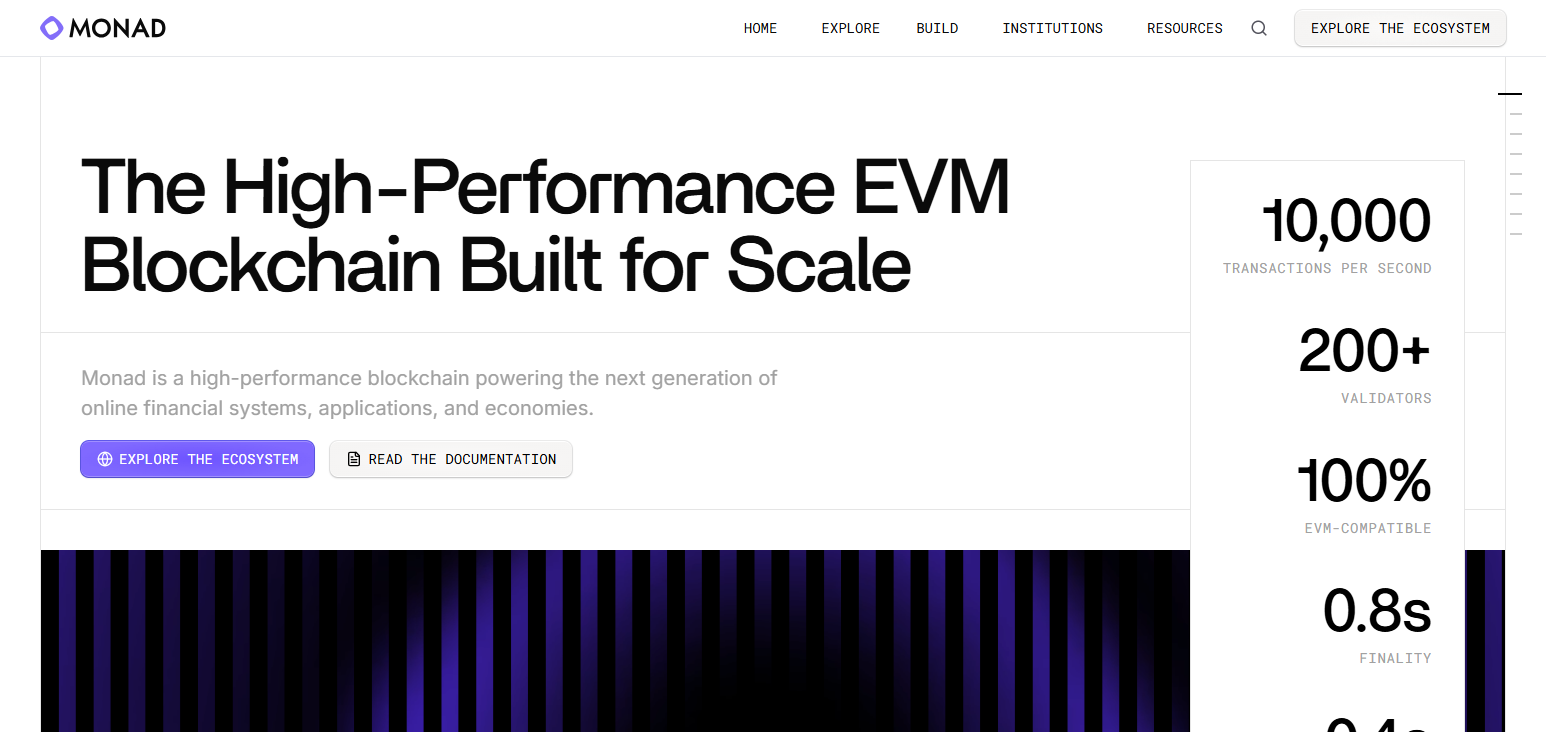
Monad is attracting a lot of developer interest because of its innovative solutions to large scale decentralized finance (DeFi) and Web3 products.
Monad Labs Features
- Advanced Layer-1 architecture allowing rapid transactions with options to scale quickly.
- Provide an Ethereum friendly environment for the migration of DApps.
- Transactions designed to be cheap for large scale Web3.
- Processing highly efficient with technology enabling parallel execution.
- Infrastructure catering to the developers for complex DeFi and consumer Apps.
| Pros | Cons |
|---|---|
| High-performance blockchain designed for faster transaction processing. | Still developing ecosystem compared with established Layer-1 networks. |
| Ethereum compatibility helps developers migrate applications easily. | Limited real-world adoption during early development stages. |
| Focuses on scalability without compromising decentralization principles. | Faces strong competition from existing blockchain platforms. |
| Lower transaction costs improve Web3 application accessibility. | Long-term network performance requires further validation. |
| Advanced architecture attracts developers and investors. | New technology may experience technical challenges. |
2. Praxis
Praxis is a model of a hyper-futuristic Web3 community that is based on the creation of Tech Cities/Smart Cities. It integrates digitally enabled urban planning with blockchain and governance systems.
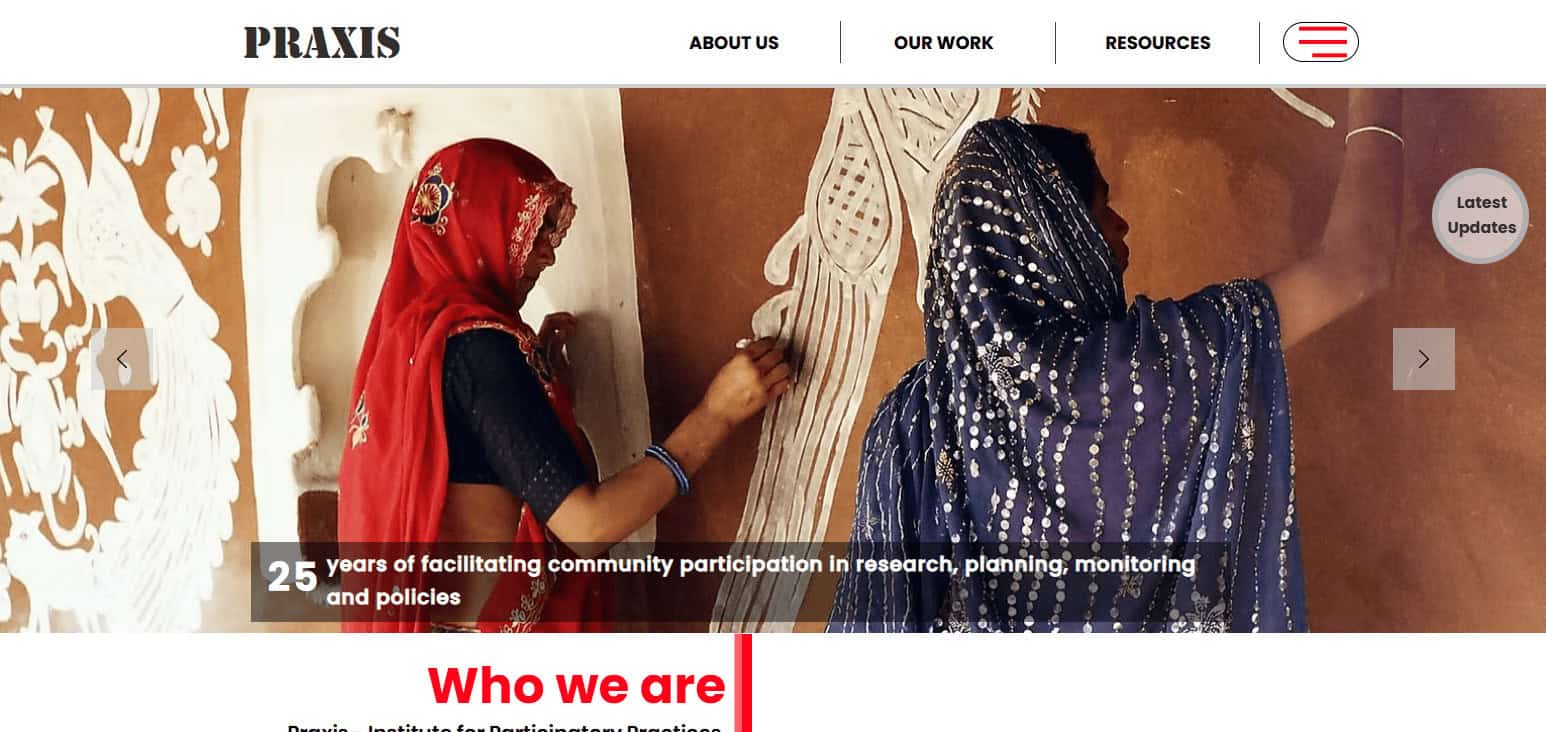
Utilizing Online Communities, Praxis attempts to extend and innovate the organized and collaborative aspects of human interaction. Its core network state model emphasizes the active participation of digitally enabled, technologically advanced communities.
Praxis Features
- A Web3 community platform forming a digital-first network state.
- City focused on technological innovations with integrated, decentralized participation.
- An advanced online collaboration platform for the future digital societies.
- Decentralized frameworks for innovative urban developments.
| Pros | Cons |
|---|---|
| Innovative Web3 network-state concept for future communities. | Concept requires significant adoption and social acceptance. |
| Encourages decentralized collaboration among global innovators. | Building physical communities involves complex challenges. |
| Combines blockchain with futuristic urban development ideas. | Limited information about practical implementation progress. |
| Supports technology-driven digital society experiments. | Regulatory issues may affect expansion plans. |
| Creates new models for online governance. | Network-state model remains experimental and unproven. |
3. Polymarket
Polymarket is a blockchain based, decentralized prediction market that allows users to spend cryptocurrency on opinions and predictions about the outcomes of a large assortment of events.
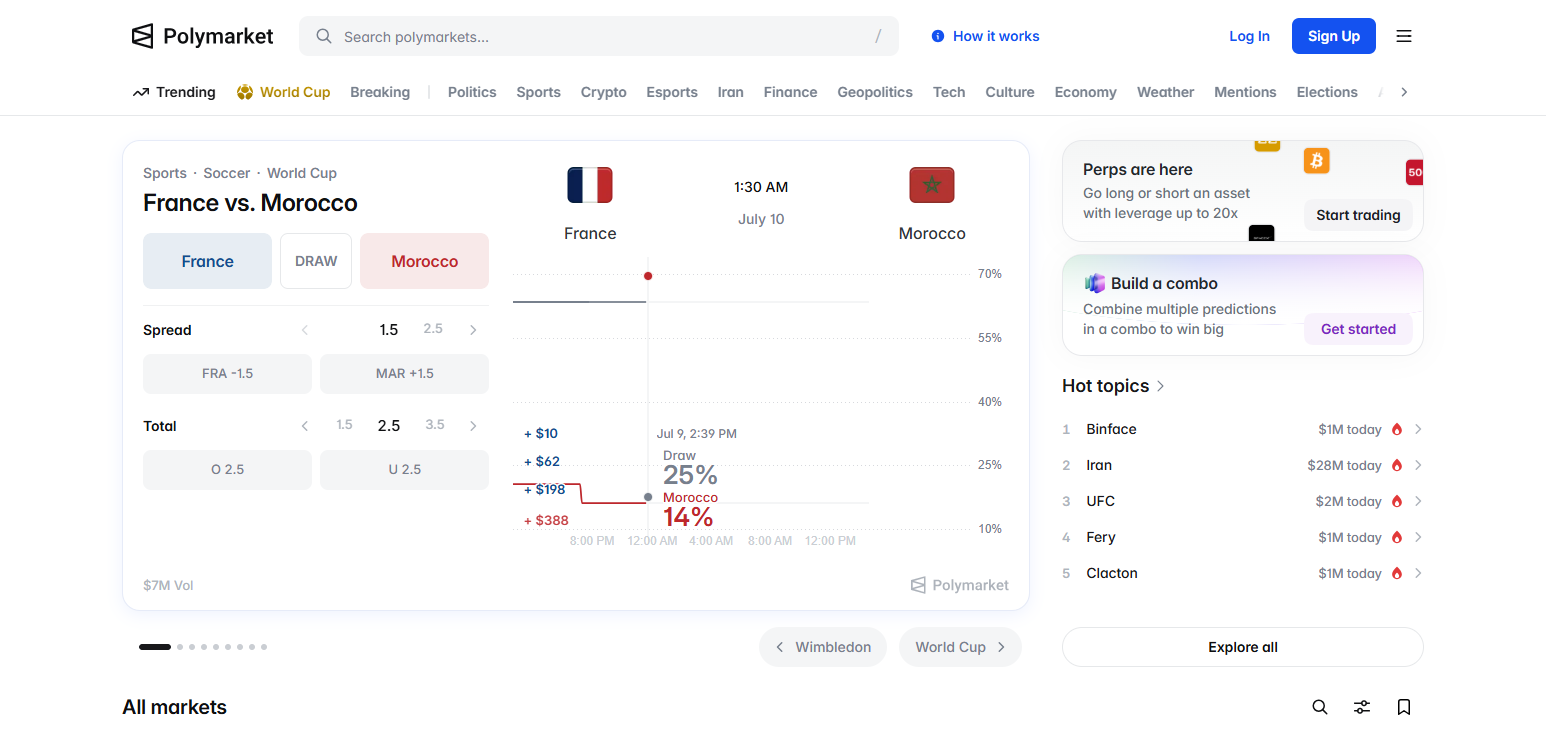
Polymarket exemplifies the dominance and efficacy of decentralized systems in the transparent and collaborative trade of information – the prediction market offers crowd-based, event centered markets.
Polymarket Features
- Decentralized markets for crypto event prediction.
- Opacity of the blockchain ensures verifiable results of open markets.
- Prediction markets that cover politics, finance, technology, and real world events.
- Collective prediction and community engagement.
- Global participation through permissionless markets.
| Pros | Cons |
|---|---|
| Transparent prediction markets powered by blockchain technology. | Prediction markets may face regulatory restrictions. |
| Allows users to forecast real-world events globally. | Market accuracy depends on participant knowledge. |
| Provides decentralized access without traditional intermediaries. | Cryptocurrency volatility can impact user experience. |
| Covers diverse categories like politics and finance. | Event outcomes can create speculative behavior. |
| Uses crowd intelligence for probability forecasting. | Limited availability in some regions. |
4. Kalshi
Kalshi is a regulated platform that lets users trade on the outcomes of events by buying and selling contracts. Kalshi is different from other traditional prediction markets because it is built on a financial model. This makes the event markets more mainstream and popular.

Users can trade on economic indicators and measurable outcomes of climate events, among other things. By combining prediction markets and financial market structures, Kalshi is the first platform to normalize event trading on a large scale.
Kalshi Features
- A platform for regulated event trading with transparent prediction contracts.
- Prediction markets based on the outcome of measurable economic and global events.
- A safe trading environment that complies with all regulations.
- Accessible to the average investor and user.
| Pros | Cons |
|---|---|
| Regulated platform offering secure event trading. | Regulations may limit market expansion opportunities. |
| Provides accessible prediction markets for users. | Available markets may be fewer than competitors. |
| Combines financial systems with event forecasting. | Requires user understanding of trading contracts. |
| Offers transparent outcome-based contracts. | Complex rules may confuse beginners. |
| Builds trust through compliance-focused operations. | Less decentralized than blockchain-based alternatives. |
5. Pump.fun
Pump.fun is an easy to use decentralized memecoin launchpad that allows users to create and trade memecoins on their platform. The launchpad is built on a community focus of token launches and uses a no code model that gives all users the power to create a token.
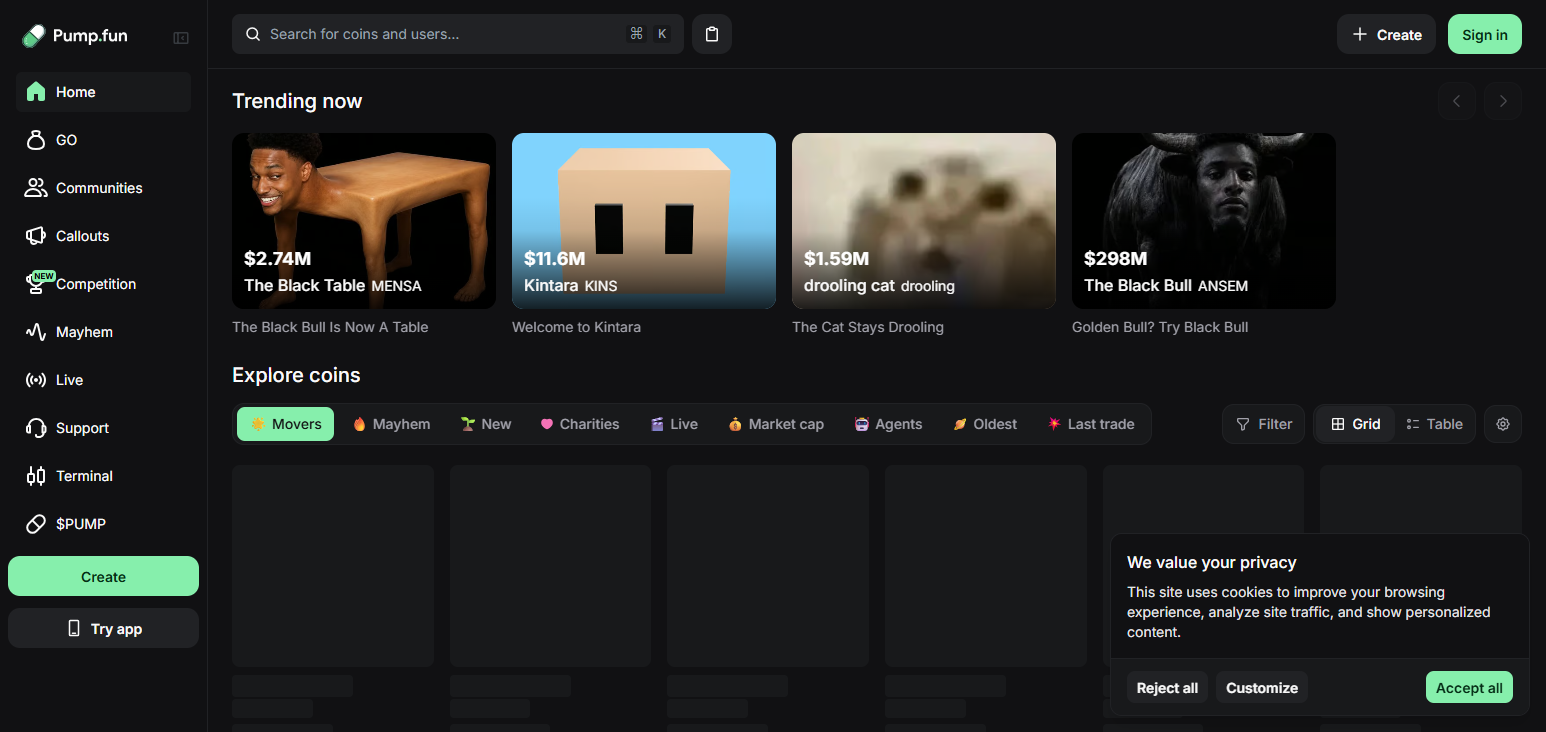
Pump.fun’s focus on increasing speed and access to retail crypto users has lead to a large amount of popularity. Responsible trading was brought to the forefront of the focus as the innovative launch model lead to viral community participation and decentralized token visibility.
Pump.fun Features
- Accessibility for the public to create memecoins.
- A community that encourages the rapid experimentation of moneys through decentralization and viral participation.
- Simplified memecoin creation through an easy to use interface for creators.
| Pros | Cons |
|---|---|
| Simplifies memecoin creation for beginners. | High risk of speculative token launches. |
| Enables fast community-driven token distribution. | Many launched tokens may lack long-term value. |
| Requires minimal technical blockchain knowledge. | Platform attracts scam and low-quality projects. |
| Encourages creative cryptocurrency experimentation. | Market volatility can cause major losses. |
| Provides accessible decentralized launch infrastructure. | Heavy dependence on community hype cycles. |
6. Alchemy
Alchemy is a tool for Web3 and blockchain development. Because decentralized apps are built on blockchains, Alchemy offers developers the complex tools for building a reliable product on the modern web.
Breakthroughs to early stage development on Web3 that Alchemy makes possible and easy for businesses have direct impact on how quickly blockchain technology can be adopted.
Alchemy Features
- Powerful APIs for Web3 development that simplify the integration of DeFi functionalities.
- Proven node infrastructure for many blockchain networks.
- State-of-the-art monitoring enhancing application performance management.
- Developer tools for accelerating blockchain innovation and adoption.
| Pros | Cons |
|---|---|
| Powerful infrastructure for Web3 developers. | Premium features may become expensive for startups. |
| Supports multiple blockchain ecosystems and applications. | Dependency on external infrastructure providers. |
| Simplifies blockchain development with APIs. | Competition from other Web3 infrastructure providers. |
| Provides reliable node management solutions. | Requires technical knowledge for advanced usage. |
| Helps businesses scale decentralized applications efficiently. | Centralized infrastructure may raise decentralization concerns. |
7. Solana
An ecosystem with speed, Solana builds blocks with high throughput. Solana has advantages over traditional networks because of the speed and costs associated with using their networks.
Developers love the growing ecosystem Solana provides, the fast transactions, and the low costs. Solana is rapidly growing and continues to innovate with Decentralized Finance (DeFi) and offers more and more decentralized applications.
Solana Features
- Fast blockchain enabling global scalable decentralized applications.
- Lower fees on transactions enhance usability and adoption.
- High throughput blockchain processing with advanced architecture.
- Robust ecosystem for DeFi, NFTs, and gaming.
- Web3 decentralized apps focused on consumers made easy for developers.
| Pros | Cons |
|---|---|
| Extremely fast transaction processing capabilities. | Has experienced network reliability concerns previously. |
| Low fees attract developers and users. | Faces competition from major blockchain ecosystems. |
| Strong ecosystem across DeFi, NFTs, and gaming. | High hardware requirements for validators. |
| Supports scalable consumer-focused applications. | Network decentralization remains debated. |
| Large developer community and growing adoption. | Market performance depends on crypto trends. |
8. Sardine
A fusion of digital assets and traditional financing, Sardine offers infrastructure and settlements as a service. Sardine helps crypto companies stop bad actors, perform KYC, and secure their transactions.
Because Sardine wants Web3 to be a safe area for users and businesses, I believe they have the right focus. Sardine wants to implement a safer and compliant Web3 so that traditional finance can connect with ease and comfort.
Sardine Features
- Digital asset transaction security and advanced fraud prevention.
- Compliance infrastructure for finance and blockchain interconnectivity.
- Web3 security enhanced with identity verification.
- Risk detection for financial transactions of a suspicious nature.
- Infrastructure for secure crypto transactions.
| Pros | Cons |
|---|---|
| Advanced fraud detection improves Web3 security. | Primarily focused on businesses rather than consumers. |
| Helps companies meet compliance requirements. | Integration may require technical expertise. |
| Connects traditional finance with digital assets. | Competition exists from other compliance platforms. |
| Provides identity verification and risk management tools. | Limited awareness among general blockchain users. |
| Improves trust in cryptocurrency transactions. | Regulatory changes may affect operations. |
9. DM2C Studio
Focused on the fusion of creation and play through ownership economies, DM2C Studio leans into the emerging world of digital assets, Blockchain Gaming, and Web3. Dedicating their time to research and development in their field

DM2C Studio wants to build new and innovative gaming worlds for players to have a more engaged experience with real life consequences and ownership. This reflects the growing interest of the new age gamers to have a more integrated approach to entertainment and ownership using Blockchain technologies.
DM2C Studio Features
- Web3 entertainment combining gaming with digital assets.
- Blockchain creates the ability for digital ownership in gaming.
- Gaming ecosystems with enhanced interactivity for participants.
- Entertainment enhanced within a decentralized framework.
- Participant engagement in gaming with digital assets.
| Pros | Cons |
|---|---|
| Combines blockchain technology with entertainment experiences. | Web3 gaming adoption is still developing. |
| Focuses on digital ownership and interactive gaming. | Limited mainstream recognition compared with gaming giants. |
| Creates new opportunities for creators and players. | Blockchain gaming markets remain highly competitive. |
| Supports innovative digital asset ecosystems. | Success depends on user engagement levels. |
| Explores future entertainment business models. | Requires strong game quality for adoption. |
10. Azra Games
Azra Games is an up-and-coming gaming studio looking to reshape the field by building new high-fidelity, Web3 games. The gaming studio prioritizes the gamification of digital ownership.
Azra Games is not interested in the traditional means of play-to-earn.
Instead, they see value in the entertainment gaming can provide to its players and the communities that surround it. The nascent gaming ecosystems that emerge from the new paradigms of blockchain technologies are where they see their opportunities.
Azra Games Features
- Exciting gaming experiences with top tier blockchain gaming.
- Gaming with digital assets enhances player control.
- Gaming economies with blockchain sustain beyond play-to-earn.
- Gaming ecosystem on blockchain enhances player engagement.
- Web3 solutions for gamers of today with entertaining options of tomorrow.
| Pros | Cons |
|---|---|
| Creates high-quality blockchain-based gaming experiences. | Web3 gaming adoption remains a challenge. |
| Focuses on gameplay rather than only token rewards. | Competes with established traditional game studios. |
| Integrates digital ownership features effectively. | Game success depends on player retention. |
| Builds sustainable blockchain gaming economies. | Development costs for premium games are high. |
| Experienced team targeting future gaming markets. | Cryptocurrency market changes may impact growth. |
Conclusion
In Conclusion, The Top Fastest Growing Web3 Companies harness advanced infrastructure, decentralized applications, digital ownership, and user-centered solutions to propel innovation in blockchain technology.
Monad Labs Solana, Alchemy, Polymarket, and Azra Games are enhancing Web3 in new industries. As these companies gain even more users, they will become the dominant companies in decentralized tech, finance, gaming, and digital ecosystems around the world.
FAQ
What does Monad Labs offer in Web3?
Monad Labs provides high-performance Layer-1 blockchain infrastructure designed to improve transaction speeds, reduce costs, and support scalable decentralized applications.
How does Polymarket work as a Web3 company?
Polymarket operates as a decentralized prediction market where users trade predictions on real-world events using cryptocurrency
Why is Solana considered a fast-growing Web3 company?
Solana is considered a fast-growing Web3 ecosystem because of its high transaction speed, low fees, and strong support for DeFi, NFTs, gaming, and consumer applications.
What role does Alchemy play in Web3 development?
Alchemy provides blockchain infrastructure, APIs, and developer tools that help companies create and scale decentralized applications. It simplifies Web3 development by offering reliable backend solutions for blockchain networks and applications.